 Have you ever read a novel that’s mostly low-key, subtle, understated, and even seemingly simple yet is compelling or charming or funny or emotionally wrenching or all of the above? Sure you have, and I have, too.
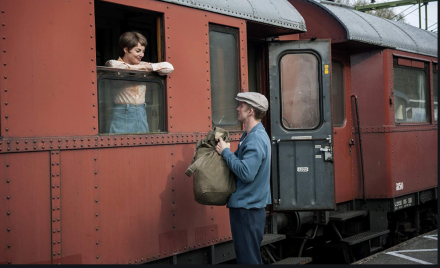
The latest for me was A Man Called Ove, which I finished a few days ago. That 2012 novel by Swedish author Fredrik Backman initially appears to be a few-frills tale of a very grumpy 59-year-old loner until it sneaks up on the reader — with help from a gradually unfolding back story — to become a wonderfully quirky, romantic, inspiring, humanistic, multicultural, heartbreaking, better-have-tissues-handy book. A novel so good that it powerfully reinforces one of the reasons we read fiction: hoping for that occasional can’t-put-down work. (The above photo, from the movie, shows a young Ove at the time he meets his future wife Sonja.)
Another understated novel is Mrs. Bridge, which is more downbeat overall than A Man Called Ove but shares a certain outward plainness that masks many beneath-the-surface themes: in this case, Evan Connell’s tale of a well-to-do family says a lot about class, conformity, unhappiness, the emptiness of too much materialism, and more.
There’s also Being There, the satirical Jerzy Kosinski novel with a flatness literally embodied in its flat protagonist: the simple-minded gardener Chance who somehow becomes considered an oracle of sorts. The book is far from flat; that’s just its veneer.
Gigi is nowhere near my favorite Colette work — the novel is sort of frivolous and its central relationship doesn’t grab me. But it’s beautifully written in its low-key way, and is more complex than it seems.
How about A Christmas Carol? A short, fairly straightforward morality tale from the usually more intricate Charles Dickens, but there’s a reason why it has endured for more than 175 years: It skillfully depicts many recognizable human (and ghostly 🙂 ) traits.
And The Remains of the Day. Kazuo Ishiguro’s story of a butler is extremely understated, but strong emotions and secrets boil under the surface.
Then there’s James Hilton’s Goodbye, Mr. Chips — about a gentle, long-tenured boarding school teacher who’s at first conventional and kind of stiff before his brief marriage makes him a looser, more tolerant person and educator.
Many of Fannie Flagg’s novels — including her most recent, The Whole Town’s Talking (2016) — also sort of fit this category. Those books are folksy and sentimental, yet quietly take on issues such as racism, sexism, and homophobia.
And Henry James’ writing (especially in mid- and late-career) is FAR from simple but almost always understated — as in The Ambassadors. Strong passions are repressed, but never totally repressed.
Even in low-key novels, beleaguered protagonists might eventually erupt in some way. That’s the case in Richard Russo’s Empire Falls — and in A Man Called Ove, too.
Your favorite works that fit this topic?
My literary-trivia book is described and can be purchased here: Fascinating Facts About Famous Fiction Authors and the Greatest Novels of All Time.
In addition to this weekly blog, I write the award-winning “Montclairvoyant” topical-humor column for Baristanet.com. The latest piece — which includes humorous fake answers to a superintendent-search survey — is here.
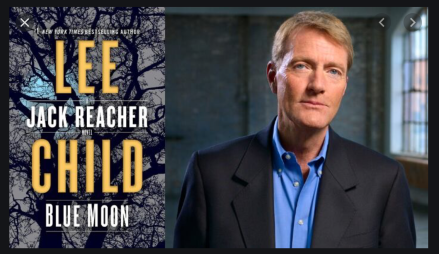 After reading Lee Child’s latest Jack Reacher novel last week, I thought about how page-turning that series is and how it reflects our times. Heck, there’s an amazing/harrowing “fake news” reference near the end of that recent book, which chronicles Reacher’s battle against rival mobs that ruthlessly control a city.
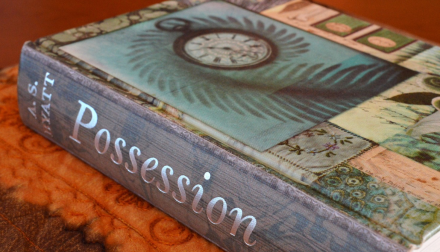 It’s anniversary time again! With a month-plus of 2020 “in the books,” I’d like to mention some of my favorite (not necessarily the best) novels that were published in 1970, 1920, 1870, and various other years ending in that big ol’ round number of zero. And then you can tell me some of your favorites.
 Dave Astor on Literature