Some Songs with a Near Literary Feel

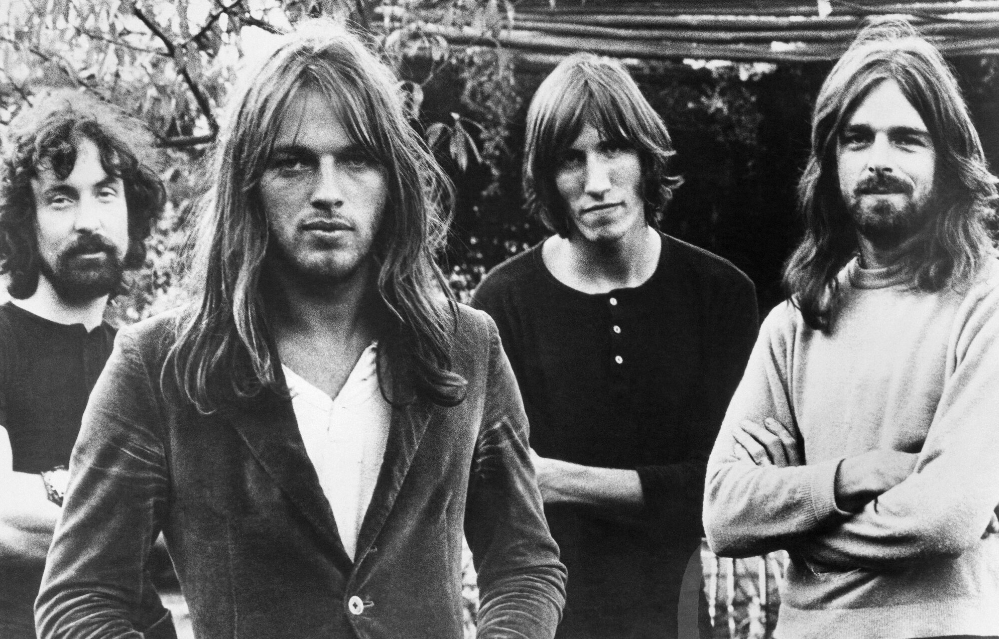
Pink Floyd, with Roger Waters third from left. (Michael Ochs Archives/Getty Images.)

I’ve written about songs that include references to literature, but what about songs that almost have a literary feel even when not necessarily mentioning fictional works?

One person who accomplished this in at least some songs is of course Bob Dylan, who immediately comes to mind partly for the simple reason that he won the Nobel Prize for Literature in 2016. I didn’t agree with the judges on that; Dylan has often been a great lyricist, but I think literary prizes are best left to novelists, short-story writers, and the like.

Among the other lyricists in rock, pop, rap, and folk music penning some songs with literary or near-literary heft are Joni Mitchell, Paul Simon, Smokey Robinson, Patti Smith, Taylor Swift, Gordon Lightfoot, Neil Young, John Lennon, Carole King, Leonard Cohen, Kendrick Lamar, Tupac Shakur, Woody Guthrie, Pete Seeger, Phil Ochs, Victor Jara, Roger Waters (also the bassist for Pink Floyd), Neil Peart (also the drummer for Rush), Bono (also the lead singer for U2), Joe Strummer (also a guitarist for The Clash), Amy Lee (also the lead singer and keyboardist for Evanescence), Natalie Merchant (also the lead singer for 10,000 Maniacs before becoming a solo artist), Don Henley (also the drummer for The Eagles as well as a solo artist), Bernie Taupin (lyricist for Elton John), Keith Reid (lyricist for Procol Harum but not a performer in the band), and Betty Thatcher (lyricist for Renaissance but not a performer in the band).

The above incomplete list is of course subjective to some extent, but among the criteria that make lyricists literary-leaning is how their words could stand alone — or almost stand alone — without the music. They skillfully use language and/or tell stories (with perhaps a focus on a character or the unfolding of a plot) and/or create narrative tension and/or paint images and/or evoke strong emotions, etc.

Here are links to songs written by some of the lyricists I mentioned:

Coyote, Joni Mitchell:

The Boxer, Simon & Garfunkel:

Tracks of My Tears, Smokey Robinson & The Miracles:

Love Story, Taylor Swift:

If You Could Read My Mind, Gordon Lightfoot:

Wish You Were Here, Pink Floyd:

London Calling, The Clash:

My Immortal, Evanescence:

Stockton Gala Days, 10,000 Maniacs:

Your Song, Elton John:

A Whiter Shade of Pale, Procol Harum:

Your thoughts on this topic or the songs I posted? Other songs or lyricists with literary chops you’d like to mention? I know I left out many.

My literary-trivia book is described and can be purchased here: Fascinating Facts About Famous Fiction Authors and the Greatest Novels of All Time.

In addition to this weekly blog, I write the 2003-started/award-winning “Montclairvoyant” topical-humor column for Baristanet.com every Thursday. The latest piece — about my town’s high school graduation and more — is here.


A Look at the Late Cormac McCarthy

I have some mixed feelings about the work of Cormac McCarthy, the renowned author who died this past Tuesday, June 13, at the age of 89. Chief among them is his dearth of women characters in major roles; he was a novelist very focused on (white) males. Also, his depiction of violence could get to the very edge of being gratuitous.

Still, there was a time about a dozen years ago when I became engrossed in his fiction — reading eight of his bleak novels almost consecutively and then later a ninth. Why?

Well, the guy could flat-out write — producing prose and dialog that almost felt biblical (albeit occasionally veering into near-nonsense). That writing had southern gothic Faulkner vibes early in McCarthy’s career (when his novels were mostly set in America’s south) and terse Hemingway vibes later in McCarthy’s career (when his novels were mostly set in America’s southwest and at times Mexico). Also, McCarthy’s troubled male characters were carefully crafted and interesting. As for the violence? Well, we of course live in a world that was and is carnage-filled, so the author was reflecting that.

Blood Meridian (1985), considered by many to be McCarthy’s masterpiece, is his most gore-filled novel — depicting a gang of mid-19th-century thugs roaming the Southwest to brutally murder Native Americans, Mexican Americans, and others — including women and children. The book’s huge, terrifying, enigmatic, pasty-pale Judge Holden character is kind of an amalgam of Captain Ahab and Moby-Dick the white whale, exemplifying the fact that McCarthy’s work also features some Herman Melville influences. The powerfully lyrical writing in Blood Meridian certainly has a Melville feel at times.

Less violent but still pretty harsh is McCarthy’s mid-20th-century-set Border Trilogy — All the Pretty Horses, The Crossing, and Cities of the Plain. But those 1990s-published books do have some very human characters — most notably the young ranch hands John Grady Cole and Billy Parham — a reader can glom onto.

My favorite McCarthy novel is the semi-autobiographical Suttree (1979), which mixes humor and pathos as it portrays a loner with affluent-family origins drifting through life in Tennessee.

What, you might ask, about The Road (2006) and No Country for Old Men (2005)? Certainly McCarthy’s two most famous novels, with the former winning the Pulitzer Prize for fiction and the latter made into an Oscar-winning movie. Both excellent, but not my favorites by the author. The Road is almost too low-key, albeit quite moving in its way as it focuses on a father and son roaming a post-apocalyptic landscape (yes, male protagonists again). No Country, featuring a psychopathic killer, is gruesome but definitely a page-turner.

I have not yet read read McCarthy’s final two, 2022-published novels: The Passenger and Stella Maris. (The latter actually has a female protagonist! Named Alicia Western.) And I can take or leave his first two, 1960s-published books: The Orchard Keeper and Outer Dark. It obviously can take a while for many authors to start hitting on all cylinders. In fact, McCarthy didn’t have a lot of commercial success until mid-career.

Your thoughts on McCarthy, if you’ve read him?

My literary-trivia book is described and can be purchased here: Fascinating Facts About Famous Fiction Authors and the Greatest Novels of All Time.

In addition to this weekly blog, I write the 2003-started/award-winning “Montclairvoyant” topical-humor column for Baristanet.com every Thursday. The latest piece — containing a YouTube-like reaction to a contentious Council meeting — is here.

They Are Imperfect and They Are Courageous

In this 1945 photo, survivors of the Jewish Underground pose atop the ruins of the Mila 18 bunker in the former Warsaw Ghetto. (United States Holocaust Memorial Museum, courtesy of Leah Hammerstein Silverstein.)

Sometimes, heroic people in literature are depicted as almost superhuman. That can be enjoyable in a novel, even as those characters aren’t exactly realistic. But when heroic people have plenty of flaws yet still act bravely when the chips are down, well, attention must be paid.

I thought about that last week while reading Leon Uris’ Mila 18 — a gripping, heartbreaking historical novel that culminates with 1943’s desperate armed uprising against the Nazis by Jewish residents trapped in the Warsaw Ghetto. Before that resistance action, we meet the women and men who will directly or tangentially take part, and, while some are almost saint-like, a number of others are far from perfect. Several are excessively cautious or possess nasty tempers or are having extramarital affairs or are not the best of parents, etc. It makes their eventual heroism more relatable, and makes readers who themselves are imperfect contemplate what they might have done in that situation. Go down fighting before facing near-certain death against a brutal force with infinitely more firepower? Or acquiesce to being transferred to concentration camps for the slim chance of being chosen for slave labor amid everyone else being genocidally murdered?

Other novels — often wartime-set books — that feature flawed, realistic, relatable heroines and heroes include Herman Wouk’s War and Remembrance, Kate Quinn’s The Alice Network, Stephen Crane’s The Red Badge of Courage, J.K. Rowling’s Harry Potter series, etc.

In the latter two works, there is a clear arc from cowardice to courageousness for Henry Fleming (the soldier protagonist of Crane’s classic) and for Harry Potter’s Hogwarts schoolmate Neville Longbottom.

Quinn’s The Alice Network focuses on a World War I spy ring of women who feel far from fearless inside but intrepidly do what needs to be done.

The main characters in War and Remembrance‘s large cast are members of the Henry family — father, mother, two sons, one daughter — who all have personal lives that are checkered to some extent. But they mostly do the right thing during World War II, with one paying the ultimate price.

A character who bravely fights all kinds of self-doubt is Adah of Buchi Emecheta’s Second Class Citizen. She determinedly attends school in Nigeria even though discouraged as a girl from doing so, and even gets beaten for her desire for an education. She eventually relocates to England, deals with racism there, and escapes an abusive husband she had made the bad decision to marry — all while juggling a career and parenthood.

Then there’s of course Sydney Carton, in Charles Dickens’ A Tale of Two Cities, who’s a lazy and alcoholic attorney before gradually reaching the point where he finds redemption by making one of literature’s most heroic decisions.

Your thoughts on this topic?

My literary-trivia book is described and can be purchased here: Fascinating Facts About Famous Fiction Authors and the Greatest Novels of All Time.

In addition to this weekly blog, I write the 2003-started/award-winning “Montclairvoyant” topical-humor column for Baristanet.com every Thursday. The latest piece — again about a court case that makes some of my town’s leaders and their attorneys look pathetic — is here.

Thrillers and Mysteries Had Homogenous Histories

I’ve written about diversity in literature before, but this time I’m going to be a bit more specific. As in the welcome increased diversity in thrillers and mysteries during the past few decades.

Many right-wing Republicans would find that “woke,” but they’re welcome to fall asleep listening to Ron DeSantis speeches.

There was of course some diversity in long-ago mysteries and thrillers, but old novels in those genres often featured white male detectives in lead roles and mostly “conventional” women in supporting roles. If there were rare inclusions of people of color, those characters were usually depicted in cringe stereotypical fashion.

Famous white male detectives of the 19th century and the first decades of the 20th century included Edgar Allan Poe’s C. Auguste Dupin (in three short stories rather than any novels), Charles Dickens’ Inspector Bucket, Wilkie Collins’ Sergeant Cuff, Arthur Conan Doyle’s Sherlock Holmes, Agatha Christie’s Hercule Poirot, Dorothy L. Sayers’ Lord Peter Wimsey, Dashiell Hammett’s Sam Spade, and Raymond Chandler’s Philip Marlowe, among others.

There were a few long-ago exceptions of strong females as leads or co-stars in crime fiction, including Miss Marple and Harriet Vane in the novels by the aforementioned Christie and Sayers, respectively; Marian Halcombe of Wilkie Collins’ The Woman in White; and…Nancy Drew! But the portrayal of people of color in, say, Christie’s otherwise fabulous Death on the Nile? Ugh. And LGBTQ+ people were usually not portrayed at all; if they were, it was almost always in a veiled, negative way.

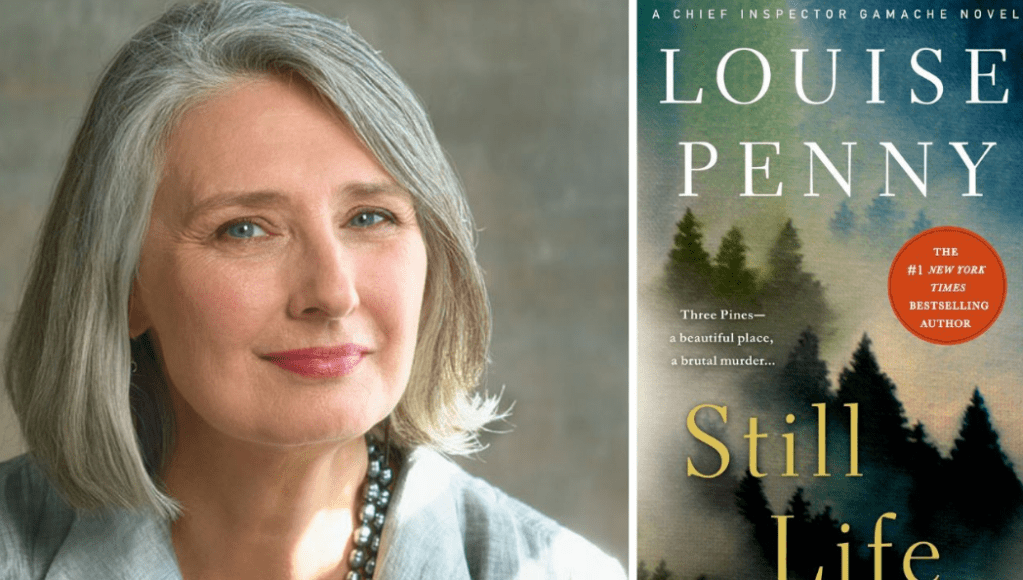
I got to thinking about all this last week while reading Still Life (2005), the absorbing debut novel in Louise Penny’s series starring investigator Armand Gamache. He’s a white guy, but the residents of Three Pines — the small Canadian town where the murder in Still Life occurs — are a wonderful mix: a Black woman who owns a bookstore, a white female artist, a white female poet, two gay restaurant operators, etc. Plus some female investigators and a Jewish female prosecutor. Most are three-dimensional; their color, gender, sexual orientation, and religion/culture are part of who they are, but not all of who they are.

There was a similar mix in Caleb Carr’s The Alienist and its scintillating sequel, The Angel of Darkness — both written in the 1990s and both set in the 1890s. The team investigating some very seedy goings-on include white men, a woman, a Black man, and two Jewish detective brothers. Given the 19th-century timeframe, Sara Howard, Cyrus Montrose, and Marcus and Lucius Isaacson are hit with plenty of nasty societal bias, but the mostly cordial interactions within the investigating team are inspiring. Everyone is respected for what they bring to the table.

Women and people of color who are the flat-out stars of crime series? They include private investigator Kinsey Millhone of Sue Grafton’s “Alphabet Mysteries” (first installment published in 1982), Black private investigator Ezekiel “Easy” Rawlins of Walter Mosley’s novels (debut book in 1990), and bounty hunter Stephanie Plum of Janet Evanovich’s novels (a 1994 start), to name a few protagonists. Oh, and Rita Mae Brown’s 1990-launched mysteries with Mary “Harry” Haristeen (and some animal detectives 🙂 ) as well as Dorothy Gilman’s Mrs. Pollifax novels starring an amateur CIA agent. That latter series, which began in 1966, does have some stereotypical moments with its senior-citizen lead character, but overall Emily P. is fairly modern in her way.

A female investigator co-starring in a series? That would be Robin Ellacott of J.K. Rowling’s crime novels. Male investigator Cormoran Strike was the initial focus of the series (written under the pen name Robert Galbraith), but Ellacott moved into a position of essentially being equal to Strike.

Quite a few of John Grisham’s novels — The Racketeer, The Judge’s List, The Client, etc. — have Black characters as protagonists or in memorable secondary roles. And Lee Child’s Jack Reacher novels (now co-written by Andrew Child) have plenty of women and people of color (female or male) as significant supporting players.

Your thoughts on this topic?

My literary-trivia book is described and can be purchased here: Fascinating Facts About Famous Fiction Authors and the Greatest Novels of All Time.

In addition to this weekly blog, I write the 2003-started/award-winning “Montclairvoyant” topical-humor column for Baristanet.com every Thursday. The latest piece — about a current court case that makes some of my town’s leaders and their attorneys look pathetic — is here.