iStock.com/LIVINUS
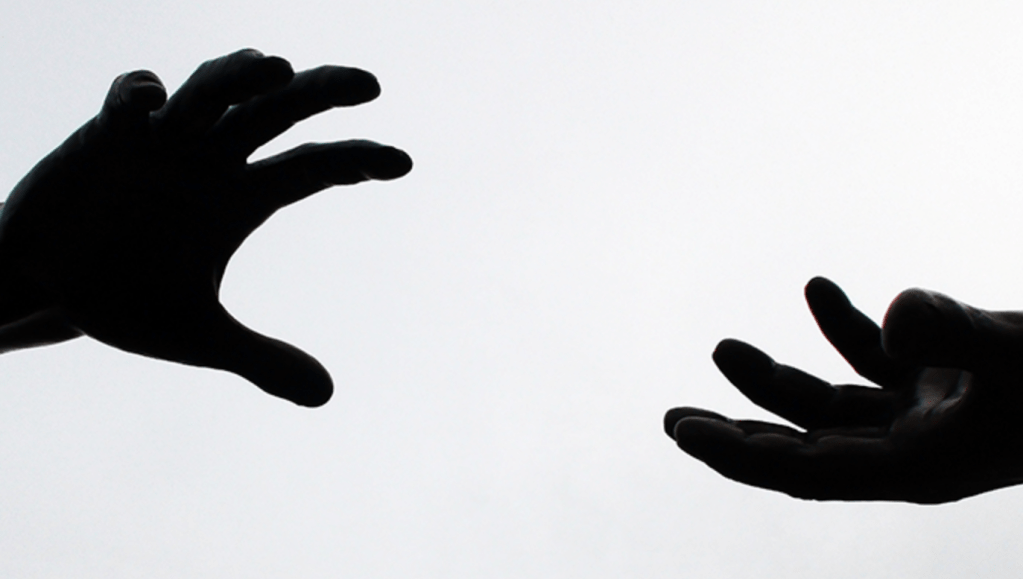
Among the poignant and dramatic story lines in literature is seeing friends or siblings who were close as children diverge in their life paths and feelings toward each other as they grow older. Sometimes things get better after that rupture, but in many cases they don’t.
Containing a strong example of divergence is John Grisham’s The Boys from Biloxi, which I finished this past week. In it, Keith Rudy and Hugh Malco are close friends and fellow baseball stars as Mississippi kids, but things take a different trajectory by the time they become adults. Keith follows his father in becoming a prominent attorney, while Hugh follows his father into mob-world territory. No surprise to say the two young men will eventually meet on different sides of the court system in this riveting novel.
As the above paragraph indicates, parental influence can be a big factor in determining the future turns children take. Look at siblings Maggie and Tom Tulliver in George Eliot’s masterful The Mill on the Floss. As was often the case in the 19th century, Tom is treated better by his parents (and society) as a male, which helps drive a wedge between him and his sister Maggie — a much nicer and smarter person. Not that the two were ever super-close in the first place, but things definitely got worse for many years until a shocking turn at book’s end.
In Toni Morrison’s absorbing early novel Sula, the protagonists Sula Peace and Nel Wright are close childhood friends. But a tragedy, different personalities (Nel is much more conventional), and a betrayal yank them apart as they grow older.
The conventional/less-conventional divide is also a factor in Kristin Hannah’s page-turning Firefly Lane, in which Tully Hart and Kate Mularkey are extraordinarily close pals in childhood and into adulthood. But the ambitious, driven Tully becomes a famous TV host who remains single while Kate marries and becomes a stay-at-home mother — so they obviously live much different lives. Plus there’s a betrayal here, too, as well as the tension of Kate wondering if her husband Johnny loves Tully more than her.
The siblings in Fyodor Dostoevsky’s The Brothers Karamazov, John Steinbeck’s East of Eden, Jane Smiley’s A Thousand Acres, and Ken Kesey’s Sometimes a Great Notion? Too complicated to summarize the machinations and drama here, but all four of those novels are very compelling reads.
There are of course many marriages in literature that start off wonderfully before later disintegrating, but that’s a somewhat different theme that I blogged about in 2014.
Your thoughts about, and examples of, today’s topic?
My literary-trivia book is described and can be purchased here: Fascinating Facts About Famous Fiction Authors and the Greatest Novels of All Time.
In addition to this weekly blog, I write the 2003-started/award-winning “Montclairvoyant” topical-humor column every Thursday for Baristanet.com, which has merged with Montclair Local. The latest piece — about the reappointment of my town’s poorly performing municipal clerk — is here.
 Dave Astor on Literature
Hi Dave,
As my Missy-Moo told you last week, my obsession at the moment is Kingsolver’s “The Poisonwood Bible”. It’s my first Kingsolver and I’m blown away by how good it is. I don’t know if it strictly fits into this week’s topic, as the sisters seem to be relatively close, especially for how difficult their situation is. But the mum is implying that one of them doesn’t survive, which I reckon is about as distant as siblings can get.
Spoiler – I may gush about this book for the next few weeks.
Susan (I’m not being asked to leave a name. Missy had the same issue last week, but I assumed that was just because she’s a cat).
LikeLiked by 1 person
Thank you, Susan! Very glad you’re still enjoying “The Poisonwood Bible”! Now that you’re reading Barbara Kingsolver, there are many other great novels of hers to try in the future if you return to that author: “Prodigal Summer,” “The Lacuna,” “Flight Behavior,” “Unsheltered,” etc. 🙂
“Cats and Avatars” would be an excellent name for a rock band…
LikeLike
Oh Dave, these sisters are breaking my heart. They’re now all in very different places, and any kind of reunion seems unlikely. As one of them has said, ‘… you can only go your own way according to what’s in your heart. And in my family, all our hearts seem to have whole different things inside.’
At the end of the book is a chapter of “Demon Copperhead” which I’m very much looking forward to reading to see if “The Poisonwood Bible” was just a fluke for Barbara Kingsolver. Somehow, I think I’m going to love her other books as much as I’ve loved this one. I see you’ve mentioned her again in your blog this week. I had no idea she had written so much. What a treat I have to look forward to ❤
Susan
LikeLiked by 1 person
Thank you for the follow-up comment, Susan! While “The Poisonwood Bible” might have been Barbara Kingsolver’s best novel, it was definitely not a fluke; several of her other books are also wonderful or near-wonderful. The only novel of hers I haven’t gotten to yet is “Demon Copperhead,” which won the Pulitzer that “The Poisonwood Bible” deserved (it was a finalist).
Yes, the lives of the sisters you mention, and their relationships with each other, make for very poignant/compelling reading.
LikeLike
What an interesting reflection. Having lost a brother at a young-ish age, the idea of siblings parting ways seems tragic to me, though I know it’s a real occurrence. As a reader, I imagine that impacts my impression of the characters. Great examples, Dave, and an interesting dynamic to add tension to a plot. 🙂
LikeLiked by 1 person
Thank you, Diana! Sorry about your brother. 😦 That is a sad, huge thing to experience, and I can see how it would affect anyone’s reading (as well as their writing). And, yes, the relationships between siblings or friends that end/go bad in some way can make for a compelling — albeit depressing — story line.
LikeLiked by 1 person
Hi Dave. I am late to arrive this week, so I’ve had the benefit of enjoying your take on this interesting subject and the excellent comments that followed. I don’t have anything to add to this collective list, but it’s a fascinating topic. Lots of stories go the other way, old friends, family coming back together. I hope you’re having a good week.
LikeLiked by 1 person
Thank you, Dan, for the kind words! As always, I have been enjoying the comments, too. And yes, the flip side — and more heartening side — to this is when people on the outs with each other patch things up. Hope you’re having a good week as well!
LikeLiked by 2 people
You got me on this one, Dave. All I could think about was that it’s a story about my sister and myself.
That’s not a book. It’s reality.
However, once past that I remembered that in “Grand Avenue” by JoyFielding, all 5 women were the best of friends, 5 musketeers, if you will.
In the end grown apart, and sometimes worse.
LikeLiked by 1 person
Thank you, Resa! Sorry about the situation with your sister. 😦 I hear you about real-life examples; my relationships with my sister and with my brother have definitely had some…drama.
“Grand Avenue” is a great mention! It hadn’t occurred to me for my post because it was a more-than-two-friends situation, but what a dramatic scenario Joy Fielding came up with for that excellent novel.
LikeLike
Charity shop, last Saturday, 8 DVD’s for £1,
including the complete Brideshead Revisited. Charles and Sebastian, student friendship/love no match for Sebastian’s alcoholism.
Wuthering Heights and the Reed sisters, lazy Georgiana and harsh Eliza, who becomes an RC mother superior. – Charlotte Bronte’s opinion of this choice clear.
The Lear sisters, of course, and please may I have Susan, no longer a friend of Narnia ?
LikeLiked by 1 person
Thank you, Esther! That’s an impressive DVD haul for the money! And great mentions of several relationships — including the fraught one between Jane Eyre’s very different cousins Eliza and Georgiana!
LikeLike
East of Eden and Firefly Lane certainly deserve mention here. I must read The Mill on the Floss again as I haven’t read it since high school, and can’t remember much about it.
LikeLiked by 1 person
Thank you, Jennifer! Yes, the sibling thing in “East of Eden” and the friend thing in “Firefly Lane” are both VERY memorable.
I’ve only read “The Mill on the Floss” once myself, but I imagine a reread of that excellent novel would be really rewarding.
LikeLiked by 1 person
Indeed! I think my adult brain would appreciate it much more than my teenage brain. 😄 George Eliot is such a fabulous author.
LikeLiked by 1 person
I agree, Jennifer! George Eliot definitely bears rereading when a person is an adult. In my case, I tried reading “Middlemarch” as a teen and enjoyed it a lot more when I returned to it about 10 years ago. I’m also a big fan of Eliot’s “Daniel Deronda,” “Silas Marner,” and “Adam Bede.” One of the greatest novelists ever!
LikeLiked by 1 person
She is. I adored Silas Marner but haven’t read the others. My husband has read all of her work and is urging me to do the same. 🙂
LikeLiked by 1 person
“Silas Marner” IS really compelling and poignant. The Eliot work that might be my favorite is the somewhat-less-known “Daniel Deronda,” her last novel. I liked it so much that, weeks after I finished it, I continued to reread various passages and scenes.
LikeLiked by 1 person
Kazuo Ishiguro’s two novels which deal with friendships growing apart are Never Let Me Go and When We Were Orphans. Also Khaled Hosseini’s The Kite Runner. In all three of these young people grow apart due to circumstances beyond their control. My two or three cents worth 🙂
LikeLiked by 1 person
Thank you, Mary Jo! Great examples! And, yes, sometimes relationships can splinter at least partly because of outside circumstances. Sociopolitical developments among them.
LikeLiked by 1 person
The book that immediately came to mind (or should I say hurtled to mind) was October Light by John Gardner. An elderly brother and sister on opposite sides of the political spectrum are forced to live together by circumstances. The brother blasts his sister’s color TV with a shotgun, and their already strained relationship goes downhill from there. A wild ride!
LikeLiked by 2 people
Thank you, Liz! Wow — that book sounds like a wild ride indeed! Some sibling relationships are VERY fraught. Shooting at a defenseless TV? Un-American! (Just kidding. 🙂 )
LikeLiked by 3 people
You’re welcome, Dave! My brother recommended it to me.
LikeLiked by 1 person
Family book recommendations are almost always welcome. 🙂
LikeLiked by 1 person
That’s been my experience!
LikeLiked by 1 person
My experience, too!
LikeLiked by 1 person
I’m thinking Whatever Happened To Baby Jane, a horrorific tale re siblings. Then there’s Wurthering Heights since Heathcliff and Catherine are siblings of sorts *ahem*. Great theme Dave. Wanted to add I enjoyed your last theme, and loved the pic of Misty. Speaking of estrangements and cats, just had our cat, Wiley Jones fixed, and he’s currently not speaking to me. Susi
LikeLiked by 3 people
Thank you, Susi! I like your “Wuthering Heights” and “Whatever Happened to Baby Jane” references. 🙂 And glad you enjoyed Misty’s blog post last week! He now thinks WP stands for both WordPress and Writer Pussycat. Sorry about your kitty’s reaction to his medical procedure. Good in the long run, not pleasant for all in the short run.
LikeLiked by 1 person
Thanks Dave. Just a side note: Auto correct turned my wuthering into furthering, then withering and weathering. Yikes, I guess anywhere the wind blows is true re friends and siblings and my spell check as well. Here’s a link re an interesting take on Charlotte’s Book. https://theconversation.com/how-incest-became-part-of-the-bronte-family-story-100059
LikeLiked by 1 person
I mean Emily’s Book, geezaloo, I’m just gonna quit while I’m ahead.
LikeLiked by 1 person
I meant Emily’s Book. Hope this doesn’t post twice cause everything is getting kinda wonky on my end.
LikeLiked by 1 person
That’s a fascinating link, Susi! I agree with the writer of the piece that a lot of that speculation deliberately or subconsciously attempts to lessen Emily Bronte’s genius.
Auto-correct? Too often auto-incorrect. 😦
LikeLike
your subject of this week, Dave, reminds of some very touching novels such as you have mentioned or A THOUSAND ACRES. Also The Choosen, by Chaim Potok, which I mentioned lately, showed me that 2 jewish teenagers of different households managed to overcome their problems and remain friends.
LikeLiked by 4 people
Thank you, Martina! I liked “A Thousand Acres” a LOT when I recently read it (on your co-recommendation). And I’m looking forward to reading “The Chosen”!
LikeLike
Thank you, Dave, for your kind words and I didn’t even remember that I had recommended “A Thousand Acres”:)
LikeLiked by 1 person
You did, Martina. 🙂 I just checked my list. 🙂 Thanks again!
LikeLike
🤣🌺
LikeLiked by 1 person
🙂
LikeLike
Hi Dave, initially I couldn’t think of any relationships like you are describing but a bit of thought yielded Pip’s damaged relationship with Biddy in Great Expectations and Ayla’s damaged relationships with Ranec and Jondular in The Mammoth Hunters by Jean Auel. There is also the blighted friendship between Howard and Peter Keeting in The Fountainhead
LikeLiked by 4 people
Thank you, Robbie, for those excellent examples! (I’ve read the first two novels you mentioned but not the third.) There were definitely some complex, ebb-and-flow relationships in “The Mammoth Hunter” and the other five books in Jean M. Auel’s excellent series that began with “The Clan of the Cave Bear.”
LikeLiked by 2 people
Oh yes, I liked the first book, Clan of the Cave bear, best.
LikeLiked by 1 person
Me, too, Robbie! Though the subsequent five books were all pretty strong as well. 🙂
LikeLiked by 1 person
🪻
LikeLiked by 1 person
🙂
LikeLiked by 1 person
The first literary friend/brother rift that I encountered was in the film of ‘Ben-Hur’ (I have yet to read Lew Wallace’s original novel). The Hebrew Judah Ben-Hur, his sister, and their mother have been close friends with the family of the Roman soldier Messala. Judah and Messala, in fact, were close as brothers. However, when Messala wants Judah to become an informant on leading Jewish citizens that might be inclined to band together to form an insurrection, Judah refuses. He will not betray his own people. In a radical and rapid about face, Messala condemns Judah to life and certain death as a galley slave, framing him for loosening a tile from a balcony that hit a Roman commander on horseback (his sister Tirza accidentally loosened the tile). He sends the sister and mother to a leper colony. When Judah asks Messala why he would do something so cold-hearted, Messala says that when Roman citizens and high ranking soldiers and aristocrats see that Messala is even willing to sacrifice his best friend and his best friend’s family, they will see that he is a ruthless leader. Needless to say, this doesn’t turn out quite as Melassa hoped. Judah survives and keeps crossing paths with a Jewish carpenter/teacher/healer named Jesus, etc. Dave, did you ever read the novel? For some reason I thought you might have. I’m assuming that the basic plot was retained for the big epic film with Chuck Heston from 1959, in which case, I’m restating the obvious. Be that as it may, this seems to be one of the most radical and irreversible rifts between friends that weren’t as close as we thought they were.
LikeLiked by 3 people
FYI: Anonymous in this case is Brian Bess. I don’t know why it didn’t give me the option or requirement to log in as me. I wrote the ‘Ben-Hur’ comment above.
LikeLiked by 2 people
Thank you, Brian! Great description of, and thoughts about, “Ben-Hur” and a very fraught relationship! LIke you, I’ve seen the film but not read the book. (Usually the opposite for me. 🙂 ) But I saw the movie as a kid and thus had forgotten virtually everything about it until seeing your comment. 🙂
LikeLiked by 1 person
Ben Hur. I never thought of that one because I was thinking more in the sibling vein, the only one I could come up beyond the ones you mention Dave–in a great post by the way– was Prue and Gideon Sarn in Precious Bane, but I’d mentioned that book before. HJowever, we have a copy of Ben Hur that the Mr picked up years back at a book sale and I’ve read it and I can confirm that the film stuck as pretty close to the book as you canget. So I feel of some use today!
LikeLiked by 2 people
Thank you, Shehanne! Glad to hear the “Ben-Hur” movie stuck pretty close to the book. Not always the case, of course, with screen adaptations. 🙂
LikeLiked by 2 people
I know and I am struggling to think of one where it’s been fair enough. Or maybe the book has been so spraling and they have only concentrated on a bit of it. I think the film of East of Eden may have done that–long time since I’ve seen it. But no it was very faithful despite being epic in scale. But maybe it was the kind of epic that was easier to shrink into a screenplay, theme-wise.
LikeLiked by 1 person
True, Shehanne — it’s indeed harder to closely replicate a long novel on screen unless it’s a mini-series or a series of movies. Concentrating on just part of the novel can work in some instances.
I’ve read “East of Eden” but never seen the movie. I’ve heard the film left out the Lee cook/housekeeper character — perhaps out of 1950s anti-Asian bias. If so, a shame, because he was my favorite character in the novel, and a VERY important character in the novel.
LikeLiked by 1 person
‘East of Eden’ was a made-for-TV miniseries in the early 80’s and covered the entire scope of the book, from the father’s post-Civil War experiences to the main part with the feuding ‘Cain and Abel’ brothers, and also including the character of Lee with his succinct philosophy, ‘Timshel’ i.e. ‘Thou shalt’. It had more of the epic sweep of the novel.
LikeLiked by 2 people
Wasn’t aware of that miniseries, Brian. Very glad it was made. The multi-generational “East of Eden” novel had tons of material to fill a miniseries!
LikeLike
He was a very important character and had his own story. I looked up the film just now as I have not seen it since the 70s I think and right enough the boys are grown up so a huge chunk of the book is cut.
LikeLiked by 1 person
Ah, so a big chunk of the earlier part of the novel wasn’t there. I wonder what Steinbeck thought about that?
LikeLiked by 1 person
Well apparently he appreciated it. If I’d been him I’d have been proper fizzing…
LikeLiked by 1 person
Or as we say here in Dundee…pure raging.
LikeLiked by 1 person
I hear you, Shehanne! I suppose having another big-time Hollywood production of a novel of his was worth it to Steinbeck, but definitely some painful compromising there…
LikeLiked by 1 person
Oh yeah. I often think when it comes to whoever has their mitts on your book and what they do with it, you just learn to smile and say thank you, while swallowing swords.
LikeLiked by 1 person
Yup.
Colorfully said! 🙂
LikeLiked by 1 person
Well, we wouldn’t your next post to be when writers and screenwriters or writers and editors and publishers grow apart…..
LikeLiked by 1 person
LOL, Shehanne! 😂 Love it! Myself and the small-press publisher of my first book could be Exhibit A. 🙂 😦
LikeLiked by 1 person
Seriously, a shame when that happens. 😦
LikeLiked by 1 person
Listen you speak to the coinverted. They let you sign on the dotted line, then….. Sorry to hear you had things there. ,
LikeLiked by 1 person
And let’s put it this way…. there’s no gonna be many blogs about being once estranged as in the past and now happily reunited, but quite simply once estranged……..
LikeLiked by 1 person
Yes, Shehanne, estrangements are often for keeps — whether between friends, siblings, or writer and publisher.
LikeLiked by 1 person
“Gora ” an epic Novel by Rabindranath Tagore , slightly resembles your topic Dave.
The world is divided into racism , white supremacists, division between poor, refugees and wealth which includes total ignorance of plights and needs of people.
The name Gora is short for Gourmohan, and he had earned this name because of his extremely fair complexion. Gora is an orthodox Hindu and strictly follows all customs and beliefs of the Hindus.
Gora, the protagonist, is a very staunch follower of Hinduism and has very high regards for his religion. He is not only a strong advocate of his religion but practices Hinduism through strict austerity and conviction.
At the end and after Gora finds out that he is not a Hindu at all, since he discovers he was actually an Irish foundling (left on the doorsdtep by his mother),
he realises that he need no longer be afraid of “becoming a fallen person and losing my caste status”.
LikeLiked by 1 person
Thank you, Bebe! Excellent description of the “Gora” novel! Sounds VERY intriguing. I definitely want to read a prose work of Tagore’s; I’ve greatly enjoyed some of the poetry by that iconic writer.
LikeLiked by 1 person
Such an interesting topic! I don’t have any other examples of books with sibling themes – except for many of the Astrid Lindgren books, such as Brothers Lionheart, where the love between two brothers is portrayed in an excellent way. But I think that the theme with siblings is a theme that touches all of us, both those who have and those who haven’t got siblings. There are many myths concerning what it is to be a sibling and to have that companion, that has grown up with you – though siblings often view their childhood quite different from one another. Growing apart and growing together is quite common, and can truly change back and forth as life moves on, but one thing that is special about siblings, is that they have been there and seen you grow up, and they are unique in that they have known the same parents from a similar position. Having read your post, I feel eager to get reading some good novels about siblings 😀
LikeLiked by 3 people
Thank you, Thérèse! Well said! Very true that fictional or real-life relationships between siblings have a LOT of history (and often a LOT of complexity) permeating them — more so than in most other kinds of relationships. I’ve certainly experienced that with my two siblings.
LikeLiked by 2 people
Thanks a lot for this Interesting analysis!
LikeLiked by 2 people
Thank you, Luisa! 🙂 And I appreciate your comment. 🙂
LikeLiked by 1 person
You’re highly welcome, Dave 🙏🤗🙏
LikeLiked by 1 person
🙂
LikeLike
Dave, the conflict between former friends or siblings definitely provides compelling stories, such as those you’ve mentioned. No additional story comes to mind at this time.
LikeLiked by 4 people
Thank you, Rosaliene! I definitely agree that those kinds of conflicts can be intensely compelling to read in fiction (even as they’re painful to experience or hear about in real life).
LikeLiked by 2 people