My Most-Worth-Writing-About-iest Reads of 2023

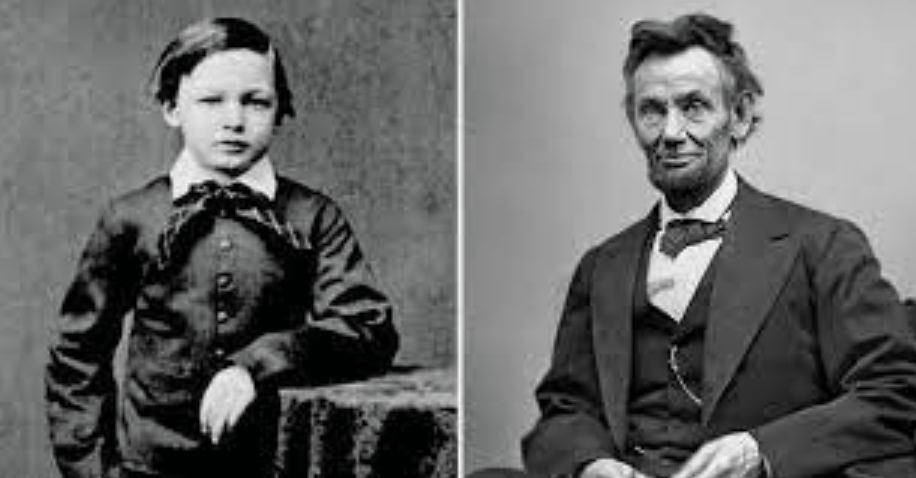
Abraham Lincoln and his son Willie.

I’ve read 46 novels this year. A bit under my annual goal of one a week, but I certainly met my annual goal of experiencing all kinds of emotions through literature. Here’s what I call my “-est list” for 2023:

Weirdest book I read: George Saunders’ Lincoln in the Bardo, which I finished a few days ago. Written more like a play than a novel, it features a chorus of ghosts stuck in purgatory as President Lincoln’s deceased 11-year-old son Willie arrives among them in 1862. Original, moving, darkly humorous, choppy, repetitive, and many other adjectives. Plus some impressive invented language.

Saddest book focusing on many characters: Leon Uris’ Mila 18, the historical-fiction novel about the Jewish uprising in the Warsaw Ghetto — and the Nazi crushing of that doomed uprising after some early against-all-odds success. Heartbreaking.

Saddest book focusing on a small number of characters: Rohinton Mistry’s A Fine Balance. Such a downer of a novel but so well-written. Some warm moments amid the inhumanity, with much of that inhumanity “courtesy” of the vile powerful against the powerless.

Funniest book: Terry Pratchett’s Small Gods, which includes plenty of satirical commentary about religion and more.

Most escapest…oops…escapist book: John Grisham’s Playing for Pizza. Football in Italy! Where a disgraced NFL quarterback goes to play when no other QB job is available. (Football as in American football, not soccer.)

Dual-timeline-iest book: Barbara Kingsolver’s Unsheltered, by the brilliant author who hasn’t lost a step in 35 years of novel writing. Unsheltered focuses on two sets of characters living in the same place, more than a century apart. One of my favorite books read this year.

Sympathize-with-the-protagonist-the-mostest book: Several Kristin Hannah titles were in the running for this, but I’ll go with The Four Winds and its beleaguered Elsa Martinelli as she lives “the life of Joad.” (The novel’s story line has some deliberate similarities to John Steinbeck’s The Grapes of Wrath.)

Subtlest book: Kent Haruf’s Our Souls at Night. A low-key but never boring work about a woman and man who briefly find happiness together late in life. Haruf’s Plainsong, which focuses on a wider, intergenerational array of characters, was a close second in poignancy.

Don’t-bring-this-to-a-block-party-iest book: Joy Fielding’s compelling Cul-de-Sac, about harrowing stuff that happens in and between the families on one suburban Florida street.

Clunkiest book: Dan Brown’s The Da Vinci Code. Liked the intricate plot. Didn’t like the often-awkward writing.

Longest book: J.K. Rowling’s The Ink Black Heart, the sixth installment of the series starring private investigators Cormoran Strike and Robin Ellacott. Rowling (writing as Robert Galbraith) rambles on for more than 1,000 pages but I mostly loved it — as I also loved the first five novels in a series that skillfully combines mystery/thriller elements and interpersonal dynamics.

Newest book: Lee Child and Andrew Child’s Jack Reacher-starring The Secret — which I just read, two months after it was published in October 2023. Few mystery/thriller books ratchet up the tension like those in the Reacher series do, and the latest novel (number 28) is excellent.

Oldest books: Georgette Heyer’s 1925 Simon the Coldheart and Vicki Baum’s 1929 Grand Hotel. Reminds me that I should have gotten to some novels from the 1800s last year, or did I read most of the 19th-century ones I’m going to read in the decades before 2023 rolled around? 🤔 Nah, this year was just a blip… 🙂

Novels you read in 2023 that left the most impression on you? And…Happy New Year!

My literary-trivia book is described and can be purchased here: Fascinating Facts About Famous Fiction Authors and the Greatest Novels of All Time.

In addition to this weekly blog, I write the 2003-started/award-winning “Montclairvoyant” topical-humor column every Thursday for Montclair Local. The latest piece — a 2023 year in review about a very newsworthy 12 months in my town — is here.

Admirable Novels With Unadmirable Protagonists

Joy Fielding

I’ve focused on novels with unlikable main characters before, but I’d “like” to return to that subject I last addressed in 2022 and 2017.

I just read Puppet by Canadian author Joy Fielding, and her protagonist Amanda Travis is…annoying. Selfish, impatient, sleeps with married men — and is an attorney with few qualms about representing criminal lowlifes. Also, she’s twice-divorced at age 28, with her being the cause of both relationships ending.

Yet I enjoyed Puppet, racing through it in two days. Why does one like any novel featuring a protagonist who gets on one’s nerves? Well, when it has various other things going for it…

In the case of Puppet, it offers a propulsive plot often focusing on why Amanda’s mother killed a man for apparently no reason. It also has some likable supporting characters, including Amanda’s first ex-husband.

And Amanda is not all bad. She’s self-critical, and smart, funny, hard-working, and determined. Plus one understands that her at-times-abrasive personality was shaped by growing up in an unloving household.

Last but not least, author Fielding’s writing is excellent. Oh, and we get plenty of Florida and Toronto atmosphere: Amanda lives in The Sunshine State after having grown up in Canada; she travels north after learning about the murder charge her mother is facing.

Two other not-that-likable people starring in novels I’ve enjoyed in recent years?

One is the title character in Alexander Pushkin’s 19th-century Eugene Onegin — a cynical, arrogant “dandy.” But he’s interesting in his way, plus there are sympathetic supporting characters in the book along with a good amount of story-line tension. Still, what makes Pushkin’s novel-in-prose an absolute classic is that it’s exquisitely written.

Then, in William Kennedy’s melancholy Ironweed, there’s Francis Phelan — basically an irresponsible drunk who abandoned his family. But the haunted Francis does have somewhat of a conscience, and at least part of the reason for his life going downhill stems from a horrible tragedy. In addition, Kennedy’s writing is skillful and atmospheric.

In previous posts, compelling novels with unlikable protagonists I’ve mentioned included Edith Wharton’s The Custom of the Country, Donna Tartt’s The Secret History, Cormac McCarthy’s Blood Meridian, Andre Dubus III’s House of Sand and Fog, Emile Zola’s Therese Raquin, John Grisham’s The Brethren, and John Kennedy Toole’s A Confederacy of Dunces, among others.

Your thoughts on, and examples of, this topic?

My literary-trivia book is described and can be purchased here: Fascinating Facts About Famous Fiction Authors and the Greatest Novels of All Time.

In addition to this weekly blog, I write the 2003-started/award-winning “Montclairvoyant” topical-humor column every Thursday for Montclair Local. The latest piece — about nationally known athletes who lived in my town — is here.

Authors Who Moved to Movies

Vicki Baum (dpa Picture-Alliance)

Vicki Baum’s 1929 novel Grand Hotel is well-known for spawning 1932’s Academy Award-winning Grand Hotel movie. But did you know that the Austria-born Baum (actual first name: Hedwig) was not only a prolific novelist but a screenwriter as well? She co-wrote the screenplay for the Grand Hotel film, and also helped script various other movies — which led me to think about how a number of novelists have doubled as screenwriters for financial reasons and/or for a creative change-of-pace and/or to mingle with celebrities and/or for other reasons.

Before I get into that, here are my brief thoughts about the Grand Hotel book, which I read for the first time last week. A very compelling novel about a group of Berlin hotel guests — including an aging ballerina, a charismatic con man with some conscience, a disfigured World War I veteran, an unsavory businessman, a timid clerk who might be dying, and a beautiful/good-natured stenographer — whose lives end up intersecting in quite dramatic ways. A bonus is that Baum gives the hotel’s staffers some page time and personality, too.

Many readers are aware that F. Scott Fitzgerald had a couple of sojourns in Hollywood. His movie-writing output and credits were not much to speak of, but The Great Gatsby author’s time in California had a big impact on his novels: a young actress (Lois Moran) he met influenced his Rosemary Hoyt character in Tender Is the Night, and the protagonist in Fitzgerald’s unfinished The Last Tycoon was based on film executive Irving Thalberg.

Aldous Huxley (Brave New World, Point Counter Point, etc.) was also a Hollywood screenwriter for a number of years — even helping to work on the 1940s movie versions of two all-time novels: Jane Austen’s Pride and Prejudice and Charlotte Bronte’s Jane Eyre.

William Faulkner, too, co-scripted 1940s movies based on novels: Ernest Hemingway’s To Have and Have Not and Raymond Chandler’s The Big Sleep. This was after Faulkner authored several of his most famous books, including The Sound and the Fury and As I Lay Dying.

John Steinbeck of The Grapes of Wrath and East of Eden fame wrote the screenplay for Viva Zapata! and was earlier involved in co-penning Alfred Hitchcock’s Lifeboat.

Speaking of boats, Ray Bradbury co-wrote the screenplay for the 1956 movie version of Herman Melville’s Moby-Dick.

Rather than novels, Dorothy Parker penned short stories, clever verse, criticism…and movie scripts — including co-writing the 1937 version of A Star Is Born as well as Hitchcock’s Saboteur.

Among other novelists who worked on film scripts: James Agee, Michael Chabon, the aforementioned Raymond Chandler, Agatha Christie, Michael Crichton, Dave Eggers, William Goldman, Larry McMurtry, and Mario Puzo, to name a few.

Thoughts about, and examples of, this topic?

My literary-trivia book is described and can be purchased here: Fascinating Facts About Famous Fiction Authors and the Greatest Novels of All Time.

In addition to this weekly blog, I write the 2003-started/award-winning “Montclairvoyant” topical-humor column every Thursday for Montclair Local. The latest piece — about legal challenges to a massive development and a closed train station waiting room — is here.

Evoking Other Novels While Remaining Original

A 1935 Texas dust storm like those in Kristin Hannah’s novel The Four Winds.

Today’s topic evokes a topic I’ve previously written about — novels that evoke previous novels.

This doesn’t mean the evoking book is plagiaristic. Often, the novel is quite original and excellent (like the one I’m about to discuss), even as the author deliberately or subconsciously makes references to previous literature. Heck, there are only so many plots, ideas, scenarios, character types, etc. No novel is completely unique.

As alluded to, I’m going to discuss this concept via a novel I recently read — Kristin Hannah’s propulsive, page-turning, heartbreaking The Four Winds.

Among the characters its Elsa protagonist evokes is Jane Eyre. Both are plain-looking and had difficult childhoods almost totally devoid of love, yet they are “survivors” possessing a good measure of resilience. Perhaps not a coincidence that among Elsa’s favorite novels in The Four Winds is…Charlotte Bronte’s Jane Eyre.

Elsa — whose low self-esteem is eventually helped somewhat by becoming a hard-working farm woman and mother, and by growing close to the two loving parents of her problematic husband — also made me think of Valancy Stirling of L.M. Montgomery’s The Blue Castle. Valancy, too, had to deal with horrible, judgmental parenting and other challenges such as (alleged) ill health, even as she would find the strength and independence to try to better her life.

But the novel that The Four Winds most evokes is The Grapes of Wrath. Most of Hannah’s book is set in the 1930s — the Depression-era decade in which John Steinbeck’s 1939-published classic also unfolds. Elsa (along with her two children) flee drought-stricken “Dust Bowl” Texas to seek a better life in California, only to face huge difficulties and vicious anti-poor/anti-newcomer sentiment from landowners, the police, and many other residents in “The Golden State” — challenges previously faced by Steinbeck’s Joad family, who drove to California from Oklahoma. Elsa’s personality feels like a mix of the fierce, compassionate Ma Joad and her stoic, admirable son Tom Joad.

Meanwhile, communist union organizer Jack in The Four Winds is reminiscent of lapsed preacher Jim Casy in The Grapes of Wrath…and also makes one think of lawyer Max in Richard Wright’s Native Son. Those three characters are sympathetic and non-stereotypical — not always the case with depictions of “reds” or other leftists in literature.

Finally, Elsa’s strong-willed, gutsy, dissatisfied, rebellious, ultimately loving daughter Loreda evokes too many other fictional teens to name, yet she is a very distinct character in her own right. Which helped remind me once again that Kristin Hannah is one of my favorite living novelists.

Your thoughts on this topic?

My literary-trivia book is described and can be purchased here: Fascinating Facts About Famous Fiction Authors and the Greatest Novels of All Time.

In addition to this weekly blog, I write the 2003-started/award-winning “Montclairvoyant” topical-humor column every Thursday for Montclair Local. The latest piece — about rent-gouging, speed-limit reductions, and more — is here.

Walks to Remember in Literature

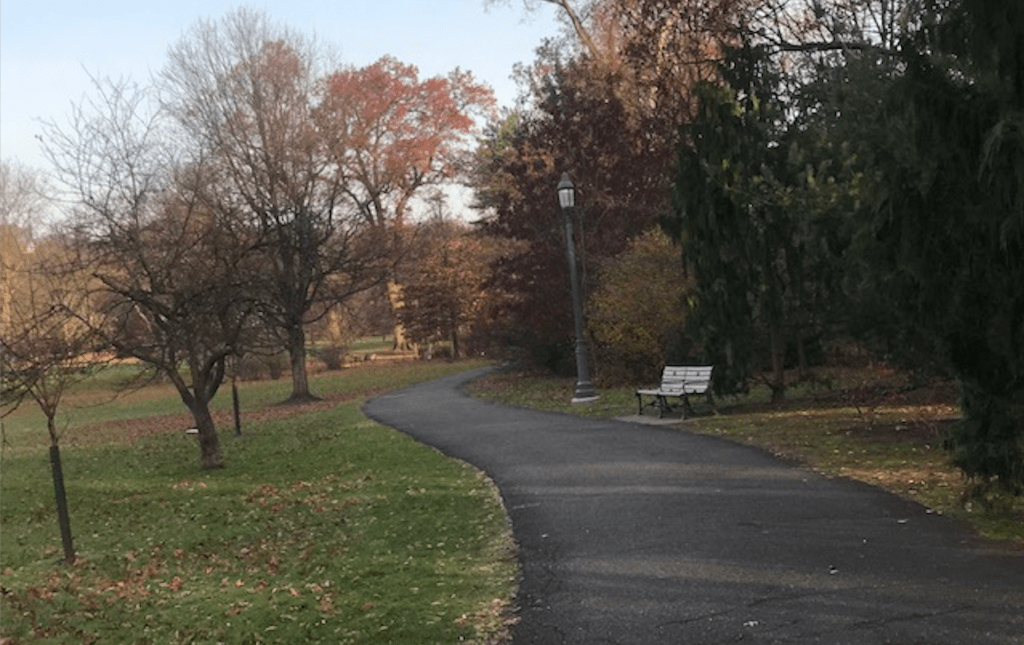
A photo I took this past Friday during a walk in a local park.

As someone who takes a long stroll almost every day, I like to see walking in literature.

Of course, memorable walks in fiction are usually not just for relaxation or exercise. They need to have some drama attached — whether positive drama, such as when romantic couples amble along, or mixed or negative drama like much of the rest of this blog post will show.

So, let’s begin trekking down the path of examples…

The first novel that came to mind was Walter Scott’s The Heart of Mid-Lothian (1818). In it, working-class protagonist Jeanie Deans trudges about 400 miles/644 kilometers from Edinburgh to London to seek a royal pardon sparing her sister Effie from a death sentence. It’s my favorite of Scott’s many great novels.

As I stay with 19th-century literature for a minute, I’ll mention that memorable walks can occasionally occur indoors, too. One of the most vivid parts of Emile Zola’s 1877 novel The Drinking Den (L’Assommoir) is when Gervaise and Coupeau and their wedding party trudge through the Louvre — a joyful, tense, chaotic scene that presages a union that will be happy and then disastrous.

Walking is also involved in escapes (as is running). I thought of Harriet Beecher Stowe’s 1852 classic Uncle Tom’s Cabin, in which Eliza frantically tries to flee slavery on foot with her young son in her arms. Also, Louis L’Amour’s 1987 novel Last of the Breed has Native-American protagonist Joseph Makatozi make a break from Soviet imprisonment and then walk hundreds of miles across Siberia trying to elude his would-be captors.

In Jean M. Auel’s The Plains of Passage (1990), the fourth installment of the Earth’s Children series that began with The Clan of the Cave Bear, prehistoric couple Ayla and Jondalar hike the enormous distance from what is now Ukraine to what is now France.

There’s also lots of wearisome walking during the epic journey of the “good guy” characters in J.R.R. Tolkien’s The Lord of the Rings (1954) — as there is with the father and son in Cormac McCarthy’s post-apocalyptic The Road (2006).

I haven’t read The Long Walk (1979) by Stephen King or The Unlikely Pilgrimage of Harold Fry by Rachel Joyce (2012), but know each novel has much moving of feet.

Animals in fiction can tread huge distances, too, as exemplified by Luath and Bodger the dogs and Tao the cat traveling approximately 300 miles/483 kilometers through the Canadian wilderness to try to return home in Sheila Burnford’s 1961 novel The Incredible Journey.

I’ll conclude with Nicholas Sparks’ A Walk to Remember, which the title of this blog post referenced. If I’m remembering correctly, the title of that moving 1999 novel refers to a wedding-day walk down the aisle of young characters Landon and the terminally ill (?) Jamie. Not a long walk, but a very important one.

Thoughts about, and examples of, this topic? And a relevant video:

My literary-trivia book is described and can be purchased here: Fascinating Facts About Famous Fiction Authors and the Greatest Novels of All Time.

In addition to this weekly blog, I write the 2003-started/award-winning “Montclairvoyant” topical-humor column every Thursday for Montclair Local. The latest piece — about being the parent of a student athlete — is here.