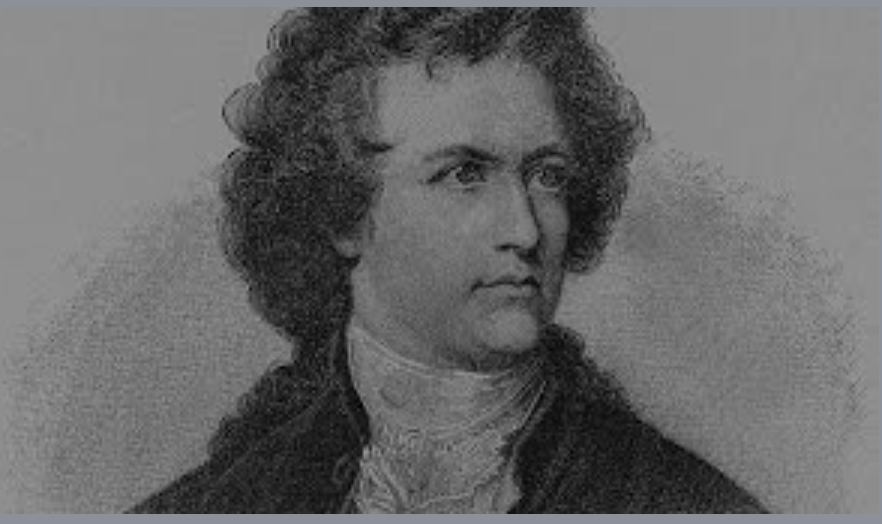
Who IS this guy? You’ll find out near the end of the post. 🙂
It’s 2024, and time for me to again mention novels reaching significant anniversaries in a new year. I’ll discuss books I’ve read, and also list some of the ones I haven’t read. Let’s start with fiction published in 1999 — a quarter century ago.
That year saw the eagerly awaited arrival of the third installment of J.K. Rowling’s mega-popular Harry Potter series. Harry Potter and the Prisoner of Azkaban is considered by many to be the first- or second-best book in the seven-book series, and I feel the same way.
Also released in 1999 were Kent Haruf’s poignant Plainsong, Andre Dubus III’s intense House of Sand and Fog, Stephen King’s suspenseful The Girl Who Loved Tom Gordon, John Grisham’s compelling The Testament, Ha Jin’s affecting Waiting, Nicholas Sparks’ heartbreaking A Walk to Remember, Susan Vreeland’s engrossing Girl in Hyacinth Blue, and Jhumpa Lahiri’s absorbing Pulitzer-winning story collection Interpreter of Maladies.
Among the notable ’99 novels I haven’t read are Tracy Chevalier’s Girl with a Pearl Earring and Joanne Harris’ Chocolat (I did see the delightful movie version of the latter book).
Moving on to 1974 — a half-century ago! Published that year were Elsa Morante’s amazing novel History, the aforementioned Stephen King’s eye-opening debut Carrie, Peter Benchley’s “biting” Jaws (I seem to remember a certain blockbuster film it inspired), and Thomas Tryon’s underrated Lady.
Some of the notable ’74-released books I haven’t gotten to include James Michener’s Centennial, James Baldwin’s If Beale Street Could Talk, John Nichols’ The Milagro Beanfield War, Joseph Heller’s Something Happened, and John le Carre’s Tinker, Tailor, Soldier, Spy.
I should also mention a couple of iconic 1974 nonfiction books I read: Robert Caro’s jaw-dropping tome The Power Broker, and Bob Woodward and Carl Bernstein’s political classic All the President’s Men.
Now, let’s go back a century. Perhaps the most famous 1924-released novels are E.M. Forster’s culturally complex A Passage to India and Herman Melville’s posthumously published stunner Billy Budd, both of which I’ve read.
Among the 100-years-ago books I haven’t gotten to are Thomas Mann’s The Magic Mountain, P.C. Wren’s Beau Geste, and Joseph Roth’s Hotel Savoy.
In 1874, 150 years ago, we had Thomas Hardy’s Far from the Madding Crowd and Jules Verne’s The Mysterious Island, among other novels.
Two centuries ago? The only 1824 novel I could find that’s somewhat remembered today is one of Walter Scott’s lesser-known titles: Redgauntlet.
Two-hundred-fifty years ago saw the publication of Johann Wolfgang Goethe’s famous The Sorrows of Young Werther. The author (pictured atop this page) was just in his mid-20s in 1774!
Your thoughts about this post? Also, I’m sure I missed some books, so please name any you’d like. 🙂
One last thing: Below is a screen grab from the back end of my blog showing some stats from 2023. Thanks so much to everyone who read my weekly posts and commented under them! I loved the conversations. 🙂

My literary-trivia book is described and can be purchased here: Fascinating Facts About Famous Fiction Authors and the Greatest Novels of All Time.
In addition to this weekly blog, I write the 2003-started/award-winning “Montclairvoyant” topical-humor column every Thursday for Montclair Local. The latest piece — a lament about my community’s Township Council — is here.
 Dave Astor on Literature
It’s a really unique and interesting review 🙂 I am happy to find your blog 😀
Thanks
LikeLiked by 1 person
Much appreciated, MindCracker! 🙂
LikeLiked by 1 person
Sorry to be so late commenting here, but I wanted to mention that a book of poems by A. A. Milne of “Winnie-the-Pooh” fame called “When We Were Very Young” was published one hundred years ago. I LOVED these poems when I was a child, along with the illustrations by Ernest Shepard. Here’s a piece of one poem called “Halfway Down.”
Halfway down the stairs
Is a stair
Where I sit.
There isn’t any
Other stair
Quite like
It.
I’m not at the bottom,
I’m not at the top;
So this is the stair
Where
I always
Stop.
LikeLiked by 3 people
Thank you, Kim! Loved that mention! 🙂 I’ve read some version of “Winnie-the-Pooh” at some point, but I don’t think I got to Milne’s 1924 book of poems. The example you posted is delightful!
And it’s never too late to comment. 🙂
LikeLike
Great post. Idle curiosity and escaping yet more DIY led me to A general history of the Pyrates, by Nathaniel Mist. 1724 Looks fun, must check
LikeLiked by 3 people
Thank you, Esther! Ha! 😂 That IS an intriguing title from 300 years ago.
LikeLike
I thought “The First Time” by Joy Fielding was published in 1999.
I went to several sites 2 had 1999, 1 had 2000, and 1 had 2006.
SO, I went to her site and it says 2000.
Let this be a lesson to the inconsistent and bad info we glean online.
Hey, The Montclair Voyant was hilarious this week.
I do feel bad about the long meetings 🥱😴, especially when teen sleuth Nancy Drew attended and left a senior citizen. 😬
LikeLiked by 3 people
Thank you, Resa! Yes, the Internet is not always reliable, as 19th-century politician Sir John A. Macdonald posted on his website the other day. 🙂
And I greatly appreciate your kind comment about my latest humor column!
LikeLiked by 1 person
Hahaha! Sir John lives on, eh? I’ll have to check out what he’s up to! I wonder if he’s going to run next election?🤔
Your humour column is a gas, and I’m not just whistling beans! 😏
LikeLiked by 1 person
Will he run? If there are no term limits… 🙂
Thank you again for your complimentary words about the column!!!
LikeLike
1824: Lord Byron died,leaving his mock-epic poem, “Don Juan”, unfinished– its last cantos were printed that same year: “I leave the thing a problem, like all things.”
“Don Juan” was chief inspiration for Pushkin’s “Eugene Onegin”, most of all in its free-wheeling ease and authorial voice. Having read both, I find Byron’s epic-poem to have begun better, but Pushkin’s being finished and well-wraught throughout, to be the better as a whole, Byron’s inspiration and interest in his own work diminished to farce by its incomplete conclusion– which may have not meant to be any sort of conclusion at all, but rather, just where Byron left off before he shuffled off.
LikeLiked by 2 people
Thank you, jhNY! Great, vivid 1824 mention! Interesting hare-and-tortoise-type comparison of “Don Juan” and “Eugene Onegin.” I read the former way back when in college and the latter a couple years ago. I thought “Eugene Onegin” was a masterpiece of a poem/novel.
LikeLike
On my recent attempt(s) to pare down my hoard to merely ‘vast’, I deprived myself of a book now enjoying its centennial pub date: “The Green Hat” by Michael Arlen. Had it around for years, but I never got around to it, so out it went, for free, to a bookseller I frequent. Knew only one mildly pertinent thing about it prior: A line out of it was used as the epigraph in F Scott Fitzgerald’s “The Great Gatsby”.
Sez wikipedia:
“The genesis of the novel was Arlen’s relationship with writer Nancy Cunard in 1920, although she was married to Sydney Fairbairn at the time and also was involved with Aldous Huxley.”
***
“The Green Hat was considered so daring in the United States that the (1928) movie did not allow any associations with it and was renamed A Woman of Affairs, with the characters also renamed to mollify the censors. In particular, the film script eliminated all references to heroin use, homosexuality and syphilis that were at the core of the tragedies involved.”
That’s just rubbing it in– it sound like just the sort of book i might have been interested to read.
I blame Marie Kondo.
LikeLiked by 3 people
Ha ha — that Marie Kondo quip. 😂
Sorry you missed out on “The Green Hat.” Sounds quite memorable in its way. And an interesting F. Scott connection!
I read a biography of Nancy Cunard years ago. Fascinating life. In the 1930s, she edited an impressive anthology of the writing of Black authors. And she had some hand in “discovering” Samuel Beckett.
LikeLike
Like Rebecca mentioned, it’s interesting to look back at the way things were and the thoughts of people 100, 200, and 250 years ago. I, too wonder what people will think of up our world in 100 years.
LikeLiked by 3 people
Thank you, Dan! One of the great pleasures and fascinations of literature — getting a sense of what people in the distant past thought, learning about their cultural norms, etc.
LikeLiked by 1 person
I’m looking forward to another year of learning from your posts and the discussions.
LikeLiked by 2 people
Thank you, Dan! 🙂 I look forward to your great and varied 2024 blog posts, too!
LikeLiked by 1 person
What will they be thinking?: “What were they thinking?”
LikeLiked by 2 people
Exactly?
LikeLiked by 1 person
Thank you for a great start to our 2024 reading adventures, Dave!
Whenever I look back to what was written 100 years ago, I wonder what people will think of our writing 100 years from now.
1924 in literature brought out 1) Edgar Rice Burroughs’ “The Land That Time Forgot” and “Tarzan and the Ant Men.” 2) Zane Grey’s “Call of the Canyon.” 3) Katherine Mansfield’s “Something Childish and Other Stories and 4) Herman Melville’s “Billy Budd” (no relation LOL). What it embedded in these narratives is the social values of that time. So, the question that I ask myself is: What should we write in 2024 that will still be important in 2124?
I think that books written in 2024 that address the long-term challenges that lay a better future for those who live in the year 2124 will still resonate in the decades to come. For example, novels that discuss sustainable practices and development, environmental issues and advancement in technology (AI, genetic engineering, and space exploration) Even more important to me are books that address social issues such as inequality, discrimination, and human rights violations.
Books are a wonderful form of entertainment, but they are also a record of our generation. I believe that we have writers who will lead the way to a better, more sustainable, more equitable world.
I look forward to traveling the 2024 reading pathways together.
LikeLiked by 4 people
Thank you, Rebecca, for your interesting and deep comment! Yes, thinking about books published in 1924, 2124, and other past and future years can make us reflect on how the world was and will be. Books are indeed a mirror of that. And it IS fascinating to wonder what readers a century from now will think of current novels — and will think of those novels’ various content categories you listed (inequality, the environment, AI, etc.). Last but not least, I appreciate your mentions of several 1924 titles! Including a certain Melville sea saga with a protagonist not related to you. 😂
LikeLiked by 1 person
Wow – a lot of good mentions here! Prisoner of Azkaban is my favorite of the series too. I think it was also one of the best movies, if not the best. A little off subject – but I’ve been meaning to tell you that I finished Kate Atkinson’s Life after Life! It was ok. I enjoyed it but it was definitely tough to get through at times and the ending was a bit of a let down for me.
LikeLiked by 4 people
Thank you, M.B.! I agree that both the “Azkaban” book and movie were terrific.
Impressive that you got through “Life After Life”! As I’ve mentioned, I gave up after a few chapters. Perhaps I should have given it more of a chance, but, as Frank Zappa said, “so many books, so little time.” 🙂
LikeLiked by 2 people
Meh… I wouldn’t say you need to give it another chance haha. Like I said, the ending is a pretty big let down after everything you go through to get to it!
LikeLiked by 2 people
That IS a disappointment. 😦
LikeLiked by 2 people
I remember reading The Milagro Beanfield War and then seeing Robert Redford’s movie of the same. Yet so much of the 70s, which I consider the beginning of some fairly intensive reading, I don’t recall in the least, excluding specific books. Odd and inexplicable how some things stick, whereas other things not so much. I know I read a lot of Vonnegut, some Joyce Carol Oates, Stephen King, and Jaws by Benchley, Chronicles Of Narnia, lots of Dostoevsky, and Tryon’s The Other and Harvest Home, Leonard Cohen, Richard Brautigan, Tom Robbins– whew! Nonfictionwise, since a friend of mine was majoring in philosophy, existential phenomenology to be precise, I became interested in Wittgenstein, Whitehead, Heidegger, and Jung, having made his bookshelf my temporary library. What a mixed bag of years. As for Goethe, I was just discussing him the other day when my husband (who is a musician) was watching a you tube video about Prince’s death. The narrator of the video said Prince had made a sort of Faustian pact. My husband asked me what that meant. Closest I could come to an answer, without going into the story of Faust, was that old saying “Never give the devil a ride cause he’ll always want to drive.” Congrats on your stats. It’s been a pleasure to read you themes and to have the opportunity to comment. Thanks Dave– onward to the future and brighter possibilities. Susi
LikeLiked by 3 people
Thank you, Susi, for the wide-ranging comment! You have read a LOT of interesting, varied fiction and nonfiction! Yes, it can sometimes be a puzzle why certain books stick with us for decades while the content of others escapes our memories. And, ah yes, the Faustian pact. Lots of that in literature and real life…
LikeLiked by 1 person
I came late to the table in reading the Harry Potter series. Saw all the films. That said, I’m halfway through The Prisoner of Azkaban and thoroughly enjoying it. I remember reading Jaws and seeing the film. I was put off swimming in the sea as a result.
LikeLiked by 4 people
Thank you, liolalee! Glad you’re enjoying the “Harry Potter” books, including “The Prisoner of Azkaban”! I’ve also been late to some series — with the “Outlander” books being an example. One advantage, of course, is that a person can read the next installment immediately rather than wait for it to be written. 🙂 And, yes, seeing the “Jaws” movie made swimming scary!
LikeLiked by 2 people
Great idea for a first post of the year, Dave. I admit I’ve read few of these books: Carrie and The Sorrows of Young Werther. An odd combination. I think I read A Passage to India after seeing the movie, but sadly I remember the movie but not the book.
Thanks for reminding us of books we may have missed!
LikeLiked by 3 people
Thank you, Audrey! I love your juxtaposition of “Carrie” and “The Sorrows of Young Werther.” 🙂 “The Sorrows of Young Carrie”? 🤔
Movies can be more memorable than the book! Sometimes, not often… 🙂
LikeLiked by 2 people
My favourite Harry Potter book was The Prisoner of Azkaban. It’s hard to imagine that 1999 was 25 years ago! You mentioned some wonderful books in this post. Many I’ve read and enjoyed. I really liked the Girl in Hyacinth Blue.
LikeLiked by 3 people
Thank you, Darlene! “The Prisoner of Azkaban” was a great “Harry Potter” installment — with Hermione time-traveling to do multiple classes at the same time, a lot of the Hagrid character, etc.! It IS hard to believe that book is 25 years ago. And, yes, “Girl in Hyacinth Blue” was kind of mesmerizing.
LikeLiked by 2 people
Congrats on blogpost #’s and more for 2024, Dave! What is coming to my mind is the election this year although I am sure tehere are many 50 year anniversaries for meaningful books, it’s what is hitting me first in 2024, what is at stake, the horror if he got in again. Its 50 years since Nixon resigned in disgrace as Watergate caught up with him. The law is catching up with vile DJT. For him to go away, although never peacefully, would give some peace to our turbulent nation.
-Michele, E&P back in day.
LikeLiked by 4 people
Thank you, Michele! Wow — difficult to believe that Nixon resigned 50 years ago! I remember watching his announcement on TV in my much younger days. And Trump makes Nixon seem like an angel in comparison. 2024 will indeed be a scary election year; Trump still seems so Teflon. 😦
LikeLiked by 2 people
I agree with everything you’ve said. I watched the Nixon resignation on TV as well.
LikeLiked by 2 people
Thank you for the comment, Liz! I can still picture that 1974 TV appearance.
LikeLiked by 2 people
So can I. He was a broken man.
LikeLiked by 2 people
Yes, Liz — and deservedly so.
(But in today’s world, of course, not enough Republicans would have broken from the party to get him ousted from office.)
LikeLiked by 2 people
I agree on both points, Dave.
LikeLiked by 2 people
Good evening Dave, your list full of older books make come back my memories of Tracy Chevalier’s Girl with a Pearl Earring, which I enjoyed very much or, of course, The Magic Mountain by Thomas Mann. Tender is the night by Scott Fitzgerald and the rise and fall of Dick Diver was also one of my favourite books when I was young. Many thanks for all your good ideas.
LikeLiked by 5 people
Thank you for the kind words, Martina! 🙂 And I appreciate the book mentions! “Tender Is the Night” IS a very compelling novel; in some ways, more emotionally involving than Fitzgerald’s more famous “The Great Gatsby.” I hope to eventually get to “Girl with a Pearl Earring” and “The Magic Mountain.”
LikeLiked by 2 people
I agree with you, Dave, and wish you many exciting reading hoours also in 2024!🐞
LikeLiked by 2 people
Wishing the same for you, Martina! 🙂
LikeLiked by 2 people
I enjoyed Tender Is the Night as well.
LikeLiked by 3 people
Many thanks for your positive opinion, Liz!
LikeLiked by 3 people
You’re welcome, Martina!
LikeLiked by 3 people
So many great books published over the years! How wonderful that you’ve been able to read so many of them! The stories we tell are snapshots of our lives and shared humanity across space and time. The greatest stories of them all, such as those mentioned in your post, live on across the ages to enrich our lives. I thank you for the gift you bring me in highlighting some of these amazing novels.
LikeLiked by 5 people
Thank you, Rosaliene, for your kind and eloquent comment! It’s so true that good books enrich our lives — and hopefully increase empathy for others. 🙂
LikeLiked by 2 people
Well said, Rosaliene!
LikeLiked by 2 people
A cracking first post of the year Dave.
LikeLiked by 3 people
Thank you very much, Shehanne! Greatly appreciated!
Just 51 more posts to go… 🙂
LikeLiked by 2 people
No bother to a fellah of your caliber.
LikeLiked by 1 person
Thank you, Shehanne! 🙂
LikeLiked by 2 people
I agree, Shey!! Dave has opened the 2024 doors to reading by going back in time. Just got on internet now. They did some maintenance over night that continued into the morning. Yikes!
LikeLiked by 3 people
Thank you, Rebecca! A counterintuitive post by me, I guess. 🙂
Hope your Internet troubles are over!
LikeLiked by 1 person
Still on and off Dave. But I think I was able to respond to your post. Thanks again for a great topic and a wonderful follow up conversation.
LikeLiked by 1 person
Ugh — hope you can lose the “off” and keep the “on.” I did see your response to my post, and will answer that other comment shortly. 🙂
Thanks for your kind words about the topic, Rebecca, and I agree about the conversation! 🙂
LikeLiked by 1 person
Oh lord…yeah they do that here sometimes. In fact they do what they like that way. But yeah, I think this post is a great opener.
LikeLiked by 3 people
1999… I remember this year very well. still in high school I read a lot more classic lit because I believe I could embrace the world of literature just like that. looking back I have a slight suspicion I was an optimist …
LikeLiked by 4 people
Thank you, Milena! One’s high school years — and what we read during those years — can indeed be memorable. 🙂 I remember first reading novels such as “Jane Eyre,” “The Grapes of Wrath,” and “Native Son” in high school.
Sometimes, it can be hard to read as much literature as we’d like after high schools as life gets busier…
LikeLiked by 4 people
The best thing I’ve read back then was Master and Margarita by M Bulgakov. It’s a fascinating read I still feel like it was probably the most impactful novel I have read in my whole life
LikeLiked by 3 people
It IS a great and unusual novel, Milena. (Devilishly great. 🙂 ) I really enjoyed reading it, too!
LikeLiked by 2 people
I like it how Voland is a positive character because in the end he doesn’t succeed in being evil
LikeLiked by 3 people
He is indeed a complex character creation!
LikeLiked by 2 people
It was a really amazing experience to read it, indeed. The story and the characters are fantastic.
LikeLiked by 2 people
Totally agree, MindCracker!
LikeLiked by 1 person
I remember first reading Jane Eyre in Secondary school. Yes, we read so many more classics. Great Expectations was another favourite of mine. I used to enjoy reading literature and studied it to ‘A’ level. I don’t read as much literature as I used to. I may have to rectify that this year.
LikeLiked by 3 people
Starting to read classic “grown-up” novels as a teen is such an amazing experience, liolalee! Like you, I also read “Great Expectations” back then.
LikeLiked by 2 people
So glad to see another person who remembers LADY. Tom Tryon was in general underrated as a writer on dark subjects. Perhaps if he’d lived longer…
LikeLiked by 3 people
Thank you, Jinx! “Lady” was indeed quite a book — and didn’t get its due. Affecting plot, with quite a secret revealed toward the end.
And, yes, a shame Thomas Tryon didn’t live longer. It’s also possible that Tryon having been an actor unfairly contributed to him not being taken more seriously as a novelist.
LikeLiked by 2 people
Even though it gave him enough insight to write convincingly about Hollywood. I’m thinking of CROWNED HEADS.
LikeLiked by 2 people
True! That can be very valuable fodder. Certainly worked for Charles Bukowski and his “Hollywood” novel (though Bukowski of course wasn’t an actor like Tryon). 🙂
LikeLiked by 2 people
Hi Dave, I never really think about, or check, the publication dates of books, but I enjoy reading these posts of yours. My favourite Harry Potter book is Book 4, Harry Potter and the Goblet of Fire, I loved the challenges. I have read Carried and A Passage to India, as well as Joanne Harris’ Chocolat. All are great books. Other 1974 books I ‘ve read and enjoyed are Helter Skelter by Vincent Bugliosi and Dogs of War by Frederick Forsyth. I see that Lady Chatterley’s Lover is now in the public domain.
LikeLiked by 5 people
Thank you, Robbie! I also don’t pay a lot of attention to publication dates…except for once a year, when I do these anniversary posts. 🙂
I agree that “Goblet of Fire” was excellent, as J.K. Rowling moved into longer, more intricate “Harry Potter” books.
And thanks for the mentions of those various other books! Yes, some interesting properties besides early Mickey Mouse now in the public domain!
LikeLiked by 2 people
Hi Dave, I saw that about Mickey Mouse. I hope no-one abuses that and turns him into a character in a horror movie like they did poor Pooh Bear.
LikeLiked by 2 people
I hear you, Robbie. Unfortunately, I’m sure Mickey will be exploited in some way.
LikeLiked by 1 person
Yes, it is a shame.
LikeLiked by 1 person
There is money to be made… 😦
LikeLike
How long before we see: “Pride and Prejudice and Steamboat Willie”, “Mickey Mouse, Vampire Killer”, and “Mickey Maus” (a re-imagined redraw of the Spiegelman classic)?
LikeLiked by 2 people
LOL, jhNY! 😂 And “Bleak Mouse,” “Mouse of Mirth,” “Mouse of Sand and Fog,” “Little Mouse on the Prairie,” “The Cider Mouse Rules,” “The Mouse of the Spirits,” “The Haunting of Hill Mouse”…okay, I’ll stop now.
LikeLike
Thank you for sharing the result of your interesting research ❣️
LikeLiked by 2 people
And thank you for the kind comment, Luisa! 🙂
LikeLiked by 2 people
My pleasure!
LikeLiked by 2 people
🙂
LikeLiked by 2 people