Our Lives (Sort of) on Literature’s Pages

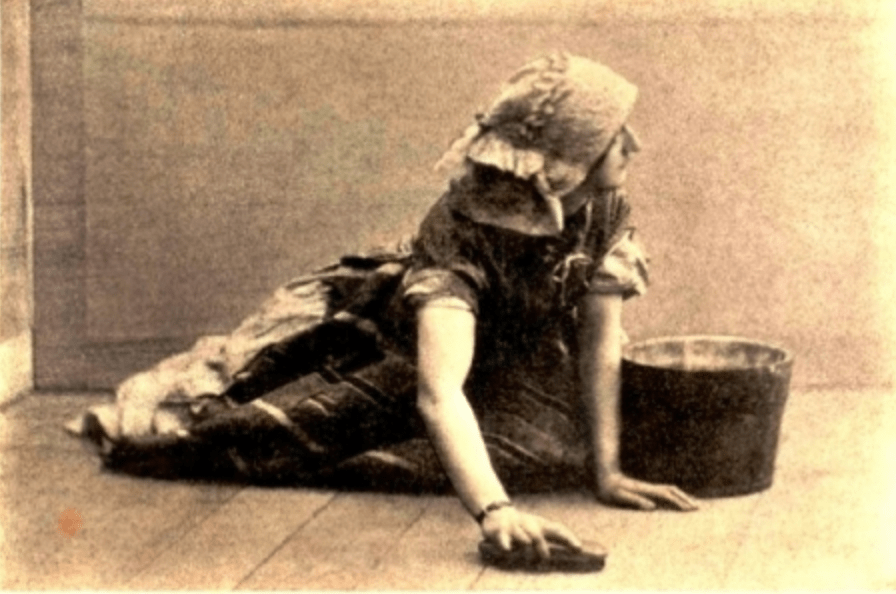
Credit: Sphere/David Levenson/Getty

In 2017, I wrote a post titled “Perceiving the Personal in the Pages We Peruse.” That piece was about how some novels we read remind us strongly of events, places, and other things in our present or past lives. Now, after lengthy penance for using too much alliteration in that post’s title, I’m back with another reminder-themed piece — this time featuring novels I’ve read during the past seven years or, if I read them earlier, hadn’t mentioned in that earlier post.

One relevant novel, which I finished last week, is Val McDermid’s 1979 — a compelling crime thriller starring a young female newspaper reporter in Scotland. I was a young male newspaper reporter in the U.S. around that time, so my experiences were obviously different, but I certainly recognized the McDermid-depicted newsroom back then that was filled with typewriters instead of computers, copy-editing done on paper, journalists smoking cigarettes and drinking a lot, unfortunately rampant sexism, and more.

It was that same year of 1979 when I visited Rome, and one of the sights I saw was The Sistine Chapel in Vatican City. Memories of that came back when I recently read Irving Stone’s historical novel The Agony and the Ecstasy about the life of Michelangelo — who famously painted that iconic chapel’s ceiling.

I was living in New York City back then (from 1978 to 1993), and worked in NYC (from 1978 to 2008), so of course novels set in The Big Apple evoke personal memories of Manhattan and other boroughs — even if the books were set before my lifetime. Michael Chabon’s The Amazing Adventures of Kavalier & Clay, Caleb Carr’s The Alienist, Lee Child’s Jack Reacher novel Gone Tomorrow, Don DeLillo’s Underworld, Ralph Ellison’s Invisible Man, Pete Hamill’s Forever, Adam Langer’s Ellington Boulevard, Betty Smith’s A Tree Grows in Brooklyn, Colm Toibin’s Brooklyn, Edith Wharton’s The Age of Innocence, etc.

The Amazing Adventures of Kavalier & Clay had the double familiarity for me of starring cartoonists, which reminded me of when I covered those creators for a magazine. I had even met some of the real-life cartoonists Michael Chabon mentioned in passing — among them the friendly and masterful “Terry and the Pirates”/”Steve Canyon” comic strip creator Milton Caniff (1907-1988).

Now I live in Montclair — a New Jersey suburb big enough and interesting enough to occasional pop up in novels, including Joel Dicker’s The Truth About the Harry Quebert Affair. The character from Montclair wasn’t super-appealing, and the Swiss author didn’t really capture the feel of my burg, but…

Modern-day Paris? One of the novels that got my recollections rolling was Jane Smiley’s Perestroika in Paris, published two years after my last visit (in 2018) to The City of Light.

Whenever I read a novel (such as Angie Thomas’ The Hate U Give and Arundhati Roy’s The God of Small Things) in which police behave badly, I think of my much-more-minor experiences of being profiled by law enforcement. (My hair used to be longer than it is now.) One time, while working as a reporter, I drove into the parking lot of my newspaper’s office. A police car pulled in behind me, lights flashing, after which the officer approached my car window and asked rather menacingly what I was doing there. I took out my press card, and enjoyed seeing the policeman’s embarrassment. One of my “beats” was covering that officer’s department. 🙂

Novels that have sparked personal memories for you?

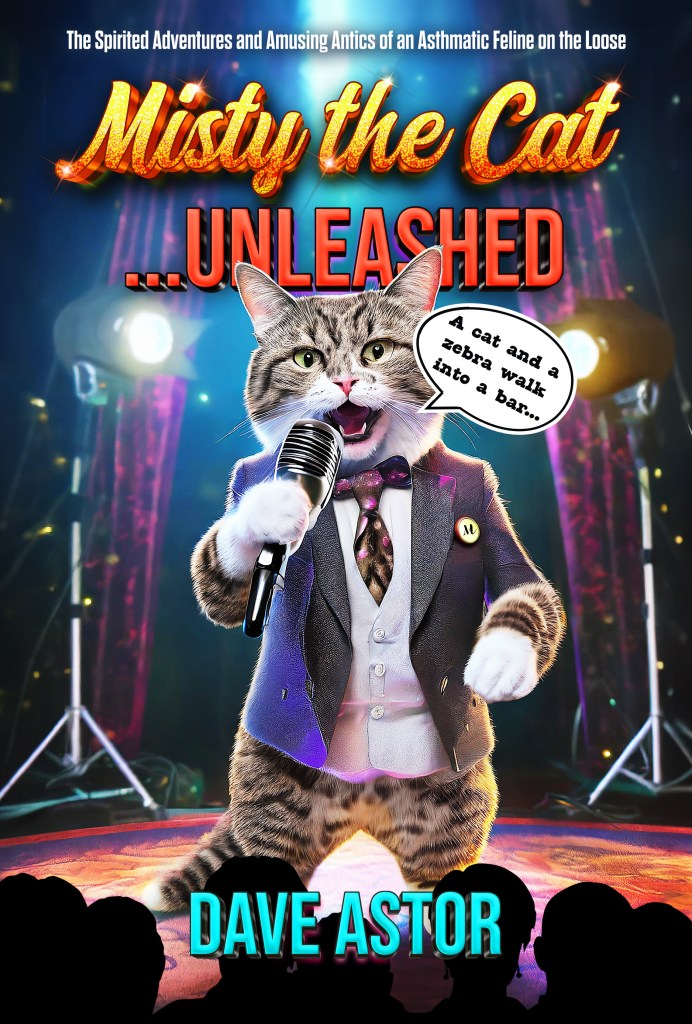
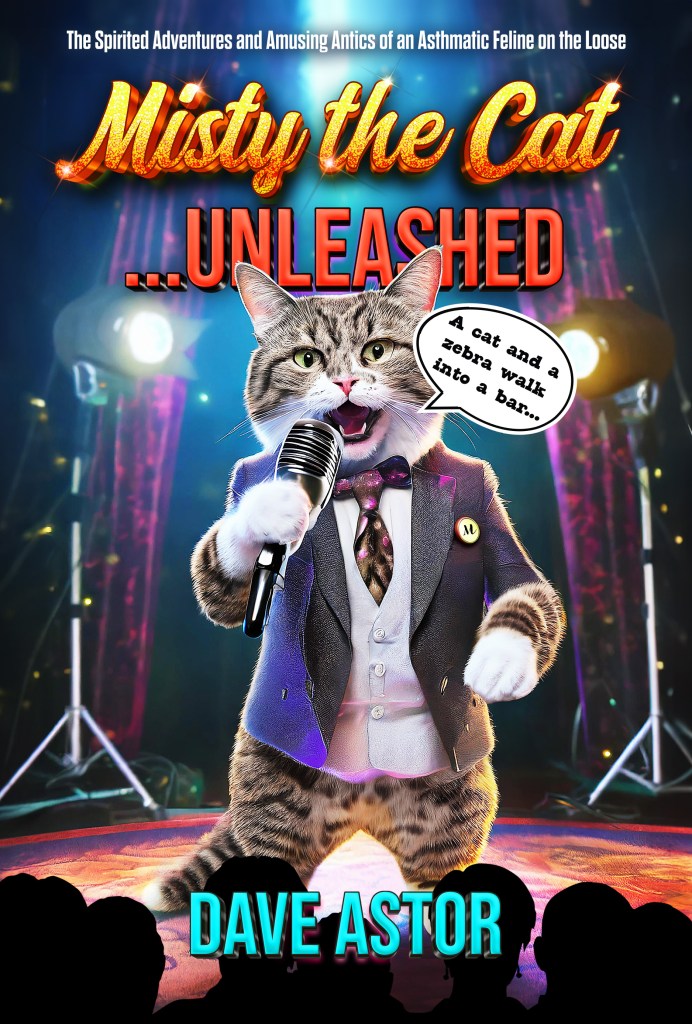
My comedic 2024 book — the part-factual/part-fictional/not-a-children’s-work “Misty the Cat…Unleashed” — is described and can be purchased on Amazon in paperback or Kindle. It’s feline-narrated! (And Misty says Amazon reviews are welcome. 🙂 )

This 90-second promo video for my book features a talking cat: 🙂

In addition to this weekly blog, I write the 2003-started/award-winning “Montclairvoyant” topical-humor column every Thursday for Montclair Local. The latest piece — about an upcoming township manager search and more — is here.

The Surprises of ’69 and Other Years

Photos courtesy of Sony; Nina Subin

I’ve written before about the unexpected in literature, but I’m going to take a partly different angle this time. It involves readers’ expectations of certain authors and novels, and how those readers can be surprised.

For instance, as I prepared to read Elin Hilderbrand for the first time last week, I expected her to be an (excellent) escapist writer. Heck, her fiction is often set on the idyllic (?) island vacation destination of Nantucket, Massachusetts, and a blurb on the back of the Summer of ’69 novel I chose said “Hilderbrand’s books are…perfect beach reads.”

Well, Summer of ’69 was certainly entertaining (and excellent), but hardly 100% escapist as it focused on a multi-generational family. There were various plot strands referencing racism, sexism, class divisions, adultery, suicide, the Vietnam War, etc. I’m glad all that was there — it made the novel more compelling — but those things weren’t on my Hilderbrand bingo card. Obviously, I hadn’t done enough pre-reading homework!

Another example of a novel that surprised me was from the summer of ’61 — 1861, that is, though I don’t know if Silas Marner was published in the summer. I opened the pages of George Eliot’s classic a decade or so ago with the expectation that it would be a dry work that many students famously disliked when it was assigned to them in high school. But it turned out to be a poignant, heartbreaking, heartwarming novel about a man who goes through some life-changing tragedies and triumphs. I loved it.

Going back another two centuries-plus, I thought Don Quixote would be entertaining but perhaps, because of its 1605-1615 publication period, not super-readable for modern eyes. But Miguel de Cervantes’ novel WAS super-readable in the 21st century.

Yes, some long-ago books are much more enjoyable than one might expect. Among those that come to mind are Voltaire’s Candide, Henry Fielding’s Joseph Andrews, and Fanny Burney’s Evelina — all written in the 18th century.

Getting more recent again, a John Steinbeck reader who starts with The Grapes of Wrath might not be ready for just how humorous that author can be when he puts his mind to it. I had no idea how much I would laugh when I polished off Tortilla Flat, Cannery Row, and Sweet Thursday (even as those novels also contained plenty of social commentary). Then, Steinbeck’s epic East of Eden wiped the smile off my face.

Not much humor, either, in Uncle Tom’s Cabin, but that novel surprised me. I thought it would be an earnest anti-slavery work that was sort of an obligation to read. But the story line is quite skillful and compelling, and Harriet Beecher Stowe’s title character is a more nuanced, more admirable person than what some critics have stereotyped him as.

Another 19th-century novel — by Stowe’s Hartford, Connecticut, neighbor Mark Twain — surprised me in being almost completely serious. That was Twain’s Personal Recollections of Joan of Arc, which also had the unusual distinction for the usually humorous or seriocomic author of featuring a female title character.

J.K. Rowling turned heads, too, when writing the deadly serious, non-wizard novel The Casual Vacancy after her blockbuster Harry Potter series that had plenty of humor amid the intense drama. Surprising, yes, but not a surprise for me and other readers who saw all kinds of reviews of, and articles about, The Casual Vacancy before reading that change-of-pace novel.

Yes, doing some homework about a novel or an author can prevent surprises, but then we might lose the fun of being startled. 🙂

Novels and authors you’ve read that were different than you expected?

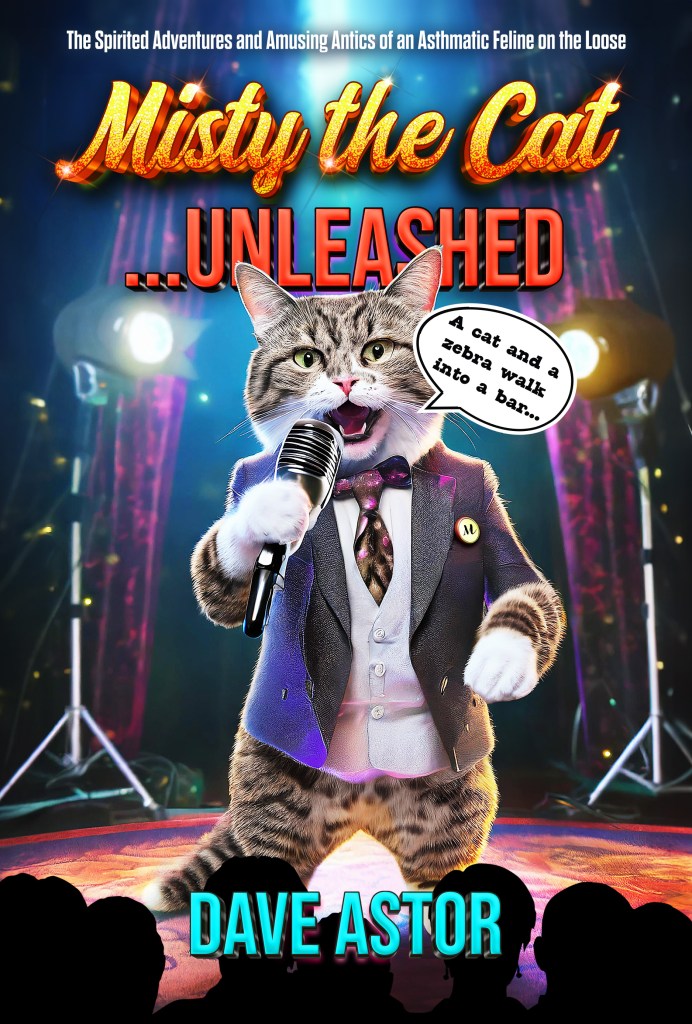
My comedic new 2024 book — the part-factual/part-fictional/not-a-children’s-work Misty the Cat…Unleashed — is described and can be purchased on Amazon in paperback or on Kindle. It’s feline-narrated! (And Misty says Amazon reviews are welcome. 🙂 )

The 90-second promo video for my book features a talking cat: 🙂

Servants in Literature (a 10th-Anniversary Post)

Today is the exact 10th anniversary of this weekly literature blog! To mark that birthday, below is a rerun of my very first post here on July 14, 2014:

Some real-life servants are treated badly by their rich employers, but many fictional servants are treated nicely by their authors. A small, wish-fulfilling solace for readers in this time of soaring economic inequality.

Literature’s servants and other “hired help” are often smarter, funnier, and more compassionate than their “betters.” Perhaps that’s partly because they have to work hard for a living, while some of the wealthy get their money the old-fashioned way — inheriting it. Ah yes, the merit system…

Servants in literature also help us judge their masters. You can tell a lot about an affluent person’s decency (or lack of) by how they treat their so-called “inferiors.”

Some stand-out servants in fiction? Jeeves, of course, in the engaging and hilarious works of P.G. Wodehouse. That valet is incredibly bright and well-spoken, and helps his congenial but somewhat dim “master” Bertie Wooster out of many a scrape.

Another famous servant character is Nelly Dean, who’s the pragmatic voice of reason in a Wuthering Heights novel filled with hyper-passionate and/or weak-minded people. Nelly grounds Emily Bronte’s superb book, and helps make the hard-to-believe events in it seem believable. Of course, another servant in that novel is boorish religious fanatic Joseph, but we won’t talk about him… 🙂

Nineteenth-century English literature also offers us Nanny from the longish short story “The Sad Fortunes of Reverend Amos Barton” in the Scenes of Clerical Life collection George Eliot wrote before embarking on her astonishing career as a novelist. Nanny is the servant who memorably denounces a freeloading countess who overstays her welcome in the Bartons’ struggling household and even endangers the health of Amos’ kindhearted wife Milly.

How about Lee in John Steinbeck’s gripping East of Eden? That servant is an intellectual guy who cleverly deals with anti-Asian prejudice in the American West of the late 1800s/early 1900s and serves as a surrogate father to the Trask sons when biological father Adam is traumatized by a disastrous marriage.

Then there are the underlings/sidekicks such as Sancho Panza in Miguel Cervantes’ iconic Don Quixote and Samwise Gamgee in J.R.R. Tolkien’s The Lord of the Rings. In the former book, squire Sancho is a humorous/competent companion to the less-than-practical Quixote. In the latter work, gardener Samwise becomes an invaluable friend to Frodo Baggins — who, while admirable and brave, would have been in dire straits without Sam’s help during the Tolkien trilogy’s epic quest.

Speaking of funny characters, and characters named Sam, it’s hard to beat Sam Weller of Charles Dickens’ The Posthumous Papers of the Pickwick Club when it comes to literature’s all-time underlings.

There’s also Kazuo Ishiguro’s The Remains of the Day, in which loyal butler Stevens comes to regret a major missed opportunity in his life.

Last but by no means least, we can’t forget the many fictional African-American characters forced into servant work or outright slavery — whether it be in Toni Morrison’s Beloved, Alex Haley’s Roots, Kathryn Stockett’s The Help, Harriet Beecher Stowe’s Uncle Tom’s Cabin, and many other novels. “Uncle Tom” became a derogatory term, but Tom in the book is quite courageous in his turn-the-other-cheek way — and is clearly the moral center of Stowe’s story.

James Fenimore Cooper’s The Last of the Mohicans and Rita Mae Brown’s Murder at Monticello are among the numerous other novels that have interesting references to the horrific institution of slavery — the ultimate servanthood.

What are your favorite literary works featuring servants, butlers, maids, valets, and others of that station in life?

My comedic new 2024 book — the part-factual/part-fictional/not-a-children’s-work Misty the Cat…Unleashed — is described and can be purchased on Amazon in paperback or on Kindle. It’s feline-narrated! (And Misty says Amazon reviews are welcome. 🙂 )

In addition to this weekly blog, I write the 2003-started/award-winning “Montclairvoyant” topical-humor column every Thursday for Montclair Local. The latest piece — about a local U.S. congresswoman rightly calling for President Biden not to seek reelection, retaliation against employees who filed lawsuits, and various other topics — is here.

Reading Lots of Lit Doesn’t Always Fit

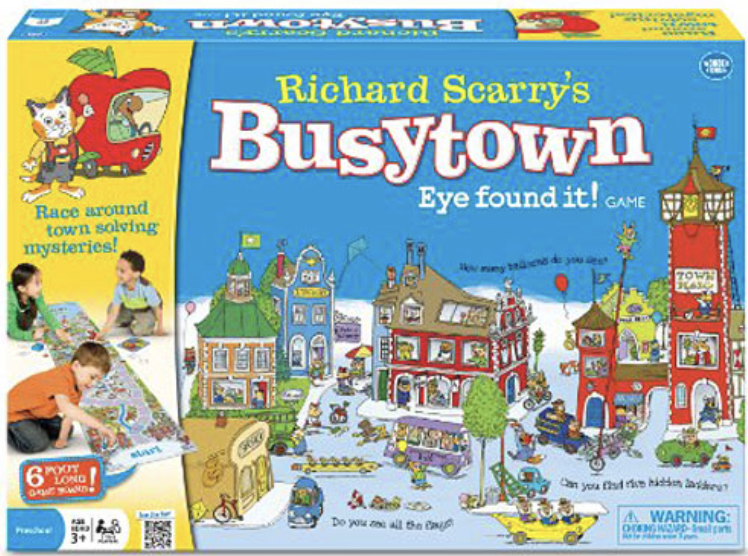
When there’s much to do, I’m reminded of the Busytown game inspired by Richard Scarry’s books.

Reading lots of fiction is a wonderful thing, but one major problem with reading lots of fiction is when…you don’t have time to read lots of fiction. 😦 Not ideal when one writes a weekly literature blog. 🙂

For me, reading novels has temporarily taken a partial back seat as I do such things as promote my new book, help with my younger daughter’s expanding college-search efforts, and spend time (texts, phone calls, visits) related to a serious medical situation faced by someone in my extended family.

Consequently, despite having started Anthony Horowitz’s Magpie Murders three weeks ago, I still haven’t finished it. Nothing to do with being bored; it’s a clever, skillfully written page-turner that’s intriguingly a mystery novel within a mystery novel — with characters who include a terminally ill detective, a best-selling mystery writer, that author’s small-press editor who becomes an amateur investigator, and several people who die under puzzling circumstances. Usually, I read at least one novel a week.

Meanwhile, five other books I too-ambitiously borrowed during my last library visit stare at me accusingly. (Yes, not getting enough sleep causes hallucinations. 🙂 ) Those novels include John Grisham’s The Associate, Elin Hilderbrand’s Summer of ’69, Val McDermid’s 1979, Walter Mosley’s Always Outnumbered Always Outgunned, and Iris Murdoch’s Jackson’s Dilemma. I’ll get to them eventually, perhaps in the year 2079. 🙂

Any thoughts about, and/or recollections of, not reading as much fiction as you’d like for a short stretch of time?

In a comedic promotional video for my comedic new Misty the Cat…Unleashed book, Misty speaks for 90 seconds — perhaps hoping he’ll get seconds after his next 90 meals? 🙂 The video can be seen here.

Also, many thanks to Colleen M. Chesebro for including a wryly wonderful review of my new book in a post that also looks at very interesting books by the very talented writers Teagan Geneviene and D.L. Finn, who each have WordPress blogs, too. Greatly appreciated! The post can be seen here.

The part-factual/part-fictional Misty the Cat…Unleashed — not a children’s book — is described and can be purchased on Amazon in paperback or on Kindle. It’s feline-narrated! (And Misty says Amazon reviews are welcome. 🙂 Several are shown here. )

In addition to this weekly blog, I write the 2003-started/award-winning “Montclairvoyant” topical-humor column every Thursday for Montclair Local. The latest piece — about my community’s new (and hopefully improved) Township Council — is here.