Should Cultural Appropriation Get Approbation?

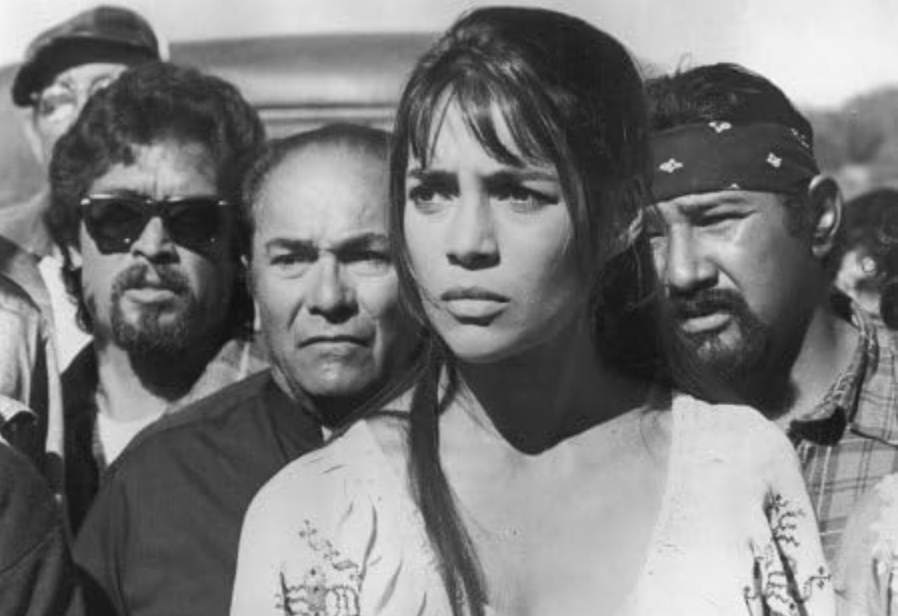
From the 1988 movie version of The Milagro Beanfield War novel.

When I read The Milagro Beanfield War last week, I thought about several things: the socially conscious and frequently comedic nature of John Nichols’ impressive 1974 novel, the skill in which he depicted his quirky/decidedly un-affluent characters, the book’s great sense of place, the wordy novel being longer than it needed to be (it could have lost about 100 of its 445 small-print pages), the unfortunate fates of too many animals in the book, and…”cultural appropriation.”

That’s because Nichols was a white “Anglo” author writing about a (fictional) New Mexican rural community in which most of the residents are Hispanic.

Is this a bad thing? Not necessarily. Obviously, Hispanic writers writing about Hispanic characters and culture is often the ideal; I’m certainly a big fan of Gabriel Garcia Marquez, Isabel Allende, Julia Alvarez, Junot Diaz, Jorge Luis Borges, and others. Same for Black writers writing about Black characters and culture — whether the compelling storyteller is Toni Morrison, Alice Walker, Zora Neale Hurston, Octavia Butler, Chimamanda Ngozi Adichie, Zadie Smith, Buchi Emecheta, Terry McMillan, James Baldwin, Richard Wright, Walter Mosley, Wole Soyinka, or Chinua Achebe…etc. (At least a couple of these authors are biracial.)

But skilled white writers can — though of course not always — make the imaginative leap into the psyches of characters with different ethnic and racial backgrounds, just as skilled writers of color can do the opposite. The same for women writing about men and vice versa. It takes care, sensitivity, some lived experience, research, a thirst for not stereotyping, and more. (It helped that the California-born John Nichols lived in Spain and Guatemala, among other places, and then moved to New Mexico — where he remained for more than 50 years.)

John Steinbeck was another white writer pretty adept at depicting Hispanic culture — mostly notably in the at-times-quite-comic Tortilla Flat, but in other novels, too. He also did a darn good job with the Chinese-American character Lee in East of Eden.

Which reminds me that contemporary Vietnamese-American author Viet Thanh Nguyen created some believable white characters amid the indelible Vietnamese characters in The Sympathizer and The Committed.

While Harriet Beecher Stowe’s depiction of the title character in Uncle Tom’s Cabin has drawn very mixed reactions the past 172 years (I don’t think Tom was as stereotypical as some say), there’s little to criticize about Stowe’s excellent treatment of the prominent Black characters Eliza and George in her famous 1852 anti-slavery novel.

On the flip side, the biracial French author Alexandre Dumas created scintillating portrayals of white characters in The Count of Monte Cristo, The Three Musketeers, and various other works — while also doing a great job with his one novel (Georges) starring a Black protagonist.

I’ll add that white author John Grisham is very adroit at giving his readers three-dimensional Black protagonists in novels such as The Racketeer and The Judge’s List.

And the aforementioned James Baldwin expertly depicted the all-white cast of characters in Giovanni’s Room, one of the earlier novels with a gay theme.

Your thoughts about this topic?

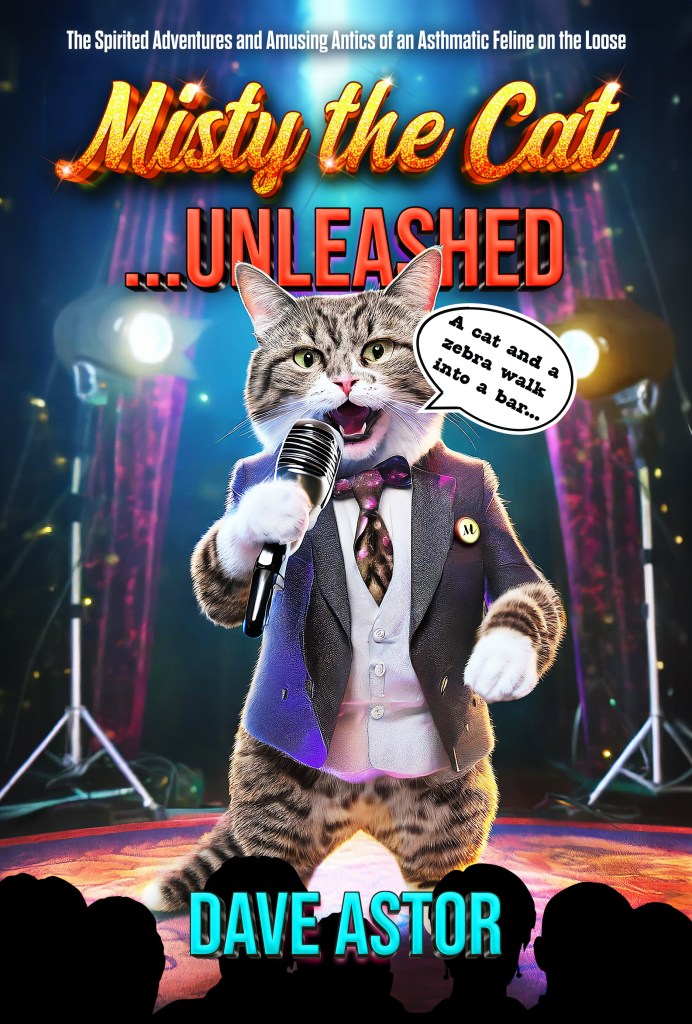
My comedic 2024 book — the part-factual/part-fictional/not-a-children’s-work Misty the Cat…Unleashed — is described and can be purchased on Amazon in paperback or on Kindle. It’s feline-narrated! (And Misty says Amazon reviews are welcome. 🙂 )
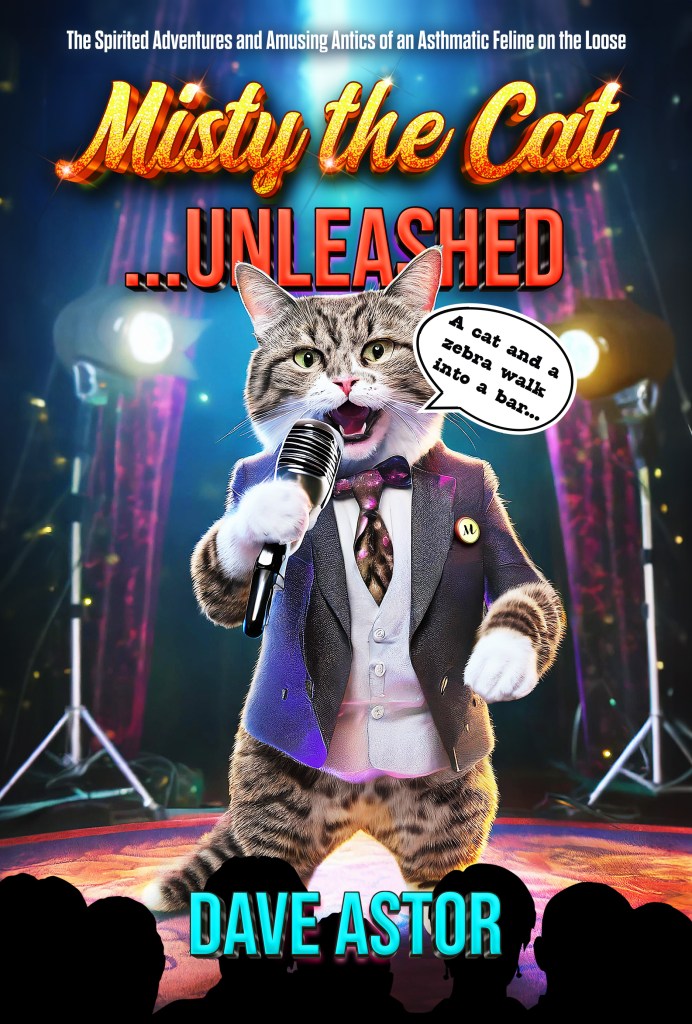
This 90-second promo video for my book features a talking cat: 🙂

In addition to this weekly blog, I write the 2003-started/award-winning “Montclairvoyant” topical-humor column every Thursday for Montclair Local. The latest piece — about topics such as my local library temporarily closing after its aged air-conditioning failed — is here.

Batman and Robin Aren’t the Only Dynamic Duo

Kamala Harris and Tim Walz. (Reuters photo.)

With the August 19-22 Democratic National Convention starting tomorrow, there’s a memorable duo atop the party’s 2024 ticket: presidential candidate Kamala Harris and her vice presidential running mate Tim Walz. Harris is of course the current veep who’d be the first female commander-in-chief in U.S. history (as well as the second person of color ever to lead the country) and Walz is a populist with “everyman” charisma and a record of getting people-friendly policies passed as governor of Minnesota.

There have also been many memorable duos in literature — whether they’re friends, work partners, or in other human configurations. (I’m mostly omitting lovers, spouses, siblings, and the like from this post because I’ve focused on those kinds of characters before.) It can be fascinating to see how each member of a fictional duo interacts with the other, whether the two people are somewhat alike or “odd couple” different, whether the whole of the pairing is greater than the sum of its parts, etc.

Duos that immediately came to my mind include teen Huck Finn and runaway slave Jim in Mark Twain’s Adventures of Huckleberry Finn, trying-to-save-their-world hobbits Frodo Baggins and Samwise Gamgee in J.R.R. Tolkien’s The Lord of the Rings trilogy, spacey Don Quixote and his more practical sidekick Sancho Panza in Miguel de Cervantes’ Don Quixote, 19th-century friends Eliza Sommers (a traveler to the U.S. from Chile) and Tao Chi’en (a cook and physician) in Isabel Allende’s Daughter of Fortune, farm woman Dellarobia Turnbow and professor/scientist Ovid Byron in Barbara Kingsolver’s Flight Behavior, pals-from-childhood Tully Hart (a TV journalist) and Kate Mularkey (a stay-at-home mom) in Kristin Hannah’s Firefly Lane, and the two Superman-creator-like cartoonists in Michael Chabon’s The Amazing Adventures of Kavalier & Clay, to name a few.

Of course, there are also plenty of dynamic duos in mystery/detective/thriller fiction. Cormoran Strike and Robin Ellacott of J.K. Rowling’s crime novels (written under the alias Robert Galbraith), Harriet Vane and Lord Peter Wimsey of various Dorothy L. Sayers mysteries, Joe King Oliver and Melquarth Frost of two Walter Mosley mysteries, Lisbeth Salander and Mikael Blomkvist of Stieg Larsson’s Millennium Trilogy (first book: The Girl with the Dragon Tattoo), Arthur Conan Doyle’s Sherlock Holmes and Dr. Watson, Agatha Christie’s Hercule Poirot and Captain Hastings, and Lee Child’s Jack Reacher and Frances Neagley, among others.

In addition, I’ve enjoyed human/animal duos such as Ayla and the horse Whinney in Jean M. Auel’s prehistoric book series that begins with The Clan of the Cave Bear, and Link Ferris and the collie Chum in Albert Payson Terhune’s His Dog, to cite just two pairings.

There’s also Robert Louis Stevenson’s Dr. Jekyll and Mr. Hyde. But they’re actually one person, so that doesn’t quite count. 🙂

I’ll conclude by mentioning one quite nasty real-life duo: Kamala Harris’ and Tim Walz’s Republican presidential and vice presidential opponents Mr. Hyde and Mr. Hyde. Oops…Donald Trump and J.D. Vance.

Your thoughts about, and examples of, this topic?

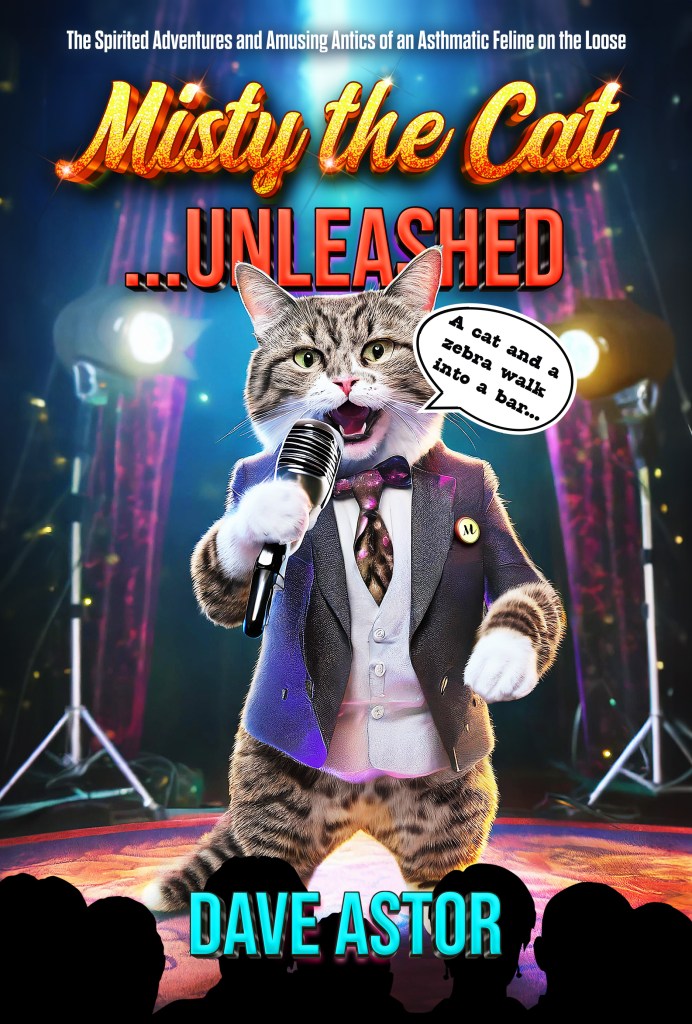
My comedic 2024 book — the part-factual/part-fictional/not-a-children’s-work Misty the Cat…Unleashed — is described and can be purchased on Amazon in paperback or on Kindle. It’s feline-narrated! (And Misty says Amazon reviews are welcome. 🙂 )

This 90-second promo video for my book features a talking cat: 🙂

In addition to this weekly blog, I write the 2003-started/award-winning “Montclairvoyant” topical-humor column every Thursday for Montclair Local. The latest piece — about yet another lawsuit in my town and more — is here.

It’s August, But I’m Not a Feline Who Guest-Blogs Augustly

An animal writing about books without a book in sight? “Sue me,” says Misty the cat. (Photo by teen human Maria.)

Hi! Misty the cat here returning for one of my periodic guest blog posts, after I filed a lawsuit against the English language for not spelling periodic “purriodic.” A legal action that promises to last even longer than the endless case in Bleak House by Charles Dickens, who also wrote The Cricket on the Hearth until I chased away that cricket. Second edition: The Cricket No Longer on the Hearth.

Anyway, my blog theme will be novels told from an unusual point of view, and I don’t mean narrating an audiobook from atop the Empire State Building. Today’s topic (along with some novelistic examples of it) was suggested by Robert Berardi, a teacher/artist/songwriter who reads this blog each week — whether the posts are written by Dave, Misty the cat (me), or a bunch of elephants slapping their trunks against a computer keyboard.

One example of a book that unspools from an unusual angle is Dave’s part-fictional Misty the Cat…Unleashed, the 2024-published work told from a feline point of view (mine). Most books aren’t in the “voice” of animals, for the simple reason that animals have trouble obtaining ISBN numbers.

Then there are novels told from a doggy perspective. (Wait…not “purrspective”? Another lawsuit coming.) Prominent examples include The Call of the Wild and White Fang by Jack London, an author who got into the canine mindset by observing Snoopy in the 1950-launched “Peanuts” comic strip. Wait…you’re saying London died in 1916 and thus couldn’t be aware of Snoopy? Nyah-nyah, I have my paws over my ears and can’t hear you.

I’ll also mention Franz Kafka’s The Metamorphosis, in which Gregor Samsa wakes up to find himself in a desperate plight: the “y” is missing from the end of his first name. (I, Misty, don’t have that problem.) Actually, Gregor-not-Gregory wakes up to find himself transformed into a giant insect and proceeds to express his understandably depressed thoughts about that situation. The huge spiders in J.K. Rowling’s Harry Potter series have a different back story.

Other novels told through a critter lens include Richard Adams’ Watership Down, George Orwell’s Animal Farm, and Garth Stein’s The Art of Racing in the Rain, to name a few.

Of course literature’s animals are often at least partly anthropomorphized, which is defined as…a word too challenging for me, Misty the cat, to have any idea what it means. Actually, anthropomorphized means the critters have some human traits and emotions, according to Dave, who didn’t tell me that until I untied him. Why did I tie him up in the first place? How do you think I got to do today’s blog post?

Just kidding. Dave is happy that I sub for him once in a while. He suggested I do so every few months; I suggested I do so every few weeks. We compromised on every few weeks. Quite fair, no?

Novels told from an unusual point of view can obviously also star humans. Take Alice Sebold’s The Lovely Bones…on second thought, don’t take it…borrow it from a library instead…or buy it at a bookstore…or order it online…or find camp counselors who read it out loud alongside a roaring fire…while toasting s’mores…and flicking ashes off their clothes…and wondering why they mistook toothpaste for sunscreen…and also wondering why the small, placid lake at the camp contains a ravenous 500-foot-long shark. Anyway, The Lovely Bones has an unusual, emotionally wrenching point of view because we experience things through the eyes of a teen girl AFTER she is murdered.

Heck, some novels even contain storytelling by inanimate objects! Are those objects catnip-filled? Rarely. That’s a problem.

Your thoughts on today’s topic? Examples of today’s topic? Do you have any cat treats for me, even if those tasty morsels are off-topic?

The very talented authors/bloggers/etc. Robbie Cheadle and D.L. Finn recently posted wonderful reviews of Misty the Cat…Unleashed. The latter post also includes reviews of books by four other authors, all excellent. Links below. Thanks so much, Robbie and Denise!

https://robbiesinspiration.wordpress.com/2024/08/07/robbies-inspiration-book-review-misty-the-cat-unleashed-the-spirited-adventures-and-amusing-antics-of-an-asthmatic-feline-on-the-loose-by-dave-astor-humour-bookreview/

https://dlfinnauthor.com/2024/08/06/93871/

My comedic 2024 book — the part-factual/part-fictional/not-a-children’s-work Misty the Cat…Unleashed — is described and can be purchased on Amazon in paperback or on Kindle. It’s feline-narrated! (And Misty says Amazon reviews are welcome. 🙂 )

This 90-second promo video for my book features a talking cat: 🙂

In addition to this weekly blog, I write the 2003-started/award-winning “Montclairvoyant” topical-humor column every Thursday for Montclair Local. The latest piece — containing my odd take on delayed tax bills — is here.

A Post-Whale-Watching Appreciation of Herman Melville

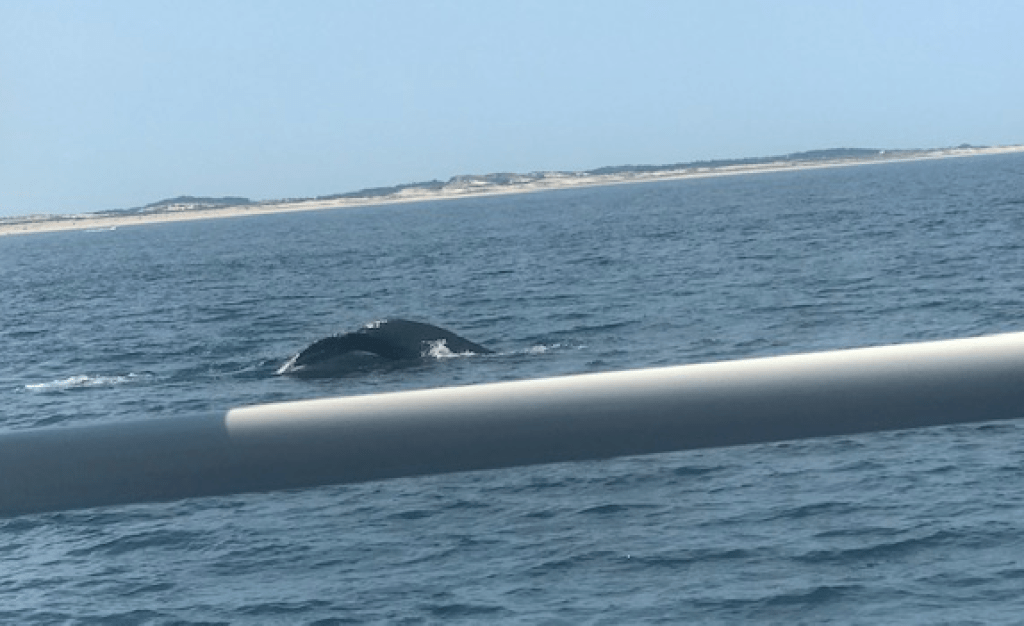
Whale sighting! (Photo by me.)

While vacationing in Massachusetts last week, my family and I visited Provincetown on August 1 to go whale-watching. We saw…whales…and I also saw the possibility of writing a blog post about an author who had a strong association with those mighty aquatic mammals.

That author of course is Herman Melville, who sailed the sea quite a bit as a young man before starting to write novels — some semi-autobiographical. He began as basically an adventure writer before getting much deeper with his fiction, even as his prose was rich yet readable from the start.

Oddly, Melville’s 1846 debut novel Typee — a partly fictional chronicle of his time in Polynesia — would be his best-selling work during his lifetime. It was followed by the pretty similar Omoo (1847) before Melville started to write in a more challenging way with Mardi. That 1849 novel had its moments, philosophical and otherwise, but overall was on the boring side.

Then came Redburn (also 1849) and White-Jacket (1850), two very good but not great sea sagas.

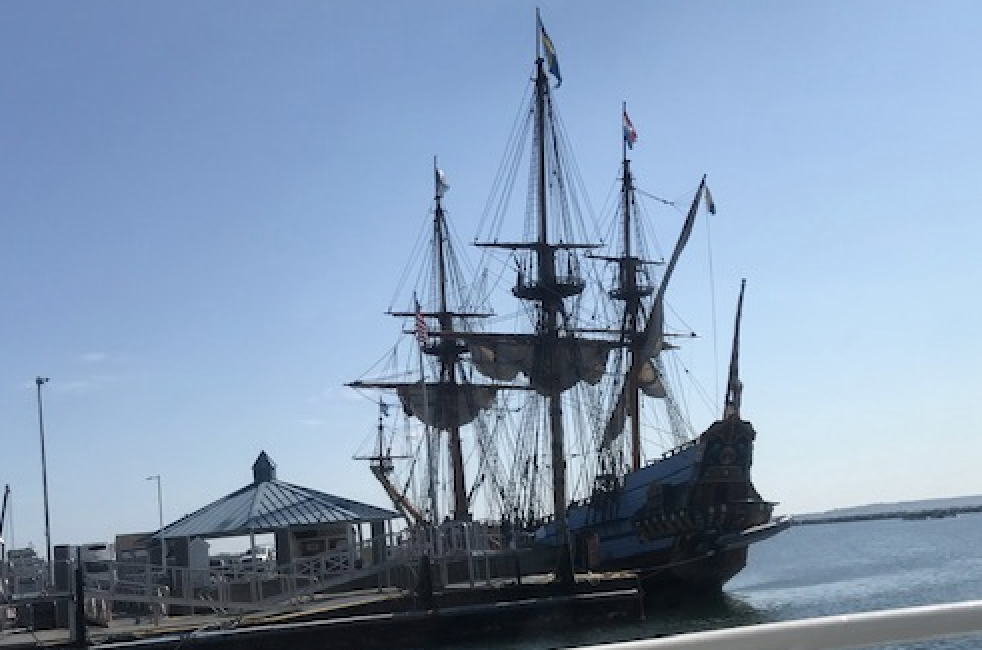
A ship in Provincetown. (Photo by me.)

The 1819-born Melville’s creative breakthrough was Moby-Dick (1851), about another epic sea voyage — this time loaded with symbolic/allegorical elements. That, along with the book’s scintillating writing and ultra-memorable characters, made for what is now considered one of the great American novels. But Moby-Dick sold poorly when published and was also unpopular with many critics — only becoming truly famous and appreciated decades after Melville’s 1891 death.

That was around the time of the posthumous 1924 publication of Melville’s final novel, the excellent Billy Budd.

At least Melville’s friend Nathaniel Hawthorne liked Moby-Dick, published a year after Hawthorne’s The Scarlet Letter — which received a much better contemporary response from readers and critics.

Melville’s bitterness over Moby-Dick‘s unenthusiastic reception was quite obvious in his 1852 novel Pierre, a land-set book (no ocean voyage) whose cast of characters includes…a bitter writer. That and the strong hints of incest in the story resulted in another sales and critical disaster for Melville, whose writing career mostly tanked at that point. Interestingly, many modern-day readers (including myself) find Pierre really compelling and way ahead of its time.

I haven’t read Melville’s novels Israel Potter (1855) or The Confidence Man (1857).

With proceeds from his writing scarce, a very unhappy Melville worked as a customs inspector in New York City from 1866 to 1885, while doing some (not exactly stellar) poetry on the side. In that inspector job, the author was known as a rare honest man in a corrupt institution.

I should also mention Melville’s 17 short stories. “I and My Chimney” is an example of how the writer was very funny when he wanted to be — as is also the case with his inn bedroom scene featuring Ishmael and harpooner Queequeg in the early land-based section of Moby-Dick.

There’s also “Benito Cereno,” a riveting sea tale (of almost novella length) about a slave revolt. Melville was rare among 19th-century authors in portraying characters of color (including the above-mentioned Queequeg) somewhat three-dimensionally.

(Speaking of Moby-Dick characters, first mate Starbuck inspired the name of a certain coffee chain.)

Perhaps Melville’s most memorable short story is the mesmerizing “Bartleby, the Scrivener.” There are few tales like it.

As I’ve mentioned before, nearly 20 years ago I visited the Pittsfield, Mass., house where Melville lived from 1850 to 1863. The window above the desk on which the author finished writing Moby-Dick has a view of a mountain that’s shaped sort of like a whale.

Any thoughts on this post, Herman Melville, and/or his writing?

My comedic 2024 book — the part-factual/part-fictional/not-a-children’s-work Misty the Cat…Unleashed — is described and can be purchased on Amazon in paperback or on Kindle. It’s feline-narrated! (And Misty says Amazon reviews are welcome. 🙂 )

This 90-second promo video for my book features a talking cat: 🙂

In addition to this weekly blog, I write the 2003-started/award-winning “Montclairvoyant” topical-humor column every Thursday for Montclair Local. The latest piece — about an affordable-housing discussion and more — is here.