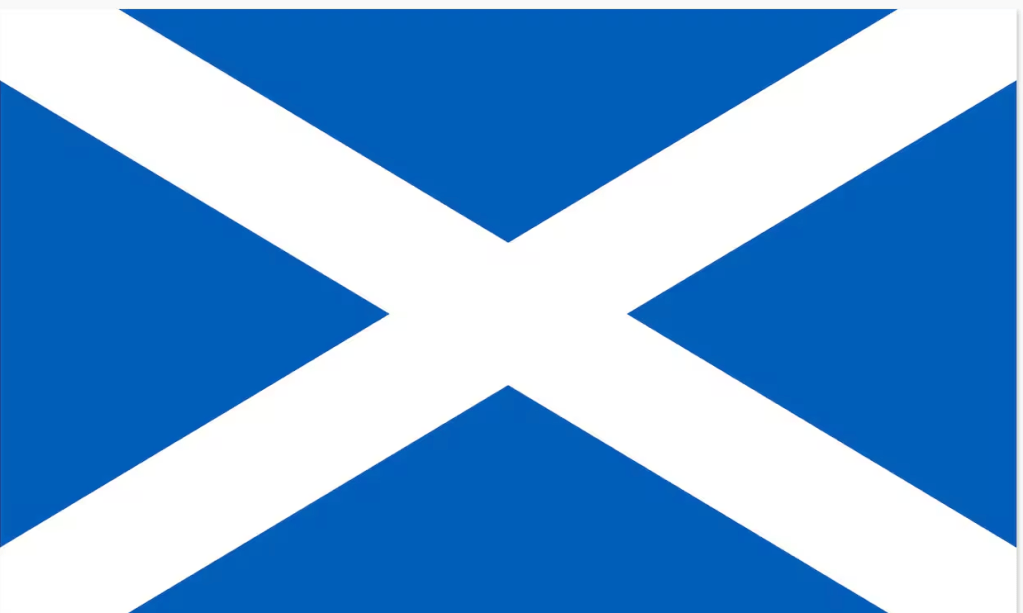
When I finished my fourth Val McDermid novel (Out of Bounds) last week, it occurred to me that I’ve read quite a lot over the years by Scottish writers — who include a number of names you’re sure to recognize.
McDermid (1955-) is a masterful crime author who has impressively created five different series, perhaps most famously the one starring dogged cold-case investigator Karen Pirie. Out of Bounds is the fourth of seven books featuring Pirie.
Then there’s perhaps the most famous detective writer of all: Edinburgh-born Arthur Conan Doyle (1859-1930), creator of the iconic Sherlock Holmes novels and short stories, not to mention The Lost World and other works. “Elementary” that he would be part of this post.
I can’t go further without mentioning the acclaimed Walter Scott (1771-1832), best known for Ivanhoe and Rob Roy but also the author of lesser-known-but-also-great novels such as Old Mortality and The Heart of Midlothian. A celebrated poet, too, earlier in his career.
Also, Robert Louis Stevenson (1850-1894), author of classics such as Treasure Island, Strange Case ofDr. Jekyll and Mr. Hyde, and Weir of Hermiston — the last of which would’ve been his masterpiece if he hadn’t died before finishing it.
Plus J.M. Barrie (1860-1937) of Peter Pan fame, Muriel Spark (1918-2006) of The Prime of Miss Jean Brodie renown, and Alistair MacLean (1922-1987) of Where Eagles Dare fame.
Among the Scottish authors I’ve yet to read but want to are Alexander McCall Smith (born in what is now Zimbabwe) and John Buchan (I did see the screen version of his The Thirty-nine Steps novel directed by Alfred Hitchcock).
Scottish poet Robert Burns (1759-1796) deserves a big mention, too.
Last but not least, there’s historical-romance author/WordPress blogger Shehanne Moore, an exceptional writer who frequently comments under WP posts here and elsewhere.
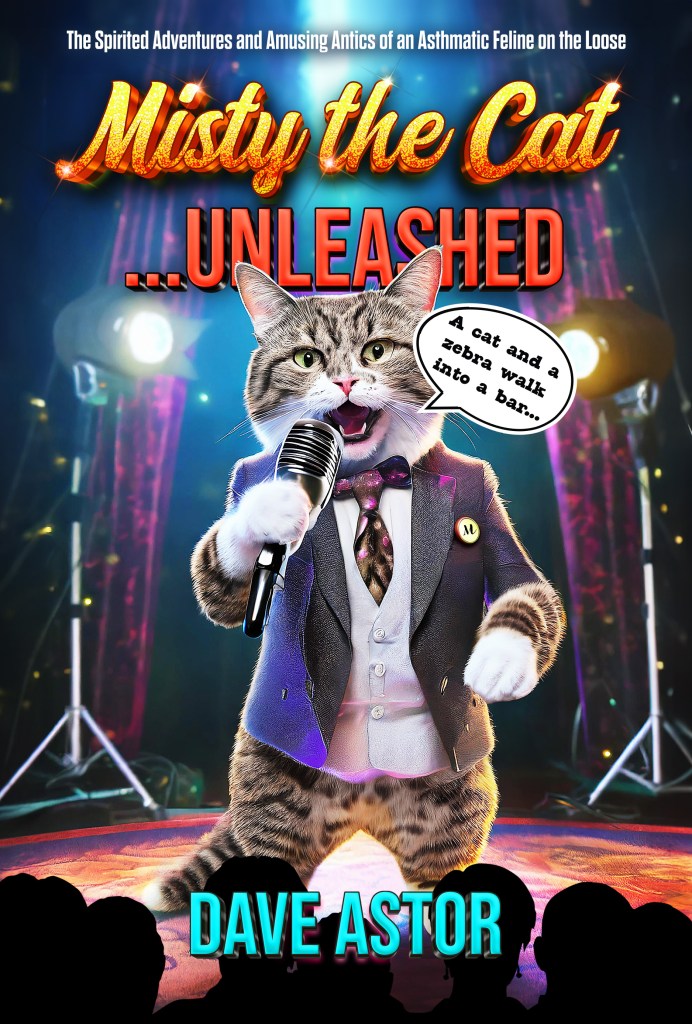
My comedic 2024 book — the part-factual/part-fictional/not-a-children’s-work Misty the Cat…Unleashed — is described and can be purchased on Amazon in paperback or on Kindle. It’s feline-narrated! (And Misty says Amazon reviews are welcome. 🙂 )
This 90-second promo video for my book features a talking cat: 🙂
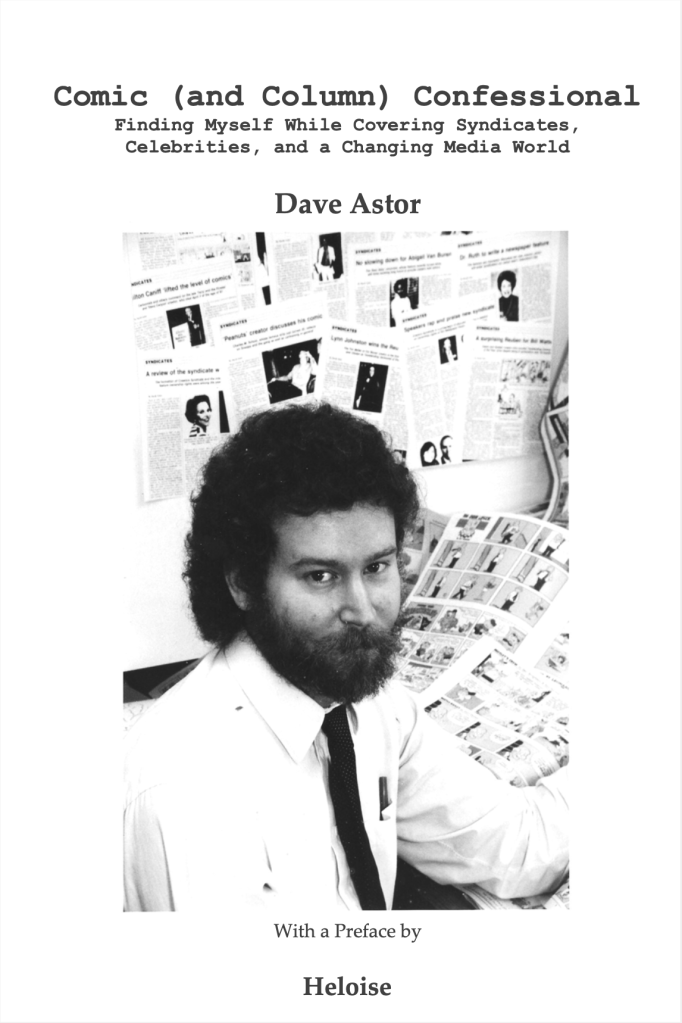
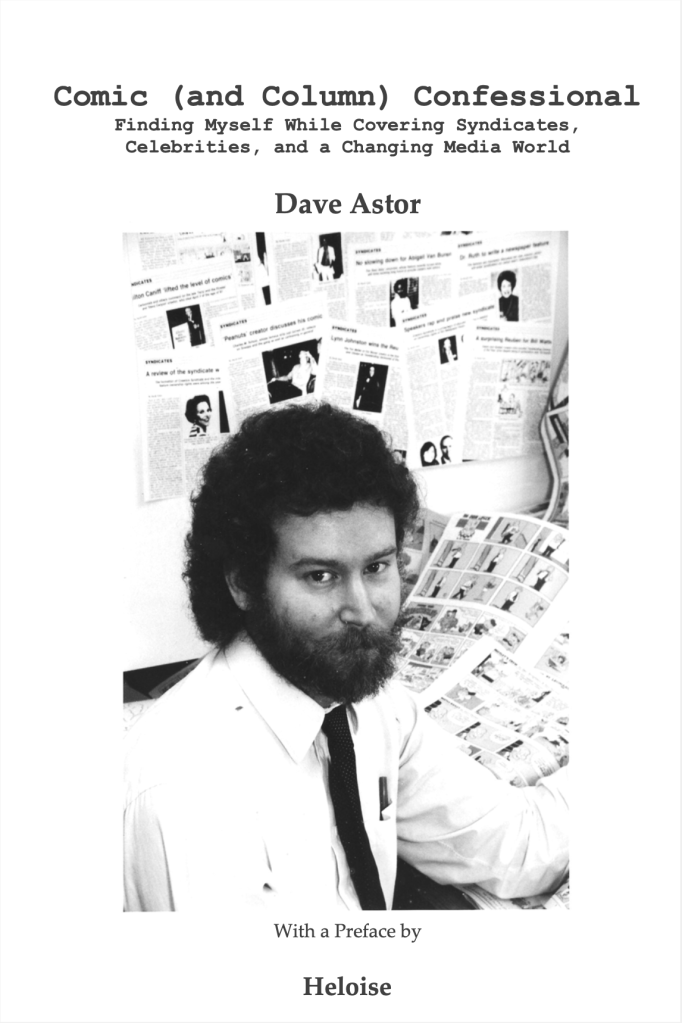
…and a 2012 memoir that focuses on cartooning and more.
In addition to this weekly blog, I write the 2003-started/award-winning “Montclairvoyant” topical-humor column every Thursday for Montclair Local. The latest piece — about Tesla buyer remorse in my liberal town — is here.
Rating: five fingers but not even one star. (Photo of Donald Trump by Win McNamee/Getty Images.)
What’s happening in the news and/or in our personal lives can affect the kind of fiction we read — temporarily, at least.
In my case, I’ve been beyond saddened by the election of far-right dictator wannabe Donald Trump as U.S. President in November 2024, his appalling appointments and actions since taking office last month, and the spineless “bending of the knee” to Trump by almost all of his fellow Republicans, some Democrats, a number of media outlets, many large corporations, and so on. Makes me sick.
Plus I’ve been dealing for months with a serious family medical matter, and with my 12th-grade daughter’s positive-but-stressful college odyssey (applications, financial-aid forms, campus visits, etc.).
So, while I usually “consume” a mix of popular fiction and more-challenging literary fiction, I’ve been leaning toward the former in recent months as I seek a mental break whenever possible. For instance, I’ve read a lot of Elin Hilderbrand — whose ultra-appealing books are very readable even as they still often deal with some heavy stuff.
After polishing off six Hilderbrand novels in a row the past few weeks — The Island and Silver Girl were my favorites — I thought I’d try to dip my toe once more into reading something of greater difficulty: Precious Bane by Mary Webb, whose prose is really impressive yet rather a slog to get through with its dialect and other complexities. But I gave up on the highly regarded 1924 book not far into it, which I don’t think would have happened if I were in a different state of mind.
I made a library trip the day I’m writing this (February 13) and vowed to try again to mix things up. Two of the six novels I borrowed did fill the Hilderbrand bucket (it’s nice when one “discovers” an author well into her or his career, which can mean many books to catch up on) but I also took out Colson Whitehead’s intense The Nickel Boys as well as Colorless Tsukuru and His Years of Pilgrimage by renowned literary-fiction writer Haruki Murakami.
The other two of the six will probably fall somewhere between “readable” and heavy: Kate Quinn’s The Rose Code and Val McDermid’s Out of Bounds, the latter an installment of the excellent series starring Scottish cold-case detective Karen Pirie. As for Quinn, I thought her war-soaked The Alice Network and The Huntress were terrific.
Hopefully, I’ll be able to soon return to my love of novels that contain only some escapism. If not soon, eventually. 🙂
In the meantime, I’m also frequently reading the news to stay informed about the Trump administration, but those stories are so painful that I tend to skim them rather than absorb every word.
Getting back to the topic of novels, whenever there’s a villainous character in one I’m reading, I now think of Donald Trump, his toady vice president JD Vance, the administration’s cartoonishly evil unelected advisor Elon Musk (richest man in the world), and others in Trump’s orbit. Trump and his ilk are a bunch of white supremacists who are also misogynist and anti-LGBTQ+, want to make the rich richer, want to shred the social-safety net for the non-rich, are profoundly corrupt, etc. At least I deleted my account last year on the Musk-owned X (formerly Twitter) and will never buy a Tesla as long as Musk owns that electric-vehicle company.
Do your reading choices change because of your mood, things happening in your life, and the political situation in your country/the world?
Misty the cat says: “Last night was a mix of snow, rain, and broccoli. Well, maybe two of those three.”
My comedic 2024 book — the part-factual/part-fictional/not-a-children’s-work Misty the Cat…Unleashed — is described and can be purchased on Amazon in paperback or on Kindle. It’s feline-narrated! (And Misty says Amazon reviews are welcome. 🙂 )
This 90-second promo video for my book features a talking cat: 🙂
…and a 2012 memoir that focuses on cartooning and more.
In addition to this weekly blog, I write the 2003-started/award-winning “Montclairvoyant” topical-humor column every Thursday for Montclair Local. The latest piece — covering topics such as the fate of a 121-year-old firehouse — is here.
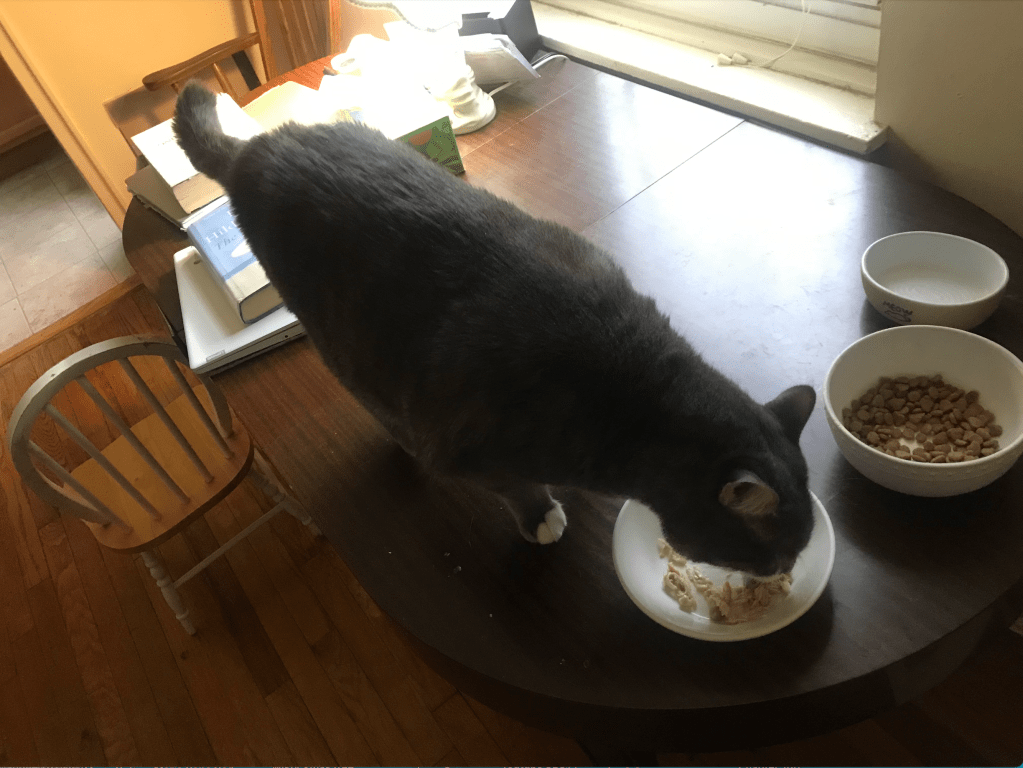
I, the feline Misty, realize most novelists celebrate their birthdays with cake. I eat cat food. (Photo by my human Dave, who has informed me that today is not my birthday.)
Hi! Misty the cat here. I haven’t guest-blogged for Dave since December 8, which was two months ago. It was also sort of a year ago: 2024! Four millennia ago, too, because it was 2024 BC (Blogging Cat). Time flies when you’re…swatting a clock off the mantelpiece.
Anyway, Dave can use the break because he recently had a nasty case of the flu as well as various family matters keeping him busy, including explaining to the ghost of his 17th-century ancestor why her on-the-mantelpiece antique clock is splattered across the floor. Or maybe that cheapo clock was purchased for a few bucks this century at Kmart. (“‘Attention, Kmart shoppers.’ Get the hell of here because our chain filed for bankruptcy seven years ago, in 2018.”)
But what topic should I, Misty the cat, discuss today? It occurred to me that authors have birthdays in all 12 months — except October because someone stole a briefcase with Bono’s notes and lyrics while he and the rest of U2 were recording their “October” album in 1981. Anyway, authors have birthdays in the other 11 months, except for those who have birthdays in October, so let’s discuss some novelists who were born in February — this month! (“I’m dreaming of a white…Presidents’ Day…with every Presidents’ Day card I write…”)
Born on February 1 (1918) was Muriel Spark! She’s best known for writing the 1930s-set novel The Prime of Miss Jean Brodie, whose title character was the first Amazon Prime customer.
Also born on February 1 (1901) was Langston Hughes, whose debut novel has a title — Not Without Laughter — that contains valuable advice for writing my blog posts. Heck, the only time I’m 100% serious is when my cat-treat container is empty and I consequently wear a mourning veil. Unlike someone marrying on the rebound who wears a basketball net for a veil.
Coming into the world on February 2 (1882) was James Joyce — who, if he had been a cat with nine lives, would’ve written “The Dead” nine times. Rather repetitive.
Ultraconservative icon Ayn Rand’s birthday was also on February 2 (1905). She decried government-run programs, yet hypocritically collected Social Security! Meanwhile, Atlas shrugged after his job as a book of maps was supplanted by GPS. “Turn right at the fountainhead.”
James Michener! Born on February 3 (1907). He wrote so many “doorstop” books that The Doors stopped…being a rock band. But not before one of my cat ancestors sang “Light My Fur” when one of those laser pointers was aimed at her.
Charles Dickens came to be on February 7 (1812). In his immortal words, “It was the best of cats, it was the best of cats,” because what other kinds of cats are there?
Sinclair Lewis was also born on February 7 (1885). He’s known for his 1920s run of excellent novels as well as for the iconic Lewis and Clark Expedition that involved setting a pick for Indiana Fever hoops superstar Caitlin Clark.
Another February 7 (1867) birthday was that of Little House on the Prairie series author Laura Ingalls Wilder. The diminutive nature of that house inspired the tiny green plastic houses used in Monopoly games.
Jules Verne? Born on February 8 (1828). Verne was a science-fiction pioneer, though he didn’t invent the genre. Sci-fi’s inventor was in fact my good friend Garfield the cat, who crafted a spaceship from lasagna and the rest was history.
Also a February 8 (1850) author was Kate Chopin, whose The Awakening novel shocked felines accustomed to napping 24 hours a day.
February 8 (1955) brought us John Grisham, too. His novel The Firm was great, but not quite an accurate representation of my jiggly belly.
Alice Walker was born on February 9 (1944). Given that me and other cats are partially color-blind, I have to take people’s word that Walker wrote The Color Purple.
February 10 (1890) was the birthday of Boris Pasternak, whose Doctor Zhivago is not about my vet. But my vet is welcome to change her name to Doctor Zhivago.
Toni Morrison was born on February 18 (1931). Her masterful work included Song of Solomon, whose initials remind me that I send out an SOS when my humans are gone for more than five seconds.
Amy Tan’s birthday is on February 19 (1952). Her books include The Kitchen God’s Wife, but religion continues to confuse me. What’s God doing in the kitchen? Does God really have a wife? If so, does that couple file a joint tax return? Who’s their CPA (Celestial Pair Accountant)?
The Heart Is a Lonely Hunter author Carson McCullers was also born on February 19 (1917). I know something about hunting, as I illustrate whenever I leave my apartment for my daily leashed walk. Let me know when chasing chipmunks becomes an Olympic sport.
David Foster Wallace, born on February 21 (1962), wrote Infinite Jest. If this post of mine became similarly infinite, could the WordPress blog platform handle that?
Anthony Burgess was born on February 25 (1917). Best known for A Clockwork Orange, but me and other cats aren’t into fruit. Our digestive systems are built for meat, and we don’t have the taste receptors to detect sweetness. Burgess could have written A Clockwork Tuna Melt, but noooo. Sheesh.
Victor Hugo! Born on February 26 (1802). Les Miserables is what happens when someone sticks a fruit platter in front of me.
I’ll end with John Steinbeck, who entered the world a century after Hugo (1902) on February 27. I don’t mean to harp on fruit, but The Grapes of Wrath…really? Steinbeck did also write East of Eden, which is definitely not east of an apple orchard.
Dave will reply to comments because I need to enter the contest for “Best Cat-Written Blog Post Focusing on Authors Born in February.” If I win a cash prize, maybe we can afford to turn up the heat in this damn apartment.
I, Misty the cat, say: “‘The Snows of Kilimanjaro’ have come to New Jersey.”
My (and Dave’s) comedic 2024 book — the part-factual/part-fictional/not-a-children’s-work Misty the Cat…Unleashed — is described and can be purchased on Amazon in paperback or on Kindle. It’s feline-narrated! (And I, Misty, say Amazon reviews are welcome. 🙂 )
This 90-second promo video for the book features a talking cat that looks sort of like me: 🙂
…and a 2012 memoir that focuses on cartooning and more.
In addition to his weekly blog, Dave writes the 2003-started/award-winning “Montclairvoyant” topical-humor column every Thursday for Montclair Local. The latest piece — about a plan for seven new pricey homes — is here.
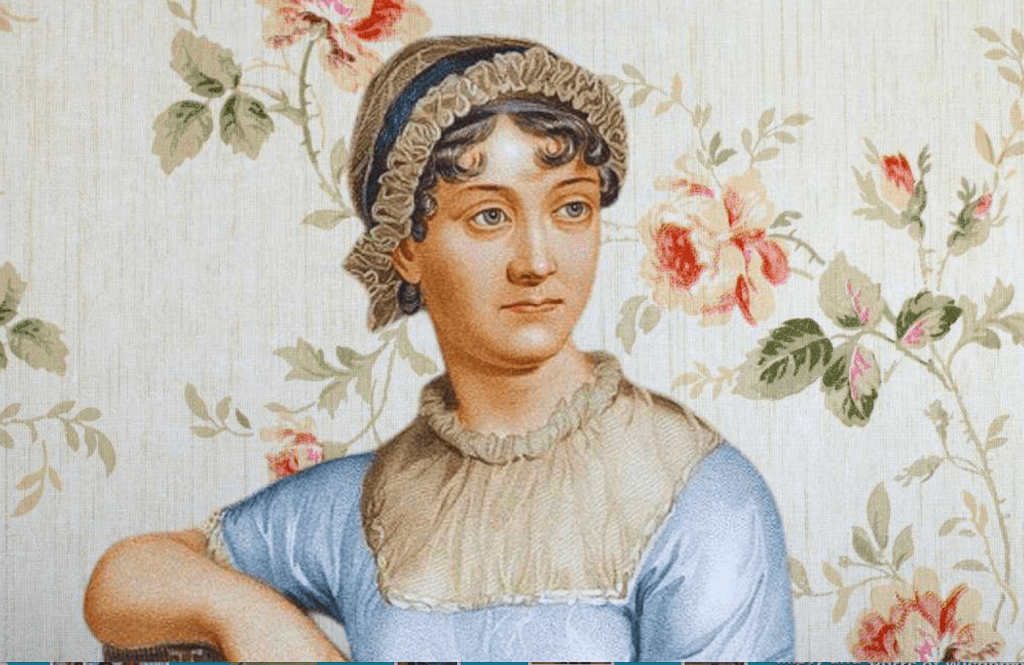
Fellow blogger Rebecca Budd noted in a post last week (see below) that January 28 was the 1813 publication date of Jane Austen’s classic novel Pride and Prejudice. Rebecca’s piece made me think about how I would rank the six books Austen (1775-1817) is most known for. So here I go with a post that will not end with a wedding, but with the Austen novel that is my favorite.
6. Northanger Abbey: A satire of Gothic fiction with both great moments and so-so moments. Though published posthumously, it was the first novel Austen fully completed — so the authorial growing pains are not surprising. The protagonist is Catherine Morland, whose reading of Gothic fiction feeds her rather overactive imagination.
5. Emma: Many readers would undoubtedly rank this well-crafted novel higher in Austen’s canon, but Emma Woodhouse’s meddlesome nature is rather annoying; she really does need to mind her own business. (I’m surprised Harriet Smith didn’t “unfriend” Emma on Facebook. 🙂 ) But, to her credit, Emma eventually does some growing up by the latter part of the novel.
4. Mansfield Park: The “poor relation” protagonist Fanny Price is sympathetic, but probably the most boring and least charismatic of Austen heroines. Still, the story line and how Fanny fares makes for interesting reading. Bonus: J.K. Rowling named a cat in her Harry Potter series after the Mrs. Norris character in Mansfield Park.
3. Sense and Sensibility: An absorbing look at the Dashwood sisters as they and their widowed mother find themselves in reduced economic circumstances. The first Austen novel published, in 1811.
2. Pride and Prejudice: The favorite Austen work of many, and the novel is indeed quite a read. Its characters of course include Elizabeth Bennet (one of five sisters) and Fitzwilliam Darcy as they navigate an initially challenging relationship. The title of this iconic book comes from a phrase in Fanny Burney’s 1782 novel Cecilia.
1. Persuasion: A concise novel featuring what I think is Austen’s most mature heroine: Anne Elliot. Her relationship with Captain Frederick Wentworth is at first thwarted, but she keeps on keeping on with life during the years of separation.
My comedic 2024 book — the part-factual/part-fictional/not-a-children’s-work Misty the Cat…Unleashed — is described and can be purchased on Amazon in paperback or on Kindle. It’s feline-narrated! (And Misty says Amazon reviews are welcome. 🙂 )
This 90-second promo video for my book features a talking cat: 🙂
…and a 2012 memoir that focuses on cartooning and more.
Also, I write the 2003-started/award-winning “Montclairvoyant” topical-humor column every Thursday for Montclair Local. The latest piece — inspired by a January jammed with local news — is here.







 Dave Astor on Literature