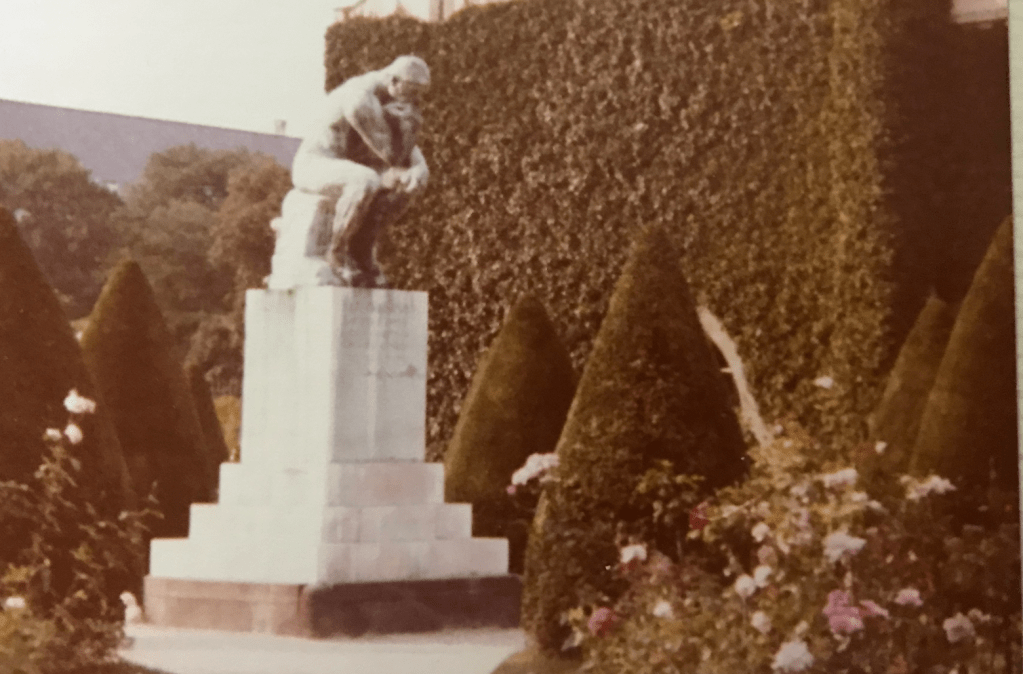
Rodin’s “The Thinker.” (Photo by me during a long-ago trip to Paris.)
There are more action heroes than philosophers in fiction, but novels do occasionally feature characters who think deeply about the human condition.
One such protagonist is Isabel Dalhousie of Alexander McCall Smith’s The Sunday Philosophy Club. (Hmm…that title points to the novel’s frequent metaphysical content.) And 40-something intellectual Isabel is actually kind of an action heroine, too, as she tries to solve the mystery of a young man’s death amid her musings about the meaning of life and such.
By the way, I thought The Sunday Philosophy Club — which I read last week — was good but not great; perhaps some of its many sequels are better?
Larry Darrell of The Razor’s Edge by W. Somerset Maugham is hyper-focused on trying to find a transcendent explanation for why things are. This is after the pilot is traumatized by his World War I experiences, including the death of a comrade. Death and war can clearly make a person philosophical.
Raskolnikov of Fyodor Dostoevsky’s Crime and Punishment is fixated on good vs. evil, how an individual’s actions affect society, and so on. Perhaps we can call him a murderer-philosopher.
Albus Dumbledore, headmaster of the Hogwarts School of Witchcraft and Wizardry, clearly has a philosophical bent in J.K. Rowling’s Harry Potter series. Harry’s mentor is wise, reflective, and thinks deeply about deep things.
Of course, some people play-act at being philosophical while not really being deep thinkers. Such is the case with Rev. Edward Casaubon, who puts on intellectual airs in George Eliot’s Middlemarch but is actually rather dull, shallow, and not particularly nice — as young Dorothea Brooke learns after marrying him.
Additional characters with philosophical leanings in other novels I’ve read include Lelia of George Sand’s Lelia, Harry Haller of Hermann Hesse’s Steppenwolf, Binx Bolling of Walker Percy’s The Moviegoer, and the unnamed narrator in Ralph Ellison’s Invisible Man, to cite a few.
Authors not previously mentioned in this post who wrote philosophically in at least some of their work include James Baldwin, Italo Calvino, Albert Camus, Umberto Eco, Gabriel Garcia Marquez, Goethe, Aldous Huxley, Franz Kafka, Herman Melville, Iris Murdoch, Marcel Proust, Jean-Paul Sartre, Mary Shelley, Voltaire, and Virginia Woolf, among others.
Your thoughts about, and examples of, this topic?
Misty the cat asks: “Can’t I get an actual throne from which to survey my kingdom?”
My comedic 2024 book — the part-factual/part-fictional/not-a-children’s-work Misty the Cat…Unleashed — is described and can be purchased on Amazon in paperback or on Kindle. It’s feline-narrated! (And Misty says Amazon reviews are welcome. 🙂 )
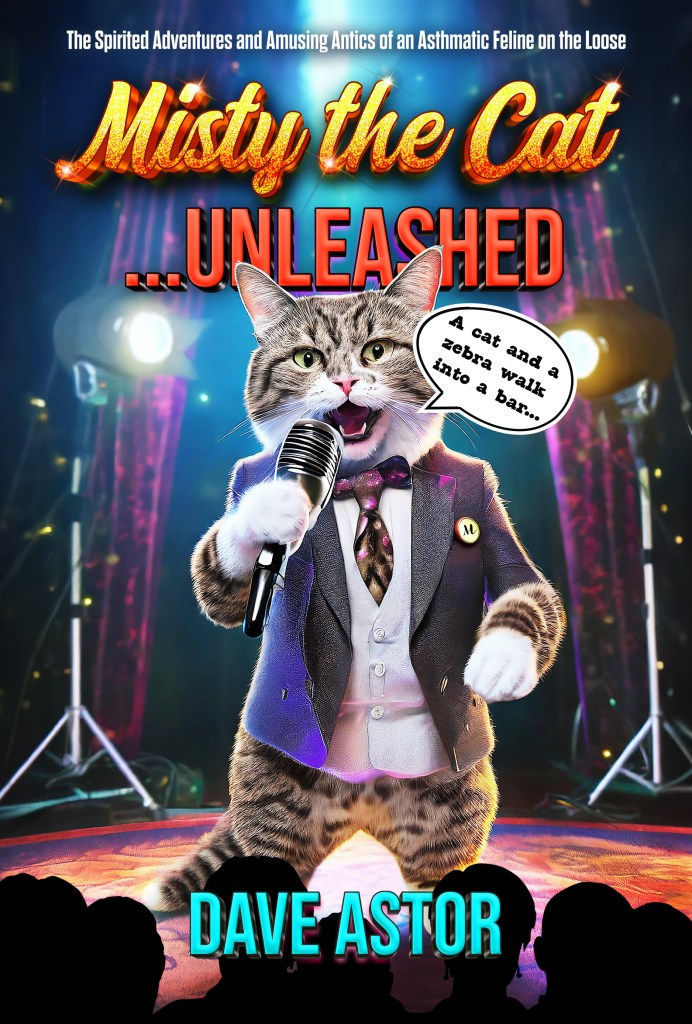
This 90-second promo video for my book features a talking cat: 🙂
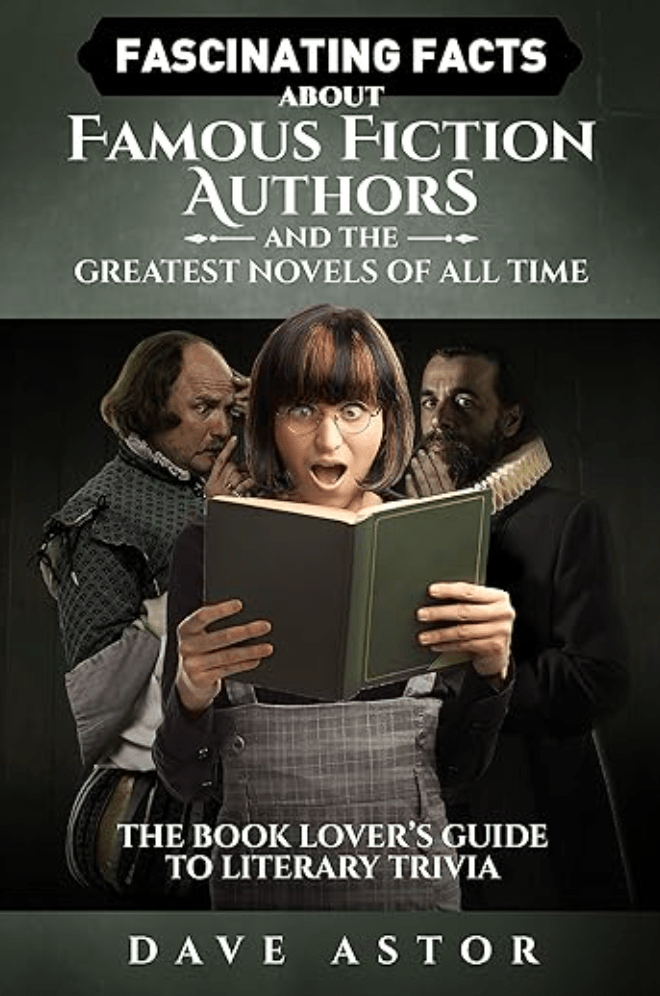
I’m also the author of a 2017 literary-trivia book…
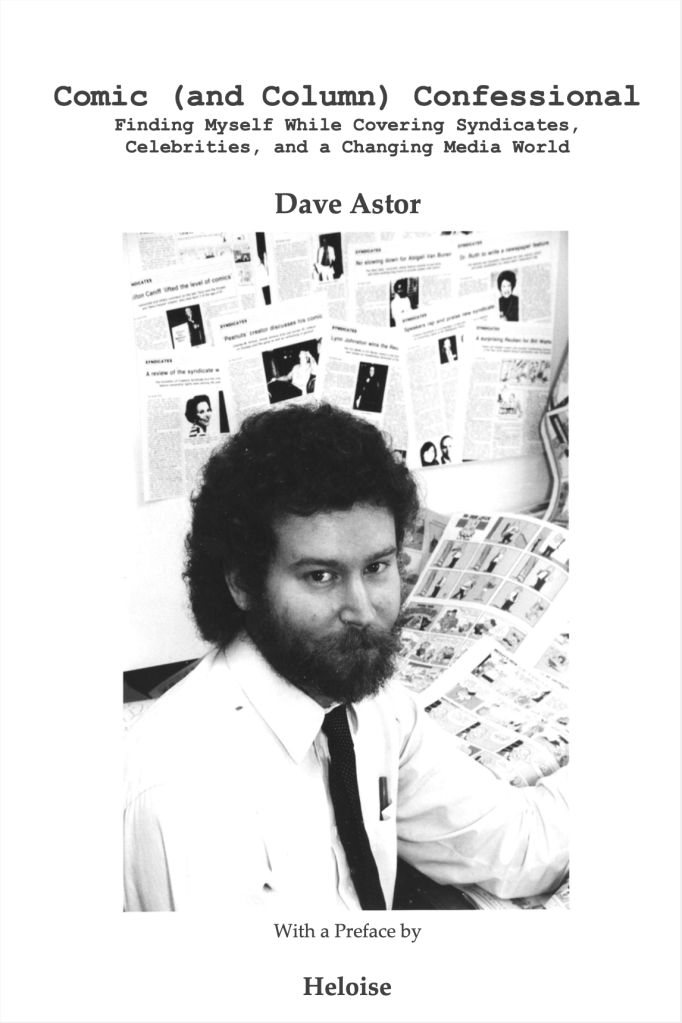
…and a 2012 memoir that focuses on cartooning and more.
In addition to this weekly blog, I write the 2003-started/award-winning “Montclairvoyant” topical-humor column every Thursday for Montclair Local. The latest piece — about a pizza mural controversy and more — is here.
 Dave Astor on Literature
Pingback: BOOK: Wish I Was Here | 😉 Author Ilsa Rey Mini Interview – priorhouse blog
Great Read
LikeLiked by 4 people
Thank you, Swamigalkodi Astrology!
LikeLiked by 2 people
Wow, so much great stuff to share here, Dave! 👏
LikeLiked by 3 people
Thank you, Cindy! I greatly appreciate your praise of the post and of the excellent comments!
LikeLiked by 1 person
You’re so very welcome.. that was all you! 👏
LikeLiked by 1 person
🙂
LikeLike
Trollope, philosopher of money in society, kinder and more generous than Dickens.
Hard to choose, but cut down to three, I’d take Dr Thorne, the Last Chronicle of Barset, and The way we live now.
One complaint – The £20 the Rev Josaiah Crawley can’t account for isn’t really a trivial amount. Literary critics don’t need to be economists – Measuring Worth will do the work for you., in $$ or ££ In 1867, the relative income value of £20 is over £21,000
LikeLiked by 2 people
Thank you, Esther! I’ve only read a couple of Anthony Trollope novels, but I agree that he offered a certain philosophical element in his writing. Contemplation of money, its uses, its positives, its negatives, etc., IS philosophical in a way. And, yes, £20 does sound like a large sum; thanks for the math!
LikeLiked by 1 person
Amazing!
LikeLiked by 2 people
Thank you, Swamigalkodi Astrology!
LikeLike
HI Dave, a great post today. I have provided my thoughts above in my response to Audrey and Liz. I think a lot of books contain some philosophy. Stephen King uses it in his writing. I’m thinking specifically of The Stand and his thoughts on human societies.
LikeLiked by 3 people
I know we are talking about philosophy in general and not just ethics, but ethical questions are particularly interesting to me. I like a piece of fiction when it confronts the characters ( and therefore the readers) with ethical dilemmas.
One writer who does that very deliberately is George Bernard Shaw in his plays, especially Pygmalion and Saint Joan.
LikeLiked by 3 people
sorry my phone made me anonymous. This is Kim Hays.
LikeLiked by 2 people
Thank you, Kim! There’s definitely a connection between philosophy and ethics. And, yes, George Bernard Shaw certainly wrestled with ethical questions/dilemmas — also in his play “Arms and the Man,” which I saw Off Broadway (or was it Off Off Broadway?) years ago when I lived in Manhattan.
LikeLiked by 1 person
Hermann Hesse
LikeLiked by 4 people
Absolutely! Thank you, Dawn! The only book of his I’ve gotten to was “Steppenwolf,” but it was pretty deep. And more “readable” than I expected.
LikeLiked by 2 people
Fortunately there are philosopher writers, Dave, and thanks very much for your reminder! Frankly speaking, I very much enjoyed the way Herman Hesse built his Harry Haller in his”Der Steppenwolf “and the way this last one was trying to find his identity and a sense of life. He also wrote about the disorientation and contradictions of that time. I would also like to mention Hesse’s SIDDHARTHA , who is of the opinion that one cannot become Gotama or Buddha through learning but only by doing!
LikeLiked by 4 people
Thank you, Martina! “Steppenwolf” was definitely an experience to read! A very unusual and compelling novel that made one think. (I also used to like the Steppenwolf rock band back in the day. 🙂 )
LikeLiked by 2 people
Hi Martina, Great recommendations. That comment about not reaching a higher level of happiness or Nirvana without doing seems very appropriate. I think that you need to be able to translate learnings into a practical and useful outcome or the learnings are lost and have little meaning. Thank you for your interesting comment.
LikeLiked by 3 people
Many thanks, Roberta, for your opinion, with which I completely agree, even concerning less important goals! Have a pleasant evening:)
LikeLiked by 2 people
😘🤗
LikeLiked by 1 person
Generally this kind of thing is too deep for me, I have to say. The nearest I got was to try to read ‘Zen and the Art of Motorcycle Maintenance’ by Robert M. Pirsig – a philosophical fiction / autobiographical novel. I managed to read last than a quarter of it (and I also dropped it in the bath, oops).
LikeLiked by 4 people
Thank you, Chris! I enjoyed your seriocomic comment. 🙂 I’ve never read “Zen and the Art of Motorcycle Maintenance”; not planning to now. 🙂
LikeLiked by 2 people
I love your pic of “The Thinker”, Dave. What a perfect image for your post…which is making me think! And smile. I’ll never know for sure, but I wonder if our daughter’s interest in philosophy was spurred on by Albus Dumbledore, prompting her to earn her minor in philosophy. 🥰
LikeLiked by 5 people
Thank you, Victoria! Very glad you liked my fading-with-age photo. 🙂
The “Harry Potter” books definitely had a big impact on readers of a certain age. My millennial-generation older daughter was a huge fan of the series. Your daughter had a great role model/inspiration in Dumbledore, and philosophy is a great college minor to have had!
LikeLiked by 2 people
I’m with you! I think it’s truly helped her become a better leader – more empathetic and rationale at the same time. Good qualities! Thank you again for your post, Dave. So good! 💕
LikeLiked by 2 people
Yes! Philosophy is a good thing for the brain. 🙂 Empathy and rationality — a terrific combination of qualities!
LikeLiked by 2 people
🥰❤️🥰
LikeLiked by 2 people
🙂
LikeLiked by 1 person
Neat photo, especially since you took the shot while in Paris. And a neat topic for your post. Back in college, one of my favorite classes was eastern European literature. The books had a good dose of the absurd (like Kafka) and tended to be philosophical. A big part of that was the shifting borders of countries due to wars. Milan Kundera was one of the authors, and his “The Unbearable Lightness of Being” feels like it would fit into this post’s topic.
LikeLiked by 5 people
Thank you, Dave! The photo was taken with a cheap camera, and the print is definitely fading with age. But I guess it kind of works. 🙂
You’re absolutely right that some Eastern European literature can get philosophical because of the times and places it was written — and the shifting of borders, as you say, had something to do with the mindset of authors. “The Good Soldier Švejk” by Czech writer Jaroslav Hašek is another absurdist/part-philosophical novel from the region that comes to mind.
LikeLiked by 2 people
Hi Dave, I read The Unbearable Lightness of Being recently and I would agree that it does fit this topic. I didn’t think of it though because I didn’t love the story line and so have put it right out of my mind. No more Kundera for me – smile!
LikeLiked by 4 people
😄 I think I read one other Kundera book besides that one. The books had interesting parts, but I haven’t rushed into reading others by him.
LikeLiked by 1 person
Another interesting topic, Dave! One of my favorite books is Kafka’s “Metamorphosis.” I remember reading this book when I was in my teens and being blown away (and perhaps a little confused) by it! 😊💙
LikeLiked by 5 people
Thank you, Ada! “Metamorphosis” is indeed ultra-memorable, and your memory of being blown away as well as confused by it sounds just about right. My reaction, too, when I read it many years ago.
LikeLiked by 4 people
Yes, I should really revisit it again soon! I’ll never look at a beetle the same way again, lol! I’m currently reading your fabulous book “Fascinating Facts” and really enjoying it so far. It’s very interesting and I’m finding out so many quirky and cool things I never knew before! 😊
LikeLiked by 2 people
“I’ll never look at a beetle the same way again” — ha, Ada! 😂 Fortunately, the beetles we usually see are a little smaller. 🙂
And thanks so much for the kind words about “Fascinating Facts”! Very appreciated! Literary trivia — heck, trivia in general — can indeed be so interesting.
LikeLiked by 1 person
Hi Dave,
I’ve just started a re-read of “Crime and Punishment”. Raskolnikov is a murderer?! I don’t remember that! Kidding of course. Though I’m 10% in and there are no dead people yet. I remember the crime happening pretty much on page 3 last time. But oh it’s even better than I remember. I was unsure about picking it up again as I thought I might have just got lucky last time and this time it would be heavy and boring and hard to read. But all that angst and philosophy has me just as hooked as before. The good vs evil, and what is ok to do for a monetary reward? Absolutely unputdownable, despite there not actually being a lot going on plot wise.
Sue
LikeLiked by 4 people
Thank you, Sue! “Crime and Punishment” is indeed a riveting book to reread. Did that myself, though the rereading was many years apart. That novel could be renamed “Angst and Philosophy,” after your words. 🙂
Perhaps Raskolnikov deprived people of life rather than murdered them? 🤔
LikeLiked by 1 person
Good keep it up
LikeLiked by 3 people
Thank you, creativelypainter9fc1679a2c!
LikeLiked by 1 person
unsubscribe me
LikeLike
Thank you for the comment. You’re welcome to unsubscribe to my blog any time, or to otherwise ignore it. 🙂
LikeLiked by 1 person
Great comments by everyone. I’ve read some of the books mentioned, but certainly not all. And in the meantime I’ve remembered The Last of the Wine by Mary Renault, set during the Peloponnesian War in ancient Greece. Socrates is a character, and there is a certain amount of discussion of his ideas, as well as historical events and a coming-of-age story.
LikeLiked by 4 people
Thank you, Audrey! I agree about the comments. 🙂
I appreciate the mention of Mary Renault (whose excellent “The Praise Singer” I read a while back after you recommended it). Socrates being a character in “The Last of the Wine” certainly promises some philosophical content!
LikeLiked by 2 people
I think Marilynne Robinson’s books are philosophical. I’m thinking particularly of “Gilead ” (k)
LikeLiked by 3 people
Thank you, Kerfe! You’re right that “Gilead” contains a good dose of philosophy, via its “man of the cloth” protagonist. (I’m more of a fan of Marilynne Robinson’s novel “Homecoming.”)
LikeLiked by 2 people
I have not read that one. I’ll make a note of it.
LikeLiked by 2 people
A much earlier novel by her, but I found it more interesting than “Gilead.” Made into a great movie, too.
LikeLiked by 2 people
Dave, nice post. I would say some of the characters in Lord of the Rings were deeply philosophical… among them Aragorn, the reluctant king in exile; Gandalf as he’s reborn in a distinctly Christian fashion (Tolkien was a devout Catholic and friends with Christian apologist C.S. Lewis); and Frodo during his journey from the Shire to Mount Doom.
I also think some of the Southern Gothic authors (Faulkner, Lee, Williams, O’Connor) infuse their characters with transformative philosophical elements. Two of my favs are Faulkner’s “Light in August” and McCuller’s “The Heart is a Lonely Hunter” 😎
LikeLiked by 4 people
Thank you, Darryl! I totally agree that the characters and authors you discussed got philosophical at times. Great mentions!
To the Southern Gothic writers you cited I’d add Cormac McCarthy (some of his novels were set in the South even as others were set in the West). Like you, I’m a big fan of “The Heart is a Lonely Hunter” and “Light in August.” I don’t like some of Faulkner’s work, by “Light in August” is excellent!
LikeLiked by 2 people
Great list and an interesting topic, Dave. I was going to mention Winnie the Pooh but that’s been mentioned. I’m not big on reading philosophy, but I’ve read some of the ones you mentioned.
LikeLiked by 4 people
Thank you, Dan! I should probably reread Winnie the Pooh sometime, with a different eye. 🙂 When I first read it, it was to one of my daughters at bedtime-story time and I was concentrating differently than when I read alone.
LikeLiked by 2 people
Understandable.
LikeLiked by 2 people
🙂
LikeLiked by 2 people
Lewis Carroll’s Alice Through The Looking Glass is full of philosophy. I especially liked the dialogue with Tweedledee and Tweedledum and Alice re: real existence vs illusion using the Red King: “If that there King was to wake,” added Tweedledum, “you’d go out — bang! — just like a candle!” Sounds like a true example of a cartesian circle to me. There is The Honourable Cat by Paul Gallico and Feline Philosphy by John Gray in their books as well. In addition philosophy is part of Steinbeck’s fiction also, here’s link: https://www.steinbeckintheschools.com/authors-context/steinbecks-philosophy. Another great theme Dave. Thanks, Susi
BTW, just an observation re Rodin’s The Thinker: he’s certainly muscular for someone who just sits and thinks.
LikeLiked by 3 people
Thank you, Susi! Yes, Lewis Carroll was quite philosophical in his whimsical way. And definitely making some societal commentary. And you’re right about John Steinbeck having his philosophical moments, as the excellent piece you linked explains so well. In “The Winter of Our Discontent,” too, which I don’t think the piece mentioned unless I missed it.
Ha — 😂 — your observation about “The Thinker”! So true!
LikeLiked by 1 person
Alice in Wonderland is an excellent mention. It is full of symbolism and philosophy.
LikeLiked by 2 people
I can’t think of any examples aside from the ones you’ve mentioned. I tend to dislike overt philosophizing in fiction (a la talking heads). I prefer a worldview to emerge organically from the the characters and the story.
LikeLiked by 6 people
Thank you, Liz! I hear you — overt/too much philosophizing in fiction can be annoying. One reason I had some mixed feelings about Alexander McCall Smith’s “The Sunday Philosophy Club.” But smaller, more organic doses of philosophizing? Bring it on. 🙂
LikeLiked by 3 people
😁
LikeLiked by 2 people
🙂
LikeLiked by 2 people
Hello, Liz, would you say that Brave New World and 1984 were philosophical in nature? I think they probably are, and I loved those books. That being said I agree that writers should always step lightly and shoving a personal philosophy down the reader’s throat is never advisable.
LikeLiked by 3 people
I’d say political philosophy.
LikeLiked by 1 person
Understood, philosophy comes in different forms.
LikeLiked by 2 people
I would choose Konstantin Levin, perhaps the main protagonist of Tolstoy’s “Anna Karenina”, he was always trying to find the meaning of life and trying to reform agriculture in his estate.
LikeLiked by 3 people
Thank you, Tony! Great mention! It’s been so many years since I read “Anna Karenina” that I’m not remembering anything about Konstantin Levin, but I wonder if he was partly a semi-autobiographical version of Tolstoy?
LikeLiked by 2 people
Yes, Levin was based closely on Tolstoy.
LikeLiked by 2 people
Ah…makes sense. Thank you for the confirmation!
LikeLiked by 1 person
An excellent topic, Dave and one that is a great follow-up post from your one from last Sunday. I belief that book series have the potential to provide an opportunity to go deeper into characters and worlds, but I have found that maintaining narrative consistency and quality across multiple installments can be challenging. And then there are writers who attempt to extend stories, especially those in the public domain like Jane Austen’s “Pride and Prejudice,”. They demonstrate the enduring appeal of beloved narratives and characters. Even so, these adaptations, such as “Pride and Prejudice and Zombies” or “Death Comes to Pemberley,” highlight the fine line between creative reimagining and straying too far from the original work’s essence.
As for a series that includes a philosophical outlet, I found one in Lawrence Block’s series of novels centered on a burglar with a philosophical outlook. In his book, “The Burglar Who Studied Spinoza,” Bernie Rhodenbarr, a gentleman burglar and bookstore owner, finds himself embroiled in a complex mystery involving a stolen manuscript and a series of intriguing characters. Bernie’s wit and philosophical musings, inspired by Spinoza, guide him as he navigates the criminal underworld, blending humor and suspense. He has a great way of writing, but as he once wrote, “The less attention I pay to what people want and the more attention I pay to just writing the book I want to write, the better I do.”
LikeLiked by 8 people
Thank you, Rebecca! One couldn’t easily find a more deliciously philosophical book title than “The Burglar Who Studied Spinoza.” 🙂 I appreciate the mention and the description!
Yes, a series has the potential and space to add lots of elements to fiction that could include philosophical musings. But, as you say, not every series stays as consistent as we might like.
I’m not a fan of the concept of using a classic novel as the inspiration for a variation on it. For that reason, I’ve never read “Pride and Prejudice and Zombies” and most other books in that “genre,” but have made an occasional exception — including the excellent “Jane Eyre” prequel “Wide Sargasso Sea.”
LikeLiked by 4 people
Both of the Pride and Prejudice offshoots were made into films and received acclaim. This is the trailer for the BBC production of Death Comes to Pemberly
https://www.google.com/gasearch?q=death%20comes%20to%20pemberley%20trailer&source=sh/x/gs/m2/5#fpstate=ive&vld=cid:7a9edd4d,vid:vGM-TWAbJHg,st:0
The Zombie trailer is graphic so will let you look it up, Dave. Again the actors were brilliant, but I didn’t watch the movie.
LikeLiked by 3 people
Thanks for the follow-up comment, Rebecca! I’ve only read one book by “Death Comes to Pemberly” author P.D. James, but liked it. She’s certainly written plenty of other novels NOT inspired by classic novels. 🙂
LikeLiked by 2 people
I must put more books by P.D. James on my TBR stack of books!!!
LikeLiked by 3 people
I should read her again, too!
LikeLiked by 3 people
Hello Rebecca, in the amended words of Dr Seuss “I do not, cannot, will not” read any books modelled off a previous famous book. I believe writers must think up their own original story idea and not pinch someone else’s even if they modify it.
LikeLiked by 2 people
And there is a lot of pinching going on – consider Sherlock Holmes!! YIKES!
LikeLiked by 1 person
I know and I’ve read none. Gregory did read the young Sherlock Holmes series but that was his own choice. It is very difficult for anyone to change my mind when I make a decision.
LikeLiked by 2 people
Philosophers in fiction? A difficult one, Dave. I don’t look to fiction for philosophical musings, though they do exist as you’ve indicated. In their own way, stories that highlight social issues do force us to question our way of being and doing in our interactions with others, human and non-human.
LikeLiked by 5 people
Thank you, Rosaliene! Yes, philosophical content can often be found in nonfiction rather than fiction. And socially conscious literature that makes us think can indeed have philosophical elements.
LikeLiked by 3 people
Rosaliene, as I read your comment, Christy Lefteri’s books came to mind. The Beekeeper of Aleppo and Songbirds both raised questions about social issues.
LikeLiked by 4 people
An excellent topic, Dave, as well as an excellent opportunity for me to recommend to you a text which I found many years ago in an obscure bookshop. Entitled ‘Pooh and the Philosophers’, It provides positive proof that Winnie the Pooh, despite having been slandered for many years on account of the size and capacity of his cerebral matter, was and is in fact in possession of a vast intellect of a philosophical nature. And yah pooh sucks to the naysayers. Unfortunately I can’t post a picture of the cover here, but it is a great book, the answer to a bet by author and philosopher John Tyerman Williams, who proceeds to demonstrate that Winnie the Pooh can hold his own in terms of the ideas of the great philosophers. The Amazon US link is enclosed below, for your perusal. It’s out of print, but 2nd hand copies are available, and I can thorougly recommend it. Bet you weren’t expecting this! 🙂 🙂 🙂 https://www.amazon.com/Pooh-Philosophers-Wisdom-S/dp/1405205172?crid=HP5CXLVW0GPO
LikeLiked by 6 people
Thank you, Laura! I enjoyed your out-of-left-field comment. 😂
I agree, from my memories of reading A.A. Milne, that Winnie the Pooh is a deep thinker of sorts. (I’ve seen Pooh-starring memes on social media that reinforce that.) Some children’s literature has several layers, and of course a number of such books can be read on one level by kids and another level by adults. “Gulliver’s Travels” is an obvious example of that.
LikeLiked by 2 people
I love books that work on both levels. A difficult task to attain successfully, but a great effect when done well, as in ‘Gulliver’s Travels’ that you mention. Thanks, Dave. 🙂
LikeLiked by 2 people
I’m a big fan of that type of novel, too! “Anne of Green Gables,” “Alice’s Adventures in Wonderland,” and “The Adventures of Tom Sawyer” would be three other examples.
LikeLiked by 2 people
And all excellent ones. I’ll have to have a think to see if I can find any more. 😊
LikeLiked by 2 people
If you do, I look forward to seeing them mentioned!
LikeLiked by 2 people
Hi again Dave, just a thought on this subject. The tales of Hans Christian Andersen can be understood in this way. For the most well-known stories, children can see just that, whereas adults know that something more is going on – The Ugly Duckling and The Little Mermaid, for instance. He also wrote much darker, lesser-known stories too, which certainly aren’t for children. 😦 🙂
LikeLiked by 3 people
Hans Christian Andersen is a GREAT example of someone whose writing was for children and adults, Laura. His devastating “The Little Match Girl” is certainly one of his darker stories.
LikeLiked by 3 people
I love ‘The Little Match Girl’, but devastating is the right word for the social comment contained within it. If you don’t know ‘A Drop of Water’ it’s worth finding online. Very short, but stark. 😐
LikeLiked by 2 people
Just read it. Wow! That’s some serious social commentary in just a few paragraphs.
LikeLiked by 2 people
It’s great that you read it – a very bleak view of the human condition, I think. Thanks Dave. 😊
LikeLiked by 3 people
A bleak story indeed, Laura. But the human condition is of course rather bleak. 😦
LikeLiked by 2 people
Oh I do love Pooh Beaer’s philosophical thoughts. he is quite the wisest bear. And yes a lot of books writtne for children in some respects…like Alice in Wonderland..are much more for adults. Given all tht I will throw a dramatic character into the mix instead and say Hamlet wa s avery deep thinker… …
LikeLiked by 5 people
Thank you, Shehanne! I agree that Winnie the Pooh is very wise, that some books are written for adults as much or more than for kids, and that Hamlet is quite a deep thinker. I suppose Shakespeare was, too. 🙂
LikeLiked by 3 people
Yeah. He must have been to have created him.
LikeLiked by 3 people
Ha! 😂 You have a point there, Shehanne. 🙂
LikeLiked by 2 people
That’s a great thought about Hamlet. In fact, many of Shakespeare’s protagonists go off into some sort of philosophical soliloquy at one point or another. You’ve got me thinking now … 😊
LikeLiked by 3 people
OOOh… Absolutely re the thinkers.. Macbeth had some classic ones. ‘Tomorrow and tomorrow…’
LikeLiked by 3 people
I think “philosophical” would be next to Shakespeare’s name in a thesaurus. 🙂
LikeLiked by 3 people
Oh yeah.
LikeLiked by 2 people
🙂
LikeLiked by 1 person
Gee, philosophical…
I read Tropic of Capricorn, by Henry Miller, when I was around 20. The fictional autobiography seemed philosophical to me at the time. I felt all… deep for reading it.
Yet, the only thing I remember about it after all these years is that I have never wanted to read anything else by him. So how good was it?
Anyway, the first book that popped into mind was Heart of Darkness by Joseph Conrad. Were Marlowe’s open minded, yet racist tinged thoughts philosophical?
Well, Dave, those are my thoughts on this topic.
Misha says Misty did a lovely video this week, and passes her compliments on to the crew!
LikeLiked by 7 people
Thank you, Resa! I’ve never tried Henry Miller’s work. Not a great sign that you didn’t want to read him again, though it sounds like “Tropic of Capricorn” had at least some appeal.
“Heart of Darkness” is an excellent mention! I do think there’s some philosophical content there — from my memory of reading it many years ago. It of course helped inspire the film “Apocalypse Now” rather than the slightly less action-packed “Philosophy Now.”
Misty appreciates your words about the video. Ha! 😂 His film crew is the trio of me, myself, and I. 🙂
LikeLiked by 4 people
I haven’t seen “Philosophy Now”…. Where is it playing? I tried to look it up. Have you sent me on a philosophical Canada goose chase?
Oh cool! Sounds like Misty has a small but efficient crew. Did you get Crew Jackets? Gotta have Crew Jackets!
🐝
OMG…I said Crew Jackets, not Yellow Jackets.
I’m outta here! 🏃♀️
LikeLiked by 2 people
LOL! 😂
I’d also love to see “Philosophy Now”…if that movie existed. 🙂 But Canadian geese exist about a five-minute walk from my apartment in/near a local park pond. 🙂
Yes, Misty’s film crew is bare bones — and footage is shot with a 2017 iPhone that somehow still performs decently. It helps that I drop it only about once a year. 🙂
LikeLiked by 2 people
Really interestingThe authors I would have mentioned already appear in your fascinating post.
LikeLiked by 4 people
Thank you, Luisa! Glad you enjoyed the post, and that we had some of the same authors in mind!
LikeLiked by 3 people
It’s always a pleasure for me to read your posts, Dave!
LikeLiked by 3 people
Thanks, Luisa! 🙂 As is the case for me with the posts on your blog. 🙂
LikeLiked by 2 people
🙏🌹🙏
LikeLiked by 3 people
🙂
LikeLiked by 3 people
This is a good topic, Dave. Unfortunately my brain isn’t awake enough to contribute any worthwhile thoughts, but I will check back later for comments by others.
LikeLiked by 6 people
Thank you, Audrey! That sounds like a philosophically sound plan of action. 🙂
LikeLiked by 3 people
Hi Audrey, I’ll contribute on your behalf. I thought your book Winter Journeys fitted into this discussion. I enjoyed it very much. And I must add The Listener and Other Stories (including The Willows) by Algernon Blackwell is very philosophical and very brilliant. A fantastic recommendation for which I thankyou.
LikeLiked by 4 people
I enjoyed reading your various interesting comments, Robbie!
LikeLiked by 2 people
Thank you, Dave. I glean a lot of book recommendations from your weekly posts. If you haven’t yet read Algernon Blackwell, I think his stories are terrific. So creepy.
LikeLiked by 3 people
Thank you, Robbie and Audrey, for that recommendation!
LikeLiked by 1 person
🤗💖
LikeLiked by 2 people
🙂
LikeLiked by 1 person
Many thanks for this, Robbie. 😊 I’m glad you found Blackwell worth reading as well.
LikeLiked by 2 people
Yes, I read The Wllows twice 😘
LikeLiked by 3 people