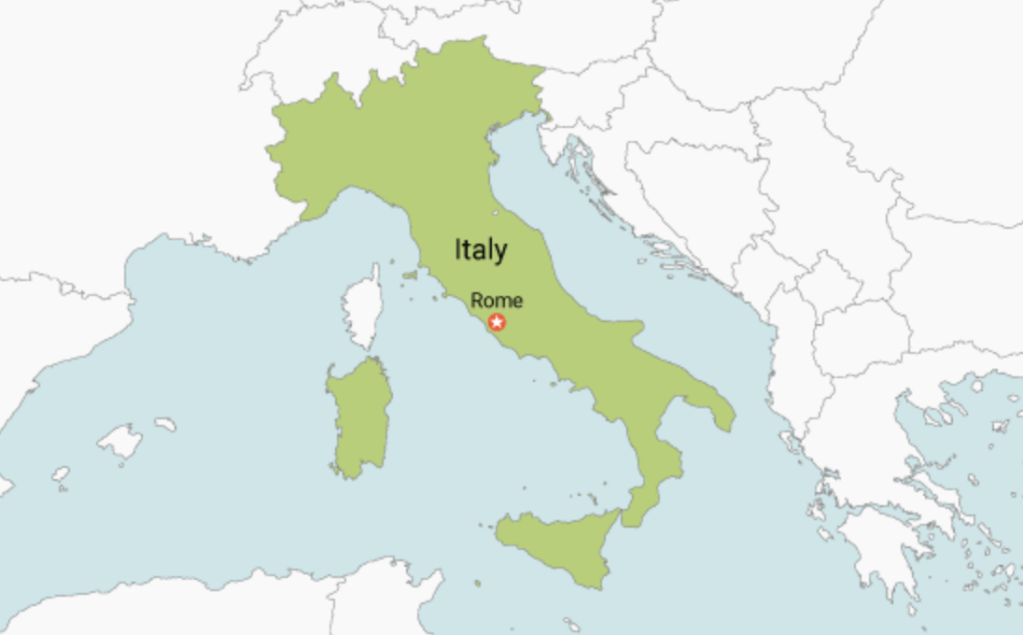
Last week I used the ascendancy of American-born Pope Leo XIV as an excuse to write about literature set in his hometown of Chicago. The new pontiff is of course now based in Vatican City, so I’ll use that as an excuse to write about literature set in…Italy. 🙂
I’m no expert on Italy, or on fiction by Italian authors, or on Italy-set fiction by non-Italian authors, but know enough to eke out a short blog post. 🙂 I’ve visited Venice twice, Florence once, and Rome once, and have read a handful of novels by Italian authors — of which these three are my clear favorites:
1. Elsa Morante’s History (1974), a gripping World War II-era novel about a beleaguered schoolteacher, her two sons (one VERY precocious), a beloved dog, and more in fascist-ruled Rome.
2. Giuseppe Tomasi di Lampedusa’s posthumously published The Leopard (1958), about seismic changes during the time of Italy’s 19th-century unification. Certainly one of the most beautifully written novels I’ve ever read.
3. Umberto Eco’s The Name of the Rose (1980), a riveting historical murder mystery set in a 14th-century monastery.
Some Italian literature I’ve read that I was not as fond of include Eco’s Foucault’s Pendulum novel, Elena Ferrante’s The Lost Daughter novel, and Italo Calvino’s Marcovaldo book of linked short stories.
I have not gotten to Dante Alighieri’s The Divine Comedy — a fact that is not divine and not comedic. 🙂
Then there are of course novels by non-Italian authors set or partly set in Italy/what is now Italy. Among those I’ve read are Stendhal’s The Charterhouse of Parma (starring a young Italian nobleman); Henry James’ The Portrait of a Lady (my favorite HJ work), The Aspern Papers (set in Venice), and Daisy Miller (Rome); Robert Grave’s I, Claudius (ancient Rome intrigue); Anthony Burgess’ The Kingdom of the Wicked (which also unfolds around 2,000 years ago); Irving Stone’s The Agony and the Ecstasy (about Michelangelo); Martin Cruz Smith’s The Girl from Venice (set near the end of World War II); Sally Vickers’ Miss Garnet’s Angel (Englishwoman moves to Venice for six months); and John Grisham’s Playing for Pizza (American quarterback joins a football team in Italy).
Your thoughts about, and examples of, this week’s theme? (After posting this piece, I realized I completely forgot that I had already written about Italian literature in 2022 — as in 2022 AD, not 2022 BC. 🙂 Sorry about that. This piece is somewhat different, at least.)
A note from Misty the cat: “Dave has a broken big left toe and can’t walk me for a while. My female humans Laurel or Maria are now taking me out every morning, but the daily videos you’ll be seeing for a while are ‘reruns’ filmed by Dave in years past, with new captions. The video below is from 2020.”
Misty the cat says: “Here I am in the ‘Up the Down Staircase’ movie.”
My comedic 2024 book — the part-factual/part-fictional/not-a-children’s-work Misty the Cat…Unleashed — is described and can be purchased on Amazon in paperback or on Kindle. It’s feline-narrated! (And Misty says Amazon reviews are welcome. 🙂 )
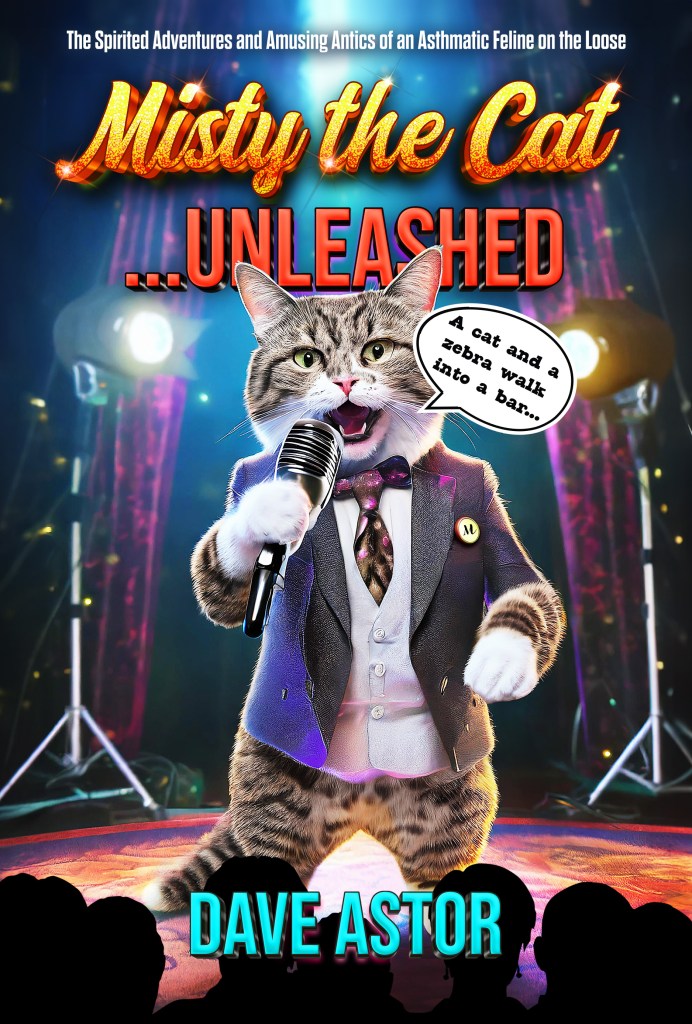
This 90-second promo video for my book features a talking cat: 🙂
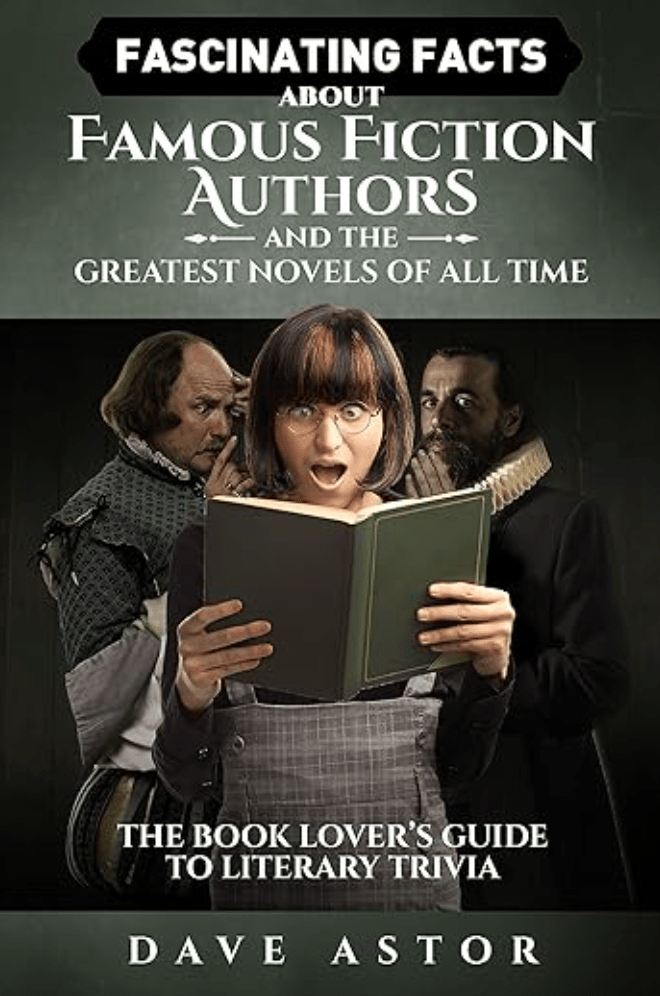
I’m also the author of a 2017 literary-trivia book…
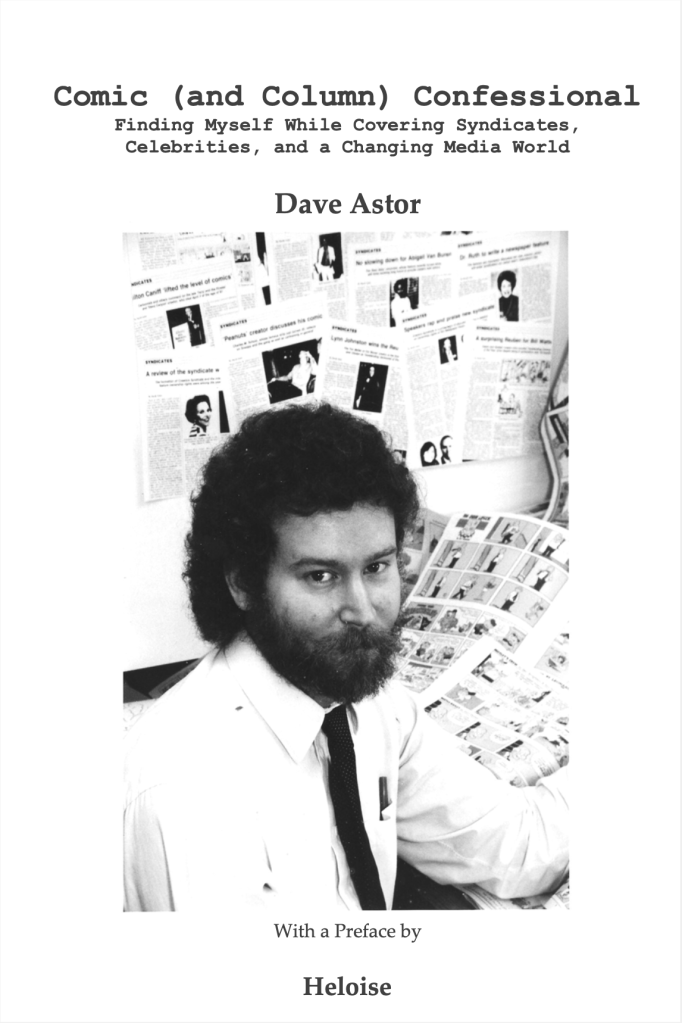
…and a 2012 memoir that focuses on cartooning and more.
In addition to this weekly blog, I write the 2003-started/award-winning “Montclairvoyant” topical-humor column every Thursday for Montclair Local. The latest piece — about the impending departure of my town’s skilled CFO, New Jersey’s governor race, a section of a venerable fallen tree turned into a bench, and more — is here.
 Dave Astor on Literature
Wonderful Post Thanks
LikeLiked by 2 people
Thank you, Rehoboth!
LikeLike
Israel only accepted two commandments at Sinai before we feared that we would surely die and therefore demanded that Moshe receive the rest of the Torah. What’s the “rest of the Torah”, not just the 611 commandments within the language of the Written Torah but all the halachot capable of rising to the sanctity of time oriented tohor commandments from the Torah itself! Herein defines the intent of the 1st Sinai commandment … to obey the revelation of HaShem לשמה.
LORD not the Name revealed in the 1st Sinai commandment and therefore LORD comes under the 2nd Sinai commandment. The same apples to God, Yahweh, Jesus or Allah etc.
The day of Shabbat approaches, but this tohor time oriented commandment does not rest at one day of not doing מלאכה/work but all the rest of the six days of not doing forbidden עבודה on the 6 days of “shabbat”. Raising positive and negative commandments – which do not require prophetic mussar as their k’vanna to tohor time oriented commandments which do require prophetic mussar as their k’vanna – as learned in the first Book of the Written Torah – בראשית. This first word of the Torah בראשית, it contains both a רמז, meaning words
within words of ראש בית, ברית אש, and ב’ ראשית but more it contains a סוד: the idea of tohor time oriented commandments which includes all the halachot contained within the Talmud! Hence the Gra taught the kabbalah that בראשית contains all the commandments of the Torah. Torah, by definition includes all the Halachot of the Talmud, according to the B’HaG’s Hilchot Gadolot, a commentary that Pre-Adamites the Creation of Adam and the Garden.
The next three Books of the Written Torah contain תולדות commandments; positive and negative commandments do not require k’vanna as do tohor time oriented commandments. What distinguishes a tohor time oriented commandment from תולדות commandments and halachot contained within the Talmud? A tohor time oriented commandment requires the dedication of the Yatzir Ha’Tov which breathes tohor spirits from within the heart. The בנין אב/precedent by which Torah common law\משנה תורה/ learns בכל לבבך\כם within the kre’a shma as publicly taught by Rabbi Yechuda Ha’Nasi in one of his Mishnaot within the mesechta of ברכות, the concept of עבודת השם – the key יסוד (which contains סוד) of doing mitzvot לשמה, a person must dedicate tohor middot (( The revelation of the 13 tohor middot revealed to Moshe at Horev 40 days after the substitute theology known as the sin of the Golden Calf )), by sanctifying a tohor spirit which breathes within the Yatzir Ha’Tov within the heart. JeZeus when asked by his disciples did not understand this fundamental and basic kabbalah/סוד. He taught his disciples: “Our Father who lives in Heaven …” Wrong. Tefillah a matter of the Yatzir Ha’Tov within the Heart. Dedicating a spirit does not compare to blowing air from the lungs as expressed through the precedent of blowing the Shofar. Its not the blowing of the shofar that elevates this mitzva unto a time oriented tohor commandment! But rather the affixation of t’keah, tru’ah, and sh’varim to the positive, negative commandments all as tohor time oriented commandments which remember the oaths the Avot Avraham Yitzak and Yaacov swore the oath ( ONE in the opening p’suk of kre’a shma. ), to serve HaShem לשמה through time oriented commandments.
Because both the gospels and new testament never teach this fundamental סוד\יסוד Jews recognize JeZeus as a false messiah. Mu-Ham-Mad referred to JeZeus as a prophet.
LikeLike
Well, I enjoyed both I, Claudius and Claudius the God, and I read them many moons ago. I was still at school then, and I was doing Latin at the time. I had to translate from Latin to English (and back again) – what fun? (hmm). There were various poems and bits of stories from Pliny the Younger, Virgil, Cicero, Ovid, Horace and more. I don’t remember much now -shame, probably.
And just to say – get better soon, Dave. Poor sore big toe… and ouch.
LikeLiked by 1 person
Thank you very much, Chris!
Impressive Latin-English juggling during your school years. 🙂 I also read “I, Claudius” long ago. It does stick with a person.
LikeLiked by 1 person
Hi Dave, the first book that came to mind is Pinocchio by Carlo Collodion. A childhood favourite of mine. I have read Dante’s Divine Comedy and The Inferno twice. As you know I am using it as a basis for my own epic poem.
LikeLiked by 2 people
PS I’m sorry to hear about your broken toe.
LikeLiked by 1 person
Thank you very much, Robbie! Great mention of “Pinocchio,” which I have never read but must have seen the Disney movie version as a kid. And VERY impressive that you’ve read Dante twice. Looking forward to your Dante-inspired epic poem!
LikeLike
Hi Dave, I am making reasonable progress with my Dante re-write. The book Pinocchio is much darker than the movie.
LikeLiked by 1 person
Great to hear about your Dante rewrite progress!
And of course not the only time Disney sanitized/”brightened” a story.
LikeLike
No, Disney is a destroyer of fairy tales.
LikeLiked by 1 person
Ouch! I’m sorry about your big toe. I hope your recovery is swift, so that you’re out walking Misty the cat soon!
Your post made me think of a book I read last year: “Dead Lagoon: An Aurelio Zen Mystery” by Michael Dibdin. The story happens in Venice. Not full of touristy places, but it felt more like places of people who actually live there. A decent story, but I enjoyed the setting of it.
LikeLiked by 1 person
Thank you very much, Dave! I can’t wait to walk Misty again, though it will be a while.
Nice mention and description of that Venice-set book! Glad it focused on people who actually live in that (gorgeous) city.
LikeLiked by 1 person
Oh, Dave. I am so sorry about your toe. We forget how important they are until we find it difficult to walk with a toe injury. I love that we travelled to Italy today so a big thank you!!! Italy has always held a special place in our hearts and imaginations. Its rich history, stunning landscapes, delicious cuisine, and vibrant culture have captivated people for centuries. Reading books set in Italy allow us to experience the beauty and magic of Italy from the comfort of our own homes, without the security lineups at the airports!!!
The follow-up conversations confirmed to me how many books set in Italy have become household names, forever linked to the country in our minds. “Eat, Pray, Love” by Elizabeth Gilbert, E.M. Forster’s “A Room with a View” “The Prince” by Niccolò Machiavelli. Just recently, I met up with Diana Giovinazzo, an Italian writer from Central New York, where she grew up surrounded by books. She told me that while she enjoyed reading stories, she felt compelled to tell her own. I just finished her books, Antoinette’s Sister and “The Woman in Red”. The non-fiction book that I enjoyed was “England’s Mistress: The Infamous Life of Emma Hamilton” by Kate Williams. Napoli was where Lady Hamilton met Lord Nelson.
Another great post and conversation. And I just had to leave this quote.
“The first method for estimating the intelligence of a ruler is to look at the men he has around him.” Niccolò Machiavelli, The Prince
LikeLiked by 4 people
Thank you very much , Rebecca! Yes, toes — especially the big ones — are rather important. 🙂 😦
You’re so right about Italy. Hard to beat the sights, the food, and much more. Your mention of flying reminded me that my wife and I — when our 2004 trip to Venice ended — took a boat in the dark before 5 a.m. from our hotel, floated through the canals of the sleeping city, and ended up at the shore of the airport. Magical.
I appreciate the mention of all those interesting books, and the reminder of your wonderful connection to “The Woman in Red” author Diana Giovinazzo.
That quote from “The Prince” is VERY relevant to today!!!
LikeLiked by 3 people
Emma Hamilton had some story.
LikeLiked by 2 people
She sure did, Shehanne!
LikeLiked by 2 people
She did indeed!!! What a superstar.
LikeLiked by 2 people
Absolutely. A legend.
LikeLiked by 2 people
Great, Rebecca that you met Diana Giovinazza! I have read her Woman in Red some 4-5 years ago and liked it! Many thanks for your interesting contribution.
LikeLiked by 3 people
I can think of 1 author, Elena Ferrante who wrote My Brilliant Friend.
I quite enjoyed it, although slow paced at times. It did reveal much about Italy and its culture post WWII. It also touched on many human dynamics.
Agatha Christie (non Italian example) wrote The Adventure of the Italian Nobleman.
I adore her mysteries, and did go through an Agatha phase in my 30’s.
Thanks for another literary topic, Dave! Give
Nebbiosa a novel pet for me!
LikeLiked by 4 people
Thank you, Resa! I appreciate the mention of Elena Ferrante, and didn’t realize Agatha Christie wrote a book titled “The Adventure of the Italian Nobleman”! (I’m a Christie fan, but not as avid a fan as you are.)
“Nebbiosa”…”Misty” in Italian! Love it! I might just call him that and see how he reacts. 🙂 Just one time…
LikeLiked by 1 person
Hi Resa, I’ve missed that Agatha Christie. I will look for it as I am a fan.
LikeLiked by 2 people
We have so many alikes!
I’m just shooting the last Barbie gown, and then I get to make my door post!
LikeLiked by 1 person
Oh Yay, I am looking forward to seeing it.
LikeLiked by 2 people
Hope you recover soon from your broken toe!
LikeLiked by 2 people
Thank you very much, Dawn! 🙂
LikeLiked by 1 person
Although I’m no expert on Italian literature either, I was proud to have at least one to mention, and that is My Brilliant Friend be Elena Ferrante. It’s a series, and although I never got around to reading the subsequent ones, the first one was pretty good and I think they just dropped an adaptation. I can’t remember what streaming it’s on though. Definitely not my area of expertise with literature, but I like when you write a post that makes me dig in the book memory files! 🙂
LikeLiked by 2 people
Thank you, M.B.! Sounds like we have similar somewhat limited experience with Italian literature. 🙂 As I mentioned in the post, I’ve only read one Elena Ferrante novel and had mixed feelings about it. Perhaps I should try another…
Digging into memories of novels read can indeed be a nice thing. 🙂
LikeLiked by 2 people
If ever there was Europhile author it would be Patricia Highsmith. The Talented Mr Ripley almost entirely takes place in Italy but quite a few of the other Ripley novels bounce around Europe and go back there. A standalone novel Those Who Walk Away takes place entirely in Venice. It’s a useful setting for Highsmith since it places her typically very cultured protagonists in suitable surroundings. Nice article – with some interesting suggestions for further reading.
LikeLiked by 4 people
Thank you, Joe! Nice to hear that Patricia Highsmith set a good amount of her unsettling/memorable work in Italy (and other European countries)! I’ve only read one of her Ripley novels. Highsmith definitely shows that some cultured people have a negative underside.
LikeLiked by 3 people
Hi Dave!
Sorry to read about your toe – hope it heals soon!! Fascinating post! The Name Of The Rose, sounds like I might add it to my TBR pile!! Thanks Dave and have a great week! Sharon
LikeLiked by 2 people
Thank you, Sharon! Hoping it heals soon, too. 🙂 At least it gave me an idea for my next blog post in six days. 🙂
“The Name of the Rose” is a literary page-turner (which might be sort of an oxymoron?).
Have a great week, too!
LikeLiked by 2 people
Thank you Dave! Glad you have another idea for next week’s post!! I’m looking forward to it!! ‘The Name Of The Rose’ – page-turner?!! It sounds thrilling! Be well! Kind regards, Sharon
LikeLiked by 2 people
Thanks, Sharon! Yes, a page-turner that’s more literary than many page-turners. 🙂
LikeLiked by 2 people
Cheers Dave! It sounds good! I’ll let you know when I eventually read it!!
LikeLiked by 2 people
Great, Sharon! I’d be very interested to hear what you think about it! (I read it quite a few years ago.)
LikeLiked by 2 people
I will certainly let you know! Thanks again, Dave.
LikeLiked by 2 people
You’re very welcome, Sharon! 🙂
LikeLiked by 2 people
Sorry about your toe – Sounds far more serious than the foot injury prompting a telegram in Brideshead Revisited.
Rome ? Time to meet Marcus Didius Falco, private detective, his most interesting client ( clue, face on all the coins, 69 – 79, specialty, ( in the first book) mineral rights and uncovering fraud.
Recently, I set a book in Rome, but the cover and title suggest another country,.
LikeLiked by 2 people
Thank you, Esther!
I like the way you introduced “Marcus Didius Falco, private detective” in your comment. 🙂
Nice that you set your book in Rome! What was behind the idea of the cover and title suggesting another country?
LikeLiked by 1 person
🤛
LikeLiked by 2 people
Yes!
LikeLiked by 1 person
👏🌺
LikeLiked by 2 people
🙂
LikeLiked by 1 person
I think I mentioned The Children’s Train by Italian writer, Viola Ardone and Andrea Camillieri’s Inspector Montalbano books in a previous post (although Camillieri might object to my including Sicily in a post about Italy). The Tuscan Child by Rhys Bowen, which I noted as a “page turner” in my list of books, is one of my favorite World War II novels. (I visited Tuscany soon after reading it and visited the area where it was set.)
LikeLiked by 2 people
Thank you, Madeline, for the mentions and the repeat mentions! “The Tuscan Child” is now on my to-read list, which I think has become larger than Italy. 🙂 And wonderful to visit a place (Tuscany) soon after experiencing it as a book setting!
LikeLiked by 1 person
I think I remember your last blog on Rome and Italian settings. This is different and also I am sure you have new readers since. There’s maybe even some new books set there since too and I sense that neither of us has changed our opinion on a certain pendulum…. The contraversial gnazio Silone and his book Bread and Wine is certainlys et in Italy.
LikeLiked by 4 people
Thank you, Shehanne! I appreciate the mention of “Bread and Wine”!
Yes, fortunately yesterday’s post was somewhat different. 🙂 I realized I had written about Italian lit before when I saw that the previous piece was among the three links one often sees at the bottom of WordPress posts. 🙂
And Umberto Eco’s “Foucault’s Pendulum” was indeed an unlikable read. I slogged through it years ago — back when I usually forced myself to finish novels I disliked. 🙂
LikeLiked by 2 people
Well just tell yourself re the other blog that sometimes great minds think like they just did. Look at the bronwie points you’ve got here for Foucault’s.
LikeLiked by 2 people
Thanks, Shehanne! I guess the year (2022) of the previous Italy piece was many hundreds of days ago, if Foucoult’s Pendulum — or any pendulum — is swinging accurately. 🙂
LikeLiked by 2 people
Lol. YOu betcha
LikeLiked by 1 person
🙂
LikeLiked by 1 person
How about E.M. Forster’s A Room with a View? (Which I greatly enjoyed.) I also enjoyed In the Name of the Rose. Oh, and of course I, Clauius!
LikeLiked by 4 people
Thank you, Liz! One of these days I should read “A Room with a View.” Even the title is iconic. 🙂 I appreciate you mentioning it along with the Umberto Eco and Robert Graves novels!
LikeLiked by 3 people
You’re welcome, Dave! I think you’d enjoy A Room with a View.
LikeLiked by 2 people
Thanks, Liz! Will see if my local library has it when I visit next month. 🙂
LikeLiked by 2 people
Hopefully, it does!
LikeLiked by 2 people
Fingers crossed. 🙂
LikeLiked by 2 people
🤞🏻
LikeLiked by 2 people
Thank you indeed for making me discover the Iranian literature. I tried downloading La Storia of Elsa Morante but I can’t find the English version yet.
LikeLiked by 2 people
Thank you, ahmadoutidianebalde! Sorry you can’t yet find the English-language version of “History.” When I read Elsa Morante’s novel, I was fortunate that my local library had it in a print edition.
LikeLiked by 1 person
Wow, Dave. I think this is three weeks in a row you hve me coming up empty. Still, I enjoyed the post and reading the comments. I hope you have a great week.
LikeLiked by 3 people
Thank you, Dan! Never pressure to name a novel — 🙂 — but I’m glad you enjoyed the post and the comments. Have a great week, too!
LikeLiked by 2 people
As I remember “Under The Tucsan Sun” was a commercial success, certainly not a classic, film was well received back in the days.
You mentioned “The Leopard” is a favorite work, had you seen the film,I think with Burt Lancaster? Surely the novels are more memorable than most films, I remember many years ago being in a courtyard in Palermo, Sicily, told that film was shot in Sicily . I think IL Gappardo is name.
Michele
E & P way back
LikeLiked by 2 people
Thank you, Michele! I may give “Under the Tuscan Sun” novel a try now that it’s been mentioned twice. 🙂 I haven’t seen “The Leopard” movie, but it’s hard to imagine it being more exquisite than the novel.
LikeLiked by 1 person
The Leopard has been remade; I watched it on Netflix a few months ago (after my trip to Sicily).
LikeLiked by 3 people
Interesting, Madeline! Didn’t know that. “The Leopard” is a novel certainly worthy of another screen adaptation!
LikeLiked by 1 person
On your theme: Briefly rome-ing… Let me be as brief as possible: There are only two books I can think of in this category: A Room With a View by E.M Forster, The Roman Spring Of Mrs. Stone by Tennessee Williams. And though the following seems a bit off topic, it does veer back again re a very interesting book called Nocturne: In Search Of Moonlight by James Atllee with various stories about the moon in which one of the stories concerns the pathological fear Mussolini had of moonlight. It begins like this:
“Nobody who has not taken one can imagine the beauty of a walk through Rome by full moon,” wrote Goethe in 1787. Sadly, the imagination is all we have today: in Rome, as in every other modern city, moonlight has been banished, replaced by the twenty-four-hour glow of streetlights in a world that never sleeps. Moonlight, for most of us, is no more.
Thanks Dave. I’m not a big fan of Italian literature yet I’m a big fan of Italian food. Susi
LikeLiked by 4 people
Thank you, Susi! Excellent mentions of E.M. Forster, Tennessee Williams, and more — with a couple of humorous wordplay touches!
Yes, with all the artificial light around, seeing the sky is a different experience than it used to be. I suppose Buzz Aldrin (the second person on the moon) having been born in my town, about five blocks from my apartment, is a bit of compensation. (Not really. 🙂 )
I’m also a big fan of Italian food. I suppose most people are. 🙂 But Japanese food is my favorite. 🙂
LikeLiked by 1 person
As soon as I closed out my comment, I thought about Enchanted April by Elizabeth Van Arnim and Dodsworth by Sinclair Lewis. I just read about your injury. Hope it mends fast. Curious as to what Misty found at the bottom of those starecase. Looks like another cat. Ciao. Susi
LikeLiked by 2 people
Thanks, Susi, for the follow-up comment and the toe-mending wishes! Yes, the American title character in “Dodsworth” does travel to Italy. Glad you mentioned that! Another great 1920s Sinclair Lewis novel.
In the Misty video, it’s just a wet spot on the concrete at the bottom of the stairs, but it does have the shape of a cat lying on its side. 🙂
LikeLiked by 1 person
Just remembered ‘Death in Venice’ by Thomas Mann, ‘The Enchantress of Florence’ by Salman Rushdie and ‘The Nature of Blood’ by Caryl Phillips, which has a storyline set in medieval Venice. And I’m really going now, honest … 🙂
LikeLiked by 3 people
Thanks for the three additional mentions, Laura! I’ll have to read “Death in Venice” one of these days…
LikeLiked by 3 people
It’s a great story with classical references – the film didn’t do it justice. I learned, while researching to write an essay about it, that many works of literature have been set in Venice. It seems to exert a certain pull on writers, due to the individual nature of its setting. Which reminds me, I just read a book by Tracey Chevalier, ‘The Glass Maker’, set on Murano Island, Venice. I’m going to bed now. Really … Ciao Ciao 🙂 🙂
LikeLiked by 2 people
Venice is indeed so inspiring in many ways. It’s of course crowded and touristy these days, but still an absolutely amazing place to visit.
LikeLiked by 2 people
So true. It’s a long time since I was there, and the idea of the crowds now is off-putting. I think I’ll stick with my memories. Have a good week, Dave. Really going now – again. 😴😴😴
LikeLiked by 2 people
I hear you, Laura. Sometimes sticking with memories is the best thing. I was last in Venice in 2004. It was very crowded then, but it probably got even more crowded after that. My wife and I did walk to a less beautiful but less packed part of Venice, and it was quite pleasant.
LikeLiked by 2 people
I guess we were last there around 2000. The cruise ships have made it more crowded for sure. We still go to Italy, just not Venice! 😊
LikeLiked by 2 people
Yes, those cruise ships — some of them massive. And there are indeed plenty of other wonderful places to visit in Italy, though Venice is of course unique.
LikeLiked by 2 people
It certainly is. I think they’re stopping the cruise ships now, which will be some relief to the people who actually live there. 🙂
LikeLiked by 2 people
Great that those ships are now banned!
LikeLiked by 2 people
Sorry to hear about the broken toe, Dave – I suffered something similar a very long time ago, but I still remember what a pain and a nuisance it was. Here’s hoping yours heals up soon and you can go on your travels with Misty again. As to literature by Italian authors: I haven’t read too many, although at university many years back I impressed one of my lecturers by becoming her only-ever student who’d read the entire ‘Decameron’ by Boccacio – and with her I also read ‘Mastro Don Gesualdo’ by Giovanni Verga. I’ve also read sections of ‘Orlando Furioso’ by Ariosto, but remember very little of that. I’ve tried ‘The Prince’ by Niccolo Machiavelli, although I wasn’t in the right frame of mind and need to give it another go. I have ‘The Leopard’ on my Kindle, along with ‘The Charterhouse of Parma, to move onto literature set in Italy – there’s just so much of this. My old favourite, Shakespeare, set so much of his work there, including the one of hisi plays which I’ll never watch, ‘Titus Andronicus’. You may know how incredibly violent it is, and the Bard was it seems trying to copy the works of the ancient Roman Seneca, who in his turn updated the tasteful Greek plays into something much bloodier for his Roman audience. ‘The Merchant of Venice’ and ‘The Two Gentlemen of Verona’ speak for themselves in terms of setting (with Milan also featuring in the latter). ‘Othello’ begins in Venice and ‘Romeo and Juliet’ is set in Verona. There’s ‘Julius Caesar’, of course, and ‘Anthony and Cleopatra’, partly set in Rome, while ‘The Taming of the Shrew’ is partly set in Padua. Apparently there’s a legend in Italy that Shakespeare, during his ‘lost years’, lived in Italy, although this can’t be confirmed or denied. England in the Elizabethan age was fascinated by Italy, chiefly because it had a reputation for poisoning and other forms of murder, which is why many of the Bard’s contemporaries set (mainly tragic) plays there. I’m thinking Webster’s ‘The Duchess of Malfi’ and ‘The White Devil’, both set in Italy, while ‘The Revenger’s Tragedy’ (authorship undecided) is set there too. John Ford also set his ‘Tis Pity She’s a Whore’ there. Several centuries later, the poet Shelley turned his hand to dram with ‘The Cenci’, based on the factual story of siblings executed for the killing of their abusive father … and I think it’s high time I stopped! A great country and a great subject for a post, Dave, and I’m sure others will come up with many other examples. Ciao for now … 🙂 🙂 🙂
LikeLiked by 3 people
Thank you, Laura! Nuisance is the word for it. Sorry you had to deal with something similar years ago. Misty is certainly puzzled about why I’m not out there with him on his walks. 😦 Creatures of habit…
I appreciate all the literary mentions — including the Shakespearean ones, among others! Your reading the entire “The Decameron” is very impressive. Lit from that long ago is often a challenge, and it seems to be a rather lengthy work, too.
I read “The Prince” in college, and found it a bit of a slog. But quite influential, of course.
“The Charterhouse of Parma” isn’t a favorite of mind. I thought it was good, not great. Apparently, it was written very quickly — in about seven weeks!
Enjoyed the “ciao” sign-off. 🙂
LikeLiked by 2 people
Best wishes for the toe, Dave. I think we take our bodies for granted, and then discover how one small part being out of commission can make life difficult for the whole, Sorry about all the books I came up with, but Italy is such a fertile ground for stories, it seems. I loved ‘The Decameron’, it’s a great example of story framing, and some of the tales have been very influential – I recommend it. Best stop now before I get going again! Buona notte from this end. Have a good week and catch you later. 🙂 🙂
LikeLiked by 2 people
So true, Laura, about bodily injuries. And “The Decameron” does sound like its reputation as a classic is deserved. Have a great week, too!
LikeLiked by 2 people
As a Dan Brown fan, I immediately thought of his novel “Inferno,” set in Italy. Though not set entirely in Italy, his novel “Angels and Demons” is an even better fit as it involves intrigues related to the election of a new pope in Rome. Sorry to hear about your broken left toe. Get better soon 🙂 ❤
LikeLiked by 3 people
Thank you, Rosaliene! Dan Brown’s books definitely seem to get around internationally! I’ve only read his “The Da Vinci Code,” which was of course set in Paris.
And I appreciate your get-better wishes. 🙂
LikeLiked by 2 people
🙂 ❤
LikeLiked by 2 people
🙂
LikeLiked by 2 people
Good evening Dave,I’m very much enjoying your post about Pope Leo XIV, who comes across to me almost as an Italian, because of the way he speaks the language! I also understand that you have read quite a lot of great books concerning Italy or Italian writers. I also very much enjoyed Giuseppe Tomasi de Lampedusa’s “The Leopoard”! As we live near the border to Italy we have
visited many angles of this beautiful and interesting country, apart from the cities you mentioned, and we also very much enjoyed Sicily or the Aeolian Islands.
At the moment I’m reading a very interesting book by Barbara Serra con il nome “Fascismo in Famiglia” or in English “Fascism in the family”. Barbara writes about the fact that her grandfather had been a fascist Mayor after having been an anti-fascist, but also about the tragedies he had gone through in the first part of his life. Barbara asks herself of whether she has to go through that kind of life in her second part of life!
The writer also speaks to the reader about her personal experiences. When a child her family emigrated to Denmark and she now lives in London after having worked for a long time with AL Jazeera and then Sky News. I have the impression that she sees the world from many angles!
LikeLiked by 3 people
Thank you, Martina! Great that you don’t live that far from Italy! It’s about an 8-hour flight for me. 😦 And glad you also enjoyed “The Leopard.” VERY beautifully written. Hard to believe that it was rejected for publication before the author died. Then it became a best-seller posthumously. Shows how much some publishing companies know…
“Fascism in the Family” sounds fascinating! I appreciate you mentioning it and describing it so well!
LikeLiked by 2 people
I didn’t remember anymore that “The Leopard” had been rejected for publication, Dave! Many thanks for your information. As I think about that important book, I suppose it would be a good idea to read it once more, because Garibaldi’s invasion on Sicily ment that he wanted to free the people from being abused by its aristocrats or the powerful!
By the way, “Fascismo in famiglia” is just unputdownable:)
LikeLiked by 2 people
Always heartening, Martina, to read about anti-autocrats!
LikeLiked by 1 person
Hi Martina, it is always interesting to read your recommendations. I’ll have to look for The Leopard seeing as both you and Dave enjoyed it. I have only been to Italy once but it was a memorable visit.
LikeLiked by 1 person
You will love it, Roberta🌻 I have finally found my old book! Italy is of course always worth going back to.
LikeLiked by 1 person
I’m sure I will love it. I would like to revisit Italy but the opportunity has not come up yet. I am going to London and Belgium in July which will be nice.
LikeLiked by 1 person
Wonderful that you’re visiting London and Belgium in a couple of months, Robbie! I loved my one visit to each place. And I agree with Martha about how great “The Leopard” is. The prose is exquisite; it really makes a reader think deep thoughts about life.
LikeLike
I already have it. I take Martina and your recommendations very seriously. I am very excited about visiting Belgium.
LikeLiked by 1 person
Great on both counts, Robbie! 🙂
LikeLike
Hugs
LikeLiked by 1 person
🙂
LikeLike
Sorry, Dave, I am Anonymous (from above!). Hopefully I’m back to being me now, though. How confusing, lol! 😊
LikeLiked by 2 people
Thank you, Ada! Blog platforms definitely seem to make people “Anonymous” here and there. 🙂 😦
LikeLiked by 2 people
I recently finished “If on a winter’s night a traveler” by Italo Calvino. A complex and very structured novel. I loved it because Calvino somehow makes you feel so close to him. My son loved the novel as well, for other reasons, and with a little more grasp than me, I think. Many years ago, I read “Forse che si, forse che no” by Gabriele D’Annunzio. I possess (antiquarian) editions in French and Italian. I read the French translation. I have a beautiful antiquarian French translation of the “Ragionamenti” by Aretino, with lithos by Siant André. And I have an illustrated three-volume cassette of the Promenades dans Rome by Stendhal with engravings and lithos. Oh, I love Italy, as I do fine books!
LikeLiked by 3 people
Thank you, Dingenom! Maybe I should give Italo Calvino another try. “Marcovaldo” was okay, but I didn’t love it. Great that you have beautiful antiquarian editions of some books! Wonderful items to collect. And I share your love of Italy (despite spending a total of only about 10 days there on separate trips).
LikeLiked by 1 person
Well, I love my e-reader all the same. A lot easier to carry when traveling than all those books! Btw, I have many books in Italian (including leather bound bible-paper editions of Dante’s La Divina Comedia and Tasso’s Gerusalemme Liberata). I fear that my command of the Italian language grew rusty even as my zeal to add to my Italian library continued unabated.
LikeLiked by 2 people
An e-reader definitely has its positive aspects. 🙂 And it sounds like you have a very impressive Italian personal library!
LikeLiked by 1 person
Kudos to you for the Italian novels you’ve read, and the ones simply set in Italy
I was saddened to hear that you broke your left big toe. I don’t think they can put a cast on it but you just have to wait for it to settle, or does orthopedic medicine have new, more advanced techniques now?
LikeLiked by 2 people
Thank you, Luisa! Glad you liked the post. 🙂 I’m sure you’ve read INFINITELY more Italian literature than I have.
Yes, no cast (or bandages, even). I’m wearing a “boot” that doesn’t allow me to flex the foot. Possibly for up to two months. Ugh. I miss my long daily walks, and my other morning walks with Misty the cat. 😦
LikeLiked by 2 people
Take care, dear Dave, and be patient! 😘
LikeLiked by 2 people
Thank you, Luisa! I will. 🙂 More time to read and write, I guess. 🙂
LikeLiked by 2 people
🙏🤗🙏
LikeLiked by 2 people
🙂
LikeLiked by 2 people
What an interesting post! I’ve never visited Italy, although I’d love to at some point. Umberto Eco’s The Name of the Rose is on my to-be-read-one-day list. Ideally, I’d like to read it when in Italy, whilst sipping a lovely drink in the sunshine! I also want to read more of Francesco Petrarca’s poetry, too.😊
LikeLiked by 4 people
Thank you, Anonymous! Hope you get to visit Italy someday! And, yes, reading Italian literature or Italy-set literature while in that country sounds like a very appealing combination. 🙂 “The Name of the Rose” is excellent.
LikeLiked by 1 person
I love books set in Italy. Two that I enjoyed are Sacred Hearts and The Birth of Venice both by Sarah Dunant. I also loved Under the Tuscan Sun by Frances Mayes and Pompeii by Robert Harris. Such a great setting.
LikeLiked by 2 people
Thank you, Darlene! I appreciate those four Italy-related book mentions! And, yes, Italy is such a beautiful, interesting country that books set there have certain advantages. 🙂
LikeLiked by 2 people