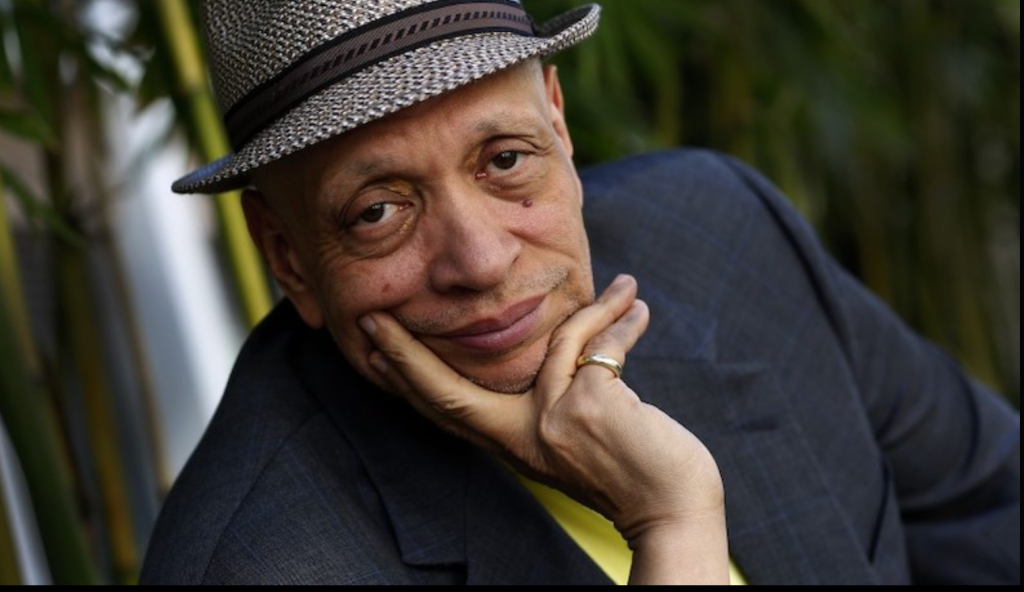
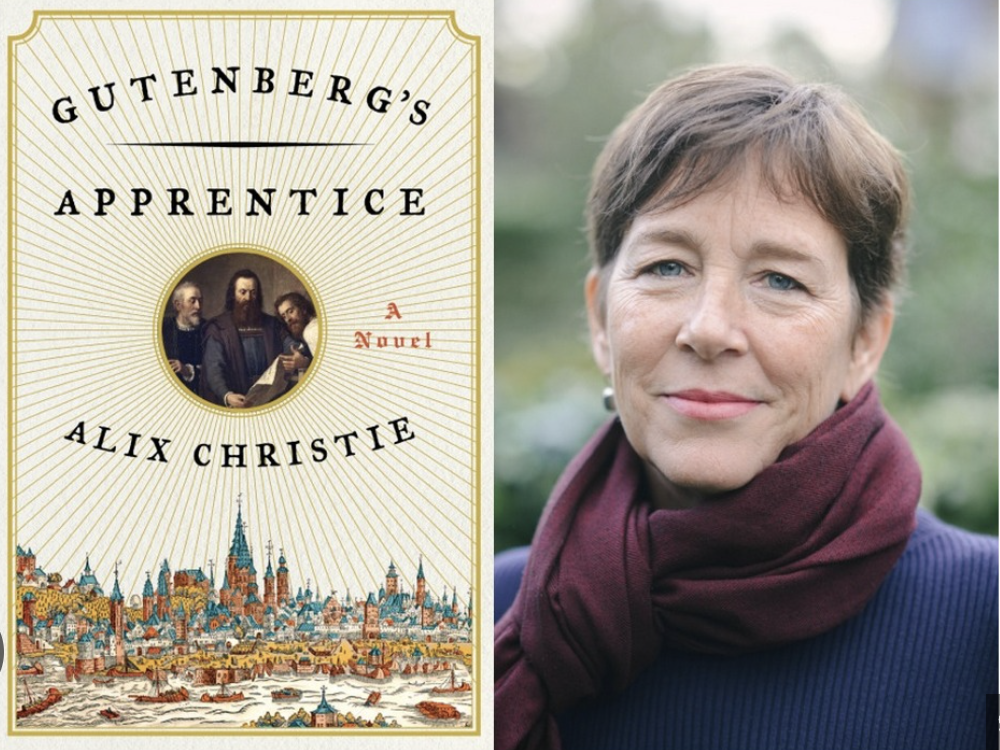
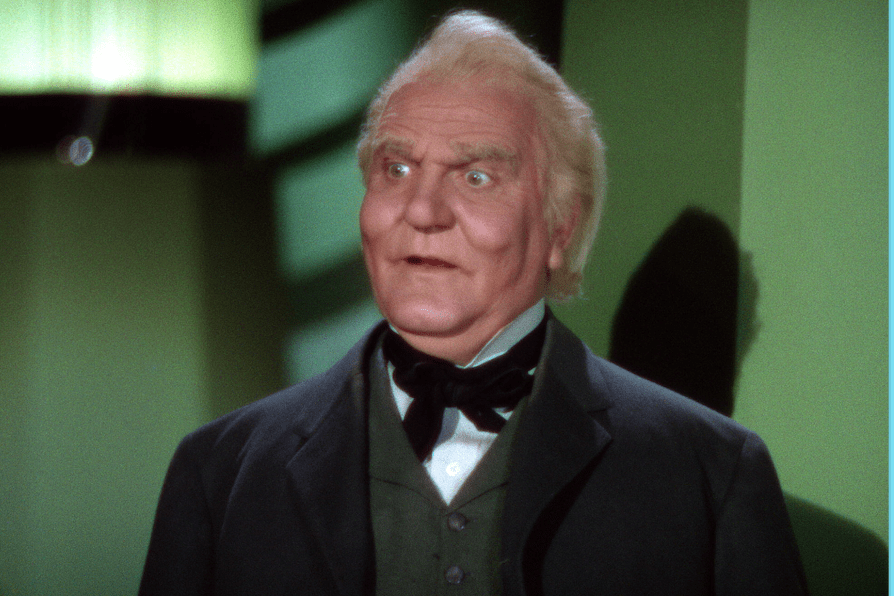
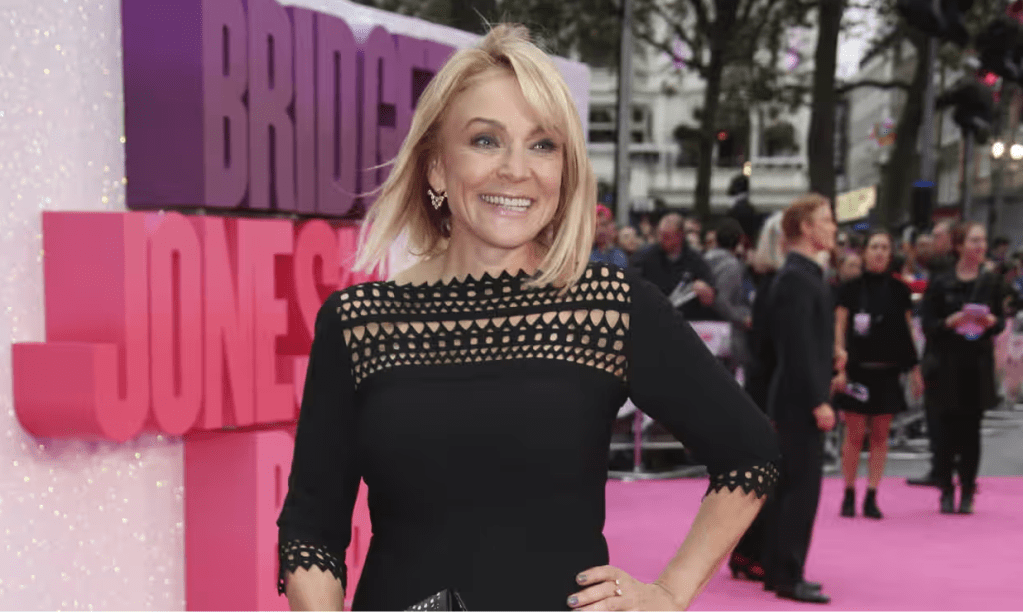
An Array of Additional Author Appearances, Courtesy of YouTube


I’ve previously done posts featuring YouTube clips of past and present novelists, but it’s been a few years now so it’s time to do another. I’m only including short clips — all under 10 minutes and many much less. 🙂

It’s interesting to see authors in a speaking setting. Some talk as well as they write; some don’t. But we do get an additional sense of their personalities, and learn more about their work.

Barbara Kingsolver discusses Charles Dickens’ influence on her latest novel, the Pulitzer Prize-winning Demon Copperhead; going back home; and more:

https://www.youtube.com/watch?v=8TwYw0cjxlw

Toni Morrison (pictured above in a screen shot) talks about survival and the weighty questions of good and evil:

https://www.youtube.com/watch?v=5xvJYrSsXPA

Daphne du Maurier is interviewed by a semi-obnoxious guy:

https://www.youtube.com/watch?v=W9JvTUjCd0s

A rare recording of Virginia Woolf’s voice:

https://www.youtube.com/watch?v=E8czs8v6PuI

John Grisham answers questions on The View TV show:

https://www.youtube.com/watch?v=4iUhIuVsr3c

Stephen King speaks with Stephen Colbert about his difficulty finishing The Stand and lists his own works that are his personal favorites:

https://www.youtube.com/watch?v=MoejU-tf4xI

Kristin Hannah (The Nightingale, The Four Winds, The Great Alone, etc.) summarizes what she focuses on in her fiction:

https://www.youtube.com/watch?v=UaAmehxDdSQ

Arundhati Roy (The God of Small Things) talks about writing and activism:

https://www.youtube.com/watch?v=y2h5AlqYwVU

Rohinton Mistry (A Fine Balance) discusses coming to writing later than many authors, education, and more:

https://www.youtube.com/watch?v=Pqw3Csbmnhg

Hilary Mantel (Wolf Hall) on English queen Anne Boleyn:

https://www.youtube.com/watch?v=Ohx2Lec6dko

This previous post from 2020 includes clips of Herman Wouk, Liane Moriarty, Alice Walker, Isabel Allende, Zadie Smith, Margaret Atwood, Lee Child, Donna Tartt, George R.R. Martin, Stephen King, Kate Quinn, James Baldwin, J.R.R. Tolkien, Mark Twain, and Leo Tolstoy:

https://daveastoronliterature.com/2020/05/24/author-clips-on-youtube/

Another 2020 post features clips of Fannie Flagg, Rita Mae Brown, Terry McMillan, Khaled Hosseini, Kazuo Ishiguro, Walter Mosley, Harper Lee, Octavia Butler, W. Somerset Maugham, Ray Bradbury, Sue Grafton, Buchi Emecheta, H.G. Wells, and Boris Pasternak:

https://daveastoronliterature.com/2020/05/31/author-clips-on-youtube-the-sequel/

My literary-trivia book is described and can be purchased here: Fascinating Facts About Famous Fiction Authors and the Greatest Novels of All Time.

In addition to this weekly blog, I write the 2003-started/award-winning “Montclairvoyant” topical-humor column every Thursday for Montclair Local. The latest piece — about my town’s mayor “taking the fifth,” and more — is here.

Separation as a Literary Theme

An internment camp in Idaho for Japanese-Americans during World War II.

It’s quite intense when fictional characters who are in love disappear from each other’s lives. So many questions evoked: Why did they get separated? How long will they be apart? Will they ever get back together? If so, how will that come about? If not, why not? All this can make for page-turning, emotionally wrenching novels.

I experienced this again last week when reading Jamie Ford’s heartwarming/heartbreaking 2009 novel Hotel on the Corner of Bitter and Sweet, which focuses on Chinese-American preteen boy Henry Lee and Japanese-American preteen girl Keiko Okabe in the months after they meet in Seattle in 1942. They develop a charming relationship amid anti-Asian prejudice that’s especially virulent against Japanese-Americans at a time when the U.S. and Japan were on opposing sides during World War II.

Then, Keiko and her family are forced to move, along with other innocent Japanese-Americans, to a bleak internment camp in Idaho. She and Henry manage to stay in touch for a while until their relationship is sabotaged (we learn how that happened late in the book) and the two go on to have totally divergent lives with no contact at all. Then Henry, who married someone else, becomes a widower in the mid-1980s. Will he and Keiko find each other again? (During a time when the Internet, and its search-for-people possibilities, was not a general-public thing.)

Through these two characters, author Ford (who is partly of Chinese descent) makes us deeply feel the injustice of what was done to loyal Japanese-American citizens during WWII. And I couldn’t help thinking of the blatant racism that spared most (not all) white German-Americans and white Italian-Americans from also being wrongly put in custody, even though the countries of their ancestry were at war with the U.S., too.

Speaking of white Europeans, we have the English characters Anne Elliot and Captain Frederick Wentworth in Jane Austen’s Persuasion. They’re engaged until things get broken when the young, not-yet-mature Anne is persuaded by interfering family and friends that Wentworth doesn’t have high enough social status. Eight years later, the two meet again. Will things work out this time? My favorite Austen novel.

In Charlotte Bronte’s Jane Eyre classic published three decades later, we have the famous rupturing of the Jane/Edward Rochester relationship. They are subsequently apart for about 10 months (a 10 months in which a LOT happens) until…

A novel written in the 20th century but set in the 19th features an unconsummated “affair” between Newland Archer and the free-spirited Ellen Olenska even as Newland is engaged and then married to the conventional May Welland. This is in Edith Wharton’s memorable The Age of Innocence. After May’s death nearly three decades later, Newland has the chance to see Ellen again. The ending surprised me.

Circling back to World War II, a key relationship in Herman Wouk’s gripping War and Remembrance is between Byron and his Jewish wife Natalie. The two are parted as Byron serves in the U.S. Navy, and further parted when Natalie — through a series of events too complicated to summarize here — ends up in a Nazi concentration camp despite being an American. Will she survive?

Reunions don’t always occur, or, when they do, don’t always result in “happily ever after” endings. While I don’t want to give specific spoilers, not every situation I discussed above concluded as pleasingly as readers might have hoped. But others finished in a more upbeat way.

Examples fitting the theme of this post?

My literary-trivia book is described and can be purchased here: Fascinating Facts About Famous Fiction Authors and the Greatest Novels of All Time.

In addition to this weekly blog, I write the 2003-started/award-winning “Montclairvoyant” topical-humor column every Thursday for Montclair Local. The latest piece — about an unfortunate intra-town lawsuit and a great cat cafe — is here.

When a Fictional Cast Focuses on the Past

Josephine Tey (credit: Sasha/Hulton Archive/Getty Images)

One of the many reasons we read literature is to get a sense of the past. Some fictional characters are quite interested in the past as well.

I just finished Josephine Tey’s intriguing 1951 novel The Daughter of Time, which features a hospitalized 20th-century Scotland Yard inspector who’s ultra-bored as he recovers from a badly broken leg and other injuries. Alan Grant eventually gets immersed in the late 1400s — specifically in sleuthing (via old documents brought to him) whether or not King Richard III was a murderer. Fascinating to try to solve a mystery involving people dead for hundreds of years, and Tey also has lots to say about historical-writing bias that reflects the perspective of “the winners.”

There’s an even bigger time gap in Daphne du Maurier’s haunting 1969 novel The House on the Strand, in which 20th-century guy Dick Young takes a drug to repeatedly go back to the 1300s — becoming engrossed in the goings-on of that period (to the detriment of his life in modern times).

Visiting the past is also a thing in Octavia E. Butler’s powerful 1979 novel Kindred, in which 20th-century Black writer Dana Franklin is involuntarily thrust back in time to America’s slave-holding South. There the young Californian meets her ancestors, Black and white, and one of the plot points involves Dana trying to ensure that she’ll end up eventually being born and existing in her own time. Butler of course has plenty to say about racism, too.

One of the highlights of another time-travel work — Diana Gabaldon’s page-turning, still-ongoing Outlander series — involves 20th-century physician Claire Randall doing research as she considers a return to 18th-century Scotland. That’s where Claire met and married Jamie Fraser before she had to return to the 1900s, pregnant with their child. Claire, assisted by her now-grown daughter and future son-in-law, uses historical records to try to determine whether Jamie is still alive at a certain point of the 1700s and, if so, where in Scotland he might be.

A.S. Byatt’s 1990 novel Possession, which I recently discussed in another blog post, features two 20th-century academics studying two 19th-century poets (a woman and a man) and whether they had a romantic relationship. The academics don’t physically go back in time, but their minds are certainly focused there for much of the book.

The nameless narrator of Henry James’ absorbing 1888 novel The Aspern Papers is also interested in a dead 19th-century poet (Jeffrey Aspern) as he uses subterfuge to try to get access to Aspern’s old papers from the late poet’s now-aged lover.

Fiction you’ve liked in which the characters are very interested in the past?

My literary-trivia book is described and can be purchased here: Fascinating Facts About Famous Fiction Authors and the Greatest Novels of All Time.

In addition to this weekly blog, I write the 2003-started/award-winning “Montclairvoyant” topical-humor column every Thursday for Montclair Local. The latest piece — about a welcome reelection bid, a squandered hate-crime grant, a great high school concert, and more — is here.

Reading Painful Novels Can Be Worth the Pain

Sometimes, the subject matter of a novel is almost too painful to read. But if the book is good, we read it nonetheless.

Why? We might admire the storytelling, like the author’s writing style, relate to the characters, learn a lot, think about our own lives and the lives of people we know, and get a needed reminder of how much sadness and inhumanity there is in the world — which exercises our empathy muscles. Also, a painful novel might offer a bit of hope and inspiration, via some silver linings in the plot and/or the courage and resilience of certain characters. Plus some truly nasty characters might get their comeuppance. (Or might not.)

My latest experience with a gut-wrenching work of fiction came last week when I read John Grisham’s riveting 2010 novel The Confession, which tells the ultra-depressing tale of a Black teen put on Death Row in Texas after being framed by law enforcement for a murder a white man committed. Such an agonizing scenario that I almost put down the novel in despair, especially when I sensed that the pulls-no-punches Grisham was going to again give his readers a sad or mixed ending. But I kept on — admiring Grisham’s suspenseful writing and his fury at the injustice rampant in America’s legal system…and his fury at spineless, amoral politicians.

I had a similar reaction a few years ago to Angie Thomas’ excellent The Hate U Give — a novel I’ve discussed here before that focuses on the plucked-from-the-headlines killing of a young Black man by a trigger-happy white cop, and the reaction to his death by his (female) friend and the community at large.

More recently, I read and wrote about Rohinton Mistry’s India-set A Fine Balance, which had many excruciating moments of the powerful making life miserable for the powerless but was crafted so well I had no thought of stopping.

Of course, novels about war, genocide, slavery, a pandemic, and so on will make readers despondent but glued to the pages if the books are good enough. I’m thinking of titles such as Herman Wouk’s War and Remembrance, William Styron’s Sophie’s Choice, Harriet Beecher Stowe’s Uncle Tom’s Cabin, and Albert Camus’ The Plague, to name just four novels among many.

And, yes, dystopian works like George Orwell’s Nineteen Eighty-Four, Margaret Atwood’s The Handmaid’s Tale, Octavia Butler’s Parable of the Sower, Ray Bradbury’s Fahrenheit 451, and Suzanne Collins’ The Hunger Games trilogy are simultaneously hellish and very compelling.

In an ideal world, we would hope that enough people perusing painful books might help (through reader change of heart, activism, etc.) lead to a society where fewer painful things happen. Perhaps wishful thinking, but…

Your thoughts about this topic, and any examples you might have of distressing novels you’ve read or tried to read?

My literary-trivia book is described and can be purchased here: Fascinating Facts About Famous Fiction Authors and the Greatest Novels of All Time.

In addition to this weekly blog, I write the 2003-started/award-winning “Montclairvoyant” topical-humor column every Thursday for Montclair Local. The latest piece — about a welcome mayoral candidate, no teacher layoffs, an overpaid township manager, and more — is here.

The New Year Brings New Literary Anniversaries

Who IS this guy? You’ll find out near the end of the post. 🙂

It’s 2024, and time for me to again mention novels reaching significant anniversaries in a new year. I’ll discuss books I’ve read, and also list some of the ones I haven’t read. Let’s start with fiction published in 1999 — a quarter century ago.

That year saw the eagerly awaited arrival of the third installment of J.K. Rowling’s mega-popular Harry Potter series. Harry Potter and the Prisoner of Azkaban is considered by many to be the first- or second-best book in the seven-book series, and I feel the same way.

Also released in 1999 were Kent Haruf’s poignant Plainsong, Andre Dubus III’s intense House of Sand and Fog, Stephen King’s suspenseful The Girl Who Loved Tom Gordon, John Grisham’s compelling The Testament, Ha Jin’s affecting Waiting, Nicholas Sparks’ heartbreaking A Walk to Remember, Susan Vreeland’s engrossing Girl in Hyacinth Blue, and Jhumpa Lahiri’s absorbing Pulitzer-winning story collection Interpreter of Maladies.

Among the notable ’99 novels I haven’t read are Tracy Chevalier’s Girl with a Pearl Earring and Joanne Harris’ Chocolat (I did see the delightful movie version of the latter book).

Moving on to 1974 — a half-century ago! Published that year were Elsa Morante’s amazing novel History, the aforementioned Stephen King’s eye-opening debut Carrie, Peter Benchley’s “biting” Jaws (I seem to remember a certain blockbuster film it inspired), and Thomas Tryon’s underrated Lady.

Some of the notable ’74-released books I haven’t gotten to include James Michener’s Centennial, James Baldwin’s If Beale Street Could Talk, John Nichols’ The Milagro Beanfield War, Joseph Heller’s Something Happened, and John le Carre’s Tinker, Tailor, Soldier, Spy.

I should also mention a couple of iconic 1974 nonfiction books I read: Robert Caro’s jaw-dropping tome The Power Broker, and Bob Woodward and Carl Bernstein’s political classic All the President’s Men.

Now, let’s go back a century. Perhaps the most famous 1924-released novels are E.M. Forster’s culturally complex A Passage to India and Herman Melville’s posthumously published stunner Billy Budd, both of which I’ve read.

Among the 100-years-ago books I haven’t gotten to are Thomas Mann’s The Magic Mountain, P.C. Wren’s Beau Geste, and Joseph Roth’s Hotel Savoy.

In 1874, 150 years ago, we had Thomas Hardy’s Far from the Madding Crowd and Jules Verne’s The Mysterious Island, among other novels.

Two centuries ago? The only 1824 novel I could find that’s somewhat remembered today is one of Walter Scott’s lesser-known titles: Redgauntlet.

Two-hundred-fifty years ago saw the publication of Johann Wolfgang Goethe’s famous The Sorrows of Young Werther. The author (pictured atop this page) was just in his mid-20s in 1774!

Your thoughts about this post? Also, I’m sure I missed some books, so please name any you’d like. 🙂

One last thing: Below is a screen grab from the back end of my blog showing some stats from 2023. Thanks so much to everyone who read my weekly posts and commented under them! I loved the conversations. 🙂

My literary-trivia book is described and can be purchased here: Fascinating Facts About Famous Fiction Authors and the Greatest Novels of All Time.

In addition to this weekly blog, I write the 2003-started/award-winning “Montclairvoyant” topical-humor column every Thursday for Montclair Local. The latest piece — a lament about my community’s Township Council — is here.

My Most-Worth-Writing-About-iest Reads of 2023

Abraham Lincoln and his son Willie.

I’ve read 46 novels this year. A bit under my annual goal of one a week, but I certainly met my annual goal of experiencing all kinds of emotions through literature. Here’s what I call my “-est list” for 2023:

Weirdest book I read: George Saunders’ Lincoln in the Bardo, which I finished a few days ago. Written more like a play than a novel, it features a chorus of ghosts stuck in purgatory as President Lincoln’s deceased 11-year-old son Willie arrives among them in 1862. Original, moving, darkly humorous, choppy, repetitive, and many other adjectives. Plus some impressive invented language.

Saddest book focusing on many characters: Leon Uris’ Mila 18, the historical-fiction novel about the Jewish uprising in the Warsaw Ghetto — and the Nazi crushing of that doomed uprising after some early against-all-odds success. Heartbreaking.

Saddest book focusing on a small number of characters: Rohinton Mistry’s A Fine Balance. Such a downer of a novel but so well-written. Some warm moments amid the inhumanity, with much of that inhumanity “courtesy” of the vile powerful against the powerless.

Funniest book: Terry Pratchett’s Small Gods, which includes plenty of satirical commentary about religion and more.

Most escapest…oops…escapist book: John Grisham’s Playing for Pizza. Football in Italy! Where a disgraced NFL quarterback goes to play when no other QB job is available. (Football as in American football, not soccer.)

Dual-timeline-iest book: Barbara Kingsolver’s Unsheltered, by the brilliant author who hasn’t lost a step in 35 years of novel writing. Unsheltered focuses on two sets of characters living in the same place, more than a century apart. One of my favorite books read this year.

Sympathize-with-the-protagonist-the-mostest book: Several Kristin Hannah titles were in the running for this, but I’ll go with The Four Winds and its beleaguered Elsa Martinelli as she lives “the life of Joad.” (The novel’s story line has some deliberate similarities to John Steinbeck’s The Grapes of Wrath.)

Subtlest book: Kent Haruf’s Our Souls at Night. A low-key but never boring work about a woman and man who briefly find happiness together late in life. Haruf’s Plainsong, which focuses on a wider, intergenerational array of characters, was a close second in poignancy.

Don’t-bring-this-to-a-block-party-iest book: Joy Fielding’s compelling Cul-de-Sac, about harrowing stuff that happens in and between the families on one suburban Florida street.

Clunkiest book: Dan Brown’s The Da Vinci Code. Liked the intricate plot. Didn’t like the often-awkward writing.

Longest book: J.K. Rowling’s The Ink Black Heart, the sixth installment of the series starring private investigators Cormoran Strike and Robin Ellacott. Rowling (writing as Robert Galbraith) rambles on for more than 1,000 pages but I mostly loved it — as I also loved the first five novels in a series that skillfully combines mystery/thriller elements and interpersonal dynamics.

Newest book: Lee Child and Andrew Child’s Jack Reacher-starring The Secret — which I just read, two months after it was published in October 2023. Few mystery/thriller books ratchet up the tension like those in the Reacher series do, and the latest novel (number 28) is excellent.

Oldest books: Georgette Heyer’s 1925 Simon the Coldheart and Vicki Baum’s 1929 Grand Hotel. Reminds me that I should have gotten to some novels from the 1800s last year, or did I read most of the 19th-century ones I’m going to read in the decades before 2023 rolled around? 🤔 Nah, this year was just a blip… 🙂

Novels you read in 2023 that left the most impression on you? And…Happy New Year!

My literary-trivia book is described and can be purchased here: Fascinating Facts About Famous Fiction Authors and the Greatest Novels of All Time.

In addition to this weekly blog, I write the 2003-started/award-winning “Montclairvoyant” topical-humor column every Thursday for Montclair Local. The latest piece — a 2023 year in review about a very newsworthy 12 months in my town — is here.

Admirable Novels With Unadmirable Protagonists

Joy Fielding

I’ve focused on novels with unlikable main characters before, but I’d “like” to return to that subject I last addressed in 2022 and 2017.

I just read Puppet by Canadian author Joy Fielding, and her protagonist Amanda Travis is…annoying. Selfish, impatient, sleeps with married men — and is an attorney with few qualms about representing criminal lowlifes. Also, she’s twice-divorced at age 28, with her being the cause of both relationships ending.

Yet I enjoyed Puppet, racing through it in two days. Why does one like any novel featuring a protagonist who gets on one’s nerves? Well, when it has various other things going for it…

In the case of Puppet, it offers a propulsive plot often focusing on why Amanda’s mother killed a man for apparently no reason. It also has some likable supporting characters, including Amanda’s first ex-husband.

And Amanda is not all bad. She’s self-critical, and smart, funny, hard-working, and determined. Plus one understands that her at-times-abrasive personality was shaped by growing up in an unloving household.

Last but not least, author Fielding’s writing is excellent. Oh, and we get plenty of Florida and Toronto atmosphere: Amanda lives in The Sunshine State after having grown up in Canada; she travels north after learning about the murder charge her mother is facing.

Two other not-that-likable people starring in novels I’ve enjoyed in recent years?

One is the title character in Alexander Pushkin’s 19th-century Eugene Onegin — a cynical, arrogant “dandy.” But he’s interesting in his way, plus there are sympathetic supporting characters in the book along with a good amount of story-line tension. Still, what makes Pushkin’s novel-in-prose an absolute classic is that it’s exquisitely written.

Then, in William Kennedy’s melancholy Ironweed, there’s Francis Phelan — basically an irresponsible drunk who abandoned his family. But the haunted Francis does have somewhat of a conscience, and at least part of the reason for his life going downhill stems from a horrible tragedy. In addition, Kennedy’s writing is skillful and atmospheric.

In previous posts, compelling novels with unlikable protagonists I’ve mentioned included Edith Wharton’s The Custom of the Country, Donna Tartt’s The Secret History, Cormac McCarthy’s Blood Meridian, Andre Dubus III’s House of Sand and Fog, Emile Zola’s Therese Raquin, John Grisham’s The Brethren, and John Kennedy Toole’s A Confederacy of Dunces, among others.

Your thoughts on, and examples of, this topic?

My literary-trivia book is described and can be purchased here: Fascinating Facts About Famous Fiction Authors and the Greatest Novels of All Time.

In addition to this weekly blog, I write the 2003-started/award-winning “Montclairvoyant” topical-humor column every Thursday for Montclair Local. The latest piece — about nationally known athletes who lived in my town — is here.

Authors Who Moved to Movies

Vicki Baum (dpa Picture-Alliance)

Vicki Baum’s 1929 novel Grand Hotel is well-known for spawning 1932’s Academy Award-winning Grand Hotel movie. But did you know that the Austria-born Baum (actual first name: Hedwig) was not only a prolific novelist but a screenwriter as well? She co-wrote the screenplay for the Grand Hotel film, and also helped script various other movies — which led me to think about how a number of novelists have doubled as screenwriters for financial reasons and/or for a creative change-of-pace and/or to mingle with celebrities and/or for other reasons.

Before I get into that, here are my brief thoughts about the Grand Hotel book, which I read for the first time last week. A very compelling novel about a group of Berlin hotel guests — including an aging ballerina, a charismatic con man with some conscience, a disfigured World War I veteran, an unsavory businessman, a timid clerk who might be dying, and a beautiful/good-natured stenographer — whose lives end up intersecting in quite dramatic ways. A bonus is that Baum gives the hotel’s staffers some page time and personality, too.

Many readers are aware that F. Scott Fitzgerald had a couple of sojourns in Hollywood. His movie-writing output and credits were not much to speak of, but The Great Gatsby author’s time in California had a big impact on his novels: a young actress (Lois Moran) he met influenced his Rosemary Hoyt character in Tender Is the Night, and the protagonist in Fitzgerald’s unfinished The Last Tycoon was based on film executive Irving Thalberg.

Aldous Huxley (Brave New World, Point Counter Point, etc.) was also a Hollywood screenwriter for a number of years — even helping to work on the 1940s movie versions of two all-time novels: Jane Austen’s Pride and Prejudice and Charlotte Bronte’s Jane Eyre.

William Faulkner, too, co-scripted 1940s movies based on novels: Ernest Hemingway’s To Have and Have Not and Raymond Chandler’s The Big Sleep. This was after Faulkner authored several of his most famous books, including The Sound and the Fury and As I Lay Dying.

John Steinbeck of The Grapes of Wrath and East of Eden fame wrote the screenplay for Viva Zapata! and was earlier involved in co-penning Alfred Hitchcock’s Lifeboat.

Speaking of boats, Ray Bradbury co-wrote the screenplay for the 1956 movie version of Herman Melville’s Moby-Dick.

Rather than novels, Dorothy Parker penned short stories, clever verse, criticism…and movie scripts — including co-writing the 1937 version of A Star Is Born as well as Hitchcock’s Saboteur.

Among other novelists who worked on film scripts: James Agee, Michael Chabon, the aforementioned Raymond Chandler, Agatha Christie, Michael Crichton, Dave Eggers, William Goldman, Larry McMurtry, and Mario Puzo, to name a few.

Thoughts about, and examples of, this topic?

My literary-trivia book is described and can be purchased here: Fascinating Facts About Famous Fiction Authors and the Greatest Novels of All Time.

In addition to this weekly blog, I write the 2003-started/award-winning “Montclairvoyant” topical-humor column every Thursday for Montclair Local. The latest piece — about legal challenges to a massive development and a closed train station waiting room — is here.

Evoking Other Novels While Remaining Original

A 1935 Texas dust storm like those in Kristin Hannah’s novel The Four Winds.

Today’s topic evokes a topic I’ve previously written about — novels that evoke previous novels.

This doesn’t mean the evoking book is plagiaristic. Often, the novel is quite original and excellent (like the one I’m about to discuss), even as the author deliberately or subconsciously makes references to previous literature. Heck, there are only so many plots, ideas, scenarios, character types, etc. No novel is completely unique.

As alluded to, I’m going to discuss this concept via a novel I recently read — Kristin Hannah’s propulsive, page-turning, heartbreaking The Four Winds.

Among the characters its Elsa protagonist evokes is Jane Eyre. Both are plain-looking and had difficult childhoods almost totally devoid of love, yet they are “survivors” possessing a good measure of resilience. Perhaps not a coincidence that among Elsa’s favorite novels in The Four Winds is…Charlotte Bronte’s Jane Eyre.

Elsa — whose low self-esteem is eventually helped somewhat by becoming a hard-working farm woman and mother, and by growing close to the two loving parents of her problematic husband — also made me think of Valancy Stirling of L.M. Montgomery’s The Blue Castle. Valancy, too, had to deal with horrible, judgmental parenting and other challenges such as (alleged) ill health, even as she would find the strength and independence to try to better her life.

But the novel that The Four Winds most evokes is The Grapes of Wrath. Most of Hannah’s book is set in the 1930s — the Depression-era decade in which John Steinbeck’s 1939-published classic also unfolds. Elsa (along with her two children) flee drought-stricken “Dust Bowl” Texas to seek a better life in California, only to face huge difficulties and vicious anti-poor/anti-newcomer sentiment from landowners, the police, and many other residents in “The Golden State” — challenges previously faced by Steinbeck’s Joad family, who drove to California from Oklahoma. Elsa’s personality feels like a mix of the fierce, compassionate Ma Joad and her stoic, admirable son Tom Joad.

Meanwhile, communist union organizer Jack in The Four Winds is reminiscent of lapsed preacher Jim Casy in The Grapes of Wrath…and also makes one think of lawyer Max in Richard Wright’s Native Son. Those three characters are sympathetic and non-stereotypical — not always the case with depictions of “reds” or other leftists in literature.

Finally, Elsa’s strong-willed, gutsy, dissatisfied, rebellious, ultimately loving daughter Loreda evokes too many other fictional teens to name, yet she is a very distinct character in her own right. Which helped remind me once again that Kristin Hannah is one of my favorite living novelists.

Your thoughts on this topic?

My literary-trivia book is described and can be purchased here: Fascinating Facts About Famous Fiction Authors and the Greatest Novels of All Time.

In addition to this weekly blog, I write the 2003-started/award-winning “Montclairvoyant” topical-humor column every Thursday for Montclair Local. The latest piece — about rent-gouging, speed-limit reductions, and more — is here.

Walks to Remember in Literature

A photo I took this past Friday during a walk in a local park.

As someone who takes a long stroll almost every day, I like to see walking in literature.

Of course, memorable walks in fiction are usually not just for relaxation or exercise. They need to have some drama attached — whether positive drama, such as when romantic couples amble along, or mixed or negative drama like much of the rest of this blog post will show.

So, let’s begin trekking down the path of examples…

The first novel that came to mind was Walter Scott’s The Heart of Mid-Lothian (1818). In it, working-class protagonist Jeanie Deans trudges about 400 miles/644 kilometers from Edinburgh to London to seek a royal pardon sparing her sister Effie from a death sentence. It’s my favorite of Scott’s many great novels.

As I stay with 19th-century literature for a minute, I’ll mention that memorable walks can occasionally occur indoors, too. One of the most vivid parts of Emile Zola’s 1877 novel The Drinking Den (L’Assommoir) is when Gervaise and Coupeau and their wedding party trudge through the Louvre — a joyful, tense, chaotic scene that presages a union that will be happy and then disastrous.

Walking is also involved in escapes (as is running). I thought of Harriet Beecher Stowe’s 1852 classic Uncle Tom’s Cabin, in which Eliza frantically tries to flee slavery on foot with her young son in her arms. Also, Louis L’Amour’s 1987 novel Last of the Breed has Native-American protagonist Joseph Makatozi make a break from Soviet imprisonment and then walk hundreds of miles across Siberia trying to elude his would-be captors.

In Jean M. Auel’s The Plains of Passage (1990), the fourth installment of the Earth’s Children series that began with The Clan of the Cave Bear, prehistoric couple Ayla and Jondalar hike the enormous distance from what is now Ukraine to what is now France.

There’s also lots of wearisome walking during the epic journey of the “good guy” characters in J.R.R. Tolkien’s The Lord of the Rings (1954) — as there is with the father and son in Cormac McCarthy’s post-apocalyptic The Road (2006).

I haven’t read The Long Walk (1979) by Stephen King or The Unlikely Pilgrimage of Harold Fry by Rachel Joyce (2012), but know each novel has much moving of feet.

Animals in fiction can tread huge distances, too, as exemplified by Luath and Bodger the dogs and Tao the cat traveling approximately 300 miles/483 kilometers through the Canadian wilderness to try to return home in Sheila Burnford’s 1961 novel The Incredible Journey.

I’ll conclude with Nicholas Sparks’ A Walk to Remember, which the title of this blog post referenced. If I’m remembering correctly, the title of that moving 1999 novel refers to a wedding-day walk down the aisle of young characters Landon and the terminally ill (?) Jamie. Not a long walk, but a very important one.

Thoughts about, and examples of, this topic? And a relevant video:

My literary-trivia book is described and can be purchased here: Fascinating Facts About Famous Fiction Authors and the Greatest Novels of All Time.

In addition to this weekly blog, I write the 2003-started/award-winning “Montclairvoyant” topical-humor column every Thursday for Montclair Local. The latest piece — about being the parent of a student athlete — is here.