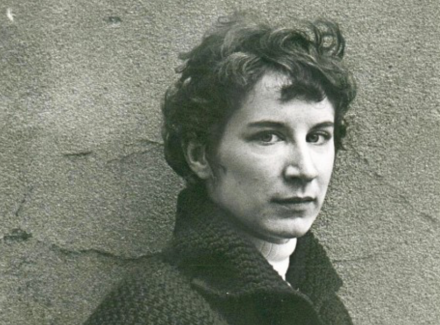
 While there are still a few months left in 2019, I thought I’d write a post about this year’s round-number anniversaries of some major novels I’ve read.
A number of significant works of fiction came out 50 years ago, in 1969, with one of the most prominent Kurt Vonnegut’s searing/darkly humorous anti-war novel Slaughterhouse-Five.
That half-century-ago year also saw the appearance of Margaret Atwood’s debut novel — The Edible Woman, a good-not-great book that kicked off Atwood’s amazing prose-fiction run that would include The Handmaid’s Tale; and the release of Daphne du Maurier’s gripping time-travel work The House on the Strand, the next-to-last novel of a long/distinguished career perhaps best known for Rebecca.
Atwood (pictured above during the 1960s) is of course still in the thick of the literary discussion in 2019 with the September 10 release of The Testaments, her blockbuster sequel to The Handmaid’s Tale.
Other memorable ’69 works included Philip Roth’s hilarious/scathing Portnoy’s Complaint, Ursula K. Le Guin’s classic sci-fi novel The Left Hand of Darkness, and Mario Puzo’s mass-audience smash The Godfather. There was also Maya Angelou’s iconic memoir I Know Why the Caged Bird Sings, which almost reads like a novel.
Going back a century, to 1919, readers were introduced to Sherwood Anderson’s Winesburg, Ohio — a pioneer in the mini-genre of novels consisting of interrelated short stories. Also released that year was one of W. Somerset Maugham’s best works — The Moon and Sixpence, about an intense stockbroker-turned-painter who was somewhat modeled on Paul Gauguin. And then there was Free Air, the last NOT-well-known novel Sinclair Lewis would write before going on an impressive run starting with Main Street in 1920.
The century-and-a-half-ago year of 1869 saw the publication of Leo Tolstoy’s immortal War and Peace as well as Fyodor Dostoevsky’s perhaps-third-best novel The Idiot. Honorable mention goes to Mark Twain’s hysterically funny nonfiction travel saga The Innocents Abroad — more entertaining than most novels.
Two centuries ago, in 1819? Not an extraordinary 12 months for novels when they were just starting to gain wider popularity as a genre, but that year did see the release of books such as Sir Walter Scott’s feverish The Bride of Lammermoor.
I’ll end by mentioning several 25th- and 75th-anniversary books.
Among 1994’s most notable releases were Julia Alvarez’s heartbreaking historical novel In the Time of the Butterflies, which tells the story of four sisters (three martyred) living under the brutal Dominican Republic dictatorship of Rafael Trujillo; and Louis de Bernières’ Captain Corelli’s Mandolin, an emotionally riveting work set on a Greek Island during World War II.
And 1944 saw the publication of another memorable WWII novel, John Hersey’s A Bell for Adano; the aforementioned Maugham’s last great creation, The Razor’s Edge, set soon after World War I; and Colette’s Gigi, that author’s most famous work but hardly her best.
Your thoughts on the books I discussed? Any other novels you’d like to mention from 1994, 1969, 1944, 1919, 1869, or 1819?
My literary-trivia book is described and can be purchased here: Fascinating Facts About Famous Fiction Authors and the Greatest Novels of All Time.
In addition to this weekly blog, I write the award-winning “Montclairvoyant” topical-humor column for Baristanet.com. The latest weekly piece — which comments on a county meeting that featured heated audience discussion about a controversial immigrant jail — is here.
 As an adult who reads fiction, it’s interesting to occasionally encounter a novel in which the goings-on are viewed from a child character’s perspective.
 Last week’s post focused on characters who miss each other. This week, the focus will be on those who HATE each other.
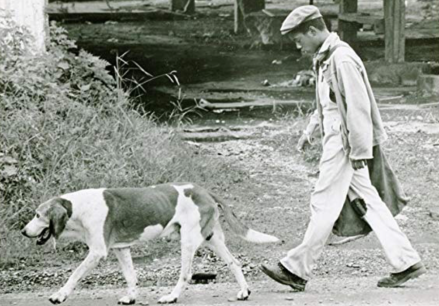 I was away last week, and greatly missed my cat Misty. Which reminded me that reading about fictional characters who miss a living animal or a living person can be a very poignant thing. Hopefully followed by a happy reunion, but not always.
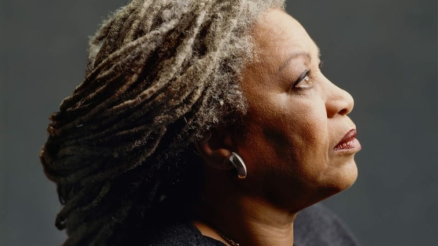 I was starting to read Alice Walker’s novel The Temple of My Familiar the morning of August 6 when I learned that literary great Toni Morrison had died the day before. So it seemed time to write a long-overdue piece about female authors of color.
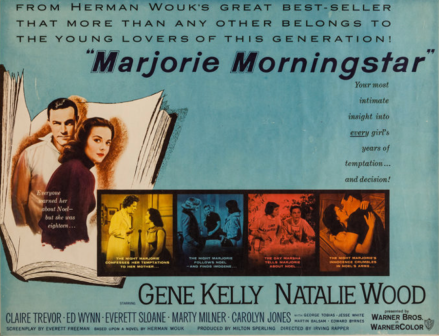 Many novels of the past 50 years or so, including literary ones, have been fairly candid in their references to sexual matters. That’s the case with parts of John Irving’s In One Person, Zadie Smith’s On Beauty, Jonathan Franzen’s The Corrections, Alice Walker’s The Color Purple, Erica Jong’s Fear of Flying, Rita Mae Brown’s Rubyfruit Jungle, Philip Roth’s Portnoy’s Complaint, Jacqueline Susann’s Valley of the Dolls, and numerous other fiction books. (Fifty Shades of Grey? Haven’t read it.)
 We’ve all heard the phrases “No good deed goes unpunished,” “When bad things happen to good people,” and “Only the good die young.” So it goes in literature, as it goes in real life. Likable, ethical, admirable characters often have negative things happen to them.
 There’s bad nostalgia, such as Donald Trump’s delusional belief that the United States was once great (perhaps for a good number of affluent white males but often not for other demographics). And there’s more positive nostalgia, which will be the subject of today’s blog post. More positive nostalgia in literature, that is.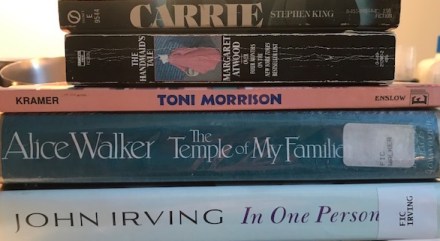

 Dave Astor on Literature