Reading an Author for the First Time

One of the pleasures of literature is reading authors one hasn’t tried before. Sure, it’s great to read or reread multiple novels by your favorite writers, but the thrill of the new is also a lure for most of us.

In this post, I’m going to discuss four of the authors I read for the first time during the past few weeks — working backwards chronologically — and then ask which authors have been new for you in the not-too-distant past.

I just finished a novel today by Penelope Fitzgerald, an author I wasn’t aware of until she was mentioned a few weeks ago (the “recommender” is credited in the comments section below). Offshore is a short, quirky book about various people living near each other in houseboats on England’s River Thames. One of the things that gives the Booker-winning novel its appeal is the way those different houseboat dwellers comprise an extended family of sorts, with all the positives and negatives that entails.

Last week, The Hypnotist’s Love Story was my introduction to Australian novelist Liane Moriarty (suggested by several people also credited in the comments section below). That Moriarty book is engaging, original, suspenseful, psychologically aware, and written like a dream. It’s about a hypnotherapist (Ellen) who starts dating a guy (Patrick) who’s being stalked by an ex-girlfriend (Saskia) who becomes a patient of Ellen’s without Ellen initially knowing Saskia is the stalker. Pretty clever plot!

Before trying Moriarty’s work, I read Sue Grafton’s first three “alphabet mysteries”: A is for Alibi, B is for Burglar, and C is for Corpse. As mystery/thriller/detective novels go, those three books have “whodunit” plots that are very good but not extraordinary. The major appeal is private investigator Kinsey Millhone, who is smart but not drop-dead brilliant, brave but also anxious at times, warm, funny, down-to-earth, and not exactly wealthy. One can really relate to her — in contrast with someone like Lee Child’s Jack Reacher (who I love but who is practically superhuman) and Arthur Conan Doyle’s Sherlock Holmes (the ultra-brainy sleuth legend).

Prior to reading Grafton’s third mystery, I enjoyed Alexander Pushkin’s adventure/romance The Captain’s Daughter. I had previously read a good deal of 19th-century Russian literature — including various works by Dostoyevsky, Tolstoy, Gogol, Turgenev, and Chekhov — and was happy to see firsthand that Pushkin deserved to be in the top ranks along with those other iconic writers. In fact, he was born before those five men, and influenced some of them.

Pushkin (of course) and Penelope Fitzgerald are now-deceased authors, while Sue Grafton and Liane Moriarty are very much with us.

Before Pushkin, I recently read for the first time Benjamin Blake (A Death in Summer), Raymond Chandler (The Big Sleep), Walter Mosley (Devil in a Blue Dress and A Red Death), James Michener (Tales of the South Pacific), Patricia Highsmith (Ripley’s Game), Jean-Paul Sartre (Nausea), Evan S. Connell (Mrs. Bridge), Abigail Tarttelin (Golden Boy), and Julia Alvarez (In the Time of the Butterflies), among other authors. All were excellent or at least interesting — and well worth the hours spent.

But I will get back to reading or rereading more authors I’ve read before: Isabel Allende, James Baldwin, Charlotte BrontĂ«, the aforementioned Lee Child and Dostoyevsky (can’t believe I just put those two writers in the same clause 🙂 ), Fannie Flagg, Henry James, Gabriel Garcia Marquez, Philip Roth, Lionel Shriver, Donna Tartt, Edith Wharton…

Which authors have you recently read for the first time?

The box for submitting comments is below already-posted comments, but your new comment will appear at the top of the comments area — unless you’re replying to someone.

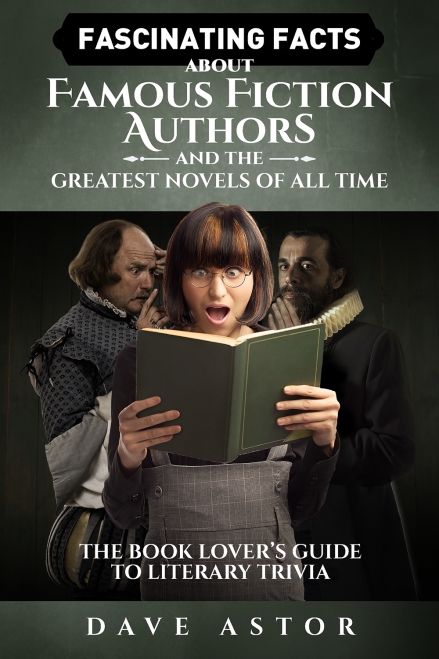
On April 2, I’ll be writing a blog post about my new book Fascinating Facts About Famous Fiction Authors and the Greatest Novels of All Time: The Book Lover’s Guide to Literary Trivia.

In addition to doing this weekly blog, I also write the award-winning “Montclairvoyant” topical-humor column — now with Baristanet.com, which covers Montclair, N.J., and nearby towns. The latest weekly column is here.

Authors of One Country Who Set Their Novels in Another Country

Because I think internationalism is important in a world where Donald Trump is wedded to “America First” (his fourth marriage?), I’ve mentioned various countries in recent blog posts.

For instance, last month I wrote about “Loving Literature from Other Countries.” The month before, I focused on “Authors Who Do and Don’t Set Their Fiction in One Place.”

I’m going internationalist again today with a somewhat different angle: authors who set a novel in a different country from the one in which they live.

The “pros” of that? Writers can look at a culture from an outside perspective, potentially interest readers in that culture, show how people from different nations are similar or different, get themselves and their readers out of their comfort zones, show the ill effects of things like colonialism, etc.

The “cons”? Authors might not know the other country well and thus might depict it inaccurately or superficially, they might consciously or subconsciously depict the nation as inferior to their own, they might make someone from their own country the most important character, etc.

Of course, it helps if authors — whether they end up portraying another country in a positive or negative light — visited that nation, or, better yet, lived there for several months or years.

Some examples of authors who set novels in countries other than their own? Glad you asked! Sir Walter Scott, who usually placed his novels in his native Scotland, put Quentin Durward in France. English author Charlotte Bronte also turned to France for Villette. Another iconic English author, Charles Dickens, set portions of A Tales of Two Cities and Martin Chuzzlewit in France and the U.S., respectively.

U.S. authors Barbara Kingsolver and Harriet Doerr put The Lacuna and Stones for Ibarra, respectively, partly or mostly in Mexico. Kingsolver used what was then called the Belgian Congo as the milieu for the American family in The Poisonwood Bible. American writer Paul Theroux set most of The Mosquito Coast in Honduras.

Mark Twain, one of the most famous U.S. authors of all, turned to England for A Connecticut Yankee in King Arthur’s Court and to France for Personal Recollections of Joan of Arc. New Englander Nathaniel Hawthorne used Italy as the backdrop for The Marble Faun after a several-year sojourn in Europe. American writer James Baldwin, who lived in France for a number of years, set Giovanni’s Room in that country.

American author Willa Cather located Shadows on the Rock in Canada, and Canadian author Margaret Atwood set The Handmaid’s Tale in the U.S.

French authors? Stendhal put The Charterhouse of Parma in Italy, Alexandre Dumas set Georges in what is now called Mauritius, and J.M.G. Le Clezio placed much of Desert in Morocco.

North Africa was also the setting for The Sheltering Sky by American writer Paul Bowles.

Erich Maria Remarque, who was forced to flee his native Germany because of the Nazis, placed Arch of Triumph in France and Shadows in Paradise in America.

Australian-born Brit (and later U.S. resident) James Clavell set Shogun in Japan, and Australian author Frank Moorhouse placed Grand Days in Switzerland.

Last but not least, American author James Michener set novels in many non-U.S. places — including the Caribbean, Israel, Japan, Mexico, Poland, Spain, and the South Pacific.

What are your favorite novels (either those I mentioned or didn’t mention) set in a different country from where the author lives or lived?

The box for submitting comments is below already-posted comments, but your new comment will appear at the top of the comments area — unless you’re replying to someone.

On April 2, I’ll be writing a blog post about my new book Fascinating Facts About Famous Fiction Authors and the Greatest Novels of All Time: The Book Lover’s Guide to Literary Trivia.

In addition to doing this weekly blog, I also write the award-winning “Montclairvoyant” topical-humor column — now with Baristanet.com, which covers Montclair, N.J., and nearby towns. The latest weekly column is here.

Fictional Religious Hypocrites Seem All Too Real These Days

Religious hypocrisy is on my mind at a time when many Christian evangelicals support Donald Trump despite America’s so-called president being an immoral person who has no compassion, cheated on his wives, sexually assaulted women, is racist to the core, is endlessly greedy, is a blatant liar, is pathologically narcissistic, and more. Anything to get their right-wing agenda enacted, I suppose.

Literature includes many hypocrites resembling those evangelicals and the many “religious” Republican politicians who espouse “values” (ha ha). I’ll discuss some of those fictional characters today.

For instance, Benjamin Blake’s Ireland-set A Death in Summer, which I read recently, includes a priest character who runs an institution for troubled boys. Despite his pious exterior, he is well aware that the institution’s rich benefactor is a vile pedophile taking advantage of those boys.

(I followed Blake’s absorbing murder mystery with Alexander Pushkin’s 1836 adventure-romance The Captain’s Daughter, which depicted little religious hypocrisy but is a great novella containing fluid prose and dialogue that seems more 20th century than 19th century.)

The priest in A Death in Summer reminded me a bit of the faux-religious Mr. Brocklehurst, wealthy “benefactor” of the Lowood institution in Charlotte Bronte’s Jane Eyre. The girls at Lowood get crummy/inadequate food, little heat in the winter, and are treated in other awful ways — with some dying as a result. St. John Rivers is a more ethical religious figure in Bronte’s book, yet is a rather coldhearted man who displays a colonialist mentality in his desire to become a third-world missionary.

Nathan Price of Barbara Kingsolver’s The Poisonwood Bible is a missionary in Africa — and that American is as hateful, racist, and sexist as many right-wing evangelicals and Republican politicians are today.

Then there’s the unnamed priest in Graham Greene’s The Power and the Glory who’s on the run from Mexican authorities. Not a totally bad guy, but he’s an alcoholic who fathered a child he barely sees. Hardly a religious role model.

The cast of James Baldwin’s Go Tell It On the Mountain includes Gabriel Grimes, a mean-spirited minister who also fathered a child out of wedlock and left the mother to fend for herself.

Sinclair Lewis might be best known these days for his It Can’t Happen Here novel about a fascist elected U.S. president (sound familiar?). But another of his novels relevant to our times is Elmer Gantry, whose charismatic preacher title character is a hard-drinking, ambitious womanizer.

Friar Tuck of the Robin Hood stories is a jovial figure who loves his food and wine. Maybe not hypocritical, but certainly not as ascetic as one might expect from someone in a religious position.

In the drama realm, we have the supposedly religious title character in Moliere’s play Tartuffe. He’s actually a two-faced guy who tries to seduce a married woman.

Who are some fictional religious hypocrites you’ve found memorable?

The box for submitting comments is below already-posted comments, but your new comment will appear at the top of the comments area — unless you’re replying to someone.

My new book Fascinating Facts About Famous Fiction Authors and the Greatest Novels of All Time: The Book Lover’s Guide to Literary Trivia will be published soon.

But I’m still selling Comic (and Column) Confessional — my often-funny memoir that recalls 25 years of covering and meeting cartoonists such as Charles Schulz (“Peanuts”) and Bill Watterson (“Calvin and Hobbes”), columnists such as “Dear Abby” and Ann Landers, and other notables such as Coretta Scott King, Walter Cronkite, and various authors. The book also talks about the malpractice death of my first daughter, my remarriage, and life in Montclair, N.J. — where I write the award-winning weekly “Montclairvoyant” humor column for Baristanet.com. You can email me at dastor@earthlink.net to buy a discounted, inscribed copy of the book, which contains a preface by “Hints” columnist Heloise and back-cover blurbs by people such as “The Far Side” cartoonist Gary Larson.

When Debut Novelists Aren’t Young

Back in November 2014, I posted a piece about authors who wrote their first published novels in their 20s. Now that I’ve aged more than two years, I’m going to turn that topic upside down and talk about authors who wrote their first published novels when much older — in their 40s, 50s, 60s, or even 70s.

Some of those older authors wrote earlier novels that didn’t get published. Others wrote nonfiction books, or perhaps short stories or poetry, in their younger years before turning to novels. Still others worked in non-literary professions before trying their hand at fiction.

Writing a debut novel later in life has its advantages — the book might be more mature than a younger author’s debut novel for the simple reason that the older writer is (usually) more mature, and has more life experience. But there are downsides, too — debut novels by older authors might lack a bit of youthful energy, and readers might lament about all the potentially great books not written by those novelists when they were in their 20s or 30s.

One of the oldest writers to have a debut novel was Harriet Doerr, who joined the ranks of published authors at the age of 74 with her absorbing Stones for Ibarra — a semi-autobiographical 1984 book about an American couple living in a remote section of Mexico.

Moving down to a somewhat younger older age, we have Laura Ingalls Wilder being 65 when the first of her eight renowned Little House books was published.

Billie Letts, who spent much of her life as a college educator, was 57 the year (1995) her debut novel Where the Heart Is came out. It did quite well with the help of being an Oprah’s Book Club selection in 1998 and getting turned into a movie starring Natalie Portman, Ashley Judd, and Stockard Channing in 2000.

Alex Haley was 55 the year (1976) that saw publication of his blockbuster novel Roots, which inspired the 1977 TV miniseries that became even more of a blockbuster. Haley of course previously wrote The Autobiography of Malcolm X (1965), which was based on many interviews with its subject. Before becoming an author, Haley served in the U.S. Coast Guard for 20 years (even ghostwriting shipmates’ letters to their girlfriends) and then became a prominent magazine interviewer.

Detective-fiction author extraordinaire Raymond Chandler was 51 when The Big Sleep became his first novel in 1939. Chandler was actually an oil company executive when he lost that job during the Depression, after which he turned to writing — initially with short stories.

And James Michener was 40 when his first novel, Tales of the South Pacific, was published in 1947 — and it won a Pulitzer Prize. Michener, who had penned one nonfiction book before that, subsequently made up for lost time by writing a whopping 25 more novels and 30-plus more nonfiction books — many very long and heavily researched — after Tales.

A few other older debut novelists and the ages their first books were published: Belva Plain (63), Charles Bukowski (51), Sir Walter Scott and Bram Stoker (each 43), and P.D. James and Elizabeth Strout (each 42). Scott was a renowned poet before turning to books, and Bukowski also had his verse published before becoming novelistic.

Then there was the 1896-born Giuseppe Tomasi di Lampedusa, whose extraordinary first (and only) novel The Leopard wasn’t published until 1958 — a year after he died.

And several people I know from the National Society of Newspaper Columnists wrote their first novels when well beyond 40. They include Kathy Eliscu, Robert Haught, and Susan Moore Jordan, among others.

In the nonfiction area, Frank McCourt was 66 the year (1996) his mega-best-selling memoir Angela’s Ashes came out. That book certainly contains literary flourishes.

Who are some of your favorite late-starting novelists (either ones I’ve named or not named)? What are the pros and cons of having a debut novel come out when the author is older?

The box for submitting comments is below already-posted comments, but your new comment will appear at the top of the comments area — unless you’re replying to someone.

My new book Fascinating Facts About Famous Fiction Authors and the Greatest Novels of All Time: The Book Lover’s Guide to Literary Trivia will be published soon.

But I’m still selling Comic (and Column) Confessional — my often-funny memoir that recalls 25 years of covering and meeting cartoonists such as Charles Schulz (“Peanuts”) and Bill Watterson (“Calvin and Hobbes”), columnists such as “Dear Abby” and Ann Landers, and other notables such as Coretta Scott King, Walter Cronkite, and various authors. The book also talks about the malpractice death of my first daughter, my remarriage, and life in Montclair, N.J. — where I write the award-winning weekly “Montclairvoyant” humor column for Baristanet.com. You can email me at dastor@earthlink.net to buy a discounted, inscribed copy of the book, which contains a preface by “Hints” columnist Heloise and back-cover blurbs by people such as “The Far Side” cartoonist Gary Larson.

Real People in Fictional Realms

Today is the birthday of Abraham Lincoln, the 1809-born 16th president who would have been 208 if he were alive in 2017 — meaning 143 years of Social Security payments.

But, seriously, I’m reminded that many fictional works — and not just historical novels — feature actual famous people.

That can of course be very attractive to readers who want to “get in the heads” of often-long-dead notables, see the times they lived in, see the way authors depict those luminaries, and see how real personages interact with fictional characters. Many readers find this a more palatable way than nonfiction history books to learn about high-profile people of the past — whether those people were heroes, villains, or something in between.

“Honest Abe” himself has appeared in everything from Gore Vidal’s Lincoln to Seth Grahame-Smith’s Abraham Lincoln, Vampire Hunter.

Another president — Ulysses Grant, commander of the Union army during the American Civil War that marked Lincoln’s presidency — shows up in Darryl Brock’s If I Never Get Back, along with various real players from the legendary 1869 Cincinnati Red Stockings baseball team. Brock’s sequel, Two in the Field, includes a deservedly scathing depiction of General Custer.

Also set in the 1800s is Leo Tolstoy’s War and Peace, which of course includes Napoleon among its large cast of mostly fictional characters; and Margaret Atwood’s Alias Grace, which features a real-life person (Grace Marks) accused of murder. Not the best way to become famous, or infamous, but Marks is a known name — especially in Canada.

Moving to literature set in more recent years, there’s the novel containing more real people than most fiction: E.L. Doctorow’s Ragtime — in which we see Henry Ford, Sigmund Freud, Emma Goldman, Harry Houdini, J.P. Morgan, Booker T. Washington, and other well-known figures.

Barbara Kingsolver’s The Lacuna devotes quite a few pages and conversations to artists Frida Kahlo and Diego Rivera, and exiled Russian revolutionary Leon Trotsky.

Fannie Flagg’s Welcome to the World, Baby Girl! includes a memorable scene with playwright Tennessee Williams as he discusses the downside of fame.

And moving to fiction set many centuries ago, we have such novels as Mark Twain’s Personal Recollections of Joan of Arc, Alexandre Dumas’ The Three Musketeers and its sequels (which feature King Louis XIII, etc.), and Anthony Burgess’ The Kingdom of the Wicked (which includes Jesus Christ. One can argue about whether he was “the son of God,” but he may have existed as a person).

Which real people have you noticed in fictional works? Bonus question: Who’s the better president — Lincoln or Donald Trump? (Hint: The Electoral College can’t help Trump this time!  🙂 )

The box for submitting comments is below already-posted comments, but your new comment will appear at the top of the comments area — unless you’re replying to someone.

My new book Fascinating Facts About Famous Fiction Authors and the Greatest Novels of All Time: The Book Lover’s Guide to Literary Trivia will be published soon.

But I’m still selling Comic (and Column) Confessional — my often-funny memoir that recalls 25 years of covering and meeting cartoonists such as Charles Schulz (“Peanuts”) and Bill Watterson (“Calvin and Hobbes”), columnists such as “Dear Abby” and Ann Landers, and other notables such as Coretta Scott King, Walter Cronkite, and various authors. The book also talks about the malpractice death of my first daughter, my remarriage, and life in Montclair, N.J. — where I write the award-winning weekly “Montclairvoyant” humor column for Baristanet.com. You can email me at dastor@earthlink.net to buy a discounted, inscribed copy of the book, which contains a preface by “Hints” columnist Heloise and back-cover blurbs by people such as “The Far Side” cartoonist Gary Larson.

Loving Literature From Other Countries

With Trump spouting his “America First” nonsense, I’ve thought about how much I love numerous fictional works written by authors from countries other than the United States.

Many of those books — in addition to being compelling and entertaining — open our minds, teach us about the differences between various cultures, and also teach us how people everywhere share similarities: love of family, the desire to be happy, dealing with life’s difficulties, etc.

So, while I usually avoid lists, I’m going to list some (but by no means all) of my favorite novels and short stories by writers from non-American countries. (Novels in italics, stories in quotes.) Then I’ll ask for some of your favorites. The countries are listed alphabetically, and the writers listed next to them were either born there and/or spent much of their lives there and/or are often associated with that nation.

Argentina: “The Aleph” by Jorge Luis Borges.

Australia: Shogun (James Clavell). On the Beach (Nevil Shute). Grand Days (Frank Moorhouse).

Canada: The Robber Bride, Alias Grace, and The Handmaid’s Tale (Margaret Atwood). Anne of Green Gables, The Blue Castle, and the Emily trilogy (L.M. Montgomery).

Chile: The House of the Spirits (Isabel Allende).

Colombia: One Hundred Years of Solitude (Gabriel Garcia Marquez).

England: Jane Eyre (Charlotte BrontĂ«). Daniel Deronda, Middlemarch, Silas Marner, and The Mill on the Floss (George Eliot). Persuasion and Pride and Prejudice (Jane Austen). The Posthumous Papers of the Pickwick Club, Great Expectations, and David Copperfield (Charles Dickens). The Woman in White (Wilkie Collins). The Last Man (Mary Shelley). Possession (A.S. Byatt). White Teeth (Zadie Smith). The Harry Potter series (J.K. Rowling). The Hobbit and The Lord of the Rings (J.R.R. Tolkien). (What can I say — I majored in English.  🙂 )

France: Germinal and The Drinking Den (Emile Zola), Old Goriot and Eugenie Grandet (HonorĂ© de Balzac). The Vagabond and Claudine at School (Colette). The Count of Monte Cristo (Alexandre Dumas). The Plague (Albert Camus). Candide (Voltaire). (What can I say — my wife is a French professor.  🙂 )

Germany: The Night in Lisbon, Arch of Triumph, All Quiet on the Western Front, and A Time to Love and a Time to Die (Erich Maria Remarque).

India: The God of Small Things (Arundhati Roy).

Ireland: “The Dead” (James Joyce). “The Canterville Ghost” (Oscar Wilde). Gulliver’s Travels (Jonathan Swift). Dracula (Bram Stoker).

Italy: History (Elsa Morante). The Leopard (Giuseppe di Lampedusa). The Name of the Rose (Umberto Eco).

New Zealand: The Luminaries (Eleanor Catton). Yellow Flowers in the Antipodean Room (Janet Frame).

Nigeria: The Interpreters (Wole Soyinka).

Russia: Crime and Punishment and The Brothers Karamazov (Fyodor Dostoyevsky). The Kreutzer Sonata (Leo Tolstoy). (Heck, Trump adores Russia’s authoritarian leader — wonder if the U.S. prez ever read any lit from that country? Probably not…)

Scotland: The Heart of Midlothian and Old Mortality (Sir Walter Scott). Weir of Hermiston (Robert Louis Stevenson).

Spain: Don Quixote (Miguel de Cervantes).

Sweden: The Girl With the Dragon Tattoo and the other two Millennium Trilogy books (Stieg Larsson).

What are some of your favorite fictional works from other countries? (You can of course also name nations I didn’t list.) And if you’re a commenter from outside the U.S., please feel free to include favorite works by American authors among your mentions.

The box for submitting comments is below already-posted comments, but your new comment will appear at the top of the comments area — unless you’re replying to someone.

My new book Fascinating Facts About Famous Fiction Authors and the Greatest Novels of All Time: The Book Lover’s Guide to Literary Trivia will be published soon.

But I’m still selling Comic (and Column) Confessional — my often-funny memoir that recalls 25 years of covering and meeting cartoonists such as Charles Schulz (“Peanuts”) and Bill Watterson (“Calvin and Hobbes”), columnists such as “Dear Abby” and Ann Landers, and other notables such as Coretta Scott King, Walter Cronkite, and various authors. The book also talks about the malpractice death of my first daughter, my remarriage, and life in Montclair, N.J. — where I write the award-winning weekly “Montclairvoyant” humor column for The Montclair Times. You can email me at dastor@earthlink.net to buy a discounted, inscribed copy of the book, which contains a preface by “Hints” columnist Heloise and back-cover blurbs by people such as “The Far Side” cartoonist Gary Larson.

Guest Literature Post by Donald Trump!

This blog will be different today, because Donald Trump demanded to write a guest piece. I told him he doesn’t read literature or know much about it, but he insisted. Anyway, things will go back to normal next week, but until then…herrrrrre’s the illegitimate president:

The Donald (me) doesn’t read novels, but I do read the backs of cereal boxes. Lots of back story, ya know?

Actually, I know a yuge amount about fiction. Not the literary kind — the “alternative facts” kind.

I can’t deal with The Wings of the Dove. Why didn’t Henry James write The Wings of the War Hawk? Sad.

The Red Badge of Courage? Stephen Crane — what a loser. Believe me, I showed more courage getting Vietnam War deferments for alleged bone spurs in my heels, even though I played a ton of sports at the time with no problem. They called me The Natural, and Bernard Malamud wasn’t referring to my hair. Colored my hair while flat on my back: As I Lay, Dyeing.

Also, I bigly love Theodore Dreiser. Sister Carrie? I’d like to grab her by the [deleted]. Make An American Tragedy Great Again? I’m on it!

You see, I have great respect for women. But was George Eliot transblender or something? George is a guy’s name, but that 19th-century scribbler looks female in photos. Lock her up!

“Low Energy Jeb,” “Little Marco,” “Lyin’ Ted,” Chris “Agatha” Christie (And Then There Were None: cabinet positions for him). Was Toni Morrison the lead singer of The Doors? Why did Harper Lee surrender to Ulysses Grant? Were the BrontĂ« sisters at the Women’s March on Washington? How did Richard Wright co-invent the airplane five years before he was born? I have a Tan, but it’s not Amy.

Another George: Orwell. Love, love, love the oppressors in 1984. I even tried doublethink, but I can’t think once most of the time. Ask Herman Melania, my wife’s ancestor, who wrote about a big white male — that’s me! Captain Ahab sounds kind of Muslim, doesn’t he?

Speaking of people with that religious belief, I as the 45th president don’t want refugees and immigrants coming to America from Muslim countries (unless they’re Muslim countries I do business with). Some will die from the horrors they’re trying to flee? That’s The Art of Me Saying “Big Deal.” Call me cruel, call me vicious, call me sadistic, call me anything, but don’t call me Slaughterhouse-Forty-Five. Is that a book?

And The Blacks, The Blacks. Why isn’t novelist Benjamin Black called Benjamin White? Why doesn’t E.B. White use the name E.B. Very White? White Fang rocks. I heard about Zora Neale Hurston’s 1937 novel Their Eyes Were Watching God — how were those eyes watching me nine years before I was born?

Flowers for Algernon — thrilling! I mentally mocked the disabled for pages and pages. Can you beat that? Well, maybe when I bring back torture. The Weight of Water author Anita Shreve needs to write a sequel called The Weight of Waterboarding.

And Jorge Luis Borges and Gabriel Garcia Marquez will never cross our southern border while I’m racist-in-chief, um, sexual-predator-in-chief, um, commander-in-chief. It helps that those Hispanics are dead. Not much border-crossing mobility there…

Mark my words, I’m going to build a wall — paid for by Mexico (aka American taxpayers). We’ll build that big, beautiful fence at The Border — a novel by Cormac McCarthy, whose last name reminds me of my hero Joe McCarthy. Jim Casy of The Grapes of Wrath was a commie, wasn’t he? Not the good kind like Putin. I love Russian literature: War and WarCrime and No Punishment for Me… But Anna Karenina? Overrated! Blood coming out of her whatever (after she was hit by a train). And Alexander Solzhenitsyn? I like authors who don’t get jailed.

Did I mention I drained the swamp? Just so I could have a dry place to burn books by liberal, pinko writers. Ever read Fahrenheit 451? The same number as my IQ. It’s so high! But I didn’t really drain the swamp — I made it swampier. My administration is like a dystopian novel come to life. I have no idea what dystopian means, but Kellyanne Conway and Steve Bannon mentioned it one day. I think of them as The Sound and the Fury. Me? Pride and Prejudice.

It Can’t Happen Here
? It already has.

Well, that was Trump’s post. Any quips or comments about him and his tenuous connection to literature?

The box for submitting comments is below already-posted comments, but your new comment will appear at the top of the comments area — unless you’re replying to someone.

My new book Fascinating Facts About Famous Fiction Authors and the Greatest Novels of All Time: The Book Lover’s Guide to Literary Trivia will be published soon.

But I’m still selling Comic (and Column) Confessional — my often-funny memoir that recalls 25 years of covering and meeting cartoonists such as Charles Schulz (“Peanuts”) and Bill Watterson (“Calvin and Hobbes”), columnists such as “Dear Abby” and Ann Landers, and other notables such as Coretta Scott King, Walter Cronkite, and various authors. The book also talks about the malpractice death of my first daughter, my remarriage, and life in Montclair, N.J. — where I write the award-winning weekly “Montclairvoyant” humor column for The Montclair Times. You can email me at dastor@earthlink.net to buy a discounted, inscribed copy of the book, which contains a preface by “Hints” columnist Heloise and back-cover blurbs by people such as “The Far Side” cartoonist Gary Larson.

Perceiving the Personal in the Pages We Peruse

There are many reasons to love literature, and one of them is seeing things familiar to a reader’s specific life.

Of course, that can mean spotting recognizable emotions, character types, etc., but for the purposes of this blog post I’m mostly talking about other content — as you’ll see. I should add that when authors are accurate or not accurate in mentioning things we’ve experienced firsthand, we obviously know it!

Anyway, I’ll give some examples that are personal to me, and then ask for some that are personal to you.

For instance, I read Sue Grafton’s B is for Burglar this week, and, early in that excellent novel, California-based private investigator Kinsey Millhone flies to Florida and drives a rental car north to Boca Raton to look into the disappearance of a woman. I immediately thought of flying to Florida last April and driving a rental car north to Boca Raton to start a weekend celebrating my mother’s 90th birthday.

Speaking of travel, the mentions of New York City subway rides in James Baldwin’s compelling Go Tell It On the Mountain reminded me of the countless NYC subway rides I’ve taken myself.

Edith Wharton, an author often associated with NYC, wrote some terrific ghost stories. When I read a collection of them last year I was thrilled to see that “The Looking Glass” tale was set in my town of Montclair — the same New Jersey setting for Susan Moore Jordan’s absorbing novel Jamie’s Children, which I also read in 2016.

Then there’s Junot Diaz’s memorable The Brief Wondrous Life of Oscar Wao, which includes scenes at my Rutgers University alma mater in New Brunswick, N.J.

And Audrey Niffenegger’s haunting The Time Traveler’s Wife visits several of the Chicago places I saw during my time as a student at Evanston, Ill.-based Northwestern University. Niffenegger even mentions punk clubs, which made me think of the Clash concert I saw way back when — though that was in NYC rather than The Windy City.

Many of us had “interesting” roommates during and after college, and the different-household pairings of Marian and Ainsley, and Duncan and Fischer, in Margaret Atwood’s quirky debut novel The Edible Woman reminded me of my own dorm and apartment experiences as a young adult.

Moving this blog post out of the U.S. for a minute, I saw the great statue of painter Paul CĂ©zanne during a 2007 visit to Aix-en-Provence, where my French professor wife was presenting a paper at an Emile Zola Society conference. Not long after that trip, I read Zola’s dramatic The Masterpiece starring an artist partly based on CĂ©zanne, and immediately thought of that statue. (Zola’s not-so-positive portrayal of fictional painter Claude Lantier apparently ended the author’s lifelong friendship with CĂ©zanne.)

During that same trip to France, we visited the Chateau d’If island prison off Marseille that figured so prominently in The Count of Monte Cristo. That stony jail was in my mind’s eye when I soon reread Alexandre Dumas’ rousing revenge novel.

And if I ever reread Sinclair Lewis’ eye-opening novel It Can’t Happen Here, I’ll think about miserably getting through Jan. 20, 2017 — the day when a man with fascist tendencies became president of the United States in real life. But those huge, fantastic anti-Trump marches the next day — wow!  🙂

Which novels have contained things personally recognizable to you, and what were those things?

(I wrote a “Recognizing Ourselves in Literature” post in 2012, but today’s new piece takes a somewhat different angle and mentions different books.)

The box for submitting comments is below already-posted comments, but your new comment will appear at the top of the comments area — unless you’re replying to someone.

My new book Fascinating Facts About Famous Fiction Authors and the Greatest Novels of All Time: The Book Lover’s Guide to Literary Trivia will be published soon.

But I’m still selling Comic (and Column) Confessional — my often-funny memoir that recalls 25 years of covering and meeting cartoonists such as Charles Schulz (“Peanuts”) and Bill Watterson (“Calvin and Hobbes”), columnists such as “Dear Abby” and Ann Landers, and other notables such as Coretta Scott King, Walter Cronkite, and various authors. The book also talks about the malpractice death of my first daughter, my remarriage, and life in Montclair, N.J. — where I write the award-winning weekly “Montclairvoyant” humor column for The Montclair Times. You can email me at dastor@earthlink.net to buy a discounted, inscribed copy of the book, which contains a preface by “Hints” columnist Heloise and back-cover blurbs by people such as “The Far Side” cartoonist Gary Larson.

Authors Who Do and Don’t Set Their Fiction in One Place

A writer’s imagination can travel the world or stay mostly in a specific locale. And readers like both approaches.

Some authors are known for situating many of their novels and stories in one town, city, region, or state. Charles Dickens: London. James Joyce: Dublin. L.M. Montgomery: Prince Edward Island. Stephen King: Maine. Nathaniel Hawthorne: Massachusetts. Edith Wharton: New York City. Anne Tyler: Baltimore. Anne Rice: New Orleans. William Faulkner: Mississippi (the fictional Yoknapatawpha County inspired by the real Lafayette County). Of course, those and other locale-centric authors occasionally vary their settings — as did Dickens with his mid-book sending of Martin Chuzzlewit to America, Hawthorne when he put The Marble Faun in Italy, and Wharton when she focused on Massachusetts resident Ethan Frome.

There are also writers who set many of their novels in either of two places, as Fannie Flagg does with small towns in Missouri and Alabama (where the Rev. Dr. Martin Luther King Jr. — born on this date, January 15, in 1929 — first became widely known during the 1955-56 Montgomery Bus Boycott).

Other authors bounce around to lots of locales in their fiction. A prime example is James Michener, who wrote novels titled Alaska, Caribbean, Hawaii, Mexico, Poland, Texas, etc. Henry James set much of his fiction in the U.S., England, France, or Italy. Terry McMillan has placed her novels in places such as Michigan, Phoenix, Jamaica, and San Francisco. And, in different books, Lee Child’s roaming Jack Reacher character visits Georgia, Texas, New York City, Colorado, South Dakota, Nebraska, Virginia, France, and elsewhere.

The toggling can be in one novel, too, as when Donna Tartt places The Goldfinch protagonist Theo Decker in New York City, Las Vegas, and Amsterdam — even as her previous book, The Little Friend, stays in Mississippi.

Some advantages of different settings? Many readers relish “seeing” new places, and authors might be refreshed and invigorated not to be in a geographical “rut.” Heck, the plot, prose, and characters can end up being less predictable because of the new locales. And readers can be nicely surprised — I know I was when Wilkie Collins yanked A Rogue’s Life protagonist Frank Softly out of England and put him on a ship to Australia.

Among the advantages of using the same place in multiple books? Authors know the terrain well and thus their fiction can seem more authentic. Also, they’re able to spend more time on plot, prose, and characters instead of countless hours researching and visiting new locales. Meanwhile, the better writers who focus on one place are obviously “traveling” in other ways — through the realm of human emotions.

Of course, the further back in time authors lived, the harder it was for them to get to other places and to do research. From what I’ve heard, there were few computers or jumbo jets available to Jane Austen…

Who are your favorite past and present authors who have repeatedly used one locale, or who have used different locales in different works? Any other thoughts on this topic?

(There are no California references in this blog post because I recently wrote a piece about literature set in that state.)

The box for submitting comments is below already-posted comments, but your new comment will appear at the top of the comments area — unless you’re replying to someone.

My new book Fascinating Facts About Famous Fiction Authors and the Greatest Novels of All Time: The Book Lover’s Guide to Literary Trivia will be published soon.

But I’m still selling Comic (and Column) Confessional — my often-funny memoir that recalls 25 years of covering and meeting cartoonists such as Charles Schulz (“Peanuts”) and Bill Watterson (“Calvin and Hobbes”), columnists such as “Dear Abby” and Ann Landers, and other notables such as Coretta Scott King, Walter Cronkite, and various authors. The book also talks about the malpractice death of my first daughter, my remarriage, and life in Montclair, N.J. — where I write the award-winning weekly “Montclairvoyant” humor column for The Montclair Times. You can email me at dastor@earthlink.net to buy a discounted, inscribed copy of the book, which contains a preface by “Hints” columnist Heloise and back-cover blurbs by people such as “The Far Side” cartoonist Gary Larson.

It’s a Crime That I Waited This Long to Write About Crime Fiction

Why do many readers love mysteries, detective novels, and thrillers? The obvious answer is that those kinds of books are often escapist and exciting — and exercise our brains as we try to figure out “whodunnit” and/or how things will end.

Sometimes books from the three above genres are as much literary fiction as genre fiction — with examples including Donna Tartt’s compelling The Little Friend (which I’m currently reading), Wilkie Collins’ The Moonstone (an early detective novel), Umberto Eco’s The Name of the Rose (14th-century monk as sleuth), and even Charlotte Bronte’s Jane Eyre (more romance than mystery, yet there’s that central puzzle over who’s living in the attic). But if genre fiction is often not literary fiction, no big deal.  🙂

I have not read as many mysteries, etc., as some of the regular commenters here, but I’ve polished off more of those books during the past couple of years thanks in large part to recommendations from you. Some of my favorites, in no particular order: Sue Grafton’s A Is for Alibi, Lisa Scottoline’s The Vendetta Defense, Walter Mosley’s Devil in a Blue Dress and A Red Death, Dorothy L. Sayers’ Strong Poison and Gaudy Night, John Grisham’s The Client and The Firm, P.D. James’ The Lighthouse, Anita Shreve’s The Weight of Water, Raymond Chandler’s The Big Sleep, Michael Connelly’s The Lincoln Lawyer, John Ajvide Lindqvist’s Harbor, Peter Hoeg’s Smilla’s Sense of Snow, Alistair MacLean’s Where Eagles Dare, Richard Matheson’s Hunted Past Reason, and Dean Koontz’s Seize the Night.

Then there are Lee Child’s Jack Reacher novels, of which I’ve read eighteen in less than two years. My addiction to that series illustrates how thrillers, detective novels, and mysteries with an intriguing, recurring protagonist can get readers VERY addicted. Of course, it helps when those series offer riveting plots and “bad guys” who raise one’s blood pressure.

Also riveting is Stieg Larsson’s Millennium Trilogy: The Girl With the Dragon Tattoo, The Girl Who Played With Fire, and The Girl Who Kicked the Hornets’ Nest. Lisbeth Salander is one of the most original thriller protagonists in modern literature, and her computer skills exemplify how digital technology has greatly influenced the ways crimes are solved in novels of the past twenty years or so.

Larsson’s books, like many of the other novels mentioned in this post, also mix in all kinds of social issues — which I think can be a good thing along with the escapism. Though of course it can be nice once in a while to read genre fiction that intends to do nothing more than entertain.

Great mystery, detective, and thriller novels I’ve read less recently include several Agatha Christie novels (the iconic And Then There Were None deserves its stupendous sales), Arthur Conan Doyle’s Sherlock Holmes novels and stories, Edgar Allan Poe’s groundbreaking detective tales (such as “The Murders in the Rue Morgue”) starring amateur sleuth C. Auguste Dupin, Dashiell Hammett’s The Maltese Falcon, and other authors and titles. Plus Margaret Atwood’s Alias Grace — a murder saga of a more literary sort.

Though I’m reading more of what might also be called crime fiction, I still like to mix things up with lots of literary fiction and “general-interest” novels — classic and modern — that are detective-free. It’s nice to jump from P.D. James to Henry James, from a Sue Grafton mystery to Elsa Morante’s History, and from a suspicious car wreck to something by John Steinbeck. And then jump back again.

What are some of your favorite mystery, detective, and thriller novels? Any thoughts about those genres and the attractions they hold?

(The box for submitting comments is below already-posted comments, but your new comment will appear at the top of the comments area — unless you’re replying to someone.)

My new book Fascinating Facts About Famous Fiction Authors and the Greatest Novels of All Time: The Book Lover’s Guide to Literary Trivia will be published soon.

But I’m still selling Comic (and Column) Confessional — my often-funny memoir that recalls 25 years of covering and meeting cartoonists such as Charles Schulz (“Peanuts”) and Bill Watterson (“Calvin and Hobbes”), columnists such as “Dear Abby” and Ann Landers, and other notables such as Coretta Scott King, Walter Cronkite, and various authors. The book also talks about the malpractice death of my first daughter, my remarriage, and life in Montclair, N.J. — where I write the award-winning weekly “Montclairvoyant” humor column for The Montclair Times. You can email me at dastor@earthlink.net to buy a discounted, inscribed copy of the book, which contains a preface by “Hints” columnist Heloise and back-cover blurbs by people such as “The Far Side” cartoonist Gary Larson.