A Blog Session on Emotional Repression

Can novels with emotionally repressed, even boring protagonists hold a reader’s interest? In many cases, most definitely yes.

To illustrate how, I’ll first talk about Evan Connell’s Mrs. Bridge, which I read this month. Its title character is not only emotionally repressed and boring but also conventional, conformist, proper, too conscious of manners, timid, obedient, afraid to offend, and often clueless. Her first name, India, is about the only thing distinctive about this white, cliche-spouting, country-club-member woman.

Yet the novel is gripping and fascinating. Why? Well, Mrs. Bridge is superbly written, in an understated way. It has numerous short chapters (some less than a page), which make things go quickly. And there’s lots of subtle satire from the author.

Also, despite India being all the yawn-inducing things listed in my second paragraph, there are other elements to her that draw our sympathy. She is nice, friendly, kind of smart, unhappy, and haunted (India has longings but can’t quite articulate them or do anything about them).

In addition, we understand that she’s of her time (the decades before World War II) and economic/family situation (upper middle class with a workaholic husband) — meaning she was expected to stay home, have no outside job, and employ a housekeeper. So Mrs. Bridge has almost nothing to do to break life’s tedium, especially when her three kids grow older.

Also making the novel interesting are those three kids, who quietly or not so quietly rebel against their humdrum upbringing. Plus India has a few friends and neighbors with a bit of an edge.

One more thing: Readers — who may know people like Mrs. Bridge, even in the 21st century — are curious what will happen to such a character. Connell’s novel doesn’t disappoint, offering closing chapters that seem just right and a last scene that’ll knock your socks off. (After which India’s housekeeper might feel obligated to wash them.)

Now I’ll name protagonists from other novels who are emotionally repressed for reasons that are Mrs. Bridge-like or because they’re the victim of racism or other bias, have a history of psychological or physical trauma, wrestle with a major regret, harbor a secret, or just possess a certain personality. In some cases, they’re emotionally repressed for the entire book; in other cases, they start out fine and then go downhill, or start out troubled and get better. And those characters range from very likable to very unlikable.

A few of the many fictional people with some or much emotional repression include Sethe and Denver of Toni Morrison’s Beloved, Matthew and Marilla of L.M. Montgomery’s Anne of Green Gables, Dimmesdale of Nathaniel Hawthorne’s The Scarlet Letter, Penderton of Carson McCullers’ Reflections in a Golden Eye, Claire of Henry James’ The American, Harry Haller of Hermann Hesse’s Steppenwolf, Gauri of Jhumpa Lahiri’s The Lowland, Maren of Anita Shreve’s The Weight of Water, Lisbeth Salander of Stieg Larsson’s Millennium Trilogy (The Girl With the Dragon Tattoo, etc.), the kid Ricky in John Grisham’s The Client, and the title characters of Charlotte Bronte’s Jane Eyre, George Eliot’s Silas Marner, and Edith Wharton’s Ethan Frome.

Who are some emotionally repressed characters you remember most?

(The box for submitting comments is below already-posted comments, but your new comment will appear at the top of the comments area — unless you’re replying to someone else.)

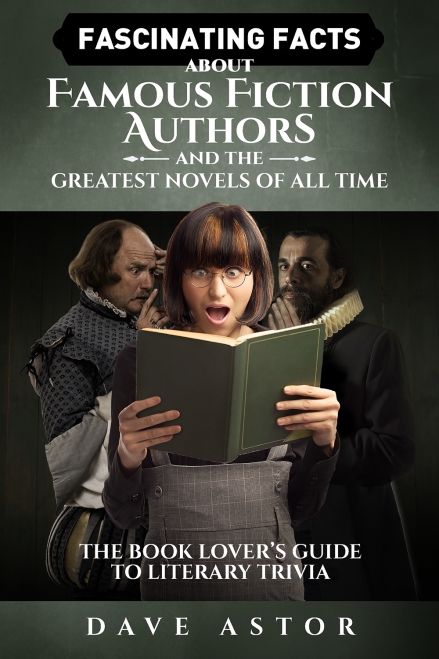
I’ve finished and am now rewriting/polishing a book called Fascinating Facts About Famous Fiction Writers, but am still selling Comic (and Column) Confessional — my often-funny memoir that recalls 25 years of covering and meeting cartoonists such as Charles Schulz (“Peanuts”) and Bill Watterson (“Calvin and Hobbes”), columnists such as “Dear Abby” and Ann Landers, and other notables such as Coretta Scott King, Walter Cronkite, and various authors. The book also talks about the malpractice death of my first daughter, my remarriage, and life in Montclair, N.J. — where I write the award-winning weekly “Montclairvoyant” humor column for The Montclair Times. You can email me at dastor@earthlink.net to buy a discounted, inscribed copy of the book, which contains a preface by “Hints” columnist Heloise and back-cover blurbs by people such as “The Far Side” cartoonist Gary Larson. 

The Plot (or Lack of) Thickens

Last week I was reading Jean-Paul Sartre’s Nausea, and my brain was queasy with mixed feelings. The novel is intellectual, philosophical, existential — clearly a great mind was at work there. But I was at times bored along with being impressed, and found myself putting the book down every few pages. Then I started to skim it.

Why the partial boredom? Well, the protagonist sat in cafes, watched people, walked down the street, moped, thought, overthought, etc. There was no dang plot, or very little of one. And a plot-less novel — no matter how well-written and thought-provoking — is going to have a harder time holding a reader’s interest.

Now a brief poetic interlude, sung to the tune of “If I Only Had the Nerve” from The Wizard of Oz:

There are followers or leaders
Who were bound to become readers
They like literature a lot

But they could change that habit
Flee as fast as a rabbit
From a novel with no plot

I’m afraid there’s no denying
If I did I would be lyin’
To adults or to a tot

Authors could show their prowess
(With a touch pad, not a mowess)
If they only had a plot

Oh we’d be in our stride
Book fans to the core
Oh we’d read the way we never read before
And then we’d read
And read some more

If many an authorsaurus
Wrote works that were more for us
More book sales to be got

Yes, we’d gladly read their fiction
And our brains would have less friction
If they only had a plot

I’m exaggerating a bit, because there are a number of novels with little or no plot that I like a lot. It helps if that sort of book has humor (as with, say, John Steinbeck’s episodic Tortilla Flat and Cannery Row), but even plot-challenged books with a scarcity of laughs can merit our admiration and deep respect. The aforementioned Nausea is one of them, as is Evan Connell’s exceptional Mrs. Bridge, which I finished this afternoon (more on that novel in next week’s post).

Yet…a plot is usually needed to activate another “p” word: page-turning.

Take any of Lee Child’s Jack Reacher novels, such as The Killing Floor and 61 Hours. How will the bad guys be defeated? How much damage will they do before that happens? How much damage will Reacher do to them? How will Jack’s latest romance begin, and end? We’re on the edge of our seats.

But a novel doesn’t have to be a thriller or a mystery or another kind of genre fiction to propel the reader along. It can be literary fiction, or a popular/literary hybrid like Alexandre Dumas’ The Count of Monte Cristo. Will Edmond Dantes escape from prison? Well, it’s pretty obvious he will. But how exactly will he exact his epic revenge on the various people who framed him?

Other classics are also full of plot lines, even as they can be brainy, too. For instance, we wonder what will happen to Crime and Punishment‘s double-murderer Raskolnikov even as we are awed by how Fyodor Dostoyevsky wrestles with all the important questions: psychological motivations, guilt, nonconformity, and more. Nearly as propulsive and thought-provoking is Richard Wright’s Native Son, which also stars a murderer whose fate we very much wonder about. Or Harper Lee’s To Kill a Mockingbird, in which an innocent man is put on trial. The last two novels have the added dimension of gruesome racism.

A fictional crime doesn’t have to involve real or alleged physical violence, of course. Donna Tartt keeps the suspense going for hundreds of pages after her protagonist takes and hides a priceless painting in The Goldfinch.

Another compelling plot line focuses on whether characters will survive a war (Ernest Hemingway’s For Whom the Bell Tolls, Erich Maria Remarque’s A Time to Love and a Time to Die, etc.) or survive a hostage scenario (Ann Patchett’s Bel Canto) or survive other life-threatening situations. It’s hard to top death, or the threat of death, for drama.

And will courageous political activists — such as those in Julia Alvarez’s In the Time of the Butterflies — survive opposing a despotic government?

Then of course there is the age-old and frequently fascinating plot line involving relationships, married or otherwise. Will two people get together or not? Will they stay together or not? How lovey-dovey or stormy is the relationship? So many examples: Charlotte Bronte’s Jane Eyre, George Eliot’s Daniel Deronda, Henry James’ The Portrait of a Lady, D.H. Lawrence’s Sons and Lovers, W. Somerset Maugham’s Of Human Bondage, Edith Wharton’s The Age of Innocence, L.M. Montgomery’s The Blue Castle, and thousands of other novels.

And there are all kinds of other plot variations, including whether characters will finally achieve a non-romantic goal — as with the protagonist in Lionel Shriver’s So Much for That, or Dorothy, The Scarecrow, The Tin Woodman, and The Cowardly Lion in L. Frank Baum’s The Wonderful Wizard of Oz.

How important is a plot to you when reading fiction? Do you like some novels that mostly lack a plot? If so, which ones? Also, what are some of your favorite books with compelling plots?

That’s a lot of questions, but at least I didn’t post a second Wizard of Oz parody…

(The box for submitting comments is below already-posted comments, but your new comment will appear at the top of the comments area — unless you’re replying to someone else.)

I’ve finished and am now rewriting/polishing a book called Fascinating Facts About Famous Fiction Writers, but am still selling Comic (and Column) Confessional — my often-funny memoir that recalls 25 years of covering and meeting cartoonists such as Charles Schulz (“Peanuts”) and Bill Watterson (“Calvin and Hobbes”), columnists such as “Dear Abby” and Ann Landers, and other notables such as Coretta Scott King, Walter Cronkite, and various authors. The book also talks about the malpractice death of my first daughter, my remarriage, and life in Montclair, N.J. — where I write the award-winning weekly “Montclairvoyant” humor column for The Montclair Times. You can email me at dastor@earthlink.net to buy a discounted, inscribed copy of the book, which contains a preface by “Hints” columnist Heloise and back-cover blurbs by people such as “The Far Side” cartoonist Gary Larson. 

One Novel Stands Out, But Why?

What is it that makes a many-novel author become known mostly for one novel?

Maybe that book is their best, even though they’ve written a number of other good or great books. Maybe it’s because that most-known novel became famous partly because it was turned into a popular movie. Maybe the publisher marketed that one book more than the others. Maybe there’s no discernible reason.

I was thinking about all that last week when reading Fannie Flagg’s Standing in the Rainbow — a funny, sunny, sentimental, heartwarming novel that also seriously addresses sexism, racism, homophobia, infidelity, death, etc. And the 2002 book — which spans more than five decades of life in a small Missouri town — includes a drunk-with-power politician whose presidential campaign in some ways eerily presages the vile Donald Trump’s divisive White House run.

Flagg has also authored other excellent novels (several set in Alabama) — including A Redbird Christmas, Can’t Wait to Get to Heaven, I Still Dream About You, and The All-Girl Filling Station’s Last Reunion. But when the general reader thinks of Flagg, what mostly comes to mind is Fried Green Tomatoes at the Whistle Stop Cafe — which probably is the author’s best novel, and was made into a beloved major motion picture. Still, Flagg’s other books deserve to have much higher profiles.

Of course, Flagg’s fans know and love her novels, and the same can be said for the fans of other multi-book authors associated mostly with one novel.

Those other authors? Let me name just a few, in alphabetical order:

— Margaret Atwood’s most famous book by far is The Handmaid’s Tale, but she has also authored more than a dozen other superb novels — including Cat’s Eye, The Robber Bride, Alias Grace, The Blind Assassin, and Oryx and Crake.

— Willa Cather’s Death Comes for the Archbishop is that author’s book most assigned in high school and college courses, but she also wrote other compelling novels such as O Pioneers!, The Song of the Lark, and My Antonia.

— Aldous Huxley’s Brave New World far outstrips his other books in popularity, but his novels such as Antic Hay, Point Counter Point, and Island are well worth the read, too.

— Herman Melville is of course best known for Moby-Dick, but he penned a number of other fine novels such as Typee, Redburn, White-Jacket, Pierre, and Billy Budd. Plus the riveting short stories “Bartleby, the Scrivener” and “Benito Cereno” are almost long enough to be novellas.

— L.M. Montgomery is mostly associated with the memorable Anne of Green Gables, but she also attracted readers with compelling works such as the various Anne sequels, the Emily trilogy, and The Blue Castle.

Can you name other authors who wrote a number of very good novels yet are mostly known for just one of those books? Why the disproportionate focus on that one novel?

(The box for submitting comments is below already-posted comments, but your new comment will appear at the top of the comments area — unless you’re replying to someone else.)

I’ve finished and am now rewriting/polishing a book called Fascinating Facts About Famous Fiction Writers, but am still selling Comic (and Column) Confessional — my often-funny memoir that recalls 25 years of covering and meeting cartoonists such as Charles Schulz (“Peanuts”) and Bill Watterson (“Calvin and Hobbes”), columnists such as “Dear Abby” and Ann Landers, and other notables such as Coretta Scott King, Walter Cronkite, and various authors. The book also talks about the malpractice death of my first daughter, my remarriage, and life in Montclair, N.J. — where I write the award-winning weekly “Montclairvoyant” humor column for The Montclair Times. You can email me at dastor@earthlink.net to buy a discounted, inscribed copy of the book, which contains a preface by “Hints” columnist Heloise and back-cover blurbs by people such as “The Far Side” cartoonist Gary Larson.

Mental Illness in Fiction

There’s a lot of mental illness in the world, and there’s a lot of mental illness in literature.

And why not? Fiction frequently reflects real life (albeit often in a heightened way) and many readers have suffered from depression, bipolar disorder, etc. — or have family members, friends, and coworkers with various such conditions.

Mental illness — which of course ranges from mild to severe — can also help give literature the important elements of drama, heartbreak, curiosity-evoking content, cliffhanger situations, etc. Will characters with mental illness harm themselves or others? Can they function well in society, perhaps with the help of medication and/or therapy? How much does income level determine how people with mental illness are treated? Do the characters live at home or in a facility? Are some of them misdiagnosed? Do characters who know characters with mental illness act resentfully, compassionately, or both ways in their interactions? Heck, people with mental illness can’t help the fact that their brain chemistry has wired them differently — yet the resulting behavior is still not easy for family and friends.

One of the most famous novels dealing with mental illness is Ken Kesey’s One Flew Over the Cuckoo’s Nest, set in a psychiatric ward. Known to many for its movie version, the book includes the sobering scenario of ward residents being treated harshly by Nurse Ratched.

Indeed, literature has many examples of the mentally ill not getting much compassion. For instance, the far-from-affluent Connie Ramos of Marge Piercy’s part-sci-fi novel Woman on the Edge of Time is institutionalized despite probably not being mentally ill at all — just legitimately angry at, and stressed with, what life has dealt her.

But there are other instances of characters being treated kindly by mental-health professionals — often in cases where the family has the money to pay for superior care. One example is in Jamie’s Children by Susan Moore Jordan, whose Niall character gets some darn good help that might help him save a relationship and create a music career.

Other literary works containing characters with mental illness, possible mental illness, depression, severe social anxiety, post-traumatic stress disorder, etc. — or who are “eccentric” or “slow” — include Charlotte Bronte’s Jane Eyre (“madwoman in the attic” Bertha), Jean Rhys’ Jane Eyre prequel Wide Sargasso Sea (a more sympathetic Bertha as a younger woman), Miguel de Cervantes’ Don Quixote (comically delusional title character), Goethe’s The Sorrows of Young Werther (despairing title character), Fyodor Dostoyevsky’s Crime and Punishment (psychologically sick Raskolnikov), and Harper Lee’s To Kill a Mockingbird (reclusive Boo Radley).

Also: Virginia Woolf’s Mrs. Dalloway (shell-shocked war veteran Septimus Smith), F. Scott Fitzgerald’s Tender Is the Night (had-a-breakdown Nicole Diver), Marilynne Robinson’s Housekeeping (spacey Sylvie), Robert Louis Stevenson’s Strange Case of Dr. Jekyll and Mr. Hyde (dual-personality title character), Sir Walter Scott’s The Bride of Lammermoor (beleaguered Lucy Ashton), Sylvia Plath’s The Bell Jar (depressed/suicidal Esther Greenwood), Joanne Greenberg’s I Never Promised You a Rose Garden (schizophrenic Deborah Blau), Shakespeare’s Hamlet (possibly psychotic title character), and Charlotte Perkins Gilman’s short story “The Yellow Wallpaper” (hallucinating/patronized-by-husband female narrator).

Several of the above fictional works were semi-autobiographical.

One of the most famous examples of an author who struggled with mental illness was Janet Frame, whose scheduled lobotomy was canceled when a collection of her stories won a prestigious literary prize in New Zealand.

Then there are works featuring characters on the autism spectrum — a neuro-developmental condition, not a mental illness. One such person is Christopher of Mark Haddon’s novel-turned-play The Curious Incident of the Dog in the Night-Time.

What are your favorite novels featuring characters who are or may be mentally ill? Any thoughts on the way that’s depicted in literature?

(The box for submitting comments is below already-posted comments, but your new comment will appear at the top of the comments area — unless you’re replying to someone else.)

I’ve finished and am now rewriting/polishing a book called Fascinating Facts About Famous Fiction Writers, but am still selling Comic (and Column) Confessional — my often-funny memoir that recalls 25 years of covering and meeting cartoonists such as Charles Schulz (“Peanuts”) and Bill Watterson (“Calvin and Hobbes”), columnists such as “Dear Abby” and Ann Landers, and other notables such as Coretta Scott King, Walter Cronkite, and various authors. The book also talks about the malpractice death of my first daughter, my remarriage, and life in Montclair, N.J. — where I write the award-winning weekly “Montclairvoyant” humor column for The Montclair Times. You can email me at dastor@earthlink.net to buy a discounted, inscribed copy of the book, which contains a preface by “Hints” columnist Heloise and back-cover blurbs by people such as “The Far Side” cartoonist Gary Larson.

‘The Next Stephen King’ and Other Comparisons

Before I read John Ajvide Lindqvist’s Harbor last week, I noticed that four of the eight review quotes on the back cover compared Lindqvist to the great Stephen King. Hmm…how derivative was this Scandinavian guy, anyway?

Actually, the excellent Harbor turned out to be quite original. It was obviously in the horror genre, but with a wintry, in-Sweden twist. Other differences from King, too. It all reminded me of…John Ajvide Lindqvist. With a touch of Peter Hoeg (Smilla’s Sense of Snow).

Yet I understand the reviewer shorthand of author comparisons. Some people — for better or for worse — want writers placed in a certain literary style or genre before deciding whether to read them. And many book publishers categorize authors in marketing campaigns.

Of course, comparisons to other authors might be dead-on, or barely an approximation. Also, some writers welcome being put in the company of a famous earlier author or novel, while others may feel such a comparison is a slur on their originality or even a near-plagiarism charge. But, heck, no writer or fictional work is completely unique.

Examples of other authors who’ve been compared to earlier authors? Let me count the names. To remain in the horror category for a minute, H.P. Lovecraft was definitely influenced by Edgar Allan Poe.

In more “general” literature, John Irving has been mentioned in the same sentence as Dickens for sprawling, seriocomic works such as The Cider House Rules and A Prayer for Owen Meany. Donna Tartt’s multifaceted The Goldfinch, Eleanor Catton’s sweeping The Luminaries, and Jonathan Franzen’s wide-ranging Freedom have also moved some reviewers to name-check Charles D.

When Isabel Allende came out with The House of the Spirits, many reviewers and readers were reminded of Gabriel Garcia Marquez’s One Hundred Years of Solitude. And the comparison is somewhat apt, though Allende put her own stamp on magic realism and multigenerational storytelling — such as concentrating more on the female characters.

Then of course there’s Cormac McCarthy following in the footsteps of William Faulkner with almost-biblical prose depicting the lives of often flawed, unhappy, eccentric, far-from-affluent people. “Southern Gothic” and all that.

Speaking of the American South, True Grit author Charles Portis’ funnier novels (such as Norwood) are reminiscent of Erskine Caldwell’s comedic classics Tobacco Road and God’s Little Acre.

In the “modernist” area, Virginia Woolf’s Mrs. Dalloway takes some inspiration from James Joyce’s Ulysses.

And A.S. Byatt — especially with her intricate masterpiece Possession — has been compared to the incomparable George Eliot.

Of course, finding a resemblance between authors can often be too facile an endeavor — especially when describing female and African-American writers. For instance, Barbara Kingsolver kind of echoes Margaret Atwood in penning fiction that’s feminist and political yet more character-driven than polemical, but their writing styles are really not alike. And the works of African-American writers such as Zora Neale Hurston, Richard Wright, Ralph Ellison, James Baldwin, Toni Morrison, and Alice Walker have as many — or more — differences than similarities.

Who are some specific authors who can be compared to earlier specific authors?

(The box for submitting comments is below already-posted comments, but your new comment will appear at the top of the comments area — unless you’re replying to someone else.)

I’m almost finished writing a book called Fascinating Facts About Famous Fiction Writers, but am still selling Comic (and Column) Confessional — my often-funny memoir that recalls 25 years of covering and meeting cartoonists such as Charles Schulz (“Peanuts”) and Bill Watterson (“Calvin and Hobbes”), columnists such as “Dear Abby” and Ann Landers, and other notables such as Coretta Scott King, Walter Cronkite, and various authors. The book also talks about the malpractice death of my first daughter, my remarriage, and life in Montclair, N.J. — where I write the award-winning weekly “Montclairvoyant” humor column for The Montclair Times. You can email me at dastor@earthlink.net to buy a discounted, inscribed copy of the book, which contains a preface by “Hints” columnist Heloise and back-cover blurbs by people such as “The Far Side” cartoonist Gary Larson.

These Days, More Explicit Lit Is Often What’s Writ

It’s no revelation that a lot of recent literature is more frank, candid, and graphic than fiction of the distant past — with sex or violence often spelled out rather than implied. But while this blog post’s theme might be unoriginal, I’m going to give my take and then ask for yours.  🙂

Despite the queasiness that blunt treatment of sex or violence can elicit on occasion, I’m glad overall that recent lit tends to be more forthright. It’s real life, and it can be psychologically healthy to have things out in the open and straightforwardly addressed.

Of course, one hopes the explicit stuff is not too over the top, and that young readers aren’t exposed to it until they’re ready. And there’s a part of me that does prefer mature content being presented with some mystery and subtlety — which explains part of the appeal of classic novels. Heck, it can require a heap of writing skill to effectively hint at things rather than be totally direct.

I thought of this topic when juxtaposing two recently read books — Elizabeth Gaskell’s Cranford (1853) and Abigail Tarttelin’s Golden Boy (2013) — published 160 years apart.

Gaskell’s novel, which mostly focuses on the older single women of a small English town, describes their relationships and an appalling railroad accident in relatively low-key ways. It’s not a boring book — Cranford is absorbing in it’s light-yet-serious fashion — but the content is all rather…decorous.

Of course, one can’t overgeneralize about long-ago literature. For instance, Emile Zola’s 1880 Nana novel was pretty racy for its time (probably no surprise that Zola was French  🙂 ), but even some 19th-century British novels were bursting with veiled yet not completely veiled passion — as any reader of Emily Bronte’s Wuthering Heights, Charlotte Bronte’s Jane Eyre, and several of George Eliot’s magnificent novels would tell you. (But the times forced Eliot, who never wed her longtime partner George Henry Lewes, to be discreet when depicting a key non-marital sexual relationship in 1859’s Adam Bede.)

On to Golden Boy. Tarttelin’s compelling novel speaks openly of sex and sexual identity: heterosexual, gay/lesbian, and intersexual — teen protagonist Max, while identifying as male, has both male and female genitalia. The book also features an exceptionally painful-to-read rape. But everything is in the service of the plot, and Golden Boy ends up being a memorable read from a very young author still in her 20s.

Like the 1853 Cranford, Tartellin’s 2013 novel is set in a small English town — but what a difference 160 years makes! Still, Golden Boy‘s technique of having the narration switch from character to character harks back more than eight decades to how William Faulkner structured As I Lay Dying (1930) — even as Golden Boy reminds me (while being its own original self) of two more recent novels: J.K. Rowling and her depiction of teens in The Casual Vacancy (2012), and Jeffrey Eugenides and his gender-confused protagonist in Middlesex (2002).

Lee Child’s twenty riveting Jack Reacher books, from 1997’s The Killing Floor to 2015’s Make Me, are examples of how frank displays of sexuality and vivid descriptions of violence are part and parcel of many modern thrillers, mysteries, etc. Heck, as violent as some pre-1900 novels might have been, most didn’t have quite the clinical detail of some of Reacher’s bone-crushing battles with the bad guys.

Other relatively recent novels with spasms of violence rendered in a way hard to imagine in most long-ago lit include Octavia Butler’s Kindred (1979), Cormac McCarthy’s Blood Meridian (1985), Suzanne Collins’ The Hunger Games trilogy (2008-10), and Frank Bill’s Donnybrook (2013). Then again, things got rather graphic when two people were murdered by Raskolnikov in Fyodor Dostoevsky’s 1866 classic Crime and Punishment.

Do you agree that modern literature tends to be more frank and candid? If so, what do you think of that? What are some examples of novels with fairly explicit depictions of sex or violence, and some examples of books that take a more subtle approach?

(The box for submitting comments is below already-posted comments, but your new comment will appear at the top of the comments area — unless you’re replying to someone else.)

I’m writing a literature-related book, but still selling Comic (and Column) Confessional — my often-funny memoir that recalls 25 years of covering and meeting cartoonists such as Charles Schulz (“Peanuts”) and Bill Watterson (“Calvin and Hobbes”), columnists such as “Dear Abby” and Ann Landers, and other notables such as Coretta Scott King, Walter Cronkite, and various authors. The book also talks about the malpractice death of my first daughter, my remarriage, and life in Montclair, N.J. — where I write the award-winning weekly “Montclairvoyant” humor column for The Montclair Times. You can email me at dastor@earthlink.net to buy a discounted, inscribed copy of the book, which contains a preface by “Hints” columnist Heloise and back-cover blurbs by people such as “The Far Side” cartoonist Gary Larson.

Women of Fiction With Lots of Ambition

I like to go AWOL: reading novels that star Ambitious Women Of Literature. Those fictional characters are often Admirable while they Work hard to conquer Obstacles in Life — As We Observantly Look. But enough of this Acronym Wordplay Overdose Locus.

Ambitious female protagonists are of course more prevalent in modern literature, as a good chunk of the world has become less patriarchal and countless women have entered previously “male” professions. (Heck, the U.S. will probably elect a woman president in November.) But even long-ago literature has female protagonists impressively pushing against the limits that society places on them. All of which makes for plenty of potential drama in fiction old and new.

Much of my summer reading has featured ambitious female characters. For instance, Frank Moorhouse’s Grand Days focuses on twenty-something Australian Edith Campbell Berry as she starts work for the League of Nations in 1920s Geneva. Smart, driven, idealistic, self-analytical, willing to try new things, and sometimes rather annoying, Edith makes her mark in a mostly male milieu — but not without many challenges.

The book I read before that was Fannie Flagg’s I Still Dream About You, in which Maggie Fortenberry ambitiously tried but didn’t succeed in parlaying her Miss Alabama title into fame and fortune. Yet, as the novel gradually shows, this kind woman became a success in other ways.

Then there’s I Still Dream About You‘s villain, real estate agent Babs Bingington, who builds a boffo business for a while via a scorched-earth approach. (She came to Alabama from New Jersey, but — hey — there are many non-Babs-ian people in my state. 🙂 )

Other ambitious but not very likable protagonists include ruthless social climber Undine Spragg of Edith Wharton’s The Custom of the Country, near-psychopath Cathy Trask of John Steinbeck’s East of Eden, and determined, manipulative, more-sympathetic-than-the-above-two-characters Becky Sharp of William Makepeace Thackeray’s Vanity Fair.

Having a higher likability quotient is hardworking Gervaise Macquart, who enterprisingly opens her own laundry before tragically being dragged down to life’s depths by her shiftless husband Coupeau in Emile Zola’s The Drinking Den.

On a more positive note, Emily Starr strongly wants to be a writer in the L.M. Montgomery trilogy of Emily of New Moon, Emily Climbs, and Emily’s Quest. She achieves that goal, though her life has plenty of difficulties. Another memorable character driven to write is Jo March of Louisa May Alcott’s Little Women.

The young widow title character in Thomas Hardy’s The Hand of Ethelberta also knows what she wants: to be a successful poet (done!) and to bring together herself and the siblings with whom she grew up poor. You’ll be impressed with how the resourceful Ethelberta goes about trying to achieve that second goal.

The likable Thea Kronborg’s ambition is a singing career, and she becomes a renowned opera star in Willa Cather’s The Song of the Lark.

Another likable and ambitious protagonist is the title character in Robert Haught’s Here’s Clare and Clare’s New Leaf. In the first novel, she runs for governor of California; in the second, her accomplishments include acting work.

Although her quest was supposedly pushed by God more than herself, Joan of Arc was certainly ambitious in taking command of a 15th-century French army. That tale is “fictionalizingly” told in Mark Twain’s historical novel Personal Recollections of Joan of Arc.

Then there’s Hermione Granger, who’s self-driven to be the smartest and hardest-working Hogwarts student in J.K. Rowling’s Harry Potter series. AWOL in the sense that she’s Among Wizards Of Literature.

Who are your favorite ambitious female characters?

(The box for submitting comments is below already-posted comments, but your new comment will appear at the top of the comments area — unless you’re replying to someone else.)

I’m writing a literature-related book, but still selling Comic (and Column) Confessional — my often-funny memoir that recalls 25 years of covering and meeting cartoonists such as Charles Schulz (“Peanuts”) and Bill Watterson (“Calvin and Hobbes”), columnists such as “Dear Abby” and Ann Landers, and other notables such as Coretta Scott King, Walter Cronkite, and various authors. The book also talks about the malpractice death of my first daughter, my remarriage, and life in Montclair, N.J. — where I write the award-winning weekly “Montclairvoyant” humor column for The Montclair Times. You can email me at dastor@earthlink.net to buy a discounted, inscribed copy of the book, which contains a preface by “Hints” columnist Heloise and back-cover blurbs by people such as “The Far Side” cartoonist Gary Larson.

Novelists and Other Nobel-Nabbing Names

Like those who comment under this blog, I take pride in having read many fiction writers. But, for me, a look at the list of “Nobel Prize in Literature” recipients punctures that pride a bit.

That major honor was first offered in 1901, and since then 112 people have won it. But I’ve read only 31 of those writers — in some cases, only a small sample of their work.

Those 31: Rudyard Kipling (1907 winner), Rabindranath Tagore (1913), Anatole France (1921), William Butler Yeats (1923), George Bernard Shaw (1925), Sinclair Lewis (1930), Eugene O’Neill (1936), Pearl S. Buck (1938), Herman Hesse (1946), T.S. Eliot (1948), William Faulkner (1949), Par Lagerkvist (1951), Ernest Hemingway (1954), Albert Camus (1957), Boris Pasternak (1958), John Steinbeck (1962), Aleksandr Solzhenitsyn (1970), Pablo Neruda (1971), Saul Bellow (1976), Isaac Bashevis Singer (1978), Gabriel Garcia Marquez (1982), William Golding (1983), Wole Soyinka (1986), Nadine Gordimer (1991), Toni Morrison (1993), V.S. Naipaul (2001), Orhan Pamuk (2006), Doris Lessing (2007), J.M.G. Le Clezio (2008), Mario Vargas Llosa (2010), and Alice Munro (2013).

(Kipling, 42, was the youngest of the 112 winners and Lessing, 88, the oldest — with 64 the average age.)

Why haven’t I read more Nobel recipients? Well, there are many great non-Nobel authors to enjoy. 🙂 Also, I’m drawn to many works by female authors, and women have unfortunately won the prize only 14 times. Then there’s the matter of some authors being little known in the U.S. (or even their own countries) until winning the prize; some not having English translations of their work before (and in certain cases even after) receiving the Nobel; some having a reputation for not being easy to read; and some hailing from countries with which I might feel I don’t have enough cultural knowledge to fully appreciate their writing. I like to read sometimes-challenging authors from a fairly wide range of countries, but I could do better.

Since 1901, the most Nobel recipients have come from France (15), followed by the United States and United Kingdom (10 apiece), Germany and Sweden (8 apiece), Italy and Spain (6 apiece), etc. Among the many other countries represented in the winners’ circle have been Australia, Belarus, Canada, China, Colombia, Guatemala, Iceland, India, Ireland, Japan, Mauritius, Mexico, Nigeria, Poland, Russia, Saint Lucia, and Turkey.

The Nobel has certainly spurred me to read some writers for the first time — including J.M.G. Le Clezio and Alice Munro. Other writers I’ve read with little or no thought of them having been Nobel recipients (Sinclair Lewis, William Faulkner, John Steinbeck, and others).

Here’s a link to the list of Nobel literature recipients. How many have you read? Who are your favorites? Any other thoughts on the prize and the authors who’ve won it?

(The box for submitting comments is below already-posted comments, but your new comment will appear at the top of the comments area — unless you’re replying to someone else.)

I’m writing a literature-related book, but still selling Comic (and Column) Confessional — my often-funny memoir that recalls 25 years of covering and meeting cartoonists such as Charles Schulz (“Peanuts”) and Bill Watterson (“Calvin and Hobbes”), columnists such as “Dear Abby” and Ann Landers, and other notables such as Coretta Scott King, Walter Cronkite, and various authors. The book also talks about the malpractice death of my first daughter, my remarriage, and life in Montclair, N.J. — where I write the award-winning weekly “Montclairvoyant” humor column for The Montclair Times. You can email me at dastor@earthlink.net to buy a discounted, inscribed copy of the book, which contains a preface by “Hints” columnist Heloise and back-cover blurbs by people such as “The Far Side” cartoonist Gary Larson.

A Ghost Post

When one thinks of the supernatural in literature, one immediately thinks of ghost stories. Yet some non-ghost tales and novels also have moments of a paranormal nature. This post will discuss both kinds of works.

Supernatural fiction is of course appealing for a variety of reasons. It offers vicarious thrills (we’re not experiencing the spookiness in real life), piques our curiosity about how characters will react to the scares, sparks our interest in how inventive authors will be in creating the eeriness, etc.

I got to thinking about all this not by seeing the current Ghostbusters movie but by reading The Ghost Stories of Edith Wharton. A really good collection, including “The Lady’s Maid’s Bell” tale that memorably chronicles a household with the specter of a dead servant still hanging around.

Then there’s The Turn of the Screw by Wharton’s friend Henry James, whose novel makes readers wonder about the age-old question posed by many ghost stories: Are the apparitions real or are they the products of anxious characters’ imaginations? Heck, the alarming eyes that appear in the dead of night in Wharton’s “The Eyes” are just the protagonist’s conscience, aren’t they? Aren’t they?

Sometimes, phantasms are partly played for laughs, as in Oscar Wilde’s hilarious yet poignant story “The Canterville Ghost” — whose title character can be rather bumbling when it comes to frightening people. Or with the funnier of J.K. Rowling’s Harry Potter ghosts — including Nearly Headless Nick (named Sir Nicholas de Mimsy-Porpington when alive) and poetry-spouting Peeves the Poltergeist (“oh Potter, you rotter…”).

In other recent fiction, Stephen King’s work has periodically been ghostly in addition to being in the genres of horror, etc. One example is his low-key, spine-tingling novel From a Buick 8, in which a supernatural car is a sort of portal to another world.

There are more haunted houses than haunted cars in literature, and one of them is the mansion in Shirley Jackson’s The Haunting of Hill House. Strange noises and presences seem to dwell in that dwelling — and one character might be getting “possessed” by the house — but the story is told with such skillful understatement that readers are not sure what to think.

Or how about Peter Straub’s aptly named Ghost Story, in which the past psychologically and literally haunts a group of old men who might be getting targeted for something they did wrong in their youth? The grapes of wraith and all that…

A mild-mannered but also-vengeful specter appears in Edith Wharton’s story “Afterward,” a cautionary tale about what happens when a businessman gets a little too greedy. Which reminds me of the spooky visits in Charles Dickens’ A Christmas Carol, though Marley’s ghost never sings the reggae tune “No, Scrooge Guy, No Cry.”

Then there are the understandably vengeful, long-dead dogs in Wharton’s chilling tale “Kerfol.” (Yes, animals can be ghosts, too.)

But, as noted before, the supernatural can be just a part of “general interest” works. For instance, think of the magic realism novels — such as Gabriel Garcia Marquez’s One Hundred Years of Solitude and Isabel Allende’s The House of the Spirits (yes…SPIRITS!) — that have humans occasionally fly and do other strange things.

Think also of Charlotte Bronte’s Jane Eyre, which is realistic in its way yet has the famous, pivotal scene in which a despairing Edward Rochester calls Jane’s name and she hears him despite being too far away to hear him.

Even “lighter” novels can have seemingly supernatural moments. For instance, Fannie Flagg’s heartwarming A Redbird Christmas has a crucial scene in which a girl’s life is saved because it snows in just one small southern Alabama town as scores of redbirds descend. If that seems confusing, read the delightful novel — it will all make sense.

And I haven’t even discussed the writings of Edgar Allan Poe, Ambrose Bierce, H.P. Lovecraft, etc.!

What are your favorite ghost stories? What are your favorite non-ghost works with occasional supernatural moments?

I’ll be skipping a July 31 post (vacation!) but will return Aug. 7.

(The box for submitting comments is below already-posted comments, but your new comment will appear at the top of the comments area — unless you’re replying to someone else.)

I’m writing a literature-related book, but still selling Comic (and Column) Confessional — my often-funny memoir that recalls 25 years of covering and meeting cartoonists such as Charles Schulz (“Peanuts”) and Bill Watterson (“Calvin and Hobbes”), columnists such as “Dear Abby” and Ann Landers, and other notables such as Coretta Scott King, Walter Cronkite, and various authors. The book also talks about the malpractice death of my first daughter, my remarriage, and life in Montclair, N.J. — where I write the award-winning weekly “Montclairvoyant” humor column for The Montclair Times. You can email me at dastor@earthlink.net to buy a discounted, inscribed copy of the book, which contains a preface by “Hints” columnist Heloise and back-cover blurbs by people such as “The Far Side” cartoonist Gary Larson.

Nicknames in Novels

Among the many things memorable in works of fiction, character nicknames are probably far down the list. But those informal monikers can be fun, interesting, make protagonists seem more approachable, and/or offer insight into their personalities, accomplishments, and looks.

My nickname today? “The Man Who Was Desperate for a Blog Topic During This Summer Week.”

In literature, Natty Bumppo of James Fenimore Cooper’s five “Leatherstocking” novels might be the king of different designations — a good thing considering how silly “Natty Bumppo” sounds. He’s known as Hawkeye and La Longue Carabine (The Long Rifle) in The Last of the Mohicans, by the books’ titles in The Deerslayer and The Pathfinder, as “the trapper” and “the old man” in The Prairie, etc.

Hopefully no one who met The Scarlet Letter author Nathaniel Hawthorne called him Natty…

Another character with more than one nickname is Lord Voldemort in J.K. Rowling’s Harry Potter series. Voldemort (born Tom Marvolo Riddle) is called “He-Who-Must-Not-Be-Named” and “The Dark Lord,” among other things. Some of the series’ other characters have nicknames such as “The Boy Who Lived” (Harry himself) and “Mad-Eye” (Alastor Moody).

Speaking of eye issues, there’s the patch-wearing Reuben “Rooster” Cogburn in Charles Portis’ novel True Grit. (Sadly, John Wayne didn’t portray another roosterChanticleer of Geoffrey Chaucer’s The Canterbury Tales. Was the “Duke” too American for that role?)

Another novel with various nicknames is Harper Lee’s To Kill a Mockingbird. Jean Louise “Scout” Finch, Jeremy Atticus “Jem” Finch, Charles Baker “Dill” Harris, Arthur “Boo” Radley (who those kids initially feared)…

There are also many casual monikers in Fannie Flagg’s Fried Green Tomatoes at the Whistle Stop Cafe, another novel of the American South. Imogene “Idgie” Threadgoode, the Buddy character (“Stump”) who lost his arm in a railroad accident, the hobo “Smokey Lonesome” Phillips, “Big George”…

Which reminds me of “Chicken George” (George Lea), who trained chickens in Alex Haley’s Roots.

Charles Dickens’ novels also have a number of nicknamed characters: the pickpocketing Artful Dodger (Jack Dawkins) of Oliver Twist, Tiny Tim (Tim Cratchit) of A Christmas Carol, Pip (Philip Pirrip) of Great Expectations

And if you haven’t overdosed on “P” and “i” names, there’s Piscine Molitor “Pi” Patel of Yann Martel’s Life of Pi — which is longer than 3.14 pages when the tiger character doesn’t eat most of the book.

Then there are the Mirabal sisters (Las Mariposas — The Butterflies) from Julia Alvarez’s In the Time of the Butterflies, which partly fictionalizes the story of those brave opponents to Dominican Republic dictator Rafael Trujillo.

A couple more examples: Captain “Aarfy” Aardvaark of Joseph Heller’s Catch-22, and the wondrous baseball player Roy Hobbs whose nickname is the title of Bernard Malamud’s The Natural. Incidentally, “Roy Hobbs” was a moniker mix of real-life baseball legends Rogers Hornsby and Ty Cobb — who had more hits than Taylor Swift, but less romantic angst on YouTube.

Of course, it almost goes without saying that countless characters have predictable nicknames: Sue for Susan, Jim for James, etc.

What are your favorite nicknames in literature?

Here’s a somewhat-related 2015 post about author aliases.

(The box for submitting comments is below already-posted comments, but your new comment will appear at the top of the comments area — unless you’re replying to someone else.)

I’m writing a literature-related book, but still selling Comic (and Column) Confessional — my often-funny memoir that recalls 25 years of covering and meeting cartoonists such as Charles Schulz (“Peanuts”) and Bill Watterson (“Calvin and Hobbes”), columnists such as “Dear Abby” and Ann Landers, and other notables such as Coretta Scott King, Walter Cronkite, and various authors. The book also talks about the malpractice death of my first daughter, my remarriage, and life in Montclair, N.J. — where I write the award-winning weekly “Montclairvoyant” humor column for The Montclair Times. You can email me at dastor@earthlink.net to buy a discounted, inscribed copy of the book, which contains a preface by “Hints” columnist Heloise and back-cover blurbs by people such as “The Far Side” cartoonist Gary Larson.