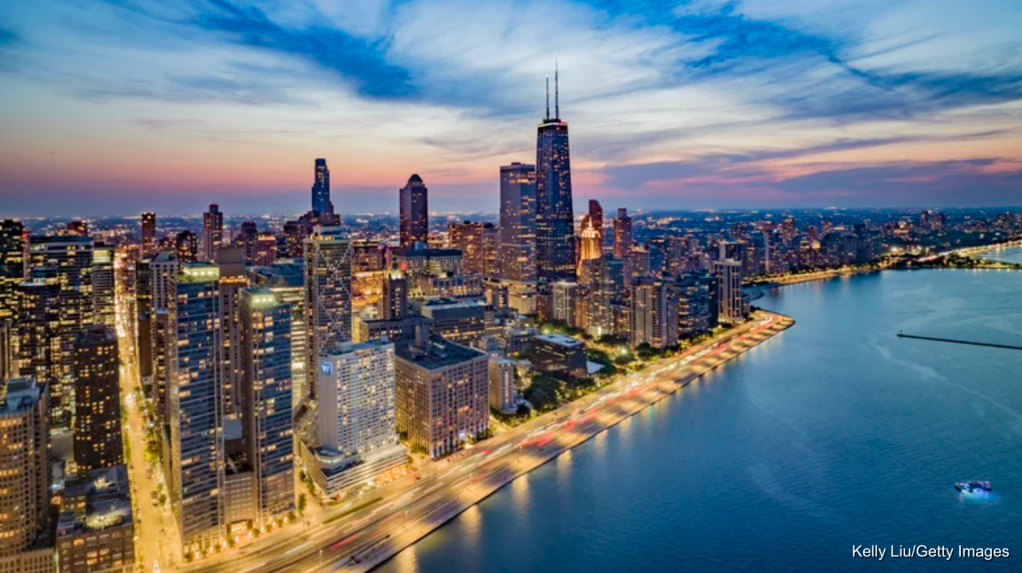
Chicago’s skyline. (Photo by Kelly Liu/Getty Images.)
Newly named Pope Leo XIV was born Robert Prevost in Chicago, so that’s as good an excuse as any to write a blog post about novels partly or fully set in “The Windy City” off Lake Michigan.
With a population of more than 2.6 million, Chicago is America’s third-largest city after New York City and Los Angeles, so there were and are plenty of stories to be told in a Midwest metropolis known for its diversity, urban architecture, commerce, arts institutions, sports teams, etc., etc.
On a personal note, my wife Laurel Cummins (Happy Mother’s Day!) was born in Chicago. Also, I went to graduate school at Northwestern University, just north of Chicago in Evanston, Illinois. Needless to say, I often took the “El” to Chicago during that year, and have since visited the city several times.
One of the best-known novels with a Chicago setting is Upton Sinclair’s The Jungle, a searing 1906 book depicting the struggles of its working-class characters and the horrendous conditions in the meat-packing industry.
Another Chicago-based classic is Richard Wright’s Native Son (1940) — which, among other things, depicts the city’s very complicated racial dynamics.
Theodore Dreiser’s two best-known novels are mostly or partly set in Chicago; those books being Sister Carrie (1900) and An American Tragedy (1925).
Published during one of the years between those Dreiser books was Willa Cather’s 1915 novel The Song of the Lark, in which future opera singing star Thea Kronborg studies music in Chicago.
Then there’s W. Somerset Maugham’s The Razor’s Edge (1944), in which the traumatized World War I pilot protagonist is from Chicago.
A 21st-century novel — Audrey Niffenegger’s 2003 bestseller The Time Traveler’s Wife — is an ode to Chicago amid its offbeat love story and frequent time-jumping.
The main character in Stephen King’s Rose Madder (1995) escapes an abusive police officer husband by fleeing to an unnamed big city that’s almost certainly Chicago.
Saul Bellow set a number of his novels in Chicago, but the only one of his I’ve read (Seize the Day) unfolded in New York City. 🙂
The title character of John Grisham’s 2012 baseball novel Calico Joe has a brief career with the Chicago Cubs.
I’ll add that while Eliot Asinof’s 1963 baseball book Eight Men Out is basically nonfiction, it does have some fictional elements. And the true story about eight Chicago White Sox players paid to “throw” the 1919 World Series for the benefit of gamblers is almost novelistic in its drama.
Your thoughts about, and examples of, this topic?
Misty the cat says: “Me eating. Birds eating. It’s a Sunday brunch frenzy.”
My comedic 2024 book — the part-factual/part-fictional/not-a-children’s-work Misty the Cat…Unleashed — is described and can be purchased on Amazon in paperback or on Kindle. It’s feline-narrated! (And Misty says Amazon reviews are welcome. 🙂 )
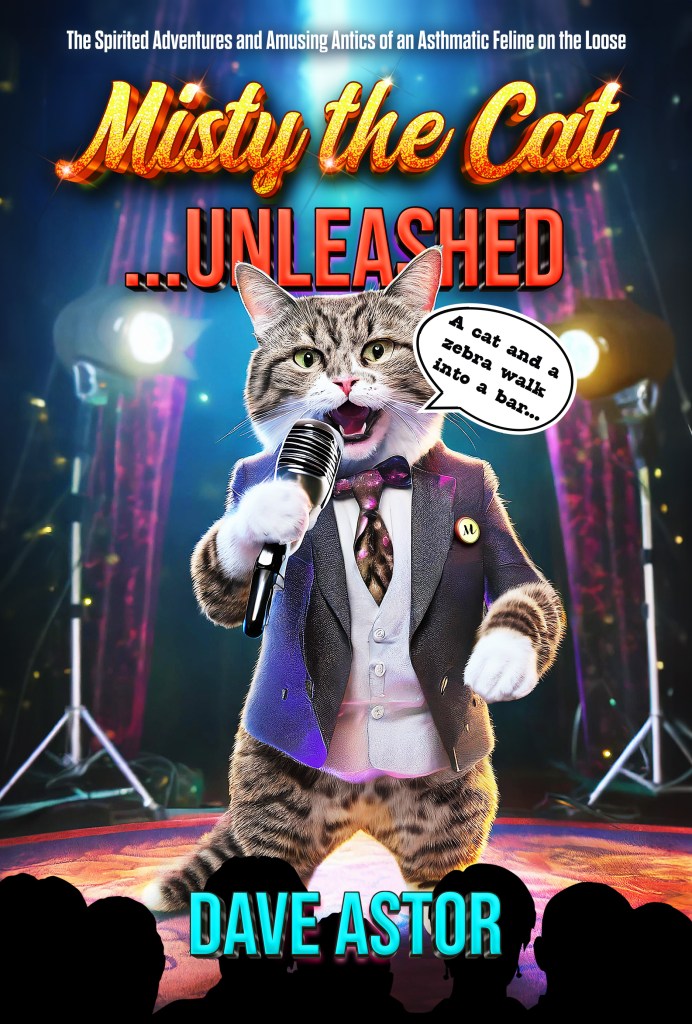
This 90-second promo video for my book features a talking cat: 🙂
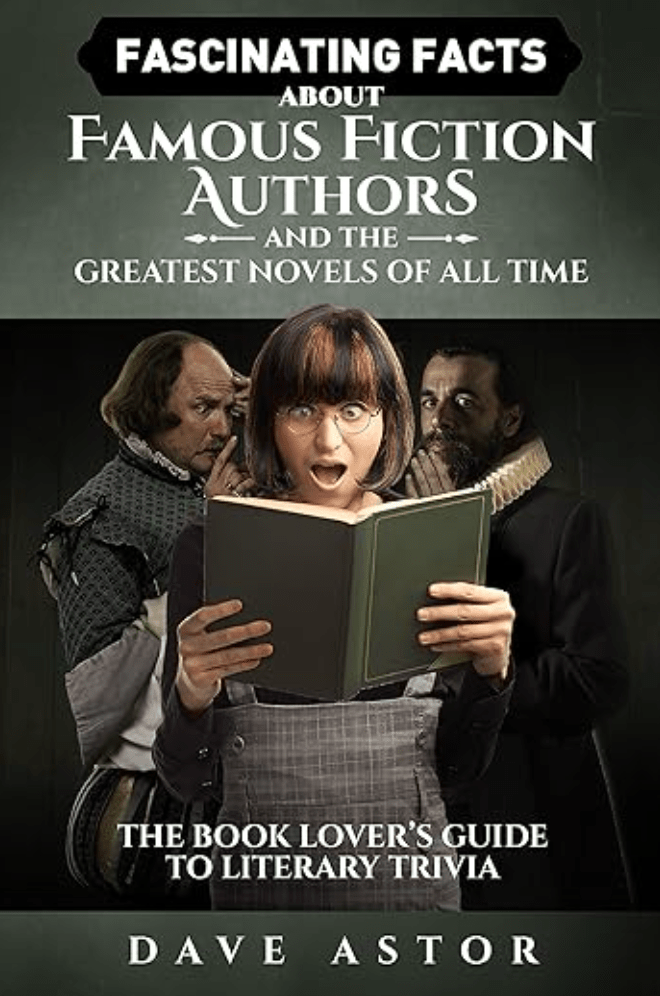
I’m also the author of a 2017 literary-trivia book…
…and a 2012 memoir that focuses on cartooning and more.

In addition to this weekly blog, I write the 2003-started/award-winning “Montclairvoyant” topical-humor column every Thursday for Montclair Local. The latest piece — about an aging ice rink, a probably doomed-to-fail affordable housing plan, and more — is here.
 Dave Astor on Literature