Reading Dystopian Fiction During a Real-Life Dystopia

It feels like a dystopian time as we witness the dictatorial Trump regime’s multiple vile actions, Israel’s unprovoked attack on Iran (probably with U.S. approval and U.S. weapons), Israel’s 20-month genocidal war (again with U.S. backing) on innocent Gazan civilians after the horrors of October 7, Russia’s continuing war on Ukraine, yesterday’s assassination of a liberal Minnesota politician by a right-winger, the existential threat of climate change, and more.

Trump this month of course sent over-the-top military force into Los Angeles against the wishes of California’s governor (despite Republicans often blathering about “states’ rights”) to crack down on a small, mostly peaceful resistance to his administration’s brutal roundup of people of color — whether they’re undocumented immigrants, documented immigrants, or longtime American citizens. Which has broken up families, and served as another test for Trump to see how far he can install his Republican brand of fascism. U.S. Sen. Alex Padilla, a California Democrat who’s the son of Mexican immigrants, was even thrown to the ground and handcuffed by agents for trying to ask a question of Homeland Security secretary Kristi Noem, the Trump cabinet member best known for heartlessly shooting her 14-month-old dog. Then came yesterday’s grotesque (and grossly expensive) military parade in Washington, DC, that was held partly to “celebrate” the cruel Trump’s birthday. A parade, by the way, that drew many fewer spectators than Trump wanted — though his constantly lying administration is already inflating the numbers.

All quite convenient for distracting Americans from things like Trump’s support of a Republican congressional tax bill that would mostly benefit the already wealthy and tech billionaire Elon Musk’s recent post on X (formerly Twitter) saying Trump is in the Epstein files for repugnant past pedophile behavior with underage girls.

Anyway, my thoughts in our ultra-depressing era naturally turned to dystopian fiction and a desire to do a post about that genre — which can also include apocalyptic novels. But there was the nagging recollection that I had focused on dystopian literature before, and, sure enough, a search turned up a piece by me for The Huffington Post book section way back in 2012 — two years before starting this WordPress blog. So, I decided to post a revised/updated version of that 13-year-old piece today. Here goes:

War. Death. Despair. Oppression. Environmental ruin. Yup, when it comes to demoralizing literature, dystopian literature is a downer of downers. Yet some of us find that genre soberly appealing. Why?

For one thing, we read about rather than live through dystopian lit’s fictional bad stuff — though real life is plenty negative now (as this post has noted) and fictional bad stuff is often an extrapolation of a troubled actual world. Still, many 2025 readers are not as much “in the arena” as the beleaguered characters in Suzanne Collins’ dystopian The Hunger Games.

And there’s a certain “rightness” in reading about a harrowing society. Why? Because we know that politicians, military leaders, and corporate moguls are capable of doing awful things — meaning dystopian novels feel kind of honest.

In addition to The Hunger Games, excellent dystopian/semi-dystopian novels filled with carnage, inhumanity, hopelessness, and more include (among others) Aldous Huxley’s Brave New World, George Orwell’s 1984, H.G. Wells’ The Time Machine, Mary Shelley’s The Last Man, Stephen King’s The Stand, Octavia E. Butler’s Parable of the Sower, (Ms.) Lionel Shriver’s The Mandibles, Lois Lowry’s The Giver, Cormac McCarthy’s The Road, Ray Bradbury’s Fahrenheit 451, Anthony Burgess’ A Clockwork Orange, William Golding’s Lord of the Flies, Sinclair Lewis’ It Can’t Happen Here, Kazuo Ishiguro’s Never Let Me Go, Albert Camus’ The Plague, Franz Kafka’s The Trial, Nevil Shute’s On the Beach, Kurt Vonnegut’s Slaughterhouse-Five, Jack London’s The Iron Heel, and Margaret Atwood’s The Handmaid’s Tale, The Testaments, Oryx and Crake, The Year of the Flood, and MaddAddam.

The above books of course take different approaches — some very dramatic, others understated, some set in the near future, others in the distant future, etc., etc.

Sometimes, authors of dystopian literature temporarily ease the tension a bit with humor, as Atwood does with the clever genetic-engineering terms she coined for Oryx and Crake. And dystopian books can have seemingly utopian elements — with things appearing not too bad even though they ARE bad; Brave New World is a perfect example. There are even novels, such as H.G. Wells’ The Shape of Things to Come, that mix dystopian and utopian elements.

We admire the best dystopian novels because they’re written well and depict people with whom we can relate. We can be fascinated by the terrible things those characters face, and by how some react bravely and some react cowardly or with resignation. We, as readers, have a hard time averting our eyes from the misery even as we’re enraged by what despots and other vicious officials are doing to citizens. And we’re compelled to turn the pages as we wonder if rebels and other members of the populace can somehow remake a wretched society into something more positive. We also wonder who will survive and who won’t.

Last but not least, some of us might admire dystopian fiction because, by giving us worst-case scenarios of the future, we have a smidgen of (in vain?) hope that our current society can be jolted enough to avoid those scenarios starting or continuing in real life. Like some of the characters in dystopian novels, we might feel a little halting, against-all-odds optimism — such as that inspired by yesterday’s 2,000 or so anti-Trump-regime “No Kings” protests attended by millions of Americans in all 50 states, the resistance of politicians such as Bernie Sanders and Alexandria Ocasio-Cortez, the resistance of institutions such as Harvard University, the holding to a belief in the rule of law by some judges (including a percentage of those appointed by Trump), and so on. But it’s a difficult fight against very powerful forces.

All that said, I don’t blame anyone for preferring escapist fiction during a time like this. I’ve upped my quota of those kinds of books myself, while making sure to still read some weightier literature.

Any favorite dystopian novels? Why do you like or not like that genre? Thoughts about the current situation in the world?

Misty the U.S. cat: “I nap in the morning near an Australian novel because it’s night in Australia.”

My comedic 2024 book — the part-factual/part-fictional/not-a-children’s-work Misty the Cat…Unleashed — is described and can be purchased on Amazon in paperback or on Kindle. It’s feline-narrated! (And Misty says Amazon reviews are welcome. 🙂 )
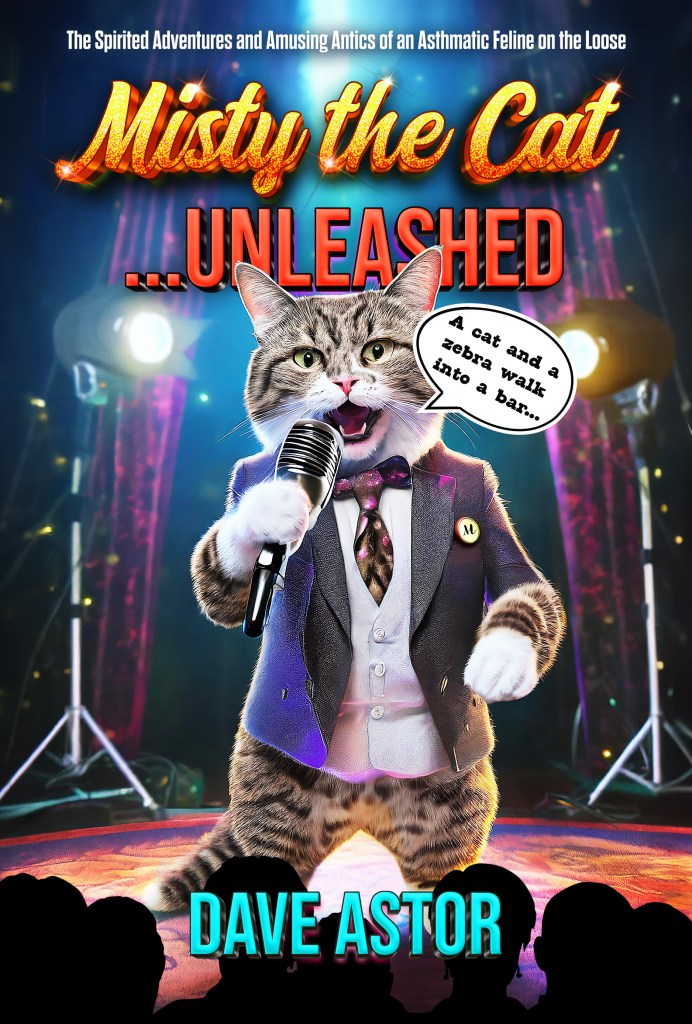
This 90-second promo video for my book features a talking cat: 🙂

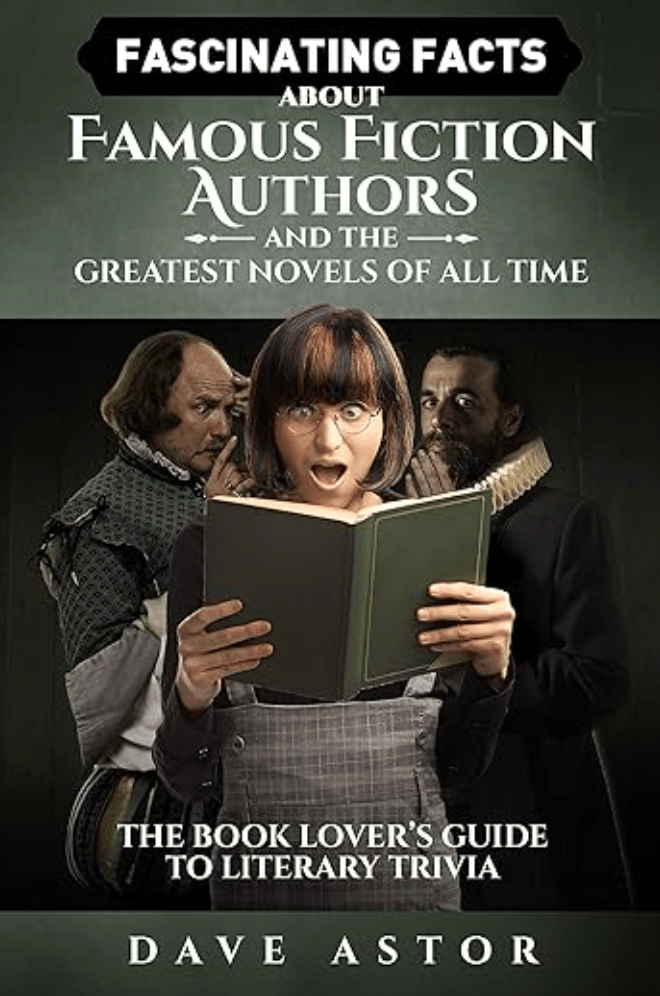
I’m also the author of a 2017 literary-trivia book

…and a 2012 memoir that focuses on cartooning and more.

In addition to this weekly blog, I write the 2003-started/award-winning “Montclairvoyant” topical-humor column every Thursday for Montclair Local. The latest piece — containing election results, news about smartphones in classrooms, and more — is here.

When Hot Is Part of the Plot

Last week, “inspired” by the frigid weather in much of the U.S., I wrote about literature that’s filled with cold and snow. Well, it’s summer in Australia and various other parts of the world, and some locales rarely get chilly, so I’ll follow up with a post about fiction featuring the hot and humid.

Heat can be a key factor in literature, whether the works are set before or after our planet’s scary scourge of climate change. High temperatures invigorate some characters and sap the energy of others, make for lush landscapes or a barren desert, and so on.

Speaking of desert, the first novel I’ll mention has to be…Desert. That J.M.G. Le Clezio book takes place mostly in Morocco, and the temperature is important and palpable — especially in comparison with the France-set scenes in later chapters.

Among many other excellent novels with milieus in the warmer countries of Africa are Wole Soyinka’s The Interpreters, Buchi Emecheta’s Second-Class Citizen, Chinua Achebe’s Things Fall Apart, and Paul Bowles’ The Sheltering Sky.

Novels that unfold in Southern Europe? They include Miguel de Cervantes’ Spain-set Don Quixote, Giuseppe Tomasi di Lampedusa’s Sicily-set The Leopard, Elsa Morante’s Rome-set History, and Jeffrey Eugenides’ partly Greece-set Middlesex. And it’s rather scorching when a certain volcanic eruption buries Pompeii in Anthony Burgess’ The Kingdom of the Wicked.

The Caribbean or other warm islands? Jean Rhys’ Jane Eyre prequel Wide Sargasso Sea and Alexandre Dumas’ Georges, to name two.

It’s interesting when a novel takes characters (and readers) from colder to warmer climes — as in (Ms.) Lionel Shriver’s So Much for That (U.S. to a tropical island), David Lodge’s Paradise News (England to Hawaii), and Paul Theroux’s The Mosquito Coast (U.S. to Central America). In the first two books, those toastier places are a big relief — even life-changing — for the characters. In the third book, disaster results.

Things are more mixed when the Price family move from the U.S. to Africa in Barbara Kingsolver’s The Poisonwood Bible. (The Prices were not exactly cold in their home state of Georgia.) The obnoxious missionary dad makes things miserable in Africa, but the wife and four daughters he drags along eventually find some positives in their lives.

Speaking of the U.S., there are plenty of novels set in the Southeast, New Orleans, the Southwest, Southern California, etc. They include Zora Neale Hurston’s Their Eyes Were Watching God, Marjorie Kinnan Rawlings’ The Yearling, Erskine Caldwell’s Tobacco Road, William Faulkner’s Light in August, Anne Rice’s The Witching Hour, John Kennedy Toole’s A Confederacy of Dunces, Amanda Moores’ Grail Nights (whose author is the wife of frequent commenter here jhNY), Cormac McCarthy’s The Border Trilogy (in which there’s also much of Mexico), James Michener’s Texas, Willa Cather’s Death Comes for the Archbishop, Terry McMillan’s Waiting to Exhale, Walter Mosley’s Devil in a Blue Dress, and Raymond Chandler’s The Big Sleep, among many others.

And there’s of course the warm climes in lots of Latin America literature — the subject of its own blog post this past September.

My 2017 literary-trivia book is described and can be purchased here: Fascinating Facts About Famous Fiction Authors and the Greatest Novels of All Time.

In addition to this weekly blog, I write the award-winning “Montclairvoyant” topical-humor column for Baristanet.com. The latest weekly piece — which includes a Russian literature sub-theme! — is here.

Hurricane Harvey and Happenings in Novels

Major real-life events can make fans of literature think of…literature. Such is the case with Hurricane Harvey — the catastrophic storm that has people focusing on lives lost, lives drastically disrupted, immense property damage, overdevelopment that eliminates water-absorbing open space, and…certain books.

I thought of novels that depict the devastating consequences of human-caused climate change, as do Octavia E. Butler’s Parable of the Sower and Barbara Kingsolver’s Flight Behavior. I also remembered fictional works in which water-related disasters are prominently featured — with those books including George Eliot’s The Mill on the Floss (huge flood), John Steinbeck’s The Grapes of Wrath (epic rains near the novel’s end), Eliot’s Daniel Deronda and Kate Chopin’s The Awakening and Jack London’s Martin Eden (drowning scenarios), etc. And one can’t ignore a novel titled The Year of the Flood — the second installment of Margaret Atwood’s post-apocalyptic/eco-drenched trilogy that starts with Oryx and Crake and ends with MaddAddam.

Parable of the Sower, a 1993 dystopian sci-fi novel I finished this morning, is also prescient about several other things besides climate change — including the evils of profit-driven privatization of public entities. Heck, the horrific Hurricane Katrina, which happened twelve years after Butler’s book came out, resulted in charter school operators taking over the public school system in New Orleans and worsening education there as they monetized it. Parable also has a lot to say about race, gender, religion, and nasty/soulless corporations — topics Donald Trump has helped turn into disasters of another sort in 2017.

Of course, novels featuring ship voyages are often going to have water-related disasters. Two examples — one from literary lit and one from popular lit — include Herman Melville’s Moby-Dick with its ill-fated Pequod vessel and Paul Gallico’s The Poseidon Adventure with its capsizing ocean liner that turns upside down.

I haven’t read this novel, but Julie Barnes’ All Flavors includes a Florida hurricane as a significant presence.

For you, what fictional works (if any) came to mind after Hurricane Harvey hit Houston, Texas, and surrounding areas?

You’re also welcome to mention novels you were reminded of by non-hurricane tragedies of any era. Examples include Albert Camus’ The Plague, Mary Shelley’s plague-filled The Last Man, L. Frank Baum’s The Wonderful Wizard of Oz (cyclone), and books that use real-life disasters in a fictional setting — such as Pete Hamill’s Forever (the 9/11 attacks) and Anthony Burgess’ The Kingdom of the Wicked (which ends with Pompeii’s 79 AD volcanic eruption).

Trump’s unwelcome Twitter storms don’t count…

My 2017 literary-trivia book is described and can be purchased here: Fascinating Facts About Famous Fiction Authors and the Greatest Novels of All Time.

In addition to this weekly blog, I write the award-winning “Montclairvoyant” topical-humor column for Baristanet.com. The latest weekly piece, about going back to school but not about going back to school, is here.

It’s Earth Day in Some Parts of Planet Literature

Yesterday, April 22, was Earth Day. Our planet is in deep ecological trouble, and America’s Predator-in-Chief is making things worse with his profoundly anti-environment policies. I guess he’s also the Polluter-in-Chief.

Anyway, I began to think about novels that have directly or indirectly focused on the environment, and the first one that came to mind was Barbara Kingsolver’s Flight Behavior.

That book is many things — including a compelling portrayal of a rural Tennessean’s dissatisfaction with her life and marriage, and what she does about it. But Flight Behavior is also a novel about climate change — including how butterflies are devastatingly affected by it.

Kingsolver addresses ecological matters in Prodigal Summer, too.

One of the ultimate environmental catastrophes takes place in Nevil Shute’s On the Beach when nuclear radiation bears down on Australia after ruining much of the world.

Then there are novels in which environmentalism is perhaps not the biggest theme, but an important theme. For instance, the harming of Oklahoma land by greedy agribusiness is a big reason why the Joad family of John Steinbeck’s The Grapes of Wrath is forced to uproot themselves to try their luck in California. The evil forces in J.R.R. Tolkien’s The Lord of the Rings certainly lay waste to a lot of Middle-earth land. And Anne Shirley’s keen appreciation of nature is one of the endearing elements in L.M. Montgomery’s Anne of Green Gables.

Also, the shrinking of the American wilderness is a poignant backdrop in James Fenimore Cooper’s five “Leatherstocking” novels (The Last of the Mohicans, etc.). Heck, protagonist Natty Bumppo is more comfortable with the eco-friendlier ways of Native Americans (such as his close friend Chingachgook) than he is with the eco-destructive ways of his fellow whites.

Of course, sci-fi, speculative fiction, dystopian novels, and post-apocalypse books often address environmental issues in direct or indirect fashion — as when they show the Earth abused by corporations and humankind in general. Examples include Margaret Atwood’s Oryx and Crake, Cormac McCarthy’s The Road, and various other books. There are also the death throes of Earth at the end of H.G. Wells’ The Time Machine.

In the children’s-book area, The Lorax by Dr. Seuss is considered a fable about how corporate greed does a number on nature.

What are some of your favorite fictional works that touch on environmental issues?

Here’s a review of, and a video interview about, my new literary-trivia book Fascinating Facts About Famous Fiction Authors and the Greatest Novels of All Time  — which earned a “Best Seller” tag on Amazon for a time this weekend.

In addition to this weekly blog, I write the award-winning “Montclairvoyant” topical-humor column for Baristanet.com, which covers Montclair, N.J., and nearby towns. The latest weekly column is here.