From Antigua to Anniversaries (of Notable Novels)

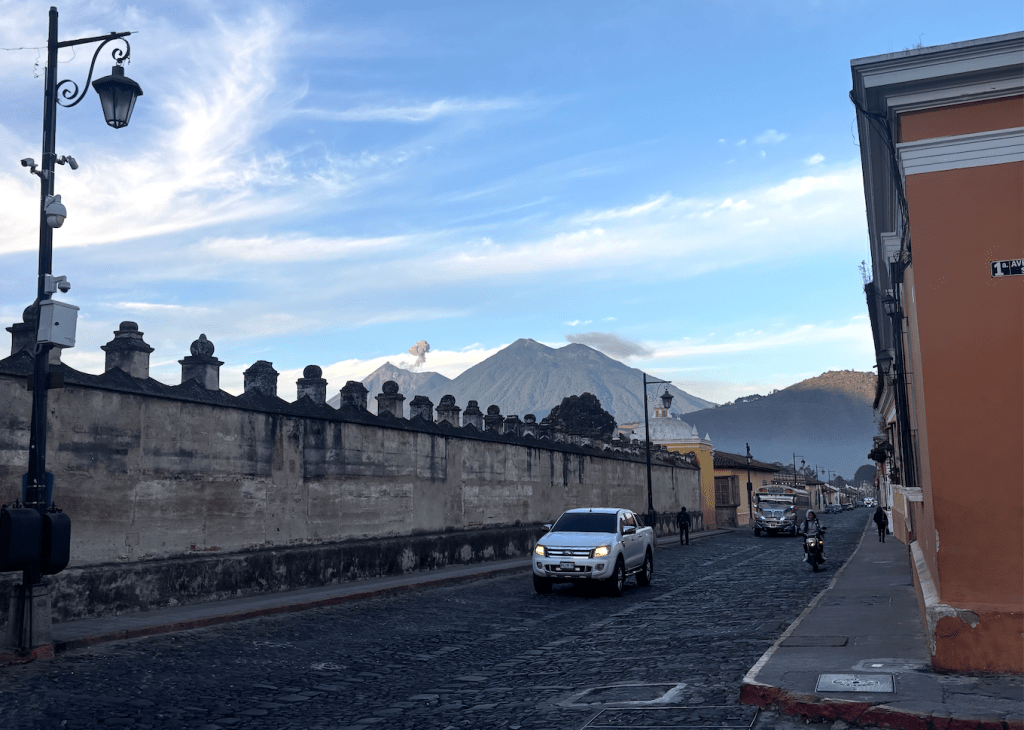
A street in Antigua, Guatemala, that has nothing to do with the topic of this literature post. πŸ™‚ (Photo by me on January 8.)

Glad to be back! I missed writing a post last week because of a trip I took with my wife Laurel and younger daughter Maria to Guatemala, where Maria was born. A memorable visit that included stops in Guatemala City, Tikal, Antigua, Panajachel, and Guatemala City again.

Today, as I do every January, I’m going to mention well-known novels — many of which I’ve read, some of which I haven’t — reaching major round-number anniversaries. So, in 2026, novels published in 2001 are turning 25, 1976-released books are turning 50, 1926 novels are turning 100, etc.

The first 2001 novel that came to mind was Richard Russo’s riveting Pulitzer Prize winner Empire Falls, set in a Maine blue-collar town.

Released that year, too, was Jonathan Franzen’s The Corrections, about a couple and their three adult children. I liked it better than the author’s much-touted Freedom, though that 2010 novel was pretty good as well.

Also, Yann Martell’s Life of Pi, which features a boy stranded on a boat with a tiger after a shipwreck; Sue Monk Kidd’s The Secret Life of Bees, which has a lot to say about female relationships as well as racism; Ann Patchett’s Bel Canto, a riveting look at a mass-hostage situation; Amy Tan’s The Bonesetter’s Daughter, about a Chinese-American woman and her immigrant mother; Ian McEwan’s Atonement, which I found both compelling and annoying; John Grisham’s semi-autobiographical A Painted House; Neil Gaiman’s fantasy tour de force American Gods; and Jasper Fforde’s clever The Eyre Affair.

Kristin Hannah’s peak as an author was yet to arrive, but her somewhat-early-in-career 2001 novel Summer Island was quite absorbing as it focused on a fraught mother-daughter relationship and rapprochement.

In the series realm, Diana Gabaldon’s fifth Outlander novel (The Fiery Cross) and Lee Child’s fifth Jack Reacher novel (Echo Burning) came out 25 years ago.

The year 2001 also saw the publication of Carlos Ruiz Zafon’s The Shadow of the Wind and Dennis Lehane’s Mystic River, neither of which I’ve read.

In 1976, the most famous release was Alex Haley’s Roots, which was of course the multi-generational American slavery saga about Kunta Kinte and his descendants.

There was also Margaret Atwood’s third novel Lady Oracle, about a woman with multiple identities; and Marge Piercy’s Woman on the Edge of Time, a sci-fi-ish work whose lower-income protagonist is unjustly committed to a psychiatric institution.

Notable 1976 books I haven’t read include Anne Rice’s debut novel Interview with the Vampire and Judith Guest’s made-into-a-memorable-movie Ordinary People.

Exactly a century ago — 1926 — saw the appearance of Ernest Hemingway’s The Sun Also Rises, which I thought was good not great.

An underrated classic that year was L.M. Montgomery’s The Blue Castle, about a young woman who gets very bad news that turns out to be very good news.

There was also Colette’s The Last of Cheri, the sequel to the 1920 Cheri novel about the relationship between a younger man and older woman; and My Mortal Enemy, one of Willa Cather’s lesser works.

Well-known 1926 novels I haven’t read include Agatha Christie’s The Murder of Roger Ackroyd and Upton Sinclair’s Oil!

Published 150 years ago, in 1876: Mark Twain’s iconic The Adventures of Tom Sawyer, about a rascally boy and his friend Huckleberry Finn.

That year also saw the release of Daniel Deronda, George Eliot’s final novel and one of her best. Its title character, who discovers he’s Jewish, interacts with some very memorable people.

In addition, there was Thomas Hardy’s not-famous-but-interesting The Hand of Ethelberta.

Two 1826 highlights were Mary Shelley’s apocalyptic, late-21st-century-set The Last Man and James Fenimore Cooper’s The Last of the Mohicans that unfolds in 1757 during the French and Indian War. Two novels with “Last” in the title that lasted.

And in 1726, 300 years ago, Jonathan Swift’s iconic Gulliver’s Travels was published!

Any thoughts on the novels I discussed? Any other titles you’d like to mention from those anniversary years? (I’m sure I missed some.)

Misty the cat says: “Tofu falling from the sky was not on my 2026 bingo card.”

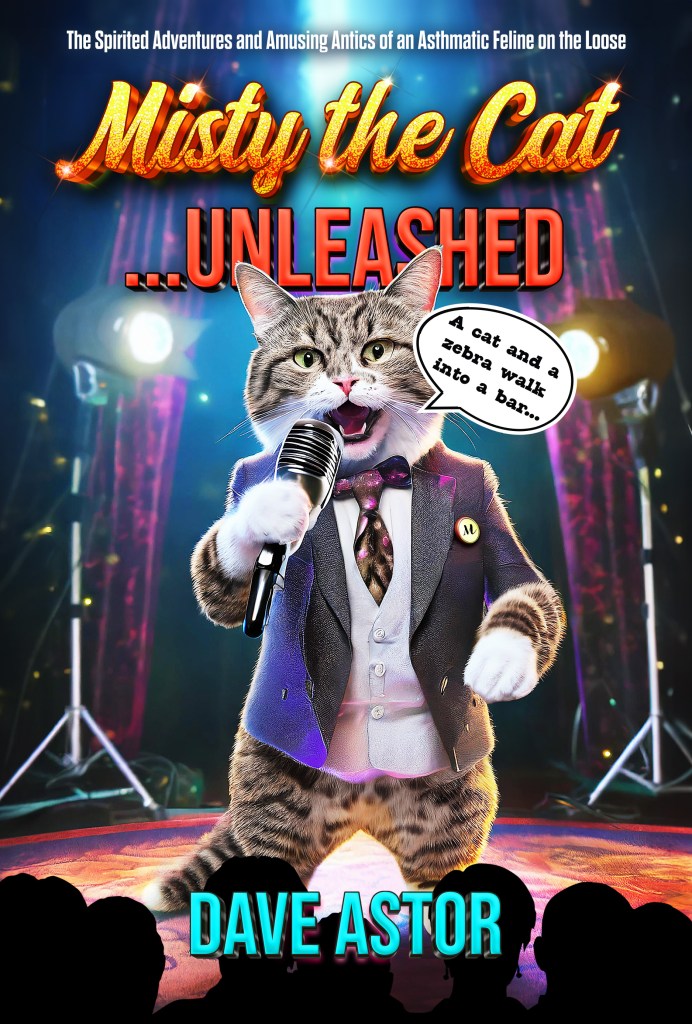
My comedic 2024 book — the part-factual/part-fictional/not-a-children’s-work Misty the Cat…Unleashed — is described and can be purchased on Amazon in paperback or on Kindle. It’s feline-narrated! (And Amazon reviews are welcome. πŸ™‚ )

This 90-second promo video for the book features a talking cat: πŸ™‚

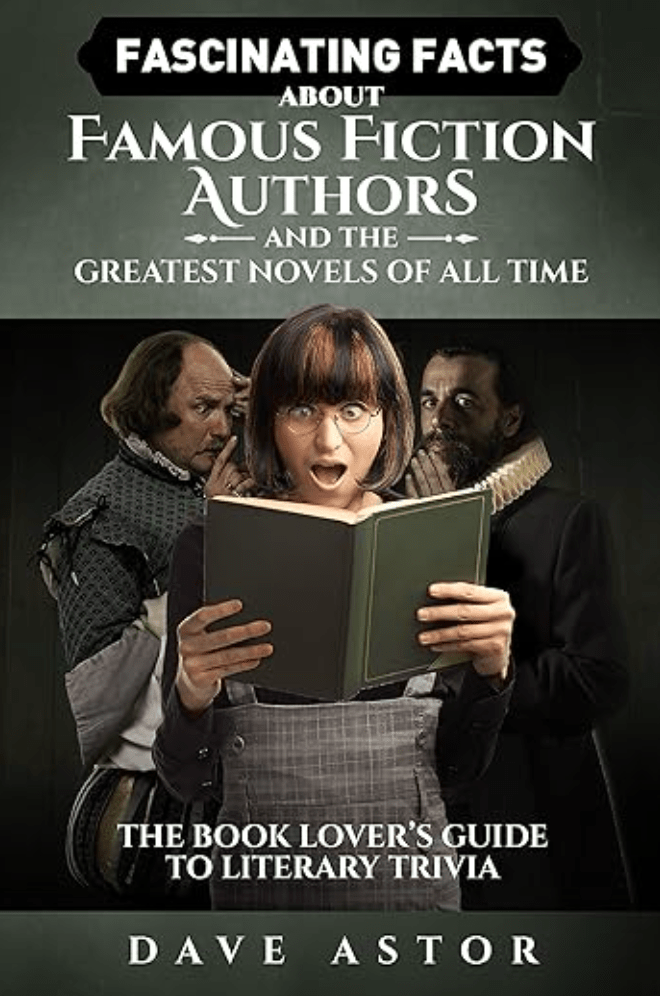
I’m also the author of a 2017 literary-trivia book

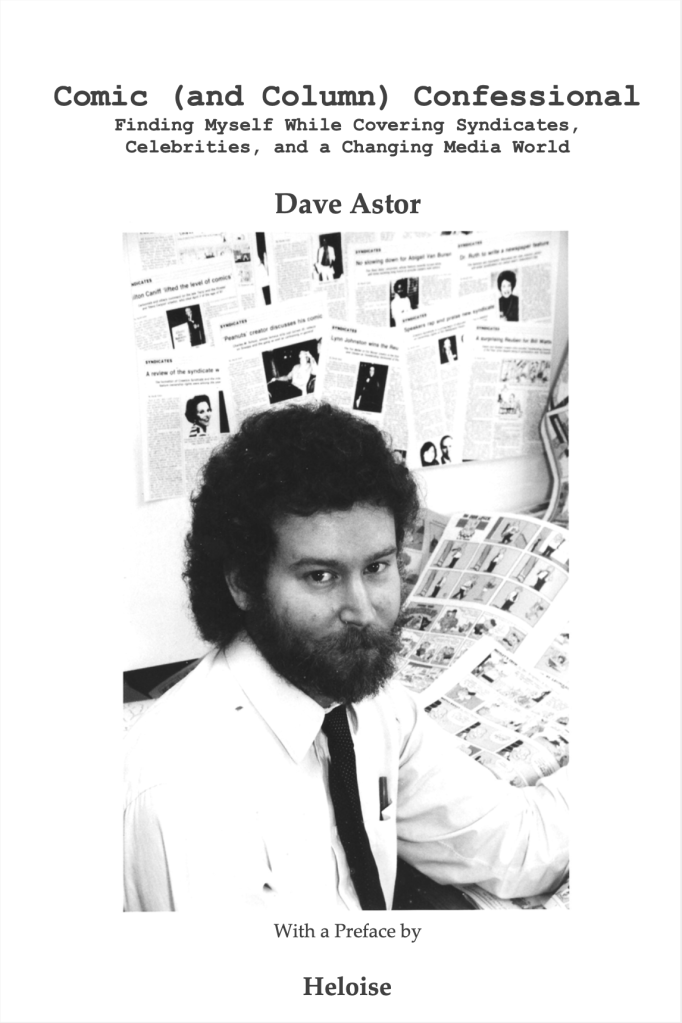
…and a 2012 memoir that focuses on cartooning and more, including many encounters with celebrities.
In addition to this weekly blog, I write the 2003-started/award-winning “Montclairvoyant” topical-humor column every Thursday for Montclair Local. The latest piece — about two meetings, a local anti-ICE protest, and more — is here.

When Famous Novels Meet, or Don’t Meet, Expectations

In 2011, I wrote a blog post about whether famous novels I belatedly read after many years met the pent-up “great expectations” I brought to them. I covered books such as Beloved, Don Quixote, East of Eden, Ivanhoe, and The Age of Innocence.

I thought I’d revisit that theme by discussing some famous novels I finally got to since then. I’ll start with The Outsiders (which I finished last week) and also mention (alphabetically by title) A Confederacy of Dunces, Doctor Zhivago, Ethan Frome, Fahrenheit 451, Gorky Park, Of Human Bondage, One Hundred Years of Solitude, Rabbit, Run, Silas Marner, The Big Sleep, The Death of Ivan Ilyich, The Last of the Mohicans, The Portrait of a Lady, The Secret History, The Stranger, and Villette.

The Outsiders (1967) is a modern young-adult classic, so I figured it would be pretty good. But S.E. Hinton wrote it while still a teen (as she was in the above photo), so I figured it wouldn’t be THAT good. I was wrong. It’s very well written, features a number of compelling characters, and has lots to say about youth angst, friendship, dysfunctional families, peer pressure, class divisions, and more. I was impressed.

John Kennedy Toole’s A Confederacy of Dunces? A weird book, but funny as hell — with quirky, eccentric characters and lots of New Orleans ambience. Worth waiting for.

I found Boris Pasternak’s Doctor Zhivago sweeping, romantic, and sad. Didn’t totally love it, but liked it a lot.

Ethan Frome is different than some other Edith Wharton books in featuring non-rich characters in Massachusetts rather than wealthy ones in New York City. It’s a downbeat novella that packs a feverish, emotional wallop.

Ray Bradbury’s Fahrenheit 451 deserves its reputation as one of the most memorable dystopian novels.

Martin Cruz Smith’s Gorky Park is a thriller that delivers in all kinds of ways — tense plot, great protagonists, great villains, excellent Russian atmosphere. Plus it spawned seven sequels nearly as good.

Of Human Bondage was W. Somerset Maugham’s masterpiece — and that’s saying a lot, because he wrote a number of terrific novels. It mostly lives up to the hype, though one does wonder how protagonist Philip could stay in love for so long with a character as unlikable as Mildred.

One Hundred Years of Solitude? A tour de force by Gabriel Garcia Marquez that deserves its reputation as one of the 20th century’s best novels, though it’s sometimes a bit confusing to read.

John Updike’s writing in Rabbit, Run can’t be questioned, but I found the protagonist Harry “Rabbit” Angstrom to be grating and sexist enough to not really enjoy the novel as much as I would’ve liked.

George Eliot’s Silas Marner has a reputation in some quarters as a tedious read, but I found it wonderful and heartwarming. And so short for an Eliot novel that it’s a very good introduction to that fabulous author for people wanting to try her work.

Raymond Chandler’s The Big Sleep? Lived up to its reputation for excellent, noirish, hardboiled crime fiction. And Humphrey Bogart was born to play private eye Philip Marlowe in the movie version.

Leo Tolstoy’s melancholy The Death of Ivan Ilyich is one of several examples of how that author rocked the novella in addition to lengthy books such as War and Peace and Anna Karenina.

The Last of the Mohicans is James Fenimore Cooper’s best-known novel, and it’s quite good, but I have to rate The Deerslayer (of the same “Leatherstocking” series) higher.

Henry James’ The Portrait of a Lady doesn’t disappoint — a sublime, poignant work written before the author got a little too dense and wordy with some of his late classics.

Donna Tartt’s The Secret History is impressive for a debut novel, but it at times feels a bit too insular and contrived as it focuses on a small group of obsessive college students. I much prefer Tartt’s later The Goldfinch.

Albert Camus’ The Stranger is often mesmerizing, occasionally unsatisfying, and quite unusual.

Finally, Charlotte Bronte’s Villette has a number of riveting moments while also dragging in spots. The author’s earlier Jane Eyre is a much more compulsive read, and it probably didn’t help that Charlotte was depressed by the deaths of sisters Emily and Anne while writing Villette.

Your reactions to some famous novels when you finally got around to reading them? Did they meet, or not meet, your expectations?

Ray Bradbury mentioning Fahrenheit 451 on Groucho Marx’s You Bet Your Life game show in 1956:

My literary-trivia book is described and can be purchased here: Fascinating Facts About Famous Fiction Authors and the Greatest Novels of All Time.

In addition to this weekly blog, I write the award-winning “Montclairvoyant” topical-humor column for Baristanet.com. The latest weekly piece — a too-much-rain-inspired satire — is here.

The Unexpected in Famous Novels

When people crack open a famous novel, they often have certain expectations. But sometimes surprises are in store.

Part of the reason is that many of us (myself included) try not to read too much about iconic books before starting them for the first time. This means not clicking on Wikipedia entries, ignoring Amazon summaries and reviews, and skipping the forewords and introductions in the novels themselves — all of which avoids spoilers and allows for the books to unfold in a fresh way.

My most recent experience with a classic novel that surprised me was D.H. Lawrence’s Sons and Lovers (1913). Just about all I knew of it was that its original publisher deleted a number of passages that were “risque” or otherwise “controversial” — passages that were fairly tame by today’s standards. But I was struck by how much more there was to the excellent novel than sexual references. A portrait of a working-class family, an exploration of a mismatched marriage, a depiction of a frustrated mother and her emotionally too-close relationship with her second son, a chronicle of that son’s complicated romantic life, etc.

Then there are those challenging classics that have a reputation for being SERIOUS, yet one discovers when reading them that they contain moments of hilarity — as with the devil “cameo” in Fyodor Dostoevsky’s The Brothers Karamazov and the Ishmael/Queequeg room-share scene in Herman Melville’s Moby-Dick.

Then there’s Silas Marner, which has been the bane of some high school students who found it (allegedly) tedious, moralistic, and not something to be read unless assigned by a teacher. But I thought George Eliot’s short novel was warm, affecting, inspiring, and more.

Or Ethan Frome by Edith Wharton, who has a reputation for writing excellent novels set in New York City’s high society. But EF pulls us in with a tale of far-from-rich folk in rural Massachusetts.

I knew a little something about Of Human Bondage‘s plot before I read W. Somerset Maugham’s masterpiece, but was still shocked by just how much the would-be-doctor protagonist degraded himself with a woman totally wrong for him.

I also knew that Cormac McCarthy’s riveting Blood Meridian was going to be violent. But the intensity of the mayhem (very graphic for a literary novel) took me aback.

Another big surprise was the sympathetic portrayal of a Jewish character (Rebecca) in a novel published in 1820, when anti-Semitism was rampant. The book: Sir Walter Scott’s Ivanhoe.

Along those lines, Alexandre Dumas’ 1843 novel Georges contains exceptionally positive portrayals of black characters for its time. Then again, I shouldn’t have been that surprised given that Dumas was partly black himself, though he usually focused on white characters (as in The Count of Monte Cristo and The Three Musketeers).

All those unexpected things mentioned above are examples of why reading literature can be so wonderful.

What surprises have you found in famous novels?

(The box for submitting comments is below already-posted comments, but your new comment will appear at the top of the comments area β€” unless you’re replying to someone else.)

I’m writing a literature-related book, but still selling Comic (and Column) Confessional — my often-funny memoir that recalls 25 years of covering and meeting cartoonists such as Charles Schulz (“Peanuts”) and Bill Watterson (“Calvin and Hobbes”), columnists such as “Dear Abby” and Ann Landers, and other notables such as Coretta Scott King, Walter Cronkite, and various authors. The book also talks about the malpractice death of my first daughter, my remarriage, and life in Montclair, N.J. — where I write the award-winning weekly “Montclairvoyant” humor column for The Montclair Times. You can email me at dastor@earthlink.net to buy a discounted, inscribed copy of the book, which contains a preface by “Hints” columnist Heloise and back-cover blurbs by people such as “The Far Side” cartoonist Gary Larson.