Reading Dystopian Fiction During a Real-Life Dystopia

It feels like a dystopian time as we witness the dictatorial Trump regime’s multiple vile actions, Israel’s unprovoked attack on Iran (probably with U.S. approval and U.S. weapons), Israel’s 20-month genocidal war (again with U.S. backing) on innocent Gazan civilians after the horrors of October 7, Russia’s continuing war on Ukraine, yesterday’s assassination of a liberal Minnesota politician by a right-winger, the existential threat of climate change, and more.

Trump this month of course sent over-the-top military force into Los Angeles against the wishes of California’s governor (despite Republicans often blathering about “states’ rights”) to crack down on a small, mostly peaceful resistance to his administration’s brutal roundup of people of color — whether they’re undocumented immigrants, documented immigrants, or longtime American citizens. Which has broken up families, and served as another test for Trump to see how far he can install his Republican brand of fascism. U.S. Sen. Alex Padilla, a California Democrat who’s the son of Mexican immigrants, was even thrown to the ground and handcuffed by agents for trying to ask a question of Homeland Security secretary Kristi Noem, the Trump cabinet member best known for heartlessly shooting her 14-month-old dog. Then came yesterday’s grotesque (and grossly expensive) military parade in Washington, DC, that was held partly to “celebrate” the cruel Trump’s birthday. A parade, by the way, that drew many fewer spectators than Trump wanted — though his constantly lying administration is already inflating the numbers.

All quite convenient for distracting Americans from things like Trump’s support of a Republican congressional tax bill that would mostly benefit the already wealthy and tech billionaire Elon Musk’s recent post on X (formerly Twitter) saying Trump is in the Epstein files for repugnant past pedophile behavior with underage girls.

Anyway, my thoughts in our ultra-depressing era naturally turned to dystopian fiction and a desire to do a post about that genre — which can also include apocalyptic novels. But there was the nagging recollection that I had focused on dystopian literature before, and, sure enough, a search turned up a piece by me for The Huffington Post book section way back in 2012 — two years before starting this WordPress blog. So, I decided to post a revised/updated version of that 13-year-old piece today. Here goes:

War. Death. Despair. Oppression. Environmental ruin. Yup, when it comes to demoralizing literature, dystopian literature is a downer of downers. Yet some of us find that genre soberly appealing. Why?

For one thing, we read about rather than live through dystopian lit’s fictional bad stuff — though real life is plenty negative now (as this post has noted) and fictional bad stuff is often an extrapolation of a troubled actual world. Still, many 2025 readers are not as much “in the arena” as the beleaguered characters in Suzanne Collins’ dystopian The Hunger Games.

And there’s a certain “rightness” in reading about a harrowing society. Why? Because we know that politicians, military leaders, and corporate moguls are capable of doing awful things — meaning dystopian novels feel kind of honest.

In addition to The Hunger Games, excellent dystopian/semi-dystopian novels filled with carnage, inhumanity, hopelessness, and more include (among others) Aldous Huxley’s Brave New World, George Orwell’s 1984, H.G. Wells’ The Time Machine, Mary Shelley’s The Last Man, Stephen King’s The Stand, Octavia E. Butler’s Parable of the Sower, (Ms.) Lionel Shriver’s The Mandibles, Lois Lowry’s The Giver, Cormac McCarthy’s The Road, Ray Bradbury’s Fahrenheit 451, Anthony Burgess’ A Clockwork Orange, William Golding’s Lord of the Flies, Sinclair Lewis’ It Can’t Happen Here, Kazuo Ishiguro’s Never Let Me Go, Albert Camus’ The Plague, Franz Kafka’s The Trial, Nevil Shute’s On the Beach, Kurt Vonnegut’s Slaughterhouse-Five, Jack London’s The Iron Heel, and Margaret Atwood’s The Handmaid’s Tale, The Testaments, Oryx and Crake, The Year of the Flood, and MaddAddam.

The above books of course take different approaches — some very dramatic, others understated, some set in the near future, others in the distant future, etc., etc.

Sometimes, authors of dystopian literature temporarily ease the tension a bit with humor, as Atwood does with the clever genetic-engineering terms she coined for Oryx and Crake. And dystopian books can have seemingly utopian elements — with things appearing not too bad even though they ARE bad; Brave New World is a perfect example. There are even novels, such as H.G. Wells’ The Shape of Things to Come, that mix dystopian and utopian elements.

We admire the best dystopian novels because they’re written well and depict people with whom we can relate. We can be fascinated by the terrible things those characters face, and by how some react bravely and some react cowardly or with resignation. We, as readers, have a hard time averting our eyes from the misery even as we’re enraged by what despots and other vicious officials are doing to citizens. And we’re compelled to turn the pages as we wonder if rebels and other members of the populace can somehow remake a wretched society into something more positive. We also wonder who will survive and who won’t.

Last but not least, some of us might admire dystopian fiction because, by giving us worst-case scenarios of the future, we have a smidgen of (in vain?) hope that our current society can be jolted enough to avoid those scenarios starting or continuing in real life. Like some of the characters in dystopian novels, we might feel a little halting, against-all-odds optimism — such as that inspired by yesterday’s 2,000 or so anti-Trump-regime “No Kings” protests attended by millions of Americans in all 50 states, the resistance of politicians such as Bernie Sanders and Alexandria Ocasio-Cortez, the resistance of institutions such as Harvard University, the holding to a belief in the rule of law by some judges (including a percentage of those appointed by Trump), and so on. But it’s a difficult fight against very powerful forces.

All that said, I don’t blame anyone for preferring escapist fiction during a time like this. I’ve upped my quota of those kinds of books myself, while making sure to still read some weightier literature.

Any favorite dystopian novels? Why do you like or not like that genre? Thoughts about the current situation in the world?

Misty the U.S. cat: “I nap in the morning near an Australian novel because it’s night in Australia.”

My comedic 2024 book — the part-factual/part-fictional/not-a-children’s-work Misty the Cat…Unleashed — is described and can be purchased on Amazon in paperback or on Kindle. It’s feline-narrated! (And Misty says Amazon reviews are welcome. 🙂 )
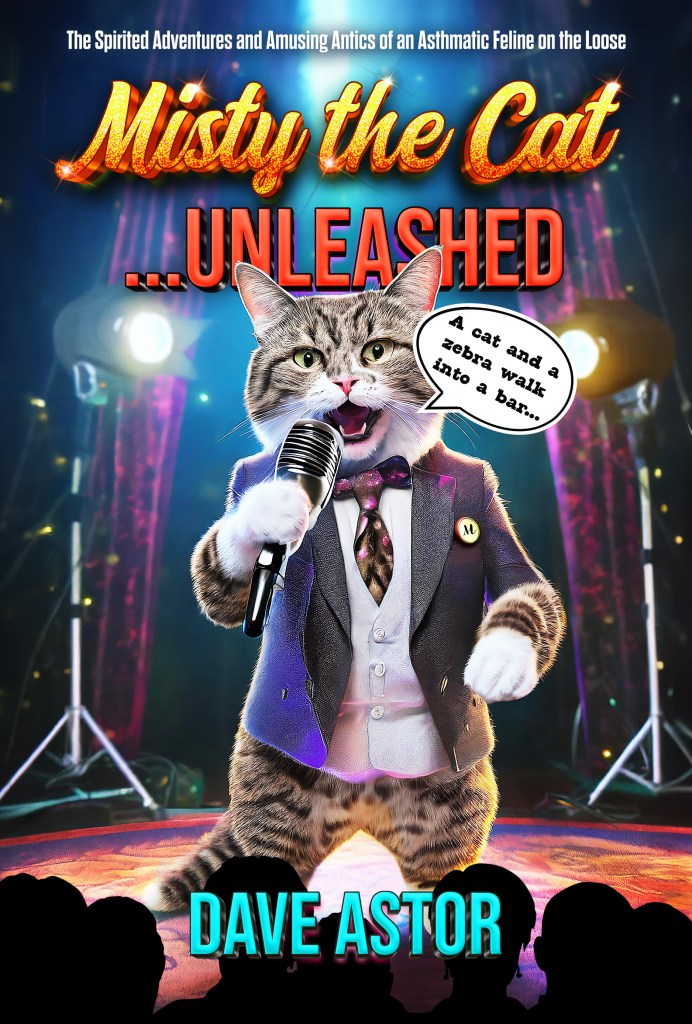
This 90-second promo video for my book features a talking cat: 🙂

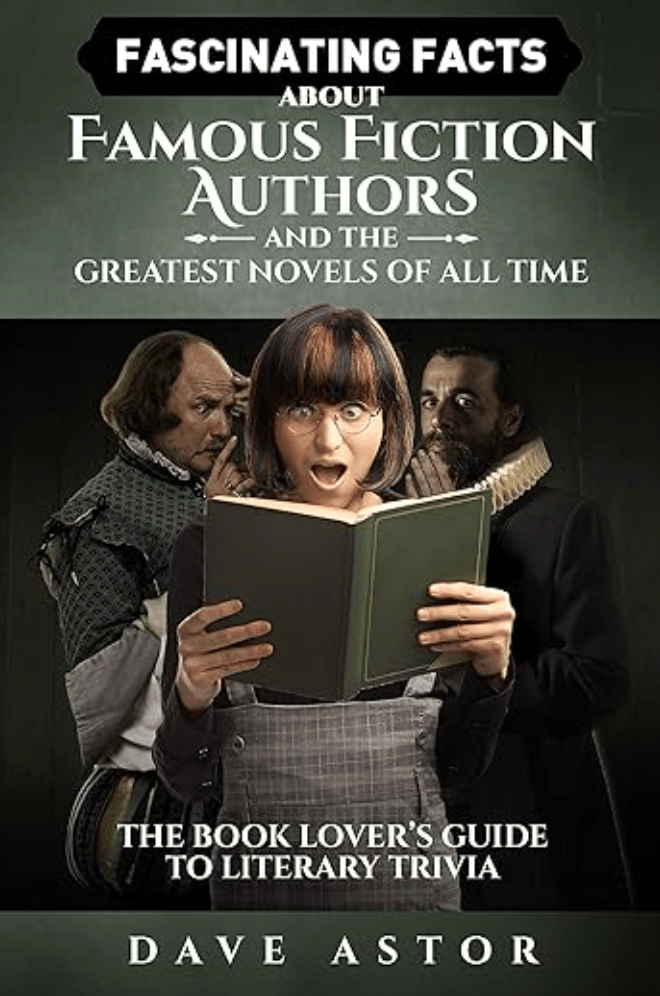
I’m also the author of a 2017 literary-trivia book

…and a 2012 memoir that focuses on cartooning and more.

In addition to this weekly blog, I write the 2003-started/award-winning “Montclairvoyant” topical-humor column every Thursday for Montclair Local. The latest piece — containing election results, news about smartphones in classrooms, and more — is here.
Immigration in Lit Amid the Latest Nativist Snit

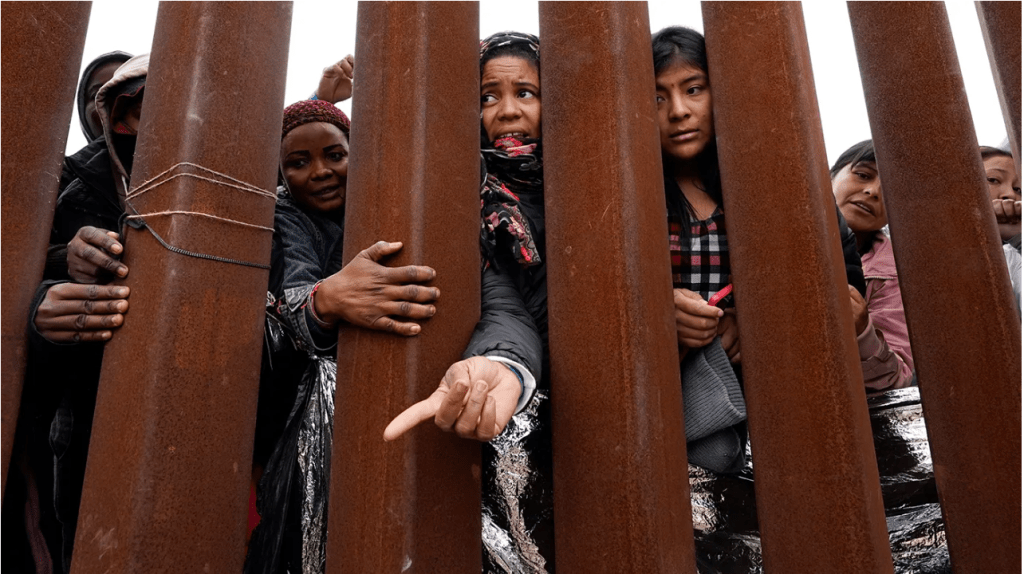
AP Photo/Gregory Bull

With Donald Trump back in the White House, many (mostly non-white) immigrants are threatened with deportation and more. Not just “illegal” immigrants, but “legal” ones, too. Deportation is of course a cruel, messy, expensive, family-shattering process that might wreak havoc on the United States economy.

Immigrants bring many positives to their new country — hard work, diversity, doing jobs many native-born citizens won’t do, etc. And studies have shown that immigrants, whether “legal” or “illegal,” commit fewer crimes than their native-born peers.

Why do so many people want to move to the U.S. or other countries? They might be fleeing poverty or danger. They might be seeking opportunities not available to them in their nation of birth, or seeking to live amid different social mores. And “first world” nations have created conditions in less-powerful countries that increase immigration — including economically exploiting those “third world” countries, sanctioning them or backing their dictatorial leaders, and hurting them with the global climate change that energy-overusing “first world” populations largely cause.

Then there’s the scapegoat scenario — blaming immigrants (not to mention trans people) when the real problems in countries such as the U.S. are oligarchs, billionaires, too-powerful corporations, widening income inequality, etc.

I should add that any country needs some limitations on how many new citizens it lets in. Unfortunately, the over-the-top way Trump is going about things in the United States is not the smart or decent immigration approach — certainly not deserving to be a role model for the rest of the world.

Anyway, now that I’ve blathered on for five paragraphs, it’s time to mention novels with memorable immigrant protagonists. These characters are depicted expertly by their authors, and we can of course relate to these fictional creations for all kinds of reasons — including partly because many of us are descendants of immigrants, or have immigrants in our extended families, or are immigrants ourselves. (I’m the U.S. grandson of immigrants from Eastern Europe, and my adopted younger daughter is from Guatemala.)

Given that the U.S. is a “nation of immigrants,” a number of examples I’ll offer are novels I’ve read with characters who came to America from various countries. But there will be other countries of destination cited, too.

Characters who move to the U.S. are from Nigeria in Chimamanda Ngozi Adichie’s Americanah, from Afghanistan in Khaled Hosseini’s The Kite Runner, from India in Jhumpa Lahiri’s The Namesake, from China in Amy Tan’s The Joy Luck Club, from Vietnam in Viet Thanh Nguyen’s The Sympathizer, from the Dominican Republic in Junot Diaz’s The Brief Wondrous Life of Oscar Wao, from Iran in Andre Dubus III’s House of Sand and Fog, from Ireland in Colm Toibin’s Brooklyn, and from Greece in Jeffrey Eugenides’ Middlesex.

Among literature’s examples of immigration to countries other the U.S. are Nigeria to England in Bucha Emecheta’s Second Class Citizen, Bangladesh to England in Zadie Smith’s White Teeth, New Zealand to Australia in Colleen McCullough’s The Thorn Birds, and Morocco to France and back to Morocco in J.M.G. Le Clezio’s Desert, to cite a few examples from those I’ve read.

The immigration themes in these and other novels can be compelling in various ways: the drama of leaving one’s homeland for reasons (some mentioned earlier in this post) such as war, repression, threat of death, poverty, and wanting better opportunities; the culture shock involved in settling in a new place; how the immigrants — and their children and grandchildren — adapt to that new place; nostalgia for one’s former country; negative encounters with those native citizens who are anti-immigrant even though their ancestors might have been immigrants…

As readers get absorbed in all this drama, they also learn a lot about the places the characters left and move to. Learning can go down especially easy in fiction; I’ve read nonfiction books about various countries, but often better understand the history, customs, culture, and other aspects of those nations when reading novels with immigration themes.

By the way, two of Trump’s three wives — including current spouse Melania — were immigrants. And Usha, wife of Trump’s vice president JD Vance, is the daughter of immigrants.

Any immigration-themed novels you’d like to mention and discuss? Any general thoughts on this topic?

Misty the cat says: There are at least three ‘King of Pain’ novels, but I’m the King of Pane.

My comedic 2024 book — the part-factual/part-fictional/not-a-children’s-work Misty the Cat…Unleashed — is described and can be purchased on Amazon in paperback or on Kindle. It’s feline-narrated! (And Misty says Amazon reviews are welcome. 🙂 )

This 90-second promo video for my book features a talking cat: 🙂

In addition to this weekly blog, I write the 2003-started/award-winning “Montclairvoyant” topical-humor column every Thursday for Montclair Local. The latest piece — which has a passport theme — is here.

Authors Who Lived in More Than One Country

I recently finished Vladimir Nabokov’s Pale Fire, and, after musing about how clever that novel is, I read a Wikipedia biography of the author.

It turned out that Nabokov wrote his first nine novels in Russian before switching to English — after which he authored his two most famous books: the controversial Lolita and the aforementioned Pale Fire, which consists of a poem followed by an extended, often-hilarious analysis that’s less about the poem than about the weird analyzer (who may or may not be a king who escaped to the U.S.).

Nabokov’s life got me thinking about other authors who lived in more than one country, and what effect that had on their work. Obviously, writers with multinational backgrounds might be compassionate or bitter about leaving one’s place of origin, more cosmopolitan, more knowledgeable about the world, more attuned to the pros and cons of various countries and political systems, more aware that human emotions anywhere tend to be alike rather than different, and so on.

The brilliant Nabokov was born in Russia and then lived in Germany before emigrating to America. Ending up in the U.S. is the template for many authors, and I’ll mention some of them first. But there are also a number of U.S.-born writers who went abroad, as well as serial-country authors who never lived in the fifty states. I’ll discuss some of those authors second and third. Meanwhile, I’ll mention here that Nabokov later left the U.S. for Switzerland.

German novelist Erich Maria Remarque also ended up in Switzerland, but lived a number of years in America after getting on the hate list of the vile Nazi regime. His last novel — Shadows in Paradise — is set in the U.S., but doesn’t measure up to his masterpieces such as the antiwar All Quiet on the Western Front, Arch of Triumph, and The Night in Lisbon.

There’s also Khaled Hosseini, whose riveting novel The Kite Runner was obviously inspired in part by his move from Afghanistan to America (with an in-between stay in France). English writer Aldous Huxley of Brave New World fame spent much of his life living in “The New World” (California, to be exact). Nigerian author Chinua Achebe (Things Fall Apart) resided a number of years in the U.S., too.

American-born authors living overseas for long periods? Two prime examples are Henry James (England) and Edith Wharton (France). Then there’s James Fenimore Cooper (in Europe from 1826 to 1833) and Nathaniel Hawthorne (in Europe from 1853 to 1860, when he strayed from his fiction’s usual New England settings to place The Marble Faun in Italy). Also, authors Richard Wright and James Baldwin went to France, partly to escape America’s virulent racism. Willa Cather lived in the U.S., but spent many summers at the only house she ever owned — in Canada (the setting of her little known but superb historical novel Shadows on the Rock). Another American author, Mary McCarthy, spent a lot of time in a second home in Paris.

Multinational authors with little or no time in the U.S. include, among others, Gabriel Garcia Marquez (Colombia, Venezuela, Spain, Mexico); Fanny Burney (England, France, England); Polish writer Joseph Conrad (who ended up in England); Kazuo Ishiguro (whose family moved from Japan to England when he was five); Russian writer Ivan Turgenev (who spent significant time in Germany and France); and Emile Zola (who left France for England to avoid jail after his brave role in debunking the anti-Semitic framing of Capt. Alfred Dreyfus).

Who are some of your favorite authors with lives lived in two or more countries? Why is this an advantage to a writer? Any disadvantages? (The box for submitting comments is below already-posted comments, but your new comment will appear at the top of the comments area — unless you’re replying to someone else’s comment.)

A note: After today, I will not post a new piece for perhaps three weeks or so for the usual summer reasons, but will pick up the pace starting in mid-August!

For three years of my Huffington Post literature blog, click here.

I’ve also written more than 50% of a literature-related book. But I’m still selling my part-funny Comic (and Column) Confessional memoir that recalls 25 years of covering/meeting cartoonists such as Charles Schulz (“Peanuts”) and Bill Watterson (“Calvin and Hobbes”), columnists such as Ann Landers and “Dear Abby,” and other notables such as Hillary Clinton, Coretta Scott King, and various authors. The memoir also talks about the malpractice death of my first daughter, my remarriage, and life in New York City and Montclair, N.J. — where I write the award-winning weekly “Montclairvoyant” humor column for The Montclair Times. I can be contacted at dastor@earthlink.net to buy a discounted, inscribed copy of the book, which has a preface by “Hints” columnist Heloise and back-cover blurbs by “The Far Side” cartoonist Gary Larson, among others.