You Know You’re a Book Addict When…

Inside my local library in Montclair, New Jersey. (Photo by me.)

You know you’re a book addict when…

…despite a broken big toe, you make a hobbling visit to the library to borrow a new bunch of novels. (Which I did on June 13.)

…you read while waiting in line (at a store, the post office, etc.) even though you might be also holding something else (a purchase, a package, etc.).

…you uncomfortably grasp a large hardcover to read while on an exercise bike.

…you read even if you’re in a room with poor lighting.

…you read while a passenger in a car even though that makes you feel kind of sick.

…you bring a novel to a doctor’s appointment and are almost disappointed on the rare occasion when you’re summoned from the waiting room on time.

…you try to read in an eye doctor’s waiting room after your pupils have been dilated.

…you read almost as much as you usually do despite an eye infection. (Happened to me last year.)

…you read a novel while watching something on YouTube even though splitting one’s attention in half is not wise, so you only do this for a little while.

…you know the year of birth for many novelists.

…you know the year of death for many novelists. (I don’t think this includes living authors, but I’ll ask the supposed psychic in Liane Moriarty’s Here One Moment novel. 🙂 )

…your brain practically breaks when you’re forced to reduce your book collection by two-thirds because of moving from a house to an apartment. (As I did in 2014.)

…you’re upset when a screen adaptation doesn’t do a novel justice.

…you exult when a screen adaptation DOES do a novel justice.

…you’re chagrined on the rare occasion when a screen adaptation is better than the book(s) it’s based on.

…you continue reading a compelling novel late at night even though you’re tired and should go to sleep.

…you delay posting on your literature blog for an hour or two because you’re so engrossed in a book.

Any additions or comments? 🙂

Last-minute postscript, after last night’s disgusting/dangerous/unprovoked bombing of Iran by the United States: You know you’re a book addict when you wish Trump and the officials in his administration were also avid novel readers — which would perhaps give them a bit more empathy, decency, common sense, and historical knowledge. Actually, perhaps not. 😦

Misty the cat says: “I’ve used an inhaler since 2018, a year after asthma was invented.”

My comedic 2024 book — the part-factual/part-fictional/not-a-children’s-work Misty the Cat…Unleashed — is described and can be purchased on Amazon in paperback or on Kindle. It’s feline-narrated! (And Misty says Amazon reviews are welcome. 🙂 )

This 90-second promo video for my book features a talking cat: 🙂

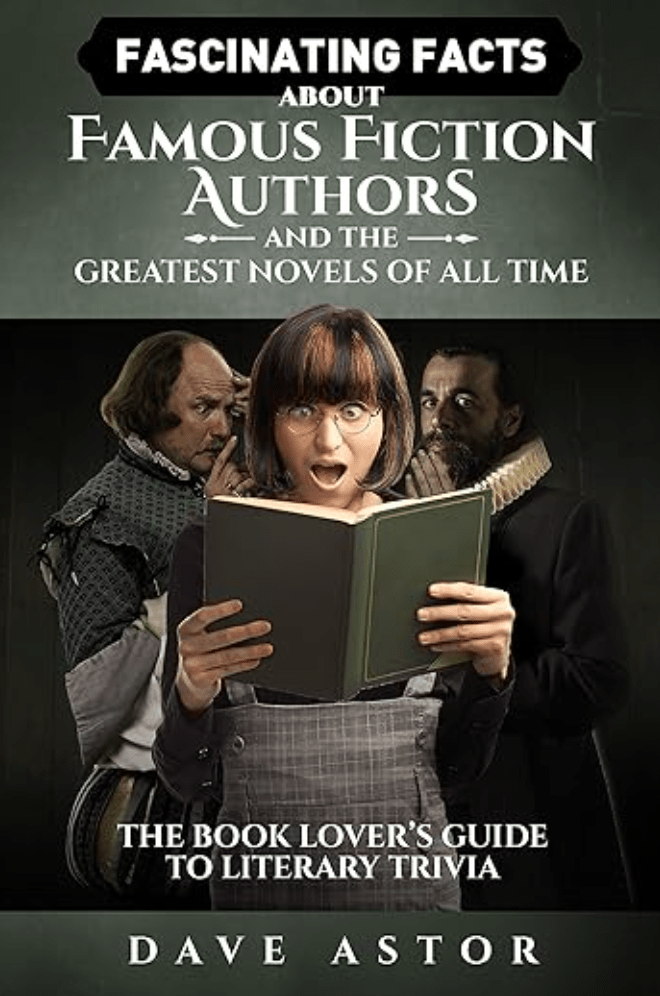
I’m also the author of a 2017 literary-trivia book

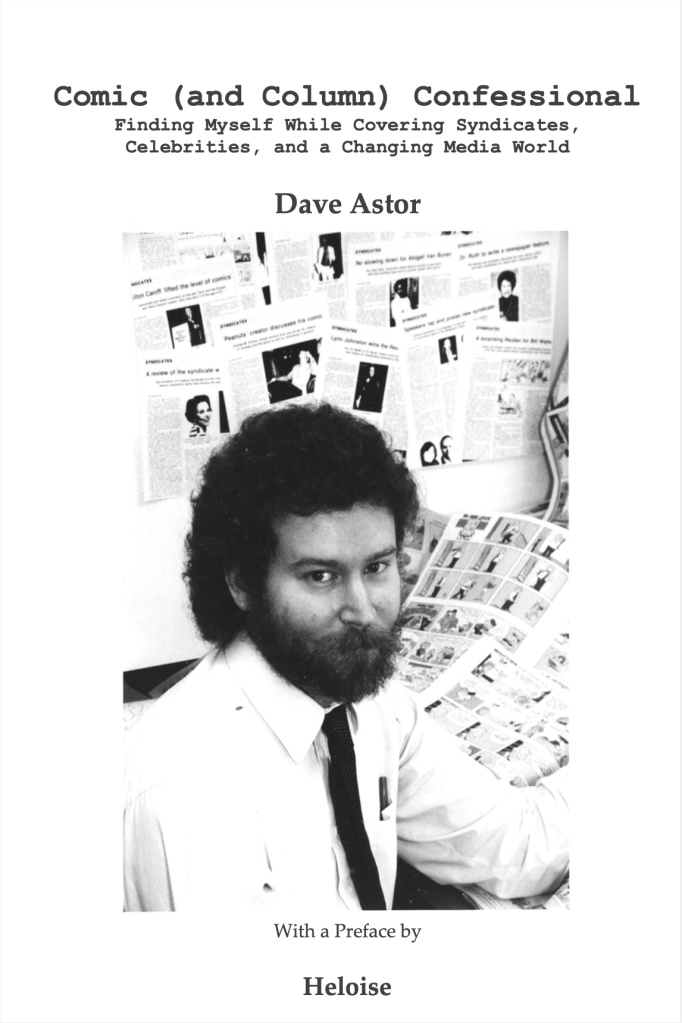
…and a 2012 memoir that focuses on cartooning and more.
In addition to this weekly blog, I write the 2003-started/award-winning “Montclairvoyant” topical-humor column every Thursday for Montclair Local. The latest piece — which includes an election postmortem, discussion of a large local “No Kings” protest against the Trump regime, and more — is here.

Libraries and Librarians in Literature

If you’re looking for evildoing in literature, you might not find much of it in books that feature librarians, library users, and library scenes. Heck, evildoers who want to research their future evildoing probably do it on their home computers…

So, with libraries in lit, you often get characters who are likable and intelligent and other good things. Which might mean a little less drama, but still some nice reading. Nothing wrong with that once in a while!

For instance, it’s appropriate that Novalee Nation, a working-class woman always open to learning more, meets another kind person in a library. He is Forney Hull, who has a major impact on Novalee’s life after she was abandoned in Oklahoma by her no-good boyfriend in Billie Letts’ Where the Heart Is.

The also-working-class protagonist of Jack London’s Martin Eden makes the ambitious transition from sailor to writer partly by spending countless hours in the library educating himself.

In L.M. Montgomery’s The Blue Castle, Valancy Stirling likes to visit the library to get the latest book by her favorite author — an author who will affect her life in a way she can never imagine.

Chicago librarian Henry DeTamblen involuntarily jumps around in time in Audrey Niffenegger’s The Time Traveler’s Wife. Another book in that genre, Darryl Brock’s If I Never Get Back, includes a poignant library scene in which the late-20th-century protagonist Sam Fowler sees a photo of the all-dead 1869 Cincinnati Red Stockings team he had recently grown to know in person.

Then there’s Carol Milford, who worked as a librarian for several years before moving to Gopher Prairie, Minn., to live with her new husband Dr. Will Kennicott in Sinclair Lewis’ Main Street. The liberal, free-spirited Carol tries to bring change to the narrow-minded, fixed-in-its-ways town, but is totally thwarted — ironically, even by a local librarian who doesn’t encourage reading. Can anyone say “wrong profession”?

Also less pleasant than most librarians is Hogwarts’ strict keeper-of-the-books Irma Pince in J.K. Rowling’s Harry Potter novels. Heck, she even makes it hard for Hogwarts headmaster Albus Dumbledore to use that wizard school’s library.

While Robin Sloan’s novel is more about a San Francisco bookstore, a secret society’s private library in New York City plays a significant role in Mr. Penumbra’s 24-Hour Bookstore.

At-home private libraries are ruthlessly burned in Ray Bradbury’s Fahrenheit 451; a monastery library figures prominently in Umberto Eco’s The Name of the Rose; Mr. Rochester impersonates a gypsy during a memorable Thornfield Hall library scene in Charlotte Bronte’s Jane Eyre; the library is visited a number of times in Carson McCullers’ The Heart Is a Lonely Hunter; a college library is one locale in Michael Chabon’s Wonder Boys; and the main branch of the New York Public Library is mentioned in Jack Finney’s From Time to Time.

In the nonfiction realm, a memorable book is the poignant Dewey: The Small-Town Library Cat Who Touched the World by Vicki Myron with Bret Witter. The formerly abandoned Dewey lives in an Iowa library, and becomes a feline celebrity.

There’s also The Autobiography of Malcolm X, the classic written with Alex Haley, in which the civil-rights leader recalls educating himself with the help of a prison library.

What are your favorite literary works featuring librarians, library users, and/or library scenes? Also welcome are your general thoughts on the value of libraries, your worries about adequate funding of these wonderful institutions, your recollections of library experiences, etc. 🙂

(The box for submitting comments is below already-posted comments, but your new comment will appear at the top of the comments area — unless you’re replying to someone else.)

Note: Later this month, I have relatives visiting and then a conference, so I’ll probably skip doing June 21 and June 28 blog posts. I’ll still reply to comments posted under this June 14 column, though at times more slowly — and will definitely put up a new column the evening of Sunday, July 5!

For three years of my Huffington Post literature blog, click here.

I’m writing a literature-related book, but still selling Comic (and Column) Confessional — my often-funny memoir that recalls 25 years of covering and meeting cartoonists such as Charles Schulz (“Peanuts”) and Bill Watterson (“Calvin and Hobbes”), columnists such as Ann Landers and “Dear Abby,” and other notables such as Hillary Clinton, Coretta Scott King, Walter Cronkite, and various authors. The book also talks about the malpractice death of my first daughter, my remarriage, and life in Montclair, N.J. — where I write the award-winning weekly “Montclairvoyant” humor column for The Montclair Times. You can email me at dastor@earthlink.net to buy a discounted, inscribed copy of the book, which contains a preface by “Hints” columnist Heloise and back-cover blurbs by people such as “The Far Side” cartoonist Gary Larson.