The ‘Winter’ of Our Book Content

Misty the cat thinks these books have a BACK story. (Photo by me.)

It’s early winter in part of the world, so thoughts turn to novels with…the word “Winter” in the title. Okay, maybe most readers’ thoughts don’t turn to that, but I needed a blog topic this week. 🙂

I just finished reading Winter Street, the first of a four-book Elin Hilderbrand series that continues with Winter Stroll, Winter Storms, and Winter Solstice. The mostly Nantucket, Massachusetts-set Winter Street focuses on the Quinn family as it goes through a dramatic Christmas week that includes a marital separation, other relationship issues, an engagement, no word from a son fighting in Afghanistan, another son facing an insider-trading charge, etc. Yes, Christmas time is not always a 100% happy time. The book obviously deals with some heavy issues, yet often retains a light touch.

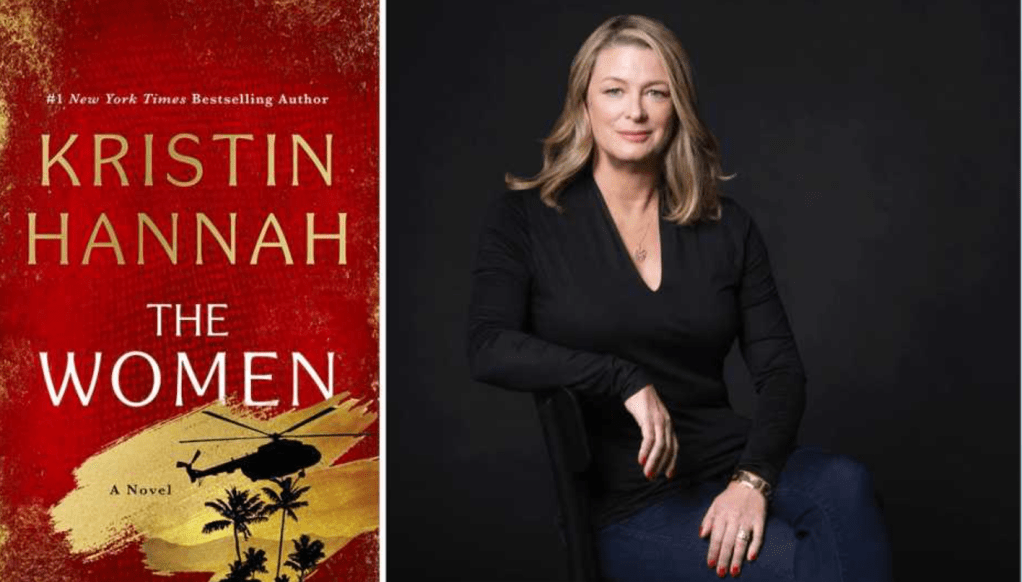
Another accomplished contemporary author, Kristin Hannah, wrote Winter Garden. Not on the level of her best novels such as The Nightingale, The Great Alone, The Four Winds, and Firefly Lane, but still pretty good. Winter Garden is about two very different sisters and their cold, mysterious mother — who’s originally from snowy Russia during the period of Stalin’s iron rule.

The late Rosamunde Pilcher’s final novel, Winter Solstice, is I think the second best of her many books — behind only her terrific The Shell Seekers. Winter Solstice (published before Hilderbrand’s novel of the same name) unfolds amid a cold-weather gathering of people from various generations.

Of course, there’s John Steinbeck’s also-final novel, The Winter of Our Discontent, which has the overarching theme of trying to maintain integrity in a corrupt society. It’s one of Steinbeck’s deeper books, though not as compelling as The Grapes of Wrath and East of Eden.

Among the “Winter”-titled novels I haven’t read are Isabel Allende’s In the Midst of Winter and Laura Ingalls Wilder’s The Long Winter (part of The Little House on the Prairie series). I should also mention George R.R. Martin’s The Winds of Winter — the lengthy, long-delayed, not-yet-finished sixth novel in his A Song of Ice and Fire series that started with A Game of Thrones.

Then there are plays such as Shakespeare’s The Winter’s Tale and James Goldman’s The Lion in Winter.

Any thoughts about, and/or examples of, this theme?

On yet another rainy winter morning, Misty the cat says: “I’d build an ark, but the lumber yard’s closed.”

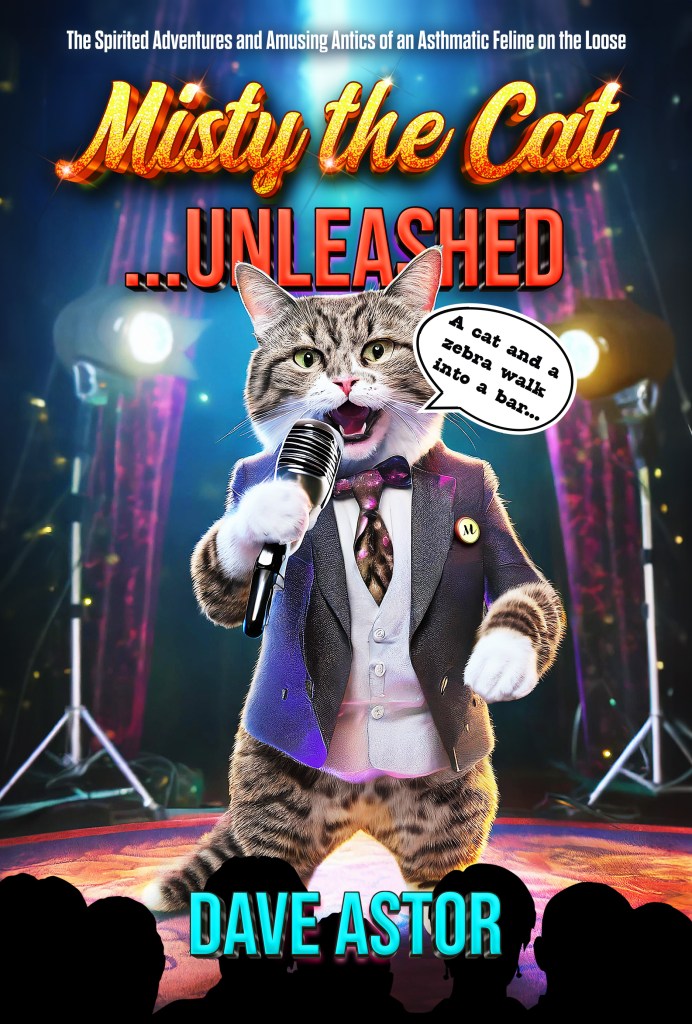
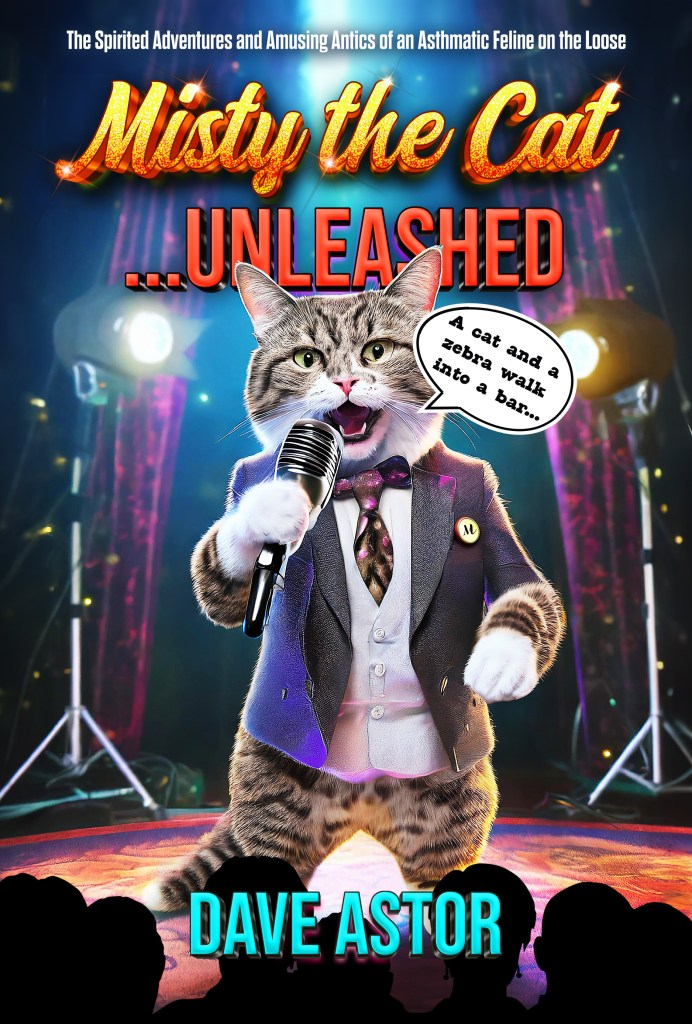
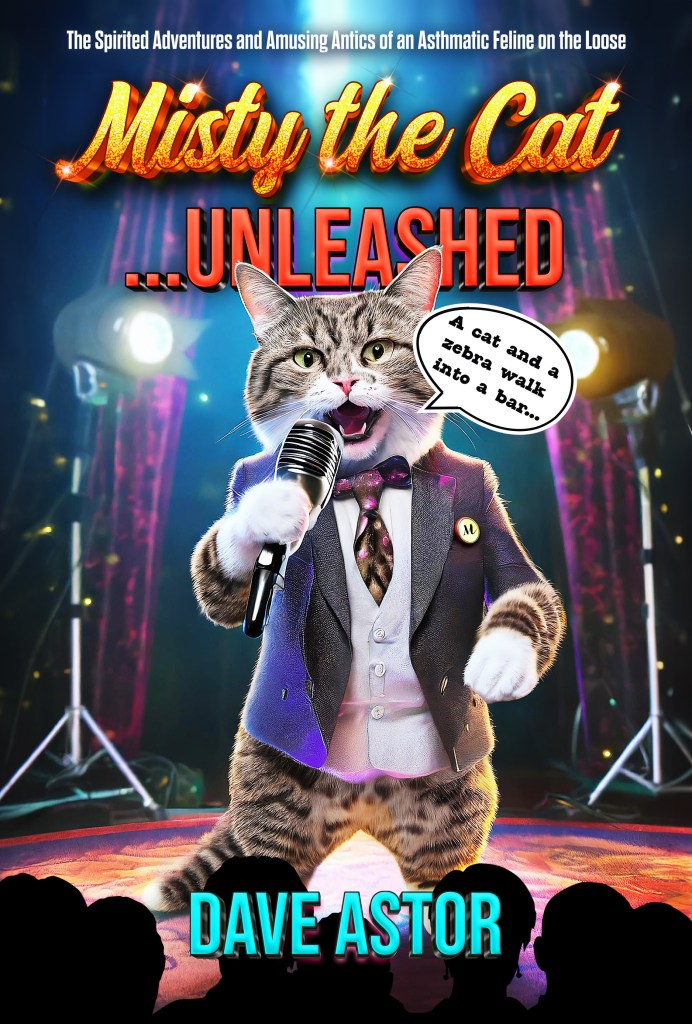
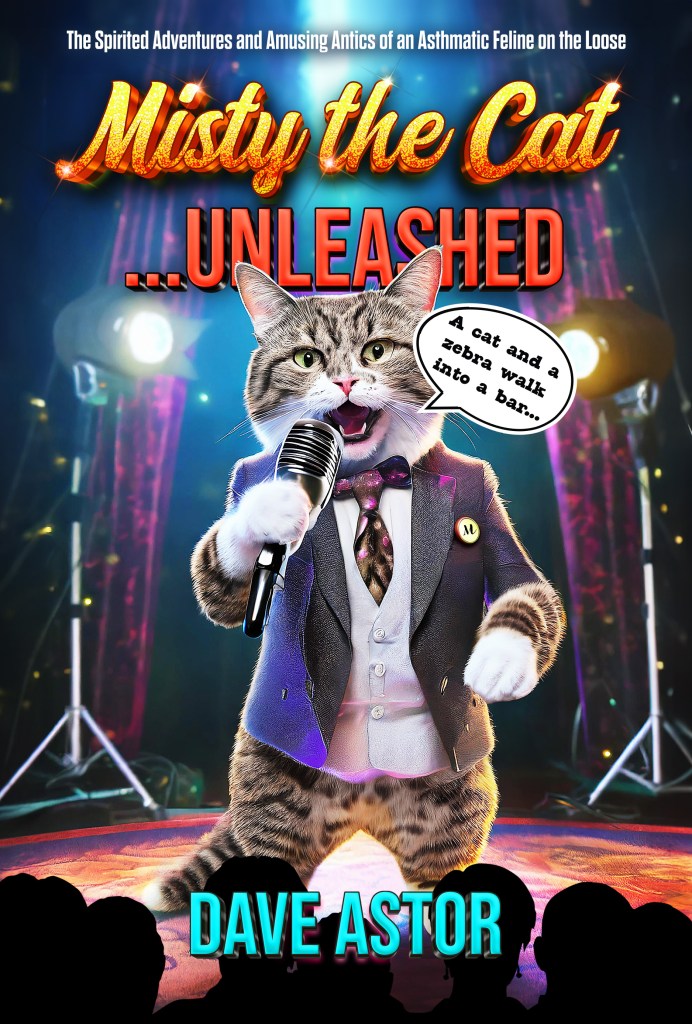
My comedic 2024 book — the part-factual/part-fictional/not-a-children’s-work Misty the Cat…Unleashed — is described and can be purchased on Amazon in paperback or on Kindle. It’s feline-narrated! (And Misty says Amazon reviews are welcome. 🙂 )
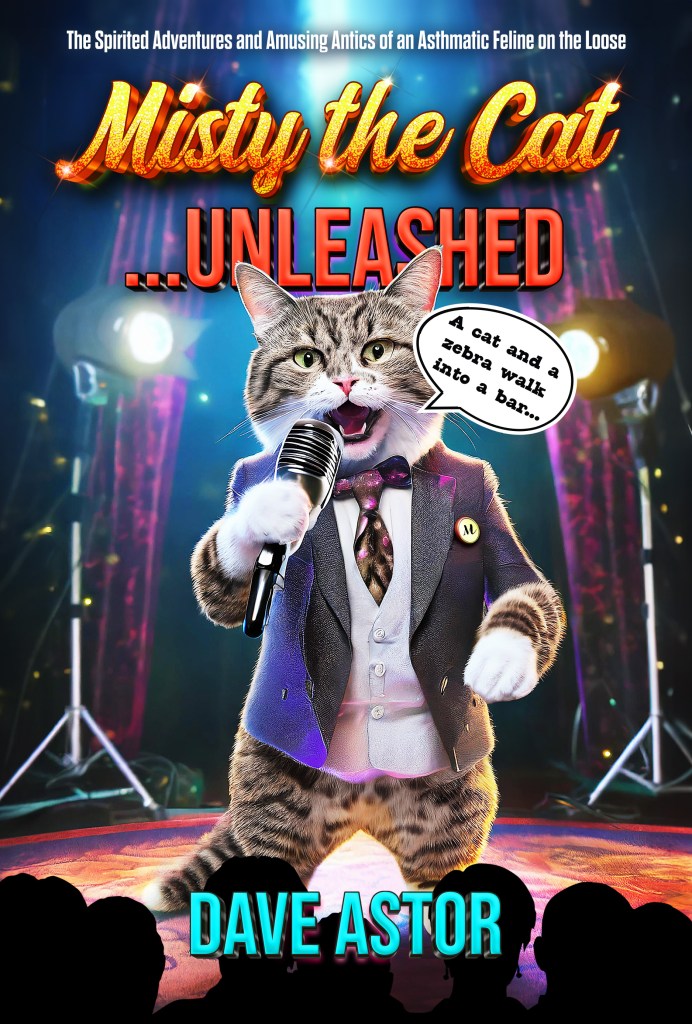
This 90-second promo video for my book features a talking cat: 🙂

In addition to this weekly blog, I write the 2003-started/award-winning “Montclairvoyant” topical-humor column every Thursday for Montclair Local. The latest piece — which discusses an “F-bomb” controversy and much more via a poem co-starring Santa Claus — is here.

When It’s Two or More, Jaws Can Hit the Floor

J.K. Rowling with the screen versions of her Harry Potter, Hermione Granger, Cormoran Strike, and Robin Ellacott characters (Everett/Getty/BBC).

It’s impressive enough when a novelist creates one successful series — as, say, Lee Child did with his Jack Reacher books and Sue Grafton did with her alphabet mysteries. But an author who creates two or more successful series? Wow!

Some writers produce multiple series consecutively — finishing one series before starting another. Other writers tack back and forth between different series. Either way, it takes some impressive and wide-ranging creative talent, and helps “serial” novelists stay fresh. Those authors can also feel good about readers staying with them as they offer something new.

Among the queens and kings of multiple series is J.K. Rowling. She of course penned the seven mega-popular Harry Potter books. Then, after writing The Casual Vacancy standalone novel, Rowling as “Robert Galbraith” launched her crime series starring private investigators Cormoran Strike and Robin Ellacott. I’m currently close to finishing the seventh installment — The Running Grave, in which Robin goes undercover to infiltrate a very problematic cult — and its 945 pages are full of the thrills, humor, suspense, poignancy, complications, excellent prose, and believable dialog Rowling always provides.

Walter Mosley is best-known for his detective series starring Easy Rawlins, who has now starred in 16 novels. But the author has interspersed those books with smaller series such as the King Oliver books and the Socrates Fortlow books. Mosley is always a great read, no matter who the protagonist is.

Val McDermid has gone the several-series route, too, including a compelling saga starring inspector Karen Pirie and another featuring journalist Allie Burns. Also not a clunker in the installments I’ve read.

Leaving contemporary fiction for a minute, L.M. Montgomery wrote Anne of Green Gables and its many sequels while also penning the semi-autobiographical Emily trilogy. (I consider a trilogy to be a series of sorts.)

Returning to a living author, Diana Gabaldon has gone the “sub-series” route by writing nine main Outlander novels (so far) and a number of offshoot books starring the Lord John character who’s a supporting player in the main novels.

Your thoughts about, and examples of, this theme?

Misty the cat says: “Snow means ‘Middlemarch’ author George Eliot wrote ‘Middledecember,’ too.”

My comedic 2024 book — the part-factual/part-fictional/not-a-children’s-work Misty the Cat…Unleashed — is described and can be purchased on Amazon in paperback or on Kindle. It’s feline-narrated! (And Misty says Amazon reviews are welcome. 🙂 )

This 90-second promo video for my book features a talking cat: 🙂

In addition to this weekly blog, I write the 2003-started/award-winning “Montclairvoyant” topical-humor column every Thursday for Montclair Local. The latest piece — which discusses what’s happening with my town’s animal shelter and much more — is here.

Murder Amid American Medical Malice

Luigi Mangione and Brian Thompson

After Brian Thompson was shot and killed in New York City this month, millions of Americans from all parts of the ideological spectrum flooded social media to express little sympathy for him. That’s because he was the CEO of UnitedHealthcare, the massive company known for denying a huge number of legitimate medical-insurance claims in order to maximize its profits.

The result of those denials? Anguish for millions of patients and death for thousands of patients who (either individually or via employer plans) pay large monthly premiums for medical coverage — even as residents of every other developed country enjoy some form of much-more-humane national health insurance. And doctors with years of medical training and experience get their requests for needed tests and treatment for their patients denied by insurance bureaucrats with little or no medical expertise.

Meanwhile, Thompson — who was specifically targeted for assassination (the arrested suspect is Luigi Mangione) — raked in yearly compensation of $10.2 million.

Obviously, murder shouldn’t be celebrated, and this was an awful tragedy for Thompson and his family. But he and other execs at UnitedHealthcare and other private insurance providers are guilty of indirectly/continually causing tragic deaths — only their method is shooting down claims rather than shooting a gun.

As with many other situations, I was reminded of certain books I’ve read. There have been numerous nonfiction titles covering the cruel, pricey, unequal, inefficient U.S. medical system — which only works very well for the wealthy — but I’m a literature blogger and will thus focus on fiction in the remainder of this post. To me, the novel I’ve read that best expresses the fury “inspired” by the U.S. medical system is Lionel Shriver’s So Much for That. I highly recommend her 2010 book, despite much of it being a painful read. Somehow, Shriver manages to often make things entertaining, too.

And I thought of novels that have strong elements of vigilantism, which of course involves seeking justice by “illegal” means when such justice might not be achieved through “legal” channels. In the U.S., there have been various efforts by Senator Bernie Sanders and others urging “Medicare for All” to give Americans the type of health-insurance system every other “first world” nation has. But those efforts have been thwarted by a political class (virtually every Republican and most Democrats) as well as a mainstream media mostly bought off by campaign contributions and ad dollars from the profit-swollen companies (also including “Big Pharma”) benefiting from a privatized medical system. So, what are beleaguered citizens to do?

Among the novels with characters who take the law into their own hands for the “right” reasons (not necessarily medical-related reasons) are Louis Sachar’s Holes, John Steinbeck’s The Grapes of Wrath, Alexandre Dumas’ The Count of Monte Cristo, Lee Child’s Jack Reacher books, and Johnston McCulley’s The Curse of Capistrano featuring the protagonist who would also become the title character in Isabel Allende’s later Zorro. For those who haven’t read those novels, I’ll refrain from giving specifics in order not to spoil things.

As we know, there are also strains of vigilantism in many western novels (like Owen Wister’s The Virginian) and in comic books starring superheroes such as Batman.

Your thoughts about, and examples of, this topic?

As Christmas nears, Misty the cat says: “Ho Ho Ho means Harness off Harness off Harness off.”

My comedic 2024 book — the part-factual/part-fictional/not-a-children’s-work Misty the Cat…Unleashed — is described and can be purchased on Amazon in paperback or on Kindle. It’s feline-narrated! (And Misty says Amazon reviews are welcome. 🙂 )

This 90-second promo video for my book features a talking cat: 🙂

In addition to this weekly blog, I write the 2003-started/award-winning “Montclairvoyant” topical-humor column every Thursday for Montclair Local. The latest piece — which discusses a Mideast-related yet local police chaplain controversy — is here.

Misty the Cat: Mentioning Novels Isn’t Novel for Me

The Sun Also Rises on my kitty self. (Photo by Dave the biped.)

I, Misty the cat, have returned to write another guest post about “books, books, books.” Which sounds like a chicken saying “buk, buk, buk.” Why did the chicken cross The Road? To get to the other side of Cormac McCarthy’s 2006 novel.

Not funny was last month’s news that the late McCarthy had a relationship with a girl that started when she was 16 and he was 42. That’s sleazy Lolita territory, which reminds me that Vladimir Nabokov also authored Pale Fire about a blaze slathered with enough sunscreen to prevent it from getting burned. Not exactly an Elin Hilderbrand “beach read.” Nor was Andre Dubus III’s novel House of Sand and Fog, which I could’ve pierced with a beach umbrella if I had it in paperback rather than hardcover. I, the feline writing this post, live in the House of Broadband Blog. Actually an apartment, but the wifi is decent.

Late autumn isn’t swimming weather, but November 30 was the 150th anniversary of L.M. Montgomery’s birth. She of course wrote the iconic Anne of Green Gables, an exceptional YA novel. YA means Young Adult as well as Yowling Adult, which describes Dave after I grabbed his laptop to write this post. He’ll get over it, especially when I give him a newfangled quill pen and parchment paper to scribble this week’s shopping list. First seven items: cat food, cat chow, cat cuisine, cat edibles, cat victuals, cat nourishment, and cat sustenance.

Moving to my book list, I recently read Nelson DeMille for the first time — his novel The Quest. Quite exciting once I got over my first disappointment about the book’s tired trope of focusing on white visitors to a “third world” country — and my second disappointment that the quest was for a holy relic rather than a cat treat at peak freshness. A good chunk of DeMille’s story takes place in Ethiopia, where injera is a food staple. That pancake-like bread is slightly spongy, so a big-enough piece would make for an excellent cat bed. But my local pet store only sells cat beds with inedible cushioning; Goodnight Moon will never be the same.

Speaking of children’s books, The Cat in the Hat‘s title character is a rather slim kitty — certainly slimmer than me, a feline who starts his midnight snacking at noon. I’ve read that Dr. Seuss based his tall feline’s look on the Uncle Sam he had previously drawn in his political cartoons, which reminds me that I’m weighing a presidential run in 2028. To practice for my future time in the Oval Office, I occasionally walk in circles.

My favorite novels with at least some political themes, schemes, dreams, teams, screams, and memes? Among them are Robert Penn Warren’s All the King’s Men, George Orwell’s Nineteen Eighty-Four, J.K. Rowling’s The Casual Vacancy, Stephen King’s The Dead Zone, and Miguel de Cervantes’ Don Trumpote, co-starring Donald Trump’s loyal squire JD Vanza. Cervantes lived in Spain during the same circa-1600 era that James Clavell’s Japan-set novel Shogun unfolded. Little-known fact: Spain and Japan are walking distance from each other despite being 6,600 miles apart. Admittedly, the walk would take a year or two, even for a fast cat like me. The Inedible Journey without an injera cat bed.

Anyway, this month begins The Incredible Journey known as the march to the holiday season, meaning I might reread A Christmas Carol by Charles Dickens, who invented the CD when he initialed a document. There’s also Fannie Flagg’s excellent A Redbird Christmas, John Grisham’s so-so Skipping Christmas, and the classic song “I’m Dreaming of a White Pearl Harbor Day” — which you can hear on a CD player that Dickens also invented.

Yesterday, December 7, was Pearl Harbor Day. Today, December 8, is the seventh anniversary of when I was adopted into my current home! That was in 2017, the year Aaron Judge hit 52 home runs as a rookie. Or was it 52 apartment runs as a rookie? No idea what his living arrangements were back then, or why Edith Wharton wrote The House of Mirth rather than The Yurt of Mirth. Maybe because her protagonist Lily Bart didn’t live in Mongolia?

Getting back to the festive season, my Misty the Cat…Unleashed book would make a great holiday gift this month for the kitty lovers in your life. I co-wrote it with my human peep Dave, sort of like how Woodward and Bernstein co-wrote All the President’s Cats about the Watergate scandal, Richard Nixon, and his 1974 resignation — with no mention of cats. Surprisingly, Nixon didn’t blog about any of this at the time.

Dave will reply to comments, because I’m in serious pre-winter training to vigorously shred the wrapping paper on holiday gifts.

Misty the cat says: “Today’s my 7th adoption anniversary. I appreciate the celebratory lights.”

Dave’s comedic 2024 book — the part-factual/part-fictional/not-a-children’s-work Misty the Cat…Unleashed — is described and can be purchased on Amazon in paperback or on Kindle. It’s feline-narrated! (And I, Misty, say Amazon reviews are welcome. 🙂 )

This 90-second promo video for Dave’s book features a talking cat: 🙂

In addition to this weekly blog, Dave writes the 2003-started/award-winning “Montclairvoyant” topical-humor column every Thursday for Montclair Local. The latest piece — which includes a “Twelve Days of Christmas” theme — is here.

A Title Wave of Opposite-Gender Novels

(Courtesy of Harper.)

Elvis Presley sang “Return to Sender.” Today, I’m going to…return to gender. Heck, I’m not even a Presley fan, so excuse my blog-post opening as I write about characters who are the opposite sex of their novelist creators.

While female authors have created many of the most-memorable female protagonists and male authors have created many of the most-memorable male protagonists, skillful novelists can of course successfully cross gender lines. It takes some imagination, some research, and some drawing on experiences with opposite-sex parents, spouses, siblings, children, friends, work colleagues, etc. And authors can obviously include memorable co-stars and supporting characters of the same gender as themselves.

For the purposes of this blog post, I’m going to focus on characters who are in the novels’ titles.

An example of today’s theme that I finally read last week is Barbara Kingsolver’s tour de force Demon Copperhead, the 2022 coming-of-age story of a boy who faces poverty, the death of his parents, foster care, addiction, injury, and other enormous challenges. It’s uncanny how well a female author in her late 60s gets into the psyche of a male who’s a preteen or teen during virtually the entire Pulitzer Prize-winning book — for which Kingsolver took inspiration from Charles Dickens’ 1850 classic David Copperfield while transferring the time and setting from 19th-century England to late-20th-century/early-21st-century Appalachia in the United States.

After finishing Demon Copperhead, I read Gabrielle Zevin’s The Storied Life of A.J. Fikry (2014) — about the prickly (male) owner of an island bookstore. A funny and poignant short novel with some echoes of George Eliot’s compelling classic Silas Marner.

About 150 years earlier, Eliot was an accomplished female author with a male title character in three of her five best-known novels: Adam Bede (1859), Daniel Deronda (1876), and the aforementioned Silas Marner (1861). All three of those men are quite believable and three-dimensional, even as prominent female characters steal (or almost steal) the show.

The 19th century also saw the publication of such female-written works as Mary Shelley’s mega-influential Frankenstein (1818), George Sand’s Jacques (1833), Elizabeth Gaskell’s Mr. Harrison’s Confessions (1851), and Harriet Beecher Stowe’s cry-for-justice Uncle Tom’s Cabin (1852), among other novels.

Moving into the 20th century and beyond, we have Edith Wharton’s emotionally wrenching Ethan Frome (1911), Willa Cather’s okay debut novel Alexander’s Bridge (1912), Colette’s Cheri (1920) and The Last of Cheri (1926), Agatha Christie’s The Murder of Roger Ackroyd (1926), Lord Edgware Dies (1933), and Hercule Poirot’s Christmas (1938), Alice Walker’s The Third Life of Grange Copeland (1970), and (you knew I would get to this eventually 🙂 ) J.K. Rowling’s blockbuster Harry Potter series of seven books published between 1997 and 2007.

And we can’t forget Murasaki Shikibu’s VERY early female-authored-novel-starring-a-man The Tale of Genji, written in the early 11th century.

Given that there were many more male than female authors published pre-1900, we can easily find a slew of male-written novels back then with female title characters: Daniel Defoe’s Moll Flanders (1722), Samuel Richardson’s Pamela (1740), Honore de Balzac’s Eugenie Grandet (1833), Gustave Flaubert’s Madame Bovary (1856), Charles Dickens’ Little Dorrit (1857), Lewis Carroll’s Alice’s Adventures in Wonderland (1865), Emile Zola’s Therese Raquin (1867) and Nana (1880), R.D. Blackmore’s Lorna Doone (1869), Thomas Hardy’s The Hand of Ethelberta (1876) and Tess of the d’Urbervilles (1891), Leo Tolstoy’s Anna Karenina (1878), Henry James’ Daisy Miller (1878), and Mark Twain’s Personal Recollections of Joan of Arc (1896), to name a few.

Plenty of titles after that, too, such as Theodore Dreiser’s Sister Carrie (1900), Herman Wouk’s Marjorie Morningstar (1955), William Styron’s Sophie’s Choice (1979), Walter Mosley’s Rose Gold (2014), and multiple ones by Stephen King — including Carrie (1974), Dolores Claiborne (1992), and Rose Madder (1995).

Your thoughts about, and examples of, this theme?

Misty the cat says: “I’m Nancy Drew starring in ‘The Mystery of the Aromatic Leaves.'”

My comedic 2024 book — the part-factual/part-fictional/not-a-children’s-work Misty the Cat…Unleashed — is described and can be purchased on Amazon in paperback or on Kindle. It’s feline-narrated! (And Misty says Amazon reviews are welcome. :-) )

This 90-second promo video for my book features a talking cat: 🙂

In addition to this weekly blog, I write the 2003-started/award-winning “Montclairvoyant” topical-humor column every Thursday for Montclair Local. The latest piece — about my town’s harassed CFO, unaffordable housing, an environmentally awful plan to cut down many trees, and more — is here.
When You’re Getting an Unexpected Setting

St. John in the Virgin Islands. (Credit: Visit USVI.)

A number of authors set their novels in the same place. So, it becomes quite noticeable when they set their novels in…a different place.

This surprise can be welcome or not, depending on the reader and how good the books are. But a change-of-pace is often a good thing, for both the writers and their fans wanting to avoid a “rut.” The authors might have to do a little more research, but they’ll survive. 🙂

I most recently enjoyed a setting switch in the work of Elin Hilderbrand. She is known for placing her novels on Nantucket, and I have loved the ones I’ve read featuring that Massachusetts island milieu. Then I picked up Hilderbrand’s Winter in Paradise, thinking I was returning to Nantucket — only to find that the novel was mostly set on St. John in the Virgin Islands. That was initially a bit disorienting, but Winter in Paradise turned out to be another compulsively readable Hilderbrand book…this time about how a family’s life changes when they learn the father had a secret second family. Then I quickly finished the second and third installments of the trilogy: What Happens in Paradise and Troubles in Paradise — the latter book ending with a dramatic and destructive hurricane. I’m sure it helped the Nantucket-based Hilderbrand in writing the trilogy that she visits St. John for several weeks each year as a warm-weather writing retreat and vacation spot.

Among the other authors who’ve produced the occasional geographic surprise is Sir Walter Scott, who placed most of his historical novels in Scotland but situated Quentin Durward in France. Still, the archer Quentin is Scottish, so Sir Walter didn’t stray completely from his own real-life roots.

Charles Dickens usually used London as the locale for his novels, but did set part of A Tale of Two Cities in Paris and part of Martin Chuzzlewit in the United States.

Given that travel was much more difficult and time-consuming during the pre-1900 era in which writers such as Scott and Dickens lived, it’s not surprising that many long-ago authors kept their novels pretty close to the locales they knew most in a firsthand way. But Dickens did take two extended trips to the U.S., and Scott visited France (though after Quentin Durward was published). Also, Scott’s wife Charlotte was of French descent.

Another 19th-century author, Mark Twain, was among the most globetrotting Americans of his time — which bore fruit in such novels as A Connecticut Yankee in King Arthur’s Court (England) and Personal Recollections of Joan of Arc (France), and in his hilarious nonfiction travel masterpiece The Innocents Abroad (in which Twain chronicled his visits to many places, including the Mideast).

In post-1900 literature, William Faulkner virtually always set his novels in Mississippi, but three of his books unfolded elsewhere: including France in A Fable.

Barbara Kingsolver also placed the vast majority of her novels in the U.S. (usually Appalachia, the South, or the Southwest), but sent her American characters to Africa in The Poisonwood Bible and situated a large portion of The Lacuna in Mexico.

Your thoughts about, and example of, this theme?

Misty the cat says: “Orange skies don’t appear like clockwork; what was Anthony Burgess thinking?”

My comedic 2024 book — the part-factual/part-fictional/not-a-children’s-work Misty the Cat…Unleashed — is described and can be purchased on Amazon in paperback or on Kindle. It’s feline-narrated! (And Misty says Amazon reviews are welcome. 🙂 )

This 90-second promo video for my book features a talking cat: 🙂

In addition to this weekly blog, I write the 2003-started/award-winning “Montclairvoyant” topical-humor column every Thursday for Montclair Local. The latest piece — about a possible end to free holiday parking and a local U.S. congresswoman’s entry into New Jersey’s governor race — is here.

Guest Literature Post by Donald Trump! (Again)

Credit: Free Books Photos

In early 2017, soon after reprehensible right-winger Donald Trump first became President of the United States, I wrote a certain post. Now that Trump will depressingly occupy the White House again, I’m bringing back that post, revised and updated. Hopefully, my blog will return to “normal” next week. 🙂

I, Donald Trump, demanded to write a guest literature piece, and I always get what I want. Sure, I don’t read novels or know much about any of them, but I do read the backs of McDonald’s “Happy Meal” containers. Lots of back story, ya know?

Actually, I know a yuge amount about fiction, but more the “alternative facts” kind than the literary kind. I’m a fabulous fabricator! Liane Moriarty wrote Big Little Lies; I’m more into Big BIG Lies.

Anyway, I was told I should read The Ambassadors by Henry James, but I already have a list of the corrupt, distasteful envoys I’ll appoint for various countries. Including Chile, which McDonald’s has on its menu, though misspelled as chili. And my weird, startling, extremist, incompetent, fox-guarding-the-henhouse cabinet picks? They make Stephen King’s Misery seem upbeat.

The Red Badge of Courage? Believe me, bravery is for losers. I showed more courage getting Vietnam War deferments for alleged bone spurs in my heels, even though I played sports at the time with no problem. They called me The Natural — inspiring a Bernard Malamud novel that later became a movie starring one of those Hollywood “libtards,” Robert Redford, who’s no relation to Robert Redtesla. My best buddy Tesla guy Elon Musk owns the now-fascist-friendly X, formerly Twitter and still the Roman numeral for the low level of Musk’s social IQ.

Also, I bigly love Theodore Dreiser’s Sister Carrie character. I’d like to grab her by the [deleted]. Make An American Tragedy Great Again? I’m on it!

You see, I have immense respect for women. But was George Eliot transblender or something? George is a guy’s name, but that 19th-century scribbler looks female in photos. Lock her up!

And the clever nicknames I come up with! “Sleepy Joe Biden,” “Crazy Kamabla,” “Tampon Tim,” “Deranged Jack Smith,” and “George Slopadopolus,” to name a few. From the past, there was also Chris “Agatha” Christie; And Then There Were None: cabinet positions for him in 2017.

I also know history, because I know everything! Toni Morrison was the lead singer of The Doors, Harper Lee surrendered to Ulysses Grant, Richard Wright co-invented the airplane, and the Brontë sisters were at the 2017 Women’s March on Washington. I always have a Tan, but it’s not Amy.

Another George: Orwell. Love, love, LOVE the oppressors in Nineteen Eighty-Four! I even tried doublethink, but I can’t think once most of the time. Ask Herman Melania, my wife’s ancestor, who wrote about a big white male — that’s me! Captain Ahab sounds kind of Muslim, doesn’t he?

My wife Melania was an immigrant, but an okay one because she’s white. I have promised to deport millions of “other” types of immigrants. Sure, it will ruin their lives, devastate communities, and wreck the U.S. economy. My response? The Art of Me Saying “Big Deal.”

No new non-white immigrants, either; Jorge Luis Borges and Gabriel Garcia Marquez will never cross our southern border while I’m racist-in-chief, um, sexual-predator-in-chief, um, commander-in-chief. It helps that those two Hispanic writers are dead. Not much border-crossing potential there.

The Blacks, The Blacks. Why didn’t E.B. White use the name E.B. Very White? The title of Jack London’s White Fang novel rocks. I heard about Zora Neale Hurston’s 1937 classic Their Eyes Were Watching God — thrilling that those eyes were watching me nine years before I was born.

Flowers for Algernon — also thrilling! It gave me a chance to mentally mock the disabled for pages and pages. Can you beat that? Which reminds me that I’ll encourage the police to beat up any Americans who oppose me. The Hate U Give? Nope, not the Angie Thomas novel. The Hate I Give.

Mark my words, I’m really going to build a wall this time — paid for by Mexico (aka American taxpayers). We’ll build that big, beautiful fence at The Border: a novel by Cormac McCarthy, whose last name reminds me of one of my heroes, Joe McCarthy.

Jim Casy of The Grapes of Wrath was a commie, wasn’t he? Not the good kind like Vladimir Putin. Although I don’t read any books, I love Russian literature — including War and War and Crime and No Punishment for Me. But Anna Karenina? Overrated! Blood coming out of her whatever (after she was hit by a train). And Alexander Solzhenitsyn? I like authors who don’t get jailed.

Did I mention I drained the swamp? So I could have a dry place to burn books by liberal, pinko writers. Ever read Fahrenheit 451? The same number as my IQ. It’s genius-ly high! But I actually never really drained the swamp — I made it swampier.

My second presidential administration — Trump 2.0 — will be like a dystopian novel come to life again. I have no idea what dystopian means, but right-wing media nut Ben Shapiro and my nasty vice president-elect JD Vance mentioned that word one day. I think of those two as The Sound and the Fury. Me? Pride and Prejudice.

It Can’t Happen Here? It already has.

Misty the cat says: “I’m waiting for the window to open, even though Godot’s not inside.”

My comedic 2024 book — the part-factual/part-fictional/not-a-children’s-work Misty the Cat…Unleashed — is described and can be purchased on Amazon in paperback or on Kindle. It’s feline-narrated! (And Misty says Amazon reviews are welcome. 🙂 )

This 90-second promo video for my book features a talking cat: 🙂

In addition to this weekly blog, I write the 2003-started/award-winning “Montclairvoyant” topical-humor column every Thursday for Montclair Local. The latest piece — about a problematic proposed townhouse plan and more — is here.
When Genres Are Happy Together

The 1935 movie version of the She novel.

Some literature offers readers content spanning at least two genres. Bonus!

It’s a blend that can make fiction richer and more interesting. Perhaps more challenging, too, but potentially very satisfying. All requiring some serious authorial skill and imagination, obviously. I’ll give some examples of this approach via multi-genre novels I’ve read.

My most recent experience was with Val McDermid’s The Skeleton Road, which combines a compelling murder mystery with well-researched historical fiction about the oft-brutal Yugoslav Wars of the 1990s.

Another example is Marge Piercy’s Woman on the Edge of Time, a novel that mixes a feminist/social-justice perspective with science fiction. Margaret Atwood’s The Blind Assassin also unites a realistic story with sci-fi, and Octavia E. Butler’s Kindred melds an anti-racism theme with time travel.

H. Rider Haggard’s novel She is squarely in the adventure genre yet contains a major fantasy element: Title character Ayesha is more than 2,000 years old — perhaps a bit longer than the usual human life span. 🙂

Anne Rice’s The Witching Hour straddles the fantasy and supernatural horror genres.

Fiction that includes ghosts usually has those ghosts interacting in some way with the real world, making for two genres of a sort. Among the novels in this realm are Charles Dickens’ A Christmas Carol, Jorge Amado’s Dona Flor and Her Two Husbands, and Elin Hilderbrand’s The Hotel Nantucket, to name a few.

Museum objects and exhibits come alive in Gore Vidal’s The Smithsonian Institution and Christine Coulson’s Metropolitan Stories — even as life is also depicted normally. So, fantasy and realism co-exist.

Then there are books that genre-blend in a different way; for instance, Vladimir Nabokov’s Pale Fire is part-novel and part-poem, while J.K. Rowling’s The Ink Black Heart mixes traditional prose with a blitz of chat conversations. Actually, chat conversations are not exactly a literary genre. 🙂

Your thoughts about, and examples of, this topic?

Misty the cat says: “The driver of that ‘On the Road’ car must be Jack Kerouac.”

My comedic 2024 book — the part-factual/part-fictional/not-a-children’s-work Misty the Cat…Unleashed — is described and can be purchased on Amazon in paperback or on Kindle. It’s feline-narrated! (And Misty says Amazon reviews are welcome. 🙂 )

This 90-second promo video for my book features a talking cat: 🙂

In addition to this weekly blog, I write the 2003-started/award-winning “Montclairvoyant” topical-humor column every Thursday for Montclair Local. The latest piece — featuring a pre-election theme and more — is here.
Current Novelists Published for Many Years

Who are some living authors with the longest novel-writing careers, dating back to the 1970s or earlier?

I contemplated that this past week as I read In One Person, John Irving’s quirky and compelling 2012 book about sexual identity (among other things). It was his 13th novel since his first, Setting Free the Bears, was published a whopping 51 years ago — in 1968.

Starting her novel career around the same time was the now-as-popular-as-ever Margaret Atwood, whose initial fiction book (The Edible Woman) was released exactly a half-century ago — in 1969. The Handmaid’s Tale and many other novels followed.

A year later, The Color Purple author Alice Walker came out with her first novel: The Third Life of Grange Copeland. Also in 1970, Beloved writer Toni Morrison entered the novel realm with The Bluest Eye. And in 1971, Underworld author Don DeLillo’s first novel (Americana) appeared.

Stephen King? His debut novel Carrie was published in 1974, the same year A Game of Thrones author George R.R. Martin produced his first novel: A Song for Lya. Salman Rushdie of Midnight’s Children fame and Russell Banks of Continental Drift fame? Their respective debut novels Grimus and Family Life were published in 1975. Anne Rice? She started big with 1976’s Interview with the Vampire. And Atonement author Ian McEwan? His debut novel The Cement Garden arrived in 1978.

Going back further, Lonesome Dove author Larry McMurtry earned his first novel credit in 1961 with Horseman, Pass By. Aunt Julia and the Scriptwriter author Mario Vargas Llosa’s first novel (The Time of the Hero) reached print in 1963 — the same year Joan Didion and Margaret Drabble entered the novel realm with Run, River and A Summer Bird-Cage, respectively. Drabble’s sister, Possession writer A.S. Byatt, saw her first novel The Shadow of the Sun released in 1964 — the same year as Joyce Carol Oates’ With Shuddering Fall debut. Cormac McCarthy started walking “The Road” of novel-writing in 1965, courtesy of The Orchard Keeper.

Who are your favorite living authors with long novel careers?

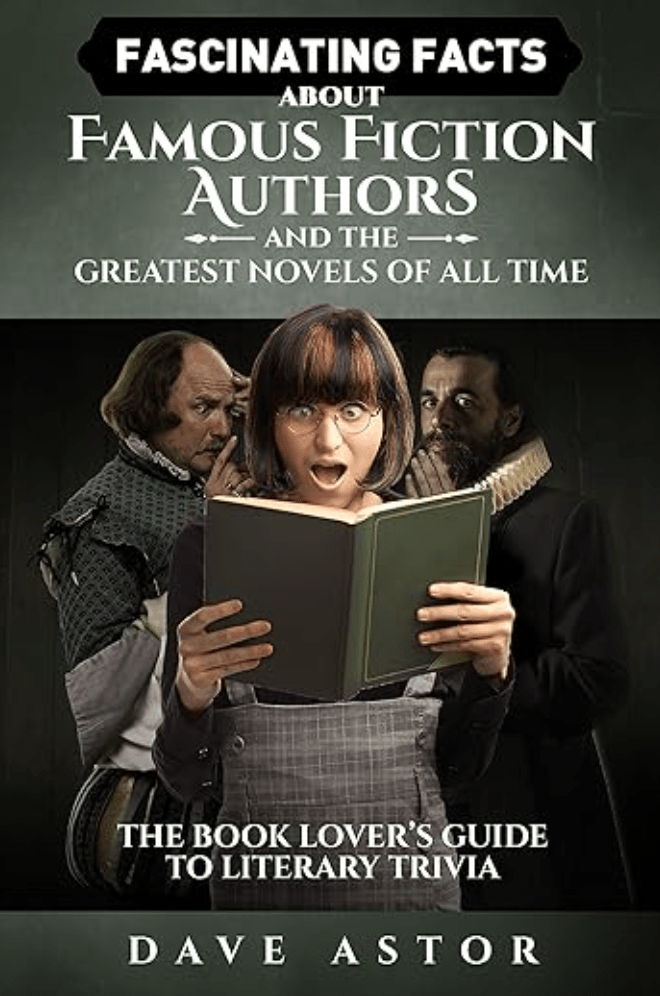
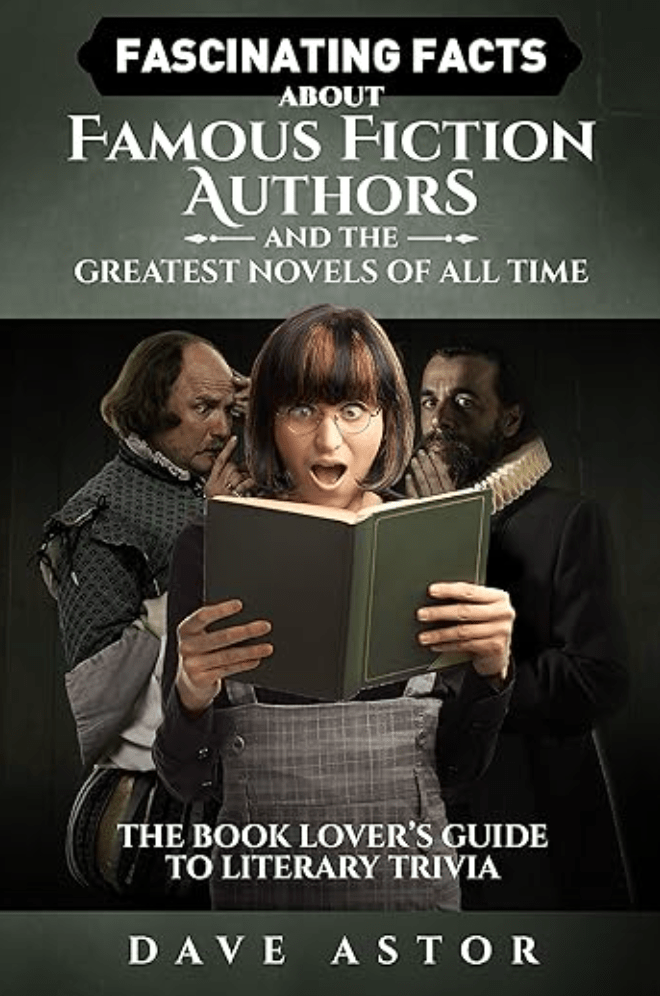
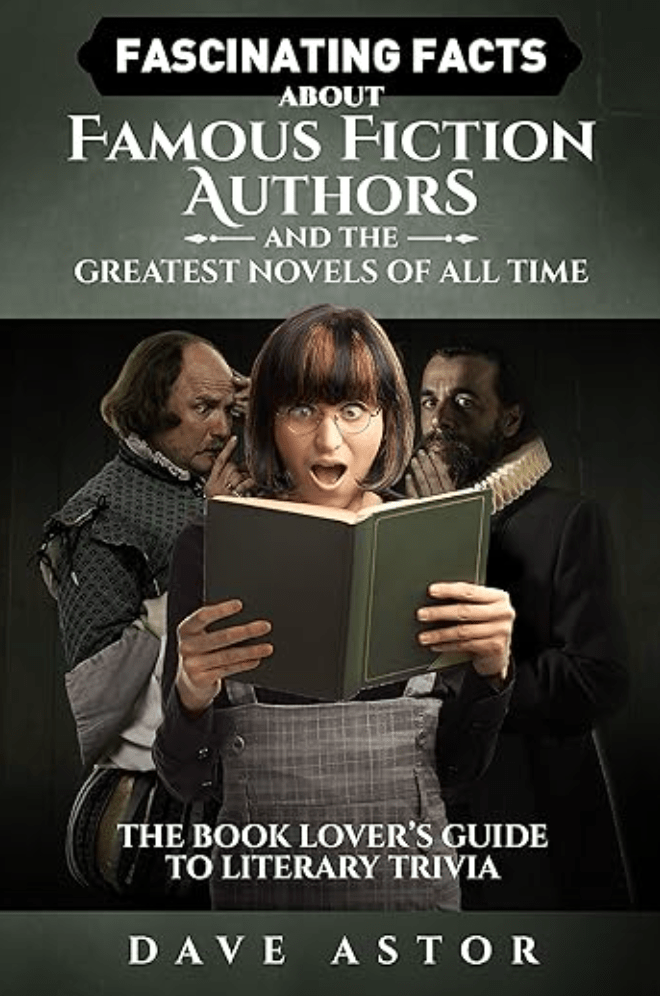
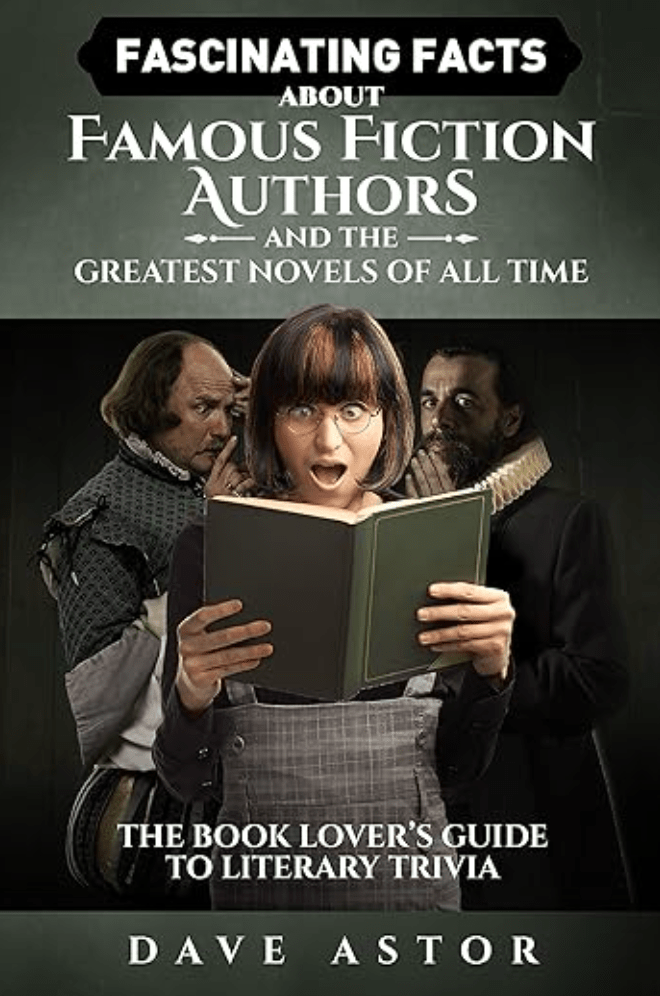
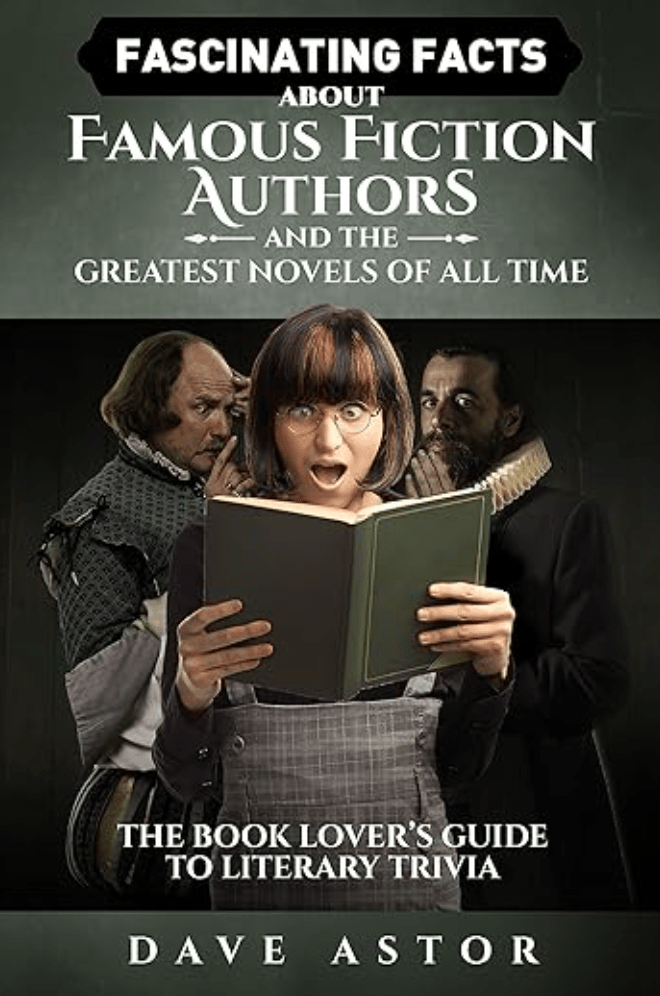
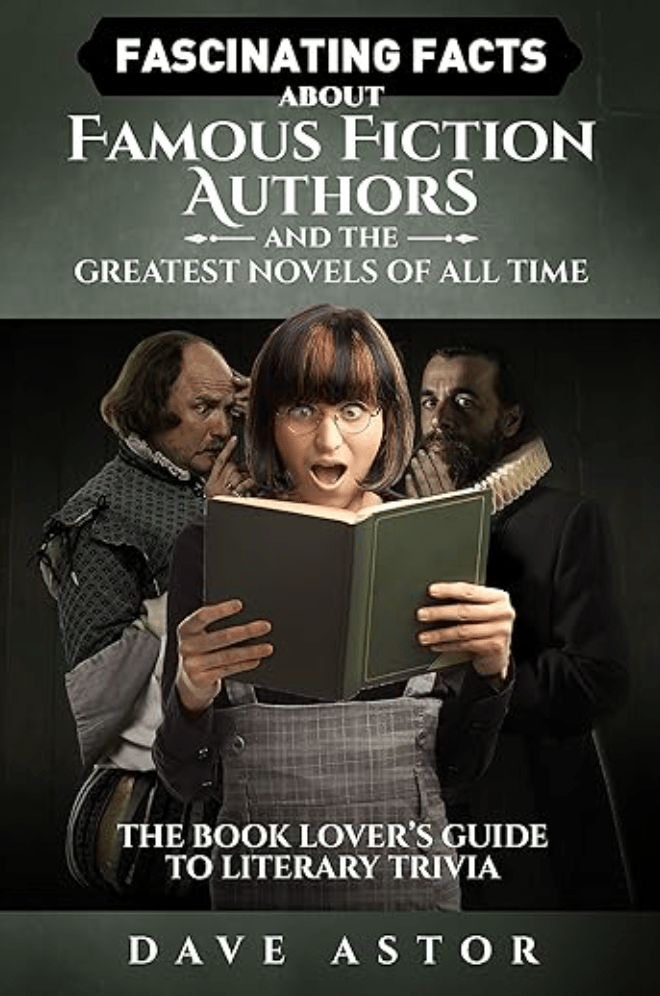
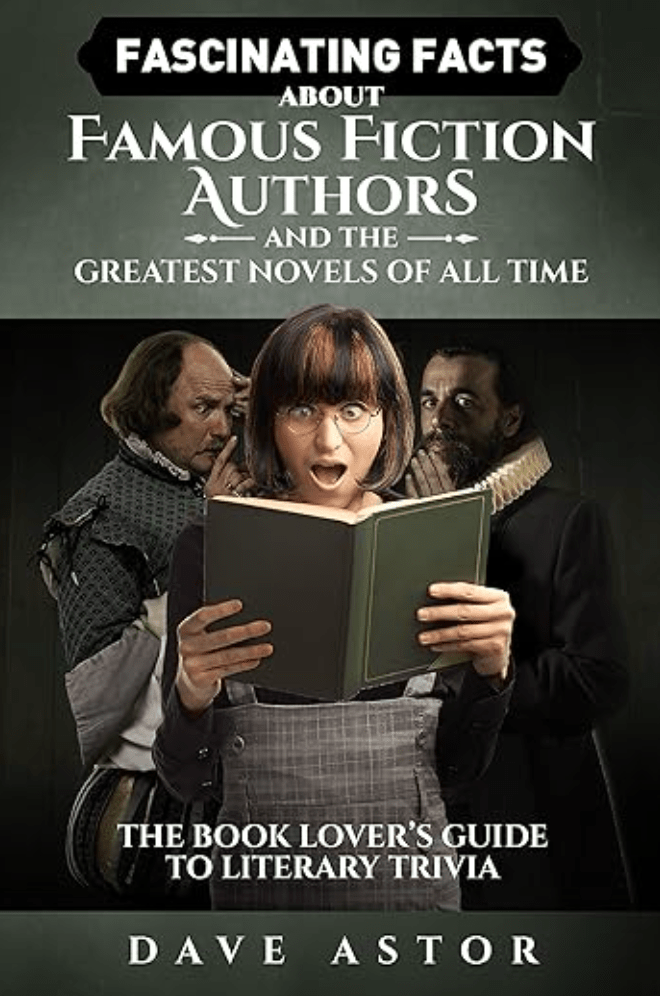
My literary-trivia book is described and can be purchased here: Fascinating Facts About Famous Fiction Authors and the Greatest Novels of All Time.

In addition to this weekly blog, I write the award-winning “Montclairvoyant” topical-humor column for Baristanet.com. The latest weekly piece — which has a Revolutionary War airports theme 🙂 — is here.

Nepotism in Novels

Among the Trump administration’s many, many horrible aspects is the blatant nepotism of incompetent daughter Ivanka and incompetent son-in-law Jared Kushner “serving” in major positions.

So, how about nepotism in literature? The beneficiaries are often also not deserving of their positions, which makes them easy for readers to root against — though there are occasional examples of those characters having some talent. Increasing the un-sympathy factor is that nepotism beneficiaries frequently aren’t nice, frequently act entitled, and frequently are quite flush with unearned family money.

Novels — historical fiction or otherwise — with royal characters of course often feature such people. For instance, in Alexandre Dumas’ The Three Musketeers, there’s the weak-willed Louis XIII who obviously had a bunch of other Louis guys come before him. One of them, Louis XI, is in Sir Walter Scott’s novel Quentin Durward.

Then there’s Rufus Weylin, the son of a slaveholder in Octavia E. Butler’s Kindred. He’s somewhat needy and unsure of himself as a boy, but grows into a mostly brutal and not especially smart master when he takes over the family plantation from his merciless father Tom.

Or how about the scenario in Lee Child’s Jack Reacher novel Worth Dying For? In that book, Seth Duncan works for a Mafia-connected Nebraska trucking company run by his father and uncles that ruthlessly extorts business from surrounding farms and engages in human trafficking. The vile Seth continues his family’s low ethical standards by also abusing his wife.

Of course, participating in or taking over the family “business” doesn’t necessarily have to be a bad thing. While there are plenty of differing views on nihilism and such in Ivan Turgenev’s novel Fathers and Sons, it seems okay that Arkady eventually assumes the management of his father’s modest Russian estate.

Another positive nepotism example is in One for the Money, the first of Janet Evanovich’s seriocomic Stephanie Plum crime novels. Stephanie gets a bounty-hunting job via her bail-bondsman cousin Vinnie, and ends up being quite good at that work (in One and the many subsequent Plum novels) despite some periodic bumbling.

Then there’s the complicated would-be nepotism situation in Charles Dickens’ Dombey and Son. The wealthy Paul Dombey is so focused on his son, and the hope that the boy will eventually take over his shipping company, that he almost totally rejects/neglects his daughter Florence.

Before ending this post, I’ll add that in real life there are plenty of children and other relatives of novelists who became novelists themselves. But that’s another topic — discussed in this piece I wrote in 2011.

Examples of nepotistic characters you’ve found memorable?

My literary-trivia book is described and can be purchased here: Fascinating Facts About Famous Fiction Authors and the Greatest Novels of All Time.

In addition to this weekly blog, I write the award-winning “Montclairvoyant” topical-humor column for Baristanet.com. The latest weekly piece — which has a July 4th theme — is here.