An Array of Admirable Activists

Zohran Mamdani walking New York City’s streets during his mayoral campaign.

I’ve written about activist authors (in 2014) and courageous characters (last year), but as far as I can recall I’ve never written specifically about activist characters in novels. So, today I will. ๐Ÿ™‚

My inspiration for this topic was 33-year-old democratic socialist Zohran Mamdani winning last month’s Democratic primary for New York City mayor — and, thrillingly, the results weren’t even close. If Mamdani also wins the general election this fall he’ll become the youngest NYC mayor in more than a century, the city’s first Muslim mayor, and clearly the most progressive mayor the biggest U.S. city has ever had. Among Mamdani’s November opponents will be current NYC mayor Eric Adams, a cartoonishly corrupt politician who escaped multiple criminal charges by making a sell-out deal with Trump’s ghoulish Republican regime.

At a time of ever-growing economic inequality in NYC and the rest of the country, the charismatic Mamdani ran an energetic grassroots campaign that focused on freezing rents, making buses free, offering universal childcare, raising the inadequate minimum wage, and other pocketbook proposals — all to be paid for by raising the too-low taxes on the very rich.

Much of the very rich, of course, went bananas, and many of them during the primary backed Mamdani’s mayoral opponent Andrew Cuomo — the conservative-leaning former New York governor who resigned in disgrace four years ago after causing thousands of deaths by sending COVID patients into nursing homes and after being credibly accused of sexual harassment by 13 women who worked for the state. Plus, plenty of corruption in his administration. Many of those wealthy Cuomo supporters are now backing the aforementioned Adams, a right-wing Democrat who sat out the June primary and is now running as an “independent.”

Mamdani, who has an activist history, is also the rare American politician who supports equal rights for Palestinians and has publicly decried Israel’s genocide of innocent civilians in Gaza — drawing bogus accusations of anti-Semitism from people who wrongly equate being against Netanyahu’s far-right Israeli government with being anti-Semitic. In fact, Mamdani received many Jewish votes amid many votes from young people, Asian-American residents, etc. Also, Mamdani and Jewish mayoral candidate Brad Lander cross-endorsed each other — something they were able to do under the election’s ranked-choice system.

I should mention that I feel a connection to New York City because I lived in its Bronx, Manhattan, Brooklyn, and Queens boroughs for a total of 16 years and worked in Manhattan for 30 years. My current town of Montclair is 12 miles west of NYC in New Jersey.

Anyway, on to some inspiring activist characters in literature!

There’s lapsed preacher Jim Casy, one of the memorable supporting players in John Steinbeck’s The Grapes of Wrath (1939). Casy tries to organize migrant workers after he tags along with the Joad family to California, where conditions for financially struggling newcomers are appalling.

Kristin Hannah’s The Four Winds was clearly inspired by The Grapes of Wrath, though that 2021 novel is original in many ways. It tracks the radicalization of Elsa Wolcott, who’s part of a cast that also includes union organizer Jack Valen.

Kate Quinn’s The Rose Code (also 2021) focuses on a memorable trio of female British code breakers during World War II.

Another compelling historical novel is Leon Uris’ Mila 18 (1961), about the desperate Warsaw Ghetto uprising against the Nazis.

And Julia Alvarez’s In the Time of the Butterflies (1994) features the part-fictionalized sisters who opposed the regime of brutal Dominican Republic dictator Trujillo.

Richard Wright’s Native Son (1940) has a supporting cast that includes radical lawyer Boris Max, who represents protagonist Bigger Thomas.

Margaret Atwood’s The Testaments — the 2019 sequel to The Handmaid’s Tale (1985) — includes the Daisy character (birth name: Nicole) who infiltrates the repressive, patriarchal society of Gilead.

In Barbara Kingsolver’s Flight Behavior (2012), Dellarobbia Turnbow is an initially apolitical young farmer’s wife who joins the fight against climate change.

Then there’s the against-the-odds activism in these two classics: Upton Sinclair’s The Jungle (1906) and George Orwell’s Nineteen Eighty-Four (1949).

While activism occasionally succeeds, many other times it doesn’t — given the formidable/well-funded forces on the other side: powerful politicians, heavily armed military and police, giant corporations trying to increase their already-huge profits, bend-the-knee mainstream media outlets, etc. In fact, some of the fictional characters I mentioned in this post ended up being killed, making for riveting reading but very depressing reading.

Examples of activist characters in novels? Thoughts on this topic?

Misty the cat says: “When I groom myself near a window, it’s ‘A Groom with a View.'”

My comedic 2024 book — the part-factual/part-fictional/not-a-children’s-work Misty the Cat…Unleashed — is described and can be purchased on Amazon in paperback or on Kindle. It’s feline-narrated! (And Misty says Amazon reviews are welcome. ๐Ÿ™‚ )

This 90-second promo video for my book features a talking cat: ๐Ÿ™‚

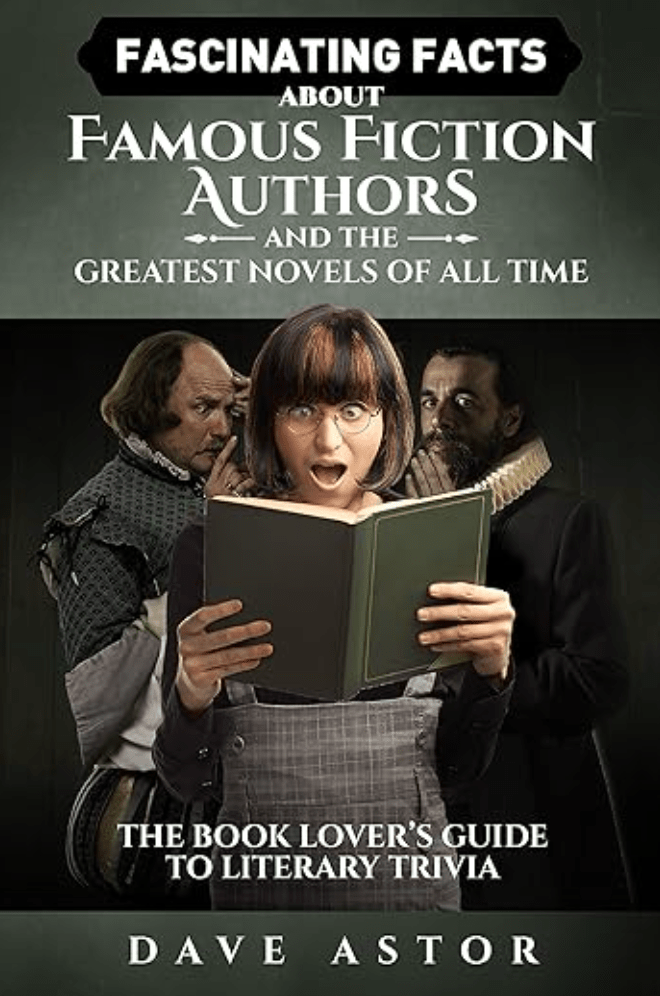
I’m also the author of a 2017 literary-trivia book

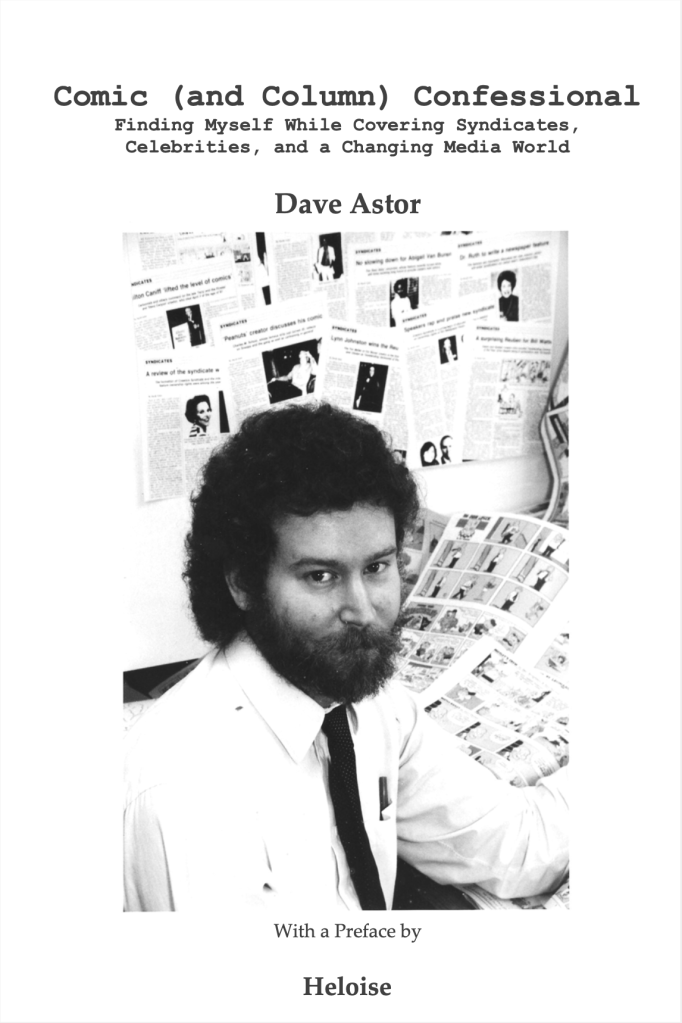
…and a 2012 memoir that focuses on cartooning and more.
In addition to this weekly blog, I write the 2003-started/award-winning “Montclairvoyant” topical-humor column every Thursday for Montclair Local. The latest piece — about my younger daughter’s June 26 high school graduation (again), a Township Council meeting, and more — is here.

Obsession in Lit and From Many a Political Twit

After right-wing U.S. Supreme Court Justice Antonin Scalia died this month, Republicans proved once again that they’re obsessed with obstructing Barack Obama at every turn. Refusing to consider ANY Scalia replacement nominee from the Democratic, biracial president with almost a year left in the White House? How partisan — and, yes, racist — of the GOP. Sure, Obama’s pick would change the ideological bent of the Supreme Court, but them’s the breaks.

Since I’m a literature blogger, I also started thinking of obsessed fictional characters — both negative (like the Republicans in their vicious hatred of the more-centrist-than-liberal Obama) and positive. Whether the single-mindedness is political, romantic, or otherwise, it can be riveting in a protagonist.

For instance, there are the rulers obsessed with control of the populace in George Orwell’s Nineteen Eighty-Four, and the hyper-ambitious, Huey Long-like Willie Stark in Robert Penn Warren’s All the King’s Men.

Or how about the fanatical police inspector Javert, who focuses to the nth degree on trying to capture Jean Valjean in Victor Hugo’s Les Miserables? And the escaped prisoner Edmond Dantes, who devotes his life to revenge against the men who framed him in Alexandre Dumas’ The Count of Monte Cristo. And the guilt-ridden lovers Therese and Laurent, who are hyper-focused on the memory of the man they killed in Emile Zola’s Therese Raquin. Heck, those three examples are just from 19th-century French literature alone.

Also obsessed is the man (Nathanael) who becomes infatuated with a (robot?) woman in E.T.A. Hoffmann’s 1816 story “The Sandman,” the woman (Katerina) who stays intensely/criminally attached to the no-good Sergei in Nikolai Leskov’s “The Lady Macbeth of Mtsensk,” and various Edgar Allan Poe protagonists — including the murderers in “The Tell-Tale Heart” and “The Black Cat,” and the love-struck young man in the partly comedic “The Spectacles.”

Then there’s the title character in Toni Morrison’s Sula who’s obsessed with being independent, unconventional, and not bound by gender norms.

A torrid affair begets homicide in Therese Raquin, but romantic obsession has different results in other novels such as W. Somerset Maugham’s Of Human Bondage and Gabriel Garcia Marquez’s Love in the Time of Cholera. In the first book, would-be doctor Philip Carey becomes totally fixated on a waitress (Mildred Rogers) who holds him in contempt until… In Garcia Marquez’s novel, Florentino Ariza carries a torch for Fermina Daza over many decades until…

Theo Decker carries something else — a painting — out of a museum after a terrorist attack in Donna Tartt’s The Goldfinch, and remains obsessed for years with Carel Fabritius’ famous bird portrait — partly because of its association with Theo’s beloved mother, who died in the attack.

Another creature filling the mind of a protagonist is the huge marlin relentlessly reeled in by Santiago the fisherman as he tries to defy bad luck and aging in Ernest Hemingway’s The Old Man and Sea.

Still another creature is the fixation of Captain Ahab, who, in Herman Melville’s Moby-Dick, angrily pursues the huge white whale that bit off part of his leg. (Some latte-drinking readers might also be obsessed with the novel’s Starbuck character and how his name was appropriated by a certain coffee chain. ๐Ÿ™‚ )

Speaking of 20th-century/19th-century connections, Octavia Butler’s Kindred novel sends Dana Franklin back in time to America’s slave-holding South. As the black character navigates that horrid world, her obsession is making sure her ancestor is born so that she (Dana) can exist 150 years later.

Many Americans are also known for single-mindedly climbing the corporate or social ladder, and an example of someone who ascends the latter ladder is Undine Spragg of Edith Wharton’s The Custom of the Country. It’s not a coincidence that her initials are U.S.

The title character’s initials in Martin Eden represent Jack London’s semi-autobiographical “me” — a self-educated, working-class protagonist hell-bent on becoming a successful writer.

Also obsessed with having a writing career is Jo March, the Little Women character partly based on the author herself — Louisa May Alcott.

Last but not least, we have Lord Voldemort’s obsession with killing Harry Potter. I’d compare the GOP’s many obstructionist politicians to Voldemort, but that would be an insult to J.K. Rowling’s gruesomely evil creation. ๐Ÿ™‚

Who are your favorite fixated fictional fellows and women? (Also welcome are any thoughts on the late Harper Lee, who died Feb. 19 following decades of being obsessed with maintaining her privacy after the great To Kill a Mockingbird rocketed her to fame.)

(The box for submitting comments is below already-posted comments, but your new comment will appear at the top of the comments area โ€” unless youโ€™re replying to someone else.)

I’m writing a literature-related book, but still selling Comic (and Column) Confessional — my often-funny memoir that recalls 25 years of covering and meeting cartoonists such as Charles Schulz (“Peanuts”) and Bill Watterson (“Calvin and Hobbes”), columnists such as Ann Landers and “Dear Abby,” and other notables such as Hillary Clinton, Coretta Scott King, Walter Cronkite, and various authors. The book also talks about the malpractice death of my first daughter, my remarriage, and life in Montclair, N.J. — where I write the award-winning weekly “Montclairvoyant” humor column for The Montclair Times. You can email me at dastor@earthlink.net to buy a discounted, inscribed copy of the book, which contains a preface by “Hints” columnist Heloise and back-cover blurbs by people such as “The Far Side” cartoonist Gary Larson.