Going Places

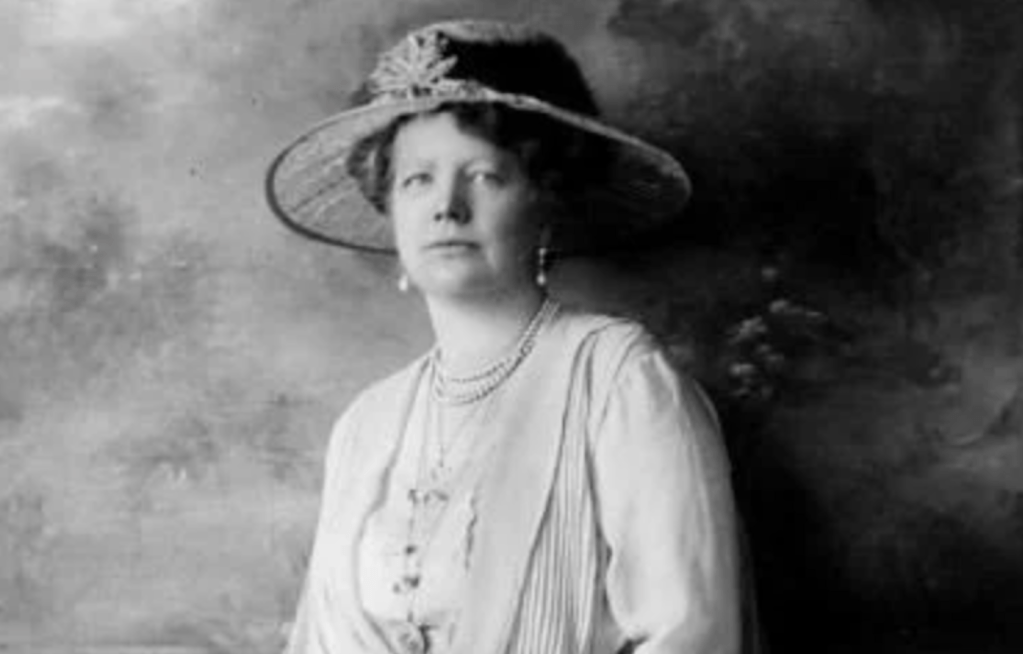
Elizabeth von Arnim

Can going to a different place change a person for the better? It certainly helps in some cases — as seen in various novels. Characters might get out of rut, meet new people, interact differently with people they already know, see new sights, learn new things, self-reflect, find the new place suits their personality more, etc.

I just read Elizabeth von Arnim’s The Enchanted April (1922), which focuses on four unhappy British women who rent a castle on the Italian Riviera for a month. The gorgeous setting becomes a big factor in improving things for each of the four. The Enchanted April is…enchanting — an upbeat novel, but with some welcome puncturing of sentimentality.

Another British character travels to Hawaii in David Lodge’s 1991 novel Paradise News, where love is found along with better weather. ๐Ÿ™‚

Rita Mae Brown’s 1973 novel Rubyfruit Jungle stars Molly Bolt — who, as a lesbian, finds life somewhat fraught in Florida. She eventually ends up in New York City, where things are of course not perfect but there’s more of an LGBTQ+ community.

The orphaned title character of Charlotte Bronte’s Jane Eyre spends many of the 1847 novel’s early pages at Lowood School, a harsh place with little heat and inadequate food until some reforms are instituted. But the big change for Jane is subsequently getting a governess job at the Thornfield Hall manor, where life becomes quite dramatic. Good things happen, but not all good…

Yes, it can obviously be a mixed experience going to a different place. In Kristin Hannah’s 2024 novel The Women, for instance, the rather naive American protagonist signs up to be a Vietnam War nurse. Much of the experience is horrific for her and of course her badly wounded patients, yet she grows so much as a person that going to Vietnam has some positives.

In John Grisham’s 2014 novel Gray Mountain, New York City lawyer Samantha Kofer is a very urban person who nonetheless finds a lot of satisfaction amid fraught moments after taking a legal-aid job in Virginia’s Appalachian region.

A life-changing positive travel experience can also involve leaving Earth, as pioneering female astronaut Elma York does in Mary Robinette Kowal’s The Calculating Stars and its sequel The Fated Sky, both from 2018.

Obvioiusly, characters can get to another place and see their lives go downhill, but that scenario is not part of this blog post.

I’ve just touched the surface here. Other novels that fit today’s theme? Comments about this theme?

Misty the cat says: “Whoever writes ‘Stop’ signs is even more widely published than Stephen King.”

My comedic 2024 book — the part-factual/part-fictional/not-a-children’s-work Misty the Cat…Unleashed — is described and can be purchased on Amazon in paperback or on Kindle. It’s feline-narrated! (And Misty says Amazon reviews are welcome. ๐Ÿ™‚ )

This 90-second promo video for the book features a talking cat: ๐Ÿ™‚

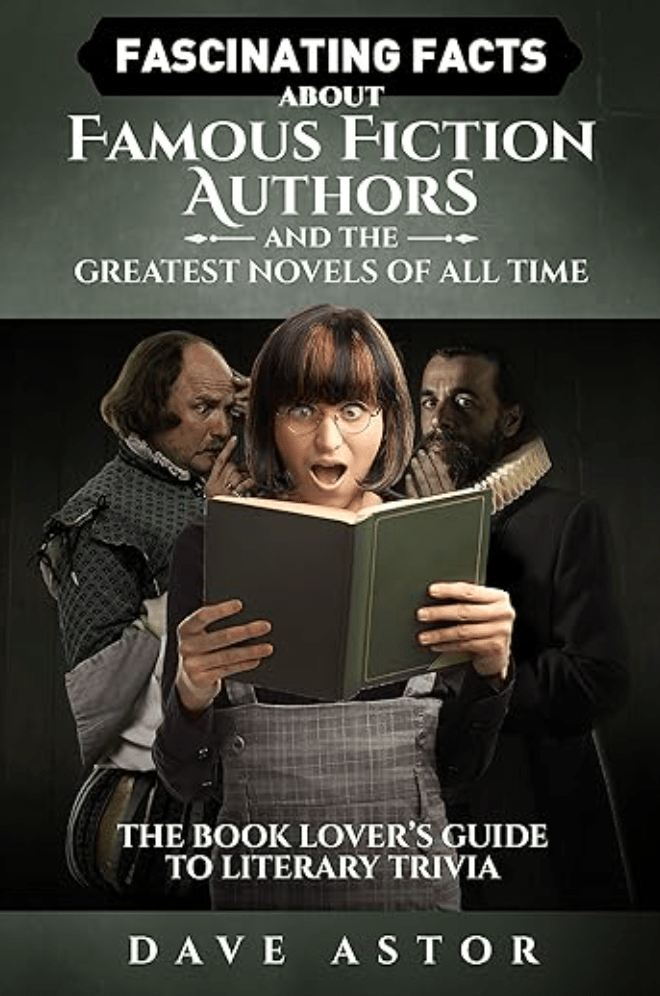
I’m also the author of a 2017 literary-trivia book

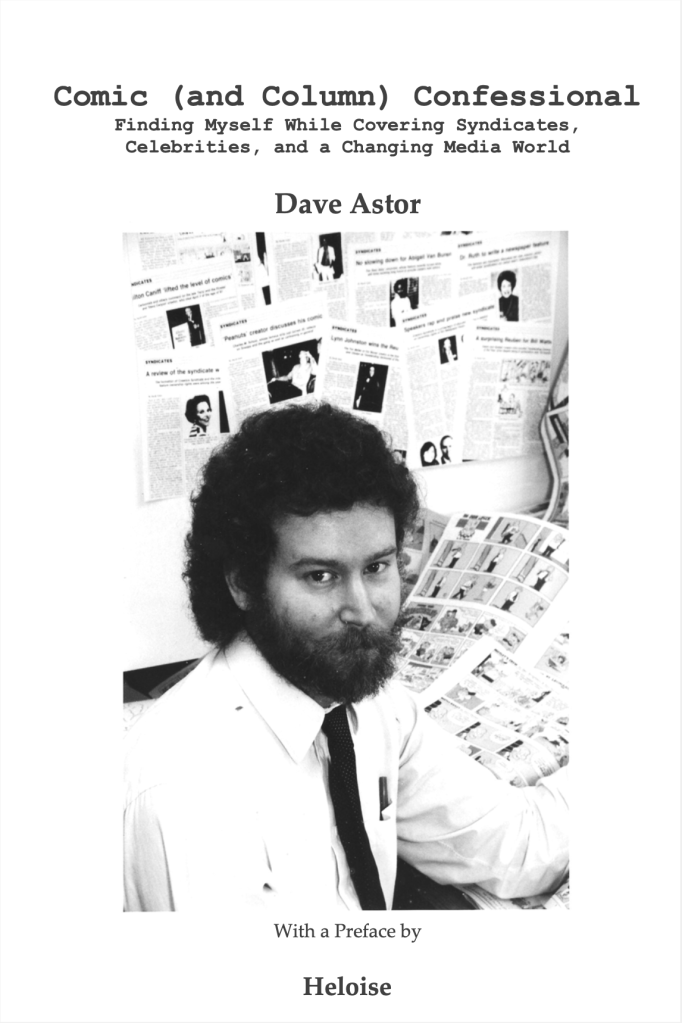
…and a 2012 memoir that focuses on cartooning and more.
In addition to this weekly blog, I write the 2003-started/award-winning “Montclairvoyant” topical-humor column every Thursday for Montclair Local. The latest piece — containing a comedic overreaction to a one-hour-earlier closing time at my town’s municipal pools — is here.

The Very Well-Traveled Caterpillar

We all remember great children’s books from when we were kids or parents of kids. I recently thought of one — The Very Hungry Caterpillar — when my family had a real-life experience with a fennel-consuming cousin of Eric Carle’s fictional character.

I’m going to recount that experience (straying from this literature blog’s usual approach) before ending with a list of several of my favorite children’s books and a request to name some of yours. It’s a true-life children’s story I’ll call…The Very Well-Traveled Caterpillar.

One afternoon last month, my younger daughter stepped off her school bus with a paper cup full of fresh fennel. On one of the stalks was a tiny black caterpillar Maria had named Spike — though she didn’t know if it was male or female. The bus ride was Spike’s first trip.

My wife Laurel ordered one of those soft caterpillar/butterfly cages online, but Spike’s “house” took more than a week to get delivered. Fortunately, Spike stayed on fennel stalks in that paper cup for several days, eating so much that Maria had to bring home new fennel from her school garden several times. Spike, who turned mostly green, grew so much that he (?) was soon perhaps 10 times his (?) original size.

But one day, Spike crawled off the fennel and paper cup and was nowhere to be found. We walked VERY carefully in the living room as we searched for about a half hour — finally spotting Spike on the floor atop one of Maria’s sandals. That was his (?) second trip, and a potentially dangerous one.

So as we continued to wait for delivery of the cloth-and-net cage, we found a large box to put the fennel and cup in. The next day, a certain mailing finally arrived, and we transported Spike from box to cage.

Spike — fortified by his (?) prodigious eating binge — attached himself to a stick we put in the cage and was encased in a chrysalis by June 22. But we were leaving June 24 for a trip to Indiana, with a return planned for June 29. The chrysalis stage was supposed to be 7-10 days, but what if Spike emerged earlier? Obviously, he (?) had to travel with us in the car.

Passenger Spike spent the first day cruising west from New Jersey through Pennsylvania — carried into rest stops, the inside of a fast-food restaurant, and then a hotel room in eastern Ohio. The next day, it was more of the same until we arrived in Indianapolis — where the National Society of Newspaper Columnists was meeting.

But there was more travel to come. As I attended the great NSNC conference, Spike joined Laurel and Maria in visiting a former Indiana State University work colleague of my wife’s in Terre Haute. So the car-cruising/cage-and-chrysalis-covered caterpillar almost made it to Illinois.

Then came a return to Indianapolis, where Spike accompanied us and friends from Bloomington to a restaurant lunch before we headed back east. More rest stops, more fast-food eateries, and another hotel stay before Spike found himself (?) in New Jersey again on June 29. Still in the chrysalis.

Several days later, Spike finally emerged as a large butterfly — mostly black, with some brilliant coloring. According to Maria, his (?) coloring indicated he (?) was…female.

Spike couldn’t immediately fly — her wings needed to dry. But when she began flapping frantically around the cage an hour later, we knew it was time. We walked to the patio area of our garden-apartment complex, slowly unzipped the cage, and Spike soared high into the air. Not west or east, but south, before disappearing above the treetops.

Believe it or not, Spike’s freedom came on July 4 — Independence Day.

So that’s the story of The Very Well-Traveled Caterpillar. My favorite children’s books? Several by Dr. Seuss, of course; Susan Meddaugh’s Martha Speaks series (talking dog!); Eric Litwin’s Pete the Cat books; Faith Ringgold’s Tar Beach; Bernard Waber’s Lyle, Lyle, Crocodile; Ludwig Bemelmans’ Madeline; Robert Munsch’s Love You Forever; Margaret Wise Brown’s Goodnight Moon; and various others. (I’m talking fictional “picture books” aimed at younger kids. ๐Ÿ™‚ )

What are your favorite children’s books? And what are some books — kid or adult, with or without caterpillars — that you connect with real-life experiences you’ve had?

One more question: Why didn’t I discuss Go Set a Watchman in this column? Well, Harper Lee’s eagerly awaited novel won’t be released until July 14, and I’m not sure when I’ll read it. It was dismaying to see, in an advance New York Times review, that the beloved Atticus Finch is depicted as a racist in the book — and there are of course questions about whether Ms. Lee truly consented to the financially lucrative publication of this To Kill a Mockingbird “sequel” (set in the 1950s) written before TKAM (set in the 1930s). But feel free to discuss Go Set a Watchman here!

The box for submitting comments is below already-posted comments, but your new comment will appear at the top of the comments area โ€” unless youโ€™re replying to someone else.

Note: My next column will post Monday, July 20, rather than the evening of Sunday, July 19 — when I’ll be seeing a U2 concert at Madison Square Garden with my adult daughter. I’m sure the band will do better in MSG than pro basketball’s Knicks! ๐Ÿ™‚


For three years of my Huffington Post literature blog, click here.

I’m writing a literature-related book, but still selling Comic (and Column) Confessional — my often-funny memoir that recalls 25 years of covering and meeting cartoonists such as Charles Schulz (“Peanuts”) and Bill Watterson (“Calvin and Hobbes”), columnists such as Ann Landers and “Dear Abby,” and other notables such as Hillary Clinton, Coretta Scott King, Walter Cronkite, and various authors. The book also talks about the malpractice death of my first daughter, my remarriage, and life in Montclair, N.J. — where I write the award-winning weekly “Montclairvoyant” humor column for The Montclair Times. You can email me at dastor@earthlink.net to buy a discounted, inscribed copy of the book, which contains a preface by “Hints” columnist Heloise and back-cover blurbs by people such as “The Far Side” cartoonist Gary Larson.