I’ve written about diversity in literature before, but this time I’m going to be a bit more specific. As in the welcome increased diversity in thrillers and mysteries during the past few decades.
Many right-wing Republicans would find that “woke,” but they’re welcome to fall asleep listening to Ron DeSantis speeches.
There was of course some diversity in long-ago mysteries and thrillers, but old novels in those genres often featured white male detectives in lead roles and mostly “conventional” women in supporting roles. If there were rare inclusions of people of color, those characters were usually depicted in cringe stereotypical fashion.
Famous white male detectives of the 19th century and the first decades of the 20th century included Edgar Allan Poe’s C. Auguste Dupin (in three short stories rather than any novels), Charles Dickens’ Inspector Bucket, Wilkie Collins’ Sergeant Cuff, Arthur Conan Doyle’s Sherlock Holmes, Agatha Christie’s Hercule Poirot, Dorothy L. Sayers’ Lord Peter Wimsey, Dashiell Hammett’s Sam Spade, and Raymond Chandler’s Philip Marlowe, among others.
There were a few long-ago exceptions of strong females as leads or co-stars in crime fiction, including Miss Marple and Harriet Vane in the novels by the aforementioned Christie and Sayers, respectively; Marian Halcombe of Wilkie Collins’ The Woman in White; and…Nancy Drew! But the portrayal of people of color in, say, Christie’s otherwise fabulous Death on the Nile? Ugh. And LGBTQ+ people were usually not portrayed at all; if they were, it was almost always in a veiled, negative way.
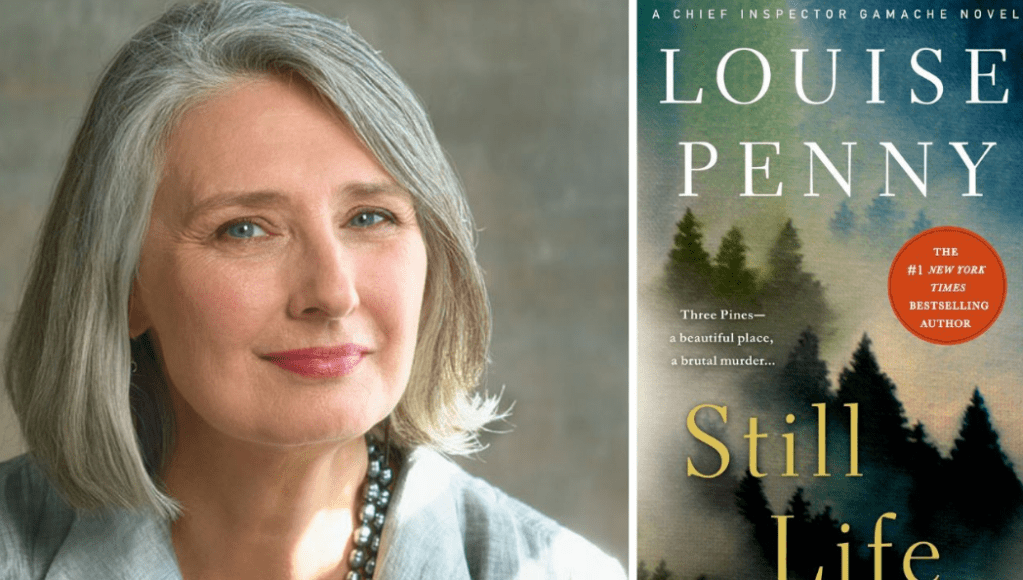
I got to thinking about all this last week while reading Still Life (2005), the absorbing debut novel in Louise Penny’s series starring investigator Armand Gamache. He’s a white guy, but the residents of Three Pines — the small Canadian town where the murder in Still Life occurs — are a wonderful mix: a Black woman who owns a bookstore, a white female artist, a white female poet, two gay restaurant operators, etc. Plus some female investigators and a Jewish female prosecutor. Most are three-dimensional; their color, gender, sexual orientation, and religion/culture are part of who they are, but not all of who they are.
There was a similar mix in Caleb Carr’s The Alienist and its scintillating sequel, The Angel of Darkness — both written in the 1990s and both set in the 1890s. The team investigating some very seedy goings-on include white men, a woman, a Black man, and two Jewish detective brothers. Given the 19th-century timeframe, Sara Howard, Cyrus Montrose, and Marcus and Lucius Isaacson are hit with plenty of nasty societal bias, but the mostly cordial interactions within the investigating team are inspiring. Everyone is respected for what they bring to the table.
Women and people of color who are the flat-out stars of crime series? They include private investigator Kinsey Millhone of Sue Grafton’s “Alphabet Mysteries” (first installment published in 1982), Black private investigator Ezekiel “Easy” Rawlins of Walter Mosley’s novels (debut book in 1990), and bounty hunter Stephanie Plum of Janet Evanovich’s novels (a 1994 start), to name a few protagonists. Oh, and Rita Mae Brown’s 1990-launched mysteries with Mary “Harry” Haristeen (and some animal detectives 🙂 ) as well as Dorothy Gilman’s Mrs. Pollifax novels starring an amateur CIA agent. That latter series, which began in 1966, does have some stereotypical moments with its senior-citizen lead character, but overall Emily P. is fairly modern in her way.
A female investigator co-starring in a series? That would be Robin Ellacott of J.K. Rowling’s crime novels. Male investigator Cormoran Strike was the initial focus of the series (written under the pen name Robert Galbraith), but Ellacott moved into a position of essentially being equal to Strike.
Quite a few of John Grisham’s novels — The Racketeer, The Judge’s List, The Client, etc. — have Black characters as protagonists or in memorable secondary roles. And Lee Child’s Jack Reacher novels (now co-written by Andrew Child) have plenty of women and people of color (female or male) as significant supporting players.
Your thoughts on this topic?
My literary-trivia book is described and can be purchased here: Fascinating Facts About Famous Fiction Authors and the Greatest Novels of All Time.
In addition to this weekly blog, I write the 2003-started/award-winning “Montclairvoyant” topical-humor column for Baristanet.com every Thursday. The latest piece — about a current court case that makes some of my town’s leaders and their attorneys look pathetic — is here.
 Dave Astor on Literature
I would include Inspector Javert in the novel Les Miserables by Victor Hugo. Javert is surely a candidate for character analysis. A person devoted to law and who had know sympathy especially for criminals.
LikeLiked by 3 people
Thank you for the comment! A very memorable character.
LikeLiked by 1 person
So happy you included Louise Penny’s series in your discussion, Dave. And her characters become even deeper and more complicated as the books progress. Such a talented writer!
LikeLiked by 1 person
Thank you, Becky! I’m glad I finally read her again. (Had previously read one of her later mysteries out of order.) Her writing is indeed excellent.
LikeLiked by 1 person
Dave, love this topic !
” The Racketeer ” is John Grisham`s one of the best seller. I like the book so much I purchased the book.
BUT, Grisham wasted his time because he wanted Mr. Denzel Washington to take the lead role, as I`ve read Grishem waited way too long.
There are so many Black actors these days, the one is ” Michael B. Jordan “, one of the top Black actor of today.
Something very interesting I discovered, this excellent actor was on the cover of People Magazine, couple of years ago, okay good for Him.
I had no clue who he is, imagine my shock to find out. When a teen he was in a soap ” All my Children”, that time I used to watch the show !
Now this young man is a director, producer and what not .
John Grisham wasted his time all these years, and Mr. Jordan might not be available now..
LikeLiked by 3 people
Thank you, Bebe! I agree — “The Racketeer” is terrific! Such an intricate plot, and then a surprise ending. I can see why you purchased it! Denzel Washington would have been great in the lead part, but, yes, various other Black actors (including the excellent Michael B. Jordan) would have been as well. And some amazing actors and actresses did indeed get their starts very young on TV. A similar shocking thing for me was learning that the outstanding current Jack Reacher, Alan Ritchson, was on “American Idol” about 20 years ago.
LikeLiked by 1 person
LikeLiked by 2 people
Here is the soap AMC, when he was on the cover on People, I had no clue who he was , imagine my shock to find out the young man grew up to be an A list actor.
Obviously something he did right !
LikeLiked by 1 person
Oh my Dave I did not know that !
Sadly I could not watch Jack Reacher, as we only have regular TV station, for anything else, we have to play extra.
Anway, PBS keeps me going, no commercials as we pay some amout yearly which is by choice..
LikeLiked by 2 people
Wow — so young-looking back then!
I haven’t watched full episodes of the Reacher series, either, Bebe, but I’ve watched a number of clips on YouTube. Ritchson is absolutely amazing! Makes the former Reacher actor Tom Cruise look like an amateur in the role.
LikeLiked by 1 person
Hi Dave, something away from the topic, yet similar in diversity.
” Elliot Page Comes Out as a Transgender In a Moving Open Letter ”
I just read a two page article in Time magazine, it was so gut wrenching , of what Elliot had to go through , from around 30 years of age from thinking ( or being told) she was a Lesban woman to a Transgender.
There is a book out, one of these days perhaps i would borrow it.
LikeLiked by 2 people
Thank you for the comment, Bebe. Good for Elliot Page, becoming the person he was meant to be.
LikeLiked by 1 person
For the record, Grisham did get his Denzel Washington, as Gray Grantham in the Pelican Brief, not in the Racketeer. Just FYI.
LikeLiked by 2 people
Thank you, kaylebrooks! A good observation. 🙂
LikeLiked by 1 person
Yes so true…thanks for the reminder !
LikeLiked by 1 person
Hi Dave, I don’t read much in the murder mystery or thriller line of books, although I have read Agatha Christie’s books (I prefer Poirot to Marple). My recent reads by authors who are still alive (referring to your post last week) are much more diverse than the older classics I read. Hotel on the corner of Bitter and Sweet had a Chinese boy and a Japanese girl as the protagonists. The MC in the Museum of Ordinary People was a woman of colour (her mother was a black lady and her father was a white man). The MCs in Balzac and the Little Chinese Seamstress are obviously all Chinese. In The Midnight Library, Nora Seed’s brother is gay and there are a few supporting characters of colour. Literature has changed over the years in line with the modern thinking.
LikeLiked by 3 people
PS I also read A Testament to Youth by Vera Brittain last year. She was a VDA during WW1 and one of the first women to study at Oxford University. It was a fascinating book.
LikeLiked by 1 person
Thank you, Robbie! I appreciate all those great examples of diversity in fiction! “Literature has changed over the years in line with the modern thinking” — so true, and a very welcome development. Of course, not welcome to some; diversity in lit sadly seems to be a major target for right-wingers in the U.S. who are banning, or trying to ban, a number of books. 😦
LikeLiked by 1 person
I am aware of the call to ban books. Every time I read a book could be banned, I rush out and buy a hard copy of it.
LikeLiked by 1 person
I like that reaction of yours, Robbie! When someone tries to ban a book, it feels almost equivalent to it having a five-star review. 🙂
LikeLiked by 1 person
Yes, exactly. I have so many previously banned or possibly could be banned books, my shelves are crammed.
LikeLiked by 1 person
Though crammed shelves can obviously be annoying, Robbie, no better reason to have that situation. 🙂
LikeLike
I’m afraid thriller and mystery aren’t genres I’m very well read up on, so I have little to add to this week’s topic. 😦 So I guess I will only say I’m happy to see more diversity coming in across all genres of literature, especially in my own historical-fiction genre. I’ve read some REALLY great works this year by some very diverse authors, and it’s making for a great reading year!
LikeLiked by 4 people
Thank you, M.B.! I agree that it’s great to see more diversity in all kinds of literature — including historical fiction — when it comes to characters as well as authors. The novels and characters of Kate Quinn, whose work you introduced me to a year or two ago, are certainly one example!
LikeLiked by 1 person
Oh yes she’s a fantastic author. I haven’t read her latest though, must get on that!
LikeLiked by 2 people
I’d like to read more Kate Quinn, too, M.B. But there’s only so much time to read so many authors. Eventually… 🙂
LikeLiked by 1 person
Goodness, no I ‘ve back with the time to read this properly, I will say stright out I’ve not read the book but I did see the Prime series, Three Pines. And it was very good.
LikeLiked by 5 people
Thank you, Shehanne! Glad you liked the “Three Pines” series! I need to look at some clips from it on YouTube. Going there now… 🙂
LikeLiked by 2 people
We thought it was well made.
LikeLiked by 3 people
I watched the trailer, Shehanne, and it seems to be well-made indeed!
LikeLiked by 1 person
Another great topic and wonderful discussion, Dave. I read a lot of non-fiction and historical fiction, and one of the issues is that diversity has to comply with the era in which the story is set. In some cases, the presence of a female or a character of color is too hard to believe but in others, the problems caused by war (say WWII) gave rise to people in unexpected roles. “The Rose Code” by Kate Quinn is a mystery involving three women who worked at Bletchley Park as code breakers. It shifts between two timelines (during and after the war). It’s accurate enough to be believable, and we know women served in those roles.
I prefer stories where I can imagine the characters as people of color or different ethnic backgrounds or sexual preferences. I’m not a fan of in-your-face scenes added to get attention. Subtle references that let my imagination fill in some gaps brings me in closer to the story. I think a lot of modern fiction is obvious, bordering on gratuitous when it comes to diversity.
LikeLiked by 3 people
Thank you, Dan! That’s a terrific point about how the era a novel is set in can determine whether diversity seems authentic. For instance, Caleb Carr was probably injecting a more modern multicultural ethos in “The Alienist” and “The Angel of Darkness” than 1890s America might have warranted — though the New York City setting helped. And, yes, there were moments, such as the way World War II put women in some prominent roles (because many men were in the military abroad), when progress jumped ahead of its time.
Yes, also, there’s something to be said for subtlety.
As for Kate Quinn, I’ve loved the two novels of hers I’ve read: “The Huntress” and “The Alice Network” — both with women in prominent roles that were sort of “before their time.”
LikeLiked by 1 person
Those roles, and Kate Quinn’s writing made those women instantly believable.
LikeLiked by 2 people
The beyond-skillful Kate Quinn is certainly capable of that, Dan!
LikeLiked by 1 person
In light of the above, we also have Patricia Cornwell, whose strong series character, Dr. Kay Scarpetta, forensic examiner and administrator, is highly authentic both to biomedical facts and to gender diversity among its continuing characters and sidekicks.
LikeLiked by 2 people
Thank you, kaylebrooks! Great mention, and well described!
LikeLike
Not in the Holmes/Christie detective style, rather mysteries, I’ll mention Joan Aiken and Jeanette Winterson novels. Re: diversity and inclusion Winterson hands-down. As far as women writing crime novels, there are what I call the “where’s the girl now books”– like Paula Hawkins’s Girl On A Train and Gillian Flynn’s Gone Girl. Great theme, Dave. Susi
LikeLiked by 4 people
Thank you, Susi! I appreciate the excellent mentions! There’s definitely some great literature that’s part genre fiction, part general fiction.
LikeLike
We just recently watched Three Pines, I’ll have to look for the book soon. Maggie
LikeLiked by 4 people
I didn’t realize there was a screen adaptation of Louise Penny’s novels. Nice! Thank you, Maggie!
LikeLiked by 2 people
The series was good; although, it won’t be renewed for another season. I was a little disappointed in the ambience of the series. Three Pines was made to feel oppressive or moody, and that’s not at all the way it seems in the books.
LikeLiked by 3 people
Thank you, nananoyz! Yes, Three Pines does seem kind of idyllic in the two Louise Penny books I’ve read, though of course there is the murder thing…
LikeLiked by 1 person
True🤣
LikeLiked by 3 people
🙂
LikeLiked by 1 person
Yes it was on Amazon Prime in Canada.
LikeLiked by 2 people
Thanks for that information, Maggie! Louise Penny is certainly a worthy author for screen adaptation in Canada — or anywhere!
LikeLiked by 1 person
The ONLY thriller-mystery-detective series I’ve read are the first three Cormoran Strike novels. Gruesome but good! I need to catch up. 🙂 Oh wait, I take that back…Girl With the Dragon Tattoo trilogy as well.
LikeLiked by 4 people
I highly recommend the Thursday Murder Club series by Richard Osman. Cozy mysteries in which the amateur sleuth are residents of an assisted living facility. It’s delightful.
LikeLiked by 3 people
Thank you for that enthusiastic recommendation, nananoyz!
LikeLike
Sounds charming! Thanks.
LikeLiked by 3 people
Thank you, Mary Jo! The Cormoran Strike novels ARE quite compelling — as are Strike himself and co-star Robin Ellacott. But, yes, a bit on the gruesome side at times. And I loved Stieg Larsson’s Millennium Trilogy; one of the most page-turning things I’ve ever read.
LikeLiked by 2 people
On the other hand, I think a goal of diversity for its own sake comes with a risk of tokenism.
LikeLiked by 4 people
Thank you, Liz! Excellent point. It certainly helps if the diversity feels organic and authentic.
LikeLiked by 3 people
You’re welcome, Dave.
LikeLiked by 1 person
🙂
LikeLiked by 1 person
No one has yet mentioned American writer Elizabeth George, whose London-centric mysteries feature a wealth of diverse characters, mostly because they are in the London area. Elizabeth George presents not only a working-class woman, a Caribbean Black man, and a lordly Brit as her main detectives, but a wide variety of ethnicities and skin colors and regional Europeans representing a typical London population. Her characters are heavy on Asians, people of color, and diverse Europeans, throughout her entire series of mysteries (many of which were on BBC.) I mention this because her characters are so natural and not contrived or seeming like “token” characters.
LikeLiked by 2 people
Thank you, kaylebrooks, for mentioning Elizabeth George! Her work sounds terrific; your excellent description of the diversity in it reminded me of the really good London-set novel “White Teeth” by British author Zadie Smith. I see George’s first book in her series was “The Great Deliverance”; will look for it.
LikeLike
Thank you, Dave. Yes, it is probably a good idea to read E. George in chronological order as the story lines connect somewhat in sequence. Early stories begin in a more Agatha Christie-like setting, becoming more and more modern, urban, and ethnically diverse as the series proceeds.
LikeLiked by 1 person
Or, if you are bold, you could jump right in with “Playing for the Ashes” or “Just One Evil Act,” then go back and pick up the earlier mysteries. As mentioned elsewhere, George writes a very “psychological” novel, focusing on the inner individual(s), as well as touching on various ethnic groups and class categories under discussion here.
LikeLiked by 1 person
Thank you, kaylebrooks! I do like to read series in order (usually), even though I realize many of them get more interesting and accomplished later — as you describe is the case with Elizabeth George 🙂
LikeLike
Her books sound worth checking out.
LikeLiked by 1 person
Thanks. Based on your comments, you would definitely enjoy her work. She also digs into class differences, and her descriptions are deeply psychological in nature. Lots to get lost in with this author. I’m surprised no one had mentioned her so far.
LikeLiked by 2 people
You’re welcome. 🙂
LikeLiked by 1 person
As a devout follower of Poirot and Holmes, I wasn’t aware there was so much diversity in the world of detective literature. Other than Marple and Jessica Fletcher, joke, I wasn’t aware of any other female protagonists. BBC has a host of diversity, but so much of it seems contrived.
LikeLiked by 4 people
Thank you, Pablo! Sherlock Holmes is definitely the most famous detective of all, and Hercule Poirot is probably in the top five. 🙂 And a great mention of Jessica Fletcher — quite a TV character!
LikeLiked by 2 people
Yes, she was! My wife would never miss an episode of Murder, She Wrote. I would always figure out the antagonist in the first 5 minutes. It was usually whoever had the smallest part in the first act. Haha!
LikeLiked by 3 people
I only watched a few episodes back in the day. I’m impressed that you figured out who the guilty person was so early!
LikeLiked by 3 people
I couldn’t watch it. The little I saw repeated the same plot gimmick every time so that I was turned off to it completely. The production was rubbish, also. Angela Lansbury, on the other hand was an actor of the first caliber.
LikeLiked by 2 people
I guess Angela Lansbury made up for multiple plot and production sins!
LikeLiked by 2 people
One of my favorite authors.
LikeLiked by 4 people
Louise Penny? I’ve read only two of her books, but liked them both a lot. Thank you, nananoyz!
LikeLiked by 2 people
A most excellent discussion, Dave. I have gone back to books read in the past and recognize the paucity of diversity. We have made progress over the years and have become more aware that we live in a world that requires diversity in every area of activity and endeavour. While not in a novel format, I offer the work of Mary Parker Follett (1868 – 1933), who was an American social worker, management consultant, and pioneer in the fields of organizational theory and organizational behavior. She authored several books that are still relevant today, including “The New State: Group Organization, the Solution of Popular Government,” “Creative Experience,” and “Dynamic Administration.” Her work emphasized the importance of collaboration, conflict resolution, and the integration of individual and group goals. Mary Parker Follett’s ideas continue to shape modern management practices.
I believe that the increase in diversity in books can be attributed to the growing demand for representation in literature. Demand will bring out supply. Publishers are recognizing the importance of reflecting the diverse experiences of readers and are actively seeking out diverse voices. I believe that social media and online communities have provided a platform for marginalized authors to share their work and gain recognition. Traditional publishers, where white, male authors have historically dominated the industry, are now responding with increased diversity.
Don recalled reading every book by Mickey Spillane on Mike Hammer. Mike Hammer is a tough private detective with the catchphrase “I’ll make a mental note.“
And of course, I must end with a quote. This one comes from Mary Parker Follett
“The ignoring of differences is the most fatal mistake in politics or industry or international life: every difference that is swept up into a bigger conception feeds and enriches society.”
Another great post and follow-up discussion.
LikeLiked by 7 people
Thank you, Rebecca! Excellent comment! Yes, demand for more diversity can definitely influence decision-making by publishers, entertainment companies, etc. They’re interested in making as much profit as possible, and, if diversity helps them do that… Of course there’s hopefully at least some corporate social conscience involved as well.
I appreciate the information about, and the great quote from, Mary Parker Follett! She sounds incredibly important and influential in her field. Her quote is certainly very relevant to this discussion. 🙂
And a very nice mention by Don of Mickey Spillane’s Mike Hammer!
LikeLiked by 2 people
I read somewhere the Virginia Woolf and Mary Parker Follett knew each other. Now that would have been an interesting conversation!
LikeLiked by 3 people
A VERY interesting conversation indeed!
LikeLiked by 1 person
The Mike Hammer books are particularly cringe-worthy as was the TV series. I watched the series for a laugh, but I couldn’t read more than one of the novels.
LikeLiked by 2 people
Sarah and I were talking about books from the past and how we relate to them now. I often wonder what people will say of our literature 30 years from now. There is a great deal of discussion on how accept what was, given what we know now. Another rabbit hole to explore.
LikeLiked by 2 people
At this point, I think the future of our culture is so murky, I can’t hazard a guess.
LikeLiked by 2 people
Fascinating to think about, Rebecca. Some literature turns out to be pretty ageless, while other literature can age badly.
LikeLiked by 1 person
I never read any of the Mike Hammer books, Liz. Perhaps I haven’t missed much? 🙂
LikeLiked by 2 people
Just a lot of boobs. 😉
LikeLiked by 2 people
LOL, Liz! 😂 George Eliot he’s not, it seems. 🙂
LikeLiked by 1 person
He is not.
LikeLiked by 1 person
🙂
LikeLiked by 1 person
I agree wholeheartedly, Dave. Even William Shakespeare’s plays holds controversy. What I gain from literature is that humanity is always in transition, faced with moral dilemmas that challenge us to think and reflect deeply. You are an excellent conduit in this regard. Thank you for your great posts and the amazing conversations that come out of them.
LikeLiked by 2 people
“What I gain from literature is that humanity is always in transition” — very well put, Rebecca, and so true. And thank you for the kind words, as well as for your excellent contributions to the conversations you mentioned. 🙂
LikeLiked by 1 person
Shanda Rhimes has given much overdue roles for women of color on her executive produced television, award winning tv shows. More diversity is always better. Hamilton made in roads and millions in weekly ticket sales. Religious, non religious, atheists like Ron Regan Jr. who doesn’t care if he burns in Hell by the way , books should have relatable people of all ethnic backgrounds, preferences or non preference for LGBTQ + or not one’s business. As a kid I remember Angie Dickinson as Police Woman and Dianne Caroll who had the program Julia when I was born in late 1960’s, both beautiful, strong women. Let people of all backgrounds see themselves in all forms of creativity, tv,theatre,books, + 🙂 That’s woke.
LikeLiked by 5 people
Thank you, Michele! Excellent examples of diversity in various media! I’m not a TV viewer these days, but watched some shows when I was younger, and it was thrilling to start to see women and people of color in at least some decent roles. The 1980s/’90s TV version of “In the Heat of Night,” co-starring Howard Rollins as a police detective, is another show that comes to mind.
LikeLike
Joseph Hansen wrote a dozen detective mysteries whose main character, insurance investigator Dave Brandstetter, was gay. His sexual orientation was neither over-stressed nor under-, and occasionally figured in the solving of crimes, and the identification and capture of criminals. I’ve read a couple of these novels, and they’re pretty good, if a bit dated, given they were written in the 1970’s, when such fare was not often served sympathetically to readers of the genre. In other words, there were certainly gay characters and criminals, at least obliquely so identified, in crime fiction , but few, if any, before Brandstetter, who were featured as detectives, or had a series built around them.
A quibble: The irreducibly foreign aspects of London-based Hercule Poirot, a Belgian– who is also painfully fastidious, sexually repressed, and whose insistent pride in his investigative achievements is a sort of egoistic perversity to the perpetually understated English upper class types among whom he plies his trade– make him an outsider, white and male though he is also. Poirot must regularly endure slights and outright insults about his foreign background as he works, and, were it not for his revelatory powers of deduction and synthesis, would hardly be expected to appear, nor be welcome, in the circles he frequents.
LikeLiked by 5 people
Thank you, jhNY! I appreciate your mention of Joseph Hansen and his mysteries. Definitely a man ahead of his time. Very interesting to read the information you offered.
And I totally hear you about Hercule Poirot. While a white male, he was considered an “other” by some “establishment” figures in Agatha Christie’s books, and thus is almost an honorary member of The Diverse Characters Club. Well argued/analyzed on your part!
LikeLiked by 1 person
You make a good point about Hercule Poirot!
LikeLiked by 3 people
Increased diversity in thrillers and mysteries is definitely a good thing. The Girl with the Dragon Tattoo, The Girl Who Played with Fire and The Girl Who Kicked the Hornet’s Nest comes to mind for me.
LikeLiked by 5 people
Thank you, Thomas! Great mention of Stieg Larsson’s Millennium Trilogy, which I LOVED. It contained some very strong, memorable women characters — including Lisbeth Salander, of course.
LikeLiked by 2 people
An excellent post, Dave! Thanks for addressing this issue of diversity of the main characters in our stories. We should also consider reading more stories by authors from among our diverse minority communities.
LikeLiked by 4 people
Thank you, Rosaliene! I totally agree about the importance (and pleasure) of reading books by a diverse variety of authors. Among other things, that is sure to give us a diverse variety of characters — authentically depicted.
LikeLiked by 3 people
I really love Walter Mosley’s work! Though due to serious illness I’m not getting much time to read books now. You might also enjoy James Lee Burke crime stories that feature Dave Robicheaux as protagonist.
LikeLiked by 4 people
Thank you, Leah!
Very sorry about your illness. Wishing you better health.
I’ve had the first book in that Dave Robicheaux series (“The Neon Rain”) on my list for a while. Will hopefully get to it in the not-too-distant future. 🙂
Walter Mosley’s work IS excellent; I’ve read the first two Easy Rawlins novels, and liked them a lot.
LikeLiked by 2 people
Wow. What a great post!
LikeLiked by 4 people
Thank you very much, celinelingg! 🙂
LikeLiked by 2 people
Luckily there have been changes and the usual stereotyped characters are disappearing.
In Italy some young (female) writers are writing detective stories in which the protagonists are women
LikeLiked by 7 people
Thank you, Luisa! I am also glad that there’s less stereotyping these days, in literature and in real life. A less-imperfect world in that respect. 🙂 And it’s great to hear about what some young women writers are doing in Italy!
LikeLiked by 4 people
Thanks a lot for your kind reply, dear Dave 🙏
LikeLiked by 3 people
You’re very welcome, Luisa, and thanks again for your comment! 🙂
LikeLiked by 2 people
According to me you have touched one of the most current topics, Dave and I thank you very much🤣 I havn‘t recently read one of your mentioned thrillers but the book „Gendered Brain“ by Gina Rippon, a neuroscientist, has tought me quite a lot about social and sexual prejudices and inferiority of women to men!
LikeLiked by 6 people
Thank you, Martina! Diversity is definitely a welcome thing, in literature and real life, even if some conservatives would like to see — and are forcing — some backsliding. 😦
And “The Gendered Brain” sounds absolutely fascinating. If I only had time these days to read some nonfiction books in addition to novels. Women and men of course have some differences, but each gender (and every race, etc.) should be treated equally.
LikeLiked by 2 people
🌼🌼
LikeLiked by 3 people
🙂
LikeLike
Great post and subject matter! I haven’t followed the development with representation and diversity in litterature like you do, but find it very important that there is a positive development when it comes to diversity. It makes it all the more interesting to read and take part of literature and culture when there is a broad representation.
LikeLiked by 4 people
Thank you, Thérèse! Well said! I agree that it’s more interesting — and also heartening — to have increased representation in literature. Definitely a reflection of positive social change in the real world; if anything, literature might present a more ideally diverse universe than is the case in the real world. 🙂
LikeLiked by 2 people
True, and it’s important to imagine this ideal universe in order to take steps to possibly achieve it 🙂
LikeLiked by 5 people
That’s a great point, Thérèse!
LikeLiked by 2 people
Reblogged this on dean ramser.
LikeLiked by 4 people
I appreciate the reblog, Dr. Dean Albert Ramser!
LikeLiked by 1 person
Thank you to Kathy Mannix for recommending “Still Life”!
LikeLiked by 1 person