Today is the exact 10th anniversary of this weekly literature blog! To mark that birthday, below is a rerun of my very first post here on July 14, 2014:
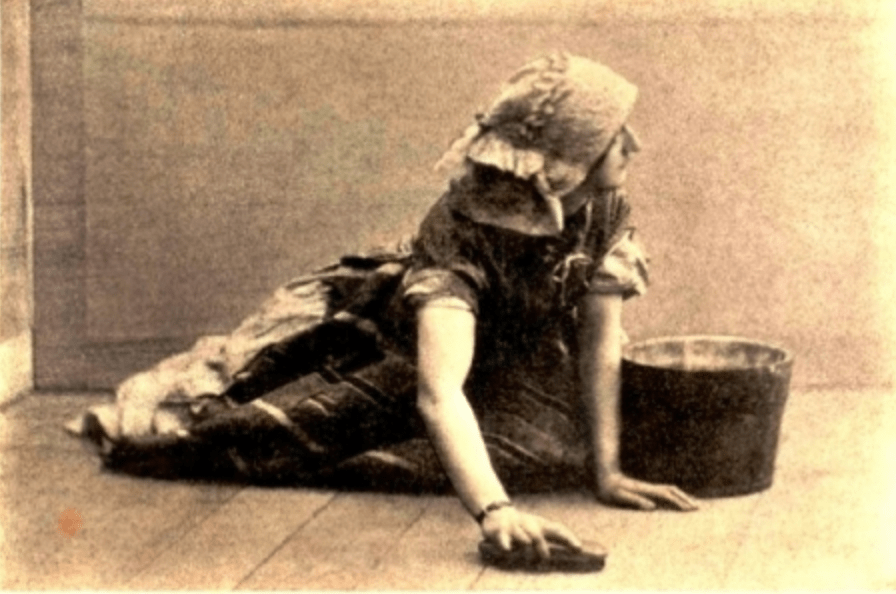
Some real-life servants are treated badly by their rich employers, but many fictional servants are treated nicely by their authors. A small, wish-fulfilling solace for readers in this time of soaring economic inequality.
Literature’s servants and other “hired help” are often smarter, funnier, and more compassionate than their “betters.” Perhaps that’s partly because they have to work hard for a living, while some of the wealthy get their money the old-fashioned way — inheriting it. Ah yes, the merit system…
Servants in literature also help us judge their masters. You can tell a lot about an affluent person’s decency (or lack of) by how they treat their so-called “inferiors.”
Some stand-out servants in fiction? Jeeves, of course, in the engaging and hilarious works of P.G. Wodehouse. That valet is incredibly bright and well-spoken, and helps his congenial but somewhat dim “master” Bertie Wooster out of many a scrape.
Another famous servant character is Nelly Dean, who’s the pragmatic voice of reason in a Wuthering Heights novel filled with hyper-passionate and/or weak-minded people. Nelly grounds Emily Bronte’s superb book, and helps make the hard-to-believe events in it seem believable. Of course, another servant in that novel is boorish religious fanatic Joseph, but we won’t talk about him… 🙂
Nineteenth-century English literature also offers us Nanny from the longish short story “The Sad Fortunes of Reverend Amos Barton” in the Scenes of Clerical Life collection George Eliot wrote before embarking on her astonishing career as a novelist. Nanny is the servant who memorably denounces a freeloading countess who overstays her welcome in the Bartons’ struggling household and even endangers the health of Amos’ kindhearted wife Milly.
How about Lee in John Steinbeck’s gripping East of Eden? That servant is an intellectual guy who cleverly deals with anti-Asian prejudice in the American West of the late 1800s/early 1900s and serves as a surrogate father to the Trask sons when biological father Adam is traumatized by a disastrous marriage.
Then there are the underlings/sidekicks such as Sancho Panza in Miguel Cervantes’ iconic Don Quixote and Samwise Gamgee in J.R.R. Tolkien’s The Lord of the Rings. In the former book, squire Sancho is a humorous/competent companion to the less-than-practical Quixote. In the latter work, gardener Samwise becomes an invaluable friend to Frodo Baggins — who, while admirable and brave, would have been in dire straits without Sam’s help during the Tolkien trilogy’s epic quest.
Speaking of funny characters, and characters named Sam, it’s hard to beat Sam Weller of Charles Dickens’ The Posthumous Papers of the Pickwick Club when it comes to literature’s all-time underlings.
There’s also Kazuo Ishiguro’s The Remains of the Day, in which loyal butler Stevens comes to regret a major missed opportunity in his life.
Last but by no means least, we can’t forget the many fictional African-American characters forced into servant work or outright slavery — whether it be in Toni Morrison’s Beloved, Alex Haley’s Roots, Kathryn Stockett’s The Help, Harriet Beecher Stowe’s Uncle Tom’s Cabin, and many other novels. “Uncle Tom” became a derogatory term, but Tom in the book is quite courageous in his turn-the-other-cheek way — and is clearly the moral center of Stowe’s story.
James Fenimore Cooper’s The Last of the Mohicans and Rita Mae Brown’s Murder at Monticello are among the numerous other novels that have interesting references to the horrific institution of slavery — the ultimate servanthood.
What are your favorite literary works featuring servants, butlers, maids, valets, and others of that station in life?
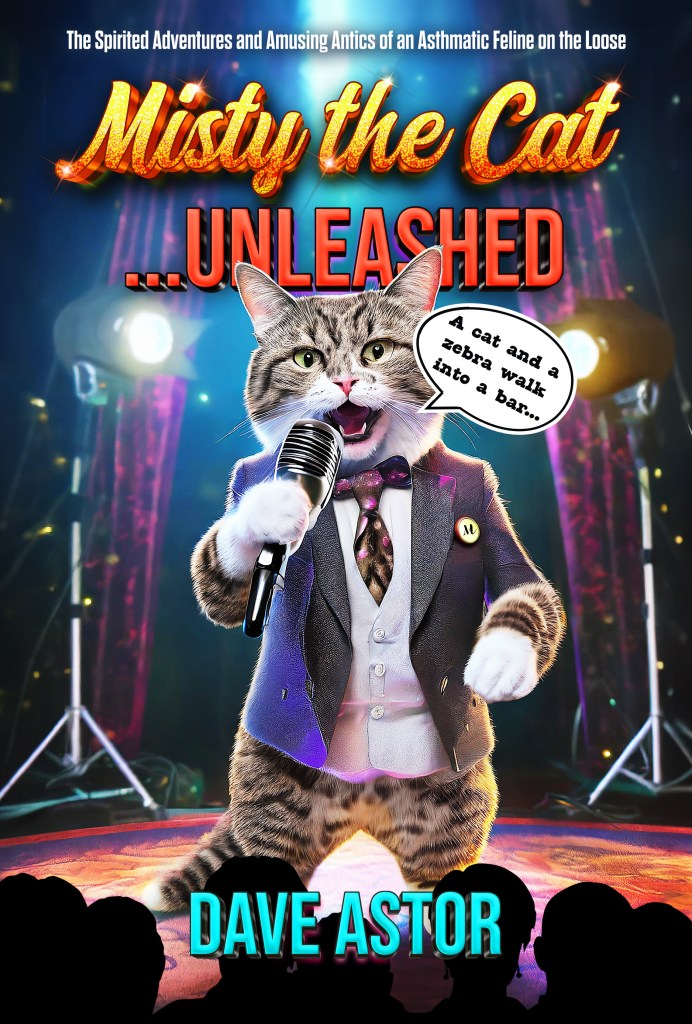
My comedic new 2024 book — the part-factual/part-fictional/not-a-children’s-work Misty the Cat…Unleashed — is described and can be purchased on Amazon in paperback or on Kindle. It’s feline-narrated! (And Misty says Amazon reviews are welcome. 🙂 )
In addition to this weekly blog, I write the 2003-started/award-winning “Montclairvoyant” topical-humor column every Thursday for Montclair Local. The latest piece — about a local U.S. congresswoman rightly calling for President Biden not to seek reelection, retaliation against employees who filed lawsuits, and various other topics — is here.
 Dave Astor on Literature
Late as usual..
Simpkin, please, housekeeper to the Tailor of Gloucester.
LikeLiked by 1 person
Thank you, Anonymous, for the Beatrix Potter book mention!
And it’s never too late to comment. 🙂
LikeLike
Thank you, Dave for this post. My favorites are Jeeves (of course) and Mr. Stevens. Although I am a fan of Tolkien´s Lord of the rings, I am not sure to completely like Sam. Neither he is presented as a servant nor a friend, but is both. Anyway, could I propose Justin Quayle as a servant of his beloved wife Tessa, in The Constant gardener?
LikeLiked by 1 person
Thank you, rincondesmendoza! Your favorites are definitely memorable “hired help.” And, yes, Samwise is a servant/friend hybrid — really more of the latter. I haven’t read “The Constant Gardener,” but the one John le Carré novel I have read — “The Russia House” — was great!
LikeLike
Ten years! Wow–I hope you’ve had fun. Ever since I discovered your blog, Dave, I’ve certainly had fun reading it.
As for servants, lots of great examples have been mentioned, like Jeeves, Mrs. Danvers, Figaro (from the marriage of!), and Jim of Huck Finn fame. I don’t think I noticed anyone mentioning Calpurnia from TO KILL A MOCKINGBIRD. I always remember her saying to Scout, after she made fun of Walter Cunningham pouring molasses all over his food, “That boy’s your company, and if wants to eat up the tablecloth, you let him, you hear?” Southern hospitality in a nutshell.
LikeLiked by 2 people
Thank you, Kim! 🙂 I appreciate the kind words! 🙂
The dignified, common-sensical Calpurnia is a terrific mention. One of the more appealing characters in Harper Lee’s novel.
By the way, based on your recommendation, I’m finally reading Val McDermid for the first time. “1979.” It’s great!
LikeLiked by 1 person
I’m so glad I’ve got you reading Val McDermid, Dave. I haven’t read the one you’re reading–I’m still reading my way through the Karen Pirie series. But now you’ve made me want to read “1979” next.
LikeLiked by 1 person
Kim, I’m still kind of early in “1979” — about 75 pages in — but can tell that the whole book will be good. An added bonus is the novel evoking memories for me of (pre-digital) newsrooms I worked in as a journalist 40 or so years ago. 🙂
LikeLiked by 1 person
Memories! In 1979 I was writing funding proposals (at a typewriter) to get government and foundation money for small non-profits.
LikeLiked by 1 person
Yes — the typewriter days! 🙂
That’s an important job you had.
LikeLiked by 1 person
They were very small, local non-profits, not Doctors without Borders! But it’s true that when we got funding for, say, a job-training program for young single mothers that I’d written a proposal about, I felt happy.
LikeLiked by 1 person
Small or large, it was indeed good people-helping work!
LikeLiked by 1 person
I congratulate you, Dave. on the site’s long life, given these changeable and fickle times in which we live.
I was with you in the Huffington Post period, and happily followed you here, which means, our digital correspondence has been going on even longer.
You are, as I’ve written before, a welcoming and generous person to all who write in, tending your garden with care, and even love.
And I wish you and author Misty critical ans commercial success!
LikeLiked by 1 person
Thank you, jhNY! 🙂 I greatly appreciate the very kind words! 🙂 Yes, you and a few others — including Bebe and Susan — go back to the three pre-WordPress years I was blogging about books for the Huffington Post. Though things kind of imploded for the blogging part of that site, I’m grateful for the online friends I made there. And for the online friends I’ve made via WordPress since 2014.
LikeLike
jhNY has been having some computer issues while not at home, so he emailed me with a request to post the comment below containing examples of servants in literature. Great thoughts and descriptions!
The comment:
Fortuitously for the week’s topic, I just yesterday finished Willkie Collins’ “The Dead Secret”, one of the author’s less-read suspense fiction titles. The plot centers on the doings and character of a female servant, whose life has been afflicted by, “fear and failure”, as she herself put it, and also by the tragic decision, and later a deathbed pledge, made on her behalf by her willful employer, a flamboyant former stage actress, whom she obsequiously adored and found, in all matters, irresistible. Suffused throughout the novel is her habituation to service and servility, and the extreme difficulty, much of which she has placed on herself, she has in hiding away from those of superior social standing, who would find her out, and force her to revelations of which they are literally unaware, yet about which they are undauntedly curious. The despair, the hopelessness she carries within her in her flight to insecure obscurity is founded on her unwavering belief that, whatever she may do, she will somehow be discovered, given the class, resources and interest of her pursuers.
In this way, she reminded me of “Caleb Williams”, an earlier novel by William Godwin, Williams being a house servant too, and in possession of his master’s great secret too, which he has found out by his own industry, driven by a ruinous curiosity he cannot resist. But, once known to possess it, his master, a nobleman, will search the nation by way of agents and the law and the privilege of his high estate indefatigably till Williams is run to earth. Escape, and he is again pursued. He is alone and friendless, and beyond his own wits, resourceless too, and cannot, try as he might, oppose the power of his master’s will to discover him and bring him under his power.
The gulf between the servant class and their employers is vast, and enforced, sometimes gently and almost undetectably, but sometimes with a presumption that is monstrous, though in “The Dead Secret,” this gulf is somewhat reduced, given the more liberal enforcement of class distinction of the mid-19th century, as opposed, in the case of “Caleb Williams,” to the mores and customs of English society in the latter part of the 18th century. But service shading into servility, ingrained and enforced by years in that state of employment, persists by means of social inferiority so deeply internalized as to be natural to those so afflicted, and this troubling and troubled obsequiousness is a state of being neither character can overcome.
LikeLike
I had typed (with no lack of difficulty) up the above elsewhere, expecting to copy and paste, but the simple act proved unperformable.
Thanks for helping me be a part of the discussion this week!
LikeLiked by 1 person
You’re very welcome, jhNY! 🙂
LikeLike
💥🌟 CONGRATLATIONS! 🌟💥
Dave, cheers, a toast to 10 more! 🥂
Okay, I’m going with smarter. Seems you may have something heroic in mind, but my example is still a servant.
The Housekeeper by Joy Fielding is an excellent gripper about a very competent, hard working and smart housekeeper (Elyse Woodley). Hired by a woman (Jodi Bishop) to take care of her aging parents (mother has Parkinson’s), the housekeeper is not just everything I just laid out, she is suddenly wearing mother’s jewelry.
Joy wrote this unexpectedly during Covid. We all dealt with those days in our own ways. Joy wrote another best seller.
LikeLiked by 1 person
Thank you, Resa! 🙂 When I read Joy Fielding again, that’s one of the ones I’ll look for. Sounds really intriguing! And well-described by you!
LikeLiked by 1 person
Ha! I tried to say something, but nothing. It would be a drag to spoiler a JF book! 😅
It’s simpler than Cul-deSac, but still quite intriguing.
It involves legal ease, as many of her books do.
Her husband is a celebrated Canadian lawyer (ret) so all the legalities you read in her books are spot on.
LikeLiked by 1 person
You told just enough, not too much. 🙂 And, yes, the endings to Joy Fielding’s novels tend to be spectacular!
LikeLike
10 years, well done. I’m on 8 as I started in 2016. The first books that spring to mind in this category were both recommended by our good friend, Martina. The Sealwoman’s Gift, also about slavery, but the slaves were from Iceland, and Balzac and the Little Chinese Seamstress. An interesting post, Dave.
LikeLiked by 1 person
Thank you, Robbie! 🙂 In 2026, I’ll congratulate you on 10 blogging years. 🙂
I appreciate those two great fiction mentions, courtesy of Martina!
LikeLike
Yes, Martina is an oracle of great reads.
LikeLiked by 1 person
She is! Well said, Robbie. 🙂
LikeLike
A very happy blogging birthday to you!!
LikeLiked by 1 person
Thank you, M.B.! 🙂 Much appreciated! 🙂
LikeLiked by 1 person
Congratulations on your 10th blogging anniversary, dear Dave! 👏👏👏
LikeLiked by 3 people
Thank you, Chris! 🙂 I appreciate the clapping hands. 🙂
LikeLiked by 1 person
Happy 10th blogging anniversary, dear Dave 🌹🌹🌹
LikeLiked by 2 people
Many thanks, Luisa! 🙂 I appreciate it! 🙂
LikeLike
Congratulations on your 10th blogging annivesary, Dave!
LikeLiked by 2 people
Thank you, Eugi! 🙂 Greatly appreciated! 🙂
LikeLiked by 1 person
You’re welcome, Dave!
LikeLiked by 1 person
🙂
LikeLiked by 1 person
Jeeves is definitively my favorite servant protagonist. In general I find that butler servants with their stoic-rational attitude spiced with some dry humor giving a good lead to follow the storyline. And what happened when the cat ordered a glass of milk at the bar? Did the cat pay (supposing they had milk in that bar)? The only thing my cat ever brought with him was a living mouse he released inside the house and then we had for two years mice issues. Could write my own version of “About Mice and Man”.
LikeLiked by 2 people
Thank you, Shaharee! I agree that Jeeves is quite a character.
When Misty ordered milk at the bar, his intention was to give half of it to the zebra. After putting the order on his tabby…um…tab. 🙂
Ha — 😂 — I hear you about cat and mice. Misty has obsessed over quite a few in his day.
LikeLiked by 2 people
Happy 10th blogging anniversary Dave.🥰
LikeLiked by 2 people
Thank you, Arlene! 🙂 Much appreciated! 🙂
LikeLiked by 2 people
Ten years is an admirable track record, Dave! Congratulations!
LikeLiked by 2 people
Thank you, Audrey! 🙂 Very appreciated! 🙂
LikeLiked by 2 people
Congratulations on 10 years of amazing posts and brilliant conversations, Dave. Life goes by “zoom zoom” especially when books are involved. Your first post was the beginning of many more to come.
My first thought was of Passepartout, the French companion of Phineas Fogg in Jules Verne’s novel “Around the World in Eighty Days”. He lives up to his well-suited name (Master Key) by being Fogg’s reliable guide throughout their journey. In a crucial moment, Passepartout’s quick thinking and bravery save Fogg’s future wife from a perilous situation, showcasing his indispensable role in the adventure.
When I think of classic literature, several books feature a long-suffering servant to a wealthy person or family. Examples include “Jane Eyre” by Charlotte Brontë, where the character of Mrs. Fairfax serves the wealthy Rochester family, and “Great Expectations” by Charles Dickens, with the character of Joe Gargery as a loyal and suffering servant to the wealthy Miss Havisham.
I find that servants play a crucial role in literature – they are witnesses to both the private lives of their masters and the workings of the household. They often serve as a narrative device to provide insight into the social hierarchy, class dynamics, and power struggles within a story.
Quite frankly, I find them, at times, to be more interesting than the main characters.
“Passepartout was astounded, and, though ready to attempt anything to get over Medicine Creek, thought the experiment proposed a little too American.” Jules Verne “Around the World in Eighty Days”
LikeLiked by 4 people
Thank you, Rebecca! 🙂 Yes, those 10 years went by quite fast!
Terrific mention of Passepartout of “Around the World in Eighty Days.” Yes, people in so-called subsidiary positions can often be of incredible service. Or they can be very unhappy, as you note. Not being in control of one’s own life definitely contributes to that. Like you, I also frequently find them to be a lot more interesting than the ostensibly “main” characters, whether they end up being narrators or not. 🙂
“…a little too American” — that’s a lament astute enough to fit many situations!
LikeLiked by 2 people
Congrats on your 10th blog anniversary, Dave! The servant that first came to mind was the loyal English butler Stevens in Kazuo Ishiguro’s The Remains of the Day. We all serve or are servants in some capacity within our families, communities, and society.
LikeLiked by 2 people
Thank you, Rosaliene! Kazuo Ishiguro’s butler in “The Remains of the Day” is definitely one of the most memorable “servants” in recent literary history.
And that’s a very accurate observation that almost everyone does servant-like things in some situations!
LikeLiked by 2 people
It took me a while to warm to Stevens, but when I did, I REALLY did. I’m sure there’s lots of wonderful literature out there that tells the story from the servant’s point of view, but this is the first time I’d come across something that had them so well rounded. I’m looking forward to reading more of Ishigura.
Dave – congrats on your anniversary. And thank you so much for this very bestest blog on all of the Internet. I’ve greatly enjoyed following it for the last ten years.
Susan
LikeLiked by 2 people
Thank you, Susan! 🙂 And I’ve enjoyed your great comments in those 10 years. 🙂
Yes, Kazuo Ishiguro created quite a character, and I’m always grateful when stories are told from the point of view of someone in a “lower” station in life. As I said in the post, that person is often a more admirable and sympathetic character.
LikeLike
Congratulations on the milestone, Dave! Here’s to another decade.
LikeLiked by 2 people
Thank you, Becky! 🙂 If I’m still doing this blog in 2034, I guess I can write about the 100th anniversary of “Murder on the Orient Express.” 🙂
LikeLiked by 2 people
Yes!
LikeLiked by 1 person
🙂
LikeLiked by 2 people
Many congrats on your 10th blogging anniversary, Dave!
LikeLiked by 2 people
Thank you, Leah! 🙂 Misty the cat helped by writing about five (?) of those 500 or so posts. 🙂
LikeLiked by 2 people
And a great blog it is!
LikeLiked by 2 people
Thank you, Leslie! 🙂 And congratulations on YOUR excellent blog’s 10th anniversary just four days ago!
LikeLiked by 2 people
Thank you!!
LikeLiked by 2 people
You’re very welcome!
LikeLiked by 2 people
Jeeves is my favorite one for sure, all the servants I can remember are from the Bible stories… Oh wait I can remember one movie where all the servants are main characters, later they made a show out of it. Let me see if I can find the name: Downton Abbey: A New Era, a really well made British production.
LikeLiked by 2 people
Thank you, Milena! Jeeves is an amazing character, and Wodehouse’s writing with Jeeves and Bertie Wooster is SO amusing. As for “Downton Abbey,” I’ve never watched it, but, like many other people, have heard a lot about it.
LikeLiked by 2 people
I have only watched it because my old friend told me I have to lol
LikeLiked by 2 people
Sometimes, “that’s what friends are for.” 🙂
LikeLiked by 2 people
Sometimes
LikeLiked by 2 people
True! Definitely sometimes not, as well. 🙂
LikeLiked by 2 people
Until relatively modern times servants were indispensable and therefore ubiquitous . . . it was considered gauche to throw your own poop out the window. Jim in ‘The Adventures of Huckleberry Finn,’ the title character of Plautus’ ‘Pseudolus’ (and a stock character of other ancient comedies), the evil Oswald in ‘King Lear’ and droll Launcelot Gobbo in ‘A Merchant of Venice,’ not to speak of a number of characters whose changing fortunes included temporary servitude.
>
LikeLiked by 3 people
Thank you, boletusc96aaa8201! Excellent point about how servants were more a “thing” prior to modern times, though of course there are still unfortunately all kinds of class divisions nowadays. And, yes, there’s both permanent servitude and temporary servitude. I appreciate the examples you offered from various works!
LikeLiked by 1 person
I think you and Laura have hit all the highlights! (And very impressively, I might add.)
LikeLiked by 4 people
Thank you, Liz! I suppose I could have added some “hired help” from novels I’ve read since 2014, but decided to keep the rerun all-rerun. 🙂 I’m about to read Laura’s comment. 🙂
LikeLiked by 3 people
You’re welcome, Dave!
LikeLiked by 2 people
🙂
LikeLiked by 2 people
Congratulations on hitting the 10-year mark, Dave!
How about The Great Gatsby? Servants are basically ignored in the book, I don’t think they had names, but it was an interesting way of treating them.
LikeLiked by 2 people
Thank you, Dan! 🙂 Interesting mention of “The Great Gatsby”! I haven’t read that novel in so long that I’ve forgotten how the servants were treated, but not surprised they were basically ignored by the author and the characters in the world F. Scott Fitzgerald usually wrote about in various books and stories.
LikeLiked by 2 people
First off, many happy 10th anniversary for your blog, Dave, and thanks for the many interesting blogs you’ve posted since then. Servants in literature – you give some great examples here. I haven’t read all these works, so I’ll have to get around to them at some point. For some others: the Dromio brothers, servants to the Antipholus brothers, help the comedy along in Shakespeare’s The Comedy of Errors. And let’s not forget the Nurse in Romeo and Juliet, a surrogate mother to Juliet who critically keeps the secret marriage of the lovers a secret and risks punishment to herself if discovered. Then, how about George Moore’s best work of Naturalism, Esther Waters, the kitchen maid who courageously tries to go it along as a single mother, at a time when society was against her? Or there’s J M Barrie’s The Admirable Crichton, with the resourceful butler Crichton becoming the natural leader when shipwrecked on a desert island with his employers. The almost marries the daughter of the family, but resists the temptation not to get them all rescued when the opportunity arises and resumes his place as butler when returned to the UK. To top them all is the play by Pierre Beaumarchais, The Marriage of Figaro which, with its cunning figure of the valet Figaro and his outwitting of his employer, Count Almaviva, who wants to exercise the Droit de seigneur with Suzanne, his wife’s maid and Figaro’s bride-to-be. The play—and its creator—was credited with helping bring about the French Revolution, by both the revolutionary Danton and Napoleon Bonaparte. Louis XVI banned it, until the action was moved from France to Spain, and even then had reservations, although allowing it to be played to a private aristocratic and royal audience—hence right royally shooting himself in the foot. If I think of any more you may be sure I’ll put them up here. In the meantime, though, thanks once more for a thought-provoking subject. 🙂 🙂 🙂
LikeLiked by 6 people
Thank you, Laura! 🙂 I appreciate the many great examples and concise descriptions of fictional servants — including those from plays. And in terms of your last example, amazing when a work of fiction (or semi-fiction) can help bring about political and/or social change. As was the case with “Uncle Tom’s Cabin,” “The Jungle,” and some others.
LikeLiked by 2 people
It must be a great feeling for an author to know that their work has made a significant difference. And if ‘The Admirable Creighton’ didn’t have quite an earth-shattering as Beaumarchais’ ‘Figaro’ did in France, it certainly helped chip away at the rigid English class-structure of the time – which was what he was aiming at. 🙂
LikeLiked by 2 people
Chipping away at rigid class structures any time and any place is very welcome!
LikeLiked by 2 people
Of course there are yet more examples in Shakespeare . . . but I almost forgot two of my favorites, Caliban and Ariel from ‘The Tempest.’
LikeLiked by 2 people
They’re great examples, I’m sure Dave will agree. 🙂
LikeLiked by 1 person
Thank you, Laura and boletusc96aaa8201! I do agree, and Shakespeare offers many examples of…almost everything. 🙂
LikeLiked by 2 people
Congratulations on your blog anniversary! It seems you’ve kept your style since you started in 2014 👏
LikeLiked by 2 people
Thank you, Thérèse! 🙂 Yes, a similar approach from the start — a theme, and several examples of novels fitting that theme.
LikeLiked by 2 people
Peggoty in David Copperfield, Alice Fairfax in Jane Eyre, Mrs. Grose in Turn Of The Screw, Miss Avery in Howards End, And I guess that’s all I can think of at present. Congrats on your 10 year anniversary. We’ve been very fortunate to have enjoyed it thus far. Here’s to another 10. *sigh* Where does the time go? Thanks Dave for sharing your insight into literature and all the book mentions as well as music, art, etc. Susi
LikeLiked by 4 people
Thank you, Susi! 🙂 Glad you’ve enjoyed the blog, and I guess we’ll see if it lasts another 10 years. Unlike F. Scott Fitzgerald’s Benjamin Button, I don’t seem to be getting younger for some reason. 🙂
I appreciate the three great 19th-century mentions and one great early-20th-century mention of “hired help” in fiction!
LikeLiked by 1 person
Idk Dave. What a long strange trip it’s been these 10 years. I hope and pray we all fare well given the time left us.
LikeLiked by 3 people
I share your heartfelt wish, Susi.
LikeLiked by 2 people
Gosh, you’ve named a few of them. I’ll add Mrs Danvers in Rebecca because she was not a nice, jolly, helpful servant . . . . There’s always great scope in writing servants
LikeLiked by 5 people
Thank you, Shehanne! Great mention; not sure how I left out Mrs. Danvers 10 years ago. 🙂 She was indeed not the most positive of presences. And I agree that servant characters can be excellent subjects for fiction writers!
LikeLiked by 3 people
10 years !
Congratulations.
Looking back, has it all been positive, worth the effort ? Have there been moments of doubt, I wonder ?
(Yes, these are my wobbles)
LikeLiked by 2 people
Thank you, Anonymous! 🙂 Definitely worth the effort — conversing with readers of the blog in the comments section, learning about novels/authors I should read, etc., etc.! It does get hard sometimes to think of new topics. 🙂
LikeLiked by 2 people