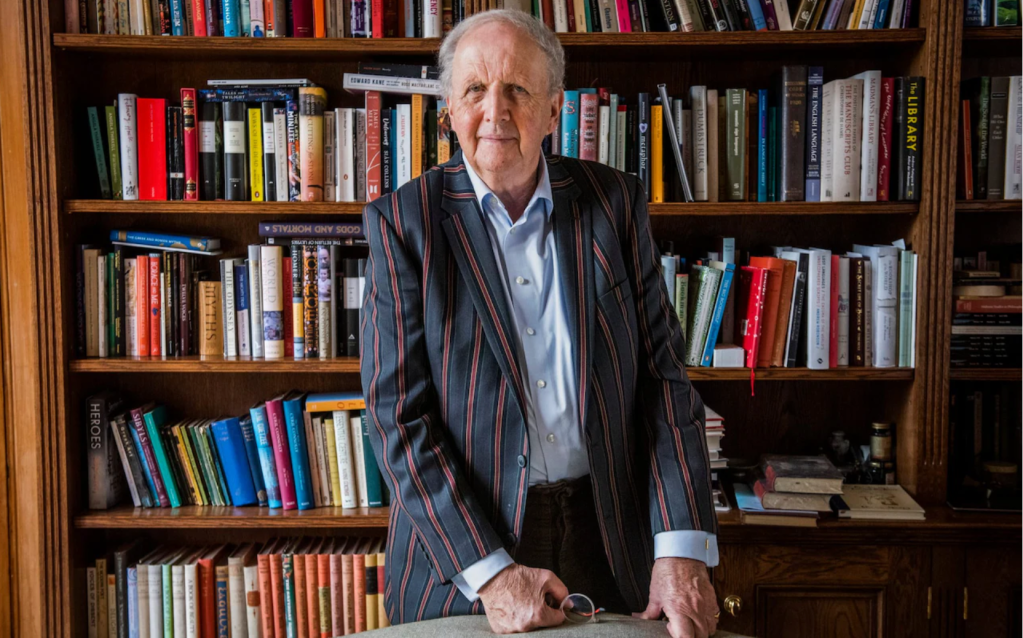
Alexander McCall Smith. (Photo by Chris Watt.)
Being an accomplished author doesn’t mean that every character she or he creates will “pop.”
Novelists are not machines; they don’t operate at 100% capacity with every word. Also, they might be more interested in certain characters than in other ones, perhaps because some characters have elements that are more quirky, unusual, etc. Authors might even make some characters deliberately boring because some people are boring and it might work for the story. And then of course there’s the matter of villains often having a level of charisma that nicer characters might not possess.
A great way to observe this phenomenon is with a novel featuring an ensemble cast in which no one is really the sole star. Such is 44 Scotland Street by Alexander McCall Smith, who populates his first-in-a-series 2005 book with residents of an apartment building (located at the Edinburgh address of the title) and with several other people who are friends or co-workers of said residents.
The “fulcrum” of 44 Scotland Street is probably Pat, a 20-year-old woman who opens the novel visiting the titular address in which she’ll soon share a multi-person apartment. But Pat is not that fascinating a person — partly because of her young age and relatively small amount of life experience. On the other hand, 60-something building resident Domenica is quite memorable, as is her 50-something artist friend — soon also Pat’s friend — Angus. Pat’s narcissistic apartment-mate Bruce is more annoying than interesting.
Of course, someone quite young can also be compelling. In McCall Smith’s novel, that would be five-year-old Bertie — a very precocious kid buckling under the pressure of a “helicopter” mom-from-hell forcing him to learn Italian and play a saxophone almost as big as he is.
Now I’ll fit three classics into this theme, although there are of course many other novels that could also be included.
The “hero” of Wilkie Collins’ 1860 mystery/adventure The Woman in White is the brave and devoted Walter Hartright, who has “the right heart” but doesn’t really “pop” into three-dimensionality. The characters who stand out include the deliciously wicked Count Fosco and the resourceful, not conventionally attractive, possibly lesbian (?) Marian Halcombe.
In Edith Wharton’s 1920 novel The Age of Innocence, protagonist Newland Archer is mildly interesting while his fiancee and subsequently wife May Welland is rather bland and conventional. The character who really “pops” is free-spirited bohemian Ellen Olenska — to whom Newland becomes attracted. This is clearly intentional on Wharton’s part as she sets up Newland’s internal struggle between what he wants and his societal “obligations” as a young man from an upper-class family.
Frodo Baggins might be “first among equals” in J.R.R. Tolkien’s The Lord of the Rings trilogy (published 1954-55). He’s admirable and courageous, but the low-key, earnest hobbit doesn’t “pop” like some other characters such as Frodo’s equally courageous but more spirited and quick-witted “servant” companion Samwise Gamgee and the anguished, part-villainous/part-sympathetic Gollum.
As I’ve written in a couple of past posts, supporting characters can frequently be more interesting than the so-called leads they might bounce off of in novels.
Your thoughts about, and examples of, this topic?
Misty the cat says: “My wagon flipped, so I’m walking the rest of the way to Mars.”
https://www.youtube.com/shorts/jNRBuJU6YFI
My comedic 2024 book — the part-factual/part-fictional/not-a-children’s-work Misty the Cat…Unleashed — is described and can be purchased on Amazon in paperback or on Kindle. It’s feline-narrated! (And Misty says Amazon reviews are welcome. 🙂 )
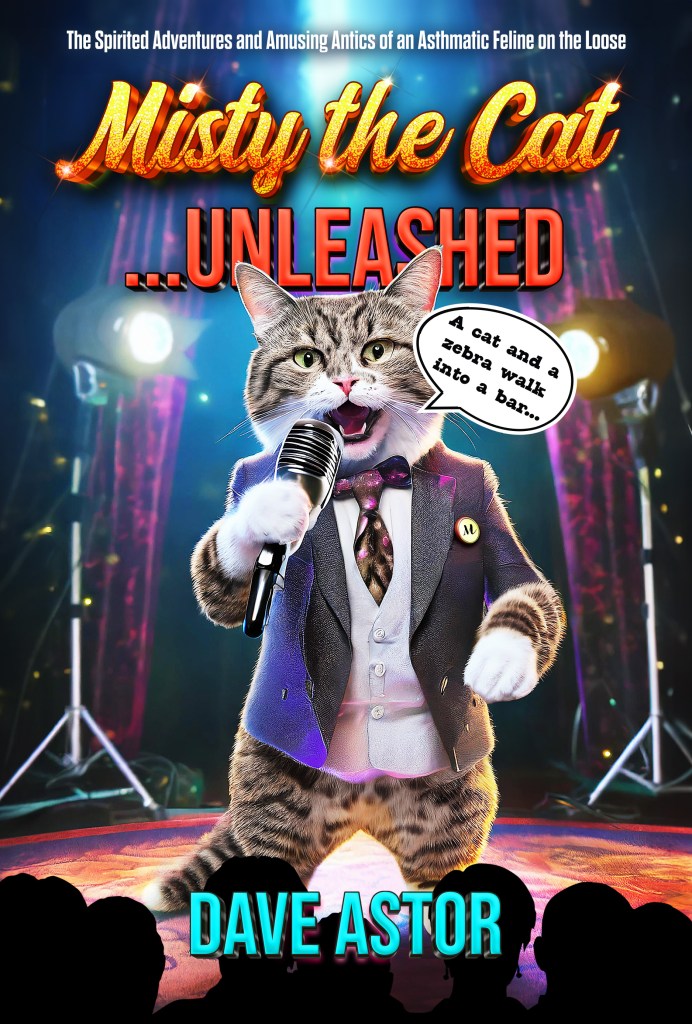
This 90-second promo video for my book features a talking cat: 🙂
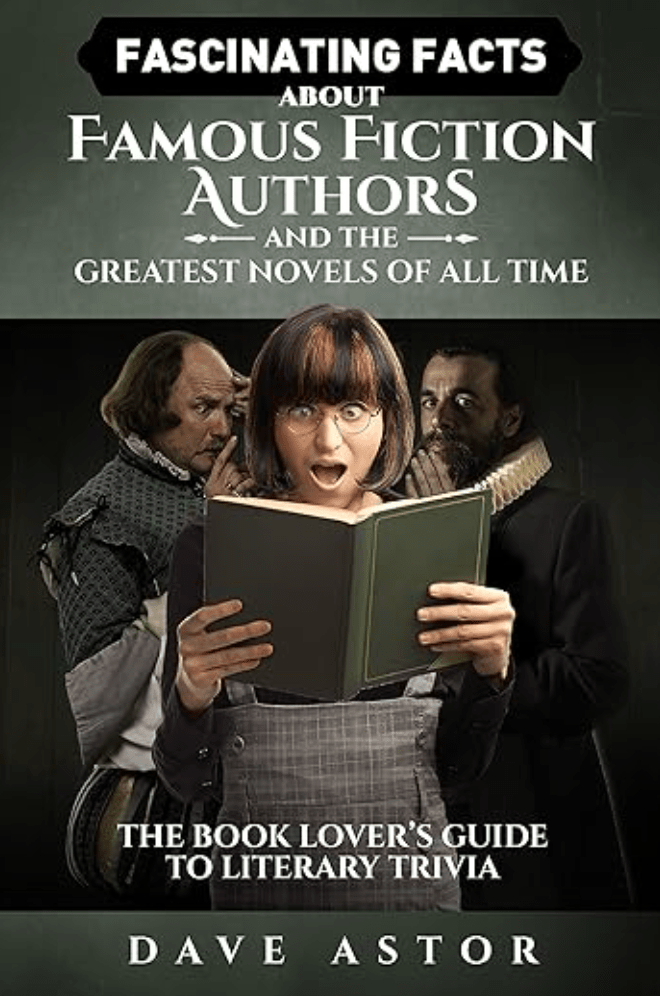
I’m also the author of a 2017 literary-trivia book…
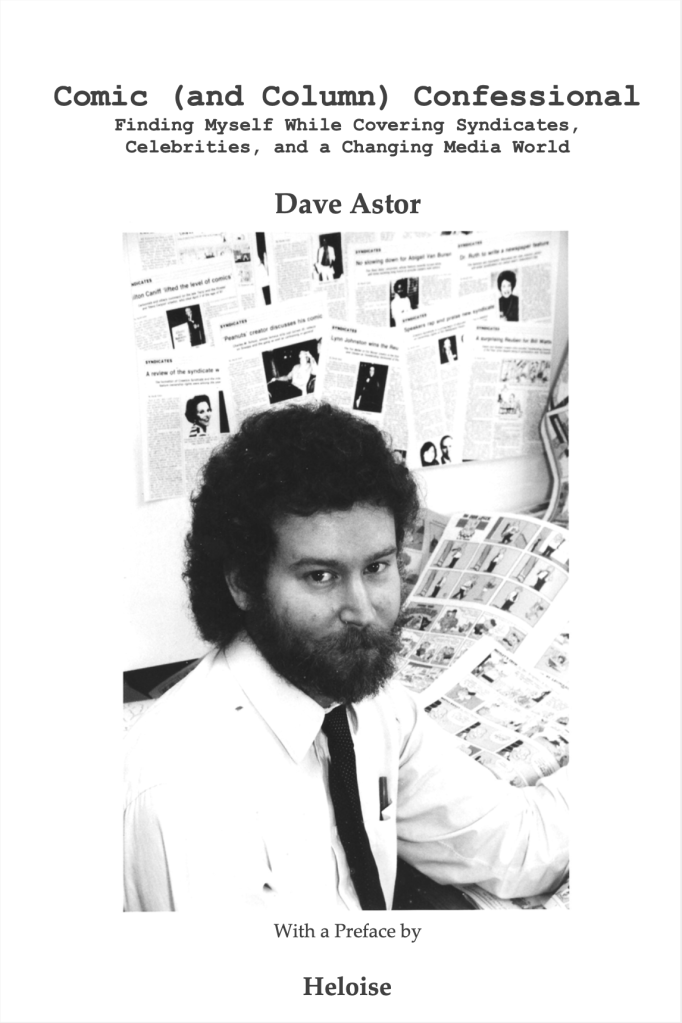
…and a 2012 memoir that focuses on cartooning and more.
In addition to this weekly blog, I write the 2003-started/award-winning “Montclairvoyant” topical-humor column every Thursday for Montclair Local. The latest piece — about my town’s newly appointed schools superintendent — is here.
 Dave Astor on Literature
❤️
LikeLiked by 2 people
Thank you, thechristiantechnerd!
LikeLiked by 1 person
Nice read
LikeLiked by 1 person
Thank you, Swamigalkodi Astrology!
LikeLiked by 1 person
I am so pleased that you read the first book of Alexander McCall Smith’s “44 Scotland Street” series, Dave. He is prolific! YIKES! I see that he has a book of poetry now. His is skillful in his use of serialization, which presents a narrative that mirrors the rhythm of daily life. Unlike conventional storytelling, which often builds towards a climax and resolution, McCall Smith’s series unfolds in a more episodic manner, allowing characters and events to evolve organically. Sometimes it takes a few books to understand the full character. (Bruce even has lovable moments) This format captures the nuances of everyday experiences, inviting readers to engage with the characters over time, much like observing the lives of neighbors.
The “44 Scotland Street” series significantly influenced my approach to reading serials, particularly in how I perceive character development. For example, I read that the character of Bertie, a seven-year-old child prodigy, is a favourite among readers. He stands out as a beloved figure not just for his innocence but for his remarkable honesty. Despite being surrounded by his mother’s strict regimen—comprising yoga, Italian lessons, saxophone exams, and the complexities of a Steiner education—Bertie’s character shines through as he navigates these challenges.
I loved Dominica!! One of my favourite quotes from 44 Scotland Street was her advice to Pat:
“Believe me, there’s nothing more brittle than human beauty. Encounter it. Savour it, by all means. Then watch how it turns to dust.: Alexander McCall Smith, 44 Scotland Street (The 44 Scotland Street Series Book 1)
LikeLiked by 3 people
Thank you, Rebecca! Alexander McCall Smith is indeed amazingly prolific; I don’t know how he keeps churning out thousands of words a day — and very well-written words at that. And going the serial route, as he does with the “44 Scotland Street” series, ain’t easy. You can’t go back and fix or adjust things!
If I continue the various McCall Smith series (I’m currently reading his “The Sunday Philosophy Club”), I look forward to seeing the characters get developed even more. That can definitely be a major appeal of series. 🙂 Bertie is an absolutely wonderful character — including his honesty, as you note.
Terrific quote from Domenica! Yes, outer beauty/handsomeness can fade. Inner attributes do not.
LikeLiked by 3 people
I really connected with Dominica. Her story is truly amazing! I must get back to reading this series. I think I’m on # 9, but not certain. Oh, the joy of reading is one of the best things of life!
LikeLiked by 3 people
She IS a very connectible character, Rebecca, with an interesting backstory. And — wow — you are well advanced in that Scotland Street series!
And I totally agree with what you said about reading. 🙂
LikeLiked by 3 people
You offer such good food for thought with your posts 🙂 Interesting how some main characters can have plain personalities, compared with other characters who are more flamboyant. Perhaps these characters offer lighter parts in books while the hero struggles with her/his Epic Journey. Us readers do need some breaks from the serious parts.
Your post made me think of a related aspect to books. About which character is the narrator. For example: Sherlock Holmes. With his fast-paced mind and addiction, he’s a more interesting character than Watson. Sherlock is too rushed with his thinking to take the time to write about his adventures. Watson, on the other hand, is more plain and does have the time. So he has the mental space to write summaries, while Sherlock is zooming on to the next five things.
LikeLiked by 3 people
Thank you, Dave! Your take on one of the reasons supporting characters can be more interesting than main characters makes sense to me! Many secondary players indeed offer humor and a kind of mental break for readers.
Narrators are so important to some novels, and narrators who are not the protagonist can offer very interesting perspectives — in an admiring way, in an I-can’t-believe-I’m-seeing-this way, etc. Watson, of course, as you mentioned, and also someone like Nelly Dean in “Wuthering Heights.”
LikeLiked by 3 people
Hi Dave, I really like your commentary about LotRs. I thought Frodo was very uninteresting. Nothing like the fabulous Bilbo Baggins from The Hobbit. Sam was the star of that trilogy, parts of which I found so slow and boring I skipped them. Hehe – I’m a literary philastine
LikeLiked by 3 people
Thank you, Robbie! Yes, Frodo is not that interesting but is of course a sympathetic character. Bilbo is indeed incredibly appealing, even during his brief appearance in the early part of “The Lord of the Rings” after his prominent role in “The Hobbit.” And I agree that Sam is the star of “TLOTR,” though there are several other important characters who also “pop”: Gollum, Gandalf the wizard, Gimli the dwarf, Treebeard the ent, etc.
LikeLiked by 1 person
You have nailed it here, Dave. I thought Frodo was rather irritating. He should have been stronger and less wimpy (aren’t I mean!). Now Merry and Pippin, what a hoot those two are. Loved them.
LikeLiked by 3 people
I agree, Robbie, that Frodo was a bit wimpy. But given his introverted/unadventurous personality, being forced to help save the world at great danger to himself was not what he wanted on his life’s bingo card. 🙂
Yes! Merry and Pippin were so fun! I think J.K. Rowling might have modeled her Weasley twins on them a bit in “Harry Potter.”
LikeLiked by 1 person
You certainly understood Frodo. I think you might be right about the Weasley twins. JK Rowling uplifted quite a few ideas from Tolkien.The Hobbit is a favourite book of mine and I’ve read it a few times. I never watched the movies though. I didn’t want my book imaginings destroyed by someone else’s ideas.
LikeLiked by 3 people
As did you, Robbie. 🙂 (Understood Frodo.)
J.K. Rowling did indeed get influenced by Tolkien, among others, but I felt she also had a lot of originality in the “Harry Potter” series. And her Cormoran Strike/Robin Ellacott crime series feels fresh as well; I’m a big fan.
I love “The Hobbit,” too, and have also read it several times. 🙂 I did see “The Lord of the Rings” movies (thought they were pretty good), but not “The Hobbit” films.
LikeLiked by 1 person
Hi Dave, I also saw the LotR movies which I thought were good. I watched them with Greg when he was 7. One of my judgement errors – eek! Ater that, if he could read it, I let him read it, but I didn’t let him watch it.
LikeLiked by 2 people
So he saw the movies before reading the trilogy? Not ideal, but the books are still so worth the time whether someone first watches the films or not. 🙂
LikeLiked by 1 person
It’s liable to happen when a male author attempts to develop a female character to roundness. And vice versa, although Virginia Woolf elegantly worked her way around the problem when creating Orlando.
LikeLiked by 3 people
Thank you, Dingenom! Very true that a number of male authors create female characters who are not as three-dimensional as a reader would like. Dickens, Twain, and Cormac McCarthy are among those who come to mind. But I think there are also a number of male authors who have depicted women three-dimensionally, as has been the case, too, with female authors who have done the same with male characters. (George Eliot, Harper Lee, Barbara Kingsolver, J.K. Rowling, etc.) And, yes, gender-blurring in a book like “Orlando” does sort of place an author outside that female or male envelope. 🙂
LikeLiked by 4 people
I very much like your opinion, Dave, that some villains often have charisma which nicer characters might not possess, because I am afraid that it’s exactly them, who makes us believe them whatever they say.
Many thanks for the book you are proposing and which seems to be quite popular!
Unfortunately I’can’t think of a book with a boring main character!
LikeLiked by 3 people
Thank you, Martina! Charismatic villains are definitely a thing. And you’re right that their charisma is one of the secrets of their success (whether that success is short-term or long-term). They can be quite convincing in their way, at least to some people.
LikeLiked by 3 people
Hi Martina, I hope you are well. Villains in real life are usually more charismatic than the virtuous. That is why they get such big followings of ordinary people.
LikeLiked by 3 people
I am pleased to read that you are also on my side, Roberta! Dave always succeeds in making us see the human being various printed!🌻
My health is not the best, but I try to do
my best.
LikeLiked by 3 people
Very sorry about your health, Martina. Wishing you the best.
LikeLiked by 2 people
You are so right, Robbie, about villains and the virtuous.
LikeLiked by 2 people
🤣🌻
LikeLiked by 3 people
I hope you health will improve with warmer weather 🤗💖. Dave certainly brings us a lot of book ideas to think about.
LikeLiked by 3 people
I’m sure that to be able to go into nature will help my eyes so that I can read some of Dave’s book proposals! Thank you very much, Roberta, for your encouraging words!♥️🤗
LikeLiked by 2 people
My pleasure, Martina. Sending you love and light.
LikeLiked by 1 person
🌻🌞🤣
LikeLiked by 1 person
I have been spending over the course of the past year lots of thoughts on what is probably the most dissected protagonist in literary history: Humphrey Chimpden Earwicker. He is a multifaceted character with multiple layers of meaning, often interpreted as “Here Comes Everybody,” representing humanity in all its aspects and a figure of universal embodiment. HCE’s significance extends to themes of cyclical history, original sin, and the duality of human nature, mirroring both the cyclical nature of history and the recurring patterns of human behavior. It was quite a challenge to distillate HCE from Joyce’s sibylline prose, which even after the removal of all the foreign language syllogisms, remains a challenging read.
LikeLiked by 4 people
Great reference!
LikeLiked by 3 people
Nice reference!
LikeLiked by 3 people
Thank you, Shaharee! Elegantly expressed thoughts. I’ve never read “Finnegans Wake”; I’ve heard it’s pretty darn challenging. But you make a great case for Humphrey Chimpden Earwicker being a VERY intriguing character.
LikeLiked by 2 people
I incline to the opinion that HCE was intended by Joyce as a literary device: a fulcrum disguised as a protagonist (but nevertheless a very compelling one). And indeed, Finnegans Wake is a challenging read because of the Joycean Gibberish. My wife threw it aside after reading 20 sentences declaring it the garbling of a schizophrenic megalomanic. That’s why I transcribed it into plain English (she still refuses to read it because she’s one of the kind who rarely change their mind on a certain subject).
LikeLiked by 2 people
Interesting — a character more a literary device than a person. And that must have been quite a project for you to change “Finnegans Wake” into plainer English!
Your wife’s experience throwing the book aside after 20 sentences reminds me of what I did with Faulkner’s “The Sound and the Fury.” 🙂
LikeLiked by 1 person
The transcribing process took a year. Although I’ve published it, I keep tinkering on it: a book is never finished but merely abandoned. And in the end: close relatives are always your worst critics. In order not to make too big waves in our relation, I never press my works on my wife. Weirdly enough, many of my works got their initial cue from some observations of my wife, but she can’t be bothered to see what I did with it.
LikeLiked by 1 person
A year! That’s dedication. And your quote “a book is never finished but merely abandoned” is so true.
Family members reading one’s work can be a fraught thing. They might or might not be interested. 🙂
LikeLiked by 1 person
That’s the truth about Frodo – The other hobbits have always had a bit more sizzle, in my opinion. Not to say that I don’t love Frodo though! 🙂 A great example I can think of for this is in one of my own books that I’m currently revising. The main character is a coming-of-age college student with a lot going on, but I think I accidentally made her mother far more interesting and layered of a character haha! It just kind of happened that way as I was writing! So that’s my author input on the subject hahahaha! 🙂
LikeLiked by 2 people
Thank you, M.B.! I like the way you put that; the other hobbits did have more “sizzle” than Frodo. (Sam, Pippin, Merry, and Bilbo — the last of whom, as you know, has a much larger role in “The Hobbit” than in “The Lord of the Rings.”) But Frodo was of course ultra-admirable in his stoic way.
It’s fascinating how characters can take on a life of their own as authors (including yourself) create them. If the mother has become more interesting and layered, so be it. 🙂
LikeLiked by 2 people
Great post, Dave, and it is interesting how secondary characters can be more intriguing than the main characters. I haven’t read 44 Scotland Street but I’ll check it out. And I’m drawing a blank for examples right now. 🙂 I hope you had a nice Easter. 😃
LikeLiked by 2 people
Thank you, Lauren! Yes, so many examples of secondary characters being more interesting than main characters.
“44 Scotland Street” is a very good read, but I can’t say I loved it. I’m now reading the same author’s “The Sunday Philosophy Club,” and liking it better so far.
Hope you had a nice Easter, too! Sounds like it from your latest excellent blog post. 🙂
LikeLiked by 2 people
Thanks for the other recommendation, Dave. Now I just need to scrounge up more time to read. 🙂 Happy Monday!
LikeLiked by 2 people
Yes, Lauren, enough time to read isn’t always easy to find. 😦 🙂
LikeLiked by 2 people
I think that authors sometimes feel like they have more leeway with secondary characters, which can make them more interesting.
LikeLiked by 3 people
Thank you, Marie! That’s a terrific point; many authors do feel somewhat less inhibited when creating secondary characters who don’t have to “support” the novel as much.
LikeLiked by 3 people
An interesting topic as usual, Dave, and one that I’ll have to think about. I haven’t read 44 Scotland Street, but I’ll have to check it out. Watch this space … 🙂
LikeLiked by 2 people
Thank you, Laura! “44 Scotland Street” is quite good, though not an A+ novel. Given that it was first written as a serial for a newspaper, it can be a bit disjointed.
LikeLiked by 2 people
I won’t put it to the top of my list, but I’ll certainly give it a look. 🙂
LikeLiked by 2 people
Sounds like a plan. 🙂
LikeLiked by 2 people
Books in which the point of view shifts from one chapter to another work best if the author makes each p.o.v. character unique and memorable; otherwise, why bother? Some of the characters’ sections may be more interesting than others, depending on their personalities.
I’m reading a recent mystery that uses this technique, but many hefty classics do as well, like Tolstoy’s Anna Karenina and Dumas’ The Count of Monte Cristo.
LikeLiked by 5 people
Thank you, Audrey! Yes, the point-of-view-shift-in-every-chapter approach needs some serious skill. But when it’s done right, and each character is imbued with a different “voice,” it can be a great experience for the reader — even as there’s a little adjustment period after having gotten accustomed to the “voice” of the previous character.
LikeLiked by 2 people
Hi Dave,
I really enjoyed your post! The idea that main characters aren’t always the most interesting is so relatable. I’ve often found myself more drawn to supporting characters like Bertie — his scenes in 44 Scotland Street sound both hilarious and heartbreaking. And yes, Count Fosco and Marian Halcombe from The Woman in White definitely leave a stronger impression than Walter!
I also agree with what you said about The Age of Innocence — Ellen Olenska completely outshines the others. It’s fascinating how authors sometimes do this intentionally to show contrast or highlight deeper themes.
Also, Misty the Cat’s quote about walking to Mars made me smile — what a fun personality! Your book sounds like a creative and entertaining read. I’ll be sure to check it out!
Best regards, Areeba
LikeLiked by 4 people
Thank you, Areeba! Glad you liked the post!
Yes, supporting characters can leave a big impression. Reminds me a bit of the “Seinfeld” sitcom, in which that TV show’s title character was kind of the straight man surrounded by three quirky regular characters along with several quirky semi-regulars and a number of quirky guest stars.
I appreciate the kind words about Misty and the Misty book! 🙂
LikeLiked by 1 person
I completely agree — supporting characters can add so much depth and personality. Misty felt so real to me, and the book really brought her to life. Thank you for creating something so special!
LikeLiked by 2 people
Many thanks, Areeba! Very glad you enjoyed Misty’s thoughts and adventures. 🙂 I greatly appreciate you letting me know.
LikeLiked by 1 person
Yess sir
LikeLiked by 2 people
🙂
LikeLiked by 1 person
When she was a toddler, my niece was obsessessed with Hop on Pop. (My brother was a patient good sport about it.)
Your post brought to mind E.M. Forster’s distinction between flat and round characters. What has stayed with me was his stating that Charles Dickens created flat characters in his books, but he shook them so they appeared round.
LikeLiked by 4 people
Thank you, Liz! As was the case with your niece, “Hop on Pop” can invite obsession. 🙂
Great paragraph about E.M. Forster’s flat and round character designations and the entertaining way he described Charles Dickens’ characters. I agree that Dickens’ characters were often far from three-dimensional; he partly made up for that with strong prose, excellent plots, humor, a social conscience, and more.
LikeLiked by 3 people
You’re welcome, Dave!
LikeLiked by 2 people
🙂
LikeLiked by 2 people
A very Happy Easter to you and Misty, Dave 🐥🐇🐥
LikeLiked by 2 people
Thank you, Maggie! Misty and I wish you the same. 🙂
LikeLiked by 2 people
Thank you Dave 🤗
LikeLiked by 2 people
🙂
LikeLiked by 2 people
Excellent excellent choice of Count Fosco Dave – When I read the woman in white I kept on just waiting for him to return. Just mentioning it makes me want to read the book again.
LikeLiked by 3 people
Thank you, Joe! I agree that Count Fosco is an incredible character. Rather charming in his ultra-villainous way. 🙂
LikeLiked by 3 people
I do like “44 Scotland Street”! Bruce, the self-obsessed narcissist, always made me laugh. “The Number 1 Ladies’ Detective Agency” is very good, too, and gentle reading which uplifts and restores the soul. He’s a fab author💜🐰
LikeLiked by 5 people
Thank you, Ada! I agree that Bruce’s high opinion of his good looks has its funny moments, but I guess I’ve met too many narcissists in real life to totally tolerate him as a character. 🙂
I agree that Alexander McCall Smith is an excellent author. I’m currently liking his “The Sunday Philosophy Club,” and I look forward to eventually reading “The Number 1 Ladies’ Detective Agency”!
LikeLiked by 3 people
Thank you for talking about Alexander McCall Smith’s works.
I totally agree with you when you write that sometimes secondary characters are more interesting than the protagonists.
Happy Easter, to you and Misty!
LikeLiked by 5 people
Thank you, Luisa! I agree that secondary characters can be more interesting the main characters. Authors might feel they can make the supporting players quirkier, funnier, more dramatic, etc.
Happy Easter to you, too! Alas, Misty did not see the Easter Bunny during his walk this morning, but did see the Easter Squirrel. 🙂
LikeLiked by 3 people
Thanks for yet another interesting theme, Dave. I agree. Not all characters in a novel will “pop.” As you point out about the novel 44 Scotland Street by Alexander McCall Smith, which I haven’t yet read, readers will not connect with each character in the same way. Perhaps Smith’s intent is to showcase the diversity of human characteristics within a given environment. Each character is to be accepted in their own way, flaws and all. As we look deeper, we may find that we are not different after all.
Your observation is also true in the case of the family saga that covers several generations. In Pachinko by Min Jin Lee, the leading characters that “pop” change over the course of the three-part novel covering four generations (1910-1989) of a Korean family. Even the most beloved characters have their strengths and weaknesses. Such is the nature of being human, brought to life with great storytelling.
LikeLiked by 5 people
Thank you, Rosaliene! Yes, readers will not connect with each character in the same way. Heck, what might be boring to one reader might be interesting to another. It can of course be a very personal reaction; whether or not we relate to a character, whether or not the character reminds us of ourselves or people we know, etc.
Multi-generational sagas can definitely offer a wide variety of character types!
LikeLiked by 4 people
So very true, Dave, regarding our personal reaction.
LikeLiked by 3 people
🙂
LikeLiked by 3 people
The book that comes to mind for me is Cul-de-Sac by Joy Fielding.
Honestly, perhaps Maggie is the main character, but I never felt she was the strongest.
It’s unique in that everyone has some intriguing or striking characteristic/experience that seems to make them the “main one” at given points.
Definitely, it is not an ensemble cast, but an assembled assortment of characters, some stand out, some receede.
Also, they are all so ordinary, that I think individual readers identify the strongest character with their own lots in life.
Grand Avenue now comes to mind. Joy does a great job in that novel with an assorted cast.
Chis, the abused one comes to mind as the main character, but certainly not the strongest. Of course that pays off in the end, in an odd, yet hopeful way.
I hope I got the theme right!
Happy Easter, Misty! (& Dave!)
LikeLiked by 4 people
Thank you, Resa! Great mention of “Cul-de-Sac”! One of my very favorite Joy Fielding novels, and the neighbors on that street are really compelling and diverse in their personalities (including that villainous, abusive monster of a guy). And most of them indeed feel like real people.
Happy Easter to you and your kitty Misha, too!
LikeLiked by 3 people
💜🐇💛
LikeLiked by 3 people
🙂
LikeLiked by 3 people
This is a very interesting topic to me, Dave. I prefer reading, writing and (when I was working) working with an ensemble cast. The mix of personalities is refreshing and adds interesting nuances, even to the slow portions. I’ll toss out a series I’ve enjoyed by an indie author – Red Sands Chronicles by Carol J. Parsons.
As for your title, I think I can still recite Hop on Pop, especially: “Stop! You must not hop on pop!”
LikeLiked by 4 people
Thank you, Dan! Yes, an ensemble cast can be great for an author to work with — and great for a reader to enjoy. One really does get a cross-section of personalities in many cases.
Ha! 😂 “Hop on Pop” — and a number of other Dr. Seuss books — are indeed very memorize-able. “One fish, two fish, red fish, blue fish…” 🙂 (Not “Hop on Pop,” of course.)
LikeLiked by 3 people
Thank you to (alphabetically) Madeline Bialecki, Rebecca Budd, Darlene Foster, Chris Hall, Kim Hays, and Suzette Martinez Standring for recommending Alexander McCall Smith!
LikeLiked by 3 people
Yes indeed, wonderful AMcS – always reading those! Plus, belated Happy Easter to Misty (& Dave).
LikeLiked by 3 people
A belated Happy Easter to you, too, Chris! And to Luna. 🙂
I’m currently enjoying Alexander McCall Smith’s “The Sunday Philosophy Club” (about halfway through).
LikeLiked by 3 people
Glad to hear that.
LikeLiked by 3 people
🙂
LikeLiked by 3 people