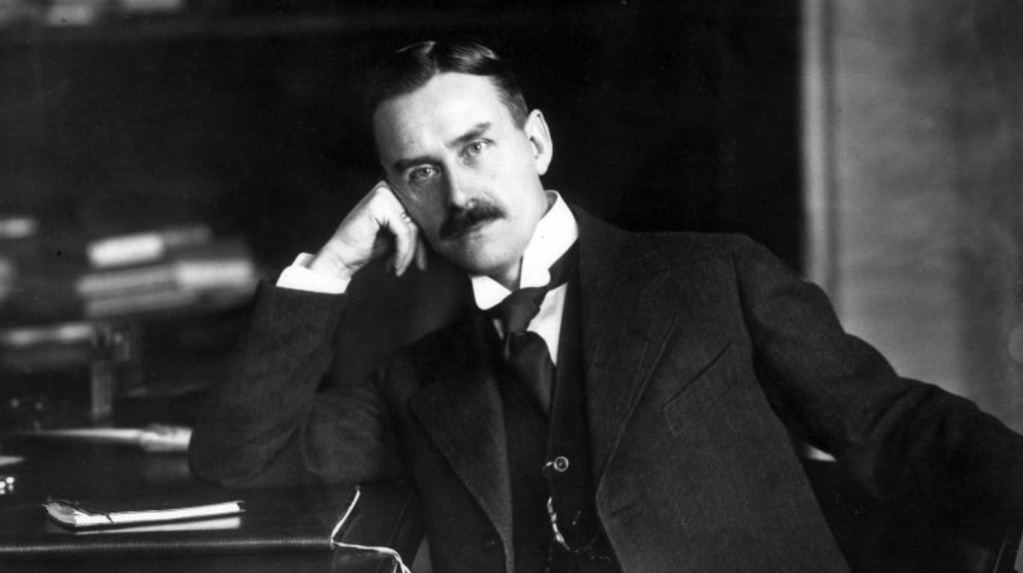
Thomas Mann (Picture Alliance/Ullstein Bild)
Sometimes, novels are semi-autobiographical confessionals and/or expressions of authors’ repressed thoughts and/or a way for them to “work out issues” and/or a way of reckoning with their past and/or an exercise in wish-fulfillment, etc. Sort of self-therapy by book.
I thought about this when recently reading Thomas Mann’s novellas Tonio Kroger (1903) and especially Death in Venice (1912), and seeing that there was a whole lot of male longing for other males by the protagonists. Sure enough, a little online exploring showed that Mann — the father of six with wife Katia — was sexually attracted to men, though there’s no conclusive evidence he acted on that during a more homophobic time. But he sure made his feelings known in some of his writing, as when middle-aged Death in Venice protagonist Gustav von Aschenbach (a famous author…hmm) becomes obsessed with a teen boy he finds very good-looking.
Several years later, in 1918, Willa Cather wrote perhaps her best novel: My Antonia. In it, male protagonist Jim Burden holds Antonia in such high regard that he might well be a stand-in for Cather, who was probably gay. Meaning she could have narrator Jim (i.e. Willa) express some feelings the author might have found more difficult to express if that character were a woman.
While sexual orientation isn’t a subtext (as far as I know) in Mary Shelley’s apocalyptic 1826 novel The Last Man, the author did base the male protagonist Lionel Verney on herself despite the different gender and modeled two other characters — Adrian and Lord Raymond — on her late husband Percy Bysshe Shelley and their late friend Lord Byron, respectively. So, Mary was kind of remembering and analyzing her relationships/interactions with the two famous poets.
Charlotte Bronte’s Villette (1853) also has a semi-autobiographical element: characters Lucy Snowe and Paul Emanuel are partly based on Charlotte and the real-life Constantin Heger, who Charlotte fell in love with (?) while enrolled in the Belgian boarding school run by Heger and his wife Zoe. And the downbeat tone of some of Villette was shaped to a degree by the 1848 and 1849 deaths-before-their-time of Charlotte’s younger novelist sisters Emily and Anne.
The Brontes’ contemporary Charles Dickens used a number of his novels to indirectly work through the childhood trauma that would help shape his social conscience. The future author’s father was sent to a debtors’ prison, and 12-year-old Charles had to leave school to work in a miserable factory to help support his family. Echoes of that can be found in the impoverished young characters Dickens created in David Copperfield (1850), Oliver Twist (1838), The Old Curiosity Shop (1841), and other works.
Amid the compulsive plot of his 1940 novel Native Son, Richard Wright wrestled with such matters as racism (which he experienced plenty of as a Black person) and his complicated feelings about the Communist Party USA (which he joined but later broke from).
Some authors who served in the military and were perhaps wounded in action indirectly worked through that trauma in war novels they would later write. Erich Maria Remarque — in books such as 1929’s All Quiet on the Western Front — is one prominent example of that.
Also, authors’ unrequited “crushes” in real life can provide rather intense fodder for novels, as was the case with Mann in his aforementioned Death in Venice and with Goethe in his The Sorrows of Young Werther (1774).
Thoughts about and examples of this topic?
Misty the cat says: “Halley’s Comet won’t be back until 2061, so you may not see it in this video.”
My comedic 2024 book — the part-factual/part-fictional/not-a-children’s-work Misty the Cat…Unleashed — is described and can be purchased on Amazon in paperback or on Kindle. It’s feline-narrated! (And Misty says Amazon reviews are welcome. 🙂 )

This 90-second promo video for my book features a talking cat: 🙂
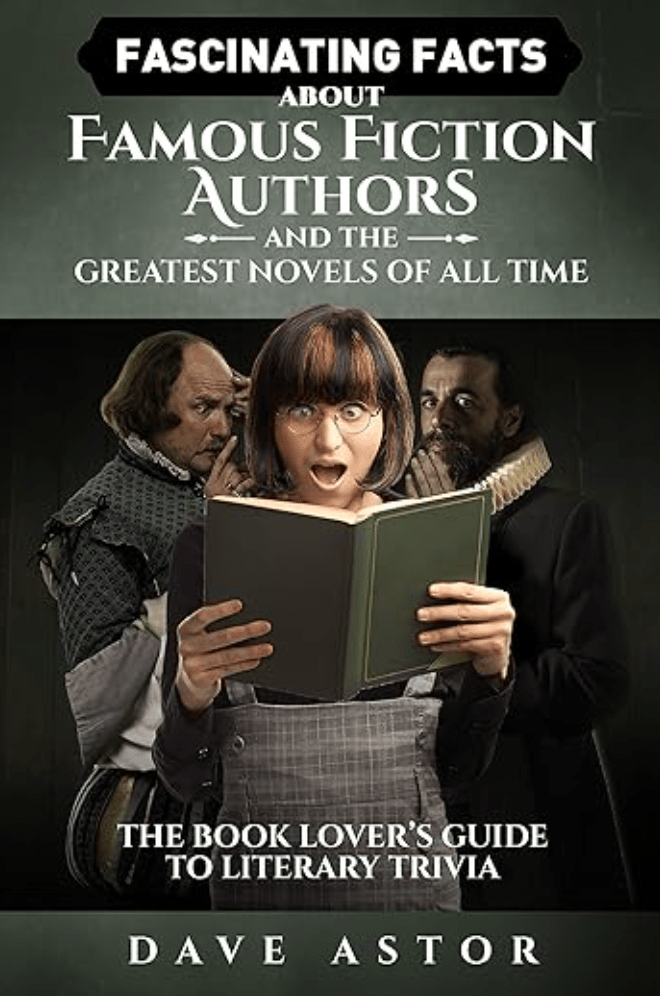
I’m also the author of a 2017 literary-trivia book…
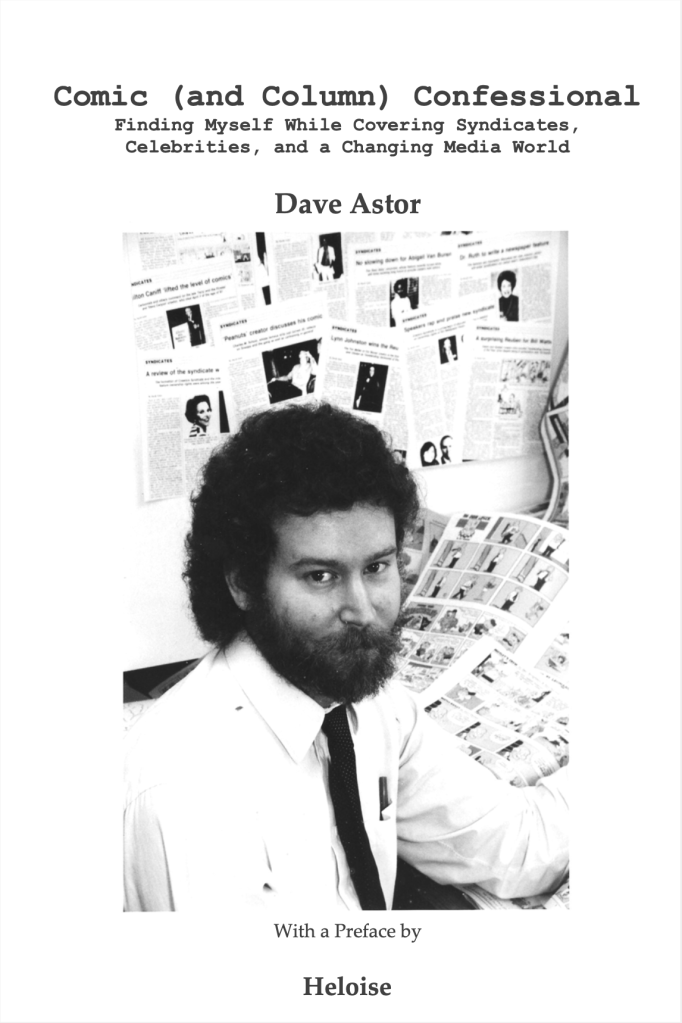
…and a 2012 memoir that focuses on cartooning and more.
In addition to this weekly blog, I write the 2003-started/award-winning “Montclairvoyant” topical-humor column every Thursday for Montclair Local. The latest piece — a time-warped look at a long-closed movie theater that might open again — is here.
 Dave Astor on Literature
Novelists draw from anecdotes in their own environment and scope of interest. Lawyers, write legal thrillers, physicians write medical sagas, librarians write about heroic archive diggers who stumble upon secret knowledge, journalists write about investigate reporters who’re unravelling major scandals or conspiracies, etc… And then you have those literary who never could fathom to become anything else than a novelist and their protagonists are very often …. writers.
I can find myself into your term “intense fodder” to define the product of novelists who mistake their readers for a wailing wall.
LikeLiked by 4 people
Thank you, Shaharee! Yes, novelists often create characters who work in jobs they have or have had — though of course novelists also often create characters who work in jobs they (the writers) never had. Research, imagination, the jobs of family members and friends, etc., can provide the inspiration.
Readers mistaken as a wailing wall — a memorable comment by you. 🙂
LikeLike
Impressive
LikeLiked by 1 person
Thank you, Swamigalkodi Astrology!
LikeLike
Autobiographical novel ? The familiar classics are here already, powerful, unforgettable, and set in the normal world.
Intensely and painfully autobiographical, Antonia White’s* Frost in May is, for me, one of the most chilling books I’ve ever read. Nine year old only child Fernanda Grey is sent to a convent boarding school because her classics teacher father has recently converted to Catholicism. Neither Nanda nor her mother have any choice, they must convert too. Mr Grey will pay far more than he can afford to have his daughter’s will broken by the nuns- and remade as God wishes . …no character is any good in this world unless that will has been broken completely. Even at nine, and in her first term away from home, Nanda’s damned, absolutely, by a senior nun for the sin of ‘ spiritual pride’ – which is her ruling vice.
Reviewers now home in on barely suppressed lesbian loves among the girls. Nothing new or different there staples of the Abbey School, Chalet School and all rival 20th C girls boarding schools. Sent to convent school ( not my idea), many decades after Frost in May, the agenda was almost unchanged. Wills must be broken, spiritua pride crushed. but there weren’t many nuns left. .
LikeLiked by 2 people
Thank you! “Frost in May” sounds absolutely horrifying, and you described it VERY well. What people do in the name of religion is disgusting. 😦 And of course the nuns acting so badly are only powerful in their little bailiwicks, because the males in most religions are nearly always the ones with the most power.
LikeLike
Your thoughts, Dave, in this week’s post seem to me to be very important in writers’ lives in general and I remember of having had that feeling especially with books of Charles Dickens and Thomas Mann. As you say, in Death in Venice the writer was very attracted to a young boy and in “Der Zauberberg”, which takes us to Davos, he was attracted to a Russian lady, who reminded him of a shool friend, so I suppose that this topic concerned him very much personally.
LikeLiked by 1 person
Sorry Dave, this is Martina!!
LikeLiked by 1 person
Thank you, Martina! I haven’t read a lot of Thomas Mann (including not getting to “The Magic Mountain” yet), but he certainly wrote some intense stuff about relationships and longed-for relationships! Same gender or opposite gender.
LikeLike
Niceee
LikeLiked by 1 person
Thank you, creativelypainter9fc1679a2c!
LikeLike
Hi Dave,
Two come to mind. Alice Sebold wrote “The Lovely Bones” which opened with the rape and murder of 14 year old Susie Salmon. And then recently I read Sebold’s memoir “Lucky” about her personal experience of surviving rape. There’s a lot of controversy around the non fiction work, but I’m very glad to have read it. As a fellow survivor I wish that there weren’t people who understand the horror of sexual crime, but as long as there are victims, I’m glad there are stories that are being shared. Sebold’s candour is especially impressive.
Just before that I read “A Lifetime of Impossible Days” by Tabitha Bird about a character set in three time periods – an old lady looking back on her life, a child being abused by her dad, and the woman in the middle trying to make sense of all the versions of herself. I like this premise, and I wanted to like the book, but I found it too self indulgent. It definitely felt like it was written by someone working through her trauma rather than someone who had come through it and had a story to tell. And at one point the adult version of herself asks if the eight year old was asking to be abused, and there isn’t enough hell no in the world for why that just doesn’t work for me.
Sue
LikeLiked by 1 person
Thank you, Sue! I appreciate those three book mentions.
So sorry that sexual assault became part of your life. That is a terrible thing to deal with. Not sure what else to say but, again, very sorry.
I think I read that the wrong man was arrested and jailed for raping Alice Sebold, but of course she still went through hell because of someone. “The Lovely Bones” was a tragically riveting novel; I have not read “Lucky.”
Re “A Lifetime of Impossible Days,” it’s interesting that authors trying to deal with their trauma in a book can create something very compelling or something that, as you say, feels too self-indulgent. It’s a tricky thing to get right.
LikeLike
Some of the most powerful words I’ve ever heard are ‘I believe you’ and ‘I’m sorry that happened to you’, so thank you ❤
I’m not quite sure what happened that put that man in jail. I know Sebold has copped a lot of criticism for it but a couple of little things in her memoir didn’t quite add up and a LOT of things must have gone wrong for an innocent man to be found guilty like that. But all that aside, it’s just a harrowing read, though a very important one. I’m really impressed that Sebold could be so honest, and didn’t seem to hold any blame or shame for what happened to her. Of course that’s how it should be, but in my experience, it’s not what happens. It was such a powerful book that it had me reaching out to the high school friend who I had first disclosed my abuse to (another rape survivor) who I hadn’t spoken to in ten years. A much more compelling read than the book that tried to blame the eight year old child.
On a more cheery note, I’m going to my first silent book club this weekend! I think the plan is a half hour or so of hi my name is, and we order coffees, and then we all just sit in silence and read for an hour. I have absolutly no idea why I feel the need to go to a coffee house to do what I can do at home, but I’m strangly excited!
Sue
LikeLiked by 1 person
Thank you, Sue, for the follow-up comment. It was probably a combination of painful and cathartic for Alice Sebold to write what she wrote, just as it’s probably painful and cathartic for you and others who have been in a similar situation to talk about it.
The U.S. “justice” system is an incredibly flawed thing. 😦
A silent book club! Never heard of that. I like it! Reminds me a bit of a writers’ group that’s part of the columnists’ association I’m a member of. I’m not in that writers’ group, but it involves people getting together via Zoom to silently write.
LikeLike
I think there’s no doubt that Nietzsche and Kafka were working out personal demons.
LikeLiked by 1 person
Thank you, Dawn! You’re absolutely right about Kafka! Many personal demons rattling around his psyche. (I’ve never read Nietzsche.)
LikeLiked by 1 person
But he was brilliant!
LikeLiked by 1 person
I agree, Dawn! I read a lot of Kafka’s work many years ago, and much of it really sticks with a person.
LikeLike
Gee,
Do you think The Kite Runner by Khaled Hosseini fits in here?
The author’s life experiences seem to make this book qualify.
{Misty, Misha says hello and that she has extra shed fur she can send, if you need any!}
LikeLiked by 1 person
Thank you, Resa! I’m sure Afghanistan-born Khaled Hosseini was “working out” some things when writing “The Kite Runner.”
Extra shed fur to send? Ha ha! 😂 Hopefully Trump won’t put a tariff on it when shipped from Canada. 🙂
LikeLiked by 1 person
Rats! I might have heard there’s a 650% tariff beginning August 1. 😡
Of course Misha’s fur is priceless. That means it is worth $0.00. 🤔
So – $0.00 x 650% = $0.00 🤑
The Penguins on the felon’s tariffed ice island will get a laugh out of this ! 🐧😂
LikeLiked by 1 person
LOL, Resa! 😂 The math I’m hoping for is 1 bad dude (Trump) = 1 jail cell.
LikeLiked by 1 person
A great equation, Dave,
The penguins say it adds up for them! 🐧🧮
LikeLiked by 1 person
Ha! 😂
Yay! I trust penguins. 🙂
LikeLiked by 1 person
Me too! 🙂
LikeLiked by 1 person
“We trust the words/of flightless birds” 🙂
LikeLiked by 1 person
Yes, especially over sightless tirds. 🤭
LikeLiked by 1 person
LOL! 😂
LikeLiked by 1 person
😂
LikeLiked by 1 person
🙂
LikeLiked by 1 person
Hi Dave, this is an interesting theme. I think a lot of authors include personal experiences and things they see as social ills in their writing. I certainly do and that is I why I write historical stories – to bring what I see as injustices of the past into the public domain in an interesting (hopefully) way. I am sure the writers of both Pachinko and Hotel on the Corner of Bitter and Sweet wrote about experiences they had been told about by parents/grandparents and these stories have elements of reality incorporated into them.
LikeLiked by 2 people
Thank you, Robbie! Excellent observation that the experiences of not only the authors themselves but of people the authors know (ancestors, current family, friends, etc.) can directly or indirectly make their way into their fiction.
Bringing injustices of the past into present-day writing is definitely a good thing. With, among other intents, the hope that bad history won’t repeat itself. But if not that, at least a compelling read.
LikeLiked by 1 person
Hello Dave and readers! I thought about this perceptive post and quickly realized that I don’t know enough about the lives of most writers, past and present, to speculate if they are trying to work out psychological issues in their books. As the author of four mysteries, I try hard to avoid revealing my psyche through my characters (which isn’t to say that something personal doesn’t get through). However, friends who read my series tease me because they recognize my opinions coming out of the mouths of many of my characters!
If I do wrestle with an important psychological concern in my books that I find fascinating, it’s about how often a lack of honest communication between siblings, husbands and wives, and parents and children (especially teenage and adult children) creates major problems.
LikeLiked by 1 person
Thank you, Kim! You make a great point about how we don’t always know about the lives of authors, so we thus don’t necessarily know whether they’re directly or indirectly putting some personal stuff in their novels.
And, yes, it’s hard for authors to avoid having their own opinions sometimes come out of the mouths of their characters. I don’t think this is necessarily a bad thing if done in moderation and the opinions feel organic to the characters.
Not enough honest communication among family members, couples, and others drives many a novel!
LikeLiked by 1 person
Another very good theme, Dave. As always, I appreciate your thoughtful consideration of the topic and the comments your thoughts inspired.
It probably won’t come as a surprise that I’ll mention Slaughterhouse-Five, by Kurt Vonnegut, which was semi-autobiographical. One of the (many) interesting things about that book is that he introduced several characters that later appeared in his other books. In that way, the story lived on, but not in sequels, just that some characters survived like some soldiers. Although part of the story in Slaughterhouse-Five is drawn from Vonnegut’s life, one of the characters, Kilgore Trout, is thought to later represent Vonnegut.
LikeLiked by 1 person
Thank you, Dan! Great example! Vonnegut did go through hell during World War II, which of course helped inspire “Slaughterhouse-Five.” And, yes, that recurring-character thing. And so it went…in various books.
LikeLiked by 1 person
As others have said writing is an excellent way to work out personal issues. However, exposing such writing to the public eye is a risky business. If you’re going to do that you have to fictionalize it thoroughly and make it part of a story that’s more than the author’s personal problems.
On the other hand, personal experience is one of the best ways to introduce authenticity. Depends what kind, though.
LikeLiked by 3 people
Thank you, Audrey! Excellent points! It’s indeed usually best when an author’s personal “working out” of things in a novel is fictionalized/disguised to a large extent. If not, the novel is moving into memoir territory. 🙂
LikeLike
Back in the dark ages when I went to college, I was taught that we shouldn’t conflate the speaker of a poem with the poet and characters in fiction with the author. (Can you hear the faint death knell of New Criticism?) I still prefer this approach, although I now give credence to the relevance of my own reading experience. Although I do confess to writing a series of autobiographical divorce stories a number of years ago, now when I start a story to work through some personal “stuff,” this initial impetus is gone from the story by the time I finish it.
LikeLiked by 3 people
Thank you, Liz, for those thoughts! I was especially interested in the experience you conveyed in your last line — with the personal stuff kind of a starting impetus but then gone by the end.
I guess what I think is that a writer’s life often has an impact on a poem, novel, etc. — but that impact can range from very subtle/indirect to something more overt.
Ha! 😂 I also went to college in the dark ages, when tuition bills weren’t mailed with blood-pressure pills. 🙂
LikeLiked by 1 person
You’re welcome, Dave. One thing about those rising tuition rates that I was surprised to learn about at Grante State College was that the increases were primarily due to the explosion of health care costs, which then were passed onto the instution in the cost of our health insurance.
LikeLiked by 1 person
Ugh — another argument for national health insurance, like every industrialized country other than the U.S. has.
With my younger daughter starting college in just over a month, tuition costs are on the top of my and my wife’s minds. 🙂 😦
LikeLiked by 1 person
I hope you’ll be able to swing your daughter’s college education without going bankrupt.
LikeLiked by 1 person
Thanks, Liz! I hope so, too. 🙂 The university offered a large grant (it helped that my daughter was recruited as an athlete). Then there’s a work-study job, some loans, some tapping of retirement savings…
LikeLiked by 1 person
You’re welcome, Dave. Sounds like you have it well in hand.
LikeLiked by 1 person
Perhaps semi-well in hand. 🙂
LikeLiked by 1 person
🙂
LikeLiked by 1 person
Absolutely agree. I remember some ridiculous views being expressed that Shakespeare must be gay, because some of the Sonnets appear addressed to a ‘fair young man’ (please note it’s a long time since I read them, so my memory is hazy; but something somewhere made this argument). Leaving aside that there’s absolutely nothing wrong with being gay, plus the particular sort of male friendship that existed in Shakespeare’s time, this would mean that the views expressed by every one of the characters of his plays would be Shakespeare’s own – which is clearly impossible. It’s not the same thing as using giving certain episodes from one’s own life to characters in our writing. I too have worked material into the narrative in this way. 🙂
LikeLiked by 2 people
I’m glad I’m not alone in dismissing unwarranted assumptions about the author based on what they’ve written.
LikeLiked by 2 people
And I’m sure there are many more of us, Liz. 🙂
LikeLiked by 2 people
I hope you’re rightm, Laura!
LikeLiked by 2 people
An excellent topic, Dave, and I’m glad that I read other people’s comments before adding my own because I found one from you thanking me for recommending ‘Death in Venice’, which I’d forgotten! Right back at ya, as they say, because I’ve just finished ‘Big Brother’ by Lionel Shriver – a favourite author of mine and a book of hers which you recommended to me – so we’re equal in recomendations there. I hadn’t realised, untl I read a review by a previous reader and did a little research – that Shriver was the middle child of three and had an older brother wh fell prey to morbid obesity, dying in his fifties. Undoubtedly she was working through her own issues surrounding a situation which played itself out within her own family. I think that’s a good one to be going on with, and I’ll have a think for some more. I’m familiar with other examples you give, and some of those in the comments of other subscribers. Authors – it seems we’re very much about working through our situations on a public platform! 🙂 🙂 PS, my review of ‘Big Brother’ will be on my Wednesday book review blog this coming Wednesday. A thought-provoking text, and thanks for the recomemndation. 🙂
LikeLiked by 3 people
Thank you for the comment, Laura! And you’re welcome re the “Big Brother” recommendation! I greatly look forward to seeing your review of that novel — including possible discussion of that “twist” near the book’s end. I didn’t realize Lionel Shriver had a brother who dealt with weight issues; I can see how that would move her to psychologically “work through” that in a novel.
LikeLiked by 1 person
Another reviewer referred to some ‘autobiographical notes’ that the author had added at the end of the book, but they weren’t present in my eCopy. A bit of goggling and I found this this had been a real-life situation for her, which makes it worse somehow. A difficult issue, but I’m glad I read. 😊
LikeLiked by 1 person
A shame the autobiographical notes weren’t in every format. But, yes, a real-life situation can have a strong impact on a novelist.
LikeLiked by 1 person
A pedantry ponder: I always thought Gustav von Aschenbach (Death in Venice) was supposed to be a composer. It always confused me how none of his responses to his drama expressed themselves musically.
I don’t mind being wrong – being right can be such a pain at times, because you never learn anything.
LikeLiked by 3 people
Gustav was changed from an author to a composer in the Dirk Bogarde-starring 1971 movie version (which I’ve read about but haven’t seen). 🙂
LikeLiked by 1 person
That may be because the well-known film which was based on the book made/based the main character on the real-life composer Mahler. Having studied the book I found the film disappointing, because I couldn’t see any good reason for the change. It was a popular film, however, so I think it’s become interchangeable with the book in many people’s minds, so I’m sure you’re not the only one to think of von Ashchbach as a composer. 🙂
LikeLiked by 3 people
Thank you, Laura! Given that the novel was partly autobiographical, it does seem odd that Gustav’s profession was changed for the movie.
LikeLiked by 2 people
And why make it about Mahler? There’s a whole other topic of good/bad film adaptations of books … 🙂
LikeLiked by 1 person
Puzzling indeed, Laura!
And, yes, screen adaptations of books. 🙂 😦 I think I wrote a post on that topic years ago. Will look…
LikeLiked by 1 person
Found the post! From 2014…
https://daveastoronliterature.com/2014/12/28/literature-gives-us-screen-gems-and-screen-duds/
LikeLiked by 1 person
It’s probably my dodgy memory playing tricks on me again … but I’ll be pleased to see it (again?) if you did write one. Thanks, Dave. 🙂
LikeLiked by 1 person
It was 11 years ago — the first year of this blog — so you might not have been reading the blog back then. 🙂 Anyway, linked above!
LikeLiked by 1 person
Way before my time then, but I’ll certainly have a read. Thank you! 🙂
LikeLiked by 1 person
You’re welcome! 🙂
LikeLiked by 1 person
Part of one of Mahler’s symphonies was used in the soundtrack. Don’t know if that’s why the m.c. was changed or if the music was an afterthought. There is even some resemblance between the actor and Mahler.
LikeLiked by 2 people
Interesting Audrey. Clearly someone strongly involved in making the film had a thing about Mahler. I don’t remember the film too well now, but I do recall being disappointed that Thomas Mann’s story was pretty much hijacked to use as a vehicle for the composer. I shall have to go and do a bit of research into the matter! 😊
LikeLiked by 1 person
I think Lolita by Nabokov is absolutely about repression. Amazing that the topic of a child sexual abuser resulted in a best seller. A lot of individuals claim believe Nabokov was sexually abused by an uncle, and if this were true, he should have been more forthcoming re his being a victim as well. Yet, I think he was trying to make sense of it. Most victims have a deep sense of shame and would make it all about their recidivism rather than their recovery. Remains Of The Day by Ishiguro is another book re repression and classism. Was Ishiguro working through his own feelings re this?
“Many of our deepest motives come, not from an adult logic of how things work in the world, but out of something that is frozen from childhood.” ~ Kazuo Ishiguro
LikeLiked by 6 people
Thank you! I didn’t know about that (possible) aspect of Nabokov’s family history. A very difficult thing to go through. And, if he did go through that, revealing it would indeed have been a good idea. Still, I have mixed feelings about “Lolita” — expertly written, but an uncomfortable reading experience. The sick fixation of some older men on girls is certainly playing out these days with the Epstein files, in which Trump is an obvious part of. And, yes, a LOT of repression in Kazuo Ishiguro’s masterful “The Remains of the Day.”
LikeLiked by 4 people
Nabokov accused Dostoevsky of being a pedophile. He (Nabokov) seemed to be quite the a narcissist. Link below re Nabokov. Geezaloo, what a bag of snakes. Susi
https://lithub.com/on-dostoevskys-199th-birthday-heres-nabokov-insulting-him-a-lot/
LikeLiked by 2 people
Thank you, Susi! Yes, Nabokov did not seem like an appealing, likable human.
LikeLiked by 1 person
An interesting theme, Dave, and probably occurs more often than we realize. As writers, it’s so much easier to express our feelings or beliefs through the characters of our stories. My debut novel started as a form of self-therapy as I grappled with yet another experience of abandonment by someone I loved. Why? What had I done wrong? Did I deserve to be treated this way? My story was an attempt to answer those questions.
LikeLiked by 2 people
Thank you, Rosaliene! Yes, a frequent occurrence in novels. It can indeed be easier for a writer to be personal — “write what you know,” as the cliche goes — though that of course can be uncomfortable, too.
It sounds like you intensely “lived” the negatives and positives of this when writing your debut novel. That experience can definitely be a combination of painful and therapeutic.
LikeLiked by 2 people
Re-living the negative emotions through my male protagonist was, indeed, painful.
LikeLiked by 1 person
I can imagine. 😦
LikeLiked by 1 person
Dave, your post opens up a powerful conversation about how writers embed their own histories—longings, griefs, and transformations—into their stories. I’ve always believed that fiction is a space where we work through who we are, who we’ve loved, who we’ve lost, and who we still wish to become. These characters carry more than a narrative; they carry memory and desire.
I gravitate toward books that connect me with voices across time and place—Alexander McCall Smith’s Isabel Dalhousie, for instance, and Tarquin Hall’s Vish Puri. Each book feels like a reunion with a familiar mind. While their stories stand alone, what keeps me coming back is the presence of a character whose thoughts, doubts, and wisdom evolve as mine do. That’s the intimacy I seek—not just plot, but companionship.
Thank you for this deep reflection. You’ve reminded me how personal literature really is—for both writer and reader. I couldn’t help it, but I had to add a quote.
“Isabel had always believed that one could achieve a kind of intimacy with a writer through his or her work. A novel, after all, was a revealing act, and one which laid bare the writer’s soul in a way that few other forms of expression could.” Alexander McCall Smith, The Sunday Philosophy Club
LikeLiked by 7 people
Thank you for the eloquent comment, Rebecca! Including your terrific first paragraph. And the Alexander McCall Smith passage in your last paragraph perfectly sums things up.
As you might remember, I finally tried a couple of Alexander McCall Smith novels earlier this year. 🙂 And when I was at my local library a few days ago, I found a copy of Tarquin Hall’s first Vish Puri novel — “The Case of the Missing Servant” — and took it out. 🙂 I look forward to reading it within the next few weeks.
LikeLiked by 1 person
Thank you, Dave. I’m especially glad the first paragraph resonated with you—it reflects where I find myself these days. I’ve gone back to some of my earliest blog posts and can see just how much has shifted over the years. The landscape has changed, but I’ve changed too. Now, I want to blog with more intention and give it the time it deserves.
Time, of course, is the central challenge. We’re always negotiating that fine balance between creating and connecting—between the solitude of writing and the joy of conversation. I’m realizing that balance is always in flux, and that’s part of the journey. Grateful to be sharing it alongside readers and writers like you.
LikeLiked by 3 people
Thank you for the follow-up thoughts, Rebecca! Yes, a lot can change — externally and internally — when one has been blogging for a number of years. And finding time to write, and write well, is indeed often a challenge. Per the second line in your second paragraph, blogging offers a wonderful combination of writing in solitude and then getting into conversations in the comments section. 🙂 And of course commenting under others’ blogs. 🙂
LikeLiked by 2 people
I identify with your comment, Rebecca, because I for one work-though my life – the things that happened and the dreams that didn’t come to pass – in my writing. It doesn’t get more personal tht that. 🙂
LikeLiked by 2 people
Well said, Laura! There’s something deeply healing about turning life into words. As you said, it doesn’t get more personal than that. I’m so glad we’re sharing this creative journey together.
LikeLiked by 2 people
As am I, Rebecca. I’m sure I’m not the only person who’s sat and written letters that never got sent at times of relationship crises, or just written an entire episode out, multiple times, with variations, just to get it out of my system. Writing is the ultimate therapy, as far as I’m concerned. 🙂
LikeLiked by 2 people
What an interesting post! Archie Hind’s “Dear Green Place,” set in Glasgow, exemplifies the author’s frustration and longing to escape a city in crises and his thwarted attempts to become a writer, I think. I haven’t read “Death in Venice,” but I’d like to at some point! I’ll add it to my list! 🪷
LikeLiked by 3 people
Thank you, Ada! I appreciate the example of “Dear Green Place,” which definitely fits this theme! Reminds me a bit of Jack London’s “Martin Eden,” whose working-class title character experiences many frustrations in trying to become a writer. As for “Death in Venice,” I’m glad I read it despite how depressing most of it was. At least it’s short. 🙂
LikeLiked by 2 people
I think every writer puts, in one way or another, something of themselves into what they write, whether prose or poetry!
I started writing (note that I’m not a writer😉 ) after my second cancer, on the advice of the psychologist I’d consulted… at first it was my (personal) diary, but then, when I started blogging, or writing short stories or poems, there’s always been a part of me beneath the surface, even the most neutral one.
LikeLiked by 6 people
Thank you, Luisa! I think you’re right that everything someone writes has something of that person in it — whether a little or a lot.
You ARE a writer — as you mentioned, of poems and short stories, and a terrific blog that appears daily! Very sorry about your two bouts with cancer; I hope there’s nothing of that sort in your present life.
LikeLiked by 4 people
Thank you for your kind words, dearest Dave. 🙏
As for my health, there’s nothing like that at the moment, thank God, but a lot of other small problems, fortunately not that serious.
LikeLiked by 1 person
Great to hear that there’s no cancer recurrence, Luisa! As for smaller problems, I can relate to the fact that getting older is no fun. 😦
LikeLiked by 2 people
So true!!!👍😘👍
LikeLiked by 2 people
Yes! 🙂 😦
LikeLiked by 2 people
Thank you to Laura Lyndhurst for recommending “Death in Venice”!
LikeLiked by 2 people
I’d forgotten that, Dave, but I’m very glad that you read and enjoyed it. There’s so much going on in there, and I shall have to have a re-read myself now. In the meantime I’ll get thinking about some examples for this. In fact, I have a good one, which I’ll add above. 🙂
LikeLiked by 2 people
Yes, Laura, you recommended “Death in Venice” under my May 2025 blog post about novels by Italian authors and novels set in Italy by non-Italian authors. 🙂
LikeLiked by 1 person
A couple of months ago then – so my memory’s not so bad as I feared, lol. 🙂
LikeLiked by 1 person
Yes, a short enough time ago where I think the novel had been invented. 🙂
LikeLiked by 1 person