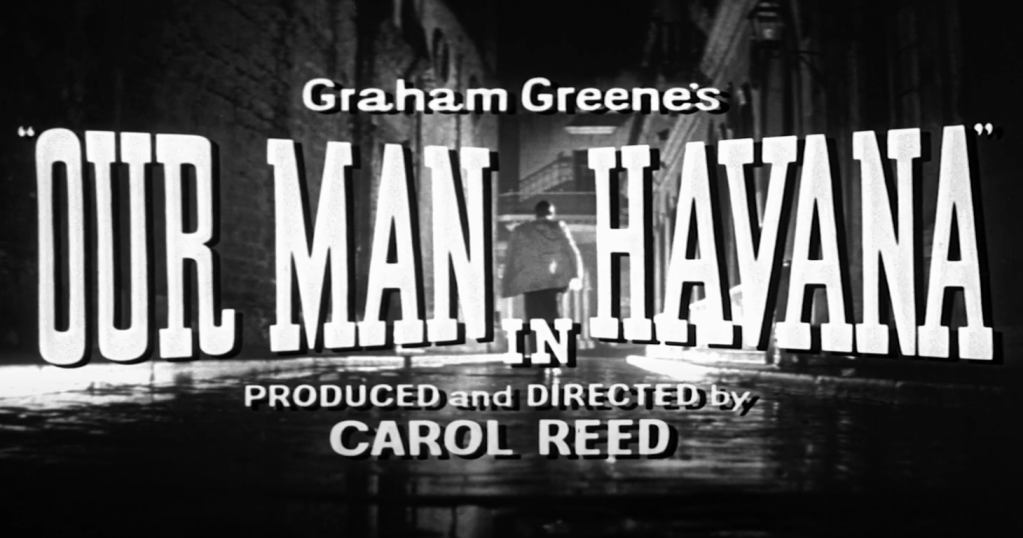
From the trailer for 1959’s film version of Our Man in Havana.
I should have posted this “Spies in Literature” piece last Sunday the 7th in honor of Agent 007 James Bond, but I hadn’t yet finished the novel that inspired what you’re about to read.
That interesting 1958 book is Graham Greene’s Our Man in Havana, and while its protagonist James Wormold is not a typical spy (he’s a vacuum-cleaner salesperson who reluctantly accepts recruitment as an agent), he nonetheless ends up in espionage.
Wormold is a satirical creation — the reports he submits to headquarters are pure fiction — but many other spies in literature are quite serious characters even if some humor might occasionally enter the mix. These secret agents can make for compelling reading as they get into adventures, risk their lives, save lives, end lives, do undercover work for good or evil patrons, inhabit a milieu of geopolitical machinations, etc.
I initially mentioned James Bond, and have seen a couple of movies starring him, but must admit I’ve never read any of the Ian Fleming novels that inspired the long-running 007 film franchise.
But I have enjoyed a handful of other books with spy characters. One author quite famous for that genre is John le Carré, whose The Russia House (1989) is the only novel of his I’ve read. It unfolds near the end of the Cold War — just before the breakup of the Soviet Union — and is pretty absorbing.
The Cold War of course has inspired many a spy novel, which could include Viet Tranh Nguyen’s The Sympathizer if the Vietnam War is considered partly a manifestation of that era’s United States/Soviet Union tensions. His seriocomic 2015 novel — set in 1975 and subsequent years — is told by an unnamed North Vietnamese mole in the South Vietnamese army who remains embedded in a South Vietnamese immigrant community in the U.S. Its sequel, The Committed, was published in 2021.
Obviously, not all espionage novels have a Cold War connection. For instance, James Fenimore Cooper’s 1821-released The Spy (hmm…I wonder what its title character is 🙂 ) takes place during the American Revolutionary War of several decades earlier.
And in the Harry Potter series, Severus Snape is a spy of sorts — and the most complex and morally ambivalent character in those seven J.K. Rowling novels.
I’ve barely touched the surface here, as I haven’t read that many books with secret-agent characters. Any thoughts on spies in literature? Your favorite characters and novels in this realm?
Misty the cat says: “I see thorns but not birds, so ‘The Thorn Birds’ novel doesn’t exist.”
My comedic 2024 book — the part-factual/part-fictional/not-a-children’s-work Misty the Cat…Unleashed — is described and can be purchased on Amazon in paperback or on Kindle. It’s feline-narrated! (And Misty says Amazon reviews are welcome. 🙂 )
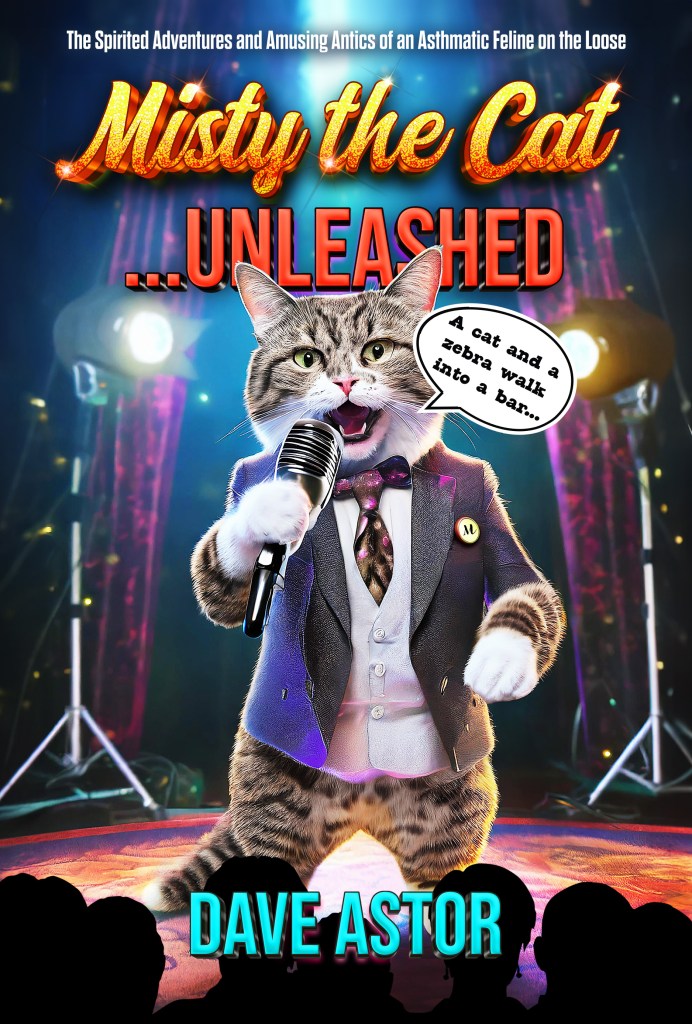
This 90-second promo video for the book features a talking cat: 🙂
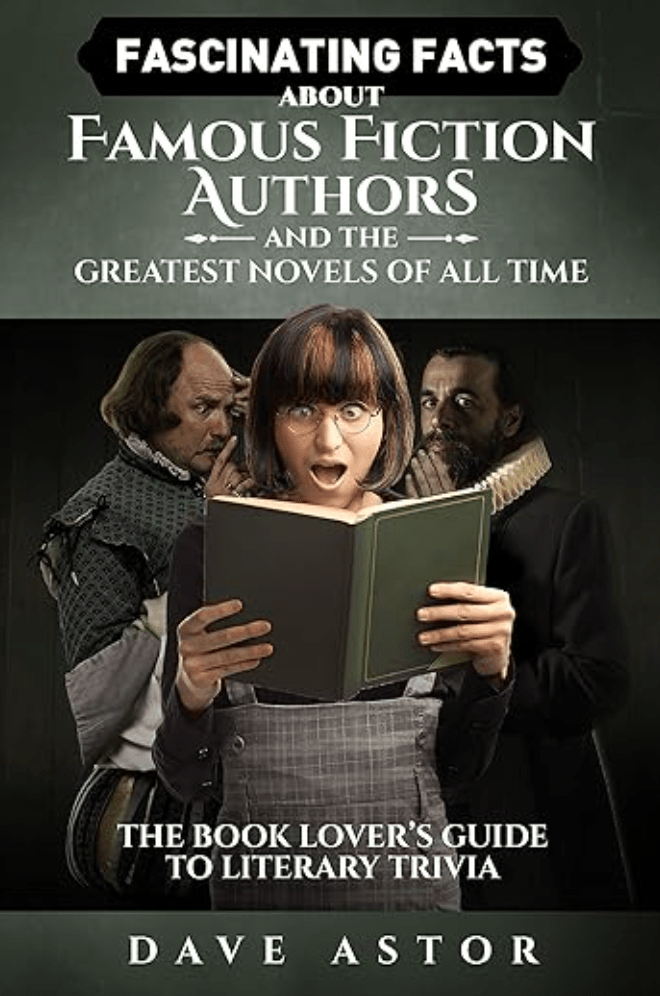
I’m also the author of a 2017 literary-trivia book…
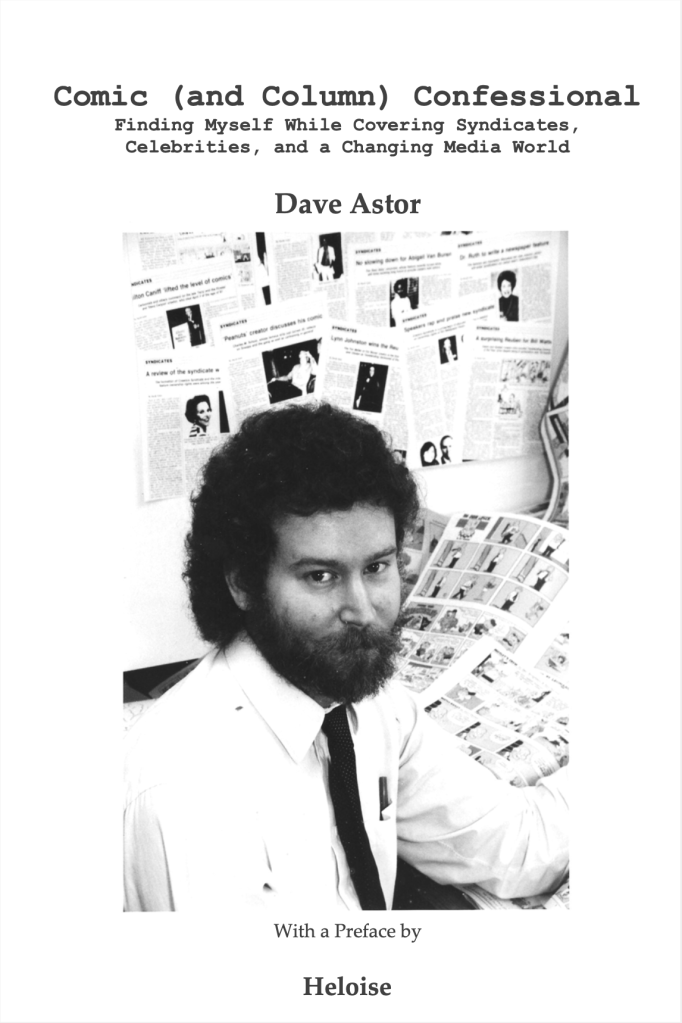
…and a 2012 memoir that focuses on cartooning and more.
In addition to this weekly blog, I write the 2003-started/award-winning “Montclairvoyant” topical-humor column every Thursday for Montclair Local. The latest piece — about another LONG Township Council meeting and more — is here.
 Dave Astor on Literature
My favorite spy is George Smiley OBE, a fictional character created by John le Carré. Smiley is a career intelligence officer with “The Circus”, the British overseas intelligence agency.
LikeLiked by 2 people
Thank you, Shaharee! I’ve only read one book featuring George Smiley, but he is indeed quite a character!
LikeLike
Pity that he took his retirement already a decade ago. Al this expertise about cold war perils would probably very useful for Whitehall in the light of the current Russian attitude towards Europe (although the British famously bailed out of that adventure). Do you think there is a chance that they will recall him a second time back out of his retirement?
LikeLiked by 1 person
Someone like George Smiley would indeed be very useful nowadays. But given that John le Carré is dead, I wouldn’t want another author to “take over” the character. 🙂
LikeLiked by 1 person
I’ve read one James Bond novel, “To Live and Let Die,” which was pretty good. I’ve heard a lot about Graham Greene’s novels.
LikeLiked by 2 people
Thank you, Dawn! That’s one more Bond novel than I’ve read. 🙂 I’ve gotten to two Graham Greene novels — “Our Man in Havana” and “The Power and the Glory” — and found both of them to be pretty good. Plus Greene’s very brief short story “Proof Positive,” which is as powerful and macabre as an Edgar Allan Poe tale.
LikeLike
Great post 📯
LikeLiked by 1 person
Thank you, Samiran! 🙂
LikeLike
Thanks for the reminder of “Our Man in Havana”… I read it a while ago and really enjoyed the part of the character being a salesman of vacuum cleaners and how he drew images of what the bosses thought were a weapon. Such cleverness in the writing! 🌞
LikeLiked by 1 person
Thank you, Dave! Graham Greene was indeed a clever writer, and that vacuum cleaner-innards-used-for-weapon-schematics thing was quite a conceit!
LikeLiked by 1 person
Hi Dave, this topic is certainly popular. I got a scroll ache trying to find the end of the comments – haha! I have read all the Bond books and I bought Greg the entire collection when he was reading fiction. I also have most of the Agatha Christie books which I enjoyed very much. I’ve never read Sherlock Holmes but I have visited his house in London. Are they spies? I suppose not really although they do some spying to catch the baddie. I read a number of books by author, Daniel Kemp, which were about espionage and which I enjoyed very much.
LikeLiked by 1 person
Ha, Robbie! 😂 (Your reference to “scroll ache.” 🙂 )This subject was definitely more popular than I thought it would be, even if some people (including myself) just wanted to say that they’re not huge fans of most spy novels. 🙂 Impressive that you’ve read all the Bond books, and I think you’re in for a treat if you ever get to the Sherlock Holmes stories and novels. Yes, detectives are spies of a sort. And glad you mentioned Daniel Kemp’s work!
LikeLike
Battalions of spies already, including Marlowe , Walsingham, the Babingtons and all Jesuits., not forgetting the traditional job description of an ambassador – a man who lies abroad for his country..
In this turbulent world, may I have a spy who reforms and is penitent, Mr Tumnus, ?
–
LikeLiked by 1 person
Thank you, Esther! Yes, a spy can come in various forms — sometimes under the guise of a different profession such as a lying ambassador. 🙂 And I love your reference to Mr. Tumnus the faun from “The Chronicles of Narnia.” (I don’t think the C.S. in C.S. Lewis stands for Confidential Spy… 🙂 )
LikeLiked by 1 person
Thanks. Life’s so deadly serious now, need some light relief.
LikeLiked by 1 person
So true, Esther!
LikeLike
Hi Dave,
I’ll join in on the chorus of I don’t really read spy novels. I’ve read one James Bond book but all I can remember is thinking it was really sexist. I’ve read one Jason Bourne book and don’t remember anything at all.
I’ve also never read Graham Greene, but I do have him on the TBR at around number 200 something. And yes, all of my counting is in cat time rather than human time ❤
Sue
LikeLiked by 1 person
Thank you, Sue! You are indeed in “The Not a Big Fan of Spy Novels Club,” where the membership is…secret. 🙂
The Bond franchise is sexist indeed. Maybe there should be a female Jamie Bond.
Graham Greene is worth an eventual read, whether he’s on a human or cat TBR list. 🙂
LikeLike
I was obsessed with James Bond one summer, in my teens. I read every book by Fleming, but refused to read any he did not write. (teenage passions)
The Hunt for Red October by Tom Clancy is a fab spy novel. However, I haven’t read any Jack Ryan since, andI have not watched the TV series.
LOVE James Bond, and watched all the movies.
Sean Connery was the only Bond for me.
Had a hard time with the rest, until Daniel Craig.
However, I will probably re-watch the four Pierce Brosnan was in. I have become fond of him in his later years. He was too, good looking when he was younger.
MEOW!
LikeLiked by 1 person
Thank you, Resa! You’re more a fan of spy novels (and spy movies) than I. 🙂 It IS interesting to think about the various actors who have played James Bond over the decades — apparently seven, according to the “Internets.” Pierce Brosnan WAS quite a looker in his younger years.
I haven’t read much Tom Clancy, but did hear him speak once at a newspaper-related convention.
LikeLiked by 1 person
7 & they are looking for a new one!
Ahh, the good ol’ days when there was no “internets”, only hair nets!
Neat that you heard TC speak. In Person!
Now, with Youtube, no one shuts up!
LikeLiked by 1 person
Hair nets — ha ha! 😂
Yes, YouTube and other outlets can enable talking forever. 🙂
Seems like there’ll eventually be hundreds of James Bonds by the “year 2525″…
LikeLiked by 1 person
Zager and Evans! 🙂
LikeLiked by 1 person
Yes! The one-hit wonders. 🙂
LikeLiked by 1 person
Yes! But it lasted until 9595! 🤭
LikeLiked by 1 person
Yes! 😂 That’s longevity… (Albeit dystopian. 🙂 )
LikeLiked by 1 person
😂
I just recently reread 1984 out loud to my hubs who is too busy reading manuals to read novels.
I mentioned it to a friend, who then sent me a gift of 1984 & Animal Farm (as a set)
That seems redundant dystopia. 🤔
LikeLiked by 1 person
Dystopian overload! But Orwell was brilliant.
LikeLiked by 1 person
Absolutely.
It’s not just the chilling story, but wow, can he write!
LikeLiked by 1 person
Yes!
LikeLiked by 1 person
Oh sir congratulations alot
LikeLiked by 1 person
Thank you, creativelypainter9fc1679a2c!
LikeLike
This is an interesting post! I don’t tend to read ‘spy’ novels as such. I did read ‘The Shanghai Factor’ by Charles McCarry, which is classed as an espionage novel, some years back. He has been compared to John le Carre! It was a good book, although I can’t say in all honesty if spy novels are ever going to be my favourite genre. I wonder Dave, if it’s a genre that is as popular as it was say, fifty years ago! Thanks Dave, your post has got me thinking as they always do. 😊
LikeLiked by 1 person
Thank you, Sharon! Like you, spy novels are far from my favorite genre. And you make an excellent point that those books were probably more popular decades ago — during the Cold War and during a time when the sexist nature of many of those spy novels was unfortunately more accepted.
LikeLiked by 1 person
Now, that’s a good point Dave! Spy novels then, were quite sexist! They wouldn’t suit modern-day readers! Thank you, Dave. Have a great week. 🤗
LikeLiked by 1 person
One reason why a more-recent spy book (2017) like Kate Quinn’s “The Alice Network” (female author and female main characters) was so refreshing.
Have a great week, too, Sharon!
LikeLiked by 1 person
‘The Alice Network?!’ It sounds good! Thanks once again, Dave!
LikeLiked by 1 person
When it comes to 20th-century-set historical fiction from a women’s perspective, I’m a big fan of Kate Quinn. 🙂
LikeLiked by 1 person
Kate Quinn?!! I haven’t heard of her! I don’t mind historical fiction though, what do you recommend?
LikeLiked by 1 person
I’ve read three novels by Kate Quinn, Sharon, and my favorites, in order, are “The Huntress” (about a woman with a secret Nazi past who marries an American), “The Rose Code” (about three British women who are codebreakers during World War II), and the aforementioned “The Alice Network” (about female World War I spies).
LikeLiked by 1 person
Thanks for that, Dave! They all sound good! ‘The Huntress’ sounds like it would be the most interesting! I’ll look out for Kate Quinn in my local library. If I do read any of her work, I’ll let you know my feelings. Thanks again for the book recommendations, they are always welcome. 😊
LikeLiked by 1 person
You’re very welcome, Sharon! Hope your local library has “The Huntress.” 🙂 Among the characters I really liked in the novel was a female WWII pilot from the Soviet Union.
LikeLiked by 1 person
Thanks for that, Dave! I’ll certainly look up, ‘The Huntress’. Good title! 😊
LikeLiked by 1 person
I agree, Sharon — a very good (and apt) title. 🙂
LikeLiked by 1 person
I think the only spy novel I’ve read is one of the James Bond novels. I found it cringe-worthy.
LikeLiked by 1 person
Thank you, Liz! I’ve never read a Bond novel, but I certainly had mixed feelings about the couple of Bond films I saw. For one thing, as I also mentioned in another comment, the whole sensibility was sexist. Which is cringeworthy.
LikeLiked by 1 person
You’re welcome, Dave. I’ve never been able to stay awake to watch an entire Bond movie. Besides the sexism, they bored me silly.
LikeLiked by 1 person
Definitely overrated, from my limited experience. Maybe it’s of some interest to some people to compare the various actors who played Bond; I assume none of those actors was Pee-wee Herman. 🙂
LikeLiked by 1 person
Hello Dave, I certainly remember that vacuum cleaner, who brought me the then political situation in Havana nearer!
Many thanks for your and Chris Hall’s reminder!
LikeLiked by 1 person
Thank you, Martina! A memorable vacuum cleaner indeed! Actually, as you know, two vacuum cleaner models were featured in Graham Greene’s novel, the second machine supposedly new and improved. 🙂
LikeLike
Wau, I didn’t know that, Dave, many thanks:)
LikeLiked by 1 person
It’s difficult to remember specific details of novels unless one has just read them. 🙂
LikeLiked by 1 person
I’m afraid that you are right:) You made me go through a summary of the book, which I read really a long time ago, and I found out that they even made a film, play and an opera with this clever story or “Our Man in Havana”
LikeLiked by 1 person
I hear you, Martina! I often look at online summaries of novels I mention in my posts if I read those novels years ago. 🙂
“Our Man in Havana” was also a play and opera? Wow!
LikeLike
👍🌺
LikeLiked by 1 person
🙂
LikeLike
This is Kim Hays; I’m not sure my phone will identify me. I’m just beginning the most recent of Mick Herron’s superb series of nine (so far) English spy novels. Called the Slough House series, they are full of black humor, political machinations, violence, and underdogs who somehow manage to save the day but never get rewarded. I’m addicted to them. The first of them have also been turned into a superb TV series starring Gary Oldham. The first book in the series is SLOW HORSES.
LikeLiked by 1 person
Thank you, Kim! (I suppose “Anonymous” would make a good spy name. 🙂 )
I appreciate the mention of Mick Herron, who I had not heard of until seeing your comment. His series sounds fantastic! And Gary Oldham is a GREAT actor.
LikeLike
Not the biggest James Bond fan, but I’ve always wanted to read John le Carré, whose The Russia House (1989). I also think this is a book my husband would enjoy, as he enjoys espionage stories. We play the word game “Codenames” where we are both pretending to be spies, so I think spy novels would appeal to us both!
LikeLiked by 2 people
Thank you, Ada! I’m not a James Bond fan, either; the whole Bond milieu seemed kind of sexist, among other things. John le Carré is an excellent writer when it comes to prose and dialogue. The “Codenames” game sounds like fun!
LikeLiked by 1 person
Well 👍❤️🩹
LikeLiked by 1 person
Thank you, Samiran!
LikeLike
So glad that you read that book, Dave. Good, eh? I don’t remember that film though. Hmm. But never mind. Here’s another book set in Cuba: Havana Bay by Martin Cruz Smith. It’s pretty good, a mystery/thriller, with a Russian spy… Bet it’s in your library!
LikeLiked by 3 people
Thank you again, Chris, for recommending “Our Man in Havana”! I also hadn’t known there was a movie version; I stumbled on it when I was looking for art to go with the post, and took a screen shot from the trailer.
I’ve read all of Martin Cruz Smith’s Arkady Renko novels — including the excellent “Havana Bay.” 🙂 A great series — starting with “Gorky Park,” of course — though the last couple of books were not as good. Sadly, the author just died this summer.
LikeLiked by 1 person
Shame about MCS – good writer.
LikeLiked by 1 person
I agree on both counts.
LikeLiked by 1 person
Engaging
LikeLiked by 2 people
Thank you, Swamigalkodi Astrology!
LikeLike
The Alice Network by Kate Quinn is about female spies during WWI, based on a true network of female spies. I have also read Ian Rankin’s Watchman and Alan Furst’s The Spies of Warsaw. Ken Follett’s Eye of the Needle is a favorite.
LikeLiked by 2 people
Thank you, Madeline! “The Alice Network” is a terrific example I forgot to include in my post. I’ve read it and really liked it — along with other superb Kate Quinn novels such as “The Huntress” and “The Rose Code.” I appreciate the other mentions, too!
LikeLike
Ian Rankin’s Watchman….Sooper from my perspective.. 🙂
LikeLiked by 1 person
Thank you, Swamigalkodi Astrology, for that mention! Just looked it up on Wikipedia, and it does sound compelling!
LikeLike
Thank you, Dave. Your post brought back such vivid memories for me — I don’t usually read spy novels, and I’ve never picked up a 007 book, but I did read and enjoy the Mrs. Pollifax series years ago. She’s such an unlikely but delightful spy (she lives in New Jersey) — a widow and senior citizen who suddenly finds herself in the CIA and the Cold War. Your reflections have prompted me to revisit her adventures, and I think it may be time to reconnect with her. Isn’t it wonderful how certain characters stay with us across the years and return at just the right moment?
Mrs. Pollifax reminds me that creativity, courage, and new beginnings can happen at any stage of life. As always, I must leave a quote that resonated with me: “It’s terribly important for everyone, at any age, to live to his full potential. Otherwise a kind of dry rot sets in, a rust, a disintegration of personality.” Dorothy Gilman, The Unexpected Mrs. Pollifax
LikeLiked by 5 people
Thank you, Rebecca! I’ve read and greatly enjoyed a couple of Mrs. Pollifax novels, so I can’t believe I forgot to mention them in my post. 🙂 Glad you mentioned that older-in-age/young-at-heart character. 🙂 She IS inspiring — and quite smart and funny.
LikeLiked by 1 person
I’m so glad you’ve read a couple of the Mrs. Pollifax novels too! She really is such an unforgettable character — older in age, but so young at heart, smart, and wonderfully funny. The older I get, the more her story resonates with me. 😂
LikeLiked by 1 person
I can see how us somewhat-older folk can especially relate to her, Rebecca. 🙂 And, as you noted in your previous comment, Mrs. Pollifax lives in my state of New Jersey, so I can relate to that, too. 🙂
LikeLiked by 1 person
Great ideas and people come from the state of New Jersey!!!
LikeLiked by 1 person
A few… 🙂
And Vancouver, too. 🙂
LikeLiked by 1 person
I don’t read a lot of spy novels, Dave but I remember reading The Matarese Circle by Robert Ludlum, almost without putting it down. I also loved Spy vs. Spy and Rocky and Bullwinkle.
LikeLiked by 2 people
Thank you, Dan! Sounds like Robert Ludlum can be compelling. 🙂 And Mad magazine had such a talented group of cartoonists — including “Spy vs. Spy” creator Antonio Prohías.
LikeLiked by 2 people
That book has two opposing spies working together. Mad magazine was a favorite forever.
LikeLiked by 2 people
An excellent premise for a spy novel!
And, yes, Mad was endlessly hilarious (and topical). 🙂
LikeLiked by 2 people
The comments reminded me of some spy fiction I’ve actually read: le Carré’s Spy Who Came in From the Cold and something similar by an indie author too. I have to admit I got lost in all the twists and found the cynical tone somewhat wearying. I read a couple of Ludlum’s Jason Bourne books too. The first one was interesting and thrilling, but also enough for me. I did read Conrad’s The Secret Agent quite recently. I would call it sort of an anti-spy novel, though; sad and disillusioning.
It seems that spying does bad things to the people that do it.
LikeLiked by 5 people
Thanks, Audrey, for the follow-up comment and the additional book mentions! Yes, being a spy doesn’t seem like an ideal profession. And, yes again, some spy novels (from my limited experience with them) can be rather cynical and/or convoluted.
LikeLiked by 3 people
Not my genre either. In fact I can’t think of one spy novel I’ve read. I remember my father loved “The Spy Who Came In From the Cold” though. (K)
LikeLiked by 3 people
Thank you, Kerfe! I think never having read a spy novel can be a point of pride. 🙂 As for your father liking “The Spy Who Came in From the Cold,” well, John le Carré was quite a wordsmith.
LikeLiked by 2 people
Well despite Ian Fleming’s father being a Dundee boy, I have to confess I’ve never read very much spy literature. But I do know a most interesting post when I see one.
LikeLiked by 5 people
Thank you, Shehanne! That’s quite a Dundee connection there! I agree with you about spy lit; it’s not even in my top 10 genres.
LikeLiked by 2 people
Yeah his father was pretty generous to the poor here –okay he could afford to be. But having risen from poverty himself he could just as easily have forgotten them. Quite a co-coincidence here’s you doing this post since we covered Ian Fleming, his father and James Bond in my hubby’s play on Fri night, where a grand impromptu discussion started with the audience when this woman said she lived in the Fleming Gardens Estate and had no idea that was the connection. .My hubby is big on spy novels and has quite a collection of them.
LikeLiked by 2 people
Nice that Ian Fleming’s father was charitable; not all rich people are like that, of course, as you note, Shehanne. And that IS a big coincidence that the Flemings and James Bond came up in relation to your husband’s play, and that he’s an avid spy novel reader!
LikeLiked by 1 person
It was his grandad Dave…. stupid me. I have had such a dreadful week in terms of business… even yesterday was full on,, that here I am just packing for going away for 3 days to Edinburgh, and I had posted the comment before I thought, ‘I am sure Ian Fleming’s father lived in Newport On Tay. not far from where we lived you dork and was killed in WW1. Robert was his grandad.’ And Yeah my Mr was briefly doing the shaken and sH)tirred bit like S(H)Ir Sean on Friday night.
LikeLiked by 1 person
Not a problem, Shehanne! Still “all in the family.” 🙂 And it does sound like you’ve been incredibly busy of late — “shaken and stirred” by a LOT going on (to reflect your comment’s droll last line 🙂 ).
LikeLiked by 1 person
Yep we were glad to get away for a few days.. been a full on few though.
LikeLiked by 1 person
I enjoy reading spy thriller novels. In the 1980s, I read every Robert Ludlum (1927-2001) novel in my father’s book collection. I don’t recall reading any of his Jason Bourne novels but I’ve watched all the movie adaptations. I also recall reading “The Spy Who Came in from the Cold” by John le Carré.
LikeLiked by 5 people
Thank you, Rosaliene! Sounds like you have more experience with spy novels than I do. 🙂 I’ve never tried Robert Ludlum, but have certainly heard of the “Bourne” books and movies you mentioned.
LikeLiked by 2 people
😀
LikeLiked by 1 person
🙂
LikeLiked by 1 person
I, too, liked Robert Ludlum’s books, and also Frederick Forsyth’s, perhaps because I worked for the FBI in the 1970’s and intrigue captivated me. I read some Tom Clancy, but he usually had too much detail for me (dials on dashboard kind of stuff).
LikeLiked by 2 people
Not a fan of spy lit, other than Mr. Mercedes by Stephen King, but I did like the cartoons Spy vs Spy in Mad Magazine and Boris and Natasha from the Rocky and Bullwinkle show, ha. Sorry I don’t have more to offer. Great post Dave. Susi
LikeLiked by 4 people
Thank you, Susi! I share your not-a-big-fan-of-spy-lit sentiments, but, yes, “Spy vs. Spy” in Mad magazine was great! I think I watched “Rocky and Bullwinkle” here and there, but have no specific memories of it. 🙂
LikeLiked by 1 person
And then there’s Harriet the Spy by Louise Fitzhugh.
LikeLiked by 3 people
Ooh — great mention, Darlene! Thank you! I read “Harriet the Spy” with one of my daughters back in the day. 🙂
LikeLiked by 2 people
I thought you might have!
LikeLiked by 2 people
🙂
LikeLiked by 1 person
A great and interesting post, as always, Dave, although my reading of spy stories is thin. By a strange coincidence I read ‘Our Man in Havana’ earlier this year – hysterically funny, I loved it. I haven’t read any of the James Bond books, although like many others I’ve seen the films. I also read Le Carre’s ‘The Spy Who Came in from the Cold’ and ‘Our Game’ last year, although I can’t remember too much about them. For classics, however, Dinenom Potter in the comments below beat me to to Conrad’s ‘The Secret Agent’; but up there has to be Kipling’s ‘Kim’ and his recruitment into ‘The Great Game’. M.M.Kaye did something similar with the character Ash in ‘The Far Pavilions’, although the book received a lot of negative reviews as a pale copy of ‘Kim’. Then there are the two dramas by Alan Bennett, ‘An Englishman Abroad’ and ‘A Question of Attribution’, which deal with the real-life spies Guy Burgess and Anthony Blunt respectively. They’re usually played together under the title ‘Single Spies’, and I had the pleasure of seeing them performed many years ago in London.
How about a bit of Shakespeare? Not espionage as such, but Rosencrantz and Guilderstern were sent by Claudius to spy on Hamlet; it didn’t end well for them. Polonius hides in the arras to do the same in the same play, and his outcome is similarly negative. The Duke in ‘Measure for Measure’ disguises himself as a friar in order to observe his deputy Angelo.
It’s interesting that there were real-life writers who were–or were thought to be–spies; Christopher Marlowe and Aphra Behn in the late 17th century, and Goethe in the 18th; he was detained in the town of Malcesine on Lake Garda on suspicion of espionage, although the mistake was quickly realised and he was released. They still remember him, and name businesses after him; and I only know about this because we go there for holidays most years.
Enough for now, I think, and thanks for another brain-teaser. If I find any more I’ll be back, but in the meantime I’ll be watching … 🙂
LikeLiked by 6 people
Thank you, Laura, for naming all those spy-related titles, including plays! Nice that you read “Our Man in Havana”; it IS quite funny.
After reading “The Russia House,” I tried what is one of John le Carré’s most famous novels — “Tinker Tailor Soldier Spy” — and just couldn’t get into it. I abandoned it after a few-dozen pages.
As for authors who were secret agents sometime in their lives, le Carré and W. Somerset Vaughn fit that bill, too.
LikeLiked by 3 people
A pity about ‘Tinker, Tailor’; there’s an old but excellent BBC dramatisation of it that makes a good alternative. As for Le Carre, it’s bizarre, in a way: do a job you can’t talk about, so put it into a book for millions to read! 🙂
LikeLiked by 2 people
It’s possible that “Tinker Tailor Soldier Spy” would have grown on me, but I must have been in a non-patient mood at the time. 🙂 And, yes, that’s some major le Carré irony you describe. 🙂
LikeLiked by 2 people
Some time ago I read a couple of books about James Bond, but I usually watch spy stories in movies.
LikeLiked by 4 people
Thank you, Luisa! Spy stories seem to be among the genres especially conducive to movies, so I think you have the right idea. 🙂
LikeLiked by 3 people
You’re more than welcome, Dave 🌺
LikeLiked by 1 person
🙂
LikeLiked by 1 person
What better fits the bill than Joseph Conrad’s The Secret Agent? It’s early-20th-century, but a compelling read and a literary masterpiece.
LikeLiked by 4 people
You beat me to that one! 🙂
LikeLiked by 3 people
Thank you, Dingenom and Laura! That book occurred to me as I was writing the post, but, while I’ve read some Conrad, I haven’t read that one. I suppose I should!
LikeLiked by 2 people
Any Conrad is a great read, so if you can get it do give it a go. 🙂
LikeLiked by 2 people
Good advice, Laura! I’ve read Conrad’s “Lord Jim” and “Heart of Darkness.”
LikeLiked by 2 people
Me too! ‘Lord Jim’ broke my heart for him. 😪
LikeLiked by 2 people
I hear you, Laura.
LikeLiked by 2 people
I have Our Man in Havana on my tbr list, but I can’t think of any other spy novels I’ve read and enjoyed. Will check back later to see the comments.
LikeLiked by 3 people
Thank you, Audrey! Spy novels are definitely not my genre of choice, either, but I found “Our Man in Havana” worth the read. Definitely a Cold War-ish novel, while being skeptical of nation-squabbling nonsense.
LikeLiked by 2 people
Sounds like a book I need to read, Dave…vacuum cleaner salesperson who becomes a reluctant spy? I’m in! 😉❤️😉
LikeLiked by 4 people
Ha, Vicki! 😂 Thank you for the comment! That salesperson even sends back to headquarters fictional supposedly dangerous enemy schematics picturing the insides of…vacuum cleaners. 🙂
LikeLiked by 3 people
Oh my stars…can’t wait to read! 🤪❤️🤪
LikeLiked by 3 people
Amazing that spydom ever recovered from that ridicule. 🙂
LikeLiked by 3 people
Haha! 🤣❤️🤣
LikeLiked by 2 people
🙂
LikeLiked by 1 person
OK
LikeLiked by 3 people
I’ll try to do better next time. 🙂
LikeLiked by 1 person
Thank you to Chris Hall for recommending “Our Man in Havana”!
LikeLiked by 1 person