

Clockwise from top left, Rush bandmates Geddy Lee and Alex Lifeson (photo credit: Rush), new Rush drummer Anika Nilles (Richard Ecclestone/Redferns), and the late Neil Peart (Clayton Call/Getty Images).
Last week, the band Rush announced it would go on a concert tour again in 2026 for the first time in 11 years. (Stick with me here; this will eventually be a literature post. 🙂 )
A lot has happened since 2015 with one of my favorite bands. Rush stopped touring mostly because the Canadian group’s legendary drummer/lyricist Neil Peart needed to end the physical and mental strain of more than four decades of hard-slamming, intricate percussion work. His bandmates — vocalist/bassist/keyboardist Geddy Lee and guitarist Alex Lifeson, the friends from childhood who co-created the music paired with Peart’s words — decided not to continue the Rock and Roll Hall of Fame band without their close pal and went on to do other things. That included Lifeson playing in another band (Envy of None) and Lee writing a best-selling memoir and a coffee-table book focusing on bass guitars.
Peart himself was a prolific nonfiction-book author whose Rush lyrics included many literary references; see below for a 2020 post of mine about that. Sadly, “The Professor” (as Peart was known) died that year of brain cancer. It definitely looked like Rush was done — until last week’s news.
The grand conclusion to all this? Brilliant drummer Anika Nilles of Germany was chosen by Lee and Lifeson to sit in Peart’s spot behind the kit — with the permission of Peart’s widow and daughter.
Anyway, this is a long intro to a literature theme Rush’s announcement made me think of — authors going a long time before writing a novel again. (I’ve previously done variations on this theme, including instances of a long gap between a famous novel and its sequel.)
The first author that came to mind was Herman Melville, whose last published novel in his lifetime came out in 1857 despite him not dying until 1891. Poor sales, negative reaction from critics, and other factors put a halt to a decade-plus of very prolific book writing, though Melville in his non-novel years did do some poetry in addition to his customs inspector job. Still, Melville started the novel Billy Budd a few years before his death — and it became a success when published posthumously in 1924 and republished in a more complete 1962 edition.
Melville’s friend Nathaniel Hawthorne’s first novel, 1828’s Fanshawe, didn’t sell well and the author turned to short stories and other things for a long 22 years before The Scarlet Letter arrived in 1850. That became an instant classic, and several other novels followed fairly quickly.
Then there’s Marilynne Robinson, whose debut novel Homecoming came out in 1980 — followed by a 24-year gap before her second novel Gilead was published. Why? Robinson turned to nonfiction writing and to teaching. The author released novels more often after 2004.
Arundhati Roy also wrote an acclaimed debut novel — 1997’s The God of Small Things — before two decades went by until her second novel, 2017’s The Ministry of Utmost Happiness. Like Robinson, Roy wrote nonfiction in between and was also involved in plenty of political activism in India.
Of course, some novelists come out with a new title only once in a while because they’re slower writers and/or write ambitious books that take a lot of time. That’s the case, for instance, with Donna Tartt — whose only three novels were published in 1992, 2002, and 2013; now 12 years and counting until a possible fourth. A similar trajectory for Jeffrey Eugenides — only three novels, in 1993, 2002, and 2011, with other years taken up by plenty of short stories as well as teaching.
To reference the title of one of Rush’s most famous songs, there can be a long gap between time in the “Limelight,” and inspiration doesn’t always arrive like clockwork. (Clockwork Angels was Rush’s last studio album.)
Your thoughts on, and/or any examples of, this topic?
Misty the cat says: “As Robert Frost wrote, ‘Good fences make good YouTube videos.'”
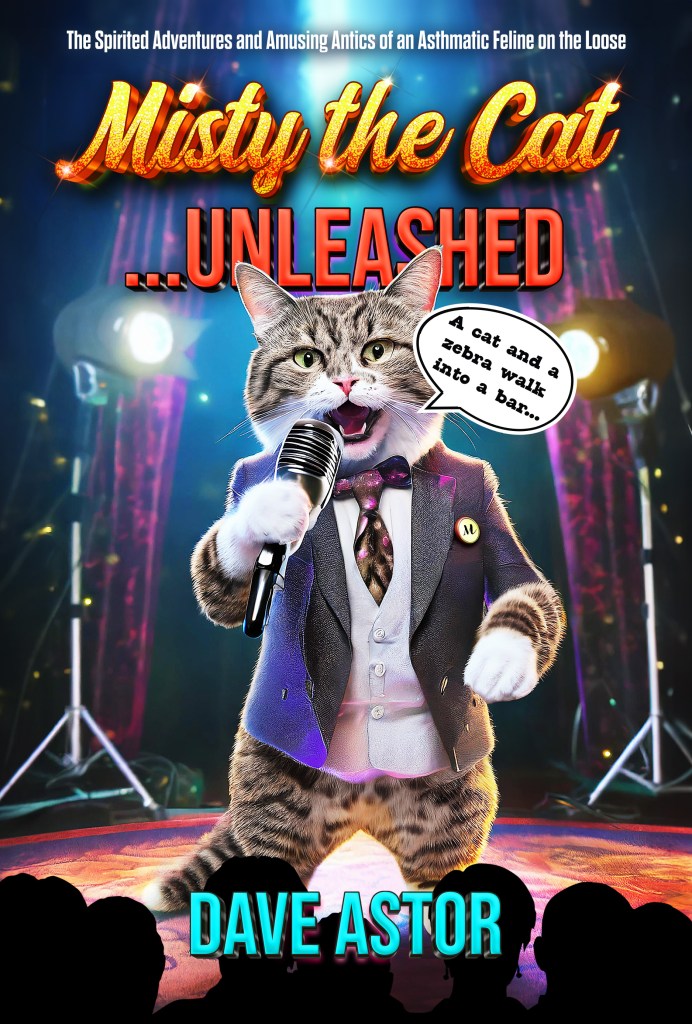
My comedic 2024 book — the part-factual/part-fictional/not-a-children’s-work Misty the Cat…Unleashed — is described and can be purchased on Amazon in paperback or on Kindle. It’s feline-narrated! (And Amazon reviews are welcome. 🙂 )
This 90-second promo video for the book features a talking cat: 🙂
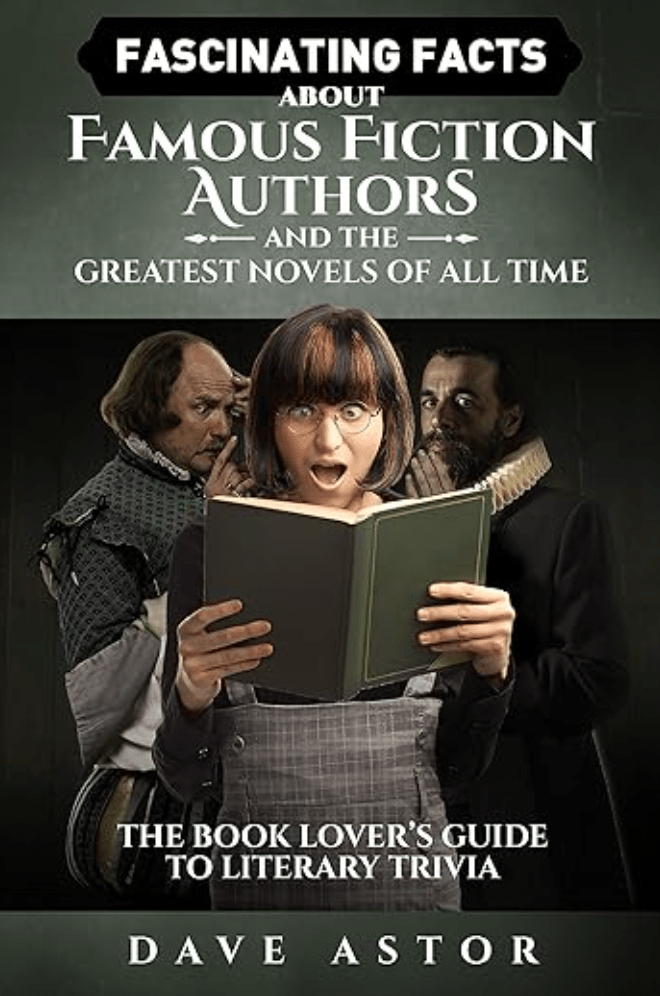
I’m also the author of a 2017 literary-trivia book…
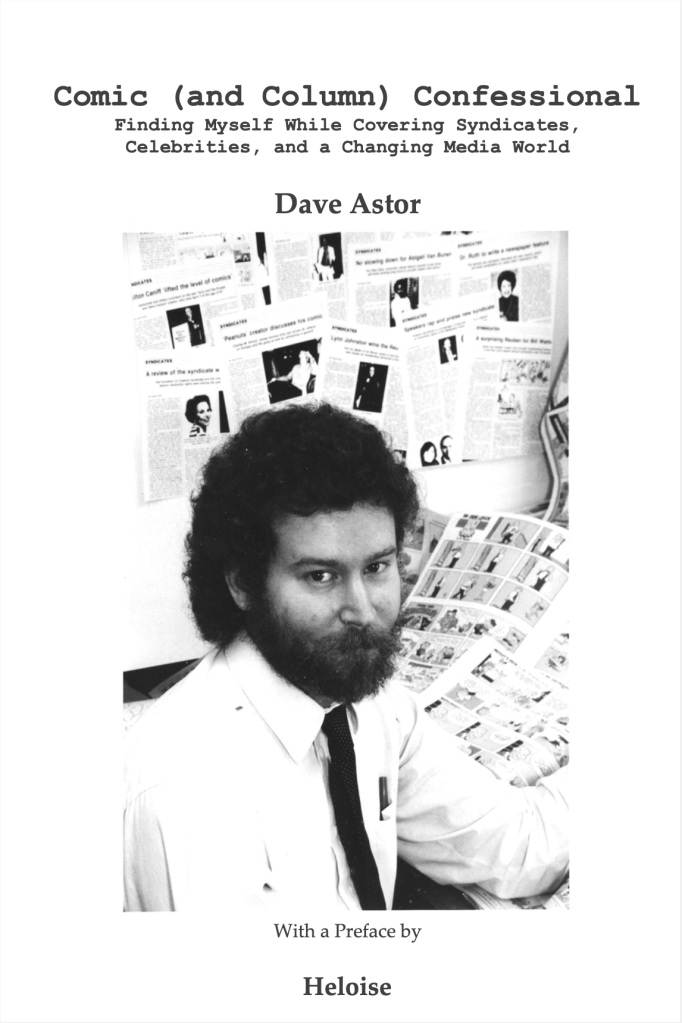
…as well as a 2012 memoir that focuses on cartooning and more, and includes many encounters with celebrities.
In addition to this weekly blog, I write the 2003-started/award-winning “Montclairvoyant” topical-humor column every Thursday for Montclair Local. The latest piece — about a new councilor and a deficit referendum decision — is here.
 Dave Astor on Literature
Super cool!
LikeLiked by 2 people
Thank you, A-Lilu lilule!
LikeLiked by 1 person
Dave, I LOVED this post!
It was breaking news for me to hear about Rush getting together like this – and I love the way you connected it to writing and life.
cheers
~Yvette
LikeLiked by 1 person
Thank you very much, Yvette! Glad you liked the post! I have some Rush fans on my social media feeds, which is where I found out about the reunion tour and new drummer. 🙂
LikeLiked by 1 person
cheers
🙂🙂
LikeLiked by 1 person
🙂
LikeLiked by 1 person
Hi Dave, I suppose some writers have lots of other creative outlets and also hold down day jobs. Lots of writers on the WordPress community only tool up writing seriously when they retired. I have not progressed my novel for over two years because of my new art hobby. There is only so much time in a day. I have only written short stories, children’s books, cake art books, and poetry during this period.
LikeLiked by 1 person
PS I’m reading Planet of the Apes? Have you read it?
LikeLiked by 1 person
I have not read “Planet of the Apes,” Robbie. Hope you’re enjoying it!
LikeLike
It is very interesting. A tale of role reversal.
LikeLiked by 1 person
Humans can always use a comeuppance. 🙂
LikeLike
Thank you, Robbie! So true that many writers have various other things in their lives — not only day jobs and other creative outlets, but family responsibilities as well — that take up time. That said, all the different things you do is awe-inspiring. 🙂
LikeLike
Creativity mounds itself around our lives.
LikeLiked by 1 person
A great way of stating that!
LikeLike
😁🩵
LikeLiked by 1 person
🙂
LikeLike
Sorry, Dave, but I am stumped. I can’t think of any other writer who had a long gap apart from those who have been mentioned. Also, I had a little look in our rather large CD collection, but no Rush there. I thought my hubby would have some of those but no.
Oh well, hey-ho.
LikeLiked by 1 person
Thank you, Chris! I don’t think there are a huge number of authors with huge novel-writing gaps. And it’s quite okay to be a Rush-less household in terms of CDs. 🙂 I was that way for a long time myself; I didn’t become a Rush fan until late in the band’s career, after which I backtracked to listen to their earlier music.
LikeLiked by 1 person
Hi Dave,
Unfortunately, something that I haven’t rushed to is actually listening to anything by Rush. I know Ana who used to comment here was a big fan and I did want to try something. And then after Neil Peart died you actually recommended an album title or two for me to check out, and yet five years later it’s still on my list of things I’d like to do. This might inspire me to finally transfer Rush to the list of music I’ve actually listened to instead of the TBLT 🙂
Sue
LikeLiked by 1 person
Thank you, Sue! It’s hard to find time to do everything! If you do listen to Rush eventually, I’d be curious what you think. I wonder if they ever played Australia? I know they did Europe, South America, and Asia in addition to the U.S. and their native Canada.
I always like a couple of Rush songs, but it’s indeed the much-missed commenter Ana who lobbied to get me more interested in Rush. She succeeded! I think I now know about 95% of their songs, and have watched many videos.
LikeLike
My husband, who is a musician, is a big Rush fan. I can’t say whether I am or not although I did watch a video of Neil Peart drumming and he was amazing.
As far as time between novels, I can add Truman Capote and Harper Lee though loosely since both had a novel a piece; however, waited to publish them. We’re talking 40 years before fate stepped in, ie Capote’s Answered Prayers and Lee’s Go Set A Watchman. Re Answered Prayers, Capote did say, “Either I’m going to kill it or it’s going to kill me.” I guess it did because it was largely unfinished when it was published. And Go Set A Watchman was actually a draft. Yikes!
LikeLiked by 1 person
Thank you for those Harper Lee and Truman Capote mentions! Most definitely, neither had Stephen King-level production. 🙂 And, yes, “Go Set a Watchman” was probably an early draft of “To Kill a Mockingbird.” (And with a pretty clunky title.)
Glad your husband is a Rush fan! Neil Peart’s drumming was indeed VERY impressive. And the size of his drum/percussion kit was mind-boggling!
LikeLike
I’m not familiar with the Rush band. I marvel at writers who can produce a book every year or two. Some novels require years of extensive and in-depth research. Such is the case of “The Secret of Secrets” by Dan Brown (2025). His last novel “Origin” was published in 2017.
LikeLiked by 1 person
Thank you, Rosaliene! It is indeed kind of awe-inspiring when authors quickly churn out book after book, especially if some research is required. Re Dan Brown, that eight-year gap is pretty long!
LikeLiked by 1 person
It’s worth the wait!
LikeLiked by 1 person
When it comes to favorite authors, readers would certainly agree! 🙂
LikeLiked by 1 person
I did not realize there was such a gap between Marilynne Robinson’s books. I can’t think of any other authors offhand, although I do think, unless you’re writing a cliffhanging series, less is more. A new book every year is not a necessity. (K)
LikeLiked by 1 person
Thank you, Kerfe! Yes, for a while it looked like Marilynne Robinson would be a one-and-done novelist. And I hear you about quality over quantity for authors not writing the kind of series that readers quickly want the next installment of.
LikeLiked by 1 person
It’s funny, I was just thinking about the author Diane Setterfield, who published The Thirteenth Tale in 2006 and only two other books after that one. I was wondering if she had another book in the works, but it doesn’t look like it.
Her books are perfect for this time of year.
-Sheila (Laurel’s sister) 🙂
LikeLiked by 1 person
Thank you, Sheila! I read “The Thirteenth Tale” a few years ago, and thought it was really good. Appropriate indeed for Halloween month. 🙂 I didn’t realize that Diane Setterfield has been an infrequent author.
LikeLike
Although it wasn’t quite as long as some of the gaps mentioned here – I did feel like it was a pretty long wait from Tommy Orange’s There, There to the prequel/sequel “Wandering Stars.” Which wasn’t quite as good as There, There but still worth a read!
LikeLiked by 1 person
Thank you, M.B.! I just looked up the gap between Tommy Orange novels and saw it was six years. That IS a bit of time for someone who’s still a fairly young author. (I liked but didn’t love “There There.”)
By the way, I tried three times to post a comment under your most recent blog post a few days ago and it didn’t take for some reason. Perhaps in your spam folder…
LikeLiked by 1 person
Oh weird!! I’ll have to see what’s going on there! Thanks for the heads up, Dave!
LikeLiked by 1 person
Thanks! The performance of blog platforms can get “interesting” sometimes. 🙂
LikeLiked by 1 person
Yeah – always some little glitch or another to work out isn’t there?!
LikeLiked by 1 person
True!
LikeLiked by 1 person
Dave, I really enjoyed this post — it reminded me that time and experience don’t just create gaps between works; they transform a writer’s voice. Some come back to the page entirely changed by what life has taught them.
Daphne du Maurier is a wonderful example of that. The haunting romantic tension of Rebecca feels worlds away from her final novel, The House on the Strand, where she explored time travel, memory, and the pull between past and present. Her writing seemed to turn inward — from passion to perception.
Leon Uris evolved too. His early novels, like Exodus, were sweeping and heroic, but later his work became quieter and more introspective, revealing the cost of conviction and the endurance of the human spirit.
It’s fascinating how writers don’t just change their subjects — they change their seeing. As Daphne du Maurier wrote in The House on the Strand:
“The essence of a man is his memory. His memories are his soul.”
Always a joy to stop by!!!
LikeLiked by 2 people
Thank you, Rebecca! Well said! So true that the time between an author’s earlier and later work can really transform their writing. It might not be better or worse, just different. Daphne du Maurier’s “Rebecca” to her “The House on the Strand” is certainly an excellent example.
Often, authors get somewhat more complex in their work as time goes on. Dickens, Twain, James Joyce, Rosamunde Pilcher, J.K. Rowling, etc.
As for Leon Uris, I’ve only read one of his novels — “Mila 18” — but it was riveting.
LikeLiked by 2 people
Check out Armageddon! That one stayed with me for a very long time.
LikeLiked by 1 person
I appreciate the recommendation, Rebecca!
LikeLiked by 1 person
Hi Rebecca, I can understand and relate to the writing changes you mentioned. I was thinking just today, how my own poetry has gone through distinct phases. Once I move on, it is really hard for me to go back and write about something that completely absorbed me before. We change as we get older. My early poems were all about babies and small children.
LikeLiked by 2 people
Change not can 😱
LikeLiked by 1 person
Corrected, Robbie. 🙂
LikeLike
💞
LikeLiked by 1 person
🙂
LikeLike
Robbie – your poetry beautifully mirrors life’s transitions, growing alongside you with each new stage of experience!!!
LikeLiked by 1 person
Exactly. I’m sure it’s the same for other writers.
LikeLiked by 2 people
I heard that Rush is back with a new, female, drummer. Exciting, but a bit sad too. Maggie
LikeLiked by 2 people
Thank you, Maggie! I agree that it’s both exciting and sad given Neil Peart’s death five years ago. He was a virtuoso on the drums (and an exceptional lyricist), but Anika Nilles is a very impressive drummer, too, from what I’ve seen on some YouTube videos.
LikeLiked by 1 person
I’ll have to watch them.
LikeLiked by 1 person
🙂
LikeLike
What a cool post, Dave! Sadly, I don’t think I’m familiar with Rush’s music, but am going to listen to some later on Spotify! I never knew that Arundhati Roy also The Ministry of Utmost Happiness. I liked “The God of Small Things” and thought that was it, so I’m glad you drew this one to my attention. I suppose one has to have something to say in order to write, and maybe it takes some author’s a while to process and refine what they want to communicate.
LikeLiked by 1 person
Thank you, Ada! Hope you enjoy a Rush song or two. 🙂
I also liked “The God of Small Things” a lot, even as it was quite depressing overall. A GREAT debut novel.
And your comment’s last line is very well said.
LikeLiked by 1 person
Hello Dave. My example isn’t anywhere near as dramatic as the gap between Homecoming and Gilead. It’s an author I love: Lewis Carroll (Charles Lutwidge Dodgson). He published “Alice in Wonderland” in 1865 and “Alice Through the Looking Glass” in 1871. After that, although he lived until 1898, he never published another novel, only a few poems. As others have already said, that’s quite enough for me–they are wonderful, clever books.
LikeLiked by 1 person
Thank you, Kim! Excellent mention! Those are quite a few years after the two Alice books. As you note, those books were so amazing that one could feel there wasn’t that much more for Lewis Carroll to say in that format.
LikeLiked by 1 person
Nice post, Dave. I think of a lot of bands who broke up , mainly because of pressure, family, insanity too much fame too soon, in a way. Bands are harder to keep together than solo artists. BUT interestingly a lot of late seem to have staged very successful come backs. Writers? Well, I think there’s a number of reasons they take breaks, especially those who met with criticism over a firs novel. But there’s plenty other reasons too why here’s gaps.
LikeLiked by 1 person
Also meant to add but hey …another temp net crash caused the comment to be sent.. There are authors who churn out tons of books but it is almost like all they’ve done is change a few names.
LikeLiked by 1 person
Thank you, Shehanne! Yes, it’s hard to keep a band together for a long time for the reasons you mentioned. Rush was among the exceptions; its three members were together for 40 years, and it helped that they were friends who didn’t have quite the egos of some rock stars, who were pretty much equally (albeit differently) talented, and who were all involved in writing the songs.
For big-name bands, there’s certainly an incentive to do concert tours again — plenty of money to be made. But there’s also the love of music and the love of performing, even if the travel can be more difficult when the musicians are older.
Being widely criticized for a novel can indeed depress a writer enough to take a break.
And, yes, some authors who write many books can sound rather similar from book to book.
LikeLiked by 1 person
My view Dave is really straightforward: quality over quantity every time! I can think of loads of writers who release book after book, who I feel could do with taking a break from writing! This could simply be me, however! interesting post as always. Thanks Dave and have a great week. Sharon 😊
LikeLiked by 2 people
Thank you, Sharon! I totally hear you. Many authors churn out book after book, and one figures the quality has to suffer somewhat even if the book is still pretty good. Of course, some authors write near-perfect stuff very fast without needing to do a lot of rewriting…
Have a great week, too!
LikeLiked by 1 person
Exactly, Dave! There is such a thing as too many books, too quickly! The quality always suffers in my view! But, as you rightly pointed out, some authors just have the knack!!! Here’s to more good books and plenty of reading!! Thank you Dave for your kind wishes.
LikeLiked by 1 person
“…more good books and plenty of reading” sounds very appealing, Sharon!
LikeLiked by 1 person
It certainly does, Dave! 😊
LikeLiked by 1 person
🙂
LikeLiked by 1 person
Howdy, Dave!
— Your thoughts on, and/or any examples of, this topic? —
Bearing in mind I have not yet read everything in the known multiverse, I long ago designated Henry Roth the poster boy for procrastinating novelists: His first novel, Call It Sleep, was published in 1934, and the four volumes of his Mercy of a Rude Stream series — A Star Shines Over Mt. Morris Park, A Diving Rock on the Hudson, From Bondage and Requiem for Harlem — were published between 1994 and 1998.
Sixty &^%$#@! years!
Whenever I consider reading the above-referenced series, I recall the line two of my beloved brothers and I would repeat among ourselves while delaying as long as possible the performance of some onerous duty or other (invariably assigned to us by our Mom): “Well, we don’t want to rush into anything.”
J.J. McGrath (Alias MugRuith1)
P.S.: Ralph Ellison is among those getting an honorable mention in this category, given the 47-year gap between Invisible Man (1952) and Juneteenth (1999), but, of course, he didn’t actually complete the latter himself.
LikeLiked by 1 person
Thank you, J.J.! That Henry Roth writing gap is astounding! And, yes, that Ralph Ellison gap stretching into posthumous completion. Reminded me a bit of Harper Lee, although her “Go Set a Watchman” book published decades after “To Kill a Mockingbird” was probably a “completed” earlier draft of “TKAM.”
LikeLike
Subdivisions and Tom Sawyer two favorite Rush songs I am remembering from high school years. Infer sold out concerts,high prices,fans waiting for so many years for reunion. I believe if I heard correctly on 60 minutes the book 1929 by Andrew Ross Sorkin took him 10 years to write,not literature but about great depression. I think I heard Chappell Roan say it yook 6 years to write her last album. Like literature many who make music can take years to either make a new album if this words till used or decades even to have a reunion.
Michele
E @ P way back
LikeLiked by 1 person
Thank you, Michele! Yes, there can be long gaps/slow-going for fiction writers, nonfiction writers, musicians…
My younger daughter is a big fan of Chappell Roan; she recently saw her in concert in Queens. Roan definitely worked hard for her several-years-delayed level of success.
“Subdivisions” is one of my favorite Rush songs!
LikeLike
Dave, I thought of you when I heard RUSH was going on tour. Will you be able to see them?
Although they are playing 4 nights in Toronto, they are playing at an arena with 20,000 seats. I’ve been there and it’s just to many people for me.
So, the topic at hand.
Tolkien took 17 years to follow The Hobbit with Lord of the Rings.
Well, that’s my only thought, and I didn’t rush it!
LikeLiked by 2 people
Thank you, Resa! Great/relevant Tolkien mention!
I’d love to see Rush — formed in your city! — when they play NYC, but it might be too pricey for me. Will see. I can always watch 2026 concert clips on YouTube. 🙂 I hear you about big concert venues; I’ve also gotten a bit leery of them in my older years. I saw U2 with my older daughter in the old Giants football stadium in New Jersey, and being among 80,000 people was exhausting.
“Well, that’s my only thought, and I didn’t rush it!” — ha ha. 😂
LikeLiked by 2 people
Thanks Dave!
😂
Concerts have become outrageously expensive. Prior to streaming, record sales were where the money was, and concerts were more of a promotional tool.
Now, royalties from streaming aren’t much, unless you are getting 100’s of millions at least.
So, expensive concerts and selling lots of merch is a bigger money maker.
Anyway, if you go, I’m sure you’ll love it.
LikeLiked by 1 person
Exactly, Resa! Concerts are SO expensive, and they’re the prime money-maker for many musicians. I think the U2 tickets were about $250 apiece — and that was several years ago, with the seats not close at all to the stage.
LikeLiked by 1 person
YIKE$!
…. and I still listen to the radio. I like a good DJ!
LikeLiked by 1 person
I also enjoy the radio, which I mostly listen to when driving. The individualism of radio DJs is often constrained these days by corporate ownership, but some manage to be creative. It of course helps to be on a college station or some other kind of independent station.
LikeLiked by 1 person
And, as you probably know, Rush did a radio-themed song: 🙂
LikeLike
Yes!
I do miss some of the retired DJ’s.
LikeLiked by 1 person
Me, too! In the New York area, several of the great ones were at WNEW-FM when it had a freer format.
LikeLiked by 1 person
Yes.. now it’s just announcing the play list.
If they are worried about redundancy at all, they need to return to freedom!
LikeLiked by 1 person
A “return to freedom” would be nice, Resa, but I assume the soul-deadening corporate approach must be somehow profitable for the ownership. 😦
LikeLiked by 1 person
I can’t think of any examples off the top of my head. The only tangential example I can think of is Donald Hall’s Essays after Eighty, in which he discusses how poetry abandoned him, and he couldn’t write it anymore.
LikeLiked by 2 people
Thank you, Liz! Poignant that writer’s block can affect excellent poets (and novelists, etc.). Good that Donald Hall could at least produce essays instead. 🙂
LikeLiked by 1 person
You’re welcome, Dave!
LikeLiked by 1 person
Interesting topic and tie in between music and writing. Apparently creativity doesn’t run on a precise timeline in any field. I don’t have any examples to add, but I’ll check back to see if anyone leaves some in the comments.
LikeLiked by 2 people
Thank you, Dan! Very true that creativity often doesn’t run on a precise timeline, though there are of course exceptions: including some authors who churn out novels quite regularly. One example would be the Jack Reacher thrillers; a new one arrives each fall like clockwork. Perhaps they’re kind of formulaic, but I like them. 🙂
LikeLiked by 1 person
An interesting post, Dave, yet not one that I can say too much about. I’m not familiar with Rush, but I’ll check them out; they sound worthwhile. Authors with long gaps between books? I can think of Flaubert who took 5 years over ‘Madame Bovary’, but I know nothing of how long his other books took. Somehow it makes me think of the polar opposite, Balzac, who spent money as fast as he earned it and knocked them out at speed because he had one hell of a lifestyle to support. I don’t know how prolific authors do it, and there are of course those who churn out a constant stream of pulp. I’d prefer to be the person who wrote just one book, but a great one, like Harper Lee. We’re all different, I guess. Thanks for the post, and if I think of any more I’ll be back. 😎
LikeLiked by 2 people
I’m with you, Laura. I’d be happy if I wrote just one great book.
LikeLiked by 2 people
Me too. From your mouth to God’s ear. 🙂
LikeLiked by 2 people
😊
LikeLiked by 1 person
Thank you, Laura! I didn’t realize “Madame Bovary” took five years to write. A long time, but of course some novels have taken even longer. And, yes, Balzac churned out an incredible amount of words for someone who lived to only 51. (Obviously, his ceaseless work and endless coffee drinking might have been a major reason why he lived to only 51.) There IS something to be said for writing one brilliant book compared to a lot of not-as-great books, but, as you know, there were several Balzac gems amid his prolific output.
LikeLiked by 1 person
Quite right, Dave and I’m grateful for each and every one of them. At a practical level it must be difficult to earn a living by writing alone; I’d have starved years ago If I’d attempted it. I’m guessing therefore that those writers with large gaps between books have some other source of income which has to be prioritised. Well done them for managing any books at all!
LikeLiked by 1 person
That’s a terrific point, Laura, about it being so hard to earn a living just by writing that writing gaps can often be at least partly explained by the need to make some money doing other things. I suppose printing up counterfeit money isn’t an option… 🙂
LikeLiked by 1 person
Ha ha, yes. I suppose they could give it a go – and then write a book about it afterwards from wherever they’ve sought sanctuary. 🙂
LikeLiked by 1 person
Ha! 😂 Yes! I think there’d be some interest in that book. 🙂
LikeLiked by 1 person