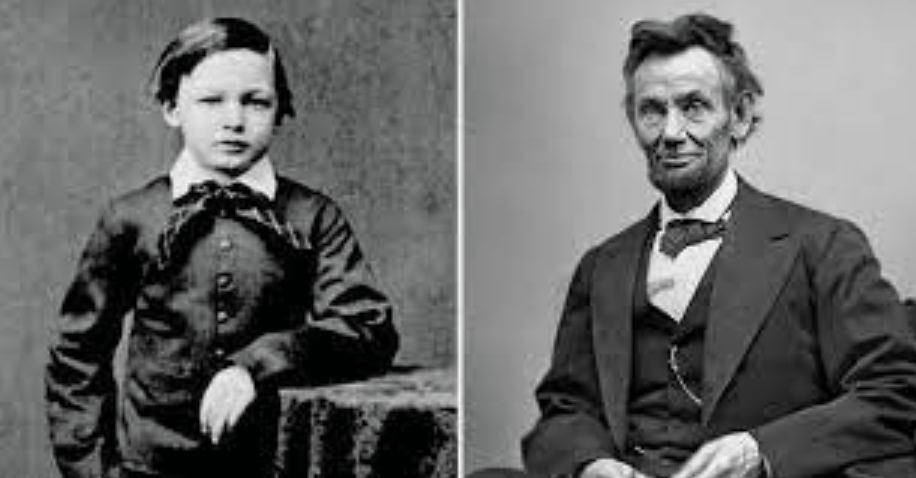
Abraham Lincoln and his son Willie.
I’ve read 46 novels this year. A bit under my annual goal of one a week, but I certainly met my annual goal of experiencing all kinds of emotions through literature. Here’s what I call my “-est list” for 2023:
Weirdest book I read: George Saunders’ Lincoln in the Bardo, which I finished a few days ago. Written more like a play than a novel, it features a chorus of ghosts stuck in purgatory as President Lincoln’s deceased 11-year-old son Willie arrives among them in 1862. Original, moving, darkly humorous, choppy, repetitive, and many other adjectives. Plus some impressive invented language.
Saddest book focusing on many characters: Leon Uris’ Mila 18, the historical-fiction novel about the Jewish uprising in the Warsaw Ghetto — and the Nazi crushing of that doomed uprising after some early against-all-odds success. Heartbreaking.
Saddest book focusing on a small number of characters: Rohinton Mistry’s A Fine Balance. Such a downer of a novel but so well-written. Some warm moments amid the inhumanity, with much of that inhumanity “courtesy” of the vile powerful against the powerless.
Funniest book: Terry Pratchett’s Small Gods, which includes plenty of satirical commentary about religion and more.
Most escapest…oops…escapist book: John Grisham’s Playing for Pizza. Football in Italy! Where a disgraced NFL quarterback goes to play when no other QB job is available. (Football as in American football, not soccer.)
Dual-timeline-iest book: Barbara Kingsolver’s Unsheltered, by the brilliant author who hasn’t lost a step in 35 years of novel writing. Unsheltered focuses on two sets of characters living in the same place, more than a century apart. One of my favorite books read this year.
Sympathize-with-the-protagonist-the-mostest book: Several Kristin Hannah titles were in the running for this, but I’ll go with The Four Winds and its beleaguered Elsa Martinelli as she lives “the life of Joad.” (The novel’s story line has some deliberate similarities to John Steinbeck’s The Grapes of Wrath.)
Subtlest book: Kent Haruf’s Our Souls at Night. A low-key but never boring work about a woman and man who briefly find happiness together late in life. Haruf’s Plainsong, which focuses on a wider, intergenerational array of characters, was a close second in poignancy.
Don’t-bring-this-to-a-block-party-iest book: Joy Fielding’s compelling Cul-de-Sac, about harrowing stuff that happens in and between the families on one suburban Florida street.
Clunkiest book: Dan Brown’s The Da Vinci Code. Liked the intricate plot. Didn’t like the often-awkward writing.
Longest book: J.K. Rowling’s The Ink Black Heart, the sixth installment of the series starring private investigators Cormoran Strike and Robin Ellacott. Rowling (writing as Robert Galbraith) rambles on for more than 1,000 pages but I mostly loved it — as I also loved the first five novels in a series that skillfully combines mystery/thriller elements and interpersonal dynamics.
Newest book: Lee Child and Andrew Child’s Jack Reacher-starring The Secret — which I just read, two months after it was published in October 2023. Few mystery/thriller books ratchet up the tension like those in the Reacher series do, and the latest novel (number 28) is excellent.
Oldest books: Georgette Heyer’s 1925 Simon the Coldheart and Vicki Baum’s 1929 Grand Hotel. Reminds me that I should have gotten to some novels from the 1800s last year, or did I read most of the 19th-century ones I’m going to read in the decades before 2023 rolled around? 🤔 Nah, this year was just a blip… 🙂
Novels you read in 2023 that left the most impression on you? And…Happy New Year!
My literary-trivia book is described and can be purchased here: Fascinating Facts About Famous Fiction Authors and the Greatest Novels of All Time.
In addition to this weekly blog, I write the 2003-started/award-winning “Montclairvoyant” topical-humor column every Thursday for Montclair Local. The latest piece — a 2023 year in review about a very newsworthy 12 months in my town — is here.





 Dave Astor on Literature