Kamala Harris and Tim Walz. (Reuters photo.)
With the August 19-22 Democratic National Convention starting tomorrow, there’s a memorable duo atop the party’s 2024 ticket: presidential candidate Kamala Harris and her vice presidential running mate Tim Walz. Harris is of course the current veep who’d be the first female commander-in-chief in U.S. history (as well as the second person of color ever to lead the country) and Walz is a populist with “everyman” charisma and a record of getting people-friendly policies passed as governor of Minnesota.
There have also been many memorable duos in literature — whether they’re friends, work partners, or in other human configurations. (I’m mostly omitting lovers, spouses, siblings, and the like from this post because I’ve focused on those kinds of characters before.) It can be fascinating to see how each member of a fictional duo interacts with the other, whether the two people are somewhat alike or “odd couple” different, whether the whole of the pairing is greater than the sum of its parts, etc.
Duos that immediately came to my mind include teen Huck Finn and runaway slave Jim in Mark Twain’s Adventures of Huckleberry Finn, trying-to-save-their-world hobbits Frodo Baggins and Samwise Gamgee in J.R.R. Tolkien’s The Lord of the Rings trilogy, spacey Don Quixote and his more practical sidekick Sancho Panza in Miguel de Cervantes’ Don Quixote, 19th-century friends Eliza Sommers (a traveler to the U.S. from Chile) and Tao Chi’en (a cook and physician) in Isabel Allende’s Daughter of Fortune, farm woman Dellarobia Turnbow and professor/scientist Ovid Byron in Barbara Kingsolver’s Flight Behavior, pals-from-childhood Tully Hart (a TV journalist) and Kate Mularkey (a stay-at-home mom) in Kristin Hannah’s Firefly Lane, and the two Superman-creator-like cartoonists in Michael Chabon’s The Amazing Adventures of Kavalier & Clay, to name a few.
Of course, there are also plenty of dynamic duos in mystery/detective/thriller fiction. Cormoran Strike and Robin Ellacott of J.K. Rowling’s crime novels (written under the alias Robert Galbraith), Harriet Vane and Lord Peter Wimsey of various Dorothy L. Sayers mysteries, Joe King Oliver and Melquarth Frost of two Walter Mosley mysteries, Lisbeth Salander and Mikael Blomkvist of Stieg Larsson’s Millennium Trilogy (first book: The Girl with the Dragon Tattoo), Arthur Conan Doyle’s Sherlock Holmes and Dr. Watson, Agatha Christie’s Hercule Poirot and Captain Hastings, and Lee Child’s Jack Reacher and Frances Neagley, among others.
In addition, I’ve enjoyed human/animal duos such as Ayla and the horse Whinney in Jean M. Auel’s prehistoric book series that begins with The Clan of the Cave Bear, and Link Ferris and the collie Chum in Albert Payson Terhune’s His Dog, to cite just two pairings.
There’s also Robert Louis Stevenson’s Dr. Jekyll and Mr. Hyde. But they’re actually one person, so that doesn’t quite count. 🙂
I’ll conclude by mentioning one quite nasty real-life duo: Kamala Harris’ and Tim Walz’s Republican presidential and vice presidential opponents Mr. Hyde and Mr. Hyde. Oops…Donald Trump and J.D. Vance.
Your thoughts about, and examples of, this topic?
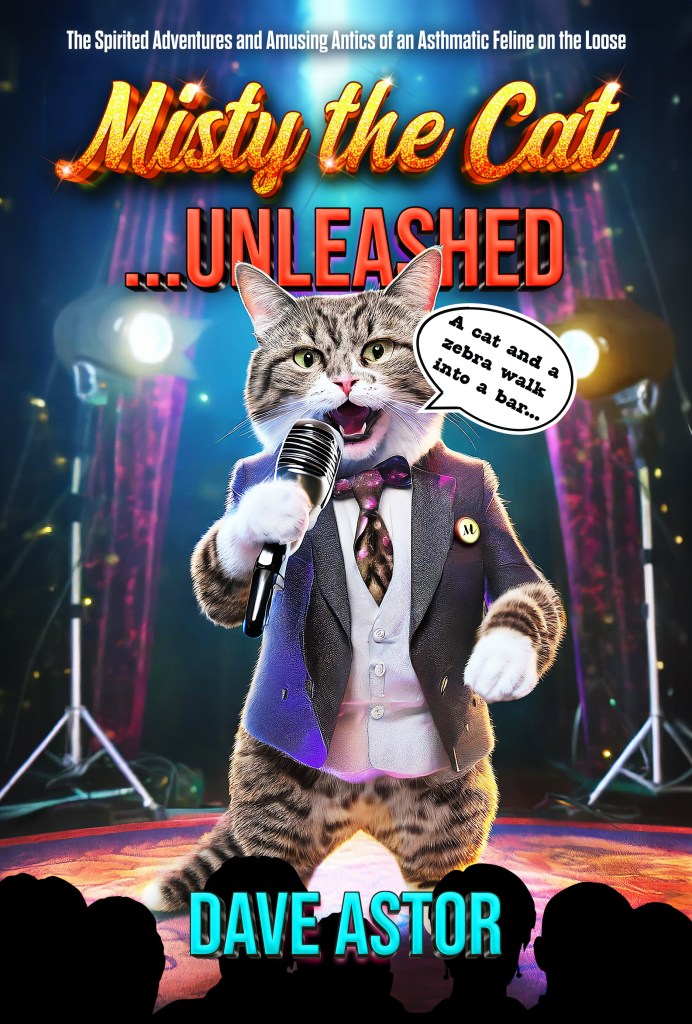
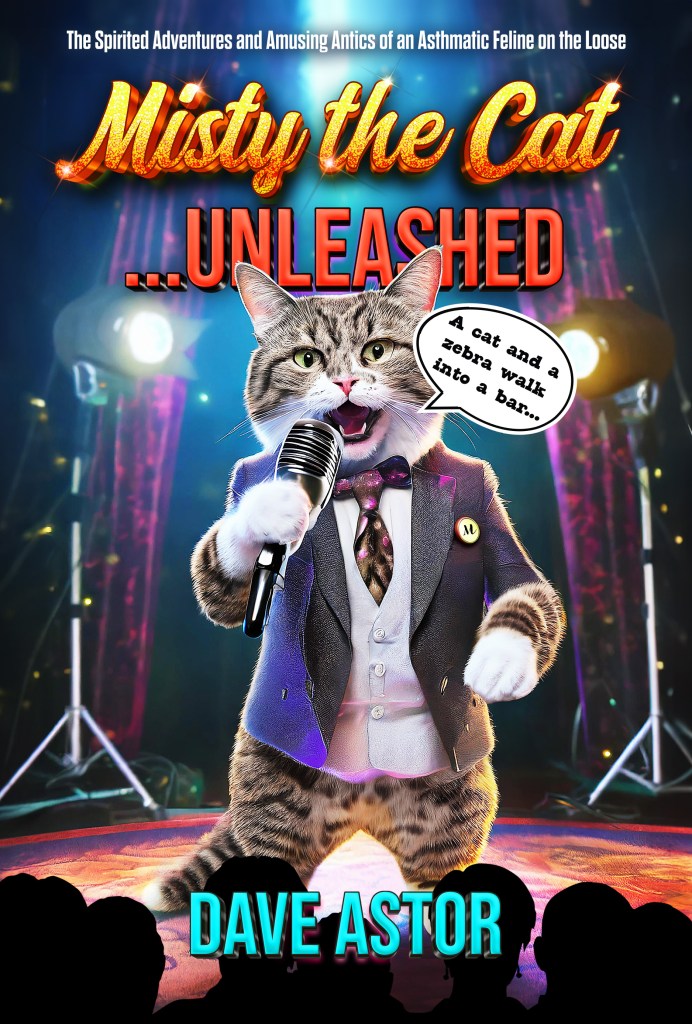
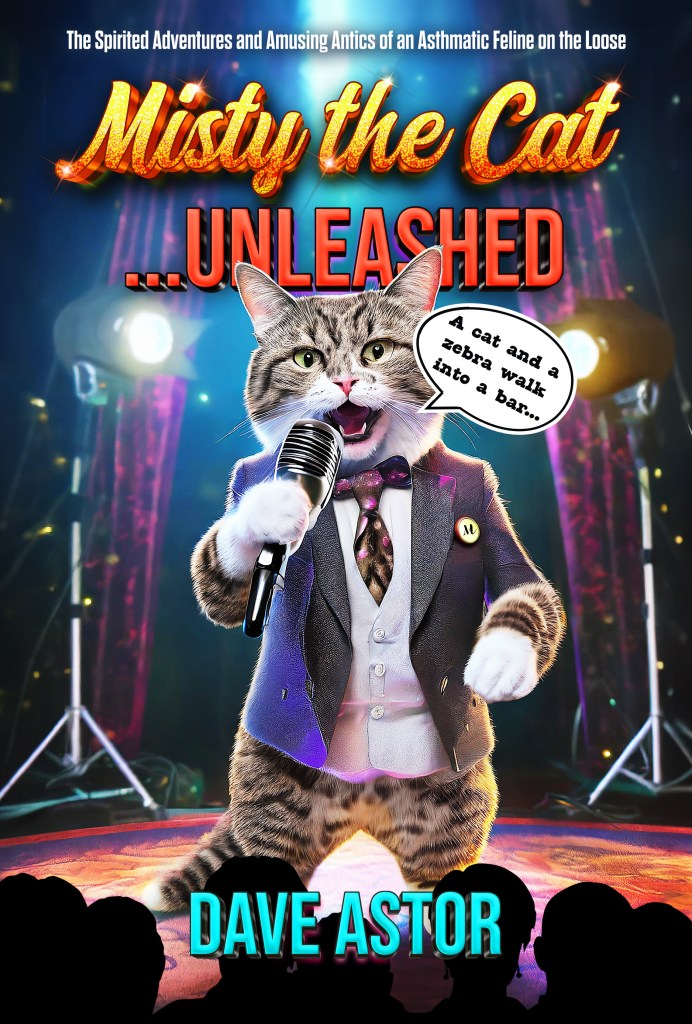
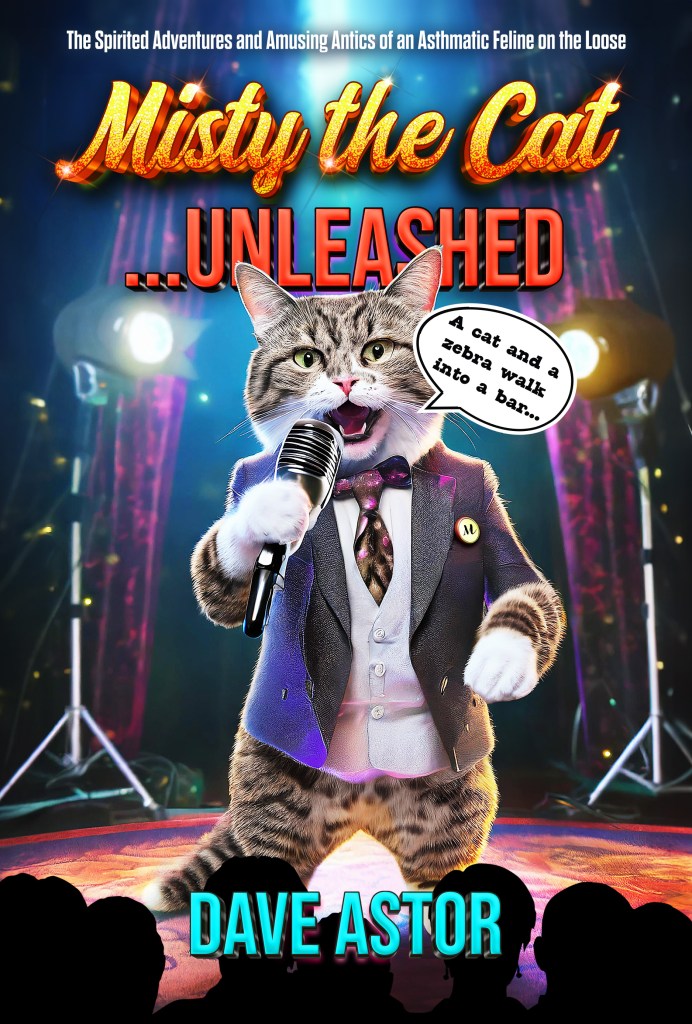
My comedic 2024 book — the part-factual/part-fictional/not-a-children’s-work Misty the Cat…Unleashed — is described and can be purchased on Amazon in paperback or on Kindle. It’s feline-narrated! (And Misty says Amazon reviews are welcome. 🙂 )
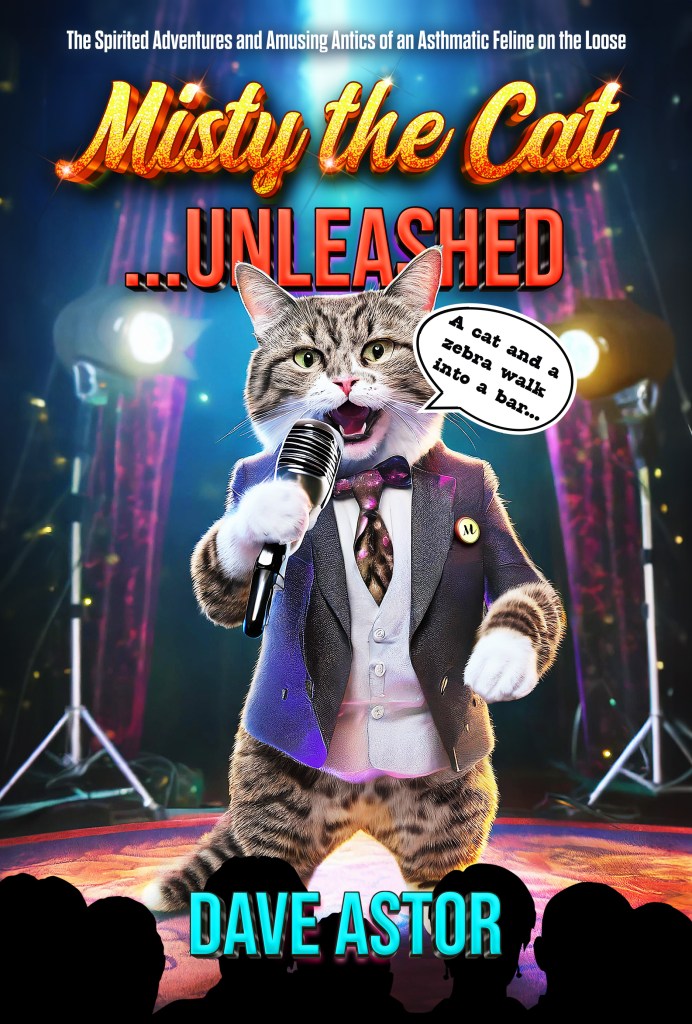
This 90-second promo video for my book features a talking cat: 🙂
In addition to this weekly blog, I write the 2003-started/award-winning “Montclairvoyant” topical-humor column every Thursday for Montclair Local. The latest piece — about yet another lawsuit in my town and more — is here.