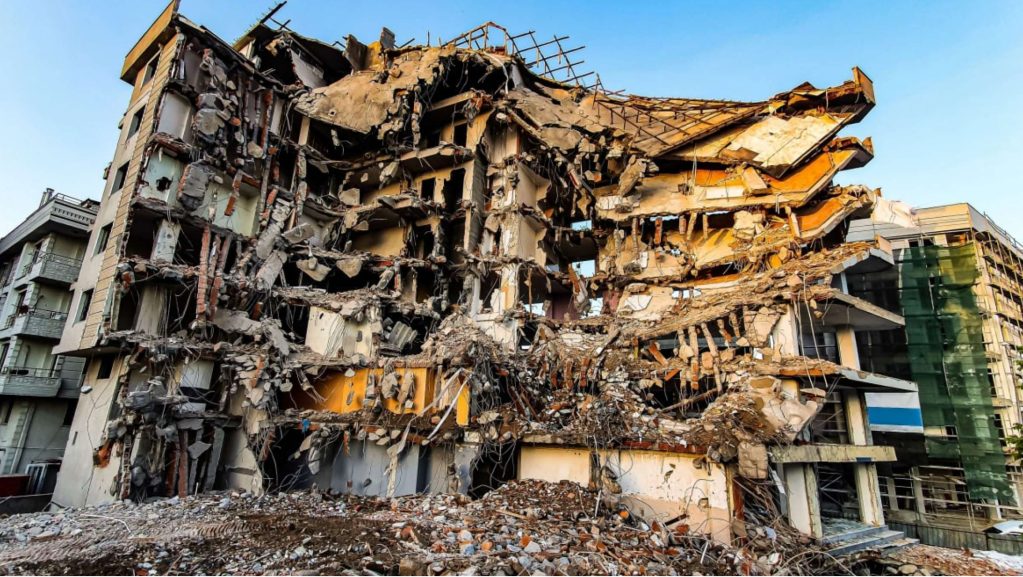
As the cycle of tragedy in the Mideast continues — decades of vicious oppression of Palestinians by Israel, vicious attacks on Israel by Hamas, all the deaths, etc. — among the words that describe the ghastly situation is: disaster. And since this is a book blog, I’m going to write about disaster in literature.
There are of course novels about devastating wars, novels about the unimaginable horror of the Holocaust, and so on, but I’ve covered those topics before. This post will be mostly about one-off disasters happening within a relatively small window of time.
As we read about these situations — fictional but reminiscent of, and sometimes based on, real disasters — there is of course much drama amid the dread. Instances of courage, instances of cowardice, wondering if the characters will survive, etc.
Before I knew last week that I would write this post, I happened to be reading Chitra Banerjee Divakaruni’s compelling novel One Amazing Thing — about nine people in an unnamed American city trapped in a passport/visa office when a major earthquake hits. The interpersonal dynamics among this multiracial group are fascinating as they try to control their fear while thinking of ways to escape or at least survive until possible rescue. Meanwhile, they pass some of the agonizing hours telling at-times-enthralling tales to each other about their lives — making the novel almost a short-story collection of sorts.
I also thought of Ann Patchett’s Bel Canto, about attendees at a posh party in a South American country who are taken hostage. In this novel, the interaction is not only between the party guests but also between the guests and the attackers during what turns out to be a four-month standoff. Good vs. evil? It’s more complicated than that.
Paul Gallico’s The Poseidon Adventure? A tidal wave turns a cruise ship upside down. Not ideal. But quite riveting as the surviving passengers try to save themselves.
In Donna Tartt’s The Goldfinch, a museum bombing is the focus only of the first part of the novel, but that bombing sets off a series of consequences, actions, and events that drive the rest of the Pulitzer Prize-winning work.
What will happen at the end of the book hangs over Nevil Shute’s On the Beach. Nuclear war has devastated much of the Earth, a massive radioactive cloud is heading toward Australia, and the novel’s characters in and near Melbourne know it’s coming.
Your thoughts about, and examples of, this topic?
My literary-trivia book is described and can be purchased here: Fascinating Facts About Famous Fiction Authors and the Greatest Novels of All Time.
In addition to this weekly blog, I write the 2003-started/award-winning “Montclairvoyant” topical-humor column every Thursday for Baristanet.com, which has merged with Montclair Local. The latest piece — about the split-vote approval of a controversial redevelopment in my town — is here.






 Dave Astor on Literature