An Overview of Oval Office Occupants in Fiction

Chimamanda Ngozi Adichie and Barack Obama

With the Presidents’ Day holiday in the United States coming up tomorrow, February 20, I thought I’d focus on mentions of and appearances by real-life presidents in novels I’ve read. Some of those commanders-in-chief were good leaders, others were bad leaders; some of their fiction cameos show them when they’re president, others show them before entering the White House. I’ll go chronologically backward in time.

Barack Obama is referenced in Chimamanda Ngozi Adichie’s novel Americanah — specifically, the reaction to his 2008 presidential campaign and election from protagonist Ifemelu, a young Nigerian woman who emigrated to the U.S.

Jonathan Franzen’s novel Freedom name-checks President George W. Bush when it focuses on character Joey Berglund’s response to the not-warranted U.S. invasion of Iraq and subsequent disastrous war.

Stephen King’s novel The Dead Zone includes a cameo from 1976 presidential candidate (and of course eventual winner) Jimmy Carter.

Herman Wouk hits the White House trifecta in War and Remembrance — which includes multiple scenes with Franklin Delano Roosevelt, a brief cameo near book’s end by FDR successor Harry Truman, and an appearance by future president Dwight Eisenhower in his WWII commander days. FDR also gets quite a few pages in Wouk’s War and Remembrance prequel The Winds of War when fictional character Victor “Pug” Henry becomes a confidant to the Oval Office occupant.

A pre-presidential Theodore Roosevelt, when New York City’s police commissioner, is a major supporting character in Caleb Carr’s crime novel The Alienist.

President Ulysses Grant appears briefly in Darryl Brock’s time-travel novel If I Never Get Back when players on baseball’s 1869 Cincinnati Red Stockings squad (including teammate-from-the-future Sam Fowler) meet the former Civil War general at the White House.

Abraham Lincoln has been a character in many novels; unfortunately, none I’ve read. But I’ve been moved by two Walt Whitman poems focusing on the 16th president: “O Captain! My Captain!” and “When Lilacs Last in the Dooryard Bloom’d.”

George Washington appears in Diana Gabaldon’s Outlander series during his time as Revolutionary War general — several years prior to being elected America’s first president. 

Any novels fitting this theme you’d like to mention? I realize I’ve just skimmed the surface; I can think of several novels featuring U.S. presidents I didn’t include in my post because I haven’t read those books (yet). I have a feeling you’ll name some of them, and others. 🙂

If you want, you could also mention novels with fictional American presidents/presidential candidates. Among the books that come to mind that I’ve read are It Can’t Happen Here by Sinclair Lewis, The President’s Plane Is Missing by Robert Serling (brother of Twilight Zone creator Rod), and Stephen King’s aforementioned The Dead Zone

My literary-trivia book is described and can be purchased here: Fascinating Facts About Famous Fiction Authors and the Greatest Novels of All Time.

In addition to this weekly blog, I write the 2003-started/award-winning “Montclairvoyant” topical-humor column for Baristanet.com every Thursday. The latest piece — featuring a weird football/anti-football theme — is here.

For Some Authors, a Change Is Gonna Come

Many writers switch things up to a degree during their careers, but some do pretty radical makeovers. 

One is J.K. Rowling, who became internationally famous with her fabulous seven-book Harry Potter series. But rather than remain completely Potter-focused, the English author pivoted to penning the non-magical novel The Casual Vacancy before moving to crime fiction starting in 2013 under the pen name Robert Galbraith. I’m currently reading 2022’s sixth book in that series starring private investigators Cormoran Strike and Robin Ellacott, and The Ink Black Heart (with its online harassment theme and other major digital elements) is so far as good as its five predecessors. Which I’m grateful for, because the novel is more than 1,000 pages. 😵

(I also mentioned Rowling’s avoidance of being pigeon-holed in a 2021 post that has some similarities to this piece but contains mostly different content.)

Sometimes, a radical makeover involves a writing-format switch. For instance, Scotland’s Sir Walter Scott was a renowned poet during the first part of his career before becoming a prolific novelist (Ivanhoe, Rob Roy, etc.). Roughly 150 years later, Canada’s Margaret Atwood made her own highly successful transition from poetry to novels (The Handmaid’s Tale, Cat’s Eye, etc.).

Flipping that script was Thomas Hardy, a renowned novelist during the first half of his career (Far from the Madding Crowd, Tess of the d’Urbervilles, etc.) before concentrating on poetry. Heck, the English author lived and wrote for 33 years after the 1895 publication of his final novel: Jude the Obscure.

Nathaniel Hawthorne came out with an amateurish first novel — Fanshawe (1828) — when he was not yet 25, but then focused on short stories over the next two decades. Some of the tales were gems, and Hawthorne enjoyed a modicum of success, but it was the American author’s return to novel-writing with 1850’s The Scarlet Letter that earned him wide fame during his lifetime and beyond.

India’s Arundhati Roy made a stunning novelistic debut in 1997 with The God of Small Things, only to turn to political nonfiction and activism for two decades before finally producing a second novel.

Any writers you’d like to mention who did the major makeover thing?

Speaking of changes, here’s Phil Ochs singing…”Changes”:

And speaking of major makeovers, I was a football fan when I was much younger, but now hate the sport for its health-shattering violence, greedy right-wing billionaire owners, racism, sexism, homophobia, and pseudo-patriotic trappings. So, I’m not watching today’s Stupor…um…Super Bowl. 🙂

My literary-trivia book is described and can be purchased here: Fascinating Facts About Famous Fiction Authors and the Greatest Novels of All Time.

In addition to this weekly blog, I write the 2003-started/award-winning “Montclairvoyant” topical-humor column for Baristanet.com every Thursday. The latest piece — about my local council FINALLY voting to initiate the firing of the municipality’s women-harassing township manager — is here.

Nicknames Can Be More Consequential Than Nicknacks

There are various ways we learn about a fictional character, and one shorthand route is when she or he has a memorable nickname.

Such is the case with the co-star of Kristin Hannah’s riveting, heartbreaking 2015 novel The Nightingale, which I finished yesterday. Isabelle is a young French woman who, during World War II, is nicknamed “The Nightingale” when she bravely risks her life time and time again sneaking downed British and American pilots out of Nazi-occupied France. Isabelle’s nickname evokes the night (the best traveling time to avoid detection during her fraught trips) as well as the melodious nightingale bird and the founder of modern nursing Florence Nightingale. The prickly, rebellious Isabelle — just 18 when she joins the French Resistance — is a helper. 

Obviously, a nickname can have negative connotations, too. In another WWII novel, Kate Quinn’s 2019 thriller The Huntress, the title is the sobriquet of a woman who was a murderous Nazi before changing her identity and marrying an American. The man has no idea of his new wife’s awful history, but his daughter suspects there’s something fishy about her stepmother. The daughter and others try to out “The Huntress.”

Diana Gabaldon’s engrossing Outlander — the title of her first novel and the overall name of the series even as the other eight books have their own titles — is the nickname of 20th-century-born Englishwoman Claire, who meets 18th-century-born Jamie of Scotland when she time travels. Claire is an “Outlander”: someone from another time and place.

Then there is Isabel Allende’s Zorro (the Spanish word for fox), whose title character’s real name is Diego de la Vega. Allende’s 2005 novel is an origin story of the masked, sword-wielding justice seeker created by Johnston McCulley in 1919.

Also, Andy Weir’s 2011 novel The Martian gets its title from the nickname of botanist-astronaut Mark Watney when he gets stranded alone on Mars.

Some nicknames can be partly ironic, as in F. Scott Fitzgerald’s The Great Gatsby. Jay Gatsby has laboriously tried to build an aura of greatness around himself, but he’s actually rather pathetic.

I blogged about nicknames in fiction once before in a 2016 post that contained mentions of such novels as Julia Alvarez’s In the Time of the Butterflies (1994), Bernard Malamud’s The Natural (1952), and James Fenimore Cooper’s 19th-century “Leatherstocking” series of five interrelated books.

“The Butterflies” is the nickname of the Mirabal sisters who, in Alvarez’s historical-fiction novel, courageously oppose vicious Dominican Republic dictator Rafael Trujillo.

“The Natural” is the nickname of Roy Hobbs, a baseball phenom whose given name is an amalgam of real-life Major League legends Ty Cobb and Rogers Hornsby. But life is far from easy for Hobbs, even as the 1984 movie version starring Robert Redford gave some of Malamud’s novel a more uplifting spin not true to the book.

Natty Bumppo of the “Leatherstocking” series gets several nicknames. The sharp-shooting, wilderness-savvy character is “The Pathfinder” in one book, “The Deerslayer” in another book, “Hawkeye” in The Last of the Mohicans, etc. All monikers with more gravitas than “Bumppo,” that’s for sure. 🙂

My 2016 post also mentioned — among other characters — “The Artful Dodger” (pickpocket Jack Dawkins) of Charles Dickens’ Oliver Twist and “He Who Must Not Be Named” (villainous Lord Voldemort) of J.K. Rowling’s Harry Potter series. 

Any nicknames in fiction that come to mind for you?

My literary-trivia book is described and can be purchased here: Fascinating Facts About Famous Fiction Authors and the Greatest Novels of All Time.

In addition to this weekly blog, I write the 2003-started/award-winning “Montclairvoyant” topical-humor column for Baristanet.com every Thursday. The latest piece — about dueling petitions and more — is here.

Young Characters in Literature

Credit: Amor Towles/Penguin Random House

There are many memorable kids and teens in literature, and I’m going to discuss a few of them in a blog post so young it was born on January 29, 2023. 🙂

A terrific non-adult character I most recently encountered is 8-year-old Billy Watson in Amor Towles’ The Lincoln Highway, which I read and very much enjoyed last week. The precocious Billy is smart, bookish, lovable, and adventurous while navigating a life that sees his 18-year-old brother spend time in prison, his mother abandon the family, his father die, and more. He often acts like a mini-adult yet is still charmingly boyish in certain ways.

Towles is obviously masterful at creating and depicting young people as supporting characters, because he also featured the unforgettable girls Nina and Sofia in his wonderful novel A Gentleman in Moscow that I read last year. They are mother and daughter, but both appear as children in different parts of a book that spans decades.

Then there’s the charming Giuseppe in Elsa Morante’s novel History (he’s the son of a beleaguered single mother in Italy during World War II); the feisty Maggie Tulliver as a girl in the first part of George Eliot’s The Mill on the Floss; the brainy, studious, ambitious Francie Nolan of Betty Smith’s A Tree Grows in Brooklyn; the conflicted teen John Grimes in James Baldwin’s Go Tell It on the Mountain; the brave teen Starr Carter, whose male friend is murdered by police in Angie Thomas’ The Hate U Give; the wise-beyond-his-years Ponyboy Curtis of S.E. Hinton’s The Outsiders; and only child Jody Baxter, who co-stars with a fawn in Marjorie Kinnan Rawlings’ 19th-century-set The Yearling.

Taking place WAY before that, in prehistoric times, is Jean M. Auel’s The Clan of the Cave Bear and its amazing young protagonist Ayla. 

Some fictional young people are so iconic that one doesn’t need to say much about them. They include Mark Twain’s Tom Sawyer and Huckleberry Finn, Charlotte Bronte’s Jane as a girl in the first part of Jane Eyre, L.M. Montgomery’s Anne Shirley of Anne of Green Gables, Harper Lee’s Scout Finch of To Kill a Mockingbird, Charles Dickens’ Pip (Great Expectations) and Oliver Twist, Lewis Carroll’s Wonderland-visiting Alice, L. Frank Baum’s Dorothy Gale of The Wonderful Wizard of Oz, J.K. Rowling’s Harry Potter and Hermione Granger, and Louisa May Alcott’s Meg, Jo, Beth, and Amy of Little Women.

Obviously, readers of the novels I mentioned and the many kid-or-teen-starring novels I didn’t mention see plenty of great and sometimes fraught interactions between young siblings, between young friends, and between young people and adults. Readers also might remember their own childhoods, or, if they’re still young themselves, currently relate to the characters — providing that the adult authors make those characters believable and interesting enough!

Also, we’re of course interested in what young people in fiction will be like when they grow up. In those novels that span enough years, we find out. 🙂

Your favorite kids and teens in literature?

My literary-trivia book is described and can be purchased here: Fascinating Facts About Famous Fiction Authors and the Greatest Novels of All Time.

In addition to this weekly blog, I write the 2003-started/award-winning “Montclairvoyant” topical-humor column for Baristanet.com every Thursday. The latest piece — which includes the latest about a proposed redevelopment, an expansion of bus service, and more — is here.

The Unexpected in Fiction

I’ve blogged about surprises in literature before, but I’m going to take a somewhat different angle this time.

It’s a good thing when authors — whether their usual writing approach is formulaic or not — offer the unexpected. That helps keep things fresh for the authors…and the readers.

I thought about this last week while enjoying the latest Jack Reacher thriller — No Plan B by Lee Child and Andrew Child. In many ways the 2022 novel is like the previous 26 Reacher books: justice-minded drifter/ex-military cop Jack doesn’t hesitate to get involved in dangerous situations and wreak havoc on the bad guys (while frequenting unpretentious eateries between the action moments 🙂 ). But among the differences in No Plan B is that there’s no significant romantic interlude for Reacher, who’s had many such interludes over the years. When Jack joins forces with Hannah Hampton (who knew two of the book’s murder victims) to travel from Colorado to a very suspicious Mississippi prison, no sleeping together ensues. It’s friendly, but all business.

Just before No Plan B, I read John Grisham’s 2017 novel The Rooster Bar. It contains many Grisham touches: a legal theme, characters in big trouble, lots of suspense, a strong social conscience, etc. Humor is rarely a big part of the Grisham mix, but in this case there were more funny moments than usual — with things getting close to slapstick at times. Even the title is a pun of sorts.

Of course, authors can also surprise readers by writing in an entirely different genre, as when Grisham came out with the 2012 baseball novel Calico Joe after more than two decades of mostly legal thrillers.

Also in 2012, J.K. Rowling radically switched gears from the magic-filled, fantastical, periodically humorous Harry Potter series she had completed in 2007 to write The Casual Vacancy — a bleak, serious, real-world look at a small town and its politics. Turned out to be pretty compelling. Then Rowling pivoted yet again to create (under the Robert Galbraith alias) the wonderful series of crime novels starring private investigators Cormoran Strike and Robin Ellacott. Six of those books so far.

John Steinbeck also kept readers on their toes with a canon that mixed partly comedic efforts (such as Tortilla Flat, Cannery Row, and CR sequel Sweet Thursday) with earnest classic works (such as The Grapes of Wrath, East of Eden, and The Winter of Our Discontent). Steinbeck could be VERY funny when he wanted to be.

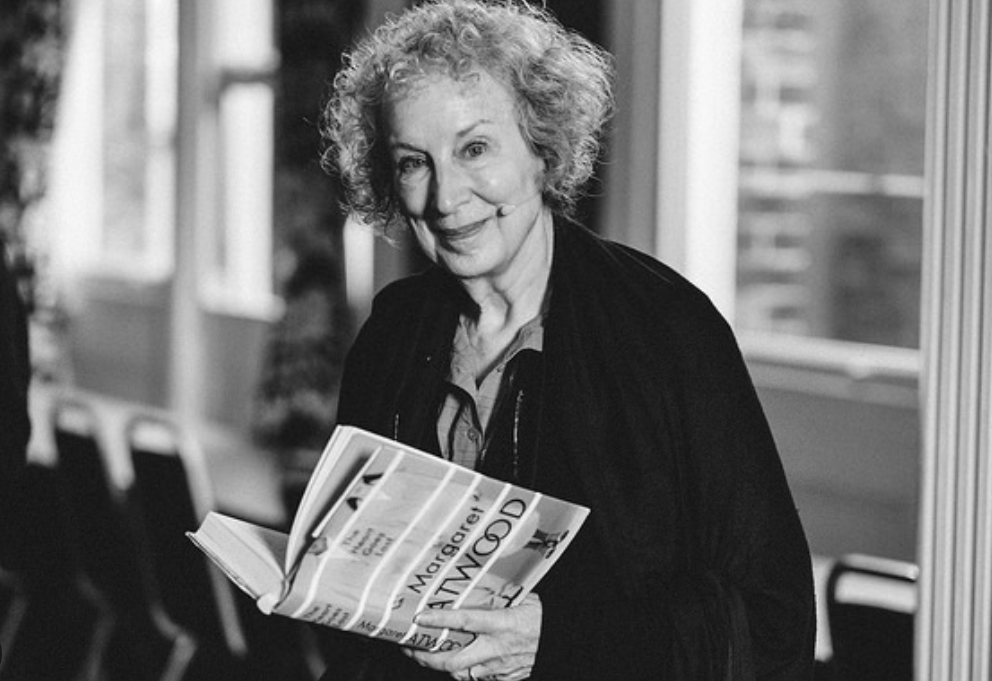
Margaret Atwood also changed things up. Mostly known for speculative fiction (The Handmaid’s Tale, etc.) and contemporary fiction (Cat’s Eye, etc.), she turned to the past for one book with the historical-fiction novel Alias Grace. Atwood excelled at all three approaches.

Or how about Mark Twain actually focusing on a female character — in Personal Recollections of Joan of Arc — after years of fiction concentrating on Tom Sawyer, Huckleberry Finn, and various other males? Plus he broke his mold by using virtually no humor in the Joan of Arc historical novel.

Getting back to surprises within specific novels, there’s the hilarious devil scene in Fyodor Dostoevsky’s mostly weighty masterpiece The Brothers Karamazov.

Then there’s the way some titles of novels throw readers for a bit of a loop when they read the books. For instance, I’m currently midway through the superb The Lincoln Highway by Amor Towles (who previously wrote 2016’s also-superb A Gentleman in Moscow) and I thought from the title it might be largely a car trip “road novel.” But while there’s some cross-country driving in The Lincoln Highway, a train trip, a stay in New York City, and other elements are also quite important to the plot. More on the 1954-set, 2021-published book in next week’s post.

Examples of the unexpected you’ve experienced in literature?

My literary-trivia book is described and can be purchased here: Fascinating Facts About Famous Fiction Authors and the Greatest Novels of All Time.

In addition to this weekly blog, I write the 2003-started/award-winning “Montclairvoyant” topical-humor column for Baristanet.com every Thursday. The latest piece — about local celebrations of Martin Luther King Jr. Day and more — is here.

Great Novels Revered Not Sooner But Later

Some notable novels don’t catch on at first — taking years, even MANY years, before getting the respect they deserve. Initial sales and critical reaction can range from poor to so-so, with the reverence not coming until later.

Why? The books might have been “before their time,” controversial, out of “the mainstream,” too challenging, or not marketed well. Or maybe there was no discernible reason for the lack of early thriving — just one of those fluky things. Sometimes, “failed” books get noticed more when the authors write later classics, causing readers to look back at their earlier work. Other times, screen adaptations might bring delayed attention to the novels.

The first title that came to mind for this post — the theme of which was suggested by blogger Endless Weekend in a comment under one of my previous posts — is Moby-Dick. As I’ve discussed before, Herman Melville’s classic bombed with readers and critics when first published in 1851. Too deep? Too metaphysical? Too diverse a crew? Too much minutiae about whales? Other reasons? Anyway, Moby-Dick wasn’t “rediscovered” until nearly 30 years Melville after died, when the 1919 centennial of his birth spurred scholarly interest in the author.

Soon after, in 1925, F. Scott Fitzgerald’s masterpiece The Great Gatsby was published to generally favorable reviews — but sales were kind of modest. Hard to know why given how good the novel is, and it’s a fairly short work that has the additional selling point of being a pretty quick read. One way strong interest in the novel finally kicked in was when the Council on Books in Wartime gave free copies of Gatsby to American soldiers during World War II — not long after Fitzgerald died in 1940. The novel’s popularity continued to surge from there, and three more Gatsby movies were released in 1949, 1974, and 2013.

Then there was Jane Austen. Sales of her novels — including Pride and Prejudice, Sense and Sensibility, Mansfield Park, and Emma — were okay during her lifetime and soon after her death in 1817 (when Persuasion and Northanger Abbey were published posthumously). But Austen’s work didn’t explode in popularity until decades later. One thing that helped was 1869’s A Memoir of Jane Austen by her nephew, James Edward Austen-Leigh. In our present time, her novels obviously remain widely read, and the subject of various screen adaptations. Why weren’t Austen’s novels not as favored as they should have been two centuries ago? Perhaps one reason is that they were wrongly seen as somewhat “inconsequential” works written by a woman during a very patriarchal era. Hardly inconsequential, of course.

A later-in-the-19th-century author, Alexandre Dumas, saw his compelling Georges novel published in 1843. It wasn’t remotely as popular as his soon-to-come The Count of Monte Cristo (which contains some elements similar to Georges) and The Three Musketeers. One obvious reason is that Georges was the only novel by Dumas that focused on race and racism — with a positive, non-stereotypical protagonist who’s partly Black (as was the author). A revelation during that time. But the long-out-of-print Georges became greatly appreciated in the 21st century — even being reissued by Modern Library in a 2007 edition.

Well, those are just a few examples. Any others you’d like to mention? Any thoughts on the ones I discussed?

My literary-trivia book is described and can be purchased here: Fascinating Facts About Famous Fiction Authors and the Greatest Novels of All Time.

In addition to this weekly blog, I write the 2003-started/award-winning “Montclairvoyant” topical-humor column for Baristanet.com every Thursday. The latest piece — about a petition against a local over-development and two more harassment accusations against a suspended township manager — is here.

Adaptations That Accrued Appreciably More Acclaim

When writing about the round-number anniversaries of certain novels last week, one title I mentioned was 1973’s The Princess Bride — which is better known for its 1987 movie version (cast pictured above) than for the original William Goldman book of 50 years ago.

Yes, there are screen and theatrical adaptations more famous — in some cases MUCH more famous — than the literary works that inspired them. In fact, many fans of the adaptations might not even know about the existence of the novels or short stories that started it all.

Why? Among the reasons: movie and TV watchers outnumber fiction readers, the adaptations might occasionally be better or at least more “exciting” than the books, etc.

Another prominent example of a film in a different stratosphere than the book is 1994’s blockbuster movie Forrest Gump, starring Tom Hanks, that was based on Winston Groom’s 1986 novel.

Also VERY different in popularity is 1953’s iconic Shane film vs. Jack Schaefer’s much-less-iconic 1949 novel of the same name.

In the short story realm, Daphne du Maurier’s 1952 tale “The Birds” isn’t nearly as famous as Alfred Hitchcock’s 1963 film — although du Maurier is of course hardly an obscure author.

Not quite as disparate in visibility is 1968’s Charly film based on Daniel Keyes’ 1959 short story (later turned into a novel) Flowers for Algernon, but the movie is more in the public zeitgeist.

Moving to plays, the opened-in-1949 musical South Pacific is at least somewhat more famous than James Michener’s 1947 book Tales of the South Pacific — even as Michener, like du Maurier, is a major name in the world of fiction.

Another musical, the 1955-debuting Damn Yankees, has a significantly higher profile than its inspiration: Douglass Wallop’s 1954 novel The Year the Yankees Lost the Pennant.

And, last but not least, the long-running musical Wicked — which opened in 2003 and is still going strong — far exceeds Gregory Maguire’s 1995 Wicked novel in renown.

I realize I’m just scratching the surface here. Other examples you’d like to mention? Any thoughts about this phenomenon?

My literary-trivia book is described and can be purchased here: Fascinating Facts About Famous Fiction Authors and the Greatest Novels of All Time.

In addition to this weekly blog, I write the 2003-started/award-winning “Montclairvoyant” topical-humor column for Baristanet.com every Thursday. The latest piece — containing some of my local wishes for 2023 — is here.

Another Roundup of Round-Number Anniversaries

With the New Year here, it’s time for my annual post focusing on some of the novels that will reach round-number anniversaries in the next 12 months.

I’ll work chronologically backwards, starting with 1998-published books turning 25 in 2023. I’ll only mention novels I’ve read, except for two of which I’ve only seen the movie version.

Not sure this qualifies, but Harry Potter and the Sorcerer’s Stone was first published in the United States a quarter-century ago, in 1998. That novel initially came out in the United Kingdom the previous year under the title of Harry Potter and the Philosopher’s Stone — kicking off J.K. Rowling’s outstanding, wildly popular seven books of wizard world-building. The second novel, Harry Potter and the Chamber of Secrets, made its page-turning debut everywhere in ’98.

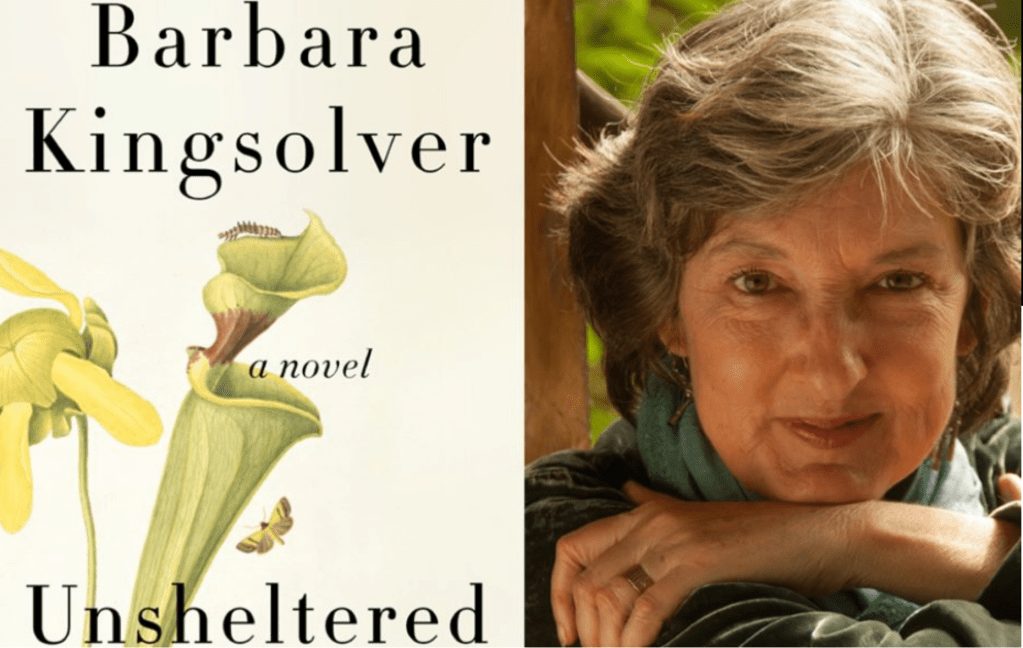
Perhaps the best novel of ’98 was The Poisonwood Bible, about a very problematic American missionary in Africa and his long-suffering/eventually rebelling wife and daughters. Barbara Kingsolver’s masterwork became a Pulitzer Prize finalist, losing out to Michael Cunningham’s The Hours and its Virginia Woolf theme. (I haven’t read the latter book but did see 2002’s excellent movie adaptation.)

In the young-adult realm, Louis Sachar’s quirkily great Holes also arrived in 1998.

Some of the novel notables of 1973, a half-century ago? William Goldman’s The Princess Bride (which I also haven’t read but saw 1987’s famous film version) turns 50 this year. As does Sula, a compelling early Toni Morrison effort about a complicated friendship between two quite different girls-then-women.

Also in ’73 was Rita Mae Brown’s pioneering lesbian-themed Rubyfruit Jungle, a great read; and Erica Jong’s Fear of Flying, which became a bestseller with its candid take on (hetero) female sexuality.

My favorite novel from 1923: L.M. Montgomery’s wonderful Emily of New Moon, the first in a semi-autobiographical trilogy. Also turning 100 in 2023 is Aldous Huxley’s Antic Hay, a comic novel quite different from his later speculative-fiction classic Brave New World; and Willa Cather’s A Lost Lady, one of her lesser-known works but still pretty good.

A notable release 150 years ago, in 1873, was The Gilded Age co-written by Mark Twain and Charles Dudley Warner. Certainly a memorable title, and the portion of the novel Twain wrote is plenty satirical. Also published that year was The Belly of Paris, in which Emile Zola started hitting his stride as a novelist with the story of a wrongly accused man amid the setting of a huge marketplace in France’s capital city.

Two centuries ago, in 1823, saw the release of The Pioneers — the first of James Fenimore Cooper’s top-notch quintet of Leatherstocking novels that would become the fourth book, chronologically, telling Natty Bumppo’s life story.

Also published in 1823 was Quentin Durward, about a Scottish archer in 15th-century France. One of Walter Scott’s best novels even if not as well-known as his Ivanhoe and Rob Roy.

Any comments about the books I mentioned? Other novels you’d like to name with round-number anniversaries this year?

One more thing: Some of this blog’s 2022 statistics are pictured below, including a list of the 12 countries from which posts were viewed the most. Thank you, everyone, for reading my weekly posts and for your MANY terrific comments! 🙂

My literary-trivia book is described and can be purchased here: Fascinating Facts About Famous Fiction Authors and the Greatest Novels of All Time.

In addition to this weekly blog, I write the 2003-started/award-winning “Montclairvoyant” topical-humor column for Baristanet.com every Thursday. The latest piece — about the saving of a historic house and more — is here.

A Christmas Wrapping Up of My Year in Reading

The Waitresses new-wave band, pictured in the early 1980s. (Photo by George DuBose.)
 
It’s Christmas Day, and time for my annual holiday verse with a literary twist. This year I’m rewriting The Waitresses’ 1981 song “Christmas Wrapping” to mention many of the novels I read in 2022.
 
First, a lyrics video of the Chris Butler-composed song:
 
https://www.youtube.com/watch?v=ARq6uYSsUq0
 
Now, my version:
 
“Bah humbug” doesn’t feel near
I read Scrooge’s tale long before this year
Started 2022 with Herman Wouk
“War and Remembrance” by “The Caine Mutiny” bloke
Lengthy, epic, heartbreaking novel
Good to finally see the Nazis grovel
Then “Up the Down Staircase” by Kaufman, Bel
That book’s high school – like war – is hell
Next “A Gentleman in Moscow,” stuck in hotel
Under house arrest, not in prison cell
Amor Towles’ Russia-set story is riveting
But to other novels I now will be pivoting
“Apples Never Fall” by Liane Moriarty
Who writes with brilliant authority
Followed by the latest from Jack Reacher’s sphere
A page-turner I received for Christmas last year.
 
After finishing Lee Child’s “Better Off Dead”
Diana Gabaldon’s ninth “Outlander” book I read
What a saga with Jamie and Claire
The very best in time-travel fare
On to the “Tinkers” novel by Paul Harding
His dying protagonist, soon departing
Toni Morrison’s “Song of Solomon” came next
Why I waited so long to read it…I’m perplexed
Same for “The Agony and the Ecstasy” by Irving Stone
About Michelangelo, not Sylvester Stallone
Then to “The Stone Diaries” I swerve
Carol Shields wrote it, not Stone, Irv
Matt Haig’s “The Midnight Library” brings thoughts of life
Many alternate timelines come with strife
Then John Grisham, not one of fiction’s rookies
“A Time for Mercy” from those Christmas cookies!
 
Merry Christmas, Merry Christmas
We read a lot of books this year
Merry Christmas, Merry Christmas
We read a lot of books this year
Merry Christmas, Merry Christmas
We read a lot of books this year
Merry Christmas, Merry Christmas
We read a lot of books this year.
 
“Breathing Lessons” inhaled soon enough
Nicely quirky, like most Anne Tyler stuff
“The Overstory” – epic! – by Richard Powers
With astonishing trees, and so-so flowers
“The General in His Labyrinth” didn’t require
“One Hundred Years of Solitude” to read, entire
After Gabriel Garcia Marquez…Joy Fielding
Her “Lost” has suspense she’s expert at wielding
The landscape turned to Jane Smiley’s “A Thousand Acres”
An intense family drama, albeit lacking Quakers
Switching genres, “The Calculating Stars”
About female astronauts steering more than cars
By Mary Robinette Kowal, years after Zane Grey
Wrote “Boulder Dam” about harnessed river spray
Followed by Melville’s “Mardi,” a sea saga longer
Than Santa’s risky sleigh ride – make your roofs stronger!
 
On to “Brothers Keepers,” let’s not tarry
Donald Westlake’s setting: a monastery
Louis Auchincloss’ “The Lady of Situations”
An interesting take on a woman’s ambitions
“The Sympathizer” and “The Committed” are connected
The first won a Pulitzer; Viet Thanh Nguyen was selected
Then “The Glass Kingdom” by Lawrence Osborne
Excellent but disturbing, I’m obliged to warn
Same with “The Alienist” by Caleb Carr
Crime fiction par excellence, or excellence par
Includes real figures like Teddy Roosevelt
The killer no teddy bear; left more than a welt
Now 16th-century-immersed in Hilary Mantel’s “Wolf Hall”
Her tour de force about a man who’s “on the ball”
His name’s Thomas Cromwell and he really existed
But just like Santa his phone number’s unlisted.
 
Merry Christmas, Merry Christmas
We read a lot of books this year
Merry Christmas, Merry Christmas
We read a lot of books this year
Merry Christmas, Merry Christmas
We read a lot of books this year
Merry Christmas, Merry Christmas
We read a lot of books this year.
 
The fictional works you most enjoyed in 2022?
 
My literary-trivia book is described and can be purchased here: Fascinating Facts About Famous Fiction Authors and the Greatest Novels of All Time.
 
In addition to this weekly blog, I write the 2003-started/award-winning “Montclairvoyant” topical-humor column for Baristanet.com every Thursday. The latest piece – which is light but not light — is here.

From Known to Less Known to More Known Again

Octavia E. Butler (photo credit: Curious Fictions)

Sometimes, a novel falls into obscurity or semi-obscurity before returning to wider public consciousness many years later. This leap might happen because of a new screen or stage adaptation of the book or a change in societal conditions, or for both reasons, or for other reasons.

A current example is Octavia E. Butler’s mind-boggling 1979 novel Kindred, which inspired a 2022 TV series that just began streaming on Hulu. New York Times critic Mike Hale expressed mixed feelings about the production (which I haven’t seen), saying it only did partial justice to Butler’s book (which I found riveting). But it’s hard for even a so-so screen adaptation to totally ruin a searing, compelling, intricate story — in the case of Kindred, about a 20th-century Black woman repeatedly yanked back in time to the plantation where her ancestors lived in the slave-holding American South.

Turning Kindred into a TV series is timely this year because of the recent rise in overt racism in the U.S., partly “thanks” to white supremacists such as Donald Trump (who still has the support of about a third of Americans) and other prominent Republicans. Also in the news have been the efforts by U.S. conservatives to try to prevent schools from teaching the country’s disturbing racial history, the harrowing murders of George Floyd and other victims of police brutality, the protests against those killings, and more.

There’s renewed interest, too, in Butler’s 1993 novel Parable of the Sower, with its prescient theme of climate change’s disastrous effects.

Butler (1947-2006) was considered a science-fiction writer but her novels are wider in scope — offering more social commentary (including anti-racist and pro-feminist elements) and more diverse casts of characters than many other sci-fi authors. She grew up in a low-income family, and became an avid reader with the help of her mother, who, as a housemaid, would bring home her employers’ discarded books and magazines for young Octavia to read.

Another novel that recently saw revived interest was Sinclair Lewis’ gripping It Can’t Happen Here (1935), about the rise of an American dictator. That dystopian political novel was never a totally obscure part of the Lewis canon, but for decades was not as well known as the author’s 1920s classics such as Main Street, Babbitt, and Elmer Gantry. Then, when the authoritarian/admirer-of-authoritarians Trump became president in 2016, It Can’t Happen Here suddenly felt prescient — and jumped up best-seller lists again. Trump of course went on to embellish his fascistic credentials by never conceding the 2020 election he convincingly lost and encouraging his followers to storm the U.S. Capitol in early 2021.

Zora Neale Hurston achieved some renown for books such as her excellent 1937 novel Their Eyes Were Watching God, but was mostly forgotten in her later years and after her 1960 death — with one reason being the difficulty for an African-American woman of that era to maintain a high profile in a mostly white-male publishing world. Hurston, Their Eyes Were Watching God, and her other books were eventually “rediscovered” largely thanks to another author, Alice Walker, finding Hurston’s unmarked Florida grave in 1973 and writing an influential article about her for Ms. magazine in 1975 (seven years before the release of Walker’s The Color Purple). Obviously, Black authors had a somewhat better chance of attaining prominence in the 1970s and beyond than they did decades earlier.

After some early-career 1840s writing fame, Herman Melville also become largely unknown by the time of his death in 1891 — the year Hurston was born. Nearly three decades later, the 1919 centennial of Melville’s birth moved some scholars to revisit his life and his Moby-Dick opus — which had garnered notice when published in 1851 but mostly for negative reasons: the novel was given a thumb’s down by many critics and sold poorly. Those 20th-century scholars helped turn the profound saga of Captain Ahab and crew into a belated sensation in the 1920s and after. Also, the manuscript for Billy Budd was found among the keepsakes of Melville’s descendants and published for the first time in 1924, to great acclaim.

Part of Melville’s “problem” was being so ahead of his time. A 2019 Columbia magazine article by Paul Hond contained this quote: “Melville was a nineteenth-century author writing for a twentieth-century audience,” explains Columbia professor Andrew Delbanco, author of the 2005 biography Melville: His World and Work. “He used stream of consciousness long before Stein or Joyce; he acknowledged America’s predatory power as well as its great promise; he defied convention in writing about sex; and perhaps most shocking of all, he took seriously the possibility of a godless universe. In his time, there was a limited market for these insights and innovations.”

Miguel de Cervantes’ iconic 1605 novel Don Quixote has nearly always been famous, but it jumped even more into public consciousness after inspiring the hit Broadway musical Man of La Mancha that made its debut in 1965. An appropriate decade for that to happen, because Don Quixote’s idealism and unconventionality made him a 1960s-type character of sorts.

I’ll conclude with a strange tale involving Colleen McCullough, whose novels include the terrific The Thorn Birds and the nearly as good Morgan’s Run. She also wrote The Ladies of Missalonghi, which, when published in 1987, turned out to be a blatant rip-off of L.M. Montgomery’s exquisite 1926 novel The Blue Castle. McCullough said this one blot in an exemplary career was not intended — she called it a case of “subconscious recollection” — but the situation did have the positive result of reviving interest in The Blue Castle, an underrated part of the wonderful Montgomery canon best known for Anne of Green Gables.

Any thoughts or examples relating to this week’s blog theme?

My literary-trivia book is described and can be purchased here: Fascinating Facts About Famous Fiction Authors and the Greatest Novels of All Time.

In addition to this weekly blog, I write the 2003-started/award-winning “Montclairvoyant” topical-humor column for Baristanet.com every Thursday. The latest piece — about an imagined tour of my town by a cynical fake Santa — is here.