If you’re a blogger, I’m sure you periodically go “backstage” on your site to look at viewership statistics. When I do that, I see a recurring thing I’d like to mention this week.
My most-read posts at a given time are of course the most recent ones. But continuing to lurk in second, third, or fourth place every week and month is a piece I published three-and-half years ago — on June 3, 2018. You’d think most people would have read it by now, but WordPress users (perhaps newer ones?) keep finding it, as do people searching the Internet for that topic.
The post is “Strong Female Characters in 19th-Century Fiction,” and I guess it struck a nerve. Many people are fascinated with real and fictional women in the arts, and the 1800s certainly had plenty of iconic female authors and protagonists such as the Bronte sisters, Jane Austen, George Eliot, Mary Shelley, and their creations. Some male authors of that era created memorable women characters, too. All during a time that was sadly ultra-patriarchal.
In addition, the novel as a genre really came into its own during the 1800s — so there’s a LOT of interest in fiction books of that era. The large number of great, iconic 19th-century novels is hard to count.
Anyway, here’s a link to that 2018 blog post, which I also cut-and-pasted after the next paragraph.
If you’d like to add any new comments about the 2018 post under today’s post, please do. And if you’re a blogger, which of your posts keep getting read the most — months or years after you first published them? Also, why are those pieces popular, if you have any theories about that.
Strong Female Characters in 19th-Century Fiction
June 3, 2018
We look back on the 1800s as a time of rampant sexism, patriarchy, male dominance, gender inequality — whatever you want to call it. And it was indeed that sort of time. But a number of 19th-century female novelists, and a few male ones, managed to directly or indirect speak against that in some of their books.
I thought of this last week while reading Lelia by George Sand (born Amandine Lucile Aurore Dupin). In that fascinating 1833 novel, the independent, intellectual, skeptical, cynical, depressed, world-weary, God-doubting title character in some ways sounds like she could be living in 2018 — if the eloquent language used in Sand’s philosophical book were more casual and not densely rich like a lot of 19th-century prose was. Lelia is not always an easy book to read, but you’ll rarely see better writing than penned by Sand.
Anne Elliot of Jane Austen’s Persuasion (1818) is another strong heroine. The capable Anne is in love with Captain Frederick Wentworth, but lives a very useful life even as the relationship between her and Wentworth is thwarted for years.
The star of Charlotte Bronte’s Jane Eyre (1847) has strong feminist leanings that come out in various ways — including her pride in being smart, her need to work, and her insistence that she be an equal in marriage.
Helen in Anne Bronte’s The Tenant of Wildfell Hall (1848) courageously leaves her abusive/alcoholic husband to save both her son and her own self-worth. It’s a novel so feminist that Anne’s not-quite-as-feminist sister Charlotte unfortunately helped prevent wider distribution of it after Anne’s death.
Of course, some of the 19th century’s male critics and readers slammed works that dared depict women as equal to men. Undoubtedly one of the reasons fewer women back then tried to write novels — and a number of those who did write them used male or gender-neutral aliases.
Another author with a George pseudonym, George Eliot (born Mary Ann Evans), created a number of strong women — including lay preacher Dinah Morris of Adam Bede (1859). And Eliot lamented the second-class citizenry of female characters in novels such as The Mill on the Floss (1860), in which Maggie Tulliver’s less-brainy brother is treated much better than her by their parents and society as a whole.
Jo March, who thirsts to be a writer, is another non-stereotypical 19th-century female — in Louisa May Alcott’s 1869 novel Little Women.
And Kate Chopin’s The Awakening (1899) depicts Edna Pontellier’s memorable rebellion against her constricted role as a wife and mother.
Can 1900 be considered the last year of the 19th century? If so, Colette’s Claudine at School belongs in this discussion with its assertive, mischievous, hilarious protagonist.
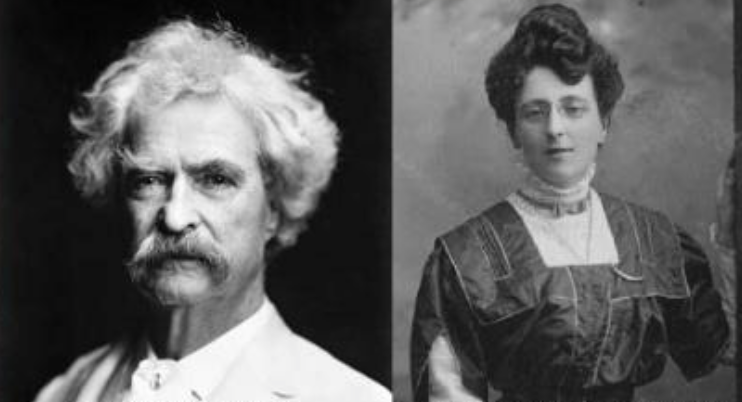
Some male novelists of the 1800s also created female protagonists who didn’t act like stereotypical women of their time. Examples include Jeanie Deans in Sir Walter Scott’s The Heart of Midlothian (1818), Judith Hutter of James Fenimore Cooper’s The Deerslayer (1841), Becky Sharp of William Thackeray’s Vanity Fair (1847), Hester Prynne of Nathaniel Hawthorne’s The Scarlet Letter (1850), Marian Halcombe of Wilkie Collins’ The Woman in White (1859), the title character in Thomas Hardy’s The Hand of Ethelberta (1876), journalist Henrietta Stackpole in Henry James’ The Portrait of a Lady (1881), and the martyred protagonist in Mark Twain’s historical novel Personal Recollections of Joan of Arc (1896).
Of course, there were also strong women in pre-1800s novels, with just two examples being the very different stars of Daniel Defoe’s Moll Flanders (1722) and Frances Burney’s Evelina (1778). Moll has a tougher exterior than Evelina, but the latter protagonist also has lots of inner strength.
My literary-trivia book is described and can be purchased here: Fascinating Facts About Famous Fiction Authors and the Greatest Novels of All Time.
In addition to this weekly blog, I write the 2003-started/award-winning “Montclairvoyant” topical-humor column for Baristanet.com. The latest weekly piece — about a coming “Greenway” and some local leaders treating my town’s library in a mean way — is here.





 Dave Astor on Literature