Doubling Down on Twoness in Fiction

Two is often a significant number in literature. There can be duality (such as good vs. evil) in a pair of characters, there can be protagonists who are twins, and so on. All this can be fascinating, helping to give a novel a theme and a certain framework.

I read Diane Setterfield’s The Thirteenth Tale last week, and her absorbing gothic novel has a strong focus on twins. In that bookish book (which mentions various classic novels), Margaret Lea is summoned by famed author Vida Winter to write the dying Winter’s biography, and a mystery unspools that includes intrigue about Vida’s twin sister. As we learn early, Lea also had a twin sister — who died young and continually haunts Margaret’s psyche.

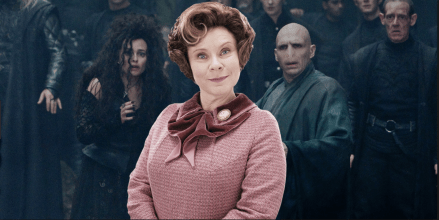
Among the other novels with twins, whether they’re major or secondary characters, are Arundhati Roy’s The God of Small Things (Estha and Rahel), Gabriel García Márquez’s One Hundred Years of Solitude (the Segundo brothers), Ian McEwan’s Atonement (Jackson and Pierrot), William Golding’s Lord of the Flies (Sam and Eric), J.K. Rowling’s Harry Potter series (Fred and George Weasley — a delightful pair, but one is ill-fated), George R.R. Martin’s A Game of Thrones (Cersei and Jaime Lannister, who are also — eek — lovers), and even Lewis Carroll’s Through the Looking-Glass (Tweedledum and Tweedledee). Fred and George are shown with Rowling in the photo above this blog post.

Then there are the also-memorable pairings that don’t involve twins. Mentioning Rowling characters again, there is of course the good-vs.-evil duo of Harry Potter and Lord Voldemort, who are as different as can be yet have a strong underlying connection.

Mark Twain did the pairings thing twice with the dramatic life switches/role reversals in his novels The Prince and the Pauper and Pudd’nhead Wilson.

In Wilkie Collins’ Armadale, there are actually two sets of linked Allan Armadales — four people total!

And although its protagonist is actually one man with a split personality, among the most famous duality depictions in literature is in Robert Louis Stevenson’s Strange Case of Dr. Jekyll and Mr. Hyde.

Your favorite novels that fit this topic?

My literary-trivia book is described and can be purchased here: Fascinating Facts About Famous Fiction Authors and the Greatest Novels of All Time.

In addition to this weekly blog, I write the award-winning “Montclairvoyant” topical-humor column for Baristanet.com. The latest weekly piece — about developer subterfuge and more — is here.

The Depiction of Disability and Disease in Fiction

Way back in 2012, I wrote a column for The Huffington Post about disability and disease in literature. I thought I’d revisit that topic today with some relevant novels I’ve read during the seven years since then.

In that blog post for the later-went-downhill HP, I mentioned characters with bodily challenges in novels such as Jane Eyre, Moby-Dick, A Christmas Carol, The Hunchback of Notre Dame, Roots, Misery, Treasure Island, Johnny Got His Gun, and the Harry Potter series. I also had this to say about the topic:

“Protagonists with physical issues can be admirable, inspirational, pitiable, embittered, etc. — or a mix of all those things. It’s fascinating for readers to see how a disability affects a character’s psyche and actions, for better or worse. Readers also might wonder what they’d do if they were disabled themselves.”

And of course readers who are disabled themselves may very well identify with protagonists in a similar situation.

I added in the 2012 post that such characters might be “underrepresented in literature for various reasons — including the discomfort some authors and readers might have with (them), and the fear of other authors that they might not depict physically challenged protagonists in an adequate way.”

Yet plenty of novels include very or somewhat disabled characters, who are often sympathetic — but not always.

The most recent novel of this type I read was Still Alice, just last week. Also known for the movie version that won Julianne Moore (pictured above) an Oscar, Lisa Genova’s haunting book chronicles Dr. Alice Howland’s descent into early-onset Alzheimer’s — with the story poignantly told from Alice’s point of view. The brilliant Harvard professor is only 49 when diagnosed, and her bout with dementia of course shows that no one — successful or not, affluent or not — is immune from disability. The novel also skillfully depicts the mix of courage and self-pity many people feel when their brains or bodies betray them, and shows that family members are not always totally supportive; for instance, Alice’s very upset husband acts rather boorish at times.

The novel I read before Still Alice was Lois Lowry’s compelling young-adult book Gathering BlueThe Giver sequel that stars a girl (Kira) whose deformed leg makes her an outcast in her harsh community. Kira’s skill at embroidery saves her from a certain death she would’ve faced if she had no stand-out skills, but she ends up living a sort of gilded-cage existence.

Also in the YA realm is John Green’s powerful The Fault in Our Stars, which tells the story of a teen girl (Hazel) with thyroid cancer who meets a teen boy (Augustus) with bone cancer that caused him to lose a leg. Their very challenging lives are made better by their romantic relationship — obviously, almost everyone wants love no matter what their condition. But as is often the case with disabilities in literature or real life, we don’t get a “happy ever after.”

Then there are J.K. Rowling’s four terrific Cormoran Strike novels (The Cuckoo’s Calling, etc.) written under the pen name Robert Galbraith. Cormoran is a super-smart private investigator who lost part of a leg while in the British military in Afghanistan, and the resulting pain and walking difficulty often exhausts him. But the charismatic Strike is stoic in the face of all that, and his disability both increases his sympathy for the underdog and the sympathy readers feel for him. Cormoran’s assistant (at first) and business partner (later) — the appealing and admirable investigator Robin Ellacott — has some scars of her own, mainly of a psychological nature.

Dana in Kindred is psychologically stressed though able-bodied in most of Octavia E. Butler’s memorable novel. But then comes the book’s shocking conclusion — with Dana’s new physical disability depicted as both real and symbolic after she had been pulled back and forth several times from 20th-century California to slavery times in America’s pre-Civil War south.

In Richard Russo’s Nobody’s Fool, the late-middle-aged “Sully” drags himself around with a bum knee while still doing very physical blue-collar work and avoiding medical treatment. Yes, some characters with a disability partly have themselves to blame by not taking better care of themselves.

Then there are novels featuring multiple characters with physical issues. (Ms.) Lionel Shriver’s terrific So Much for That has four — including protagonist Shep Knacker’s wife, father, best friend, and best friend’s daughter. There’s lots of humor among the depressing subject matter (which can soften the downbeat-ness of a novel with disability and disease); plenty of understandable rage against America’s money-draining, soul-sapping, for-profit medical system; and an amazing ending I didn’t see coming.

Another novel starring multiple sick or injured characters is Edith Wharton’s riveting Ethan Frome, with its tragic triangle of Ethan, his wife Zeena, and Zeena’s cousin Mattie. Two of those three characters are involved in a horrific (but intentional) accident that leaves them disabled to varying degrees, while the other is sickly (yet perhaps only psychosomatically so).

Going back to another early-20th-century classic, we have medical student Philip in W. Somerset Maugham’s Of Human Bondage born with a clubfoot that contributes to lowering his self-esteem enough to seek a disastrous relationship with the cold/unaffectionate Mildred.

Last but not least, it almost goes without saying that people — whether fictional or real — are not their disability. The disability is part of who they are, but not all of who they are.

Your favorite novels that fit this topic?

My literary-trivia book is described and can be purchased here: Fascinating Facts About Famous Fiction Authors and the Greatest Novels of All Time.

In addition to this weekly blog, I write the award-winning “Montclairvoyant” topical-humor column for Baristanet.com. The latest weekly piece — about an appalling Republican dinner invitation — is here.

Day’s In: Novels With Very Short Time Spans

Several weeks ago, I wrote a post about novels with long time spans. Today’s column will cover novels with short time spans — in most cases, no more than a day. Yet a lot of drama can be crammed into that brief period, often with the help of some back story interspersed among the day’s depiction.

Two of the more famous examples of novels limited to a 24-hour time period are James Joyce’s Ulysses and Aleksandr Solzhenitsyn’s One Day in the Life of Ivan Denisovich. Unfortunately, I’ve read neither (though I did see the latter’s movie version), so there’s not much I can say about them.

I have read Virginia Woolf’s Mrs. Dalloway, and that compelling novel packs a lot in one day. Clarissa Dalloway prepares for a party, muses about her past and her life’s choices, and then holds the party — whose attendees include some people from that referenced past. Meanwhile, the novel also focuses on the doings of shell-shocked World War I veteran Septimus Smith. Obviously, Mrs. Dalloway covers a number of years within a day’s framework. (Virginia Woolf is pictured atop this blog post.)

It’s not a coincidence that the title of Saul Bellow’s Seize the Day reflects how that novel is another less-than-24-hour-time-span book. But, again, we learn a lot about the life of the title character — in this case, Wilhelm Adler, a failed 40-something actor separated from his wife and estranged from his children and father.

Charles Dickens’ A Christmas Carol is a very famous novel, but readers don’t always remember that the book unspools during a very short period — from Christmas Eve to Christmas Day. Enough time for miserly businessman Ebenezer Scrooge to be transformed with the help of some ghostly visits.

Then we have Haruki Murakami’s After Dark, which is set in Tokyo over the course of a single night. It stars 19-year-old student Mari Asai (who we first see reading in a restaurant) and other characters she meets.

And Lee Child’s 61 Hours takes place over (surprise, surprise) a bit more than two-and-a-half days — with lots of intrigue and mayhem during Jack Reacher’s brief stay in snowy and bitterly cold South Dakota.

Short stories of course often focus on a relatively brief period. One particularly memorable one is Kate Chopin’s “The Story of an Hour,” in which Louise Mallard feels liberated when her husband dies, happily envisions life without him, and then…

What are your favorite fictional works with short time spans?

My literary-trivia book is described and can be purchased here: Fascinating Facts About Famous Fiction Authors and the Greatest Novels of All Time.

In addition to this weekly blog, I write the award-winning “Montclairvoyant” topical-humor column for Baristanet.com. The latest weekly piece — partly about my town’s high school students joining the global walkout to draw attention to climate change — is here.

No (Or Maybe Some) ‘Sympathy for the Devil’ in Literature

During Trump’s hellish American presidency, thoughts can turn to the devil in literature. Satan or Lucifer or Beelzebub or whatever you want to call him, that immortal guy is an evil yet rather charismatic fellow good for plenty of drama — and perhaps some comedic hijinks, too.

All that is certainly part of Mikhail Bulgakov’s The Master and Margarita — a raucous, sobering, hilarious novel I read last week that stars “the devil in disguise” (to quote an Elvis Presley song) and his memorable assistants. As in many books featuring the Prince of Darkness, this brimstone bro is depicted as both real and symbolic — partly functioning as a device to satirize the Stalin-ruled Soviet Union. (Pictured atop this blog post are the book’s title characters — with The Master not the devil but rather a 20th-century Russian who writes a novel, within Bulgakov’s novel, set in the time of Jesus.)

Set in the Russia of the 19th century, Fyodor Dostoyevsky’s classic The Brothers Karamazov includes a long, significant, incredibly entertaining cameo from Satan.

American literature also has its share of Beelzebub-ian appearances. For instance, Douglass Wallop’s The Year the Yankees Lost the Pennant uses the familiar trope of someone selling their soul to the devil to get something they crave; in Wallop’s novel (which inspired the hit musical Damn Yankees) that something is becoming a baseball star.

Then there’s William Peter Blatty’s The Exorcist and Cormac McCarthy’s Blood Meridian — with the latter novel featuring a chilling guy (Judge Holden) who may very well be the devil visiting America’s bloody 19th-century West.

Short stories I’ve read that fit this blog post’s sulfurous theme include Stephen Vincent Benét’s “The Devil and Daniel Webster” and Nathaniel Hawthorne’s “Young Goodman Brown.” In the second tale, Lucifer is more a philosophical presence than a “real” presence.

In the poetry realm, there’s of course Milton’s Paradise Lost.

Among the devilish works I haven’t read are Dante’s Inferno, Goethe’s play Faust, and Anne Rice’s novel Memnoch the Devil. Not sure Lauren Weisberger’s The Devil Wears Prada quite fits here…

Your favorite fictional offerings with a Satanic element?

My literary-trivia book is described and can be purchased here: Fascinating Facts About Famous Fiction Authors and the Greatest Novels of All Time.

In addition to this weekly blog, I write the award-winning “Montclairvoyant” topical-humor column for Baristanet.com. The latest weekly piece — partly about a state politician who (surprise, surprise) isn’t keeping some of his campaign promises — is here.

‘Novels’ and ‘Numbers’ Both Start With the Letter ‘N’

With “Pi Day” coming March 14, I thought I’d mention novels I like that have numbers in their titles. I’m probably forgetting some of the ones I’ve read, and am deliberately leaving out ones I haven’t read. But here goes — from low numbers to high:

One Flew Over the Cuckoo’s Nest. Ken Kesey’s psychiatric ward-set novel says a lot about freedom, individualism, and…psychiatric wards. Perhaps better known for the film version.

One of Ours. Willa Cather’s absorbing World War I-themed novel won a Pulitzer.

One Summer. David Balducci’s poignant look at an unexpected death and life after that.

A Tale of Two Cities. Charles Dickens’ classic tale of the French revolution has what might be literature’s most memorable opening and closing passages.

Dona Flor and Her Two Husbands. Jorge Amado’s novel looks at an irresponsible (but charismatic) first hubby and a responsible (but kind of boring) second hubby. But the star is the kind, talented, memorable Dona Flor herself.

The Two Towers. The middle installment of J.R.R. Tolkien’s The Lord of the Rings trilogy is not as interesting as the first and third books, but still pretty darn good.

Two in the Field. Darryl Brock’s okay sequel to his amazing baseball/time-travel novel If I Never Get Back includes a cameo by the infamous General Custer.

The Three Musketeers. Alexandre Dumas’ fun, thrilling, swashbuckling novel. His second-best book after The Count of Monte Cristo — which features a person who’s a count rather than a numbers-related counting. 🙂

Three Junes. Julia Glass’ absorbing tale contains a trio of sections set a number of years apart.

Three Stations. One of Martin Cruz Smith’s seven excellent sequels to Gorky Park.

The Sign of the Four. Among Arthur Conan Doyle’s best Sherlock Holmes mysteries.

Slaughterhouse-Five. Kurt Vonnegut’s iconic look at the horrors of World War II.

The House of the Seven Gables. Nathaniel Hawthorne’s melancholy novel of old New England.

From a Buick 8. One of Stephen King’s lower-key novels, and quite haunting.

Twenty Years After. The first of Dumas’ sequels to The Three Musketeers.

Catch-22. Joseph Heller’s hilarious, bitingly satiric antiwar novel.

Mr. Penumbra’s 24-Hour Bookstore. Robin Sloan’s quirky novel is set in San Francisco and New York City, and has a mystery element.

61 Hours. Might be my favorite of Lee Child’s Jack Reacher novels. Set in a snowy and bitterly cold South Dakota.

Around the World in Eighty Days. A Jules Verne adventure novel whose title is self-explanatory.

One Hundred Years of Solitude. Gabriel García Márquez’s tour de force is a multi-generational family saga that’s also about Latin America’s social and political history.

Fahrenheit 451. Ray Bradbury’s sobering book about book-burning.

Nineteen Eighty-Four. George Orwell’s dystopian classic about an ultra-controlled society.

2001: A Space Odyssey. Arthur C. Clarke’s mind-blowing sci-fi novel.

Twenty Thousand Leagues Under the Sea. Another Jules Verne favorite with a self-explanatory title.

And then there are the 25 (so far) Janet Evanovich novels starring bounty hunter Stephanie Plum that have numbers in their titles: One for the Money, Two for the Dough, Three to Get Deadly

Life of Pi doesn’t qualify for this blog post because Pi is of course not a number but rather the nickname of Piscine Molitor Patel — the star of Yann Martel’s novel.

Your favorite books with numbers in their titles, including ones I mentioned or didn’t mention?

My literary-trivia book is described and can be purchased here: Fascinating Facts About Famous Fiction Authors and the Greatest Novels of All Time.

In addition to this weekly blog, I write the award-winning “Montclairvoyant” topical-humor column for Baristanet.com. The latest weekly piece — about a massive mega-mansion coming to my town — is here.

Not an Error to Depict Many an Era

A novel that spans a long period of time can be quite impressive and interesting. The author research required, the segueing from century to century, the awe that’s inspired in seeing the sweep of history, the mixed feelings about “civilization” encroaching on nature, etc.

One excellent example of this is a book I’m currently reading. Norah Lofts’ A Wayside Tavern begins in 384 AD with the story of a Roman soldier and a slave woman in Britain, and then chronologically proceeds nearly 1,600 years into the 20th century — all in 376 pages!

Anne Rice’s The Witching Hour takes many more pages (nearly 1,000) to tell the tale of four centuries of witches. That compelling novel’s timeline is not strictly linear — much of the book is set in the 1900s — but there’s plenty of back story spanning those aforementioned centuries.

Susan Vreeland’s Girl in Hyacinth Blue evocatively proceeds in reverse-chronological order — focusing on the ownership of a painting (possibly a Vermeer) from the 20th century back to the 1600s.

I’m not sure exactly what the time span is in Gabriel García Márquez’s iconic One Hundred Years of Solitude, but it seems like more than a century as it chronicles seven generations of the Buendía family.

Seven generations are also featured in Alex Haley’s semi-autobiographical novel Roots, which depressingly and dramatically goes from the slave trade of the 1700s into the 1900s.

Time-travel and science-fiction novels of course often span many a year, century, or millennium. For instance, Octavia E. Butler’s Kindred (image atop this blog post) moves from California in 1976 to a Maryland plantation in 1815, Daphne du Maurier’s The House on the Strand goes from the 1900s to the 14th century, and Mark Twain’s A Connecticut Yankee in King Arthur’s Court switches from the 1800s to the time of “Camelot.” H.G. Wells’ The Time Machine begins in the 19th century and brings its traveler first to 802,701 AD and then a mind-boggling 30 million years into the future to witness Earth dying. An author can’t span much more time than that!

Series and sequels obviously allow authors to potentially cover large swaths of time, but I’m focusing on individual books here.

Before ending this post, I did want to mention that there are some drawbacks to long time spans in fiction. For instance, readers aren’t able to enjoy a character for that many chapters before the author moves on to other characters. Meanwhile, we mourn the deaths of the previous characters — unless they’re villains, of course. 🙂

What are some of your favorite novels that cover many, many years?

My literary-trivia book is described and can be purchased here: Fascinating Facts About Famous Fiction Authors and the Greatest Novels of All Time.

In addition to this weekly blog, I write the award-winning “Montclairvoyant” topical-humor column for Baristanet.com. The latest weekly piece — which focuses on too much standardized testing and other topics — is here.

In Certain Books, Learn, Learn, Learn

Among the many benefits of reading novels is often learning new things while (hopefully) enjoying a great story.

For instance, I just read the Dick Francis crime novel Break In, and, along with being impressed with the thrilling plot and skilled character depictions, received an education about steeplechase horse racing. (It certainly didn’t hurt that Francis was a former steeplechase jockey himself.) In addition, there was plenty of information about the intricacies of 1980s-era TV production and editing.

I also learned a lot about coal mining — the 19th-century French version, at least — in a more literary novel: Emile Zola’s riveting Germinal (see the image atop this blog post). In fact, a number of Zola’s novels have a subject theme: The Masterpiece (art), The Drinking Den (alcoholism), The Beast in Man (trains), The Ladies’ Delight (department stores), Nana (prostitution), etc.

Another 19th-century classic, Herman Melville’s Moby-Dick, includes sometimes tedious passages on whales and whaling amid the dramatic doings of Ahab, Ishmael, Queequeg, and company. But those passages are quite an education.

When I think about World War II, my mind usually focuses on how it affected the aggressor countries Germany and Japan as well as Allied countries such as the U.S., England, France, and Russia. But reading Elsa Morante’s compelling novel History gave me a real sense of how things played out in Italy, another aggressor country back then.

Novels such as F. Scott Fitzgerald’s The Last Tycoon and Charles Bukowski’s Hollywood provide readers with a strong sense of the glamour and the considerable dark side of the movie business in two different eras.

Getting back to sports, I learned a lot about the rules of pre-modern baseball in Darryl Brock’s immensely entertaining time-travel novel If I Never Get Back — which places its 20th-century protagonist in 1869.

Which novels have given you an education about various topics?

(It’s Oscar night, so here’s an old post of mine on movies and literature!)

My literary-trivia book is described and can be purchased here: Fascinating Facts About Famous Fiction Authors and the Greatest Novels of All Time.

In addition to this weekly blog, I write the award-winning “Montclairvoyant” topical-humor column for Baristanet.com. The latest weekly piece — which focuses again on overdevelopment and historical desecration in my town — is here.

More Than One ‘Eave of Destruction’ in the Literary World

I’ve had historic preservation, or lack of, on my mind this past week.

As my “Montclairvoyant” column link at the end of this post describes, my town’s Planning Board sadly voted February 11 to approve a redo of a former train station that will wreck some historic elements of the vintage site. Elsewhere in town, two beautiful mansions — one dating back to 1865, the other to 1907 — were demolished several days ago to make way for a future obscenely large single-family compound with a spa, an indoor pool, a movie theater, a bowling alley, a basketball court, seven guest rooms, a staff wing, etc.

So, naturally my thoughts turned to building destruction in the literary world.

For instance, some of you may remember that the Los Angeles house author extraordinaire Ray Bradbury (1920-2012) lived in for more than 50 years was torn down in 2015 by a heartless architect who wanted to put a fancy new house on the site.

Then there was the New York City apartment building Willa Cather lived in with her friend/life partner Edith Lewis starting in 1913. The two of them had to leave the place in 1927 — the year Cather’s Death Comes for the Archbishop came out — when their Manhattan building was condemned to make way for a subway line. (The photo atop this blog post shows Cather — sitting left, on the bench — in Greenwich Village’s Washington Square Park in 1924.)

Of course, fictional works also feature plenty of ill-fated homes and other structures — surely a dramatic plot element.

For instance, the devastating fire that ruined Edward Rochester’s Thornfield Hall mansion is a pivotal occurrence in Charlotte Brontë’s Jane Eyre.

There’s also a key house fire near the end of Lee Child’s Echo Burning — a Jack Reacher novel whose title sounds rather surreal/metaphysical/philosophical but literally refers to a climactic blaze on a ranch in fictional Echo County, Texas.

And a fire at the New York World building is a major element in Jack Finney’s time-travel novel Time and Again.

Or how about Anthony Burgess’ historical novel The Kingdom of the Wicked, which ends with the burying of Pompeii? Unimaginable destruction there.

And in Edgar Allan Poe’s story “The Fall of the House of Usher,” that titular abode ends up disintegrating.

Of course, war novels and apocalyptic novels — Cormac McCarthy’s The Road is one example of the latter — are filled with buildings bombed-out or otherwise destroyed.

Your most-remembered examples of structural destruction — of real-life author homes or fictional buildings?

My literary-trivia book is described and can be purchased here: Fascinating Facts About Famous Fiction Authors and the Greatest Novels of All Time.

In addition to this weekly blog, I write the award-winning “Montclairvoyant” topical-humor column for Baristanet.com. The latest weekly piece — which comments on what’s mentioned in the second paragraph of this blog post — is here.

We’ve Got Their Number: Our Most-Read Novelists

When I recently finished Past Tense, the latest page-turner starring Jack Reacher, I realized that I had now read 20 of Lee Child’s 23 great Reacher books. Which made me wonder, have I ever read that many novels by any other author?

So I scoured my list of books read, and my memory, to try to figure out which authors I had spent the most time with during my life. Of course, some writers pen longer novels than others, but I was looking strictly for number of books.

My first thought turned to Charles Dickens, because I took a college literature course in which the students read nothing but him. It turned out that I’ve read 14 Dickens novels, with a few of them perused pre- and post-college. Among my favorites? David Copperfield and The Pickwick Papers.

But I’ve actually read more books by Stephen King, not surprising given how prolific a writer he is. Fifteen of his novels, with my favorites Misery and From a Buick 8, among others. Actually, Misery might go under the category of “most intense” rather than a number-one favorite.

John Steinbeck? Thirteen of his novels read, with The Grapes of Wrath and East of Eden the ones I liked best. Also 13 for Colette, with my favorites The Vagabond and Claudine at School.

I’ve read all 12 of Willa Cather’s novels, enjoying My Antonia and The Song of the Lark the most. Twelve for Margaret Atwood, too, with my preferences including The Robber Bride and Alias Grace. And 12 for L.M. Montgomery, including my favorite-ever YA novel — Anne of Green Gables — as well as various Anne sequels and the sublime stand-alone novel The Blue Castle.

With 12 a popular number here, I’ll add J.K. Rowling. I’ve read her seven Harry Potter books as well as The Casual Vacancy, and am now in the middle of the fourth title (Lethal White) in her excellent crime series written under the Robert Galbraith alias. I’ve also read Harry Potter and the Cursed Child, but that’s a theater piece. I’m just doing novels here, not plays, short-story collections, nonfiction, etc.

Some of my other most-read authors (and some of my favorite novels of theirs) include Alexandre Dumas, 10 books (The Count of Monte Cristo and Georges); Sir Walter Scott, 10 (Old Mortality and The Heart of Midlothian); Martin Cruz Smith, 10 (Gorky Park and Rose); Jack London, 9 (Martin Eden and The Sea-Wolf); Cormac McCarthy, 9 (Suttree and Blood Meridian); Fannie Flagg, 8 (Fried Green Tomatoes at the Whistle Stop Café and The All-Girl Filling Station’s Last Reunion); and six authors with seven apiece: Henry James (The Portrait of a Lady and The American), Barbara Kingsolver (The Poisonwood Bible and Prodigal Summer), Herman Melville (Moby-Dick and Pierre), Erich Maria Remarque (Arch of Triumph and The Night in Lisbon), Mark Twain (Adventures of Huckleberry Finn and A Connecticut Yankee in King Arthur’s Court), and Emile Zola (Germinal and The Beast in Man).

Then there’s Jane Austen, 6 (Persuasion and Pride and Prejudice); and these novelists with five apiece: Honoré de Balzac (Old Goriot and Eugenie Grandet), James Fenimore Cooper (The Deerslayer and The Last of the Mohicans), Fyodor Dostoyevsky (Crime and Punishment and The Brothers Karamazov), George Eliot (Daniel Deronda and The Mill on the Floss), Aldous Huxley (Brave New World and Point Counter Point), W. Somerset Maugham (Of Human Bondage and The Razor’s Edge), Leo Tolstoy (War and Peace and Anna Karenina), Jules Verne (Around the World in Eighty Days and Journey to the Center of the Earth), H.G. Wells (The Time Machine and The First Men in the Moon), and Edith Wharton (The House of Mirth and The Age of Innocence).

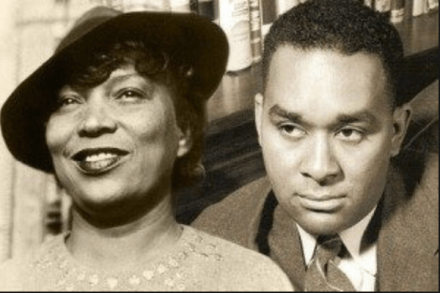
Looking over my list so far, I’m embarrassed that there are no authors of color listed, though Dumas and Colette had some black ancestry. But I’ve read anywhere from one to four novels apiece by writers (my favorite books of theirs in parentheses) such as Isabel Allende (The House of the Spirits), James Baldwin (Go Tell It On the Mountain), David Bradley (The Chaneysville Incident), Octavia Butler (Kindred), Junot Diaz (The Brief Wondrous Life of Oscar Wao), Ralph Ellison (Invisible Man), Buchi Emecheta (Second Class Citizen), Alex Haley (Roots), Zora Neale Hurston (Their Eyes Were Watching God), Jhumpa Lahiri (The Lowland), Gabriel García Márquez (One Hundred Years of Solitude), Terry McMillan (Waiting to Exhale), Toni Morrison (Beloved), Walter Mosley (Devil in a Blue Dress), Arundhati Roy (The God of Small Things), Zadie Smith (White Teeth), Wole Soyinka (The Interpreters), Alice Walker (The Color Purple), and Richard Wright (Native Son), among various others.

Well, I guess I’ve never read more books by a writer other than Lee Child. He and his Jack Reacher character are highly addicting.

Which novelists have you read the most, in number of books?

My literary-trivia book is described and can be purchased here: Fascinating Facts About Famous Fiction Authors and the Greatest Novels of All Time.

In addition to this weekly blog, I write the award-winning “Montclairvoyant” topical-humor column for Baristanet.com. The latest weekly piece — about the 2020 Democratic presidential field and a hometown astronaut’s unfortunate association with Trump at the State of the Union address — is here.

Novelists With Short Fiction in Their Jurisdiction

Many famous authors known mostly for their novels also penned a number of short stories.

They may have started their writing careers with brief fiction, and may have continued to compose stories after turning to novels. They wrote stories for the money, to try different genres, to explore themes they felt wouldn’t work as well in the longer novel format, to take a “breather” from novels, etc.

All this came to mind last week while reading a collection of F. Scott Fitzgerald’s stories. Fitzgerald is of course best known for his small canon of novels — The Great Gatsby obviously being the most famous — but he also sold about 160 pieces of short fiction to magazines during his 44-year life. Fitzgerald even used some of his stories — such as the compelling “The Curious Case of Benjamin Button,” about a “baby” born old who grows younger — to delve into fantasy or supernatural themes almost entirely absent from his novels.

Fitzgerald’s stories include those, such as the poignant “Babylon Revisited” and the barbed “Bernice Bobs Her Hair,” with themes (spoiled/rich characters, troubled relationships, social competition, lots of drinking, etc.) reminiscent of his long fiction. Then there’s the eye-opening “The Diamond as Big as the Ritz,” about the world’s wealthiest family trying to keep their existence secret in a remote area of Montana. It’s a creepy/fascinating/memorable tale, unfortunately lessened by blatant racism that can’t be excused by Fitzgerald’s somewhat-satiric approach.

Leo Tolstoy, author of the classic novels War and Peace and Anna Karenina, also wrote some amazing short fiction — some of it just long enough to edge into novella territory. The snowy “Master and Man,” the melancholy “The Death of Ivan Ilyich,” the dramatic “The Kreutzer Sonata,” the history-tinged “Hadji Murat,” etc.

Herman Melville’s main claim to fame is the iconic Moby-Dick and other novels, but he also penned memorable/wide-ranging short fiction — including the slavery saga “Benito Cereno,” the sublimely disturbing office tale “Bartleby, the Scrivener,” and the droll “I and My Chimney.”

In addition to writing terrific novels such as The House of Mirth and The Age of Innocence, Edith Wharton penned some very absorbing short stories that included a number of excellent ghost tales.

Other deceased novelists who wrote excellent short fiction include James Baldwin, Honoré de Balzac, Willa Cather, Kate Chopin, George Eliot, Graham Greene, Nathaniel Hawthorne, Ernest Hemingway, Zora Neale Hurston, James Joyce, D.H. Lawrence, Jack London, Gabriel García Márquez, W. Somerset Maugham, Carson McCullers, Rabindranath Tagore, Mark Twain, Virginia Woolf, and Richard Wright, among many others.

Prominent living novelists who have successfully gone down the short-story road include Isabel Allende, Margaret Atwood, Lee Child, Stephen King, Barbara Kingsolver, Jhumpa Lahiri, and Alice Walker, to name just a few. Lahiri hit the Pulitzer Prize jackpot with her Interpreter of Maladies story collection, which preceded her novels The Namesake and The Lowland. I love Kingsolver’s Homeland and Other Stories and Atwood’s Wilderness Tips collection. And the title tale of Atwood’s Stone Mattress collection is a gripping piece of fiction.

Of course, there are also authors who have produced novels that are basically an assemblage of related stories: Sherwood Anderson (Winesburg, Ohio), Isaac Asimov (I, Robot), Ray Bradbury (The Martian Chronicles), Elizabeth Gaskell (Cranford), Amanda Moores (Grail Nights), Elizabeth Strout (Olive Kitteridge)…

Some of your favorite writers known mainly for novels but who’ve also done plenty of short stories?

My literary-trivia book is described and can be purchased here: Fascinating Facts About Famous Fiction Authors and the Greatest Novels of All Time.

In addition to this weekly blog, I write the award-winning “Montclairvoyant” topical-humor column for Baristanet.com. The latest weekly piece — about my town’s mixed environmental record — is here.