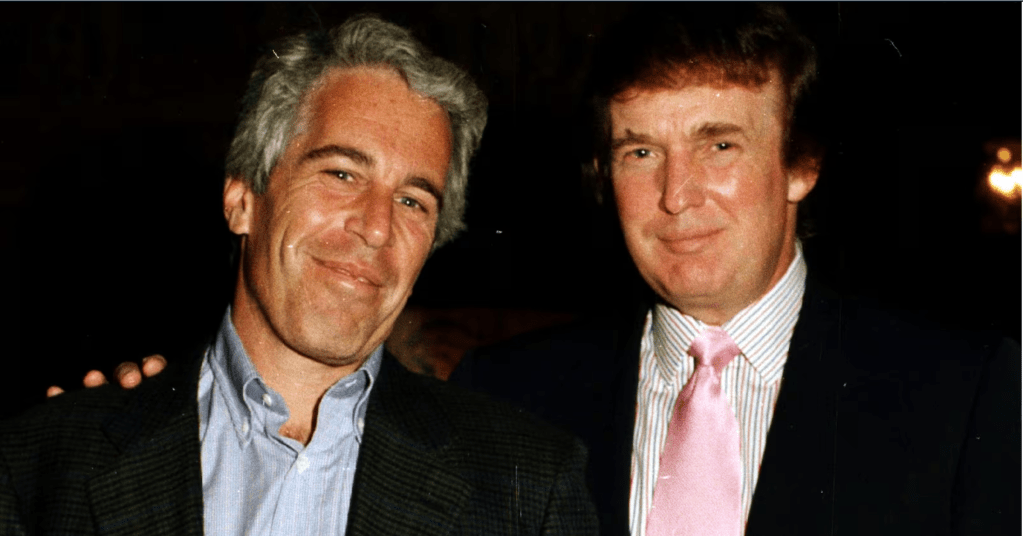
Jeffrey Epstein with Donald Trump. (Davidoff Studios Photography/Getty Images.)
After the welcome February 19 arrest of the former Prince Andrew over his tawdry and traitorous ties to the late Jeffrey Epstein, much can be said before I somehow turn this into a literature post:
— The monstrous Epstein was an abusive pedophile, sex trafficker of girls and young women, blackmailer, possible Russian and/or Israeli intelligence agent, etc.
— Major consequences for the elite (mainly rich white men) who were in Epstein’s orbit have mostly been meted out to those outside the United States.
— Nearly all the prominent Americans who were in that orbit have faced little more than some public scorn. A small number lost jobs or other positions, but none have faced Epstein-related criminal charges.
— Americans who were in Epstein’s orbit include President Trump (who has VERY suspiciously fought like hell to keep The Epstein Files secret); Trump cabinet members Howard Lutnick and Robert F. Kennedy Jr.; Trump strategist Steve Bannon; former President Bill Clinton; former Clinton cabinet member Lawrence Summers; tech billionaires Elon Musk, Peter Thiel, and Bill Gates; former Victoria’s Secret CEO Leslie Wexner; attorney Alan Dershowitz; filmmaker Woody Allen; intellectual Noam Chomsky; Giants football team co-owner Steve Tisch; and others.
All the debauchery and lack of accountability have not gone unnoticed by famous characters in literature, even if their thoughts on Epstein never quite made it into the novels they inhabit. For instance, fictional pedophile Humbert Humbert is perverted enough to hypothetically admire Epstein, even if Epstein was only two years old when Vladimir Nabokov’s Lolita got published in 1955. Perhaps HH was prescient in addition to deviant.
A Game of Thrones, the first novel in George R.R. Martin’s “A Song of Ice and Fire” series, includes 13-year-old Daenerys being forced to marry the adult warlord Drogo. Maybe she found some of her courage by anticipating the perseverance of Epstein survivors who continue to seek justice despite their attempts at that being blocked or ignored for decades — most recently by the Trump regime’s ghoulishly sycophantic attorney general Pam Bondi.
While thirsting for revenge against her sexual abuser, the resourceful Lisbeth Salander of Stieg Larsson’s The Girl with the Dragon Tattoo and its sequels might have theoretically considered also unleashing retribution on the depraved Epstein. At minimum, the computer-savvy Salander was capable of hacking into Epstein’s grotesque email conversations with various wealthy sickos.
While looking down from heaven in Alice Sebold’s The Lovely Bones, raped-then-murdered teen Susie Salmon could have also kept a disgusted eye on Epstein before he started looking up from hell after his 2019 death. (It has been said that Epstein committed suicide in prison, but many feel he was killed to prevent him from possibly spilling the beans on his fellow guilty elites.)
The female collaborators to the grossly misogynist men in Margaret Atwood’s The Handmaid’s Tale might wish they could contact Epstein collaborator Ghislaine Maxwell for extra collaboration advice, or even ask to join Maxwell in the cushy Texas jail the Trump regime transferred her to as a way to increase the chances of her not implicating former close Epstein pal Trump.
Finally, a reader could wonder if Jane Eyre, after becoming aware of Edward Rochester’s marital history, suspected Rochester of having Epstein ties despite the two men existing two centuries apart and one of them being fictional. Thankfully, British author Charlotte Bronte lived during Queen Victoria’s time rather than the former Prince Andrew’s time.
Comments on, or additions to, this rather fraught topic?
Misty the cat says: “Trying to outrun the big predicted snowstorm is a new Winter Olympics sport.”
My comedic 2024 book — the part-factual/part-fictional/not-a-children’s-work Misty the Cat…Unleashed — is described and can be purchased on Amazon in paperback or on Kindle. It’s feline-narrated! (And Amazon reviews are welcome. 🙂 )
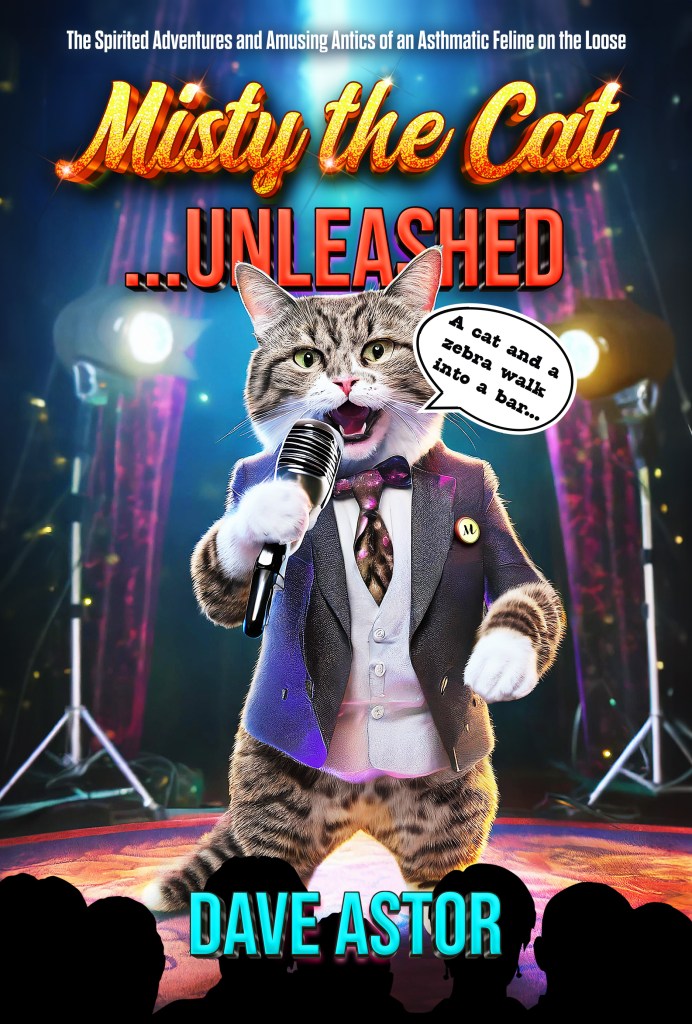
This 90-second promo video for the book features a talking cat: 🙂
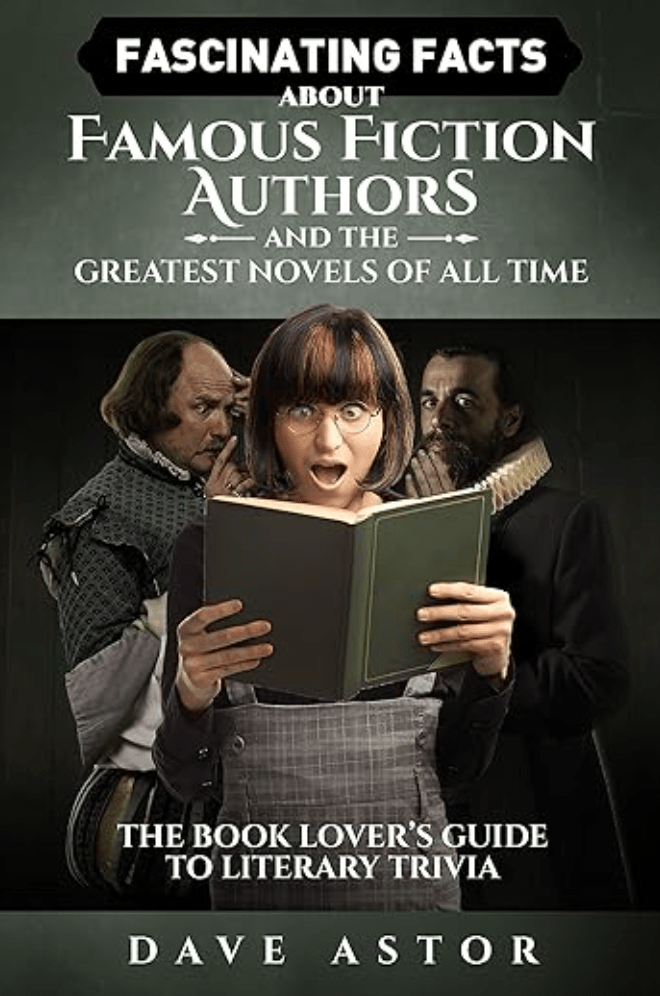
I’m also the author of a 2017 literary-trivia book…
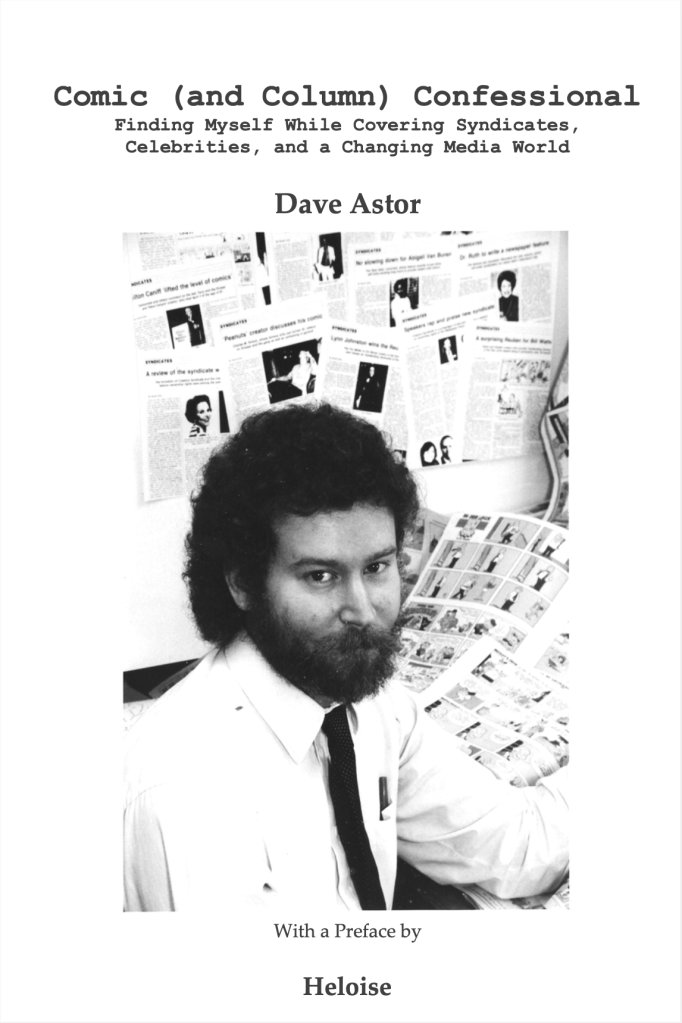
…and a 2012 memoir that focuses on cartooning and more, including many encounters with celebrities.
In addition to this weekly blog, I write the 2003-started/award-winning “Montclairvoyant” topical-humor column every Thursday for Montclair Local. The latest piece — about a bad tax deal and a controversial upcoming school vote — is here.

 Dave Astor on Literature