The Return of the Educators

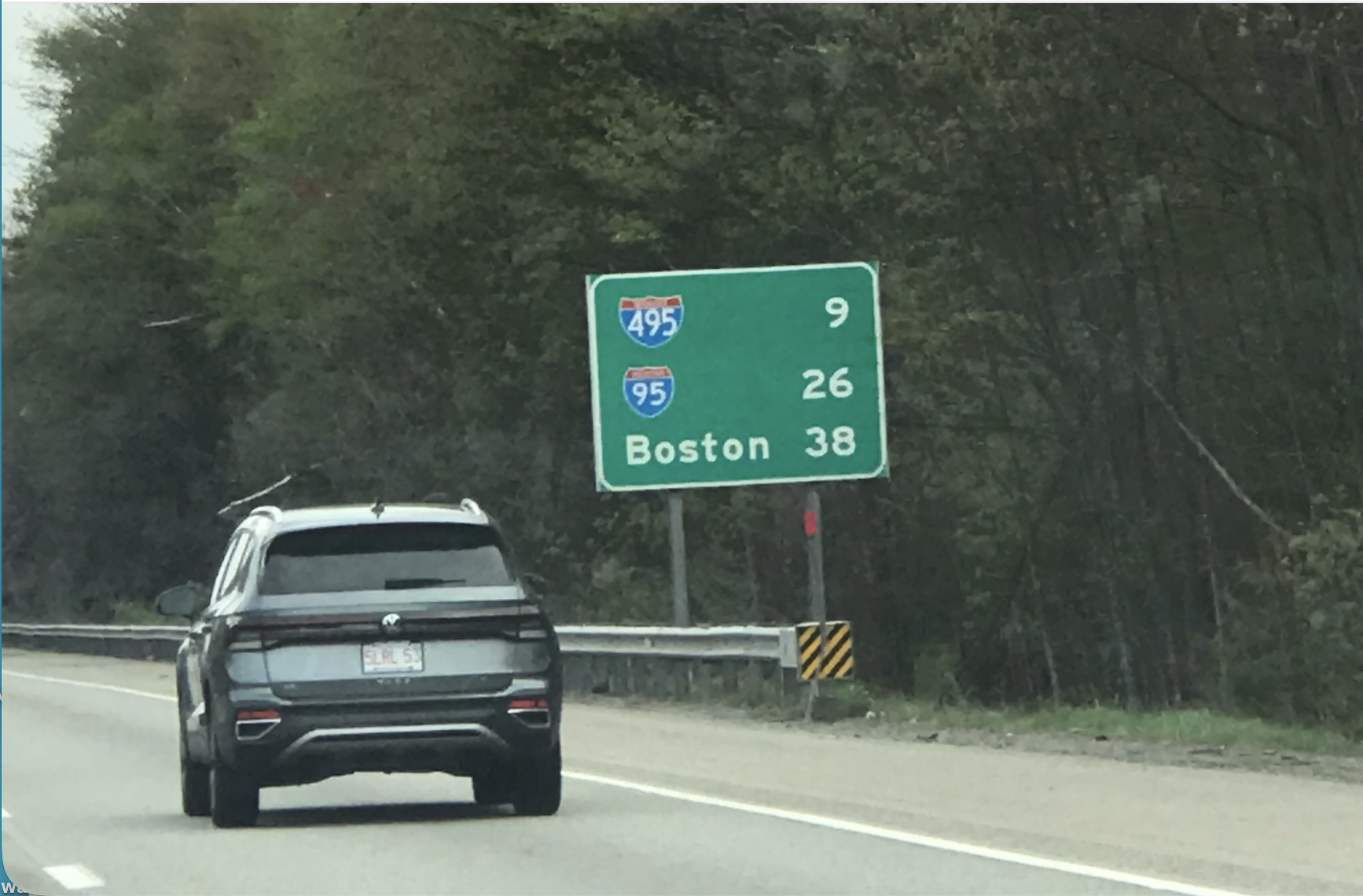
On the way to Boston this past Friday, May 8, from New Jersey. (Photo by me.) Unsurprisingly, we were behind a car with Massachusetts plates…I think.

My wife Laurel and I were in Boston the past couple days picking up our younger daughter Maria from her first year of college, meaning I didn’t have a lot of time to write. Because of that, I figured I’d rerun a post…and it seemed appropriate to have that literature piece be about educators — whether professors or teachers of younger students. But I’ve done several posts over the years featuring fictional (and actual) educators, so I decided to reference all of them.

In 2023, I discussed real-life authors who also are or were professors.

“And why not?,” I wrote back then. “Teaching uses different creative muscles, is a source of additional income (not all well-known novelists are rich), gets authors away from their solitary writing desks into some semblance of the real world, enables them to help budding writers, gives them insight into what young people are thinking, etc. Perhaps their teaching also indirectly infuses their own writing, or even directly if a book they pen has an academic setting. On the other hand, teaching time does take away from writing time.”

I added, “In some cases, dual-duty authors were professors who later became novelists. But perhaps in more cases, they first gained some renown as novelists — after which universities came a-calling.”

The living and deceased authors/professors I named in that 2023 post included Jhumpa Lahiri (Barnard College); Toni Morrison (Princeton University, Rutgers University, etc.); Joyce Carol Oates (Princeton, University of California, Berkeley); Jeffrey Eugenides (Princeton, New York University); Zadie Smith (also NYU); Viet Thanh Nguyen (University of Southern California); Junot Diaz (Massachusetts Institute of Technology); Kent Haruf (Nebraska Wesleyan University); Vladimir Nabokov (Wellesley College, Cornell University); and J.R.R. Tolkien (University of Oxford).

In 2021, 2015, and 2012 posts (the earliest one for The Huffington Post two years before this blog’s 2014 launch), I discussed fictional educators. Many who are as smart, hardworking, and compassionate as some of our favorite real-life teachers we might fondly recall when reading about fictional ones.

Literature’s memorable educators include — among others — Anne Shirley in Anne of Avonlea, the first sequel to L.M. Montgomery’s Anne of Green Gables; Charles Chipping of James Hilton’s Goodbye, Mr. Chips; Ricky Braithwaite of E.R. Braithwaite’s autobiographical novel To Sir, With Love; Dan Needham of John Irving’s A Prayer for Owen Meany; and Jane Eyre, briefly a teacher in Charlotte Bronte’s novel after that character spent a longer time as a teacher of another sort: being a governess.

Children’s fiction also has some great teachers — with one I mentioned in a previous post being Ms. Frizzle of The Magic School Bus books written by Joanna Cole and illustrated by Bruce Degen.

Of course, not all teachers are terrific and/or admirable. In past posts I cited the bumbling Gilderoy Lockhart of J.K. Rowling’s Harry Potter series; the charismatic but fascist-leaning title character in Muriel Spark’s The Prime of Miss Jean Brodie; the means-well-but-overwhelmed Ida Ramundo of Elsa Morante’s novel History; and the comedic-but-a-bit-irresponsible Aimee Lanthenay of Colette’s Claudine at School.

When previously naming fictional professors, I noted that a number of them are quirky — which obviously can make for interesting reading. I added: “There can be drama in their interactions with students, in their competitive relationships with fellow profs, in their sometimes-fraught encounters with university administrators, in their quests for tenure, and in the whole publish-or-perish thing. All that makes up for the fact they are (usually) not the heroic, adventurous sorts who can make readers turn pages faster than tuition payments drain a bank account.”

Among literature’s other fictional profs are Howard Belsey and Monty Kipps of Zadie Smith’s On Beauty; Gauri Mitra of Jhumpa Lahiri’s The Lowland; William Stoner of John Williams’ Stoner; Virginia “Vinnie” Miner and Fred Turner of Alison Lurie’s Foreign Affairs; Tony Fremont (a woman) of Margaret Atwood’s The Robber Bride; Humphrey Clark of Margaret Drabble’s The Sea Lady; Grady Tripp of Michael Chabon’s Wonder Boys; and Godfrey St. Peter of Willa Cather’s The Professor’s House.

I asked this before in previous posts on this topic, but you’re welcome to again name some of your favorite fictional educators.

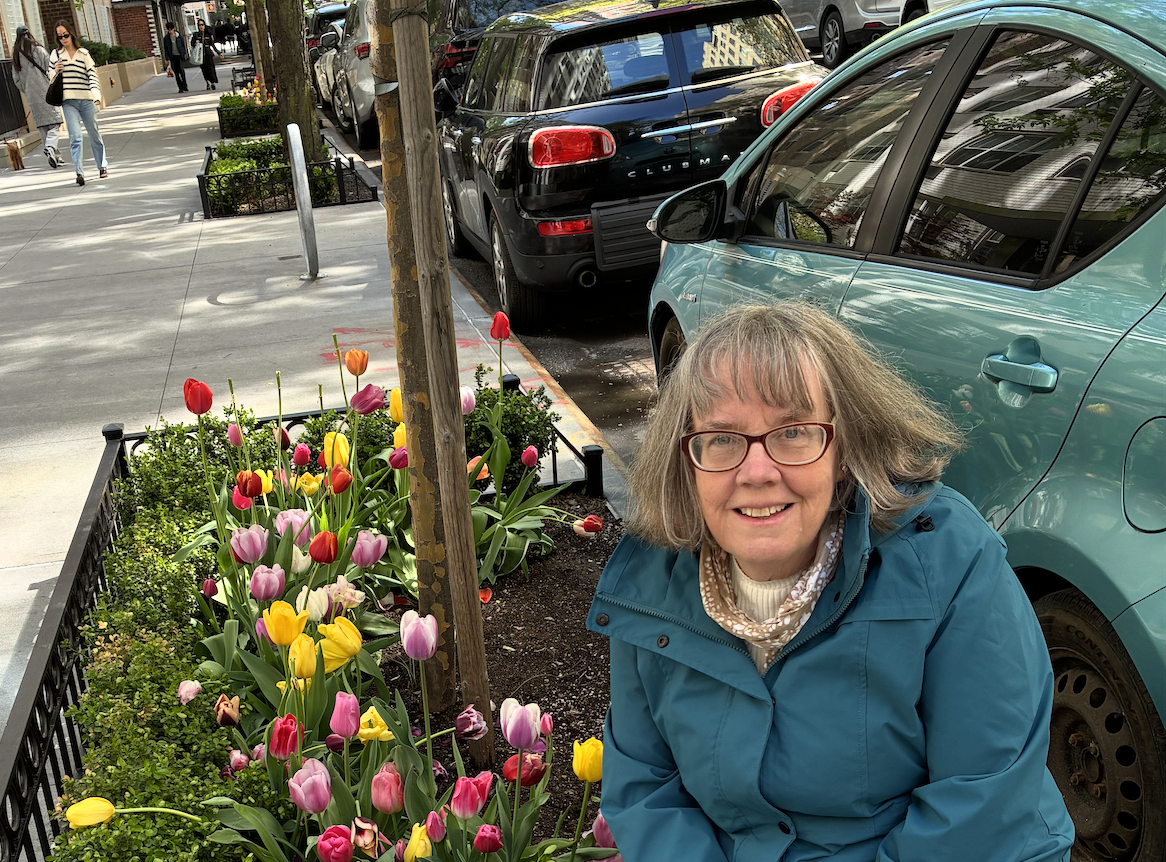
Happy Mother’s Day to my wife Laurel, who is…a professor. 🙂 This photo of her was taken last month in New York City.
Misty the cat says: “My teen human is home from college, so I sleep extra in celebration.”

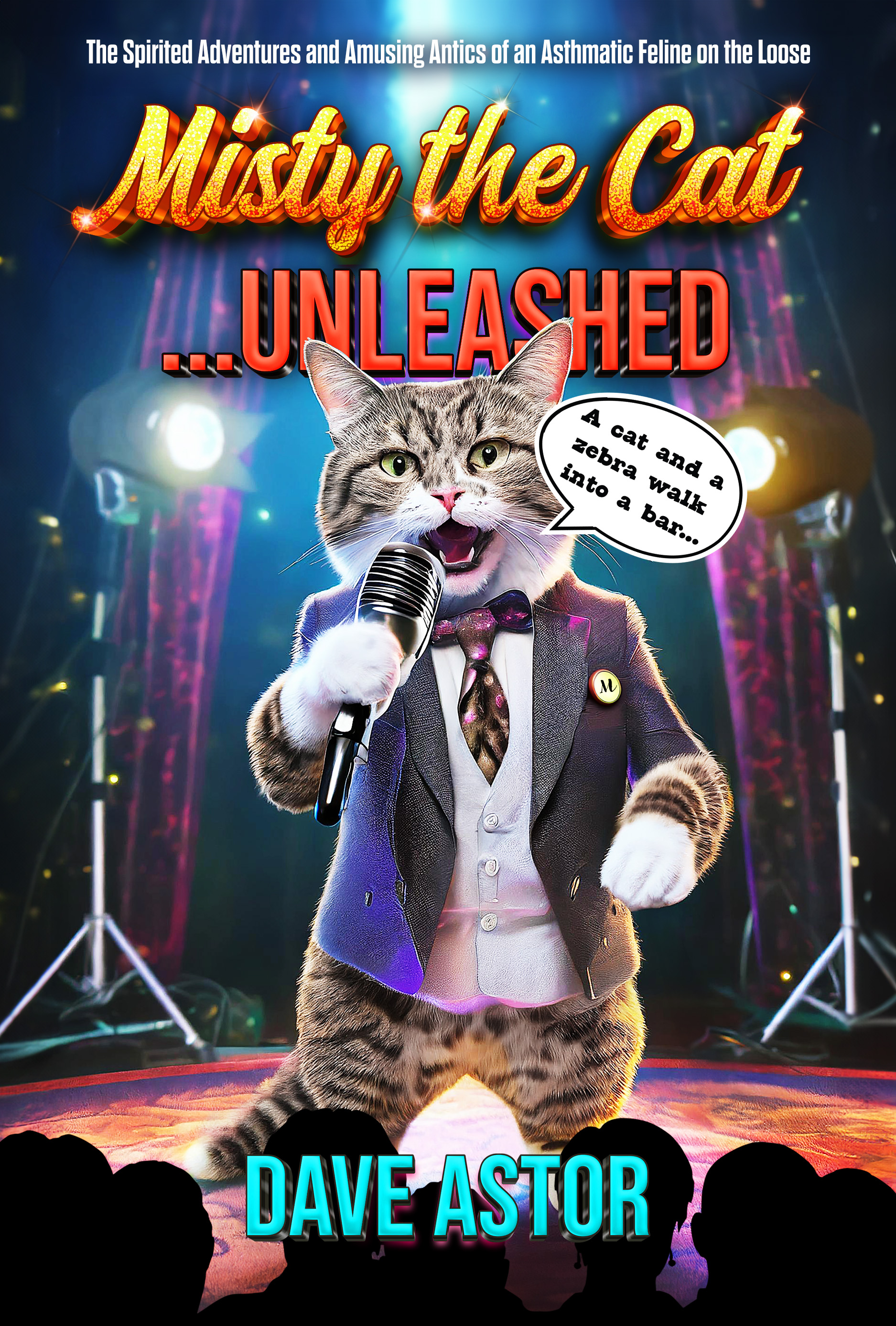
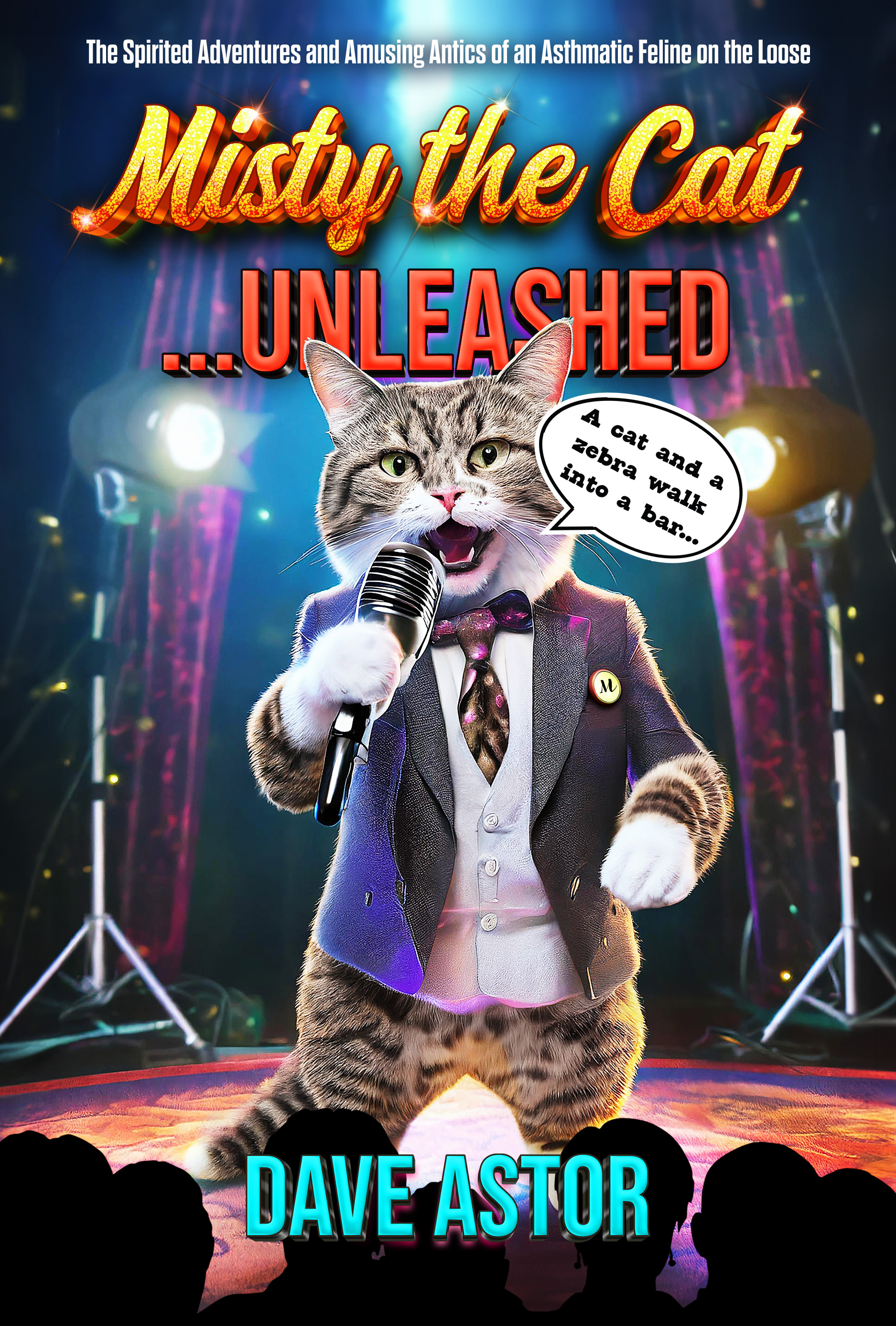
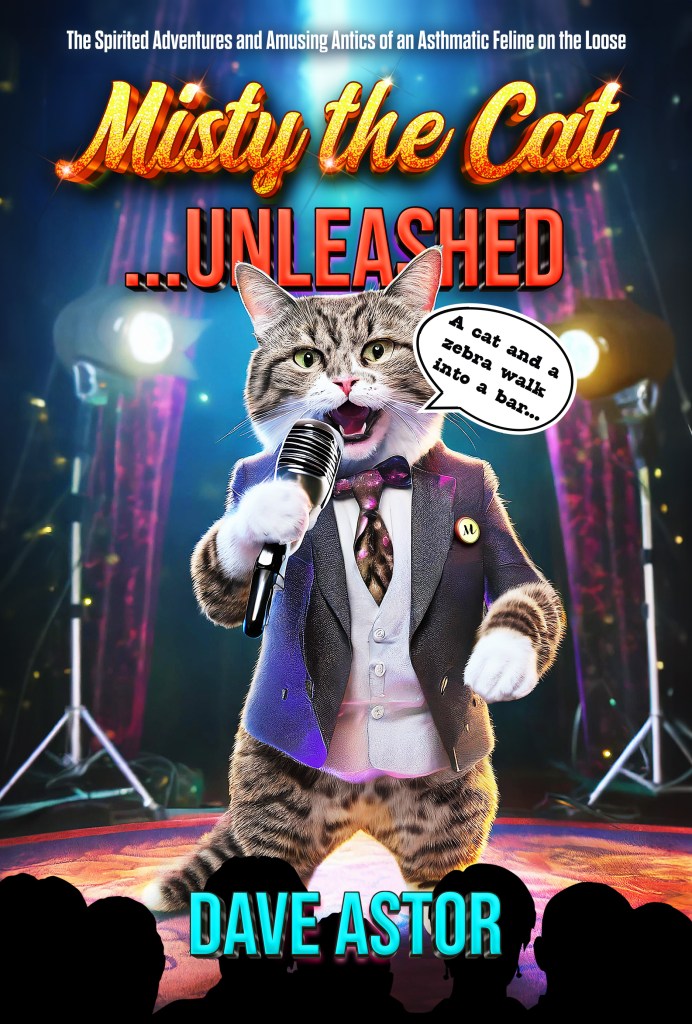
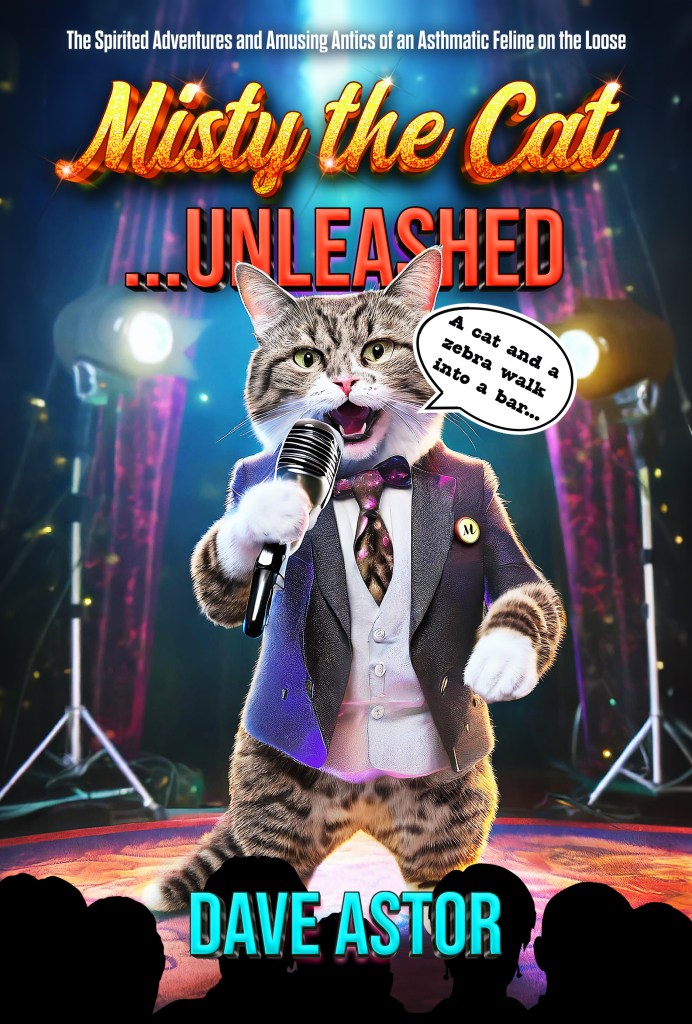
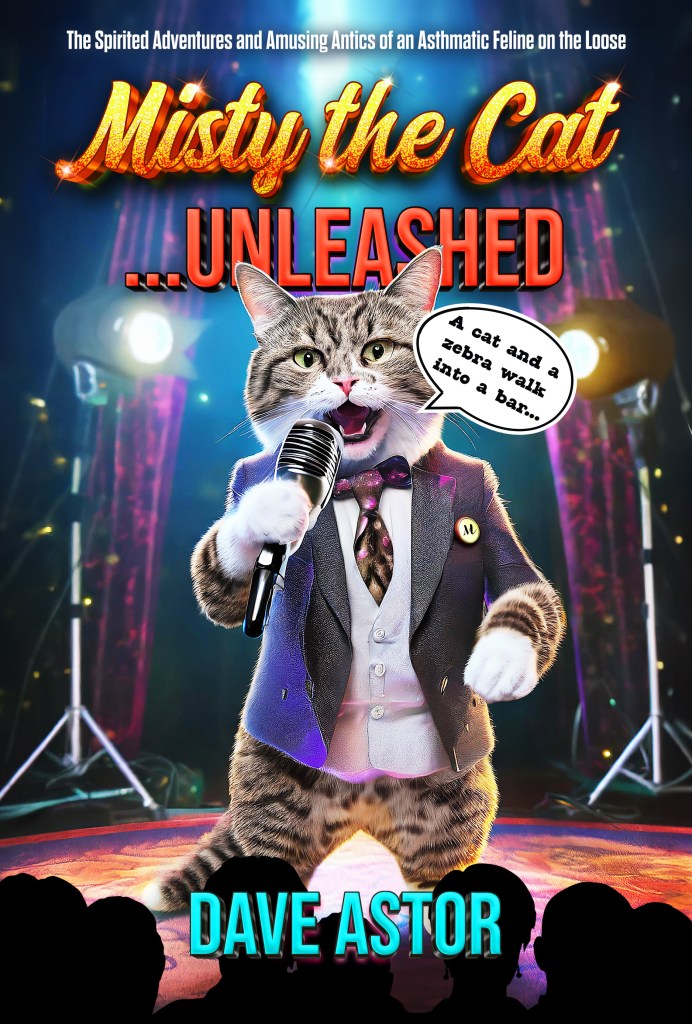
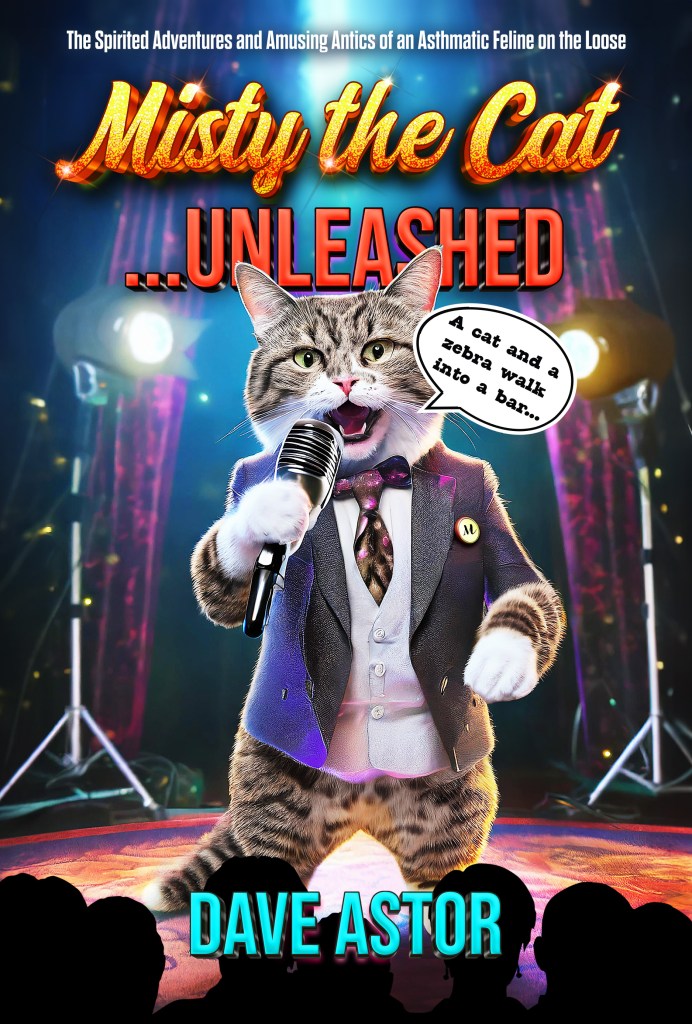
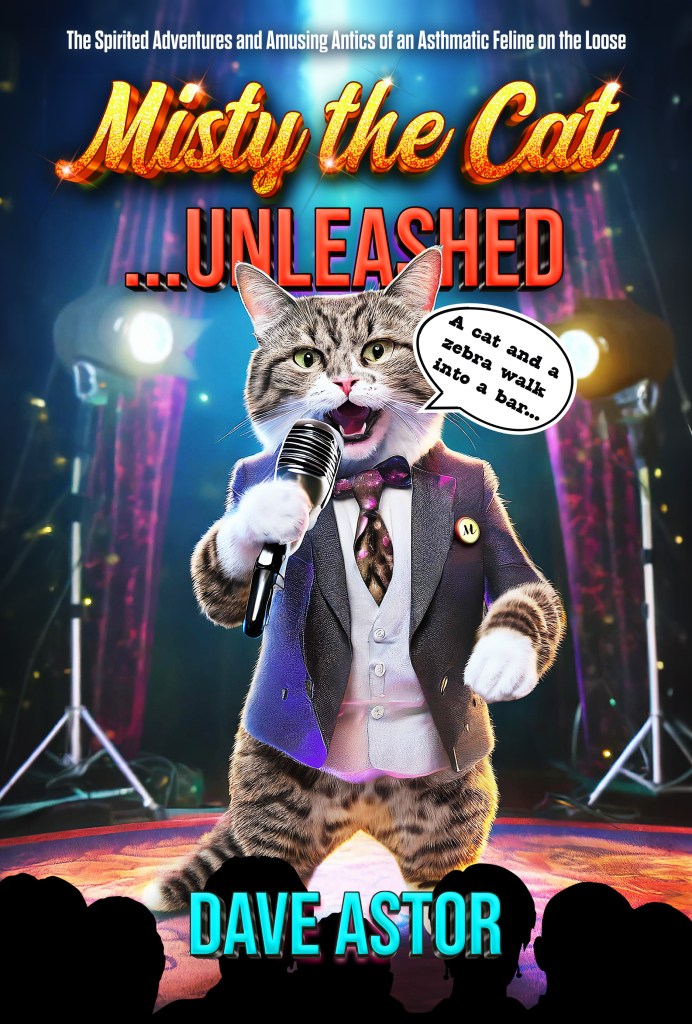
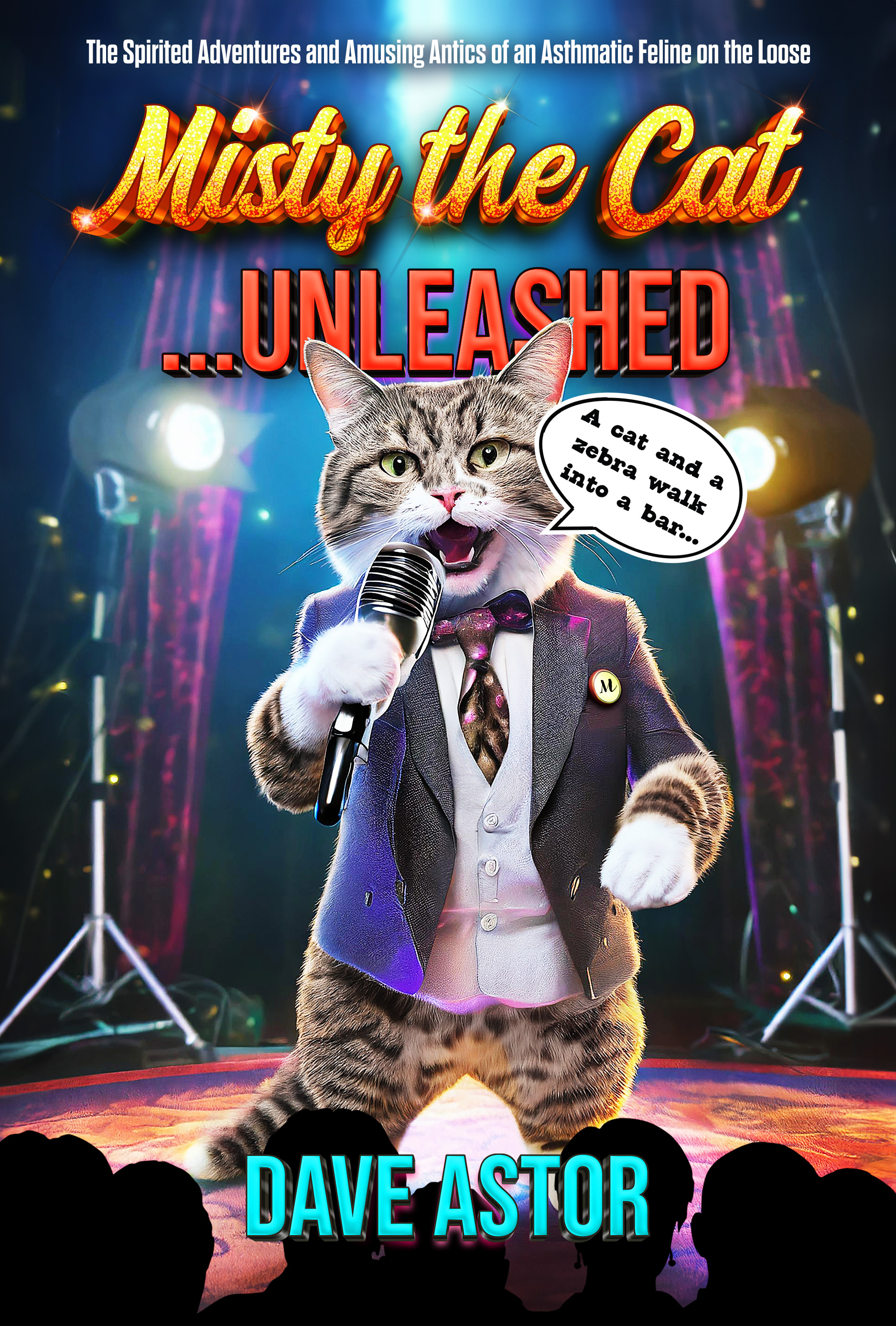
My comedic 2024 book — the part-factual/part-fictional/not-a-children’s-work Misty the Cat…Unleashed — is described and can be purchased on Amazon in paperback or on Kindle. It’s feline-narrated! (And Amazon reviews are welcome. 🙂 )
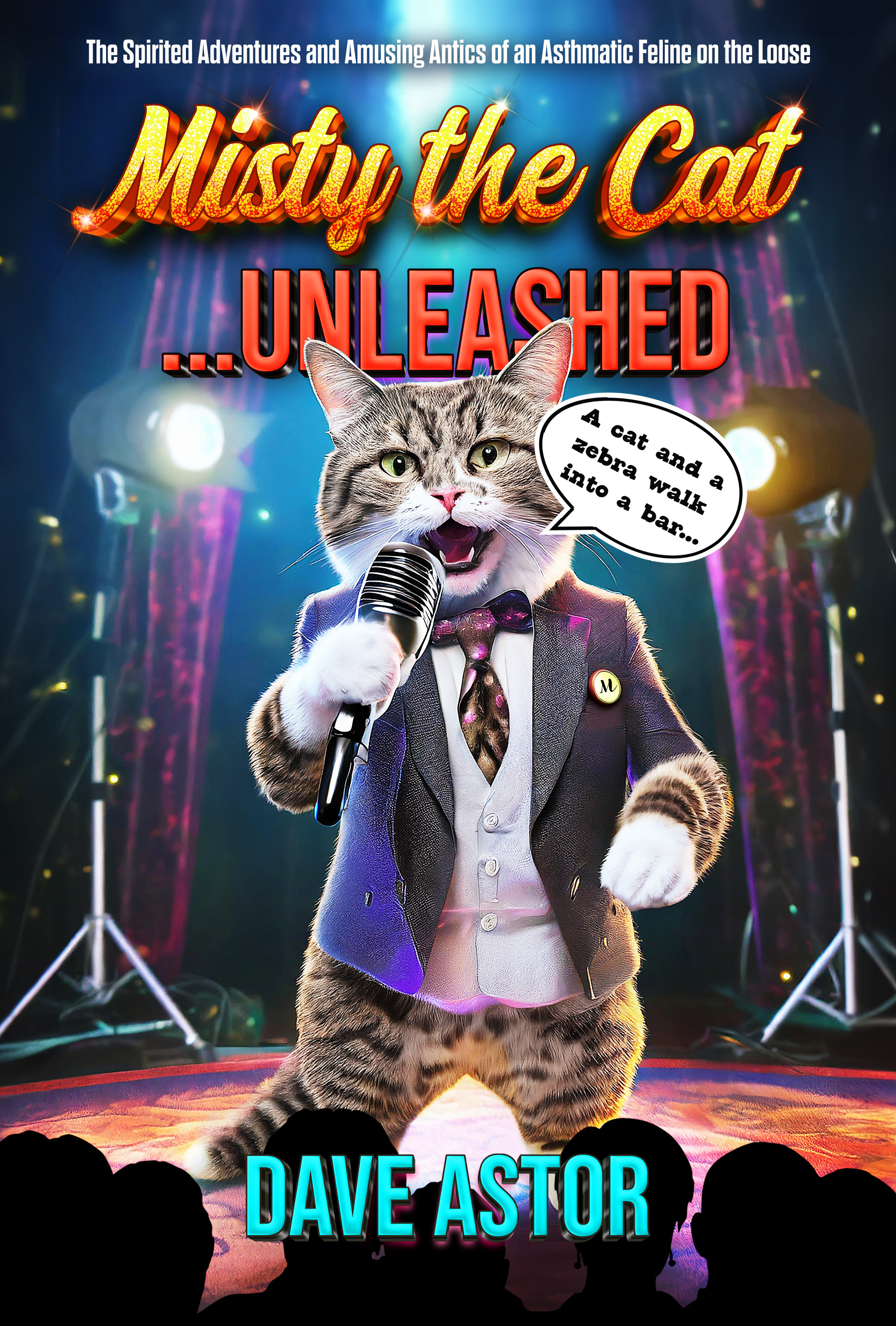
This 90-second promo video for the book features a talking cat: 🙂

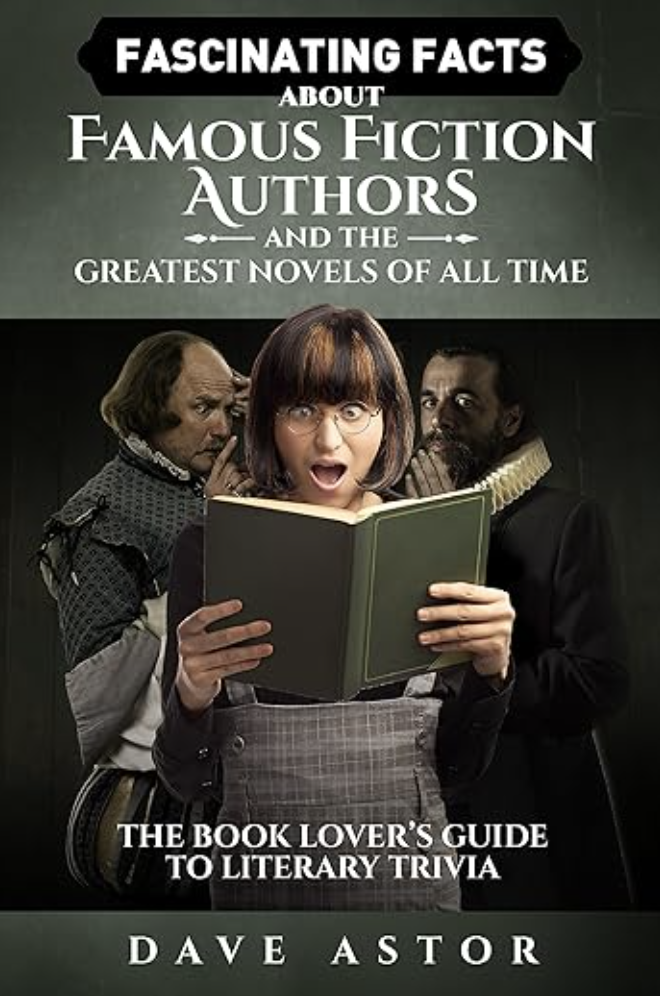
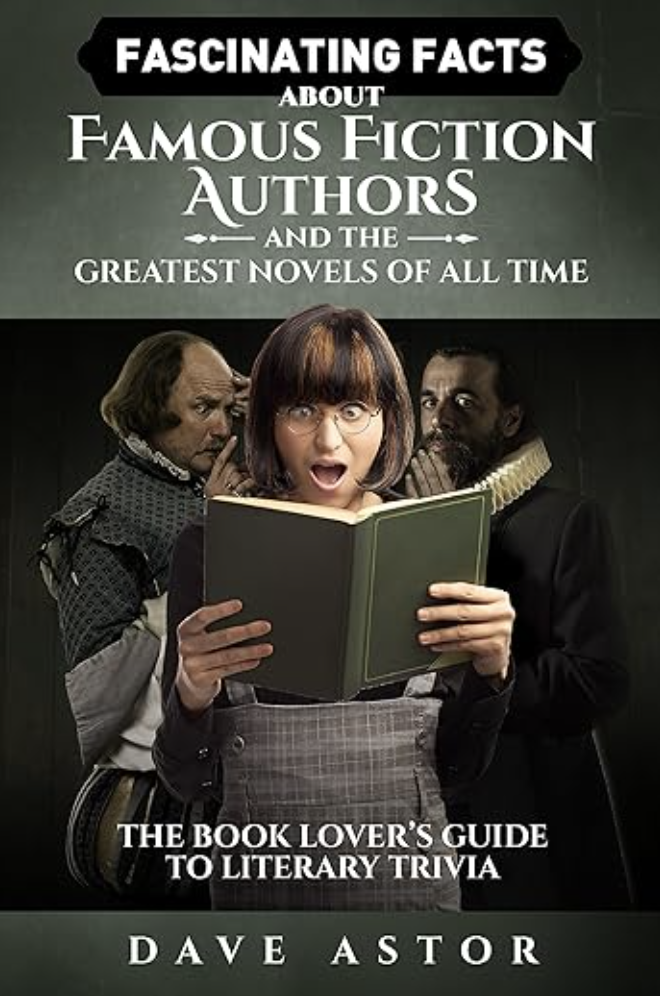
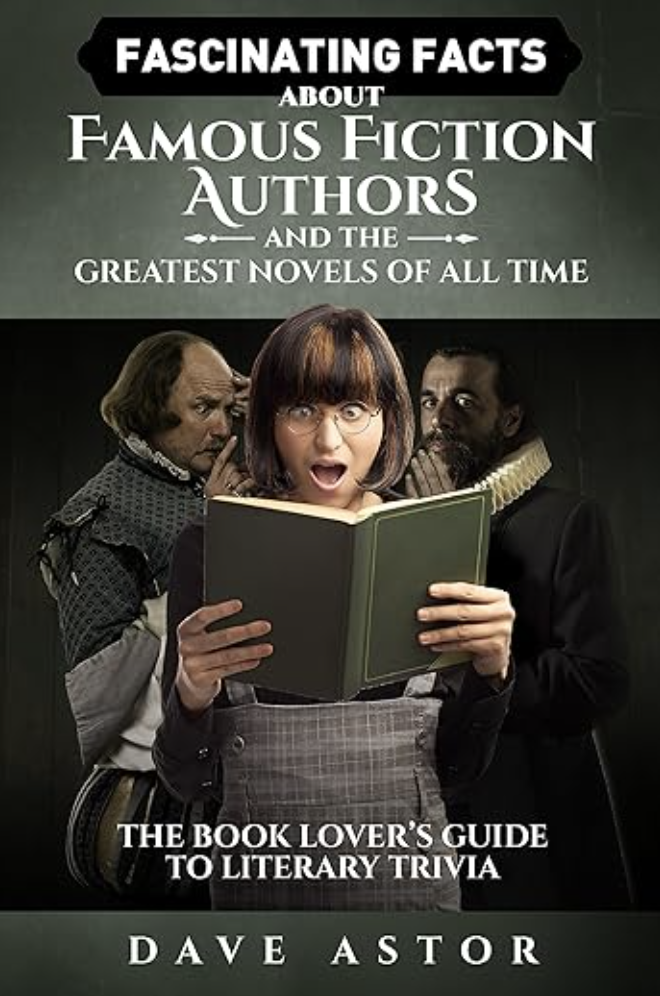
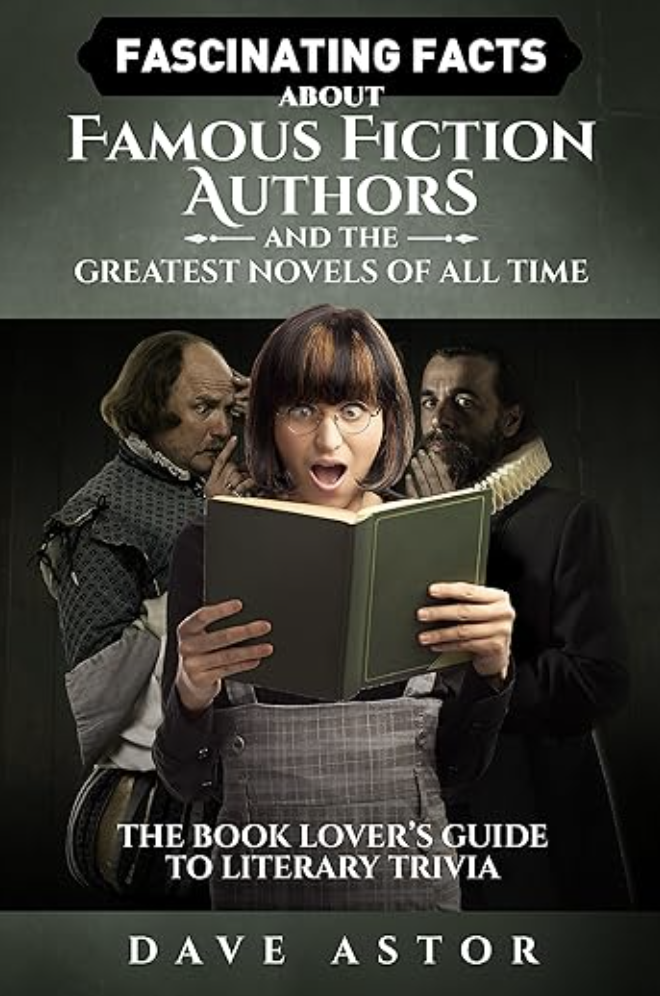
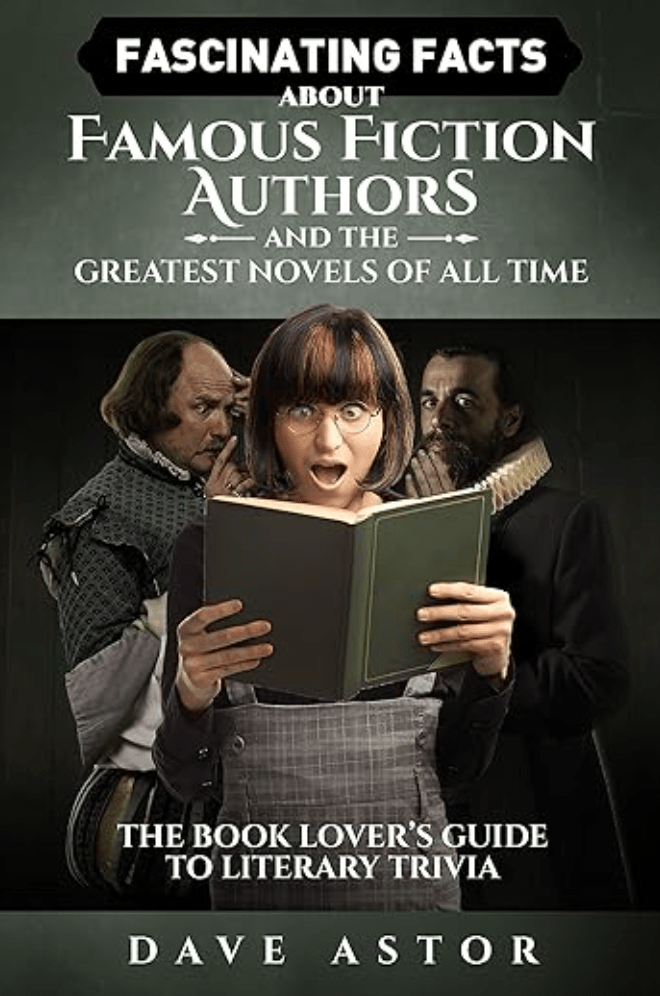
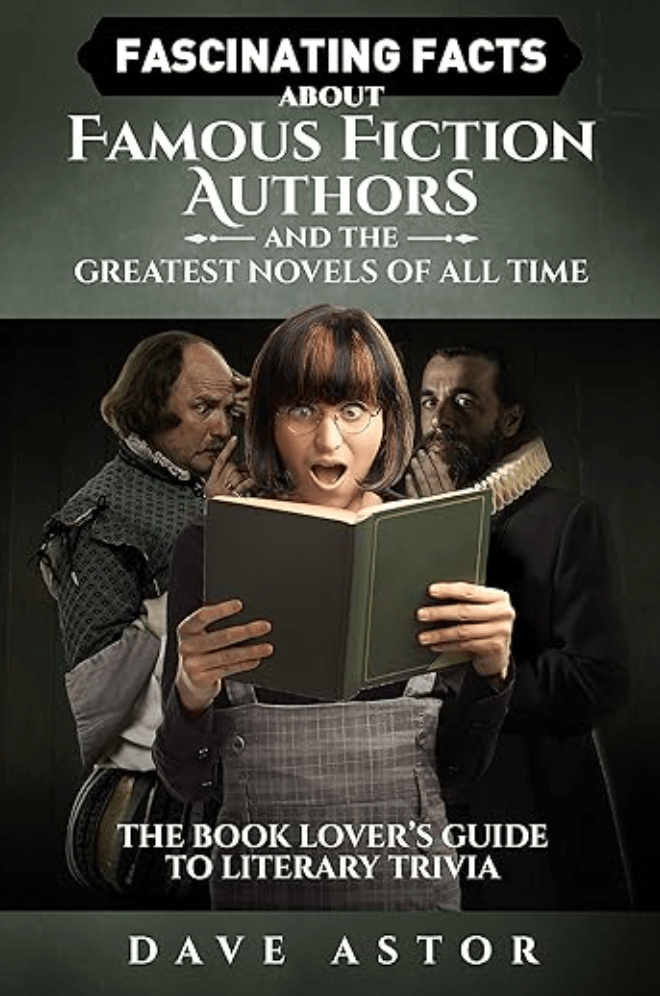
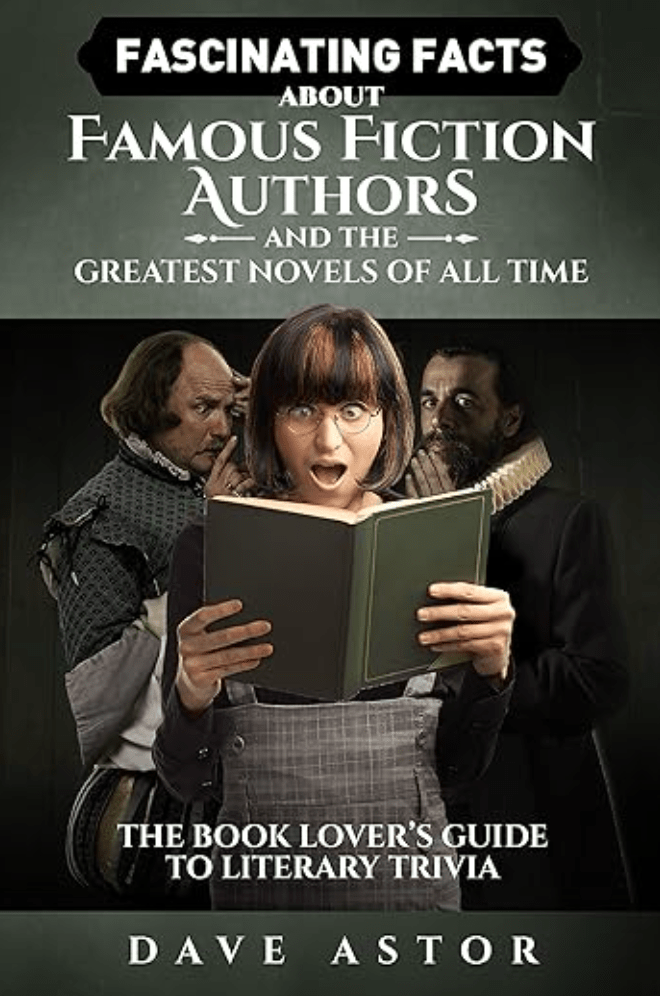
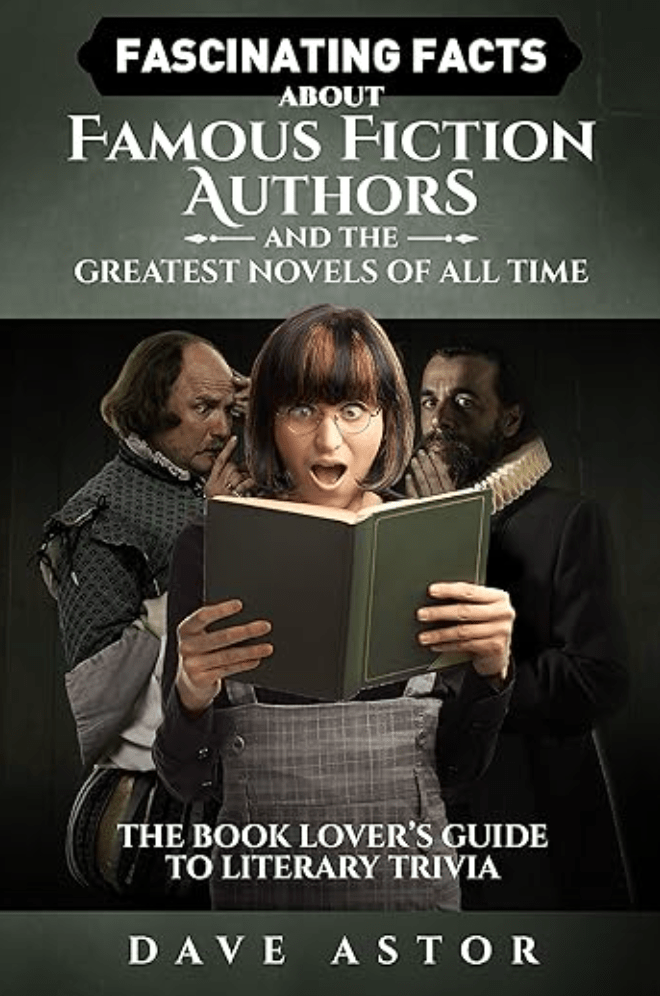
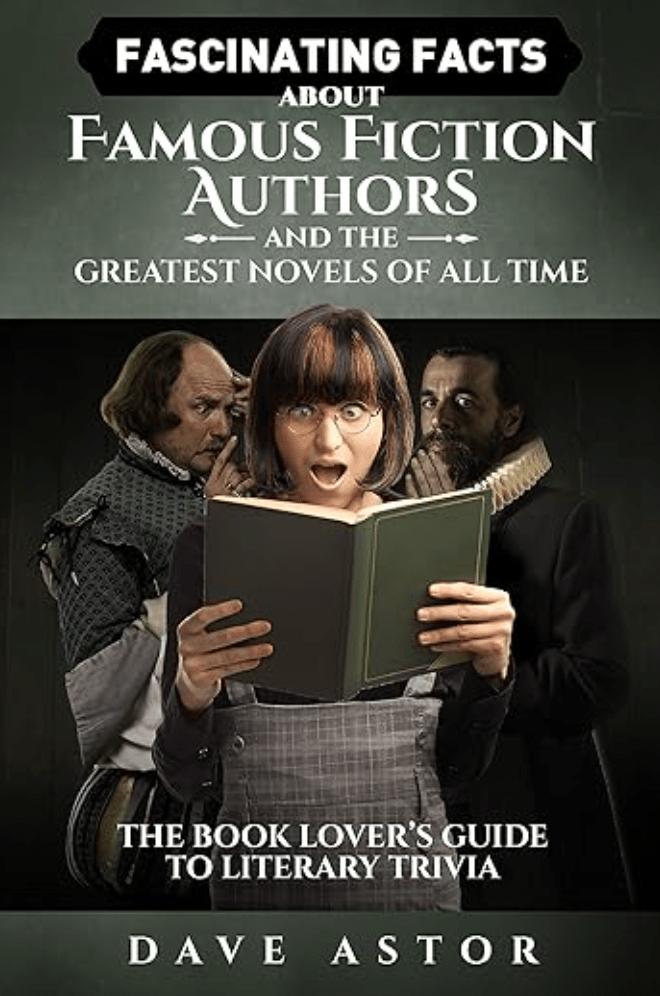
I’m also the author of a 2017 literary-trivia book

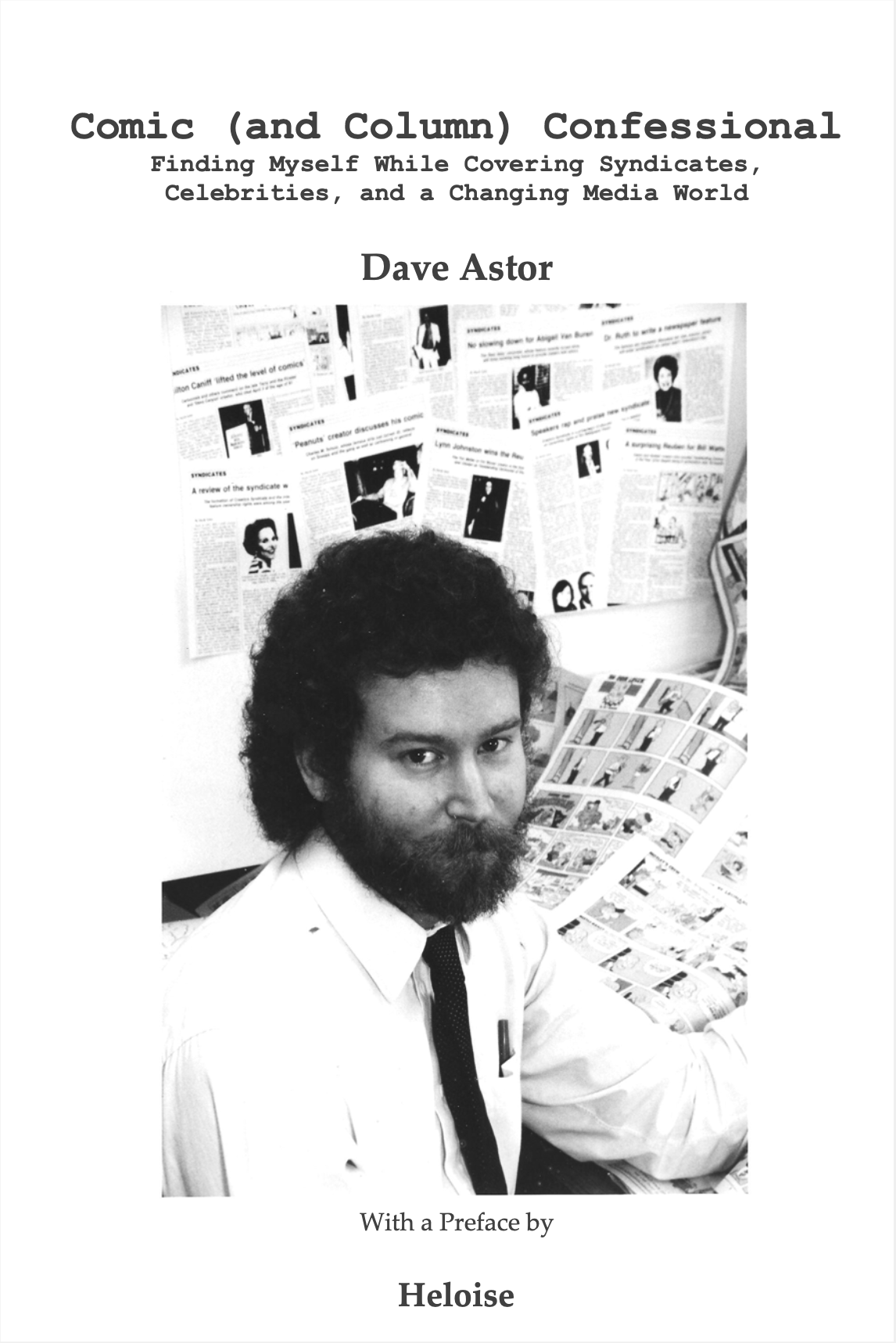
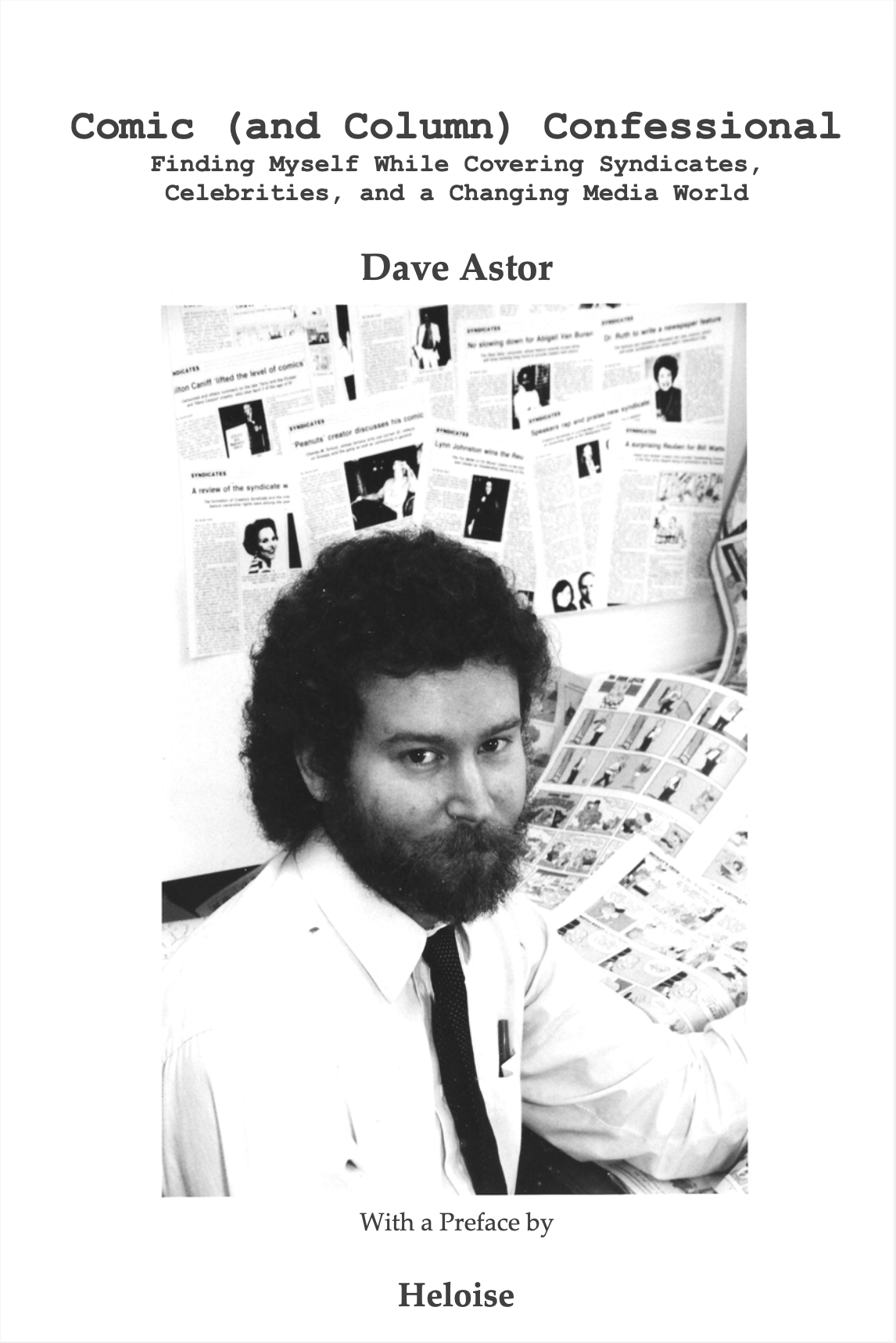
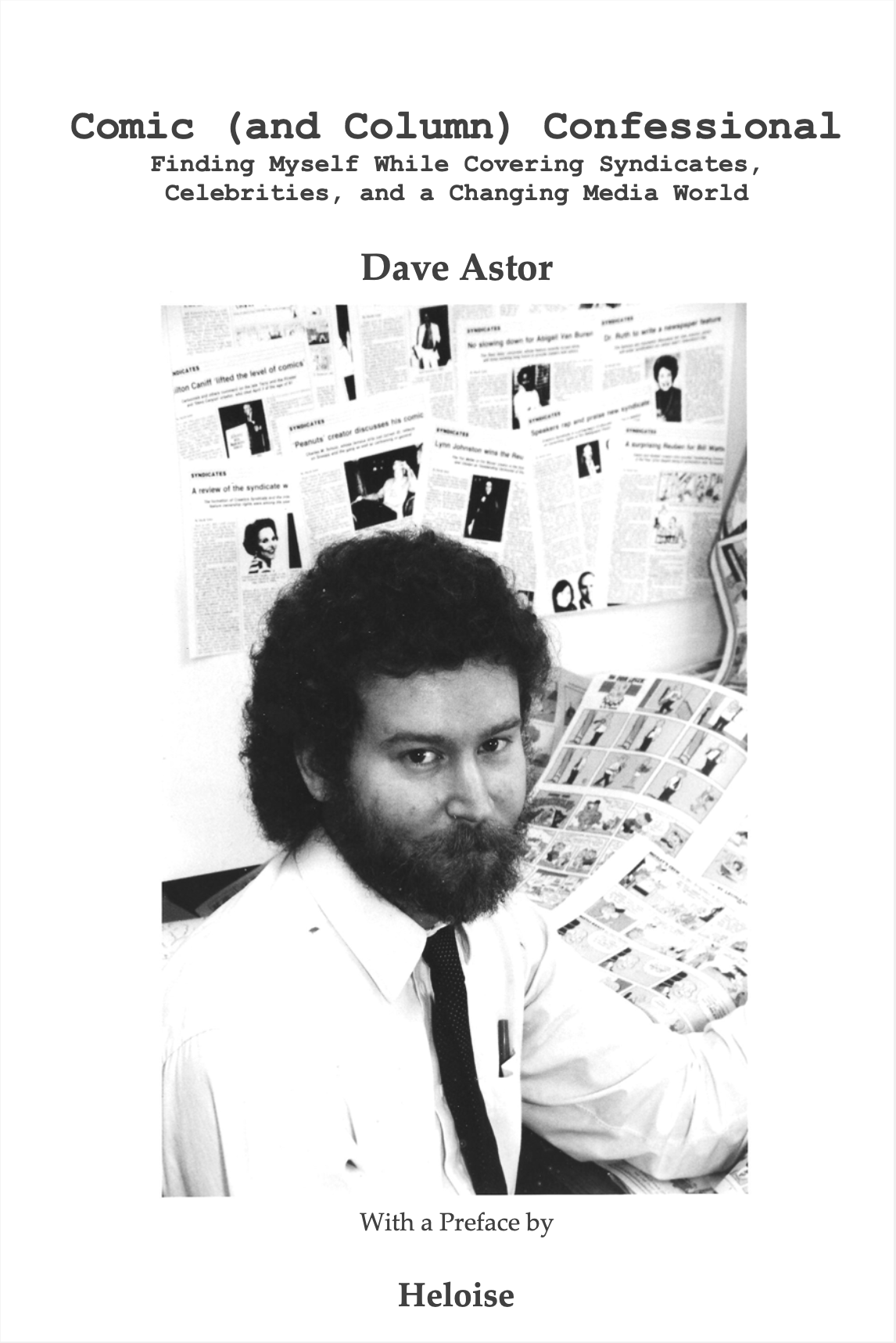
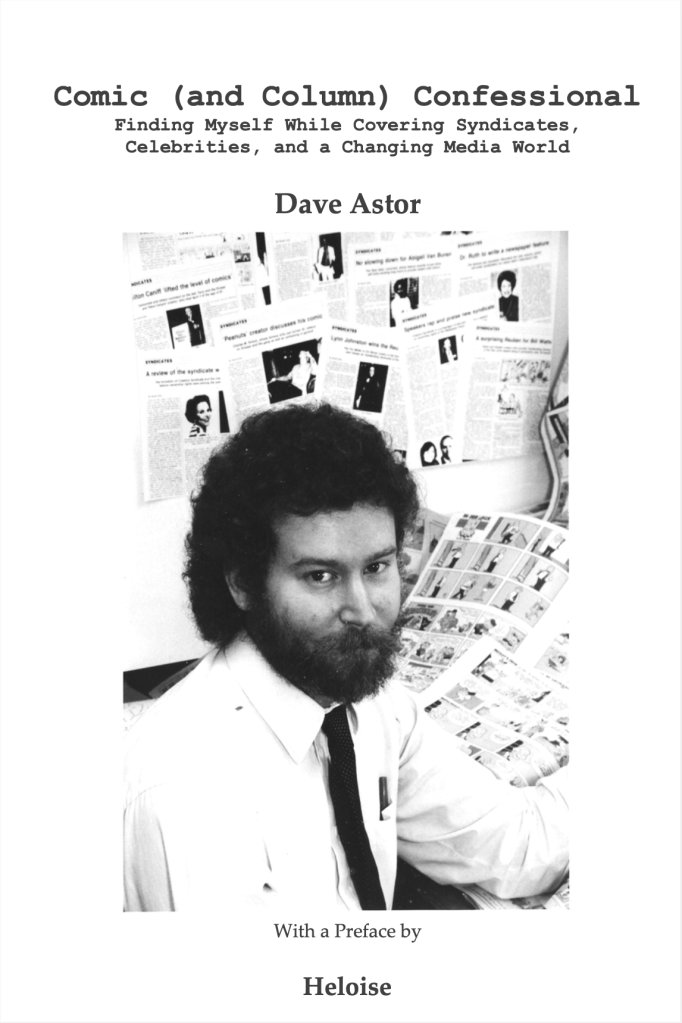
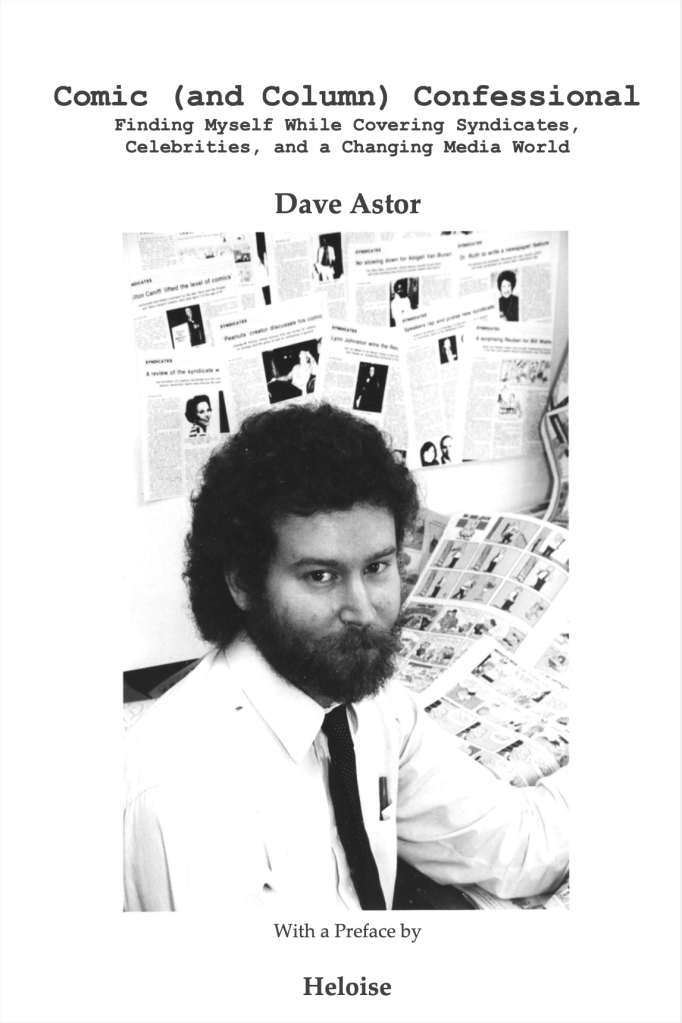
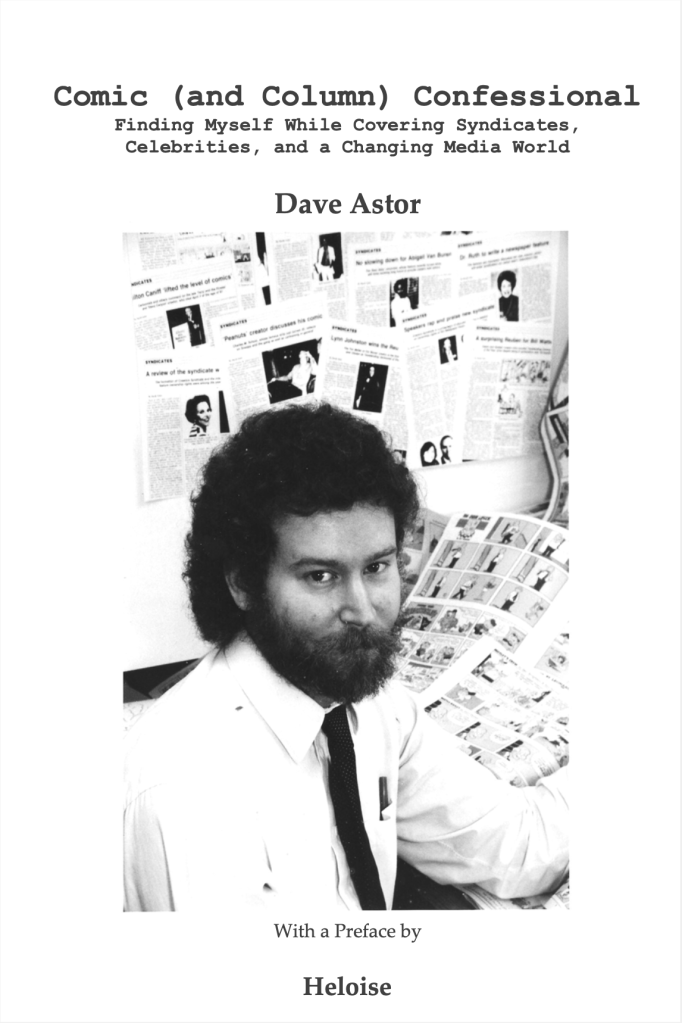
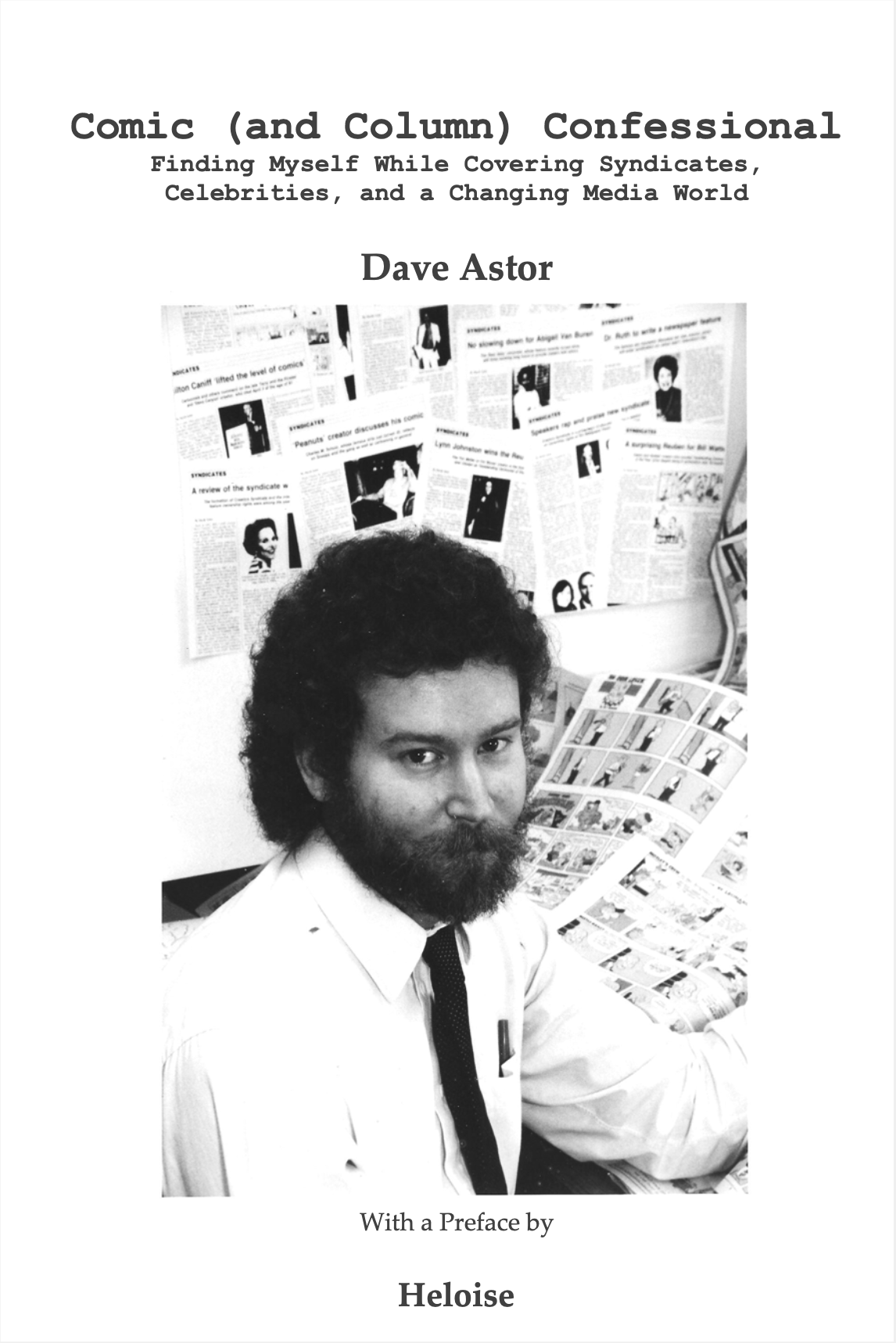
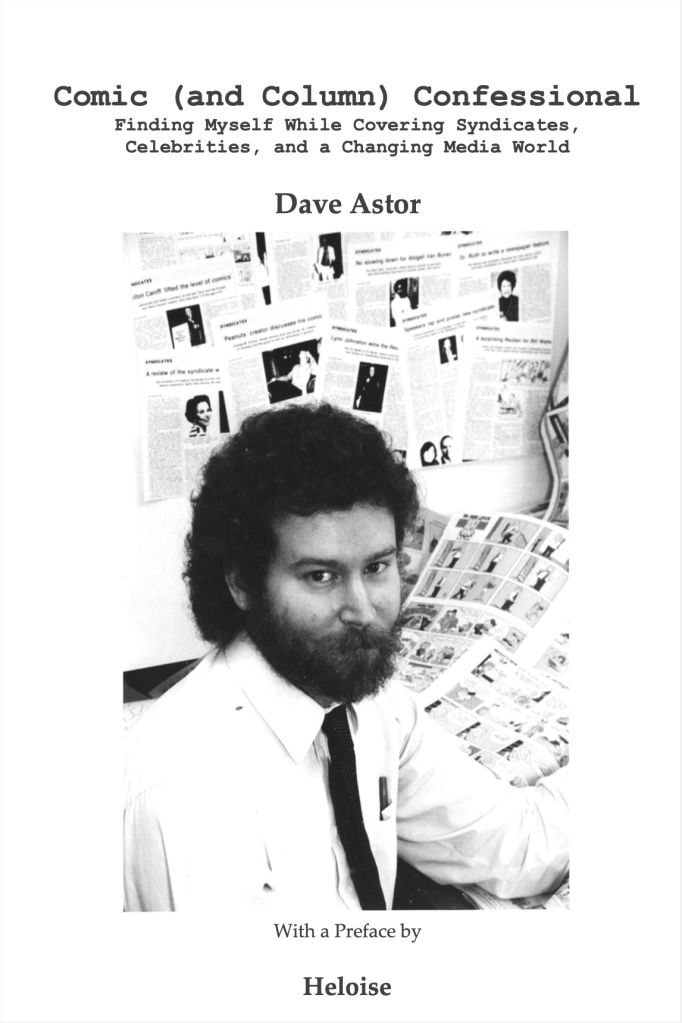
…and a 2012 memoir that focuses on cartooning and more, including many encounters with celebrities.
In addition to this weekly blog, I write the 2003-started/award-winning “Montclairvoyant” topical-humor column every Thursday for Montclair Local. The latest piece — which discusses my town’s grim school budget and more — is here.
Gothic Fiction Gives Readers Frisson

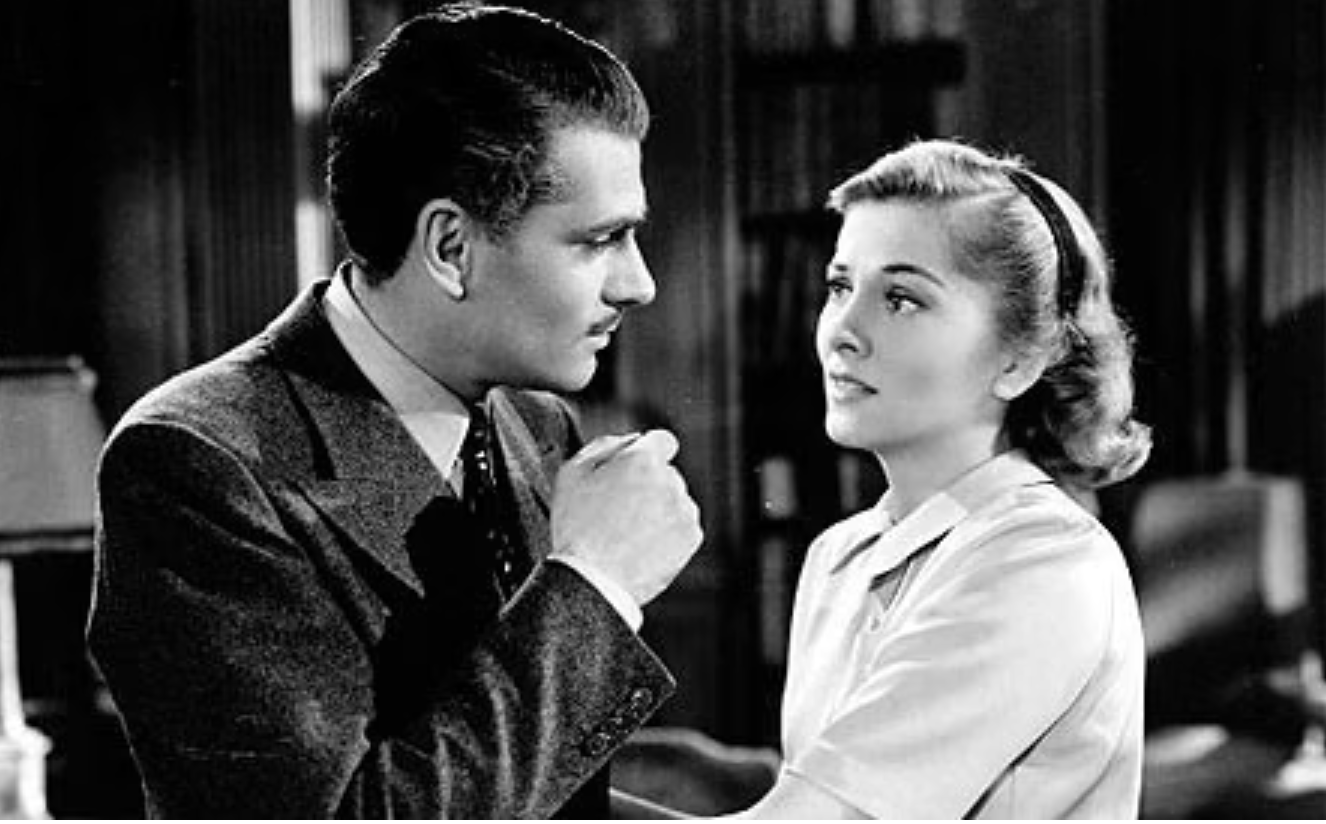
Laurence Olivier and Joan Fontaine in Alfred Hitchcock’s Rebecca movie from 1940.

What’s a Gothic novel? Definitions I found online include “a literary genre combining fiction, horror, death, and romance” that might be “set in gloomy, decaying locations like castles or ruined mansions” and also might feature “the intrusion of the past upon the present” as well as “dark secrets, supernatural elements” and “a brooding hero” and “a vulnerable female protagonist.”

Those definitions mean books in this category can be compelling, mysterious, haunting, and more. So, all that is an incentive for me to discuss various Gothic novels I’ve read.

I recently reread Daphne du Maurier’s mesmerizing Rebecca (1938), which is one of the first books that come to mind when thinking of the Gothic genre. It’s about an unnamed young woman who marries wealthy widower Maxim de Winter. His first wife? Rebecca, of course. The shy/insecure/inexperienced new spouse compares herself (and is compared by others) to the late Rebecca — whose presence remains palpable at Maxim’s huge Manderley estate. In which we meet sinister housekeeper Mrs. Danvers, who was very attached to the beautiful/charismatic/seemingly admirable Rebecca and treats the second Mrs. de Winter with contempt and cruelty.

After finishing Rebecca, I read for the first time du Maurier’s 1936 potboiler of a novel Jamaica Inn, which also has some Gothic elements (including a remote setting and plenty of terror) but no upper-class characters in the main cast. Not as skillfully composed as Rebecca, but still plenty gripping.

Du Maurier also wrote several other novels considered Gothic or part-Gothic — including 1951’s My Cousin Rachel and 1969’s The House on the Strand.

Going back to 19th-century literature, Charlotte Bronte’s Jane Eyre (1847) included various Gothic elements — a big old home, a mysterious woman in the attic, some disastrous events, an otherworldly occurrence, etc. Its story, several of its characters, and the dynamics of its central romance clearly influenced the Rebecca novel published nearly a century later.

Emily Bronte’s Wuthering Heights (also 1847) has lots of Gothic content, too — obsession, psychological torment, ghostly apparitions, the wild moors…

Almost 30 years earlier, Mary Shelley’s ominous 1818 novel Frankenstein drips with atmosphere while also being an early example of science fiction.

Later in the 19th century, we have Wilkie Collins’ The Woman in White (1860) with its suspense, “insane asylum,” and mistaken identity; Robert Louis Stevenson’s Strange Case of Dr. Jekyll and Mr. Hyde (1886) with its split-personality motif, claustrophobia, and foggy London streets; and Bram Stoker’s Dracula (1897), which I don’t need to summarize but can give many a reader nightmares.

In the realm of 19th-century short stories, a number of Edgar Allan Poe’s tales can be considered Gothic — including “The Fall of the House of Usher” and “The Masque of the Red Death.”

Joining du Maurier in writing 20th-century novels with at least some Gothic elements are authors such as Shirley Jackson (1959’s The Haunting of Hill House), Stephen King (1977’s The Shining), and Toni Morrison (1987’s Beloved).

And I shouldn’t forget to mention Jane Austen’s Northanger Abbey — an 1817-published spoof of Gothic fiction.

It’s pretty much agreed that Gothic novels first appeared in the 1700s, but I haven’t read any from that century (yet). They include Horace Walpole’s The Castle of Otranto (1764) and Ann Radcliffe’s The Mysteries of Udolpho (1794), among others.

There’s also the Southern Gothic genre that includes such novels as William Faulkner’s Light in August (1932), Carson McCullers’ Reflections in a Golden Eye (1941), Flannery O’Connor’s Wise Blood (1952), and Cormac McCarthy’s Outer Dark (1968).

What are your favorite Gothic novels, whether I mentioned them or not? I know there are a number of books in that genre I didn’t name.

Misty the cat says: “When I requested a deck, I meant a deck of cards to play poker.”

My comedic 2024 book — the part-factual/part-fictional/not-a-children’s-work Misty the Cat…Unleashed — is described and can be purchased on Amazon in paperback or on Kindle. It’s feline-narrated! (And Amazon reviews are welcome. 🙂 )

This 90-second promo video for the book features a talking cat: 🙂

I’m also the author of a 2017 literary-trivia book

…and a 2012 memoir that focuses on cartooning and more, including many encounters with celebrities.

In addition to this weekly blog, I write the 2003-started/award-winning “Montclairvoyant” topical-humor column every Thursday for Montclair Local. The latest piece — about a welcome election victory and more — is here.
Characters from Classic Novels Take to Social Media

The mature and measured U.S. president.

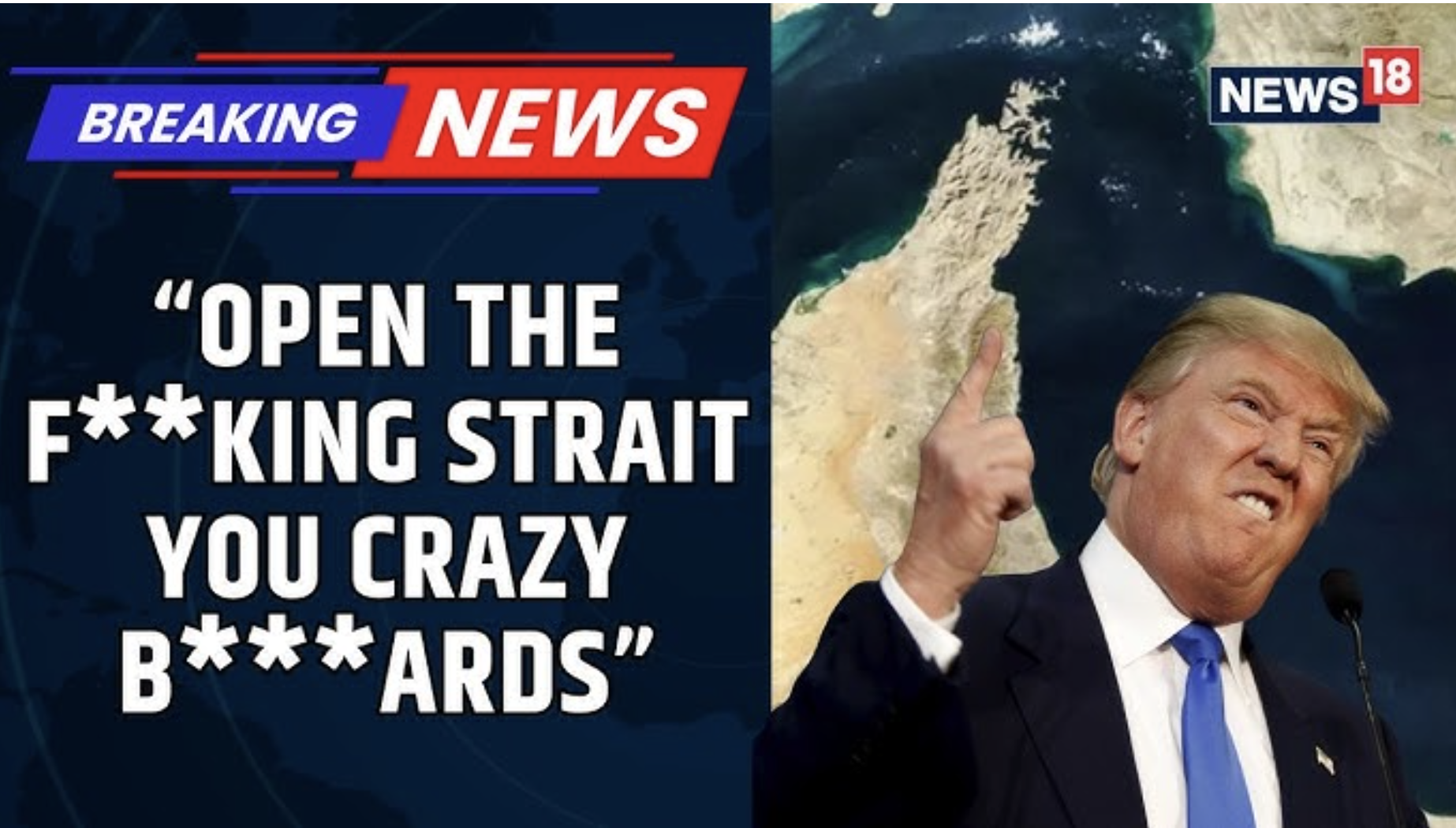
Donald Trump constantly posts unhinged messages on his social media platform Truth Social (aka Lie Social). Threatening genocide against Iran, showing an image of himself as Jesus Christ, denouncing Pope Leo XIV for wanting peace in the world, cursing at people who don’t “bend the knee” to him, etc. So, I’d like to offer more respectable — and more enjoyable — social media content: posts by various characters from classic literature. (With fictional comments responding to those fictional posts.) The characters inhabit novels published long before the existence of Facebook, X, Bluesky, Instagram, and other platforms, but they still managed to make their online thoughts known.

Jane Eyre: “Here’s a photo I took tonight of a tree that got split by lightning just after R asked me to marry him. Cool!”

Rochelle from Rochester: “Jane, not sure that’s cool; the severed tree could symbolize a coming rupture in your relationship.”

Jane: “As Freud might say after he’s eventually born, sometimes a tree is just a tree.”

Thornfield Hall & Oates: “Charlotte Bronte, please weigh in here.”

Charlotte: “I’ll try, but the WiFi in Haworth Parsonage is spotty.”

Rodion Raskolnikov: “I heard that the popular co-hosts of the I’ve Had It podcast are ‘killing it.’ That means I have something in common with them.”

St. Petersburger King: “You actually murdered people; podcasters Jennifer Welch and Angie ‘Pumps’ Sullivan did not.”

Raskolnikov: “I had my reasons for doing the Crime that might lead to Punishment, but at least I didn’t bomb a girls’ school like the Trump regime did in Iran.”

Sonya Semyonovna Marmeladova: “Fyodor Dostoevsky, could you extract Raskolnikov from his time warp? And give me a shorter name while you’re at it.”

Dostoevsky: “I’m busy deciding on a first name for the repulsive dad in my novel The Brothers Karamazov. Let’s see…Biff? No. Chuck? No. Rocky? No. Fyodor? Yes!”

Paul Baumer: “I’m told it’s All Quiet on the Western Front, but the occasional new western novel and occasional new western movie means that genre is not totally quiet. Plus I’m not sure if I’m fighting in World War I or The Great War.”

Wiser than the Kaiser: “Actually, they’re the same conflict. When The Great War happened, no one knew there’d be a World War II that would retrospectively lead to The Great War being renamed World War I.”

Paul: “I did not live to see World War II, or to even read the World War Z zombie apocalypse novel by Max Brooks, son of Mel Brooks and Anne Bancroft. Young Frankenstein was The Graduate, right?

Archie Triumph: “Erich Maria Remarque, could you rein in your protagonist?”

Erich: “I married Charlie Chaplin’s former wife, actress Paulette Goddard, so get off my case.”

Queequeg: “I’d post a video of The Great White Whale, but Apple has yet to develop a harpoon with a phone camera.”

Mel from Melville: “Given that you’re in a novel with lots of gravitas, shouldn’t the Moby-Dick whale have the more-formal name of Moby-Richard?”

Queequeg: “Call me, Ishmael, if my harpoon ever gets a smartphone.”

This Billy Budd’s for You: “Herman Melville, tell Captain Ahab to start monitoring his crew’s social media content.”

Herman Melville: “Herman Munster has the same initials as me.”

Edmond Dantes: “Given that it’s tax season, what is The Count of Monte Cristo’s count — according to his accountant?”

Chateau d’ifs, ands, or buts: “Depends on whether you, Edmond/Count, declared Abbe Faria a dependent.”

Edmond: “Actually, I was more a dependent of Faria’s than he was of me in the Chateau d’if island prison.”

Rhea Venge: “Alexandre Dumas, could you have The Three Musketeers stick a sword in this blog post? It’s done.”

Note: My next post might publish on Monday, April 27, rather than Sunday, April 26.

Misty the cat says: “The novel ‘All the Light We Cannot See’ seems to have missed that lamp.”

My comedic 2024 book — the part-factual/part-fictional/not-a-children’s-work Misty the Cat…Unleashed — is described and can be purchased on Amazon in paperback or on Kindle. It’s feline-narrated! (And Amazon reviews are welcome. 🙂 )

This 90-second promo video for the book features a talking cat: 🙂

I’m also the author of a 2017 literary-trivia book

…and a 2012 memoir that focuses on cartooning and more, including many encounters with celebrities.

In addition to this weekly blog, I write the 2003-started/award-winning “Montclairvoyant” topical-humor column every Thursday for Montclair Local. The latest piece — about topics such as steeply rising health-insurance costs hurting my town’s municipal budget — is here.

Favorite Females in Fiction, Recently Read

Today is International Women’s Day. Over the years, I’ve written blog posts from various angles about women in literature. This time, I’ll focus on some of my favorite women characters in novels I’ve read (though were not necessarily published) during the past couple of years.

Because of its title, the first book that came to mind was Kristin Hannah’s terrific 2024 novel The Women focusing on Vietnam War combat nurses. It stars Frances “Frankie” McGrath, a somewhat-naive young woman from an affluent family who’s forced to mature very quickly while treating horrendous battle injuries. Her two war-zone mentors — Barb Johnson and Ethel Flint — are also memorable in secondary roles.

Hannah’s previous novel, 2021’s The Four Winds, also has a stirring woman protagonist in Elsa Wolcott. (Her 1930s-set story is clearly influenced by John Steinbeck’s The Grapes of Wrath.)

Elin Hilderbrand’s novels — nearly 30 of which I read in 2024 and 2025 — are teeming with compelling women characters. Among my favorites are teacher Mallory Blessing of 2020’s bittersweet 28 Summers (inspired by Bernard Slade’s Same Time, Next Year) and the strong-willed Irene Steele who moves from Iowa to the Caribbean after her husband dies mysteriously in Hilderbrand’s Paradise trilogy (2018/2020/2020).

I was also drawn to another teacher: Maggie Jones of Kent Haruf’s Plainsong, an affecting 1999 novel that features interlocking stories.

And to the brave/beleaguered former government agent who goes by various aliases in Stephenie Meyer’s 2016 thriller The Chemist.

And to 1950s mathematician/astronaut Elma York of Mary Robinette Kowal’s 2018 alternative-history novel The Calculating Stars.

And to Wall Street attorney-turned-Appalachia legal aid attorney Samantha Kofer in John Grisham’s Gray Mountain (2014).

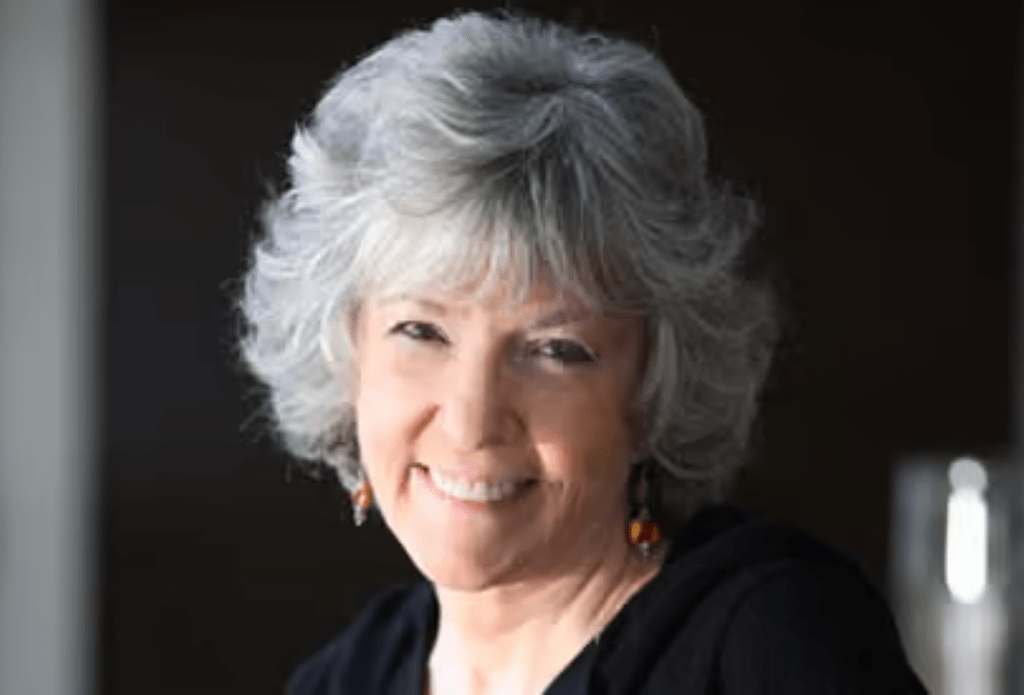
In the sleuth genre, three impressive yet very human/relatable women I’ve recently mentioned in other posts include Robin Ellacott of J.K. Rowling’s 2013-launched series, cold-case detective Karen Pirie of Val McDermid’s 2003-launched series, and private investigator Kinsey Millhone of the late Sue Grafton’s 1982-2017 alphabet-mystery series I’m currently working through (now enjoying Q Is for Quarry).

Among my favorite women characters in novels (some classic) that I read years ago include Jane Eyre in Charlotte Bronte’s book of the same name, Helen Huntingdon of Anne Bronte’s The Tenant of Wildfell Hall, Anne Elliot of Jane Austen’s Persuasion, Maggie Tulliver of George Eliot’s The Mill on the Floss, Denise Baudu of Emile Zola’s The Ladies’ Paradise, Marian Halcombe of Wilkie Collins’ The Woman in White, Ethelberta Petherwin in Thomas Hardy’s The Hand of Ethelberta, Edna Pontellier of Kate Chopin’s The Awakening, Anne Shirley of L.M. Montgomery’s Anne of Green Gables, Renee Nere of Colette’s The Vagabond, Pilate Dead of Toni Morrison’s Song of Solomon, Imogene “Idgie” Threadgoode of Fannie Flagg’s Fried Green Tomatoes at the Whistle Stop Cafe, Eliza Sommers of Isabel Allende’s Daughter of Fortune, and Dellarobia Turnbow of Barbara Kingsolver’s Flight Behavior, to name a few. (Actually, Anne Shirley is only 16 at the end of Montgomery’s book.)

Your thoughts about this topic, and your favorite women characters?

Misty the cat says: “Last night, clocks and patches of snow both moved one hour ahead.”

My comedic 2024 book — the part-factual/part-fictional/not-a-children’s-work Misty the Cat…Unleashed — is described and can be purchased on Amazon in paperback or on Kindle. It’s feline-narrated! (And Amazon reviews are welcome. 🙂 )

This 90-second promo video for the book features a talking cat: 🙂

I’m also the author of a 2017 literary-trivia book

…and a 2012 memoir that focuses on cartooning and more, including many encounters with celebrities.

In addition to this weekly blog, I write the 2003-started/award-winning “Montclairvoyant” topical-humor column every Thursday for Montclair Local. The latest piece — which comments on a fraught upcoming school budget vote — is here.

Were Fictional Characters in Epstein’s Orbit, Too?

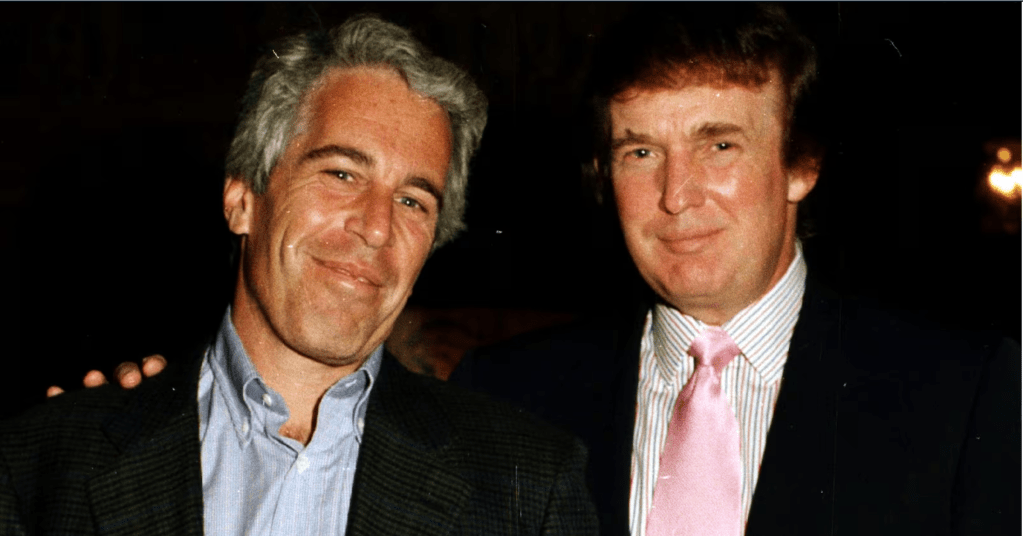
Jeffrey Epstein with Donald Trump. (Davidoff Studios Photography/Getty Images.)

After the welcome February 19 arrest of the former Prince Andrew over his tawdry and traitorous ties to the late Jeffrey Epstein, much can be said before I somehow turn this into a literature post:

— The monstrous Epstein was an abusive pedophile, sex trafficker of girls and young women, blackmailer, possible Russian and/or Israeli intelligence agent, etc.

— Major consequences for the elite (mainly rich white men) who were in Epstein’s orbit have mostly been meted out to those outside the United States.

— Nearly all the prominent Americans who were in that orbit have faced little more than some public scorn. A small number lost jobs or other positions, but none have faced Epstein-related criminal charges.

— Americans who were in Epstein’s orbit include President Trump (who has VERY suspiciously fought like hell to keep The Epstein Files secret); Trump cabinet members Howard Lutnick and Robert F. Kennedy Jr.; Trump strategist Steve Bannon; former President Bill Clinton; former Clinton cabinet member Lawrence Summers; tech billionaires Elon Musk, Peter Thiel, and Bill Gates; former Victoria’s Secret CEO Leslie Wexner; attorney Alan Dershowitz; filmmaker Woody Allen; intellectual Noam Chomsky; Giants football team co-owner Steve Tisch; and others.

All the debauchery and lack of accountability have not gone unnoticed by famous characters in literature, even if their thoughts on Epstein never quite made it into the novels they inhabit. For instance, fictional pedophile Humbert Humbert is perverted enough to hypothetically admire Epstein, even if Epstein was only two years old when Vladimir Nabokov’s Lolita got published in 1955. Perhaps HH was prescient in addition to deviant.

A Game of Thrones, the first novel in George R.R. Martin’s “A Song of Ice and Fire” series, includes 13-year-old Daenerys being forced to marry the adult warlord Drogo. Maybe she found some of her courage by anticipating the perseverance of Epstein survivors who continue to seek justice despite their attempts at that being blocked or ignored for decades — most recently by the Trump regime’s ghoulishly sycophantic attorney general Pam Bondi.

While thirsting for revenge against her sexual abuser, the resourceful Lisbeth Salander of Stieg Larsson’s The Girl with the Dragon Tattoo and its sequels might have theoretically considered also unleashing retribution on the depraved Epstein. At minimum, the computer-savvy Salander was capable of hacking into Epstein’s grotesque email conversations with various wealthy sickos.

While looking down from heaven in Alice Sebold’s The Lovely Bones, raped-then-murdered teen Susie Salmon could have also kept a disgusted eye on Epstein before he started looking up from hell after his 2019 death. (It has been said that Epstein committed suicide in prison, but many feel he was killed to prevent him from possibly spilling the beans on his fellow guilty elites.)

The female collaborators to the grossly misogynist men in Margaret Atwood’s The Handmaid’s Tale might wish they could contact Epstein collaborator Ghislaine Maxwell for extra collaboration advice, or even ask to join Maxwell in the cushy Texas jail the Trump regime transferred her to as a way to increase the chances of her not implicating former close Epstein pal Trump.

Finally, a reader could wonder if Jane Eyre, after becoming aware of Edward Rochester’s marital history, suspected Rochester of having Epstein ties despite the two men existing two centuries apart and one of them being fictional. Thankfully, British author Charlotte Bronte lived during Queen Victoria’s time rather than the former Prince Andrew’s time.

Comments on, or additions to, this rather fraught topic?

Misty the cat says: “Trying to outrun the big predicted snowstorm is a new Winter Olympics sport.”

My comedic 2024 book — the part-factual/part-fictional/not-a-children’s-work Misty the Cat…Unleashed — is described and can be purchased on Amazon in paperback or on Kindle. It’s feline-narrated! (And Amazon reviews are welcome. 🙂 )

This 90-second promo video for the book features a talking cat: 🙂

I’m also the author of a 2017 literary-trivia book

…and a 2012 memoir that focuses on cartooning and more, including many encounters with celebrities.

In addition to this weekly blog, I write the 2003-started/award-winning “Montclairvoyant” topical-humor column every Thursday for Montclair Local. The latest piece — about a bad tax deal and a controversial upcoming school vote — is here.

Moving from Incompetent to Competent Characters

Sue Grafton

Last week, I wrote about incompetent characters in literature. So, naturally I’ll write this week about…Valentine’s Day yesterday. Oops, just kidding; I’m going to discuss competent characters in literature.

That can mean smart people, handy people, socially adept people, etc. They might be skilled in many areas, or skilled in some ways and not in others.

Obviously, detectives are among the protagonists who come to mind, although many of them are more competent in their work than in their personal lives. For instance, Sherlock Holmes is a brilliant sleuth with loner and eccentric traits in Arthur Conan Doyle’s novels and stories. Val McDermid’s Karen Pirie is also highly intelligent and driven in her cold-case work while not being as successful in off-duty life. Sue Grafton’s self-deprecating Kinsey Millhone is a brainy, brave, dogged, and witty private investigator who had two failed marriages, eats too much junk food, etc.

I’m currently working my way through — and loving — the Millhone-starring “alphabet mysteries” (now reading M is for Malice).

Other memorably competent characters? Hermione Granger is as book-smart as they come, and also has plenty of common sense in J.K. Rowling’s Harry Potter series. Those books’ wizards — including Albus Dumbledore and Minerva McGonagall — are obviously quite capable, too, as is another wizard: Gandalf in J.R.R. Tolkien’s The Hobbit and The Lord of the Rings trilogy.

In Stieg Larsson’s trilogy that starts with The Girl with the Dragon Tattoo, abuse survivor Lisbeth Salander is a determined genius with computers.

Preteen-then-teen Francie Nolan is wise beyond her years — both academically and as a navigator of difficult family dynamics — in Betty Smith’s A Tree Grows in Brooklyn.

When one thinks of Charlotte Bronte’s Jane Eyre character, competent is one of the first adjectives that comes to mind. Whatever she does — whether being a governess, a teacher, or generally maneuvering through the difficulties of her oft-challenging life — she does well.

Also quite skilled — and with a strong sense of morality — is attorney Atticus Finch of Harper Lee’s To Kill a Mockingbird.

Another classic, Willa Cather’s My Antonia, features a title character (Antonia Shimerda) who’s a very competent farm spouse and parent.

In the sci-fi area, we have protagonists like Mark Watney, who has to be unusually clever and innovative to survive when stranded on Mars in Andy Weir’s The Martian. Twentieth-century Black woman Dana Franklin also has to be really skilled to deal with and survive involuntary time travel to and from the slave-holding American South in Octavia E. Butler’s Kindred.

Your thoughts about, and examples of, competent characters in fiction?

Misty the cat says: “This must be one of Norman Rockwell’s larger paintings.”

My comedic 2024 book — the part-factual/part-fictional/not-a-children’s-work Misty the Cat…Unleashed — is described and can be purchased on Amazon in paperback or on Kindle. It’s feline-narrated! (And Amazon reviews are welcome. 🙂 )

This 90-second promo video for the book features a talking cat: 🙂

I’m also the author of a 2017 literary-trivia book

…and a 2012 memoir that focuses on cartooning and more, including many encounters with celebrities.

In addition to this weekly blog, I write the 2003-started/award-winning “Montclairvoyant” topical-humor column every Thursday for Montclair Local. The latest piece — about a congressional candidate’s welcome win and various weird maps — is here.

Fictional People Are Getting Deported, Too

The Trump regime’s cruel deportation program has extended to fictional characters. And this program is widespread: affecting characters from the United States or other countries, characters who live in the present or lived in the past, etc. Because novels can make readers smarter and more empathetic, most of today’s Republicans feel many characters have to be removed from the pages where they live — including pages in some of my favorite literature.

I first heard about character deportations when The Grapes of Wrath‘s Tom Joad, who develops a stronger class consciousness as John Steinbeck’s book goes on, was yanked from the novel by Trump’s masked ICE agent goons. Determined to find Tom, the rest of the Joad family traveled east instead of west and ended up picking crops in New York City’s Times Square. Needless to say, not much was growing through the pavement.

ICE agents also plucked Jane Eyre from Charlotte Bronte’s novel because she’s a determined young woman too independent-minded for Trump’s taste, and doesn’t have big blonde hair like many Fox News hosts do. So, U.S. Secretary of Education/wrestling biz wacko Linda McMahon substituted for Jane as little Adele’s teacher, and Rochester instead fell in love with a Disney princess.

Of course, characters of color are most at risk of the Trump regime’s deportations, and Bigger Thomas of Richard Wright’s Native Son was no exception. Plus his attorney is a communist! With Bigger no longer around as a client, that lawyer represented Jane Eyre as she tried to return to her novel, but Jane instead got sent to Florida’s “Alligator Alcatraz” two centuries before that repugnant concentration-camp-like jail was built.

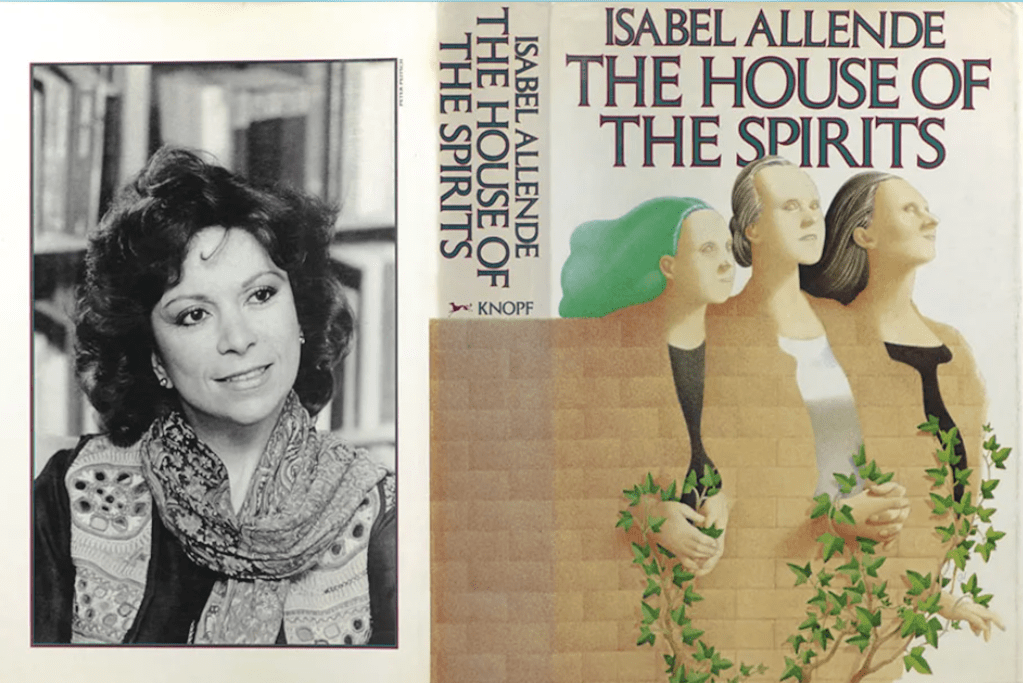
Clara del Valle Trueba was also deported — from The House of the Spirits. After being kicked out of Isabel Allende’s novel, the clairvoyant Clara took her knowledge of Trump’s guilt in the sickening Epstein pedophile scandal and started a blog about that. Because Clara had been in a magic-realism book, the blog levitated out of her computer screen — which puzzled WordPress customer support.

In Daniel Deronda, Daniel D. and Mirah Lapidoth and Ezra Mordecai Cohen are idealistic proto-Zionists rather than the U.S.-armed genocidal Zionists in Israel’s current leadership who are mass-murdering Palestinian civilians, so the three were deported when entering a government office to register as George Eliot characters. That left Gwendolen Harleth wandering around Eliot’s 19th-century novel, searching for a Burger King in which to have lunch.

Atticus Finch? Taken from To Kill a Mockingbird for being an attorney with integrity. This came after some Trump regime hesitation to deport Finch because author Harper Lee had the same last name as Confederate traitor Robert E. Lee, the Civil War general greatly admired by right-wingers for fighting to defend the appalling institution of slavery. But Atticus did ultimately get booted from To Kill a Mockingbird before joining Donna Tartt’s The Goldfinch novel starring a painting of a bird sharing his last name.

In J.K. Rowling’s Harry Potter books, every character except the ultra-evil Lord Voldemort was deported to make the series more palatable for Republican fascists. One of the characters, Nearly Headless Nick, went on to successfully lose 10 pounds by becoming Completely Headless Nick.

But no character was spared from deportation in Arundhati Roy’s The God of Small Things because Trump erroneously thought the title of that novel referred to his fingers and his…

Misty the cat says: “Where’s my teen human? Oh, she went away to college last weekend.”

My comedic 2024 book — the part-factual/part-fictional/not-a-children’s-work Misty the Cat…Unleashed — is described and can be purchased on Amazon in paperback or on Kindle. It’s feline-narrated! (And Misty says Amazon reviews are welcome. 🙂 )

This 90-second promo video for the book features a talking cat: 🙂

I’m also the author of a 2017 literary-trivia book

…and a 2012 memoir that focuses on cartooning and more.

In addition to this weekly blog, I write the 2003-started/award-winning “Montclairvoyant” topical-humor column every Thursday for Montclair Local. The latest piece — about the spending to date of money authorized by my town’s massive 2022 school bond referendum — is here.

Reimagination Actualization

Four years ago, I blogged about fiction that uses previous fiction as a jumping-off point — and perhaps reimagines well-known characters. This post is sort of a sequel to that post, taking a somewhat different angle and including several novels I’ve read since 2021.

In general, I’m not a huge fan of fiction that’s heavily inspired by a famous work; I’d rather writers be more original than that. Still, there have been some excellent novels that offer insights into the previous work and might be great in their own right.

My latest encounter with this reimagining phenomenon was Queen Macbeth, Val McDermid’s 2024 novella that takes a fascinating approach to characters in Shakespeare’s iconic Macbeth play. The book is excellent, giving Lady Macbeth a more positive (and more historically accurate) persona as a compelling plot unfolds in two different timelines.

McDermid’s book reminded me a bit of Margaret Atwood’s 2005 novella The Penelopiad (mentioned in my 2021 post) that gives Penelope a bigger and more feminist role than she had in Homer’s ancient Odyssey poem.

There’s also Demon Copperhead, Barbara Kingsolver’s 2022 tour de force that gives Charles Dickens’ 1850 classic David Copperfield a modern spin in America’s Appalachian region during the opioid epidemic.

Kristin Hannah’s gripping 2021 novel The Four Winds was obviously inspired by John Steinbeck’s The Grapes of Wrath (1939), but it’s still plenty original and differs in featuring a female protagonist. (The title character in Demon Copperhead is male.)

Zadie Smith has described the structure/focus of her novel On Beauty (2005) as an homage to E.M. Forster’s Howards End (1910).

In her also-published-in-2005 novel March, Geraldine Brooks takes the father from Louisa May Alcott’s 1868-released Little Women and gives him his own story.

I haven’t read it yet, but Percival Everett’s acclaimed James (2024) reimagines Mark Twain’s Adventures of Huckleberry Finn (1884) from the perspective of the escaped slave Jim.

In my 2021 post, I mentioned the 1966 novel Wide Sargasso Sea, in which Jean Rhys gives three-dimensionality to the “madwoman in the attic” of Charlotte Bronte’s novel Jane Eyre; Rhys’ creation is in effect a prequel to Bronte’s 1847 book. I also discussed the novel (by Gregory Maguire) and the play Wicked, which sympathetically portray the Wicked Witch from L. Frank Baum’s The Wonderful Wizard of Oz novel (1900) and The Wizard of Oz movie (1939).

Mentioned as well in that post were Isabel Allende’s 2005 novel Zorro, Jasper Fforde’s 2001 novel The Eyre Affair, and Seth Grahame-Smith’s 2009 Jane Austen parody Pride and Prejudice and Zombies — the last of which I haven’t felt the “Persuasion” to read.

Comments about, and examples of, this theme?

Misty the cat says: “My right turn has nothing to do with politics.”

My comedic 2024 book — the part-factual/part-fictional/not-a-children’s-work Misty the Cat…Unleashed — is described and can be purchased on Amazon in paperback or on Kindle. It’s feline-narrated! (And Misty says Amazon reviews are welcome. 🙂 )

This 90-second promo video for the book features a talking cat: 🙂

I’m also the author of a 2017 literary-trivia book

…and a 2012 memoir that focuses on cartooning and more.

In addition to this weekly blog, I write the 2003-started/award-winning “Montclairvoyant” topical-humor column every Thursday for Montclair Local. The latest piece — about a badly maintained lower-income apartment building, a change in venue for a senior center, and more — is here.
When Authors Insert Hurt

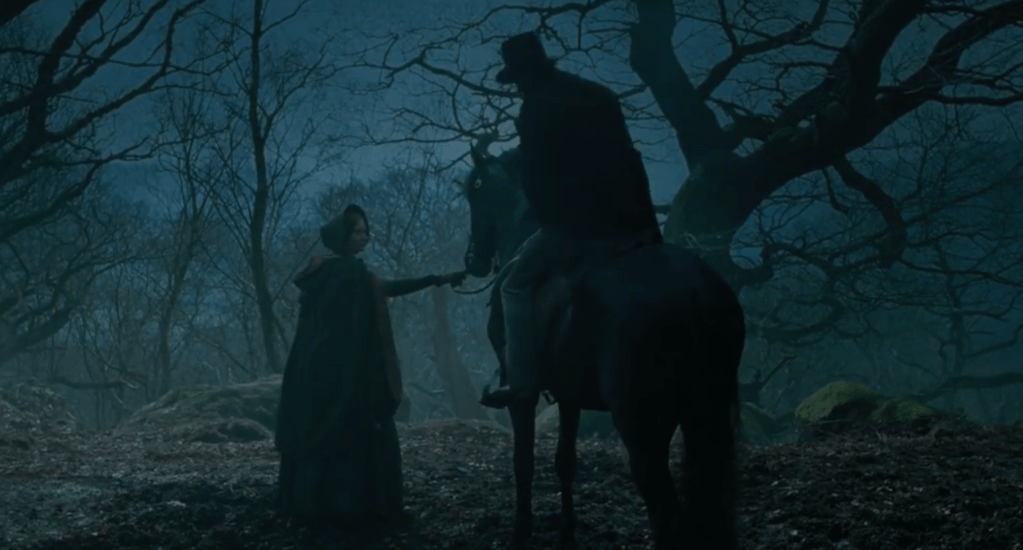
My screen grab from the 2011 Jane Eyre movie shows the injured Rochester just after he struggles back onto his horse.

As I recover from a broken toe, I’ve thought about injuries in literature — many of them more serious than a broken toe. What first came to mind was Annie Proulx’s short story “Broketoe Mountain.” 🙂 Or was that “Brokeback Mountain”? 🤔

Injuries in fiction (whether accidental or deliberately caused by a malicious person) are often more than incidental elements in story lines. They can help shape a plot, offer insight into how stoic and resilient the injured character might or might not be, give a hurt character more time to do other things and think about things, etc.

Now I’ll offer a few examples, some of which I’ve mentioned in past posts.

There are two significant injuries in Charlotte Bronte’s Jane Eyre. Fairly early in the 1847 novel, Edward Rochester’s spooked horse stumbles when its rider first encounters new governess Jane, throwing him to the ground and badly spraining his ankle. Jane’s immediate reaction to this incident shows her skill as well as calmness under pressure, and Rochester being homebound during his subsequent recuperation gives him and Jane a chance to get to know each other — which leads to subsequent dramatic events. I’ll refrain from discussing the book’s second set of injuries to avoid a spoiler for anyone who has yet to read Bronte’s iconic British novel.

Across “the pond” four years later, American author Herman Melville’s Moby-Dick was published. In the novel’s back story, Captain Ahab had part of his leg chomped off by the white whale of the title, and his obsessive pursuit of revenge against the massive sea creature is what drives the 1851 book’s plot.

In the much-more-recent Demon Copperhead (2022), the very-challenged-by-life title character of Barbara Kingsolver’s modern-day take on Charles Dickens’ David Copperfield (1850) suffers a severe knee injury while playing high school football — which becomes a big factor in his spiraling into the opioid addiction also afflicting many of his fellow residents of America’s Appalachian region.

U.S. soldier Joe Bonham of Dalton Trumbo’s Johnny Got His Gun (1939) is horrifically/permanently injured by an exploding artillery shell during World War I, and his bitter thoughts in the time after that make for a devastating anti-war argument.

In Scottish author Josephine Tey’s 1951 novel The Daughter of Time, 20th-century police inspector Alan Grant is confined to a hospital bed with a severely broken leg. That enforced inactivity gives him the time and the avoid-boredom desperation to investigate the alleged 15th-century crimes of King Richard III.

Near the start of Edith Wharton’s Ethan Frome, we see that the title character had been badly injured at some point. The 1911 novel goes on to heartbreakingly explain the love story leading to that.

When 20th-century Claire first meets 18th-century Jamie in Diana Gabaldon’s first Outlander book (1991), the Scottish warrior’s shoulder is dislocated. The time-traveling Claire, a nurse who later becomes a physician, expertly snaps the stoic Jamie’s shoulder back into place — illustrating the advances of modern medicine while getting the epic Claire/Jamie relationship started on the basis of mutual respect.

Parts of limbs are lost — in various tragic scenarios — in novels such as Octavia Butler’s Kindred (1979), Alex Haley’s Roots (1976), Stephen King’s Misery (1987), and J.K. Rowling’s seven (so far) Cormoran Strike/Robin Ellacott crime books published between 2013 and 2023. Those grievous injuries are all very relevant to the respective plots and shaping of the affected characters.

Physical injuries caused by domestic violence are a way for authors to convey how awful this violence is — with what happens in Kristin Hannah’s The Great Alone (2018) just one of countless examples. And of course there’s also the psychological trauma inflicted by domestic abusers.

Two more book mentions:

I recently read Val McDermid’s Still Life (2020), the sixth installment of the excellent series starring brilliant, dogged cold-case detective Karen Pirie. In this installment, her nice/loyal/not-super-bright-but-learning assistant investigator Jason Murray is injured by a criminal suspect and ends up trapped in a locked basement.

And my own fiction/fact hybrid, Misty the Cat…Unleashed, includes some pages about my teen daughter Maria tearing her ACL in 2022 and getting reconstructive surgery because of a gymnastics accident. While the 2024 book was published before all the ramifications of this mishap would unfold, the tear/operation/rehab changed the course of Maria’s life: which sport she would switch to (crew), which university she would enter this fall because of getting recruited for that sport (Boston University), and which career path she would choose (the health-care field). Major injuries can do that.

Any comments about, and/or examples of, this topic?

Misty the cat says in 2020: “This is not your typical municipal library.”

My comedic 2024 book — the part-factual/part-fictional/not-a-children’s-work Misty the Cat…Unleashed — is described and can be purchased on Amazon in paperback or on Kindle. It’s feline-narrated! (And Misty says Amazon reviews are welcome. 🙂 )

This 90-second promo video for my book features a talking cat: 🙂

I’m also the author of a 2017 literary-trivia book

…and a 2012 memoir that focuses on cartooning and more.

In addition to this weekly blog, I write the 2003-started/award-winning “Montclairvoyant” topical-humor column every Thursday for Montclair Local. The latest piece — about too many topics to list 🙂 — is here.