Paying Deference to Novelistic Self-Reference

Was W. Somerset Maugham relaxing after appearing in his own book? Maybe. 🙂

Our attention is definitely captured when authors directly or indirectly refer to themselves and their own books in their novels.

This can give readers an additional sense of a writer’s personality, and provide other extra elements to a book — including humor. On the possibly negative side, “self-insertion” can puncture fiction’s illusory world and remind readers that there’s an authorial presence pulling the strings.

The example of “self-insertion” I noticed most recently was when Elin Hilderbrand had one of her fictional characters in The Five-Star Weekend buy a Hilderbrand novel while in a Nantucket bookstore. Some delightful authorial self-mocking was part of the scene as another character tried to ply the Hilderbrand-interested character with more “serious” literature.

In Miguel de Cervantes’ Don Quixote novel, the title character has Cervantes’ debut book in his library. Also, another character in the classic 17th-century work says he’s a friend of Cervantes.

Then there’s John Steinbeck’s East of Eden, which was partly inspired by the author’s own family history. So it’s not a total surprise when Steinbeck himself pops up for a brief cameo in the novel.

W. Somerset Maugham put somewhat more of his actual self in his latter-career novel The Razor’s Edge when his searching-for-meaning-in-life protagonist — the fictional Larry Darnell — has a deep discussion about spirituality and more in a Paris cafe with…Maugham. (Of Human Bondage, the Maugham novel considered that author’s masterpiece, is actually more semi-autobiographical than The Razor’s Edge.)

And Emile Zola put a LOT of himself in his novel The Masterpiece; the book’s fictional author Pierre Sandoz is clearly based on Zola himself, who had a long real-life friendship with painter Paul Cezanne. The Masterpiece‘s protagonist — painter Claude Lantier — is partly based on Cezanne as well as Claude Monet and Edouard Manet.

In Kurt Vonnegut’s Slaughterhouse-Five, the narrator character is obviously Vonnegut himself. There are even these lines: “That was I. That was me. That was the author of this book.”

Herman Melville did a self-reference variation by having the title character in Pierre write a book that appalled its would-be publisher. This plot twist was a way for Melville to vent about the poor critical and commercial reception for Moby-Dick, released the previous year. Pierre — which, like Moby-Dick, was ahead of its time in various ways — would also sell badly, and cause lots of controversy with its implied-incest element.

Of course, as several early commenters rightly note below, most novelists put something of themselves in the books they write — even if subconsciously. My post mostly focused on when writers do this in a pretty overt way. 🙂

Your thoughts on, and examples of, this topic?

Misty the cat says: “I’m on the windswept moors of ‘Wuthering Heights.'”

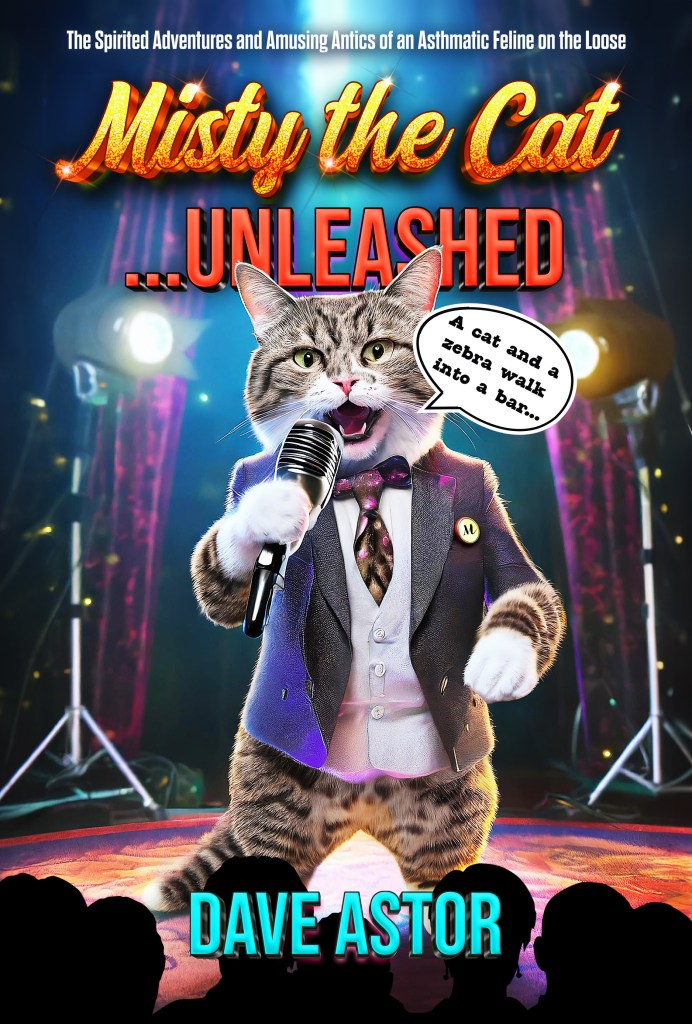
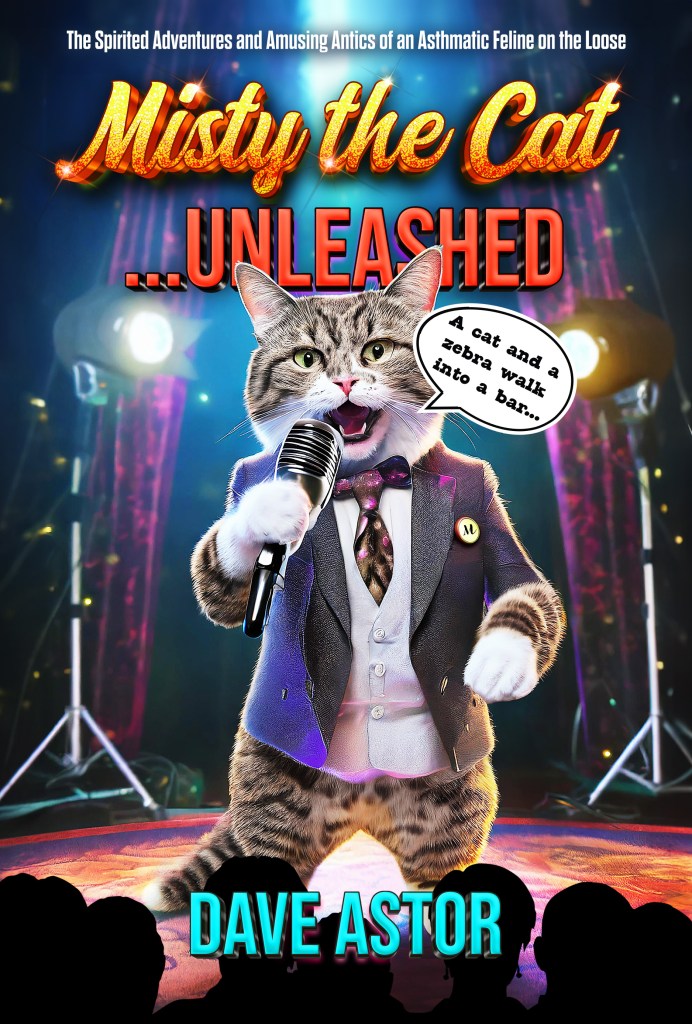
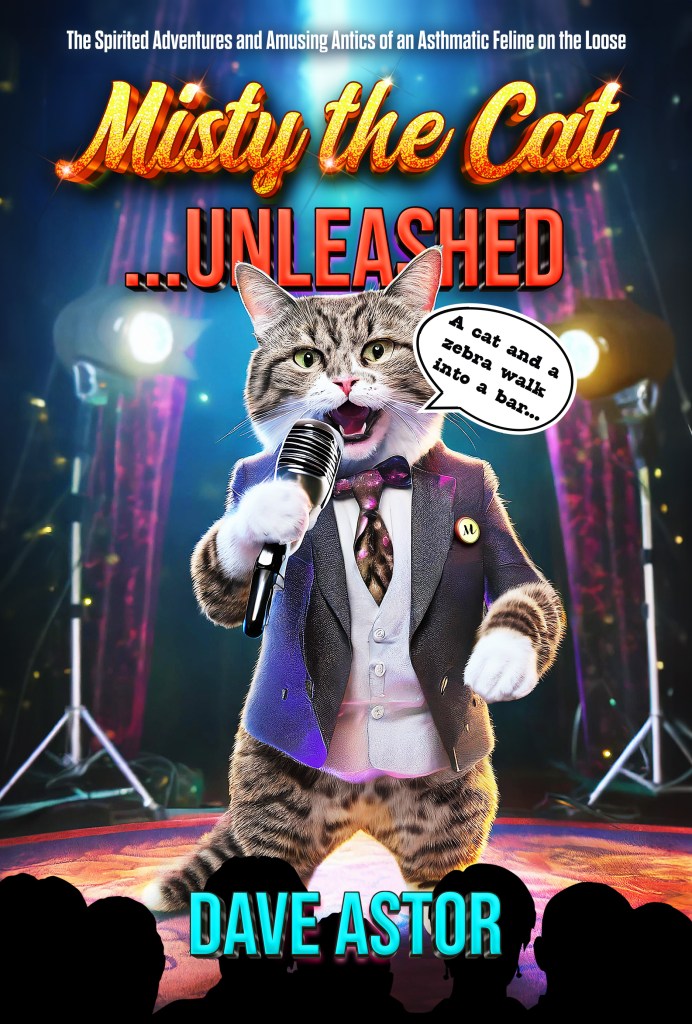
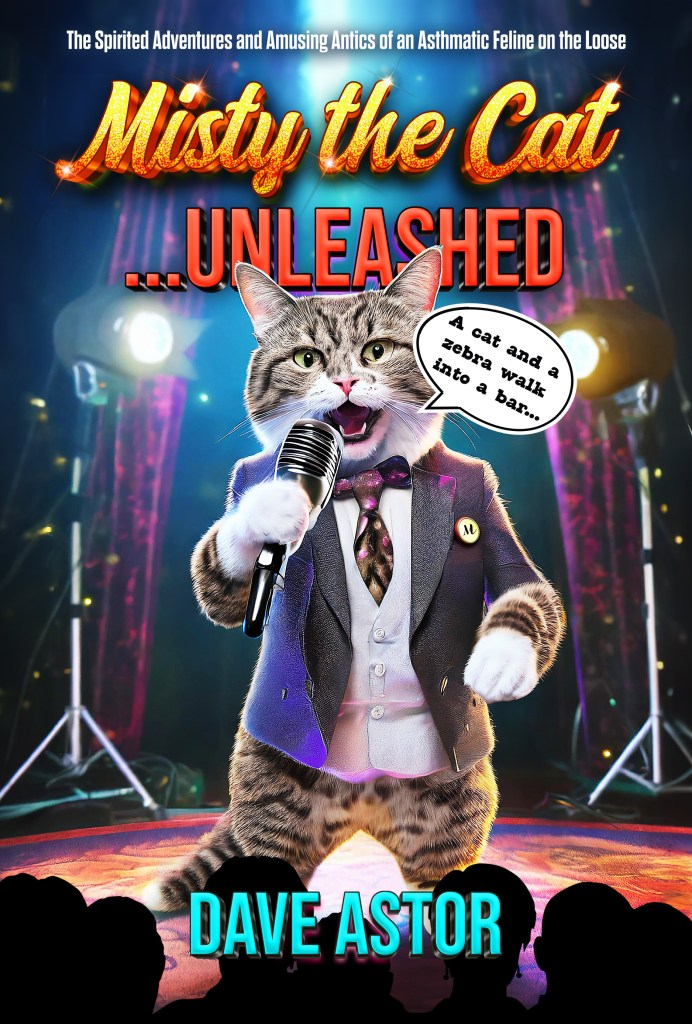
My comedic 2024 book — the part-factual/part-fictional/not-a-children’s-work Misty the Cat…Unleashed — is described and can be purchased on Amazon in paperback or on Kindle. It’s feline-narrated! (And Misty says Amazon reviews are welcome. 🙂 )
This 90-second promo video for my book features a talking cat: 🙂

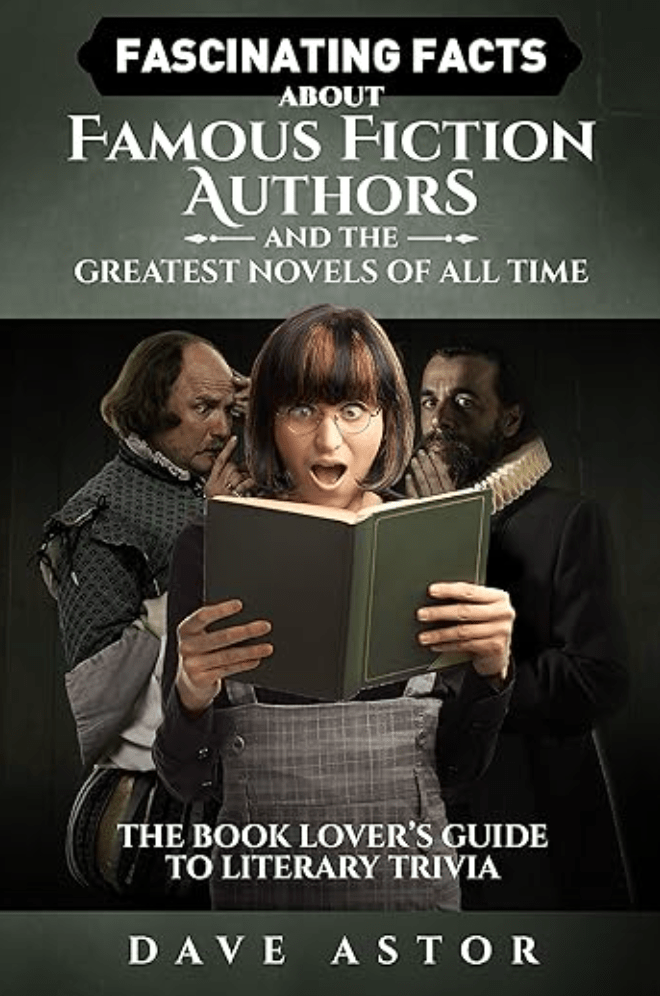
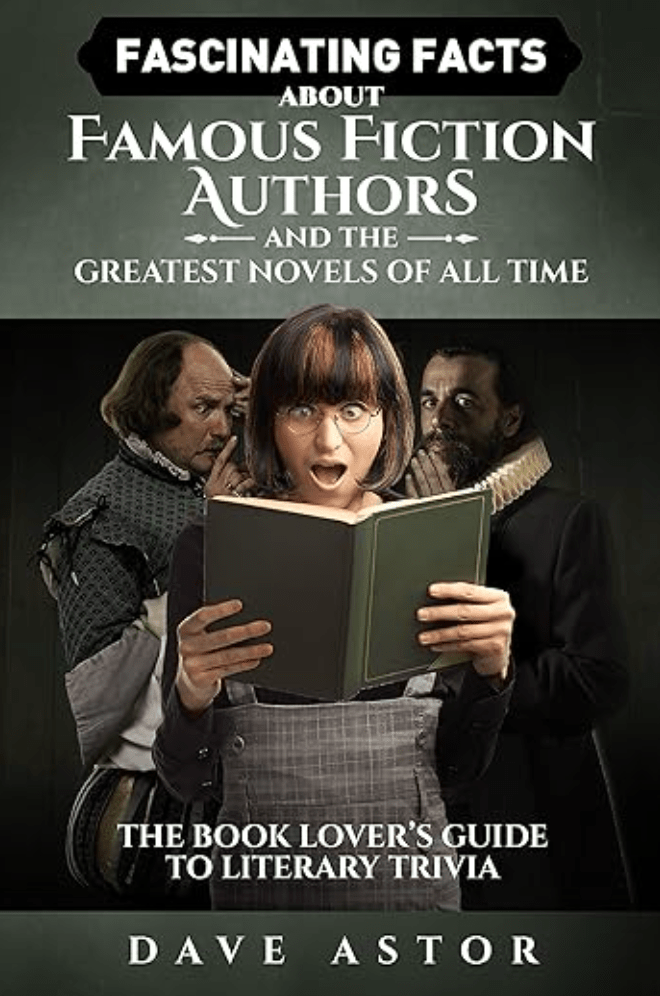
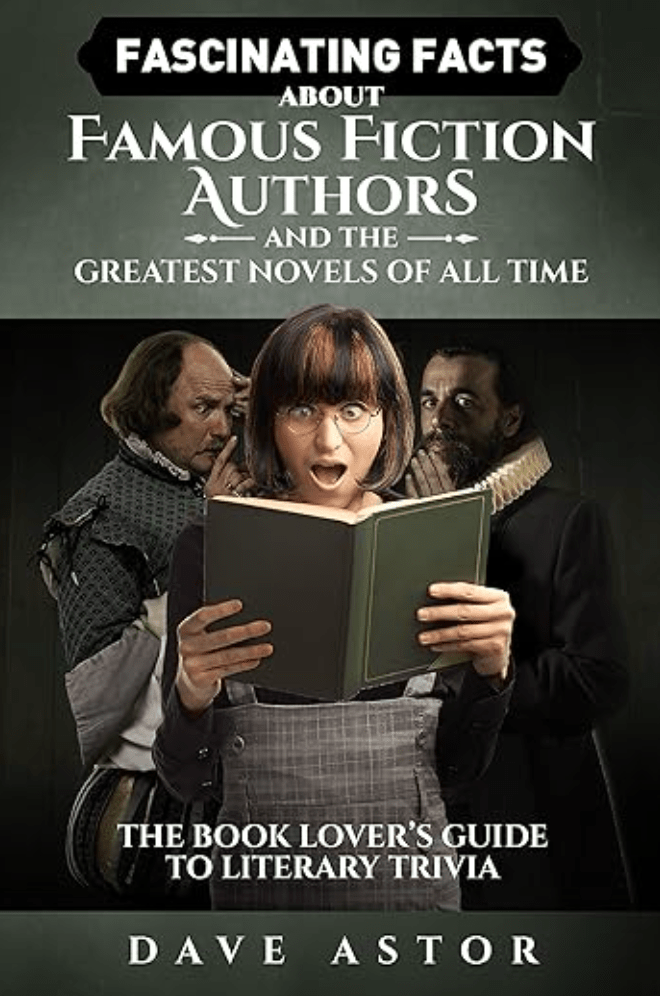
I’m also the author of a 2017 literary-trivia book

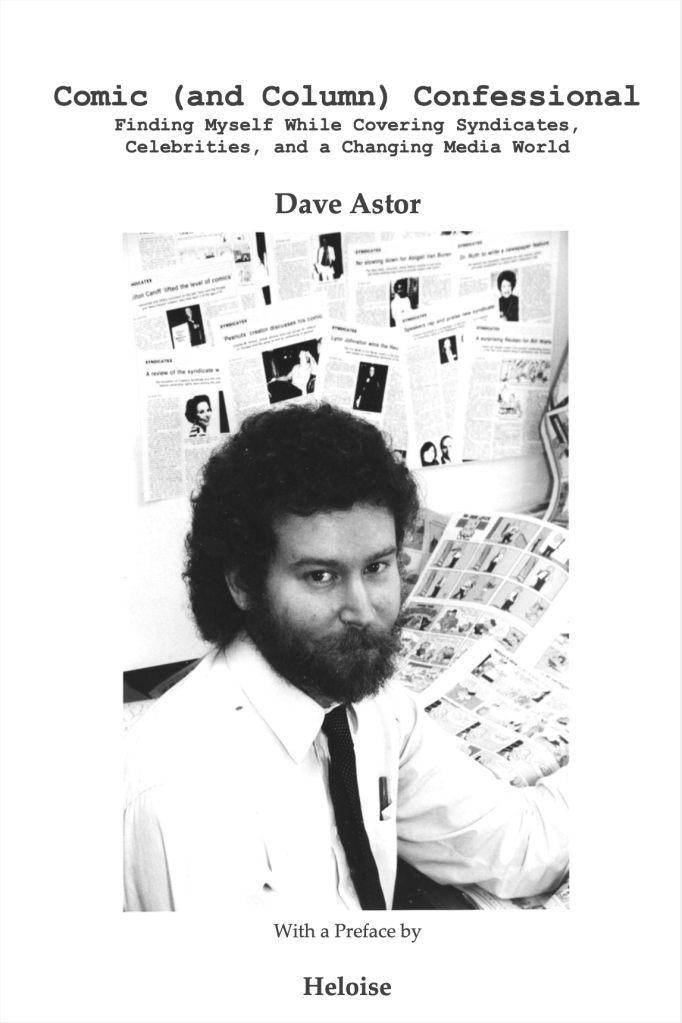
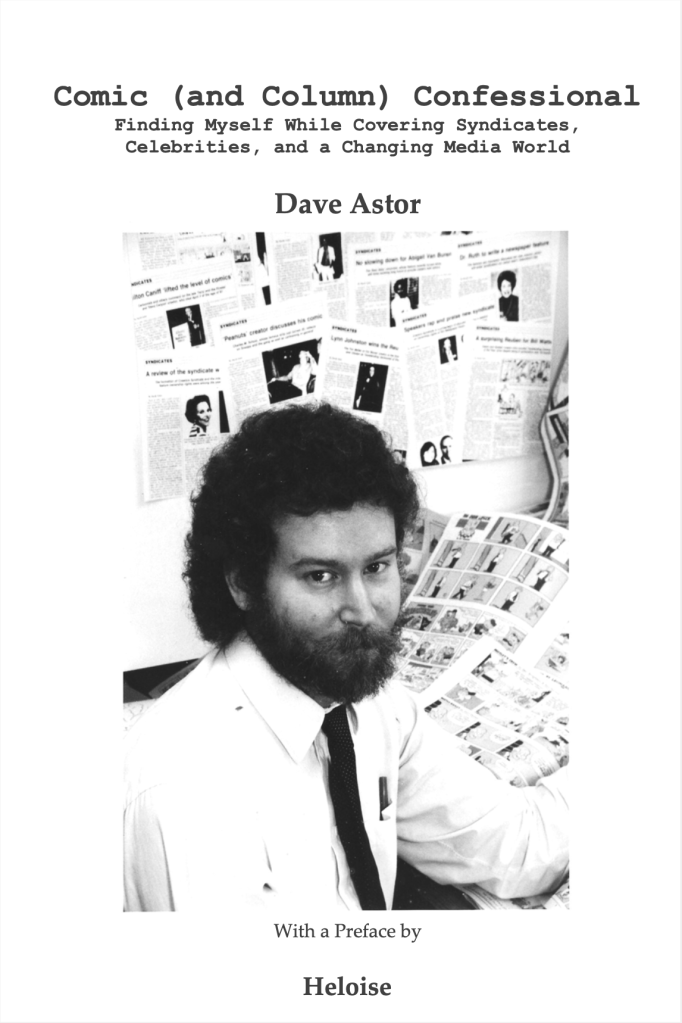
…and a 2012 memoir that focuses on cartooning and more.


In addition to this weekly blog, I write the 2003-started/award-winning “Montclairvoyant” topical-humor column every Thursday for Montclair Local. The latest piece — about past-due school district bills, a township manager payout, diminished mass transit, and more — is here.

We Were All Kids in the Beginning, Except for Benjamin Button

Every one of us can relate to looking back at our younger years and remembering the highs and lows of that time. Feeling nostalgia or regret or embarrassment, etc., from an adult perspective. And perhaps getting insight into what helped make us what we are today.

Among the many authors who have explored a fictional character’s past is Haruki Murakami in the rather lengthily titled Colorless Tsukuru Tazaki and His Years of Pilgrimage, which I read last week. As a teen two decades earlier, Tsukuru had been part of a group of five close friends when the other four suddenly and completely cut him off without explanation. Tsukuru was devastated, and never quite got over it even into his 30s. Finally, his girlfriend insists that the Tokyo-based Tsukuru try to find out what happened — which leads him to revisit his Japanese hometown of Nagoya and even take a trip to Finland.

Revisiting/analyzing one’s younger years is also a major theme of Cat’s Eye by Margaret Atwood. In that novel, celebrated Canadian painter Elaine Risley is invited back to her Toronto hometown for a retrospective show of her art. That visit brings to the surface many memories of her childhood — which included negative experiences (such as being bullied) and more positive ones.

Harper Lee’s renowned To Kill a Mockingbird novel has its Scout Finch character recount her childhood from an adult vantage point. Nicholas Sparks does something similar in A Walk to Remember, as the middle-aged Landon Carter recalls his teen romance with the gravely ill Jamie Sullivan. In both cases, virtually the whole book takes place in the past, except for the brief later-life framing.

Many other novels chiefly focus on a protagonist in adulthood while offering brief childhood flashbacks to more fully flesh out the character. Elin Hilderbrand’s The Blue Bistro, a book I just finished set mostly in a Nantucket restaurant, does that well.

The recollection-of-childhood approach is different in Charlotte Bronte’s Jane Eyre, as the title character uses a first-person narrative to chronologically chronicle her life from girlhood into adulthood. George Eliot does a third-person version of that in The Mill on the Floss as she tells the life story of Maggie Tulliver (and to a lesser extent Maggie’s brother Tom).

A chronological kid-to-adult story line can of course be extended into a series, as is the case with J.K. Rowling’s Harry Potter books and Jean M. Auel’s Earth’s Children books (The Clan of the Cave Bear, etc). In those two series, the sagas end in early adulthood for the young protagonists.

Another type of approach is in Jamie Ford’s Hotel on the Corner of Bitter and Sweet, which features Henry Lee in parallel story lines — as a 56-year-old adult in the 1980s, and as a 12-year-old kid seeing his friend Keiko Okabe relocated to a harsh Japanese-American internment camp in Idaho in the 1940s.

Then there’s F. Scott Fitzgerald’s short story “The Curious Case of Benjamin Button,” in which the title character ages in reverse — from old to young. Kind of a different category. 🙂

Your thoughts about, and examples of, this theme?

Misty the cat says: “Thomas Wolfe wrote ‘You Can’t Go Home Again.’ I’m proving him wrong.”

My comedic 2024 book — the part-factual/part-fictional/not-a-children’s-work Misty the Cat…Unleashed — is described and can be purchased on Amazon in paperback or on Kindle. It’s feline-narrated! (And Misty says Amazon reviews are welcome. 🙂 )

This 90-second promo video for my book features a talking cat: 🙂

I’m also the author of a 2017 literary-trivia book

…and a 2012 memoir that focuses on cartooning and more.

In addition to this weekly blog, I write the 2003-started/award-winning “Montclairvoyant” topical-humor column every Thursday for Montclair Local. The latest piece — about affordable housing, flooding, public libraries in need of work, a schools superintendent search, and more — is here.

Chase Is Not a Bank When Novels Include Chases

One way to almost guarantee a satisfying conclusion in a novel is with a great chase scene. Such a scene frequently happens in genres such as the thriller, but also occasionally in more literary fiction.

Chases are exciting; the way they unfold can be quite inventive; and they make eager readers wonder: Will the pursued person (who can be the novel’s villain or hero) get caught or escape? Also, it should be noted that memorable chases might occur in the middle or soon after the start of a novel, too.

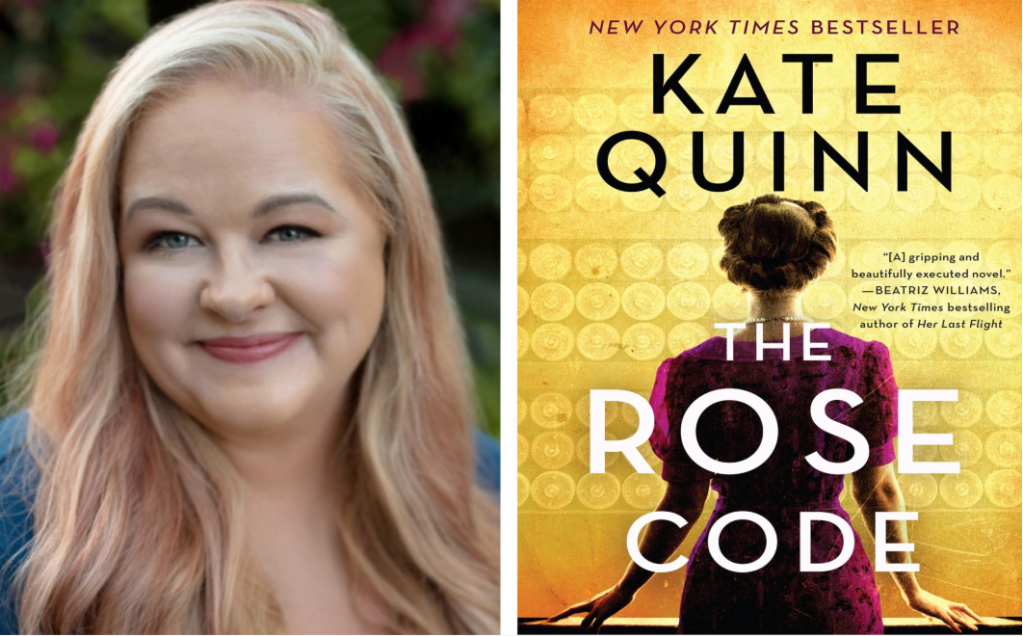
I just finished Kate Quinn’s The Rose Code, a terrific/intricate piece of historical fiction about British codebreakers during World War II that stars three unforgettable women. The icing on the cake near book’s end is an on-foot, top-speed, ultra-dramatic pursuit in London of a codebreaker traitor who had ruthlessly framed one of the three women.

Among the most memorable chases in the history of fiction? The pursuit of a terrified Eliza, holding her young son, as she tries to escape from slavery — including an attempt to cross the icy Ohio River — in Harriet Beecher Stowe’s Uncle Tom’s Cabin.

Also quite well known is Victor Frankenstein’s eye-opening, across-the-Arctic pursuit of the creature he created in Mary Shelley’s Frankenstein.

Hunted Past Reason chronicles the brutal hunt of a fleeing man by another man — with Richard Matheson’s novel inspired by Richard Connell’s decades-earlier short story “The Most Dangerous Game.”

Other novels with unforgettable chase elements — again, not necessarily at book’s end — include Cormac McCarthy’s No Country for Old Men, Patricia Highsmith’s The Talented Mr. Ripley, William Goldman’s Marathon Man, John Buchan’s The Thirty-Nine Steps, and James Dickey’s Deliverance.

Of course, there are novels with car chases, too.

Obviously, chases in fiction don’t always involve just humans. For instance, Captain Ahab and his Pequod crew pursue a certain big white whale in Herman Melville’s Moby-Dick. Also, there are the shark shenanigans in Peter Benchley’s Jaws.

Any other novels with great chase scenes you’d like to mention? Any general thoughts on this topic?

Misty the cat says: “One small step for cat, one giant leap if I were a very small cat.”

My comedic 2024 book — the part-factual/part-fictional/not-a-children’s-work Misty the Cat…Unleashed — is described and can be purchased on Amazon in paperback or on Kindle. It’s feline-narrated! (And Misty says Amazon reviews are welcome. 🙂 )

This 90-second promo video for my book features a talking cat: 🙂

I’m also the author of a 2017 literary-trivia book

…and a 2012 memoir that focuses on cartooning and more.

In addition to this weekly blog, I write the 2003-started/award-winning “Montclairvoyant” topical-humor column every Thursday for Montclair Local. The latest piece — about neglectful ownership of a lower-income apartment building and more — is here.
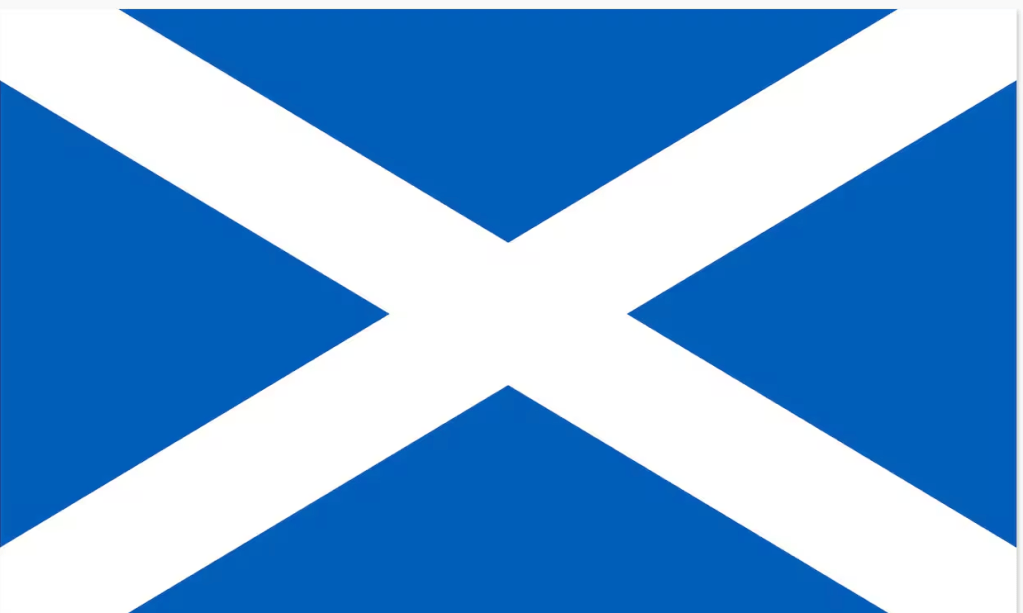
Scotland Is a Land of Notable Authors

When I finished my fourth Val McDermid novel (Out of Bounds) last week, it occurred to me that I’ve read quite a lot over the years by Scottish writers — who include a number of names you’re sure to recognize.

McDermid (1955-) is a masterful crime author who has impressively created five different series, perhaps most famously the one starring dogged cold-case investigator Karen Pirie. Out of Bounds is the fourth of seven books featuring Pirie.

Then there’s perhaps the most famous detective writer of all: Edinburgh-born Arthur Conan Doyle (1859-1930), creator of the iconic Sherlock Holmes novels and short stories, not to mention The Lost World and other works. “Elementary” that he would be part of this post.

I can’t go further without mentioning the acclaimed Walter Scott (1771-1832), best known for Ivanhoe and Rob Roy but also the author of lesser-known-but-also-great novels such as Old Mortality and The Heart of Midlothian. A celebrated poet, too, earlier in his career.

Also, Robert Louis Stevenson (1850-1894), author of classics such as Treasure Island, Strange Case of Dr. Jekyll and Mr. Hyde, and Weir of Hermiston — the last of which would’ve been his masterpiece if he hadn’t died before finishing it.

Plus J.M. Barrie (1860-1937) of Peter Pan fame, Muriel Spark (1918-2006) of The Prime of Miss Jean Brodie renown, and Alistair MacLean (1922-1987) of Where Eagles Dare fame.

Among the Scottish authors I’ve yet to read but want to are Alexander McCall Smith (born in what is now Zimbabwe) and John Buchan (I did see the screen version of his The Thirty-nine Steps novel directed by Alfred Hitchcock).

Scottish poet Robert Burns (1759-1796) deserves a big mention, too.

Last but not least, there’s historical-romance author/WordPress blogger Shehanne Moore, an exceptional writer who frequently comments under WP posts here and elsewhere.

Any thoughts on these and other Scottish writers?

In his latest brief video, Misty the cat says: “I turned south after walking west, and it instantly got 10 degrees warmer.”
https://www.youtube.com/shorts/f6nxRPncTIs

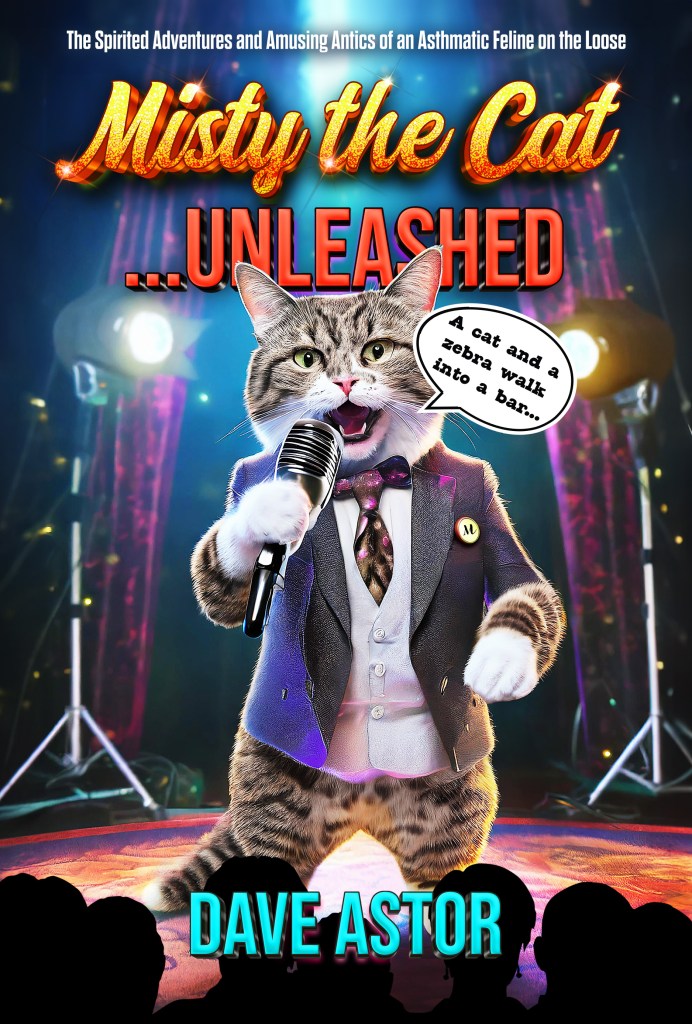
My comedic 2024 book — the part-factual/part-fictional/not-a-children’s-work Misty the Cat…Unleashed — is described and can be purchased on Amazon in paperback or on Kindle. It’s feline-narrated! (And Misty says Amazon reviews are welcome. 🙂 )

This 90-second promo video for my book features a talking cat: 🙂

I’m also the author of a 2017 literary-trivia book

…and a 2012 memoir that focuses on cartooning and more.

In addition to this weekly blog, I write the 2003-started/award-winning “Montclairvoyant” topical-humor column every Thursday for Montclair Local. The latest piece — about Tesla buyer remorse in my liberal town — is here.

In February, There Are Authors Born Between January and March

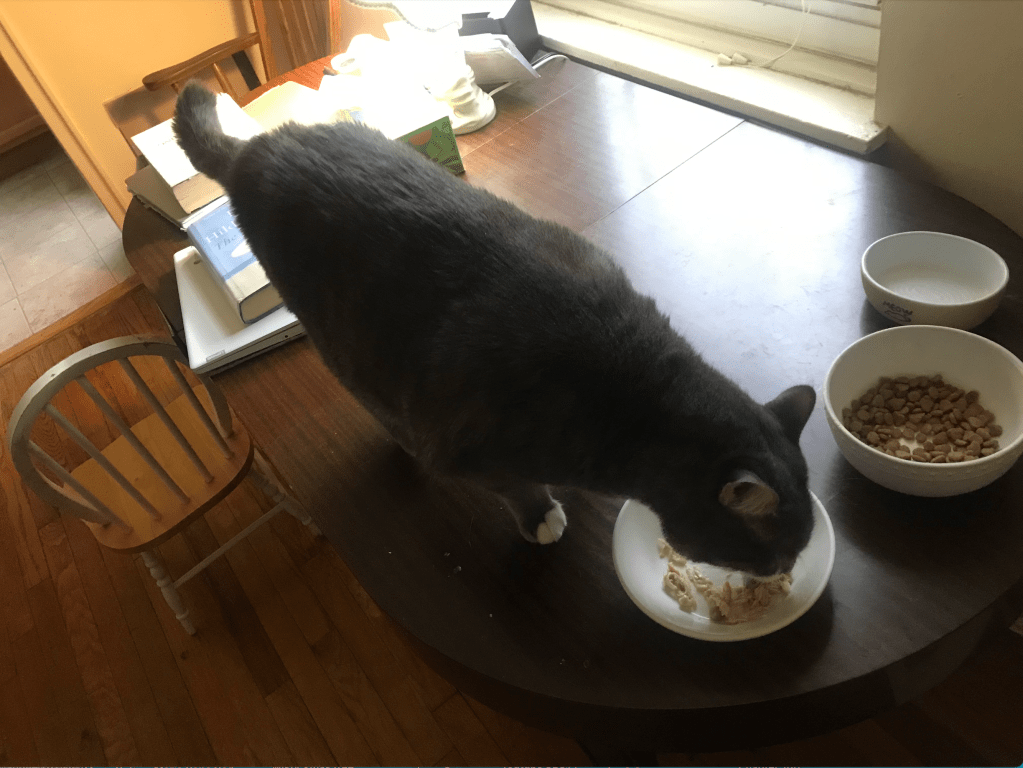
I, the feline Misty, realize most novelists celebrate their birthdays with cake. I eat cat food. (Photo by my human Dave, who has informed me that today is not my birthday.)

Hi! Misty the cat here. I haven’t guest-blogged for Dave since December 8, which was two months ago. It was also sort of a year ago: 2024! Four millennia ago, too, because it was 2024 BC (Blogging Cat). Time flies when you’re…swatting a clock off the mantelpiece.

Anyway, Dave can use the break because he recently had a nasty case of the flu as well as various family matters keeping him busy, including explaining to the ghost of his 17th-century ancestor why her on-the-mantelpiece antique clock is splattered across the floor. Or maybe that cheapo clock was purchased for a few bucks this century at Kmart. (“‘Attention, Kmart shoppers.’ Get the hell of here because our chain filed for bankruptcy seven years ago, in 2018.”)

But what topic should I, Misty the cat, discuss today? It occurred to me that authors have birthdays in all 12 months — except October because someone stole a briefcase with Bono’s notes and lyrics while he and the rest of U2 were recording their “October” album in 1981. Anyway, authors have birthdays in the other 11 months, except for those who have birthdays in October, so let’s discuss some novelists who were born in February — this month! (“I’m dreaming of a white…Presidents’ Day…with every Presidents’ Day card I write…”)

Born on February 1 (1918) was Muriel Spark! She’s best known for writing the 1930s-set novel The Prime of Miss Jean Brodie, whose title character was the first Amazon Prime customer.

Also born on February 1 (1901) was Langston Hughes, whose debut novel has a title — Not Without Laughter — that contains valuable advice for writing my blog posts. Heck, the only time I’m 100% serious is when my cat-treat container is empty and I consequently wear a mourning veil. Unlike someone marrying on the rebound who wears a basketball net for a veil.

Coming into the world on February 2 (1882) was James Joyce — who, if he had been a cat with nine lives, would’ve written “The Dead” nine times. Rather repetitive.

Ultraconservative icon Ayn Rand’s birthday was also on February 2 (1905). She decried government-run programs, yet hypocritically collected Social Security! Meanwhile, Atlas shrugged after his job as a book of maps was supplanted by GPS. “Turn right at the fountainhead.”

James Michener! Born on February 3 (1907). He wrote so many “doorstop” books that The Doors stopped…being a rock band. But not before one of my cat ancestors sang “Light My Fur” when one of those laser pointers was aimed at her.

Charles Dickens came to be on February 7 (1812). In his immortal words, “It was the best of cats, it was the best of cats,” because what other kinds of cats are there?

Sinclair Lewis was also born on February 7 (1885). He’s known for his 1920s run of excellent novels as well as for the iconic Lewis and Clark Expedition that involved setting a pick for Indiana Fever hoops superstar Caitlin Clark.

Another February 7 (1867) birthday was that of Little House on the Prairie series author Laura Ingalls Wilder. The diminutive nature of that house inspired the tiny green plastic houses used in Monopoly games.

Jules Verne? Born on February 8 (1828). Verne was a science-fiction pioneer, though he didn’t invent the genre. Sci-fi’s inventor was in fact my good friend Garfield the cat, who crafted a spaceship from lasagna and the rest was history.

Also a February 8 (1850) author was Kate Chopin, whose The Awakening novel shocked felines accustomed to napping 24 hours a day.

February 8 (1955) brought us John Grisham, too. His novel The Firm was great, but not quite an accurate representation of my jiggly belly.

Alice Walker was born on February 9 (1944). Given that me and other cats are partially color-blind, I have to take people’s word that Walker wrote The Color Purple.

February 10 (1890) was the birthday of Boris Pasternak, whose Doctor Zhivago is not about my vet. But my vet is welcome to change her name to Doctor Zhivago.

Toni Morrison was born on February 18 (1931). Her masterful work included Song of Solomon, whose initials remind me that I send out an SOS when my humans are gone for more than five seconds.

Amy Tan’s birthday is on February 19 (1952). Her books include The Kitchen God’s Wife, but religion continues to confuse me. What’s God doing in the kitchen? Does God really have a wife? If so, does that couple file a joint tax return? Who’s their CPA (Celestial Pair Accountant)?

The Heart Is a Lonely Hunter author Carson McCullers was also born on February 19 (1917). I know something about hunting, as I illustrate whenever I leave my apartment for my daily leashed walk. Let me know when chasing chipmunks becomes an Olympic sport.

David Foster Wallace, born on February 21 (1962), wrote Infinite Jest. If this post of mine became similarly infinite, could the WordPress blog platform handle that?

Anthony Burgess was born on February 25 (1917). Best known for A Clockwork Orange, but me and other cats aren’t into fruit. Our digestive systems are built for meat, and we don’t have the taste receptors to detect sweetness. Burgess could have written A Clockwork Tuna Melt, but noooo. Sheesh.

Victor Hugo! Born on February 26 (1802). Les Miserables is what happens when someone sticks a fruit platter in front of me.

I’ll end with John Steinbeck, who entered the world a century after Hugo (1902) on February 27. I don’t mean to harp on fruit, but The Grapes of Wrath…really? Steinbeck did also write East of Eden, which is definitely not east of an apple orchard.

Dave will reply to comments because I need to enter the contest for “Best Cat-Written Blog Post Focusing on Authors Born in February.” If I win a cash prize, maybe we can afford to turn up the heat in this damn apartment.

I, Misty the cat, say: “‘The Snows of Kilimanjaro’ have come to New Jersey.” 

My (and Dave’s) comedic 2024 book — the part-factual/part-fictional/not-a-children’s-work Misty the Cat…Unleashed — is described and can be purchased on Amazon in paperback or on Kindle. It’s feline-narrated! (And I, Misty, say Amazon reviews are welcome. 🙂 )

This 90-second promo video for the book features a talking cat that looks sort of like me: 🙂

Dave is also the author of a 2017 literary-trivia book

…and a 2012 memoir that focuses on cartooning and more.

In addition to his weekly blog, Dave writes the 2003-started/award-winning “Montclairvoyant” topical-humor column every Thursday for Montclair Local. The latest piece — about a plan for seven new pricey homes — is here.

Immigration in Lit Amid the Latest Nativist Snit

AP Photo/Gregory Bull

With Donald Trump back in the White House, many (mostly non-white) immigrants are threatened with deportation and more. Not just “illegal” immigrants, but “legal” ones, too. Deportation is of course a cruel, messy, expensive, family-shattering process that might wreak havoc on the United States economy.

Immigrants bring many positives to their new country — hard work, diversity, doing jobs many native-born citizens won’t do, etc. And studies have shown that immigrants, whether “legal” or “illegal,” commit fewer crimes than their native-born peers.

Why do so many people want to move to the U.S. or other countries? They might be fleeing poverty or danger. They might be seeking opportunities not available to them in their nation of birth, or seeking to live amid different social mores. And “first world” nations have created conditions in less-powerful countries that increase immigration — including economically exploiting those “third world” countries, sanctioning them or backing their dictatorial leaders, and hurting them with the global climate change that energy-overusing “first world” populations largely cause.

Then there’s the scapegoat scenario — blaming immigrants (not to mention trans people) when the real problems in countries such as the U.S. are oligarchs, billionaires, too-powerful corporations, widening income inequality, etc.

I should add that any country needs some limitations on how many new citizens it lets in. Unfortunately, the over-the-top way Trump is going about things in the United States is not the smart or decent immigration approach — certainly not deserving to be a role model for the rest of the world.

Anyway, now that I’ve blathered on for five paragraphs, it’s time to mention novels with memorable immigrant protagonists. These characters are depicted expertly by their authors, and we can of course relate to these fictional creations for all kinds of reasons — including partly because many of us are descendants of immigrants, or have immigrants in our extended families, or are immigrants ourselves. (I’m the U.S. grandson of immigrants from Eastern Europe, and my adopted younger daughter is from Guatemala.)

Given that the U.S. is a “nation of immigrants,” a number of examples I’ll offer are novels I’ve read with characters who came to America from various countries. But there will be other countries of destination cited, too.

Characters who move to the U.S. are from Nigeria in Chimamanda Ngozi Adichie’s Americanah, from Afghanistan in Khaled Hosseini’s The Kite Runner, from India in Jhumpa Lahiri’s The Namesake, from China in Amy Tan’s The Joy Luck Club, from Vietnam in Viet Thanh Nguyen’s The Sympathizer, from the Dominican Republic in Junot Diaz’s The Brief Wondrous Life of Oscar Wao, from Iran in Andre Dubus III’s House of Sand and Fog, from Ireland in Colm Toibin’s Brooklyn, and from Greece in Jeffrey Eugenides’ Middlesex.

Among literature’s examples of immigration to countries other the U.S. are Nigeria to England in Bucha Emecheta’s Second Class Citizen, Bangladesh to England in Zadie Smith’s White Teeth, New Zealand to Australia in Colleen McCullough’s The Thorn Birds, and Morocco to France and back to Morocco in J.M.G. Le Clezio’s Desert, to cite a few examples from those I’ve read.

The immigration themes in these and other novels can be compelling in various ways: the drama of leaving one’s homeland for reasons (some mentioned earlier in this post) such as war, repression, threat of death, poverty, and wanting better opportunities; the culture shock involved in settling in a new place; how the immigrants — and their children and grandchildren — adapt to that new place; nostalgia for one’s former country; negative encounters with those native citizens who are anti-immigrant even though their ancestors might have been immigrants…

As readers get absorbed in all this drama, they also learn a lot about the places the characters left and move to. Learning can go down especially easy in fiction; I’ve read nonfiction books about various countries, but often better understand the history, customs, culture, and other aspects of those nations when reading novels with immigration themes.

By the way, two of Trump’s three wives — including current spouse Melania — were immigrants. And Usha, wife of Trump’s vice president JD Vance, is the daughter of immigrants.

Any immigration-themed novels you’d like to mention and discuss? Any general thoughts on this topic?

Misty the cat says: There are at least three ‘King of Pain’ novels, but I’m the King of Pane.

My comedic 2024 book — the part-factual/part-fictional/not-a-children’s-work Misty the Cat…Unleashed — is described and can be purchased on Amazon in paperback or on Kindle. It’s feline-narrated! (And Misty says Amazon reviews are welcome. 🙂 )

This 90-second promo video for my book features a talking cat: 🙂

In addition to this weekly blog, I write the 2003-started/award-winning “Montclairvoyant” topical-humor column every Thursday for Montclair Local. The latest piece — which has a passport theme — is here.

Murder Amid American Medical Malice

Luigi Mangione and Brian Thompson

After Brian Thompson was shot and killed in New York City this month, millions of Americans from all parts of the ideological spectrum flooded social media to express little sympathy for him. That’s because he was the CEO of UnitedHealthcare, the massive company known for denying a huge number of legitimate medical-insurance claims in order to maximize its profits.

The result of those denials? Anguish for millions of patients and death for thousands of patients who (either individually or via employer plans) pay large monthly premiums for medical coverage — even as residents of every other developed country enjoy some form of much-more-humane national health insurance. And doctors with years of medical training and experience get their requests for needed tests and treatment for their patients denied by insurance bureaucrats with little or no medical expertise.

Meanwhile, Thompson — who was specifically targeted for assassination (the arrested suspect is Luigi Mangione) — raked in yearly compensation of $10.2 million.

Obviously, murder shouldn’t be celebrated, and this was an awful tragedy for Thompson and his family. But he and other execs at UnitedHealthcare and other private insurance providers are guilty of indirectly/continually causing tragic deaths — only their method is shooting down claims rather than shooting a gun.

As with many other situations, I was reminded of certain books I’ve read. There have been numerous nonfiction titles covering the cruel, pricey, unequal, inefficient U.S. medical system — which only works very well for the wealthy — but I’m a literature blogger and will thus focus on fiction in the remainder of this post. To me, the novel I’ve read that best expresses the fury “inspired” by the U.S. medical system is Lionel Shriver’s So Much for That. I highly recommend her 2010 book, despite much of it being a painful read. Somehow, Shriver manages to often make things entertaining, too.

And I thought of novels that have strong elements of vigilantism, which of course involves seeking justice by “illegal” means when such justice might not be achieved through “legal” channels. In the U.S., there have been various efforts by Senator Bernie Sanders and others urging “Medicare for All” to give Americans the type of health-insurance system every other “first world” nation has. But those efforts have been thwarted by a political class (virtually every Republican and most Democrats) as well as a mainstream media mostly bought off by campaign contributions and ad dollars from the profit-swollen companies (also including “Big Pharma”) benefiting from a privatized medical system. So, what are beleaguered citizens to do?

Among the novels with characters who take the law into their own hands for the “right” reasons (not necessarily medical-related reasons) are Louis Sachar’s Holes, John Steinbeck’s The Grapes of Wrath, Alexandre Dumas’ The Count of Monte Cristo, Lee Child’s Jack Reacher books, and Johnston McCulley’s The Curse of Capistrano featuring the protagonist who would also become the title character in Isabel Allende’s later Zorro. For those who haven’t read those novels, I’ll refrain from giving specifics in order not to spoil things.

As we know, there are also strains of vigilantism in many western novels (like Owen Wister’s The Virginian) and in comic books starring superheroes such as Batman.

Your thoughts about, and examples of, this topic?

As Christmas nears, Misty the cat says: “Ho Ho Ho means Harness off Harness off Harness off.”

My comedic 2024 book — the part-factual/part-fictional/not-a-children’s-work Misty the Cat…Unleashed — is described and can be purchased on Amazon in paperback or on Kindle. It’s feline-narrated! (And Misty says Amazon reviews are welcome. 🙂 )

This 90-second promo video for my book features a talking cat: 🙂

In addition to this weekly blog, I write the 2003-started/award-winning “Montclairvoyant” topical-humor column every Thursday for Montclair Local. The latest piece — which discusses a Mideast-related yet local police chaplain controversy — is here.

Current Novelists Published for Many Years

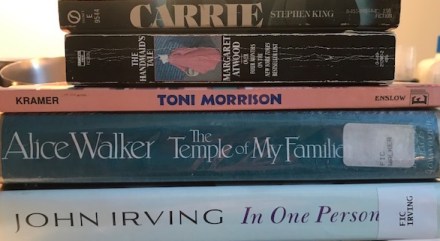
Who are some living authors with the longest novel-writing careers, dating back to the 1970s or earlier?

I contemplated that this past week as I read In One Person, John Irving’s quirky and compelling 2012 book about sexual identity (among other things). It was his 13th novel since his first, Setting Free the Bears, was published a whopping 51 years ago — in 1968.

Starting her novel career around the same time was the now-as-popular-as-ever Margaret Atwood, whose initial fiction book (The Edible Woman) was released exactly a half-century ago — in 1969. The Handmaid’s Tale and many other novels followed.

A year later, The Color Purple author Alice Walker came out with her first novel: The Third Life of Grange Copeland. Also in 1970, Beloved writer Toni Morrison entered the novel realm with The Bluest Eye. And in 1971, Underworld author Don DeLillo’s first novel (Americana) appeared.

Stephen King? His debut novel Carrie was published in 1974, the same year A Game of Thrones author George R.R. Martin produced his first novel: A Song for Lya. Salman Rushdie of Midnight’s Children fame and Russell Banks of Continental Drift fame? Their respective debut novels Grimus and Family Life were published in 1975. Anne Rice? She started big with 1976’s Interview with the Vampire. And Atonement author Ian McEwan? His debut novel The Cement Garden arrived in 1978.

Going back further, Lonesome Dove author Larry McMurtry earned his first novel credit in 1961 with Horseman, Pass By. Aunt Julia and the Scriptwriter author Mario Vargas Llosa’s first novel (The Time of the Hero) reached print in 1963 — the same year Joan Didion and Margaret Drabble entered the novel realm with Run, River and A Summer Bird-Cage, respectively. Drabble’s sister, Possession writer A.S. Byatt, saw her first novel The Shadow of the Sun released in 1964 — the same year as Joyce Carol Oates’ With Shuddering Fall debut. Cormac McCarthy started walking “The Road” of novel-writing in 1965, courtesy of The Orchard Keeper.

Who are your favorite living authors with long novel careers?

My literary-trivia book is described and can be purchased here: Fascinating Facts About Famous Fiction Authors and the Greatest Novels of All Time.

In addition to this weekly blog, I write the award-winning “Montclairvoyant” topical-humor column for Baristanet.com. The latest weekly piece — which has a Revolutionary War airports theme 🙂 — is here.

Nepotism in Novels

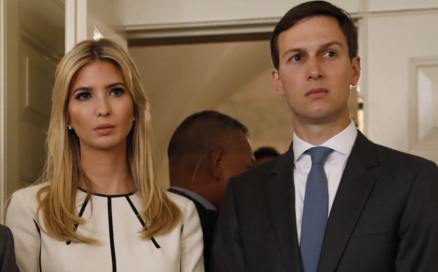
Among the Trump administration’s many, many horrible aspects is the blatant nepotism of incompetent daughter Ivanka and incompetent son-in-law Jared Kushner “serving” in major positions.

So, how about nepotism in literature? The beneficiaries are often also not deserving of their positions, which makes them easy for readers to root against — though there are occasional examples of those characters having some talent. Increasing the un-sympathy factor is that nepotism beneficiaries frequently aren’t nice, frequently act entitled, and frequently are quite flush with unearned family money.

Novels — historical fiction or otherwise — with royal characters of course often feature such people. For instance, in Alexandre Dumas’ The Three Musketeers, there’s the weak-willed Louis XIII who obviously had a bunch of other Louis guys come before him. One of them, Louis XI, is in Sir Walter Scott’s novel Quentin Durward.

Then there’s Rufus Weylin, the son of a slaveholder in Octavia E. Butler’s Kindred. He’s somewhat needy and unsure of himself as a boy, but grows into a mostly brutal and not especially smart master when he takes over the family plantation from his merciless father Tom.

Or how about the scenario in Lee Child’s Jack Reacher novel Worth Dying For? In that book, Seth Duncan works for a Mafia-connected Nebraska trucking company run by his father and uncles that ruthlessly extorts business from surrounding farms and engages in human trafficking. The vile Seth continues his family’s low ethical standards by also abusing his wife.

Of course, participating in or taking over the family “business” doesn’t necessarily have to be a bad thing. While there are plenty of differing views on nihilism and such in Ivan Turgenev’s novel Fathers and Sons, it seems okay that Arkady eventually assumes the management of his father’s modest Russian estate.

Another positive nepotism example is in One for the Money, the first of Janet Evanovich’s seriocomic Stephanie Plum crime novels. Stephanie gets a bounty-hunting job via her bail-bondsman cousin Vinnie, and ends up being quite good at that work (in One and the many subsequent Plum novels) despite some periodic bumbling.

Then there’s the complicated would-be nepotism situation in Charles Dickens’ Dombey and Son. The wealthy Paul Dombey is so focused on his son, and the hope that the boy will eventually take over his shipping company, that he almost totally rejects/neglects his daughter Florence.

Before ending this post, I’ll add that in real life there are plenty of children and other relatives of novelists who became novelists themselves. But that’s another topic — discussed in this piece I wrote in 2011.

Examples of nepotistic characters you’ve found memorable?

My literary-trivia book is described and can be purchased here: Fascinating Facts About Famous Fiction Authors and the Greatest Novels of All Time.

In addition to this weekly blog, I write the award-winning “Montclairvoyant” topical-humor column for Baristanet.com. The latest weekly piece — which has a July 4th theme — is here.

Authors Who’ve Excelled at Fiction and Nonfiction

There are many great fiction authors and many great nonfiction authors, but obviously a smaller number of authors who’ve written excellent books in both categories.

The skill sets for each category are similar in certain ways and different in others. Many novels contain at least some of the level of research we often find in nonfiction books, and obviously it helps any type of book to be well-written and interesting. But not every author can capably create fictional characters and fictional dialogue, or have the qualities (such as scholarly chops) to create top-notch nonfiction.

One who did excel in both categories was John Hersey, whose Hiroshima nonfiction book — originally a very long article in The New Yorker magazine — takes a riveting look at six survivors of the devastating atomic bomb unleashed on Japan by the U.S. in 1945. I finally got a chance to also read one of Hersey’s novels, and found A Single Pebble to be really compelling after thinking it started rather slowly. The book is about a young American engineer’s river voyage on a junk in China, and it has a lot to say about cultural differences, cultural misunderstandings, the “old ways” vs. the new, and more. (Hersey’s most famous novel is the Pulitzer Prize-winning A Bell for Adano, which I haven’t read.)

More recently, we have Barbara Kingsolver — who has written many a memorable novel (including The Poisonwood Bible, Prodigal Summer, The Lacuna, and Flight Behavior) but has also penned absorbing nonfiction books such as Animal, Vegetable, Miracle: a Year of Food Life.

Another living author who has ably spanned the fiction and nonfiction worlds is Stephen King, who’s of course famous for dozens of best-selling novels but is admired by fellow wordsmiths for the advice in the partly autobiographical On Writing: A Memoir of the Craft.

Alice Walker has penned an almost equal number of novels and short-story collections (13, including The Color Purple) as nonfiction books (12, including Go Girl! The Black Woman’s Book of Travel and Adventure).

Zadie Smith has produced several novels, such as White Teeth, as well as essay collections, such as Feel Free.

Jhumpa Lahiri’s fiction includes The Namesake novel, and she turned to nonfiction with works such as In Other Words — about her immersion in Italy and the Italian language.

Some deceased authors in addition to Hersey? Moving backward chronologically from the writers’ birth years:

James Baldwin toggled between categories with novels such as Go Tell It On the Mountain and nonfiction such as The Fire Next Time.

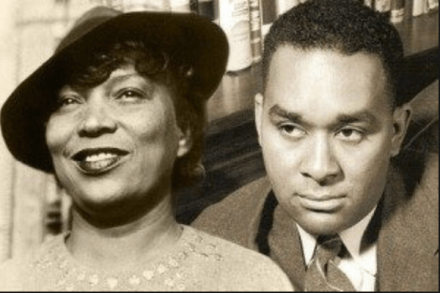
As did Richard Wright with works like the novel Native Son and the memoir Black Boy. (Wright is pictured at the top of this blog post with Zora Neale Hurston, who’s mentioned a few paragraphs below.)

John Steinbeck is famous for novels such as The Grapes of Wrath and East of Eden, but Travels With Charley — his uneven but great-in-spots chronicle of a cross-country road trip with his dog — is pretty well known, too.

George Orwell wrote three nonfiction books (with Down and Out in Paris and London having the highest profile) and six novels (of course including Animal Farm and Nineteen-Eighty-Four).

Aldous Huxley? We have novels such as Brave New World and Point Counter Point, and nonfiction such as The Doors of Perception. (Yes, The Doors rock group named itself after that Huxley book, which in turn was named after a William Blake line.)

Dorothy L. Sayers is best known for her Lord Peter Wimsey/Harriet Vane mysteries such as Gaudy Night, while also producing plenty of nonfiction — including the Christian theological book The Mind of the Maker.

Zora Neale Hurston is most remembered for her novel Their Eyes Were Watching God, but the author/anthropologist wrote nonfiction books such as Mules and Men, too.

Readers admire Edith Wharton for fiction classics such as The House of Mirth and The Age of Innocence, but she also penned popular nonfiction books such as Fighting France (a contemporary look at World War I) and The Decoration of Houses.

Mark Twain of course penned novels like Tom Sawyer and Huckleberry Finn while also writing nonfiction classics like The Innocents Abroad and Life on the Mississippi.

And Elizabeth Gaskell authored Cranford and other novels even as she was perhaps best known for her biography The Life of Charlotte Bronte.

I’ll end by saying (as a Facebook comment I just saw from Brian Bess noted) that some nonfiction books can have a lot of made-up elements — just as novels (and not just historical fiction) can include plenty of facts.

Which authors do you feel have written novels AND nonfiction books really well?

My literary-trivia book is described and can be purchased here: Fascinating Facts About Famous Fiction Authors and the Greatest Novels of All Time.

In addition to this weekly blog, I write the award-winning “Montclairvoyant” topical-humor column for Baristanet.com. The latest weekly piece — which discusses everything from the future reopening of an old movie theater to a cruel jail for immigrants near my town — is here.