Can Escapist Fiction Be Completely Escapist?

Barbara Taylor Bradford. (Credit: Bradford Enterprises.)

As I’ve mentioned here and there in recent months, I’ve been mixing my more-serious novel reading with a larger percentage of mass-audience and/or escapist fiction these days as I seek diversion from the distressing words and actions of America’s repulsive Trump regime. But of course those categories of literature are not always mostly upbeat.

Take Barbara Taylor Bradford, who was known for best-selling novels starring impressive, plucky women. Those characters are inspiring, yes, but some of them go through some really depressing things. I just read Bradford’s Everything to Gain, and while I enjoyed rooting for its protagonist Mallory Keswick, what happens to her family would not help the mood of any reader appalled at the latest Trump-related news.

Meanwhile, I continued this year to read many novels by Elin Hilderbrand. She is known for what have been called summer “beach reads” — most of them set on the beautiful Massachusetts island of Nantucket — but Hilderbrand is actually a much more complex and nuanced author than that. So, while I first tried her novels with escapist intent on my part, I’ve seen plenty of illness, death, and other sad developments in those books. But plenty of lighter content and entertainment, too, and I always eagerly went back for more even as I don’t get 100% relief from Trump and what he says and supports.

Detective fiction, to which I devoted a separate blog post earlier this month, can also make one temporarily forget the real world — one reason why I’ve read quite a few books in that genre this year. Then again, any novel with crime as a major element can make a reader not only sadly think about the victims but also think about one of America’s biggest criminals, who happens to currently live in the White House rather than in a jail cell where he belongs.

It can also be a refreshing interlude to read very funny fiction. The Pickwick Papers, anyone? But even that Charles Dickens book and most other comedic novels by various authors have some downbeat sections amid the humor.

One of these days I’m going to give a third reread to L.M. Montgomery’s Anne of Green Gables. That iconic novel always brings a smile to my face, yet it contains some fraught moments and a heartbreaking death.

All this makes me wonder if I’ve ever read a completely upbeat novel. Not sure that even exists, and, if it did, I suppose such a book would lack adequate drama. But it would give readers a complete mental break. 🙂

Any thoughts on this post, and on novels that might be relevant to its theme?

Misty the cat says: “Pumpkins but no spice? I turn my back.”

My comedic 2024 book — the part-factual/part-fictional/not-a-children’s-work Misty the Cat…Unleashed — is described and can be purchased on Amazon in paperback or on Kindle. It’s feline-narrated! (And Misty says Amazon reviews are welcome. 🙂 )

This 90-second promo video for the book features a talking cat: 🙂

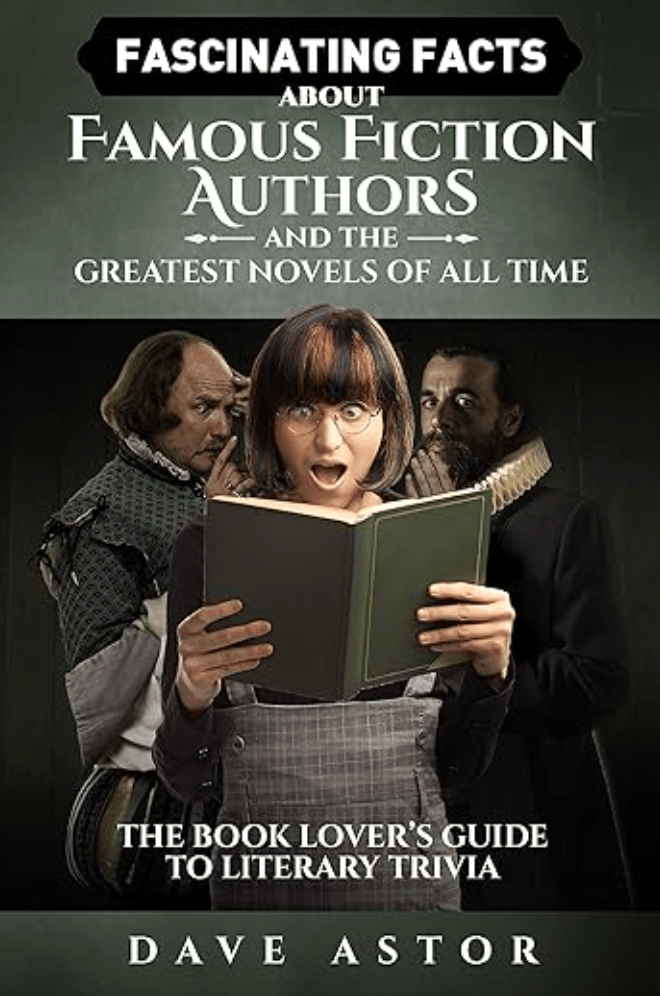
I’m also the author of a 2017 literary-trivia book

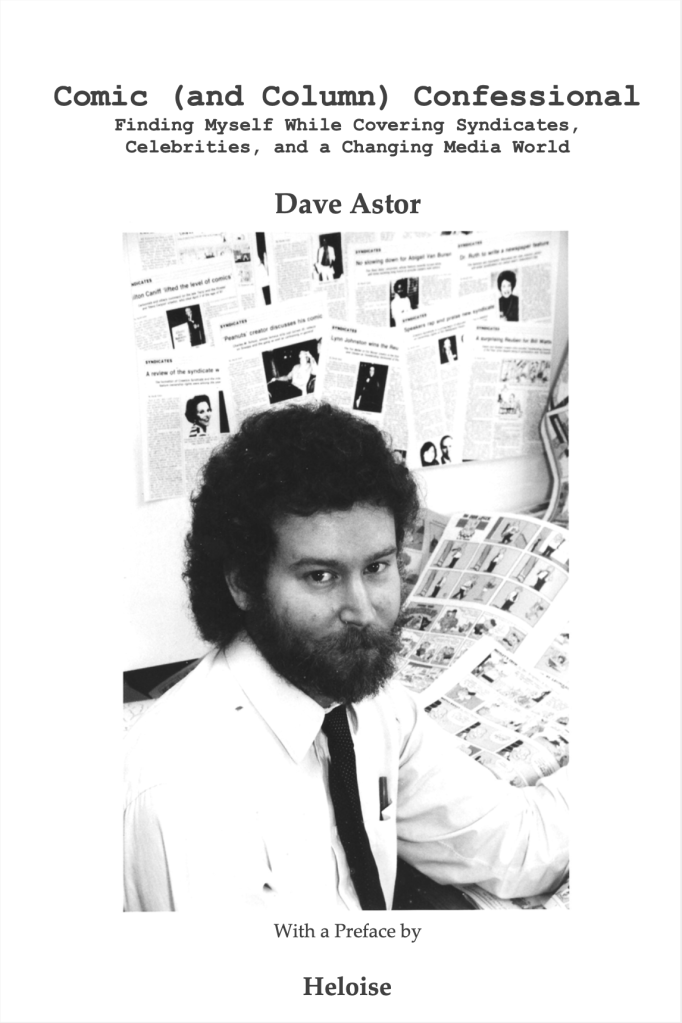
…and a 2012 memoir that focuses on cartooning and more, and includes many encounters with celebrities.
In addition to this weekly blog, I write the 2003-started/award-winning “Montclairvoyant” topical-humor column every Thursday for Montclair Local. The latest piece — about topics such as a local Charlie Kirk flag controversy and a local bookstore canceling the appearance of a Palestinian-American children’s book author — is here.

A Categorical Take on Short Stories

As with other literary genres, short stories have different “categories.” Two of those “categories” include tales that are psychologically insightful but not very plot-oriented, and more “escapist” tales that have a strong, perhaps even exciting story line leading inexorably to a conclusion.

I like many stories from each camp, and also enjoy tales that combine the two styles. As with novels, it’s great to experience reading variety!

Obviously, psychologically insightful tales can offer plenty of food for thought and reflection, even if they’re not purely entertaining. But it’s nice sometimes to just sink one’s teeth into an adventure tale that gets the blood racing.

Thanks to James Joyce, I thought about all this after reading his Dubliners collection of short stories. (Previously, I had only gotten to that collection’s final, sublime, most-famous tale, “The Dead,” by finding it online.) Many of the Dubliners stories are subtle, slice-of-life works; they don’t exactly yank a reader toward Jack Reacher-like thriller endings. Yet they delve deeply into the human psyche and the difficulties and epiphanies of life for everyday people, and also give readers a panoramic view of the Dublin of 100-plus years ago.

Many of Anton Chekhov’s short stories are similar — usually not that plot-driven, but very rich in emotions, nuances, philosophical thoughts, and character delineation. And of course it helps to be a great wordsmith, as Joyce and Chekhov were.

Contrast those kinds of tales — which can often be categorized as literary fiction — with something like Jack London’s “To Build a Fire” or Richard Connell’s “The Most Dangerous Game” that seem to run on adrenaline as they move readers toward a breathtaking climax. Or with mostly comedic stories — such as Mark Twain’s career-making “The Celebrated Jumping Frog of Calaveras County” — that may not have a huge amount of depth but sure are funny.

Then there are stories that seem to have “the best of both worlds” — psychological insight and (perhaps propulsive) drama. They include — among various other tales by various other writers — Jorge Luis Borges’ “The Aleph,” Leo Tolstoy’s “Master and Man,” George Eliot’s “The Sad Fortunes of the Reverend Amos Barton,” Nikolai Gogol’s “The Overcoat,” Edgar Allan Poe’s “The Cask of Amontillado,” Shirley Jackson’s “The Lottery,” O. Henry’s “The Last Leaf,” Kate Chopin’s “The Story of an Hour,” Graham Greene’s “Proof Positive,” Flannery O’Connor’s “A Good Man Is Hard to Find,” Nathaniel Hawthorne’s “Rappaccini’s Daughter,” Herman Melville’s “Bartleby the Scrivener,” Willa Cather’s “Paul’s Case,” Ambrose Bierce’s “An Occurrence at Owl Creek Bridge,” E.T.A. Hoffmann’s “The Sandman,” Oscar Wilde’s “The Canterville Ghost,” John Cheever’s “The Swimmer,” and Margaret Atwood’s more recent “Stone Mattress.”

What are some of your favorite short stories with psychologically insightful or escapist approaches, or a combination of the two?

(The box for submitting comments is below already-posted comments, but your new comment will appear at the top of the comments area — unless you’re replying to someone else.)

I’m writing a literature-related book, but still selling Comic (and Column) Confessional — my often-funny memoir that recalls 25 years of covering and meeting cartoonists such as Charles Schulz (“Peanuts”) and Bill Watterson (“Calvin and Hobbes”), columnists such as Ann Landers and “Dear Abby,” and other notables such as Hillary Clinton, Coretta Scott King, Walter Cronkite, and various authors. The book also talks about the malpractice death of my first daughter, my remarriage, and life in Montclair, N.J. — where I write the award-winning weekly “Montclairvoyant” humor column for The Montclair Times. You can email me at dastor@earthlink.net to buy a discounted, inscribed copy of the book, which contains a preface by “Hints” columnist Heloise and back-cover blurbs by people such as “The Far Side” cartoonist Gary Larson.