When You’re Getting an Unexpected Setting

St. John in the Virgin Islands. (Credit: Visit USVI.)

A number of authors set their novels in the same place. So, it becomes quite noticeable when they set their novels in…a different place.

This surprise can be welcome or not, depending on the reader and how good the books are. But a change-of-pace is often a good thing, for both the writers and their fans wanting to avoid a “rut.” The authors might have to do a little more research, but they’ll survive. 🙂

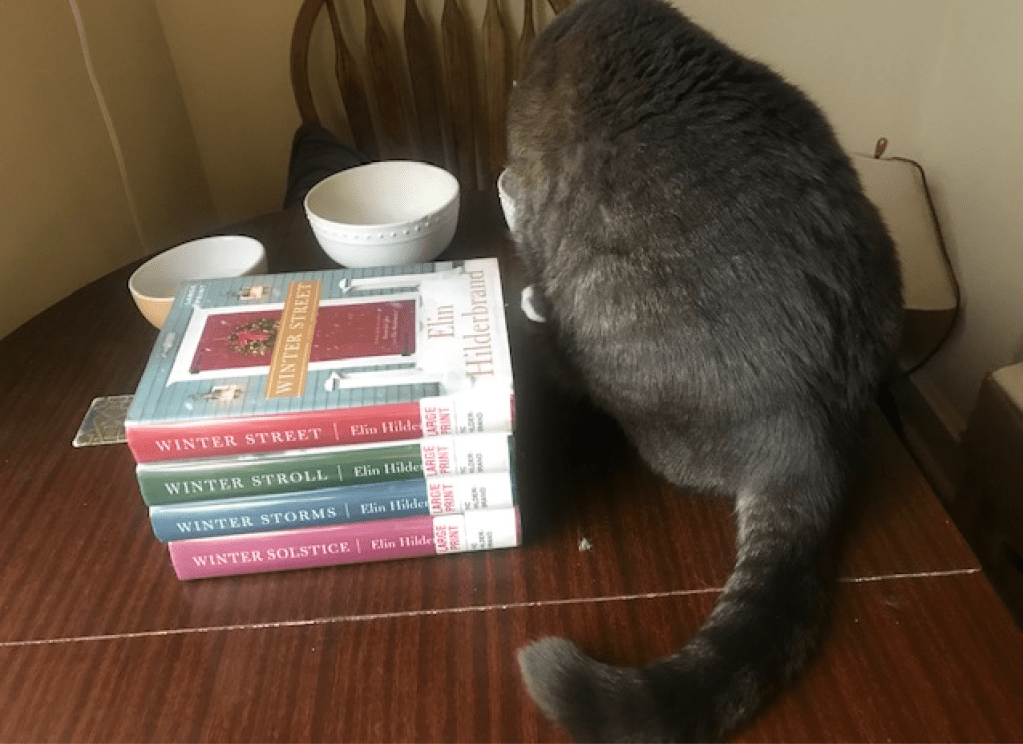
I most recently enjoyed a setting switch in the work of Elin Hilderbrand. She is known for placing her novels on Nantucket, and I have loved the ones I’ve read featuring that Massachusetts island milieu. Then I picked up Hilderbrand’s Winter in Paradise, thinking I was returning to Nantucket — only to find that the novel was mostly set on St. John in the Virgin Islands. That was initially a bit disorienting, but Winter in Paradise turned out to be another compulsively readable Hilderbrand book…this time about how a family’s life changes when they learn the father had a secret second family. Then I quickly finished the second and third installments of the trilogy: What Happens in Paradise and Troubles in Paradise — the latter book ending with a dramatic and destructive hurricane. I’m sure it helped the Nantucket-based Hilderbrand in writing the trilogy that she visits St. John for several weeks each year as a warm-weather writing retreat and vacation spot.

Among the other authors who’ve produced the occasional geographic surprise is Sir Walter Scott, who placed most of his historical novels in Scotland but situated Quentin Durward in France. Still, the archer Quentin is Scottish, so Sir Walter didn’t stray completely from his own real-life roots.

Charles Dickens usually used London as the locale for his novels, but did set part of A Tale of Two Cities in Paris and part of Martin Chuzzlewit in the United States.

Given that travel was much more difficult and time-consuming during the pre-1900 era in which writers such as Scott and Dickens lived, it’s not surprising that many long-ago authors kept their novels pretty close to the locales they knew most in a firsthand way. But Dickens did take two extended trips to the U.S., and Scott visited France (though after Quentin Durward was published). Also, Scott’s wife Charlotte was of French descent.

Another 19th-century author, Mark Twain, was among the most globetrotting Americans of his time — which bore fruit in such novels as A Connecticut Yankee in King Arthur’s Court (England) and Personal Recollections of Joan of Arc (France), and in his hilarious nonfiction travel masterpiece The Innocents Abroad (in which Twain chronicled his visits to many places, including the Mideast).

In post-1900 literature, William Faulkner virtually always set his novels in Mississippi, but three of his books unfolded elsewhere: including France in A Fable.

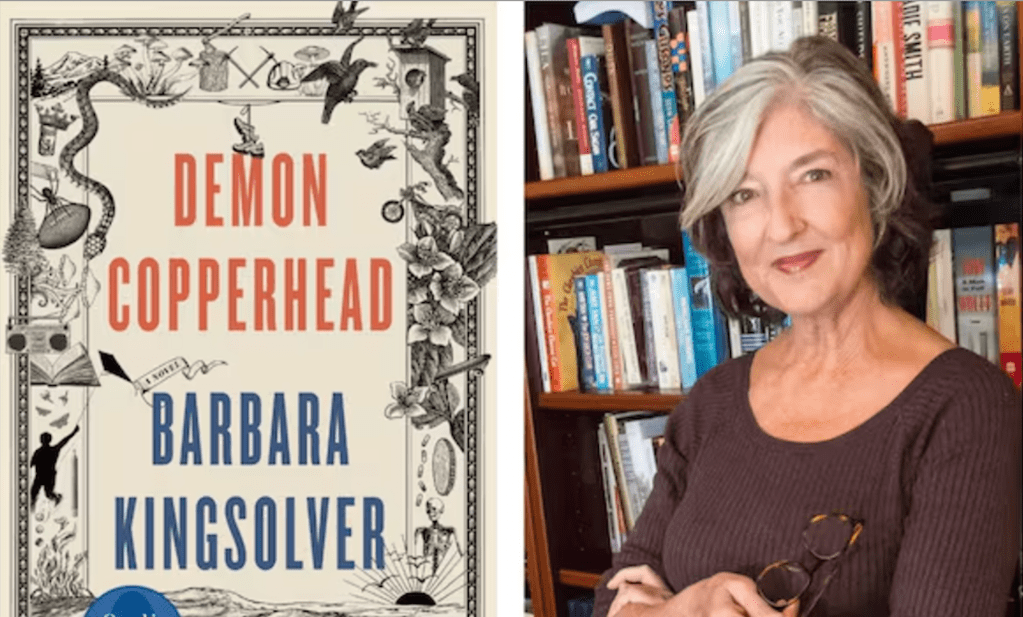
Barbara Kingsolver also placed the vast majority of her novels in the U.S. (usually Appalachia, the South, or the Southwest), but sent her American characters to Africa in The Poisonwood Bible and situated a large portion of The Lacuna in Mexico.

Your thoughts about, and example of, this theme?

Misty the cat says: “Orange skies don’t appear like clockwork; what was Anthony Burgess thinking?”

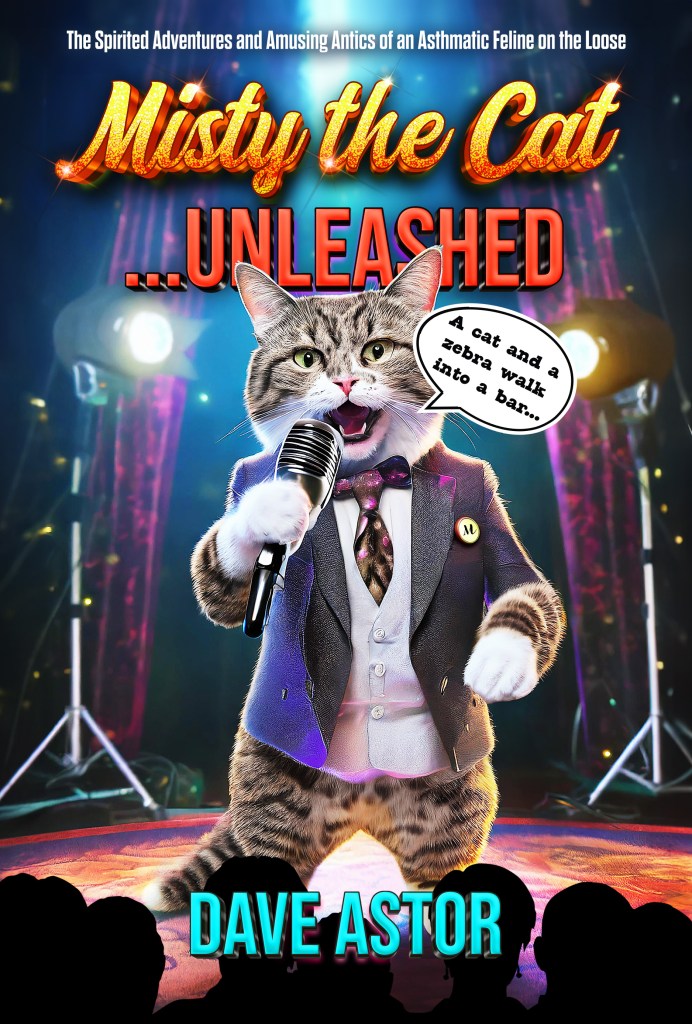
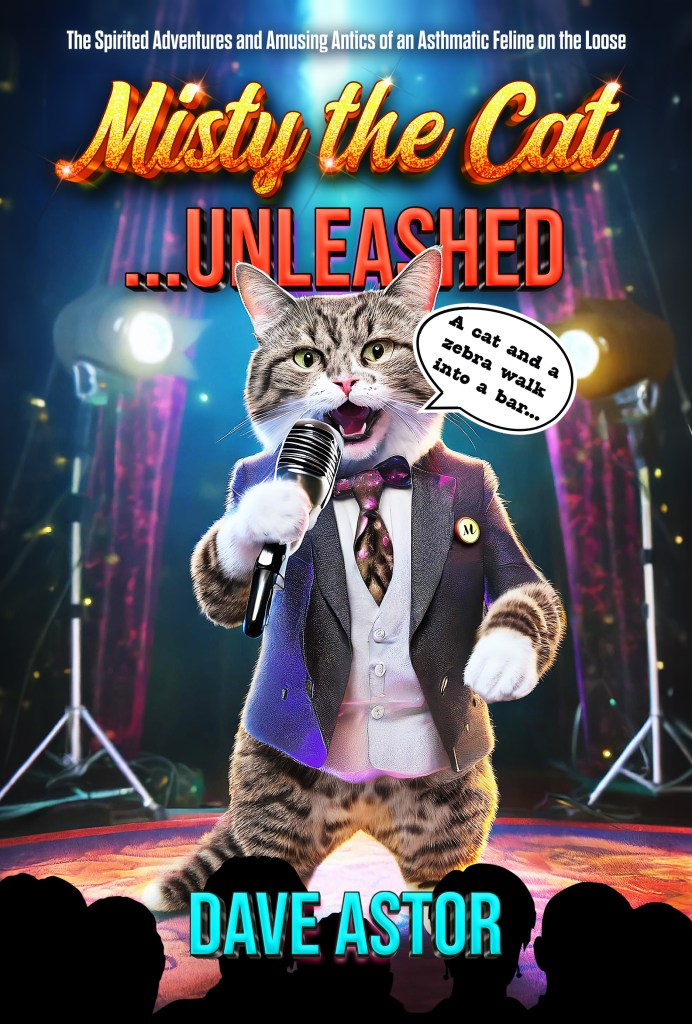
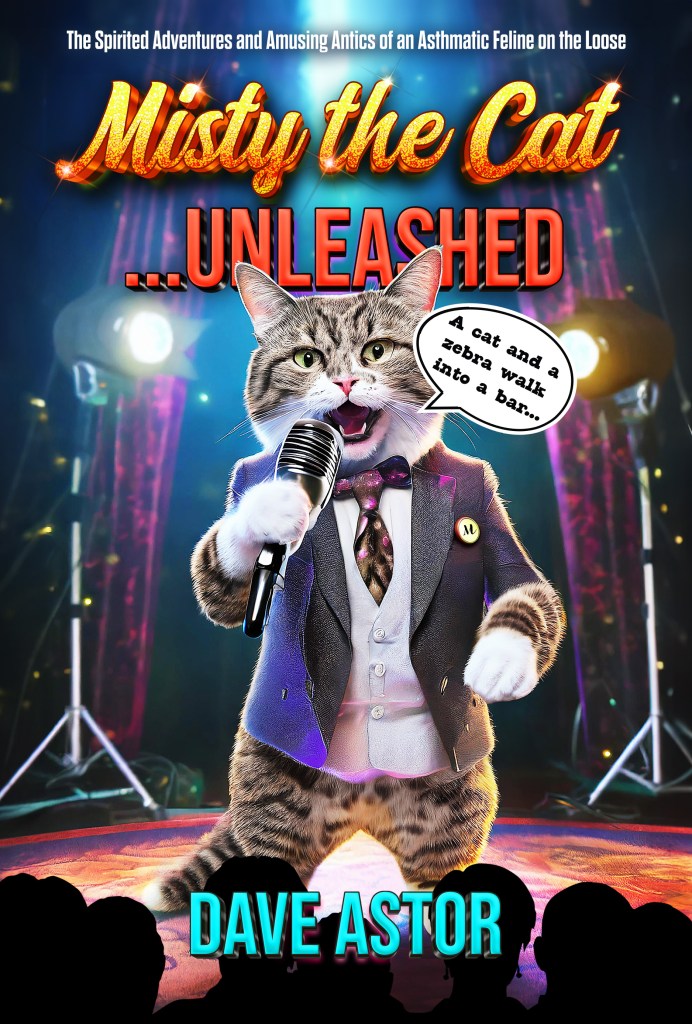
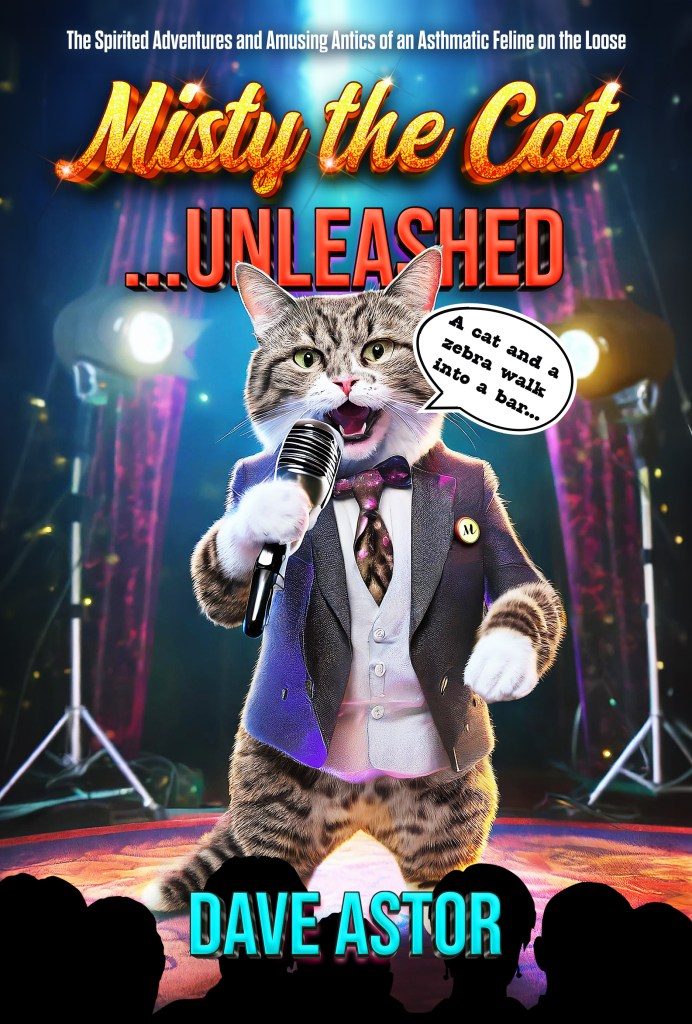
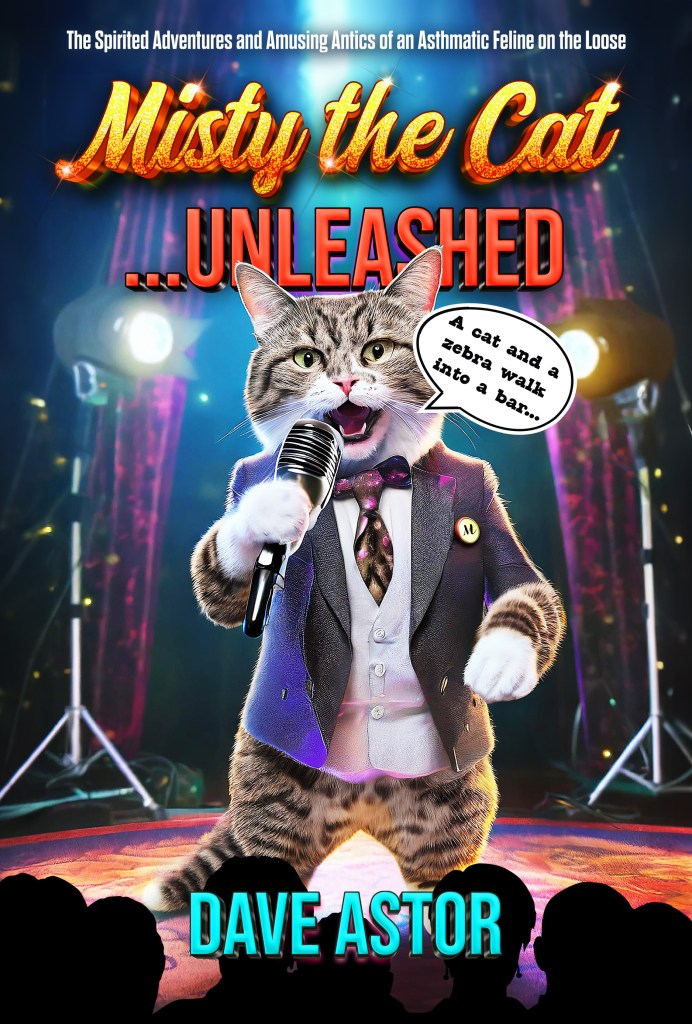
My comedic 2024 book — the part-factual/part-fictional/not-a-children’s-work Misty the Cat…Unleashed — is described and can be purchased on Amazon in paperback or on Kindle. It’s feline-narrated! (And Misty says Amazon reviews are welcome. 🙂 )
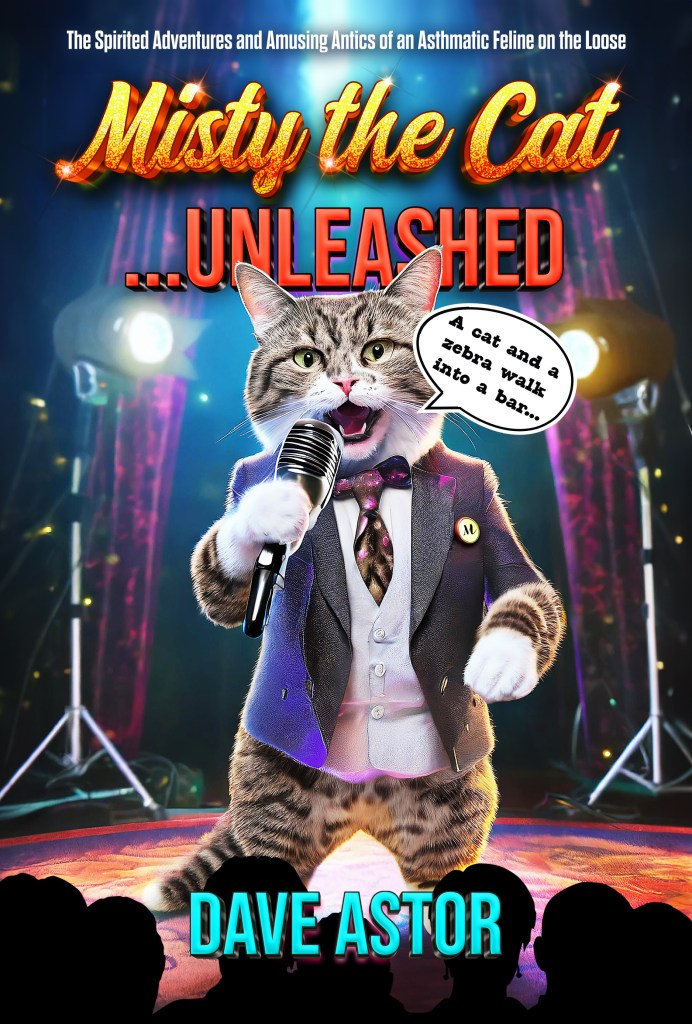
This 90-second promo video for my book features a talking cat: 🙂

In addition to this weekly blog, I write the 2003-started/award-winning “Montclairvoyant” topical-humor column every Thursday for Montclair Local. The latest piece — about a possible end to free holiday parking and a local U.S. congresswoman’s entry into New Jersey’s governor race — is here.

Guest Literature Post by Donald Trump! (Again)

Credit: Free Books Photos

In early 2017, soon after reprehensible right-winger Donald Trump first became President of the United States, I wrote a certain post. Now that Trump will depressingly occupy the White House again, I’m bringing back that post, revised and updated. Hopefully, my blog will return to “normal” next week. 🙂

I, Donald Trump, demanded to write a guest literature piece, and I always get what I want. Sure, I don’t read novels or know much about any of them, but I do read the backs of McDonald’s “Happy Meal” containers. Lots of back story, ya know?

Actually, I know a yuge amount about fiction, but more the “alternative facts” kind than the literary kind. I’m a fabulous fabricator! Liane Moriarty wrote Big Little Lies; I’m more into Big BIG Lies.

Anyway, I was told I should read The Ambassadors by Henry James, but I already have a list of the corrupt, distasteful envoys I’ll appoint for various countries. Including Chile, which McDonald’s has on its menu, though misspelled as chili. And my weird, startling, extremist, incompetent, fox-guarding-the-henhouse cabinet picks? They make Stephen King’s Misery seem upbeat.

The Red Badge of Courage? Believe me, bravery is for losers. I showed more courage getting Vietnam War deferments for alleged bone spurs in my heels, even though I played sports at the time with no problem. They called me The Natural — inspiring a Bernard Malamud novel that later became a movie starring one of those Hollywood “libtards,” Robert Redford, who’s no relation to Robert Redtesla. My best buddy Tesla guy Elon Musk owns the now-fascist-friendly X, formerly Twitter and still the Roman numeral for the low level of Musk’s social IQ.

Also, I bigly love Theodore Dreiser’s Sister Carrie character. I’d like to grab her by the [deleted]. Make An American Tragedy Great Again? I’m on it!

You see, I have immense respect for women. But was George Eliot transblender or something? George is a guy’s name, but that 19th-century scribbler looks female in photos. Lock her up!

And the clever nicknames I come up with! “Sleepy Joe Biden,” “Crazy Kamabla,” “Tampon Tim,” “Deranged Jack Smith,” and “George Slopadopolus,” to name a few. From the past, there was also Chris “Agatha” Christie; And Then There Were None: cabinet positions for him in 2017.

I also know history, because I know everything! Toni Morrison was the lead singer of The Doors, Harper Lee surrendered to Ulysses Grant, Richard Wright co-invented the airplane, and the Brontë sisters were at the 2017 Women’s March on Washington. I always have a Tan, but it’s not Amy.

Another George: Orwell. Love, love, LOVE the oppressors in Nineteen Eighty-Four! I even tried doublethink, but I can’t think once most of the time. Ask Herman Melania, my wife’s ancestor, who wrote about a big white male — that’s me! Captain Ahab sounds kind of Muslim, doesn’t he?

My wife Melania was an immigrant, but an okay one because she’s white. I have promised to deport millions of “other” types of immigrants. Sure, it will ruin their lives, devastate communities, and wreck the U.S. economy. My response? The Art of Me Saying “Big Deal.”

No new non-white immigrants, either; Jorge Luis Borges and Gabriel Garcia Marquez will never cross our southern border while I’m racist-in-chief, um, sexual-predator-in-chief, um, commander-in-chief. It helps that those two Hispanic writers are dead. Not much border-crossing potential there.

The Blacks, The Blacks. Why didn’t E.B. White use the name E.B. Very White? The title of Jack London’s White Fang novel rocks. I heard about Zora Neale Hurston’s 1937 classic Their Eyes Were Watching God — thrilling that those eyes were watching me nine years before I was born.

Flowers for Algernon — also thrilling! It gave me a chance to mentally mock the disabled for pages and pages. Can you beat that? Which reminds me that I’ll encourage the police to beat up any Americans who oppose me. The Hate U Give? Nope, not the Angie Thomas novel. The Hate I Give.

Mark my words, I’m really going to build a wall this time — paid for by Mexico (aka American taxpayers). We’ll build that big, beautiful fence at The Border: a novel by Cormac McCarthy, whose last name reminds me of one of my heroes, Joe McCarthy.

Jim Casy of The Grapes of Wrath was a commie, wasn’t he? Not the good kind like Vladimir Putin. Although I don’t read any books, I love Russian literature — including War and War and Crime and No Punishment for Me. But Anna Karenina? Overrated! Blood coming out of her whatever (after she was hit by a train). And Alexander Solzhenitsyn? I like authors who don’t get jailed.

Did I mention I drained the swamp? So I could have a dry place to burn books by liberal, pinko writers. Ever read Fahrenheit 451? The same number as my IQ. It’s genius-ly high! But I actually never really drained the swamp — I made it swampier.

My second presidential administration — Trump 2.0 — will be like a dystopian novel come to life again. I have no idea what dystopian means, but right-wing media nut Ben Shapiro and my nasty vice president-elect JD Vance mentioned that word one day. I think of those two as The Sound and the Fury. Me? Pride and Prejudice.

It Can’t Happen Here? It already has.

Misty the cat says: “I’m waiting for the window to open, even though Godot’s not inside.”

My comedic 2024 book — the part-factual/part-fictional/not-a-children’s-work Misty the Cat…Unleashed — is described and can be purchased on Amazon in paperback or on Kindle. It’s feline-narrated! (And Misty says Amazon reviews are welcome. 🙂 )

This 90-second promo video for my book features a talking cat: 🙂

In addition to this weekly blog, I write the 2003-started/award-winning “Montclairvoyant” topical-humor column every Thursday for Montclair Local. The latest piece — about a problematic proposed townhouse plan and more — is here.

When Genres Are Happy Together

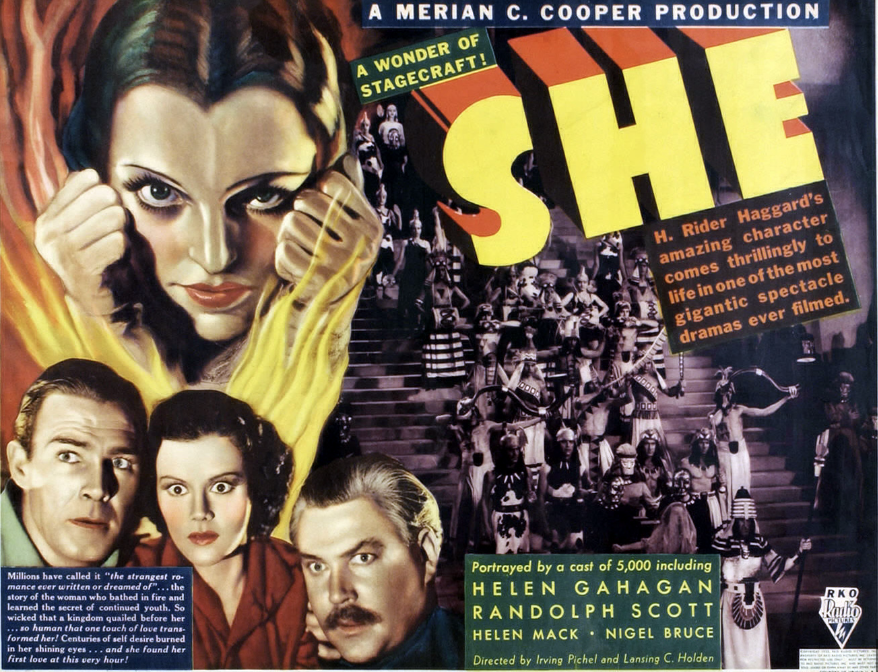
The 1935 movie version of the She novel.

Some literature offers readers content spanning at least two genres. Bonus!

It’s a blend that can make fiction richer and more interesting. Perhaps more challenging, too, but potentially very satisfying. All requiring some serious authorial skill and imagination, obviously. I’ll give some examples of this approach via multi-genre novels I’ve read.

My most recent experience was with Val McDermid’s The Skeleton Road, which combines a compelling murder mystery with well-researched historical fiction about the oft-brutal Yugoslav Wars of the 1990s.

Another example is Marge Piercy’s Woman on the Edge of Time, a novel that mixes a feminist/social-justice perspective with science fiction. Margaret Atwood’s The Blind Assassin also unites a realistic story with sci-fi, and Octavia E. Butler’s Kindred melds an anti-racism theme with time travel.

H. Rider Haggard’s novel She is squarely in the adventure genre yet contains a major fantasy element: Title character Ayesha is more than 2,000 years old — perhaps a bit longer than the usual human life span. 🙂

Anne Rice’s The Witching Hour straddles the fantasy and supernatural horror genres.

Fiction that includes ghosts usually has those ghosts interacting in some way with the real world, making for two genres of a sort. Among the novels in this realm are Charles Dickens’ A Christmas Carol, Jorge Amado’s Dona Flor and Her Two Husbands, and Elin Hilderbrand’s The Hotel Nantucket, to name a few.

Museum objects and exhibits come alive in Gore Vidal’s The Smithsonian Institution and Christine Coulson’s Metropolitan Stories — even as life is also depicted normally. So, fantasy and realism co-exist.

Then there are books that genre-blend in a different way; for instance, Vladimir Nabokov’s Pale Fire is part-novel and part-poem, while J.K. Rowling’s The Ink Black Heart mixes traditional prose with a blitz of chat conversations. Actually, chat conversations are not exactly a literary genre. 🙂

Your thoughts about, and examples of, this topic?

Misty the cat says: “The driver of that ‘On the Road’ car must be Jack Kerouac.”

My comedic 2024 book — the part-factual/part-fictional/not-a-children’s-work Misty the Cat…Unleashed — is described and can be purchased on Amazon in paperback or on Kindle. It’s feline-narrated! (And Misty says Amazon reviews are welcome. 🙂 )

This 90-second promo video for my book features a talking cat: 🙂

In addition to this weekly blog, I write the 2003-started/award-winning “Montclairvoyant” topical-humor column every Thursday for Montclair Local. The latest piece — featuring a pre-election theme and more — is here.

Nice Characters: a Morale Boost in Fiction’s Roost

Megan Follows as Anne Shirley and Richard Farnsworth as Matthew Cuthbert in 1985’s beloved Anne of Green Gables screen adaptation.

With all the scary real-world stuff happening (that has nothing to do with Halloween), it’s good to think positive…about nice characters in literature.

Those characters can be admirably nice or cloyingly nice, but they’re…nice. (Even as they, like most people, usually have some flaws.) They can also be boring or interesting, with some of them interesting enough to carry a novel and others needing “villains” to play off of — possibly to be victimized by or possibly to triumph over. The latter scenario is of course heartening wish fulfillment when it occurs.

Nice characters come from all walks of life. For instance, Sonya — a beacon of goodness and decency in Fyodor Dostoevsky’s oft-disturbing classic Crime and Punishment — is a drunkard’s daughter forced into prostitution to help her family.

There are also moral religious characters such as Helen Burns, the very kind classmate of the young Jane Eyre in Charlotte Bronte’s equally classic novel. (It should be noted that it’s hardly a given a religious person will be moral.)

Another 19th-century-literature character in the kind category is Fanny Price of Mansfield Park. Super-nice but rather on the boring side, unlike Jane Austen’s usually fascinating female protagonists.

A more interesting 1800s character with a kind nature is Denise Baudu, the young countrywoman who moves to Paris to work in a pre-Walmart-like department store in Emile Zola’s The Ladies’ Delight.

And young Eva of Uncle Tom’s Cabin is positively angelic. Sort of one-dimensional but a potent contrast to another of Harriet Beecher Stowe’s white characters — vicious slaveowner Simon Legree — in a rare 19th-century novel with a multiracial cast giving African-Americans (such as Tom, Eliza, and George) prominent roles.

Going back further in time, the titular Joseph Andrews of Henry Fielding’s satirical 18th-century novel is comically pure of heart.

Very nice characters in 20th- and 21st-century fiction? Among the many are shy Matthew Cuthbert, who becomes Anne Shirley’s beloved adoptive father in L.M. Montgomery’s Anne of Green Gables; masochistic-until-he’s-not Philip Carey, who eventually becomes a physician in W. Somerset Maugham’s Of Human Bondage; caring, disease-stricken Jamie Sullivan in Nicholas Sparks’ A Walk to Remember; and altruistic Subhash in Jhumpa Lahiri’s The Lowland.

There are also admirably good characters who become full or sort-of social/political activists — including lapsed reverend Jim Casy in John Steinbeck’s The Grapes of Wrath, attorney Atticus Finch in Harper Lee’s To Kill a Mockingbird, reproductive-rights advocate Dr. Wilbur Larch in John Irving’s The Cider House Rules, the anti-dictatorship Mirabel sisters in Julia Alvarez’s In the Time of the Butterflies, and the anti-police-brutality teen girl Starr Carter in Angie Thomas’ The Hate U Give.

Thoughts about, and examples of, this topic?

Misty the cat says: “I’m editing a manuscript.”

My comedic 2024 book — the part-factual/part-fictional/not-a-children’s-work Misty the Cat…Unleashed — is described and can be purchased on Amazon in paperback or on Kindle. It’s feline-narrated! (And Misty says Amazon reviews are welcome. 🙂 )

This 90-second promo video for my book features a talking cat: 🙂

In addition to this weekly blog, I write the 2003-started/award-winning “Montclairvoyant” topical-humor column every Thursday for Montclair Local. The latest piece — featuring a pre-Halloween theme — is here.

Current Novelists Published for Many Years

Who are some living authors with the longest novel-writing careers, dating back to the 1970s or earlier?

I contemplated that this past week as I read In One Person, John Irving’s quirky and compelling 2012 book about sexual identity (among other things). It was his 13th novel since his first, Setting Free the Bears, was published a whopping 51 years ago — in 1968.

Starting her novel career around the same time was the now-as-popular-as-ever Margaret Atwood, whose initial fiction book (The Edible Woman) was released exactly a half-century ago — in 1969. The Handmaid’s Tale and many other novels followed.

A year later, The Color Purple author Alice Walker came out with her first novel: The Third Life of Grange Copeland. Also in 1970, Beloved writer Toni Morrison entered the novel realm with The Bluest Eye. And in 1971, Underworld author Don DeLillo’s first novel (Americana) appeared.

Stephen King? His debut novel Carrie was published in 1974, the same year A Game of Thrones author George R.R. Martin produced his first novel: A Song for Lya. Salman Rushdie of Midnight’s Children fame and Russell Banks of Continental Drift fame? Their respective debut novels Grimus and Family Life were published in 1975. Anne Rice? She started big with 1976’s Interview with the Vampire. And Atonement author Ian McEwan? His debut novel The Cement Garden arrived in 1978.

Going back further, Lonesome Dove author Larry McMurtry earned his first novel credit in 1961 with Horseman, Pass By. Aunt Julia and the Scriptwriter author Mario Vargas Llosa’s first novel (The Time of the Hero) reached print in 1963 — the same year Joan Didion and Margaret Drabble entered the novel realm with Run, River and A Summer Bird-Cage, respectively. Drabble’s sister, Possession writer A.S. Byatt, saw her first novel The Shadow of the Sun released in 1964 — the same year as Joyce Carol Oates’ With Shuddering Fall debut. Cormac McCarthy started walking “The Road” of novel-writing in 1965, courtesy of The Orchard Keeper.

Who are your favorite living authors with long novel careers?

My literary-trivia book is described and can be purchased here: Fascinating Facts About Famous Fiction Authors and the Greatest Novels of All Time.

In addition to this weekly blog, I write the award-winning “Montclairvoyant” topical-humor column for Baristanet.com. The latest weekly piece — which has a Revolutionary War airports theme 🙂 — is here.

Nepotism in Novels

Among the Trump administration’s many, many horrible aspects is the blatant nepotism of incompetent daughter Ivanka and incompetent son-in-law Jared Kushner “serving” in major positions.

So, how about nepotism in literature? The beneficiaries are often also not deserving of their positions, which makes them easy for readers to root against — though there are occasional examples of those characters having some talent. Increasing the un-sympathy factor is that nepotism beneficiaries frequently aren’t nice, frequently act entitled, and frequently are quite flush with unearned family money.

Novels — historical fiction or otherwise — with royal characters of course often feature such people. For instance, in Alexandre Dumas’ The Three Musketeers, there’s the weak-willed Louis XIII who obviously had a bunch of other Louis guys come before him. One of them, Louis XI, is in Sir Walter Scott’s novel Quentin Durward.

Then there’s Rufus Weylin, the son of a slaveholder in Octavia E. Butler’s Kindred. He’s somewhat needy and unsure of himself as a boy, but grows into a mostly brutal and not especially smart master when he takes over the family plantation from his merciless father Tom.

Or how about the scenario in Lee Child’s Jack Reacher novel Worth Dying For? In that book, Seth Duncan works for a Mafia-connected Nebraska trucking company run by his father and uncles that ruthlessly extorts business from surrounding farms and engages in human trafficking. The vile Seth continues his family’s low ethical standards by also abusing his wife.

Of course, participating in or taking over the family “business” doesn’t necessarily have to be a bad thing. While there are plenty of differing views on nihilism and such in Ivan Turgenev’s novel Fathers and Sons, it seems okay that Arkady eventually assumes the management of his father’s modest Russian estate.

Another positive nepotism example is in One for the Money, the first of Janet Evanovich’s seriocomic Stephanie Plum crime novels. Stephanie gets a bounty-hunting job via her bail-bondsman cousin Vinnie, and ends up being quite good at that work (in One and the many subsequent Plum novels) despite some periodic bumbling.

Then there’s the complicated would-be nepotism situation in Charles Dickens’ Dombey and Son. The wealthy Paul Dombey is so focused on his son, and the hope that the boy will eventually take over his shipping company, that he almost totally rejects/neglects his daughter Florence.

Before ending this post, I’ll add that in real life there are plenty of children and other relatives of novelists who became novelists themselves. But that’s another topic — discussed in this piece I wrote in 2011.

Examples of nepotistic characters you’ve found memorable?

My literary-trivia book is described and can be purchased here: Fascinating Facts About Famous Fiction Authors and the Greatest Novels of All Time.

In addition to this weekly blog, I write the award-winning “Montclairvoyant” topical-humor column for Baristanet.com. The latest weekly piece — which has a July 4th theme — is here.

Authors Who’ve Excelled at Fiction and Nonfiction

There are many great fiction authors and many great nonfiction authors, but obviously a smaller number of authors who’ve written excellent books in both categories.

The skill sets for each category are similar in certain ways and different in others. Many novels contain at least some of the level of research we often find in nonfiction books, and obviously it helps any type of book to be well-written and interesting. But not every author can capably create fictional characters and fictional dialogue, or have the qualities (such as scholarly chops) to create top-notch nonfiction.

One who did excel in both categories was John Hersey, whose Hiroshima nonfiction book — originally a very long article in The New Yorker magazine — takes a riveting look at six survivors of the devastating atomic bomb unleashed on Japan by the U.S. in 1945. I finally got a chance to also read one of Hersey’s novels, and found A Single Pebble to be really compelling after thinking it started rather slowly. The book is about a young American engineer’s river voyage on a junk in China, and it has a lot to say about cultural differences, cultural misunderstandings, the “old ways” vs. the new, and more. (Hersey’s most famous novel is the Pulitzer Prize-winning A Bell for Adano, which I haven’t read.)

More recently, we have Barbara Kingsolver — who has written many a memorable novel (including The Poisonwood Bible, Prodigal Summer, The Lacuna, and Flight Behavior) but has also penned absorbing nonfiction books such as Animal, Vegetable, Miracle: a Year of Food Life.

Another living author who has ably spanned the fiction and nonfiction worlds is Stephen King, who’s of course famous for dozens of best-selling novels but is admired by fellow wordsmiths for the advice in the partly autobiographical On Writing: A Memoir of the Craft.

Alice Walker has penned an almost equal number of novels and short-story collections (13, including The Color Purple) as nonfiction books (12, including Go Girl! The Black Woman’s Book of Travel and Adventure).

Zadie Smith has produced several novels, such as White Teeth, as well as essay collections, such as Feel Free.

Jhumpa Lahiri’s fiction includes The Namesake novel, and she turned to nonfiction with works such as In Other Words — about her immersion in Italy and the Italian language.

Some deceased authors in addition to Hersey? Moving backward chronologically from the writers’ birth years:

James Baldwin toggled between categories with novels such as Go Tell It On the Mountain and nonfiction such as The Fire Next Time.

As did Richard Wright with works like the novel Native Son and the memoir Black Boy. (Wright is pictured at the top of this blog post with Zora Neale Hurston, who’s mentioned a few paragraphs below.)

John Steinbeck is famous for novels such as The Grapes of Wrath and East of Eden, but Travels With Charley — his uneven but great-in-spots chronicle of a cross-country road trip with his dog — is pretty well known, too.

George Orwell wrote three nonfiction books (with Down and Out in Paris and London having the highest profile) and six novels (of course including Animal Farm and Nineteen-Eighty-Four).

Aldous Huxley? We have novels such as Brave New World and Point Counter Point, and nonfiction such as The Doors of Perception. (Yes, The Doors rock group named itself after that Huxley book, which in turn was named after a William Blake line.)

Dorothy L. Sayers is best known for her Lord Peter Wimsey/Harriet Vane mysteries such as Gaudy Night, while also producing plenty of nonfiction — including the Christian theological book The Mind of the Maker.

Zora Neale Hurston is most remembered for her novel Their Eyes Were Watching God, but the author/anthropologist wrote nonfiction books such as Mules and Men, too.

Readers admire Edith Wharton for fiction classics such as The House of Mirth and The Age of Innocence, but she also penned popular nonfiction books such as Fighting France (a contemporary look at World War I) and The Decoration of Houses.

Mark Twain of course penned novels like Tom Sawyer and Huckleberry Finn while also writing nonfiction classics like The Innocents Abroad and Life on the Mississippi.

And Elizabeth Gaskell authored Cranford and other novels even as she was perhaps best known for her biography The Life of Charlotte Bronte.

I’ll end by saying (as a Facebook comment I just saw from Brian Bess noted) that some nonfiction books can have a lot of made-up elements — just as novels (and not just historical fiction) can include plenty of facts.

Which authors do you feel have written novels AND nonfiction books really well?

My literary-trivia book is described and can be purchased here: Fascinating Facts About Famous Fiction Authors and the Greatest Novels of All Time.

In addition to this weekly blog, I write the award-winning “Montclairvoyant” topical-humor column for Baristanet.com. The latest weekly piece — which discusses everything from the future reopening of an old movie theater to a cruel jail for immigrants near my town — is here.

How Some Protagonists Respond to Provocation

White House occupant Donald Trump pulled the U.S. out of a perfectly good nuclear agreement with Iran — an agreement Iran was honoring — and followed that up with intense economic pressure and military threats. So naturally Iran started to push back, though the almost-always-lying Trump administration is surely exaggerating the extent of that.

This reminded me of a number of scenarios in literature where a character is unfairly provoked to the point of she or he retaliating. Sometimes the retaliation is effective (providing readers with satisfying wish fulfillment); other times the retaliating party suffers (which frustrates readers even as that suffering scenario can often be more realistic).

One of the most famous provoked-to-retaliate novels is Billy Budd, in which the popular-among-his-fellow-sailors protagonist is badgered by the envious, nasty John Claggart. After Claggart falsely accuses Herman Melville’s kindly title character of trying to incite mutiny, a shocked Billy strikes John with no premeditation and accidentally kills him. But we don’t get a happy ending after that. (A photo from the Billy Budd movie is above.)

In modern fiction, we have Lisbeth Salander of Stieg Larsson’s The Girl With the Dragon Tattoo. Wrongly declared legally incompetent as a child, her appointed guardian Nils Bjurman sexually abuses her. Eventually, Lisbeth ruthlessly revenges herself on the sadistic Bjurman without killing him but in a way that deservedly ruins his life.

Sometimes in literature, abusive or otherwise despicable men ARE justly killed. That’s the case with the Karamazov father in Fyodor Dostoyevsky’s The Brothers Karamazov and Ruth’s husband Frank Bennett in Fannie Flagg’s Fried Green Tomatoes at the Whistle Stop Cafe. (If you feel it’s weird to put those two novels in the same sentence, Flagg’s sprawling book is quite deep amid its entertaining aspects.)

Perhaps the greatest revenge novel of all is Alexandre Dumas’ The Count of Monte Cristo, in which a false accusation puts young Edmond Dantes into a remote island prison for many years. After escaping, he dedicates his life to some epic payback.

Then there’s Stephen King’s Gerald’s Game, in which Jessie Burlingame is treated shabbily by her husband before and during a sexual game he wants to play more than she does. Jessie, partly spurred by subconscious memories of also being abused by her father, kicks Gerald away and inadvertently gives him a fatal heart attack. The ensuing problem? Jessie is handcuffed to the bed, now alone in a remote lakeside house.

And various scenarios in various Jack Reacher novels have Jack minding his own business before being surrounded by a group of bad guys who feel they greatly outnumber Lee Child’s protagonist enough to give him a pounding. Reacher, who almost always welcomes the challenge, invariably wins convincingly.

Your favorite novels that fit this topic?

One final note: Iran is hardly an exemplary democracy, but neither is the U.S. under Trump and his cynical enablers in the Republican-controlled Senate, right-wing media, conservative corporate circles, and right-wing religious circles.

My literary-trivia book is described and can be purchased here: Fascinating Facts About Famous Fiction Authors and the Greatest Novels of All Time.

In addition to this weekly blog, I write the award-winning “Montclairvoyant” topical-humor column for Baristanet.com. The latest weekly piece — which discusses a middle-school controversy and an endangered 1890s mansion — is here.

Authors From One Country Who Set Books in Another Country

It’s of course interesting to read novels set in countries other than where the reader lives. And those books can be written from two main vantage points.

One is for a novel set in a certain nation to be written by an author from that nation. Such a book most likely offers a local protagonist, deep knowledge of the culture, and so on.

The second vantage point involves novels that are set (or partly set) in countries other than where the authors live. That can often (not always) mean a protagonist from the writer’s country, a more superficial knowledge of the other country’s culture, etc. A non-native character who visits or lives in another nation is usually not truly representative of that country, but there’s the potential positive of the sojourning protagonist being sort of a guide or surrogate who helps readers understand the other country from an outsider perspective.

This blog post will focus on the latter scenario, and an excellent example is Mexico — one of the long/heavily researched novels by American author James Michener (pictured), and a book I’m currently reading.

It stars Norman Clay, a journalist born in Mexico to a Mexican mother and American father who has lived in the U.S. for many years before returning to his native country to write a story about a rivalry between two very different bullfighters. We see Mexico, and learn a lot about its present and past, through Norman’s eyes. Several of the novel’s fully Mexican characters are more interesting than Clay, but he is a guide/surrogate that a good number of American readers might relate to most.

Then we have novels in which we see the U.S. through the eyes of English authors and characters — with two examples being Martin Chuzzlewit (Charles Dickens jump-started sagging serial sales by sending Martin across the ocean) and Paradise News (David Lodge’s Bernard protagonist is a fish-out-of-water visiting Hawaii).

France? English author Charlotte Bronte gave her perspective on that country by setting Villette there. And Scottish author Sir Walter Scott did the same in Quentin Durward — though his perspective was on the France of the 1400s, nearly four centuries before Scott’s novel was written.

Plenty of novels have focused on white people traveling to Africa, for better or often for worse. Two American authors who made that happen with from-the-U.S. characters include Barbara Kingsolver in The Poisonwood Bible and Paul Bowles in The Sheltering Sky.

We also have the interesting case of Buchi Emecheta, the Nigerian-born British author whose semi-autobiographical novel Second Class Citizen is about a Nigerian woman who moves to England. The book was published in 1974, when the author was already in England for 12 years, so we had at that time a British author writing about Nigeria (early in Second Class Citizen) and a Nigerian-born author writing about England (later in that novel).

There’s a similar cultural juxtaposition in The Kite Runner by Afghanistan-born U.S. author Khaled Hosseini, whose family left his native country when the future writer was 11. Hosseini’s novel starts in Afghanistan, moves to the U.S., goes back to Afghanistan, and finally returns to the U.S.

Not a novel, but a book that almost reads like one, is Mark Twain’s The Innocents Abroad. In that travel book, Twain is a highly observant and drop-dead hilarious guide who gave American readers a look at various European and Mideast countries in the 1860s.

Your favorite novels that fit this topic?

My literary-trivia book is described and can be purchased here: Fascinating Facts About Famous Fiction Authors and the Greatest Novels of All Time.

In addition to this weekly blog, I write the award-winning “Montclairvoyant” topical-humor column for Baristanet.com. The latest weekly piece — which discusses a pretentious, overpriced hotel coming to my town — is here.

Literature’s LGBTQ Characters: an Update

In honor of June 2019’s Pride Month, I’m going to revisit LGBTQ characters in fiction — LGBTQ of course standing for Lesbian, Gay, Bisexual, Transgender, Queer.

I previously wrote about this topic in 2013 (a year before starting this blog) and mentioned a number of novels with openly, closeted, or maybe-they-are/maybe-they-aren’t LGBTQ characters in lead or supporting roles. Among those books were Rita Mae Brown’s Rubyfruit Jungle, James Baldwin’s Giovanni’s Room, Alice Walker’s The Color Purple, Colette’s Claudine at School, Barbara Kingsolver’s The Lacuna, Margaret Atwood’s The Robber Bride, Margaret Drabble’s The Sea Lady, Fannie Flagg’s Fried Green Tomatoes at the Whistle Stop Cafe, Wilkie Collins’ The Woman in White, Herman Melville’s Moby-Dick, and Shirley Jackson’s The Haunting of Hill House.

This blog post will mention some of the novels I’ve read since 2013 with LGBTQ characters.

Despite the cruel right-wing intolerance in the U.S. and elsewhere that’s setting back various kinds of human rights these days, LGBTQ people are generally more accepted in many places than decades ago. This is reflected in recent literature — where there are more LGBTQ characters (from both LGBTQ and non-LGBTQ authors), where these characters are usually treated more positively or at least more three-dimensionally than in the past, and where in many cases a big deal isn’t made of these characters; they’re one of the many parts of the human mosaic. That’s a good thing.

The five-person Lambert family that Jonathan Franzen focuses on in The Corrections (a great novel I also mentioned last week) includes daughter Denise, who’s had a bisexual life but is almost certainly lesbian. Her portrayal is satisfying and convincing partly because her sexual life is depicted as just one of many aspects of her — she’s also a conflicted daughter/sibling, a strong personality, very smart, a star professional chef, a hard worker, generous at times, unkind at other times, etc.

In Stieg Larsson’s Millennium Trilogy — which begins with The Girl With the Dragon Tattoo — the brilliant, abused, troubled, brave, vengeance-seeking Lisbeth Salander is bisexual. The most memorable character in those three riveting novels.

Among the many memorable characters J.K. Rowling has expertly created, from her Harry Potter series to her crime fiction, have been LGBTQ ones. For instance, in The Cuckoo’s Calling novel written under Rowling’s Robert Galbraith pen name, Guy Somé (pictured on the right in the above photo) is stereotypical in certain ways (he’s a fashion designer) but is depicted as a fairly complex person devoid of several other gay stereotypes.

The Secret History‘s Francis Abernathy is gay but that’s not overemphasized in Donna Tartt’s compelling debut novel. Her emphasis is more on the insularity and strangeness of the small group (including Francis) that protagonist Richard falls in with when he goes to college.

It’s not secret history that there’ve been LGBTQ people throughout time, and one example of this is in Philippa Gregory’s excellent novel Earthly Joys. Set in the 17th century, it features a master royal gardener (John Tradescant) who’s married to a woman but ends up having a same-gender sexual dalliance with a charismatic “bad boy” duke.

A novel that sort of/sort of not fits this blog post is Abigail Tarttelin’s excellent Golden Boy, which — like Jeffrey Eugenides’ Pulitzer Prize-winning Middlesex — features an intersex character. The hermaphroditic gender confusion embodied in protagonist Max Walker has echoes of what transgender people face.

Your favorite novels featuring LGBTQ characters in lead or supporting roles?

My literary-trivia book is described and can be purchased here: Fascinating Facts About Famous Fiction Authors and the Greatest Novels of All Time.

In addition to this weekly blog, I write the award-winning “Montclairvoyant” topical-humor column for Baristanet.com. The latest weekly piece — which comedically compares my town in 2019 vs. 1796 — is here.