Novelists Have the Facility to Depict Nobility

Yesterday, a massive total of nearly seven million people attended the 2,700-plus “No Kings” rallies in the United States and abroad to protest Trump’s fascist/authoritarian regime as that Republican administration ignores Congress, enriches itself, cracks down on peaceful dissent, arrests innocent people of color, invades American cities for no good reason, meddles in other countries’ affairs, starts or supports wrongful military actions around the world, etc. Which, as a literature blogger, reminded me of kings and other royalty in fiction — including historical fiction.

Of course, some royalty can be partly benevolent, but in many cases all that power heightens a ruler’s nasty instincts, makes a corrupt person even more corrupt, and increases the entitlement of the already entitled. Also, being a member of royalty doesn’t exactly involve the merit system.

I’ve never deliberately sought out novels containing royal characters, much preferring to read about the lives of “everyday” people. But privileged aristocrats have popped up here and there in my reading.

For instance, when long ago working through many a great book by Mark Twain, I polished off The Prince and the Pauper (two boys changing places) and A Connecticut Yankee in King Arthur’s Court (in which a certain king appears).

Another 19th-century novel, Alexandre Dumas’ 17th-century-set The Three Musketeers, includes King Louis XIII and Queen Anne as secondary characters.

In Charles Dickens’ A Tale of Two Cities, King Louis XVI and King George III are referenced.

Some novels written in the 20th and 21st centuries also include royal characters. Hilary Mantel’s Wolf Hall has Henry VIII and other monarchical personages, Josephine Tey’s The Daughter of Time harkens back to King Richard III, Robert Graves’ I, Claudius features the Roman emperor of the book’s title, J.R.R. Tolkien’s The Lord of the Rings has the would-be king Aragorn, and Philippa Gregory’s Earthly Joys has the Duke of Buckingham.

There’s also William Goldman’s The Princess Bride, Meg Cabot’s The Princess Diaries, Antoine de Saint-Exupery’s The Little Prince, Lewis Carroll’s Alice’s Adventures in Wonderland and its Queen of Hearts, C.S. Lewis’ The Chronicles of Narnia and its King Tirian, Diana Gabaldon’s Outlander and its King Louis XV appearance, Margaret Landon’s Anna and the King of Siam that inspired The King and I musical, and so on.

Of course there’s royalty, too, in various Shakespeare plays and in other stage creations such as Eugene O’Neill’s The Emperor Jones, Lin-Manuel Miranda’s Hamilton (King George III), etc.

I’m sure I’ve only touched the surface here. Any additional examples of, or thoughts about, this topic?

Misty the cat asks: “What’s the new White House ballroom doing here?”

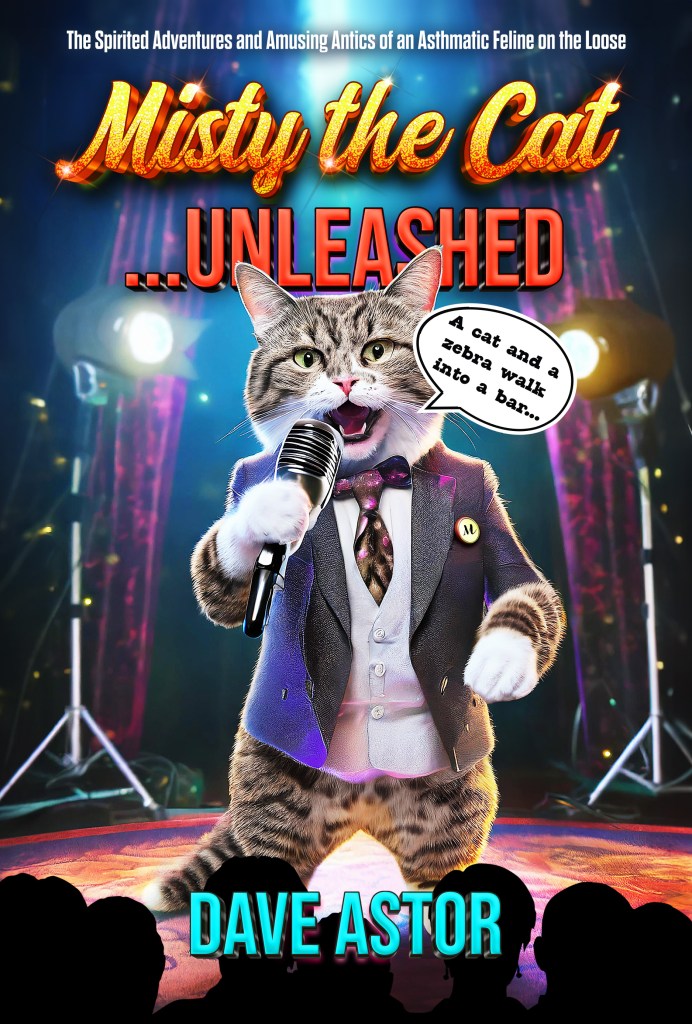
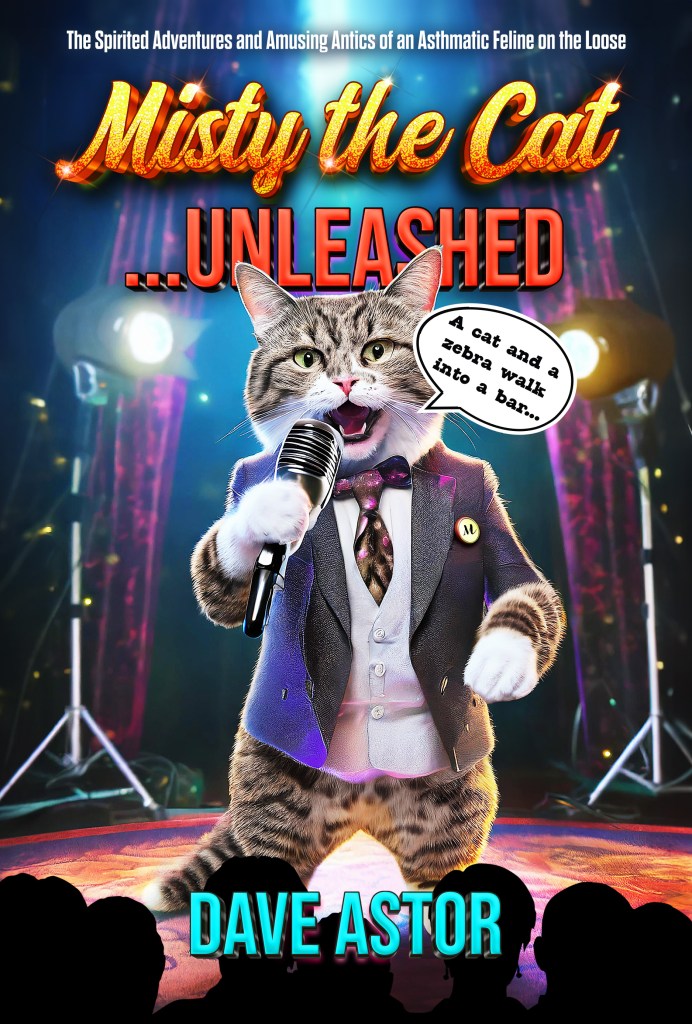
My comedic 2024 book — the part-factual/part-fictional/not-a-children’s-work Misty the Cat…Unleashed — is described and can be purchased on Amazon in paperback or on Kindle. It’s feline-narrated! (And Amazon reviews are welcome. 🙂 )
This 90-second promo video for the book features a talking cat: 🙂

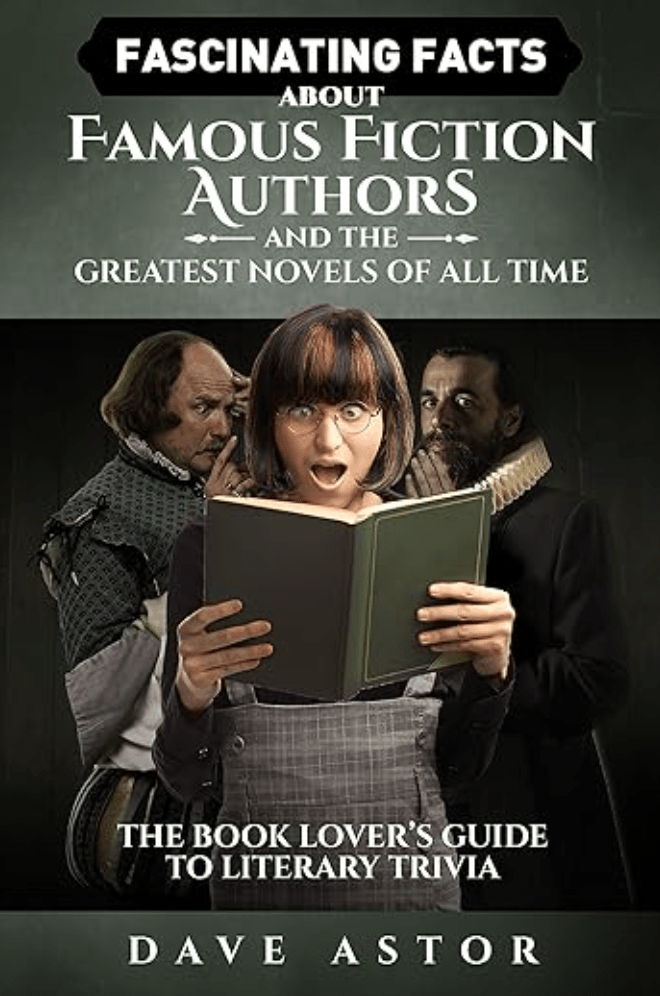
I’m also the author of a 2017 literary-trivia book

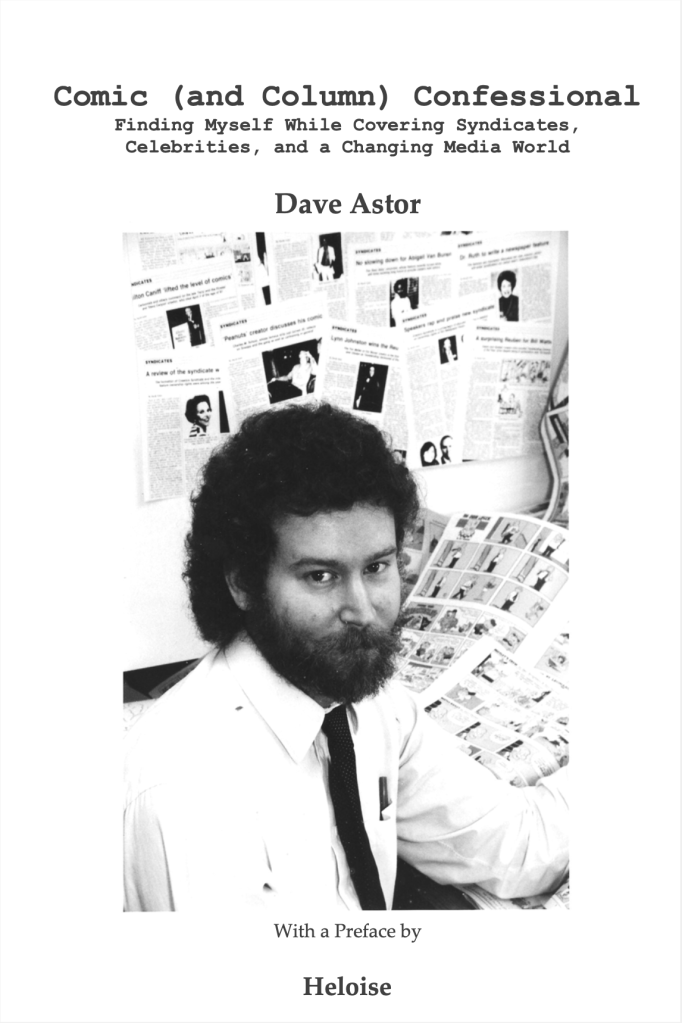
…and a 2012 memoir that focuses on cartooning and more, and includes many encounters with celebrities.
In addition to this weekly blog, I write the 2003-started/award-winning “Montclairvoyant” topical-humor column every Thursday for Montclair Local. The latest piece — about wondering how to vote in a controversial local tax referendum that will be held this December because of a huge school district deficit — is here.
The Power of Research

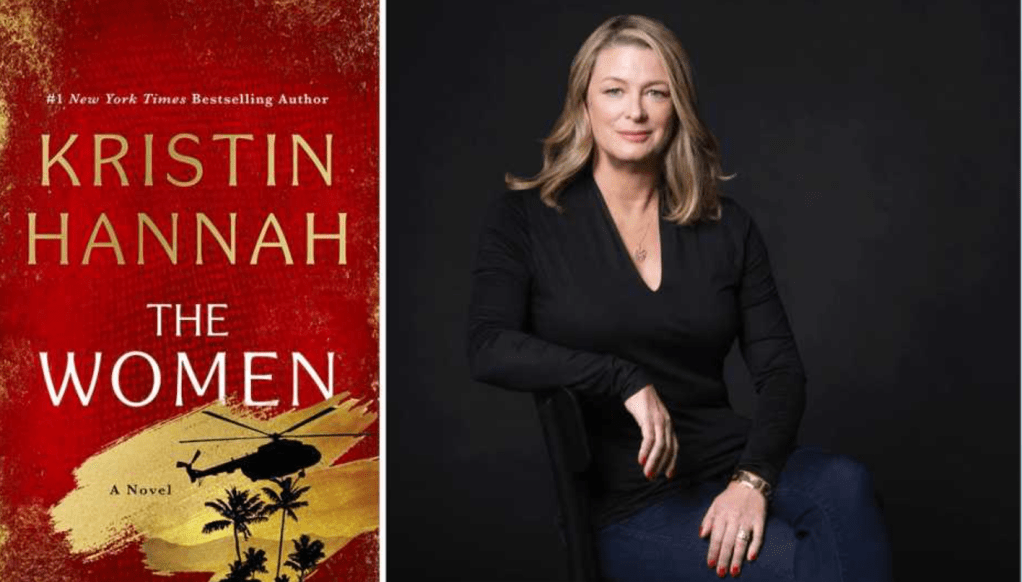
Kristin Hannah (St. Martin’s Press/Kevin Lynch)

Authors of course do research for not only nonfiction books but novels as well — often, albeit not always, when writing historical fiction. And sometimes the power of that research is…stunning.

I appreciated that once again last week when I read Kristin Hannah’s 2024 novel The Women, which focuses on U.S. combat nurses serving amid the chaos of the Vietnam War. The 1960-born Hannah was not a combat nurse, and hadn’t even reached adulthood before that war in Southeast Asia ended in 1975, but The Women‘s devastating “you are there” depiction of the work those nurses did is unforgettable. She obviously researched things to the hilt — reading written sources as well as interviewing people — and then combined that with a riveting story, compelling characters, and excellent prose and dialogue.

This was not the first time Hannah tackled historical fiction; among her many previous books are well-researched novels starring women such as The Nightingale (set during World War II) and The Four Winds (which unfolds in the 1930s Depression/Dust Bowl/California milieu previously explored by John Steinbeck in his classic The Grapes of Wrath).

With the help of careful/thorough research, female authors can obviously write novels set during wartime or other fraught times that are as good or better than those by male authors. We see that in such titles as Isabel Allende’s The House of the Spirits (which includes content about the U.S.-backed 1973 military coup in Chile); Julia Alvarez’s In the Time of the Butterflies (battling a Dominican Republic dictatorship); Kate Quinn’s The Rose Code and The Huntress as well as Elsa Morante’s History (all World War II-related); Quinn’s The Alice Network, Pat Barker’s Regeneration, Willa Cather’s One of Ours, and L.M. Montgomery’s Rilla of Ingleside (all World War I-related); Toni Morrison’s Beloved, Margaret Mitchell’s Gone With the Wind, and Geraldine Brooks’ March (all American Civil War-related); Octavia E. Butler’s Kindred and Harriet Beecher Stowe’s Uncle Tom’s Cabin (brutal U.S. slavery times); Diana Gabaldon’s Outlander series (American Revolutionary War); and Hilary Mantel’s Wolf Hall (intrigue in early 16th-century England).

Other historical novels that grab reader interest with the help of research-buttressed story lines and characters include Barbara Kingsolver’s The Lacuna, Margaret Atwood’s Alias Grace, Alix Christie’s Gutenberg’s Apprentice, Amor Towles’ A Gentleman in Moscow, Khaled Hosseini’s The Kite Runner, Mark Twain’s Personal Recollections of Joan of Arc, Nathaniel Hawthorne’s The Scarlet Letter, Alex Haley’s Roots, Junot Diaz’s The Brief Wondrous Life of Oscar Wao, Tracy Chevalier’s Girl With a Pearl Earring and Remarkable Creatures, E.L. Doctorow’s Ragtime and The Book of Daniel, and Sir Walter Scott’s Ivanhoe and Rob Roy, to name just a few.

Also, I will be reading Colson Whitehead’s The Underground Railroad sometime next month.

There are obviously countless well-researched novels out there; what are some of the ones you’d like to discuss, whether they were mentioned in my post or not? Any general comments about author research?

Misty the cat says: “Those are either daffodils in the distance or unusual cell towers.”

My comedic 2024 book — the part-factual/part-fictional/not-a-children’s-work Misty the Cat…Unleashed — is described and can be purchased on Amazon in paperback or on Kindle. It’s feline-narrated! (And Misty says Amazon reviews are welcome. 🙂 )

This 90-second promo video for my book features a talking cat: 🙂

I’m also the author of a 2017 literary-trivia book

…and a 2012 memoir that focuses on cartooning and more.

In addition to this weekly blog, I write the 2003-started/award-winning “Montclairvoyant” topical-humor column every Thursday for Montclair Local. The latest piece — about a new library bond, an old school district bond, a faltering gubernatorial candidate, mice in a school, a welcome transgender proclamation, and more — is here.

Hooray for Historical Fiction!

As I mentioned last week, I’ll be posting one more blog rerun today as I cope with a busy month that included attending a GREAT June 8-11 National Society of Newspaper Columnists conference in Manchester, New Hampshire. I’ll return to doing all-new posts next Sunday, June 18, but, until then, here’s a slightly revised piece from November 3, 2011:

It’s a current fact that I love historical fiction. No, not the kind that wrongly said Barack Obama was born outside the U.S., but the kind in novels.

Why is historical fiction great? For one thing, it enables you to learn about the past in a way that goes down easily and entertainingly.

I realize it might be better to read nonfiction history books than historical fiction. After all, historical fiction can idealize, over-dramatize, and “error-ize” the past. But this fun and absorbing novel genre is better than reading no history at all — especially when the author does plenty of research.

Books of total fiction are wonderful, but there’s something about partly factual novels that excite readers. Knowing that the made-up characters you’re bonding with are experiencing real events, living through real times of societal progress or regress, and meeting real celebrities of their era can help make a novel fascinating.

Want to know more about U.S. history? There’s Stephen King’s 11/22/63, which takes its title from the day of John F. Kennedy’s assassination. Or try E.L. Doctorow’s Ragtime and Jeffrey Eugenides’ Middlesex — two books that happen to share a real-life character by the name of Henry Ford. Or William Styron’s The Confessions of Nat Turner and David Bradley’s The Chaneysville Incident — a pair of novels that address America’s brutal system of slavery. Or Barbara Kingsolver’s The Lacuna, which includes Mexican as well as U.S. history; Gore Vidal’s Burr, Lincoln, and 1876; and many other titles by many other authors.

Almost everything I know about pre-1800 Scottish history I learned from Sir Walter Scott’s excellent novels, including Rob Roy and Old Mortality. I picked up some French history by reading Charles Dickens’ A Tale of Two Cities (the French Revolution), Alexandre Dumas’ The Three Musketeers and its sequels (in which Louis XIV appears), Willa Cather’s Shadows on the Rock (French immigrants in 17th-century Quebec), and Mark Twain’s Personal Recollections of Joan of Arc (perhaps you’ve heard of her).

Care for a baseball book that mixes fact and fiction? Try Darryl Brock’s If I Never Get Back (about a time traveler from the 20th century who hooks up with baseball’s 1869 Cincinnati Red Stockings as well as Mark Twain — before he wrote that Joan of Arc novel).

The 1800s are also the time of Alias Grace, in which Margaret Atwood brilliantly reconstructs a Canadian double-murder case and makes an engrossing character out of Grace Marks — who may or may not have participated in the killings.

Whether the real-life people in novels are obscure (Ms. Marks) or famous (Mr. Twain), historical fiction can humanize them — moving them from cardboard cutouts to flesh-and-blood protagonists who seem as three-dimensional as the made-up characters with whom they interact.

That, if you’ll excuse the hackneyed phrase, makes history come alive.

What are some of your favorite works of historical fiction?

Here’s a review of, and a video interview about, my new literary-trivia book Fascinating Facts About Famous Fiction Authors and the Greatest Novels of All Time.

In addition to this weekly blog, I write the award-winning “Montclairvoyant” topical-humor column for Baristanet.com, which covers Montclair, N.J., and nearby towns. The latest weekly column — which discusses such topics as Trump’s pulling out of the Paris climate accord — is here.