The Books of Sleuth

It’s been a while since I wrote a post focusing on crime novels, so let’s get fictionally felonious again! Today, I’m going to discuss some of my favorite detectives/investigators in literature.

Their exploits can be compelling and satisfying for various reasons, including the wish-fulfillment aspect of seeing criminals get their comeuppance — though not always, and even those caught or killed can wreak a lot of havoc before their illegal work is done. Then there’s the appeal of intricate plots, trying to guess the culprits, seeing how fictional sleuths solve cases, enjoying the interesting and at-times weird personality traits of the detectives and criminals, etc.

Fictional sleuths — some professional, some amateur — are on my mind after having read four of Tarquin Hall’s India-set mysteries the past few weeks. They star private investigator Vish Puri — a brilliant, incorruptible, overeating, occasionally comedic, unfortunately a bit sexist character who solves various quirky cases. Just how quirky is telegraphed by the titles of some of Hall’s books, including The Case of the Man Who Died Laughing (2010) and The Case of the Deadly Butter Chicken (2012).

Yes, sleuths are often in multiple novels — including J.K. Rowling’s superb crime series starring Cormoran Strike and Robin Ellacott. Those two characters are brave, brainy, charismatic investigators who carry some serious physical or psychological baggage and, while work partners, are secretly in love with each other. It’s saying something that I find that 2013-launched series — written under the pen name Robert Galbraith — almost as compelling as Rowling’s earlier Harry Potter books.

Also excellent are Walter Mosley’s novels starring another expert investigator: Easy Rawlins, an African-American World War II veteran who lives in Los Angeles. The series began with the 1990-published Devil in a Blue Dress, and now has 16 installments set from the 1940s to 1960s.

Absorbing, too, are Louise Penny’s atmospheric Canada-set novels featuring inspector Armand Gamache.

And there are Val McDermid’s great books starring cold case detective Karen Pirie that I won’t get into today because I’ve recently written about them in other contexts.

Some other contemporary authors have created characters who are not detectives per se but do plenty of incisive sleuthing to solve crimes. Among them are bounty hunter Stephanie Plum in Janet Evanovich’s mysteries, attorney Mickey Haller in Michael Connelly’s books, and the roaming Jack Reacher in the novels by Lee Child (with recent titles co-written by Andrew Child).

Then of course there are past authors who created detectives — many quite iconic. Arthur Conan Doyle’s Sherlock Holmes (in novels and short stories), Edgar Allan Poe’s C. Auguste Dupin (in short stories), Agatha Christie’s Hercule Poirot and Miss Marple (of course!), Wilkie Collins’ Sgt. Richard Cuff (of The Moonstone), Umberto Eco’s William of Baskerville (in The Name of the Rose), Sue Grafton’s Kinsey Millhone (of alphabet mysteries fame), Dorothy L. Sayers’ Peter Wimsey/Harriet Vane duo, Raymond Chandler’s Philip Marlowe, Dashiell Hammett’s Sam Spade, P.D. James’ Adam Dalgliesh, etc.

And, in books penned by multiple authors over the years…Nancy Drew!

Comments about this post? Fictional sleuths you’ve liked?

Misty the cat says: “The leaves turned after I installed steering wheels on them.”

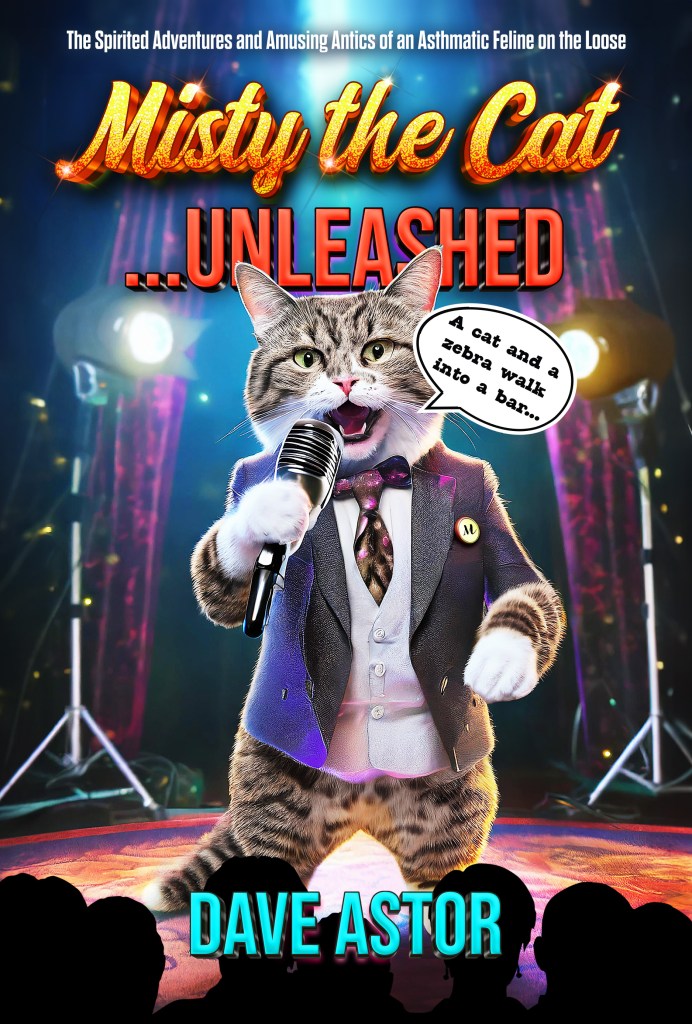
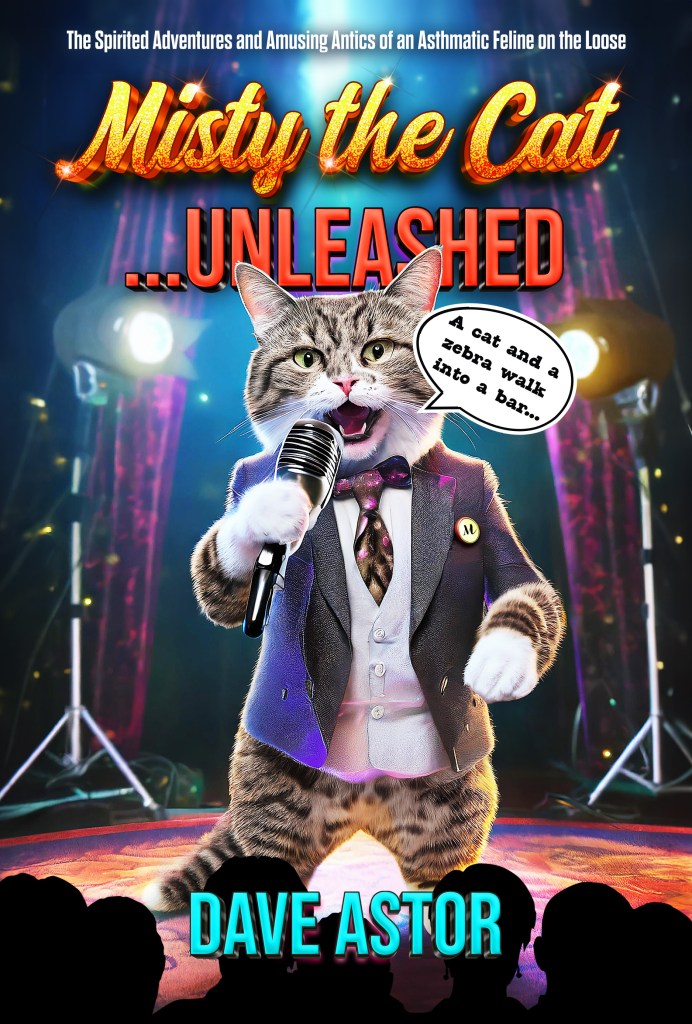
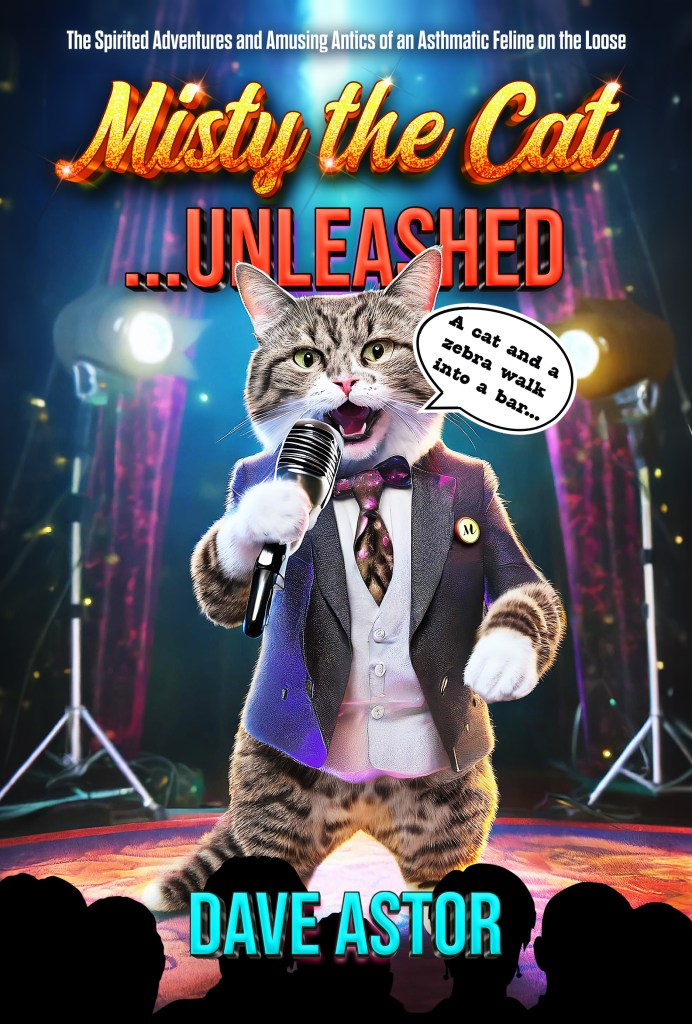
My comedic 2024 book — the part-factual/part-fictional/not-a-children’s-work Misty the Cat…Unleashed — is described and can be purchased on Amazon in paperback or on Kindle. It’s feline-narrated! (And Misty says Amazon reviews are welcome. 🙂 )

This 90-second promo video for the book features a talking cat: 🙂

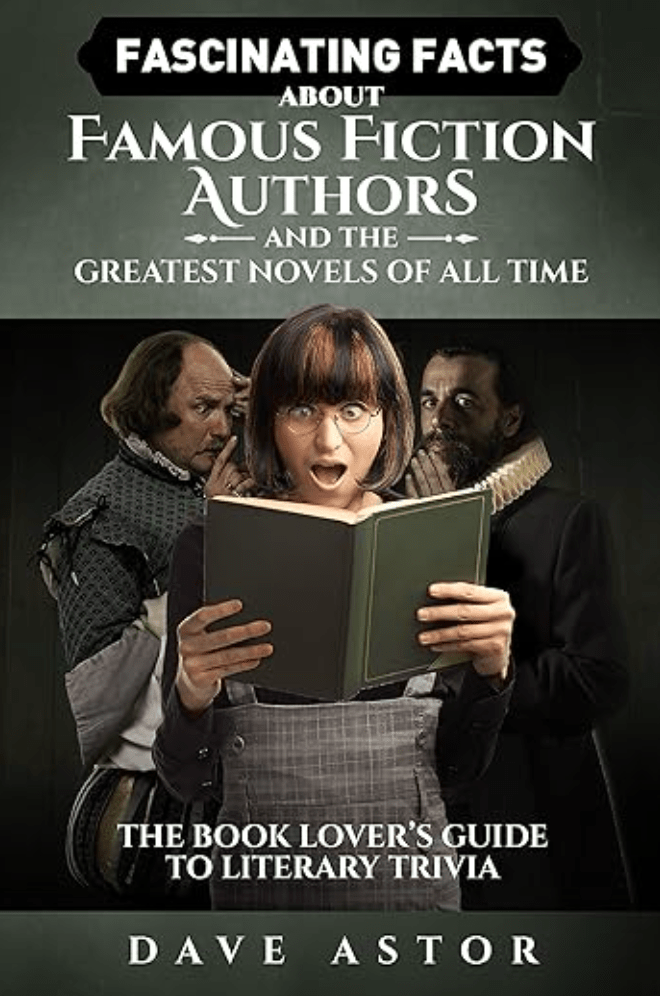
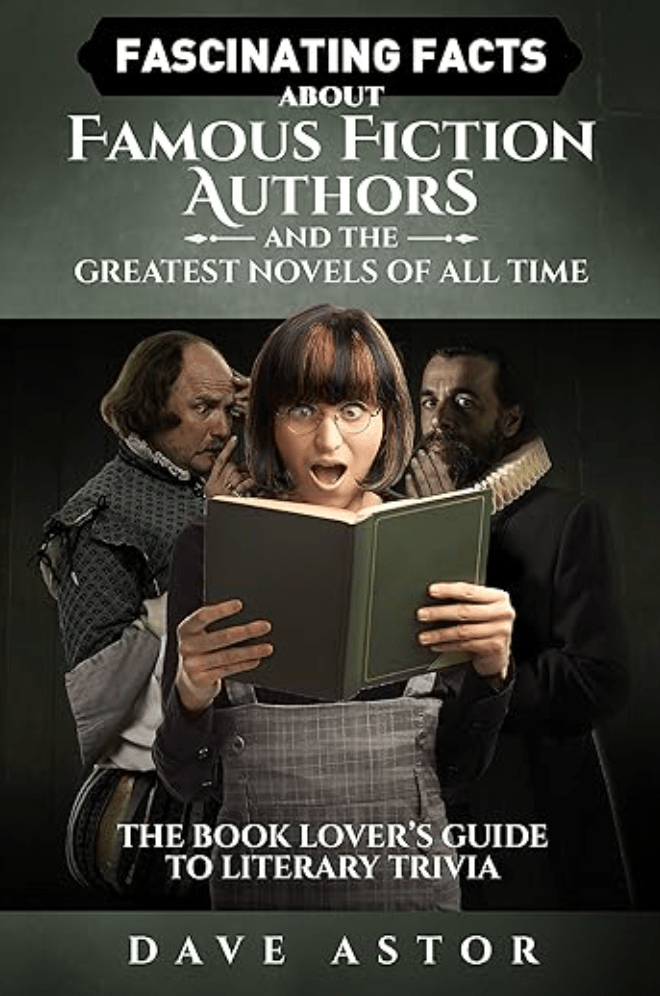
I’m also the author of a 2017 literary-trivia book

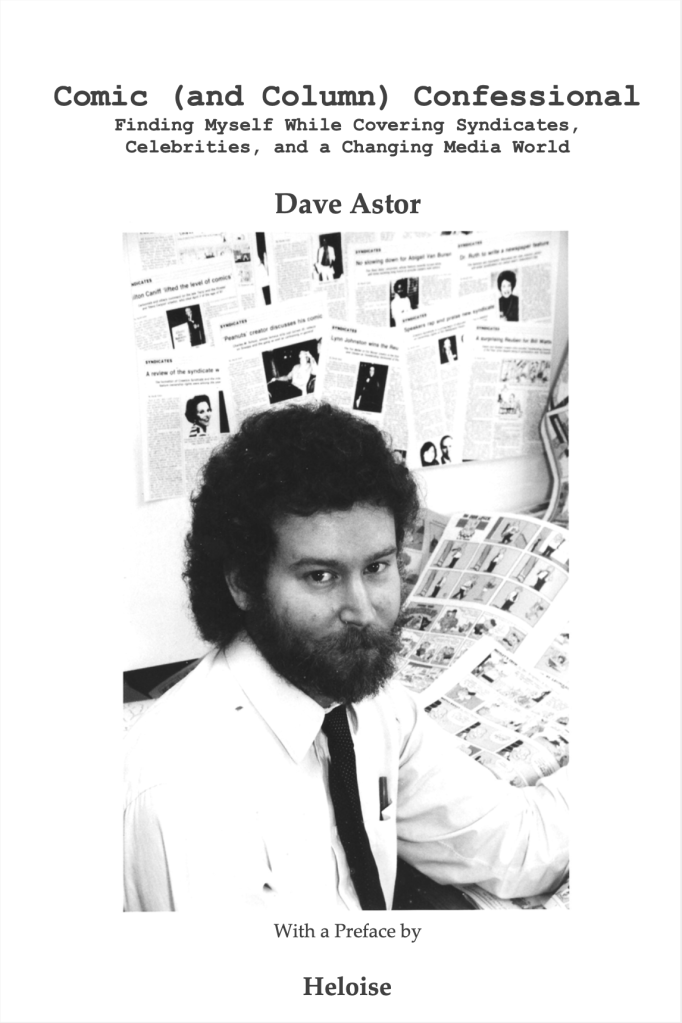
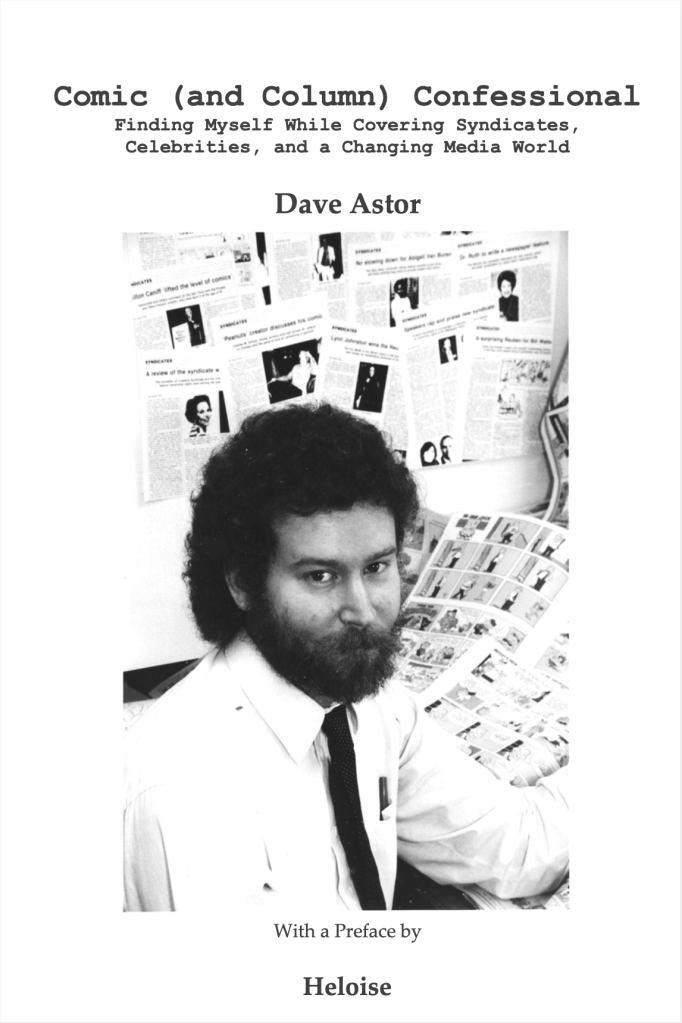
…and a 2012 memoir that focuses on cartooning and more.

In addition to this weekly blog, I write the 2003-started/award-winning “Montclairvoyant” topical-humor column every Thursday for Montclair Local. The latest piece — about the start of school and more — is here.

Summer in the City? No, Summer with a Kitty

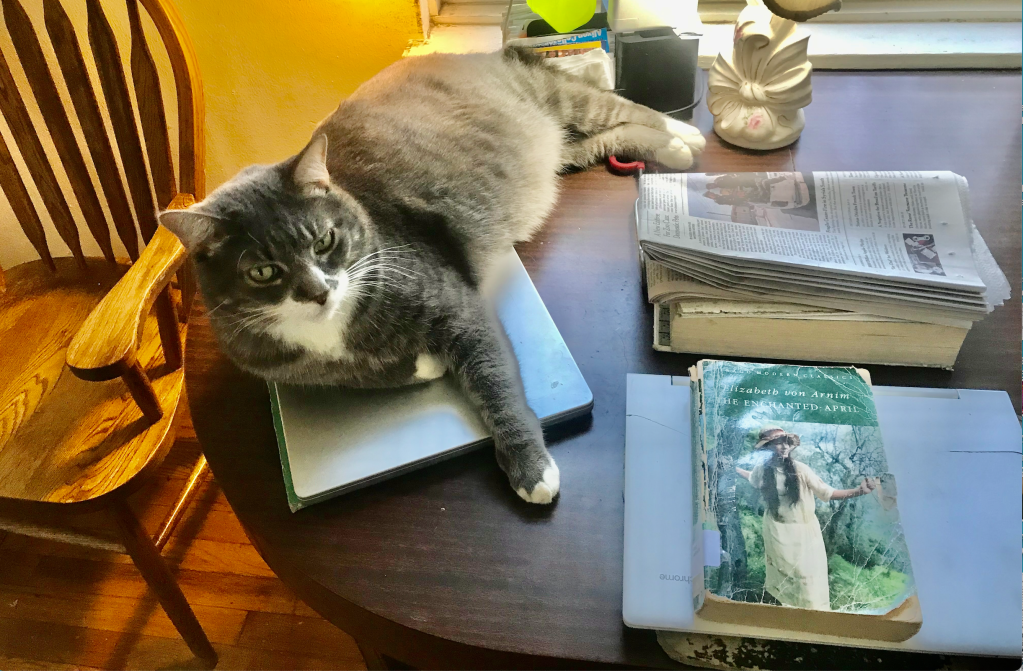
My feline self sprawled next to Elizabeth von Arnim’s The Enchanted April, which I will not discuss today because I haven’t finished reading it yet. The first letters of that novel’s title spell “tea,” which I don’t drink. Thank you for your attention to these two matters. (Photo by Dave.)

Misty the suburban cat here with my every-two-month blog post. My previous guest piece was in June, this one is in August, and the next one will be in October. Except that U2’s October album was released in 1981, so I’m not sure how my next blog post will be in…October. There IS a song on that album called “Stranger in a Strange Land,” which is about me at the vet for my yearly check-up.

Anyway, my adult humans Dave and Laurel saw the Superman movie this month, and enjoyed its thrills, acting, and empathy. But I, Misty, was not allowed in the theater because of being a cat. I was actually kind of relieved, because sitting through 25 minutes of ads and previews would have had me yowling loud enough to be heard on Mars — which billionaire bozo Elon Musk, aka the Tesla dude, wants to not only colonize but have The Martian Chronicles author Ray Bradbury write a 2025 sequel called The SpaceX Chronicles. Given that Bradbury died in 2012, he…missed the pleasure of seeing the catastrophic flop of Musk’s stupid Cybertruck.

The Superman film reminds me and other kitties of Michael Chabon’s The Amazing Adventures of Kavalier & Clay, the 2000 novel partly based on the real-life Jerry Siegel/Joe Shuster duo who created the Superman character for comic books in 1938 — the year the iPhone minus-69 was released.

More generally, the 2025 movie starring the “Man of Steel” also reminds my meowing self of fictional characters possessing abilities beyond the capacity of most mortals. One is the Lee Child-created Jack Reacher — who’s not a superhero but displays unusual strength, incredible fighting abilities, great intellect, and other attributes in the 29-book series that began in 1997. Exactly a century after Bram Stoker’s Dracula (1897), which stars a vampire who acts out in all kinds of ways after Frankenstein defeats him in pickleball. A tip of the hat to Mary Shelley.

Another character who combines exceptional brains with exceptional physical abilities is the prehistoric protagonist Ayla of Jean M. Auel’s The Clan of the Cave Bear and its sequels. Ayla’s many accomplishments included inventing things and being the only person able to ride Baby the lion (a feline like me!), although she never played pickleball with her horse Whinney.

Some fictional people even rise in the air or fly — in magic-realism novels and other books. Among them are Remedios in Gabriel Garcia Marquez’s One Hundred Years of Solitude, Margarita in Mikhael Bulgakov’s The Master and Margarita, and the title character of J.M. Barrie’s Peter Pan — which was first a play, then a novel, then an animated movie, then a live TV film, and finally a jar of peanut butter which also flew when Dave tossed it out the window to compare its hang time with a jar of Skippy peanut butter. Denying me the opportunity to swat both brands off the counter with my cat paws.

There are also characters who might not be extraordinarily adept in a brute physical way but are really, really smart. Hermione Granger of J.K. Rowling’s Harry Potter books, Sherlock Holmes of Arthur Conan Doyle’s detective fiction, Hercule Poirot of Agatha Christie’s mysteries, Lisbeth Salander of Stieg Larsson’s The Girl with the Dragon Tattoo and its sequels, etc. Lisbeth sadly did not have a cat tattoo, but I forgive her because she’s Swedish and thus might toss some Swedish meatballs my way.

Dave will reply to comments so that I have time to eat the aforementioned meatballs. Rest assured that I maintain a balanced diet — one meatball in each side of my mouth.

I, Misty the cat, say: “After years of study, I’m finally qualified to inspect Belgian blocks.”

My and Dave’s comedic 2024 book — the part-factual/part-fictional/not-a-children’s-work Misty the Cat…Unleashed — is described and can be purchased on Amazon in paperback or on Kindle. It’s feline-narrated! (And Misty says Amazon reviews are welcome. 🙂 )

This 90-second promo video for the book features a talking cat: 🙂

Dave is also the author of a 2017 literary-trivia book

…and a 2012 memoir that focuses on cartooning and more.

In addition to this weekly blog, Dave writes the 2003-started/award-winning “Montclairvoyant” topical-humor column every Thursday for Montclair Local. The latest piece — about my school district’s huge, recently discovered deficit — is here.

When It’s Two or More, Jaws Can Hit the Floor

J.K. Rowling with the screen versions of her Harry Potter, Hermione Granger, Cormoran Strike, and Robin Ellacott characters (Everett/Getty/BBC).

It’s impressive enough when a novelist creates one successful series — as, say, Lee Child did with his Jack Reacher books and Sue Grafton did with her alphabet mysteries. But an author who creates two or more successful series? Wow!

Some writers produce multiple series consecutively — finishing one series before starting another. Other writers tack back and forth between different series. Either way, it takes some impressive and wide-ranging creative talent, and helps “serial” novelists stay fresh. Those authors can also feel good about readers staying with them as they offer something new.

Among the queens and kings of multiple series is J.K. Rowling. She of course penned the seven mega-popular Harry Potter books. Then, after writing The Casual Vacancy standalone novel, Rowling as “Robert Galbraith” launched her crime series starring private investigators Cormoran Strike and Robin Ellacott. I’m currently close to finishing the seventh installment — The Running Grave, in which Robin goes undercover to infiltrate a very problematic cult — and its 945 pages are full of the thrills, humor, suspense, poignancy, complications, excellent prose, and believable dialog Rowling always provides.

Walter Mosley is best-known for his detective series starring Easy Rawlins, who has now starred in 16 novels. But the author has interspersed those books with smaller series such as the King Oliver books and the Socrates Fortlow books. Mosley is always a great read, no matter who the protagonist is.

Val McDermid has gone the several-series route, too, including a compelling saga starring inspector Karen Pirie and another featuring journalist Allie Burns. Also not a clunker in the installments I’ve read.

Leaving contemporary fiction for a minute, L.M. Montgomery wrote Anne of Green Gables and its many sequels while also penning the semi-autobiographical Emily trilogy. (I consider a trilogy to be a series of sorts.)

Returning to a living author, Diana Gabaldon has gone the “sub-series” route by writing nine main Outlander novels (so far) and a number of offshoot books starring the Lord John character who’s a supporting player in the main novels.

Your thoughts about, and examples of, this theme?

Misty the cat says: “Snow means ‘Middlemarch’ author George Eliot wrote ‘Middledecember,’ too.”

My comedic 2024 book — the part-factual/part-fictional/not-a-children’s-work Misty the Cat…Unleashed — is described and can be purchased on Amazon in paperback or on Kindle. It’s feline-narrated! (And Misty says Amazon reviews are welcome. 🙂 )

This 90-second promo video for my book features a talking cat: 🙂

In addition to this weekly blog, I write the 2003-started/award-winning “Montclairvoyant” topical-humor column every Thursday for Montclair Local. The latest piece — which discusses what’s happening with my town’s animal shelter and much more — is here.

Donald Trump Meets Jack Reacher

Yesterday marked the one-year anniversary of Donald Trump’s disastrous time in the White House. Also, I finished reading Lee Child’s latest Jack Reacher novel last week. The Trump-Reacher connection? There is no connection. But I’m going to make a connection. “Fake news” and all that.

First my brief review of 2017’s The Midnight Line, Child’s 22nd Reacher novel. (I’ve read 20 of them, and will eventually get to the two I missed! As Jack says, “Good to go.”)

The Midnight Line has some of the visceral action Reacher fans love — various villains get battered by Jack in innovatively choreographed ways. But this book also features a more mature, reflective Reacher — the big guy is now 57, after all — and there are poignant passages amid the page-turning excitement. Plus plenty of social commentary about America’s drug scourge and grievously wounded veterans — with the roaming Reacher getting a firsthand look at both problems while trying to locate a woman whose West Point ring he finds in a Wisconsin pawn shop. Last but not least, Child’s writing is as lean and impressive as ever, and includes the usual touches of humor.

My “fake news” connection between Jack (a good-hearted man of integrity) and Trump (a heartless man of no integrity)? I’m going to seriocomically discuss America’s Predator-in-Chief using the titles of all 22 Reacher novels. As I do that, I’ll keep in mind that Trump has boasted about sexually assaulting women, called majority-black countries “shitholes,” made life hell for immigrants, pushed awful tax “reform” that benefits only the ultra-rich, tried to yank away health care from millions, removed environmental protections, and more.

Killing Floor: Trump’s words and actions are so low there’s no floor to them. He killed the floor.

Die Trying: What happened to the woman in Charlottesville, Virginia, who bravely tried to counter Neo-Nazis the white-supremacist Trump would then praise.

Tripwire: What might keep Trump’s hair in place when he exits Air Force One after flying on a windy day.

Running Blind: If the didn’t-protect-his-eyes Trump had looked longer at last year’s major eclipse, this book title would have described his reelection effort in 2020.

Echo Burning: Sort of like Eco Burning — Trump has hurt the U.S. ecology in many ways.

Without Fail: The almost-always-wrong Trump never admits he’s almost always wrong.

Persuader: Trump has expertly persuaded everyone he’s a jerk.

The Enemy: Today’s GOP — including Trump, Paul Ryan, and other cruel far-right Republicans.

One Shot: All the out-of-shape Trump would manage to heave up on a basketball court.

The Hard Way: Democrats trying to win elections despite Republican voter suppression, gerrymandering, big corporate money, and biased right-wing media.

Bad Luck and Trouble: Nicknames for Trump’s two adult sons.

Nothing to Lose: Trump figured that was the case when claiming bone spurs to avoid the Vietnam War draft, even though he was healthy enough back then to play intense sports. His scam worked.

Gone Tomorrow: We wish. But then there would be Mike Pence. 😦

61 Hours: How long it takes Trump to read a paragraph.

Worth Dying For: No war that Trump might start with his reckless words.

The Affair: Not just one adulterous relationship for Trump while he has been married.

A Wanted Man: How law enforcement should label the corrupt Trump.

Never Go Back: The current White House occupant cowardly avoids visiting his posh Trump Tower home in New York City, where he’s loathed.

Personal: Trump takes criticism very personally.

Make Me: What Trump told his father, who bankrolled his not-self-made son’s real-estate career.

Night School: The incurious/ignorant Trump could use some schooling any time of the day.

The Midnight Line: Any repugnant sentence Trump spews out on Twitter when most of us are asleep.

Conclusion: Reacher would know what to do with someone like Trump.

I’m sure you could come up with other ways to discuss Trump via those Lee Child titles! Try if you’d like!  🙂

My 2017 literary-trivia book is described and can be purchased here: Fascinating Facts About Famous Fiction Authors and the Greatest Novels of All Time.

In addition to this weekly blog, I write the award-winning “Montclairvoyant” topical-humor column for Baristanet.com. The latest weekly piece — about the complicity of my town’s Republicans re the vile Trump — is here.

‘No Book Panic Syndrome’ Is a Novel Problem

Do you occasionally suffer from NBPS? Yes, I’m talking about No Book Panic Syndrome.

Let me explain. You’re a literature lover, and you’ve finished all the not-read novels in your home. You need to go to the library or bookstore, but you can’t get there quite yet — maybe the next day. Or you’ve ordered a title or two online, and it won’t be arriving in the mail until, say, the weekend. And (this is important!) you read books the old-fashioned way, not on a Kindle.

What to do? You can of course click on some free short stories online, and read them there. But you crave print.

I suffered from NBPS this past week. On Tuesday, I finished Louise Penny’s excellent mystery How the Light Gets In — mostly set in a small Canadian town filled with memorable characters. Two other library books I borrowed in August — Octavia Butler’s sci-fi novel Parable of the Sower and Lee Child’s Jack Reacher adventure Night School — had already been read, admired, and put aside. But I couldn’t get to the library until Thursday because of chores and car availability.

(Yes, Car Availability would make a great name for a rock band.)

Why not go a couple days without reading, I asked myself? Yeah, right, I answered — ain’t happening.

Perusing the back of cereal boxes was not a tempting option, and I had already read too much about Hurricane Irma and What a Pain Donald Trump in the print and online New York Times. So, although I’ve promised myself the past few years not to reread books I own (too many never-tried novels and authors out there), I was desperate enough to start scanning my living-room shelves. There I spotted Ray Bradbury’s R Is For Rocket, a yellowing paperback collection of 17 short stories I hadn’t read since I was a teen. Just 184 pages — the perfect length for a bridge to that Thursday library visit.

And what evocative, exquisitely written tales — about kids (as well as adults) longing to travel in space, and the occasional pitfalls of doing so; about a huge, ancient sea creature falling in love with a lighthouse and foghorn; and the classic “A Sound of Thunder” that depicts how the killing of a tiny butterfly during a trip back in time revises the present the travelers return to just enough to have a nightmarish result.

After Bradbury filled that two-day gap, I found reinforcements on Thursday when my library visit got me Fannie Flagg’s The Whole Town’s Talking, Isak Dinesen’s Seven Gothic Tales, Larry McMurtry’s The Last Kind Words Saloon, and John Green’s The Fault in Our Stars. I’ll undoubtedly mention all those fictional works in future posts.

What do you do when you temporarily have no book you want to read? Do you reread something? Do extra non-reading things? Sob uncontrollably?  🙂

Or maybe the crying will happen when I get to the above-mentioned John Green novel…

I’ll end today’s post with this video of a 2017 U2 song called “The Little Things That Give You Away.” Such as suffering from No Book Panic Syndrome…  🙂

My 2017 literary-trivia book is described and can be purchased here: Fascinating Facts About Famous Fiction Authors and the Greatest Novels of All Time.

In addition to this weekly blog, I write the award-winning “Montclairvoyant” topical-humor column for Baristanet.com. The latest weekly piece, about a way-way-too-big project that became way too big, is here.

In Praise of (Some) Prequels

I once wrote a post about sequels. Today, the sequel to that piece is about…prequels.

Many prequels are by the same authors who previously wrote the set-later-in-time novels, while some are by writers who penned their books after the original writers died.

Prequels have the positives of offering readers more insight into characters (by seeing them again, in their younger years). Readers also get the chance to have their curiosity about those characters further sated. And prequels have other advantages I’ll bring up as I offer some specific examples — now.

I recently finished the latest Jack Reacher novel, 2016’s excellent Night School, and, as in The Affair, author Lee Child goes back in time to show Reacher in the 1990s. We learn more about the charismatic Jack’s military career before he became a roaming vigilante loner without a permanent home. And we see Reacher once again in his mid-30s, when most other recent Child novels have depicted Jack in his 50s. Obviously, when you fight bad guys with not only your brain but lots of physicality, it helps to be two decades younger…  🙂

Wide Sargasso Sea
is an example of a prequel — to Charlotte Bronte’s Jane Eyre — written by a different person. That would be Jean Rhys, who penned the novel long after Bronte died. Rhys’ idea was to give Jane Eyre‘s “madwoman in the attic” her due — showing her earlier life before and after meeting Rochester, and showing that she was a more complex character than portrayed by Bronte. Wide Sargasso Sea is a compelling, richly written book, but nothing beats the riveting Jane Eyre.

The Deerslayer was the last written of James Fenimore Cooper’s five “Leatherstocking” novels, yet it shows white woodsman Natty Bumppo and his equally impressive Native American friend Chingachgook at their youngest. Nineteenth-century readers were undoubtedly thrilled to finally learn about the early years of those two memorable characters, and to “see” New York’s wilderness in a mostly undeveloped form. Plus I think The Deerslayer is the best of those five Cooper novels — including much more famous The Last of the Mohicans.

Another advantage of prequels is that they give authors a creative change of pace that can help them keep things fresh. Heck, maybe they don’t have many more things to say or plot variations to offer about their protagonists in those characters’ present day.

Disadvantages of prequels? In some cases, they might be written mostly to make money. Or perhaps we’re getting too much of the characters. Or maybe we’d rather leave their earlier lives to our imagination.

What are your favorite prequels? What do you think of the idea of prequels?

My 2017 literary-trivia book is described and can be purchased here: Fascinating Facts About Famous Fiction Authors and the Greatest Novels of All Time.

In addition to this weekly blog, I write the award-winning “Montclairvoyant” topical-humor column for Baristanet.com. The latest weekly piece, partly about August 21’s major eclipse, is here.

Authors as Landscapers

The most crucial elements of most literary works are the characters, plot, and quality of prose. But another important element is the landscape: where things happen, what that place looks like, the mood that locale might create, and how that place might affect what’s going on with the characters and plot.

And when some of that aforementioned prose is used to describe “the scenery,” the description can be quite evocative in the right authorial hands.

Landscape is a key part of Lee Child’s 61 Hours, a Jack Reacher crime thriller I just read. Reacher unexpectedly finds himself stuck in a bone-chillingly cold South Dakota town — and the bleak, wide-open spaces in and near that town help establish the novel’s spare, tense, scary, lonely, downbeat vibe.

South of South Dakota — in Oklahoma — is where John Steinbeck depicts the parched, dust storm-decimated farm country the impoverished Joads are forced to leave in The Grapes of Wrath. When they finally arrive in California after an arduous journey, they are struck by the Golden State’s lushness and beauty — only to find that the oppressive rich control just about everything.

That contrast of beauty and misery also crops up in Herman Melville’s first novel Typee, in which the protagonist is stranded on a gorgeous South Seas island where some ensuing events turn ugly. (Another contrast is the fact that the good but not great Typee sold many more copies than Moby-Dick during Melville’s lifetime.)

Then there are the rolling, moonlit, windswept moors in Wuthering Heights that do so much to help create the novel’s wild, eerie mood. When Emily Bronte’s characters trudge through that terrain, their destinations usually aren’t happy ones.

Rivers? Literature has a few, with perhaps the most famous being the mighty Mississippi in Mark Twain’s Adventures of Huckleberry Finn. Also memorable is the Tennessee River in Cormac McCarthy’s Suttree, whose titular protagonist lives in a houseboat. The Tennessee is lovely in parts, but also speaks to the poverty and despair of some characters — as when a suicide victim is pulled from the water.

Mountains? Glad you asked! In Lost Horizon, various characters are flown to (the fictional) Shangri-La amid Tibet’s majestic peaks. That towering, remote, dream-like setting is a big reason why many readers find James Hilton’s novel so mesmerizing. Even more towering are the peaks in H.P. Lovecraft’s At the Mountains of Madness.

Swamps? Mentioned in Zora Neale Hurston’s Their Eyes Were Watching God. Jungles? Parts of Barbara Kingsolver’s The Poisonwood Bible and Paul Theroux’s The Mosquito Coast. The desert? Um…Desert by J.M.G. Le Clezio.

Changes in scenery when traveling? A good example, in Zadie Smith’s On Beauty, is when Brit-living-near-Boston Howard revels in the no-snow look of England when he goes there during the winter.

A landscape can of course be urban, too. In The Marble Faun, Rome is almost a living, breathing character as Nathaniel Hawthorne describes its beautiful but hectic 19th-century present and its beautiful but spooky ancient past. The excitement and claustrophobia of a big city like Chicago comes through in Audrey Niffenegger’s The Time Traveler’s Wife. An amazing visual image in Jack Finney’s Time and Again is the Statue of Liberty’s torch-holding arm in Manhattan’s Madison Square Park, where that arm was actually displayed from 1876 to 1882 — before the full statue arose in New York Harbor.

Daphne du Maurier’s The House on the Strand shows an English town’s landscape in both the populated 1900s and less-populated 1300s, depending on the century protagonist Dick Young mentally occupies in his drugged mind.

Other time-travel novels, such as H.G. Wells’ The Time Machine, hauntingly picture future civilizations with architecture in partial or full ruin.

Science-fiction books, such as Ray Bradbury’s The Martian Chronicles, feature the unfamiliar yet at times sort of familiar landscapes of other worlds besides Earth.

There are also devastating views of battlefields — during and after the fighting — in Erich Maria Remarque’s All Quiet on the Western Front, Sir Walter Scott’s Old Mortality, and many other novels.

Landscapes in literature can also convey a strong sense of nostalgia, as with James Fenimore Cooper’s descriptions of New York’s unspoiled 18th-century woods in novels such as The Deerslayer. Some of those forests were already getting cut down when Cooper was writing in the 19th century — and undeveloped areas are of course much more scarce today.

What are some of your favorite fictional works featuring memorable landscapes?

(The box for submitting comments is below already-posted comments, but your new comment will appear at the top of the comments area — unless you’re replying to someone else. Also, please feel free to read through comments and reply to anyone you want; I love not only being in conversations, but also reading conversations in which I’m not involved!)

For three years of my Huffington Post literature blog, click here.

I’m also writing a literature-related book, but still selling Comic (and Column) Confessional — my often-funny memoir that recalls 25 years of covering and meeting cartoonists such as Charles Schulz (“Peanuts”) and Bill Watterson (“Calvin and Hobbes”), columnists such as Ann Landers and “Dear Abby,” and other notables such as Hillary Clinton, Coretta Scott King, and various authors. The book also talks about the malpractice death of my first daughter, my remarriage, and life in New York City and Montclair, N.J. — where I write the award-winning weekly “Montclairvoyant” humor column for The Montclair Times. You can email me at dastor@earthlink.net to buy a discounted, inscribed copy of the book, which contains a preface by “Hints” columnist Heloise and back-cover blurbs by people such as “The Far Side” cartoonist Gary Larson.