Yesterday, a massive total of nearly seven million people attended the 2,700-plus “No Kings” rallies in the United States and abroad to protest Trump’s fascist/authoritarian regime as that Republican administration ignores Congress, enriches itself, cracks down on peaceful dissent, arrests innocent people of color, invades American cities for no good reason, meddles in other countries’ affairs, starts or supports wrongful military actions around the world, etc. Which, as a literature blogger, reminded me of kings and other royalty in fiction — including historical fiction.
Of course, some royalty can be partly benevolent, but in many cases all that power heightens a ruler’s nasty instincts, makes a corrupt person even more corrupt, and increases the entitlement of the already entitled. Also, being a member of royalty doesn’t exactly involve the merit system.
I’ve never deliberately sought out novels containing royal characters, much preferring to read about the lives of “everyday” people. But privileged aristocrats have popped up here and there in my reading.
For instance, when long ago working through many a great book by Mark Twain, I polished off The Prince and the Pauper (two boys changing places) and A Connecticut Yankee in King Arthur’s Court (in which a certain king appears).
Another 19th-century novel, Alexandre Dumas’ 17th-century-set The Three Musketeers, includes King Louis XIII and Queen Anne as secondary characters.
In Charles Dickens’ A Tale of Two Cities, King Louis XVI and King George III are referenced.
Some novels written in the 20th and 21st centuries also include royal characters. Hilary Mantel’s Wolf Hall has Henry VIII and other monarchical personages, Josephine Tey’s The Daughter of Time harkens back to King Richard III, Robert Graves’ I, Claudius features the Roman emperor of the book’s title, J.R.R. Tolkien’s The Lord of the Rings has the would-be king Aragorn, and Philippa Gregory’s Earthly Joys has the Duke of Buckingham.
There’s also William Goldman’s The Princess Bride, Meg Cabot’s The Princess Diaries, Antoine de Saint-Exupery’s The Little Prince, Lewis Carroll’s Alice’s Adventures in Wonderland and its Queen of Hearts, C.S. Lewis’ The Chronicles of Narnia and its King Tirian, Diana Gabaldon’s Outlander and its King Louis XV appearance, Margaret Landon’s Anna and the King of Siam that inspired The King and I musical, and so on.
Of course there’s royalty, too, in various Shakespeare plays and in other stage creations such as Eugene O’Neill’s The Emperor Jones, Lin-Manuel Miranda’s Hamilton (King George III), etc.
I’m sure I’ve only touched the surface here. Any additional examples of, or thoughts about, this topic?
Misty the cat asks: “What’s the new White House ballroom doing here?”
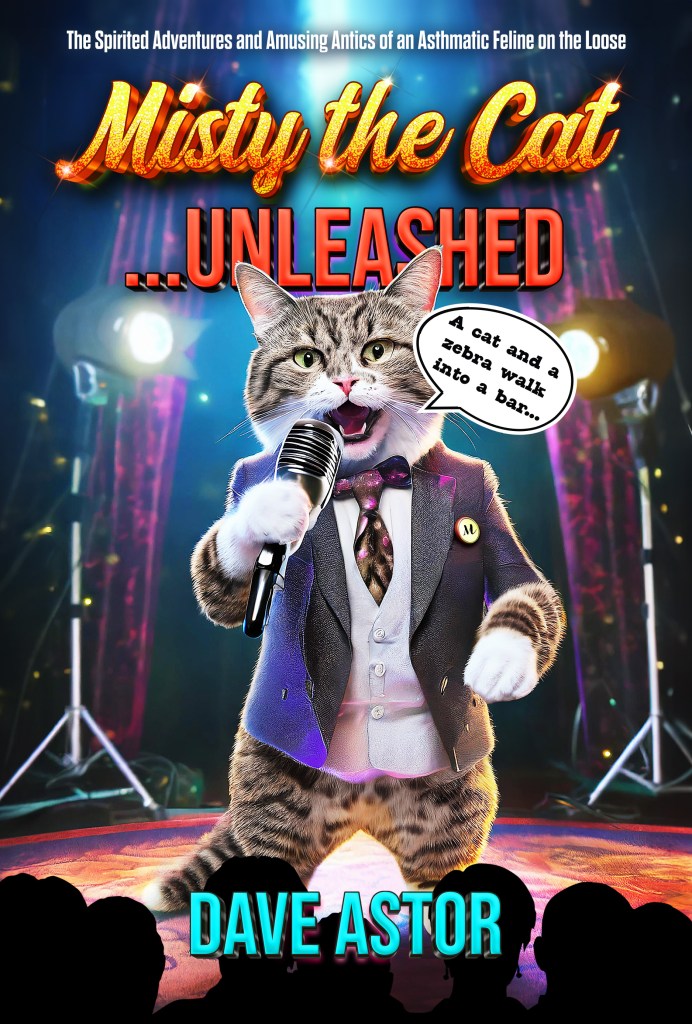
My comedic 2024 book — the part-factual/part-fictional/not-a-children’s-work Misty the Cat…Unleashed — is described and can be purchased on Amazon in paperback or on Kindle. It’s feline-narrated! (And Amazon reviews are welcome. 🙂 )
This 90-second promo video for the book features a talking cat: 🙂
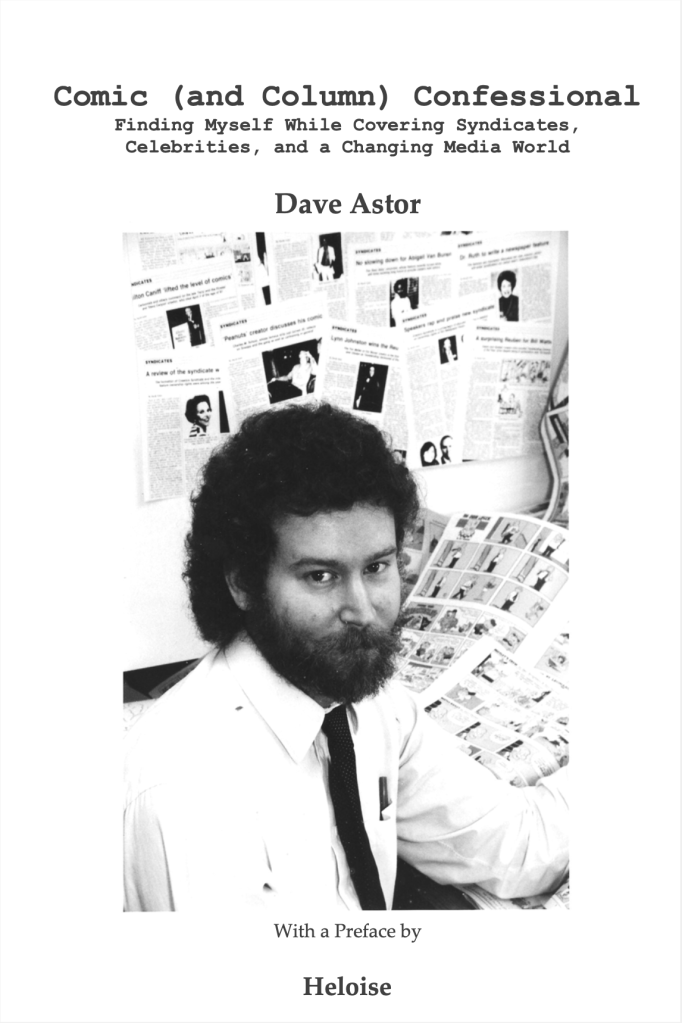
…and a 2012 memoir that focuses on cartooning and more, and includes many encounters with celebrities.
In addition to this weekly blog, I write the 2003-started/award-winning “Montclairvoyant” topical-humor column every Thursday for Montclair Local. The latest piece — about wondering how to vote in a controversial local tax referendum that will be held this December because of a huge school district deficit — is here.
It feels like a dystopian time as we witness the dictatorial Trump regime’s multiple vile actions, Israel’s unprovoked attack on Iran (probably with U.S. approval and U.S. weapons), Israel’s 20-month genocidal war (again with U.S. backing) on innocent Gazan civilians after the horrors of October 7, Russia’s continuing war on Ukraine, yesterday’s assassination of a liberal Minnesota politician by a right-winger, the existential threat of climate change, and more.
Trump this month of course sent over-the-top military force into Los Angeles against the wishes of California’s governor (despite Republicans often blathering about “states’ rights”) to crack down on a small, mostly peaceful resistance to his administration’s brutal roundup of people of color — whether they’re undocumented immigrants, documented immigrants, or longtime American citizens. Which has broken up families, and served as another test for Trump to see how far he can install his Republican brand of fascism. U.S. Sen. Alex Padilla, a California Democrat who’s the son of Mexican immigrants, was even thrown to the ground and handcuffed by agents for trying to ask a question of Homeland Security secretary Kristi Noem, the Trump cabinet member best known for heartlessly shooting her 14-month-old dog. Then came yesterday’s grotesque (and grossly expensive) military parade in Washington, DC, that was held partly to “celebrate” the cruel Trump’s birthday. A parade, by the way, that drew many fewer spectators than Trump wanted — though his constantly lying administration is already inflating the numbers.
All quite convenient for distracting Americans from things like Trump’s support of a Republican congressional tax bill that would mostly benefit the already wealthy and tech billionaire Elon Musk’s recent post on X (formerly Twitter) saying Trump is in the Epstein files for repugnant past pedophile behavior with underage girls.
Anyway, my thoughts in our ultra-depressing era naturally turned to dystopian fiction and a desire to do a post about that genre — which can also include apocalyptic novels. But there was the nagging recollection that I had focused on dystopian literature before, and, sure enough, a search turned up a piece by me for The Huffington Post book section way back in 2012 — two years before starting this WordPress blog. So, I decided to post a revised/updated version of that 13-year-old piece today. Here goes:
War. Death. Despair. Oppression. Environmental ruin. Yup, when it comes to demoralizing literature, dystopian literature is a downer of downers. Yet some of us find that genre soberly appealing. Why?
For one thing, we read about rather than live through dystopian lit’s fictional bad stuff — though real life is plenty negative now (as this post has noted) and fictional bad stuff is often an extrapolation of a troubled actual world. Still, many 2025 readers are not as much “in the arena” as the beleaguered characters in Suzanne Collins’ dystopian The Hunger Games.
And there’s a certain “rightness” in reading about a harrowing society. Why? Because we know that politicians, military leaders, and corporate moguls are capable of doing awful things — meaning dystopian novels feel kind of honest.
In addition to The Hunger Games, excellent dystopian/semi-dystopian novels filled with carnage, inhumanity, hopelessness, and more include (among others) Aldous Huxley’s Brave New World, George Orwell’s 1984, H.G. Wells’ The Time Machine, Mary Shelley’s The Last Man, Stephen King’s The Stand, Octavia E. Butler’s Parable of the Sower, (Ms.) Lionel Shriver’s The Mandibles, Lois Lowry’s The Giver, Cormac McCarthy’s The Road, Ray Bradbury’s Fahrenheit 451, Anthony Burgess’ A Clockwork Orange, William Golding’s Lord of the Flies, Sinclair Lewis’ It Can’t Happen Here, Kazuo Ishiguro’s Never Let Me Go, Albert Camus’ The Plague, Franz Kafka’s The Trial, Nevil Shute’s On the Beach, Kurt Vonnegut’s Slaughterhouse-Five, Jack London’s The Iron Heel, and Margaret Atwood’s The Handmaid’s Tale, The Testaments, Oryx and Crake, The Year of the Flood, and MaddAddam.
The above books of course take different approaches — some very dramatic, others understated, some set in the near future, others in the distant future, etc., etc.
Sometimes, authors of dystopian literature temporarily ease the tension a bit with humor, as Atwood does with the clever genetic-engineering terms she coined for Oryx and Crake. And dystopian books can have seemingly utopian elements — with things appearing not too bad even though they ARE bad; Brave New World is a perfect example. There are even novels, such as H.G. Wells’ The Shape of Things to Come, that mix dystopian and utopian elements.
We admire the best dystopian novels because they’re written well and depict people with whom we can relate. We can be fascinated by the terrible things those characters face, and by how some react bravely and some react cowardly or with resignation. We, as readers, have a hard time averting our eyes from the misery even as we’re enraged by what despots and other vicious officials are doing to citizens. And we’re compelled to turn the pages as we wonder if rebels and other members of the populace can somehow remake a wretched society into something more positive. We also wonder who will survive and who won’t.
Last but not least, some of us might admire dystopian fiction because, by giving us worst-case scenarios of the future, we have a smidgen of (in vain?) hope that our current society can be jolted enough to avoid those scenarios starting or continuing in real life. Like some of the characters in dystopian novels, we might feel a little halting, against-all-odds optimism — such as that inspired by yesterday’s 2,000 or so anti-Trump-regime “No Kings” protests attended by millions of Americans in all 50 states, the resistance of politicians such as Bernie Sanders and Alexandria Ocasio-Cortez, the resistance of institutions such as Harvard University, the holding to a belief in the rule of law by some judges (including a percentage of those appointed by Trump), and so on. But it’s a difficult fight against very powerful forces.
All that said, I don’t blame anyone for preferring escapist fiction during a time like this. I’ve upped my quota of those kinds of books myself, while making sure to still read some weightier literature.
Any favorite dystopian novels? Why do you like or not like that genre? Thoughts about the current situation in the world?
Misty the U.S. cat: “I nap in the morning near an Australian novel because it’s night in Australia.”
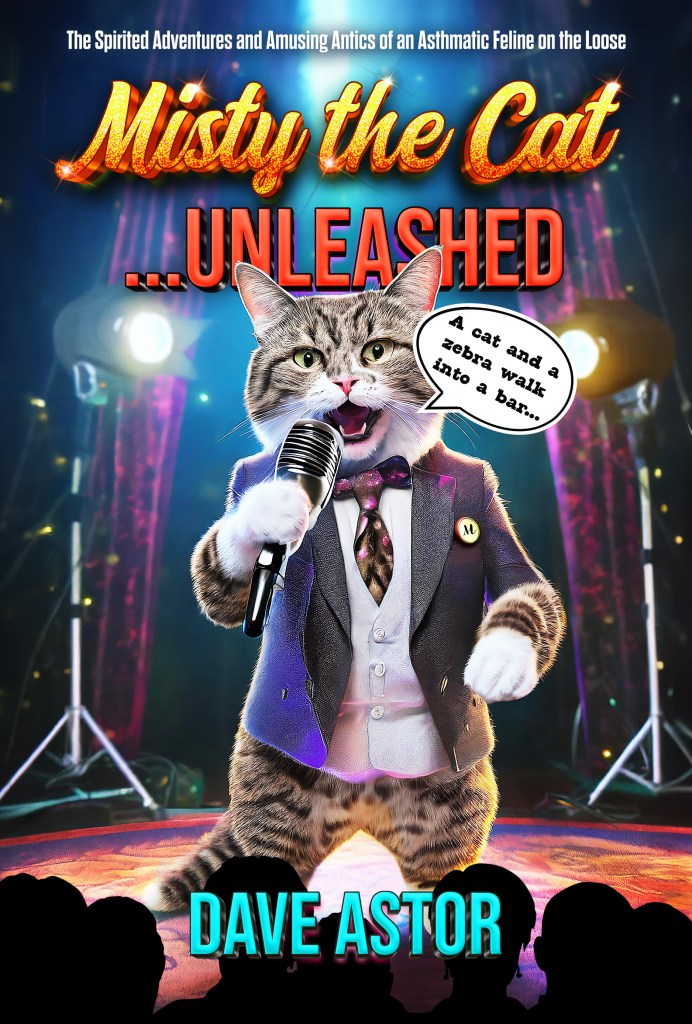
My comedic 2024 book — the part-factual/part-fictional/not-a-children’s-work Misty the Cat…Unleashed — is described and can be purchased on Amazon in paperback or on Kindle. It’s feline-narrated! (And Misty says Amazon reviews are welcome. 🙂 )
This 90-second promo video for my book features a talking cat: 🙂
…and a 2012 memoir that focuses on cartooning and more.
In addition to this weekly blog, I write the 2003-started/award-winning “Montclairvoyant” topical-humor column every Thursday for Montclair Local. The latest piece — containing election results, news about smartphones in classrooms, and more — is here.



 Dave Astor on Literature