A Kitty Tries to Be Witty

“Perhaps I should wake up and write a blog post,” says Misty. (Photo by Maria.)

I, Misty the cat, guest-blog for Dave every two months. I last did this on April 13 and today is June 8, so that’s…hmm…actually not quite two months. Reminds me of when Dave returned some novels to the library five days before their due date, and the indignant book drop expelled said novels with such force that they traveled back in time and landed on the heads of the three Karamazov brothers. Fortunately, each of the books was under 400 pages.

But Fyodor Dostoevsky’s 824-page The Brothers Karamazov is even longer than my average nap, during which I experience “Dreams” more often than Fleetwood Mac did at their 1977 concerts. And Dostoevsky’s 1880 novel might have been the first volume of an even longer work if the Russian author hadn’t died in early 1881. Perhaps a trilogy of sorts — like Suzanne Collins’ The Hunger Games (about me nudging my cat-food bowl so that each serving lands in the exact center) and J.R.R. Tolkien’s The Lord of the Rings (about my epic quest to be a male feline version of the Ernestine telephone operator played by Lily Tomlin).

I recommend shopping at Pop Culture R Us for all your celebrity-name-dropping needs.

Speaking of decades-ago entertainment, do you remember the 1978 movie Same Time, Next Year about a married woman and a married man who have a multi-year annual affair? That film partly inspired the long-term romance of Mallory Blessing and Jake McCloud in Elin Hilderbrand’s 2020 novel 28 Summers, which I read last week and found to be a wonderful, poignant book. It’s 422 pages in hardcover, which explains why various other 19th-century Russian fictional characters are donning helmets to avoid concussions. Helmets with stickers saying “Please Don’t Name Your Cat Anna Karenina.”

I’ll add that 28 Summers has an alternate-history element, with Jake’s wife Ursula DeGournsey running for President of the United States in 2020. Reminds me that my aforementioned cat-food bowl is shaped sort of like the Oval Office, and even has a tiny edible desk.

Other novels featuring politicians? Stephen King’s The Dead Zone, Robert Penn Warren’s All the King’s Men, J.K. Rowling’s The Casual Vacancy, Fannie Flagg’s Standing in the Rainbow, and Sinclair Lewis’ It Can’t Happen Here, to name a few. When my cat-food bowl was empty for five seconds, you know what I screamed? Yes, I screamed “It can’t happen here!!!”

A century ago, Lewis had quite a run of notable novels: Main Street (1920), Babbitt (1922), Arrowsmith (1925), Elmer Gantry (1927), and Dodsworth (1929). It Can’t Happen Here was published in 1935, eight decades before my 2015 birth year — which means that in 2025 I’m now…furry.

I’m sometimes asked how I, the kitty Misty, consume literature. Smeared with tasty cat food, of course. But, seriously, I read novels in the traditional print-book format rather than via eBook or audiobook. I guess I’m “old school,” like the 1636-founded Harvard University. I expect only a few members of The Class of 1640 to be at Harvard’s 2040 alumni reunion; they’re the ones who reside with cats, who help humans live longer.

Long-lived humans in literature? The over-2,000-year-old Lazarus Long of five Robert Heinlein novels; Ayesha, who also clocks in at about two millennia in H. Rider Haggard’s She; the 250-year-old High Lama of James Hilton’s Lost Horizon; etc. I assume they had well-funded retirement accounts.

One of the oldest of my fellow cats is Garfield, who has starred in Jim Davis’ 1978-founded comic strip for 47 years! Which reminds me that my next guest blog post will appear in 47 years — minus 46 years and 10 months. So, August 2025. That’s also when my teen human Maria is starting college, which means her bedroom will be…mine!

Dave will reply to any comments because I, Misty the cat, am busy consulting with an interior decorator about changes in Maria’s room (where you see me in the photo atop this post). A kitty can’t have enough scratching posts, treat dispensers, and paintings of hairballs playing poker.

Misty the cat says: “That railing’s shadow means 4,378 more days of spring.”

Dave’s comedic 2024 book — the part-factual/part-fictional/not-a-children’s-work Misty the Cat…Unleashed — is described and can be purchased on Amazon in paperback or on Kindle. It’s feline-narrated! (And Misty says Amazon reviews are welcome. 🙂 )

This 90-second promo video for Dave’s book features a talking cat: 🙂

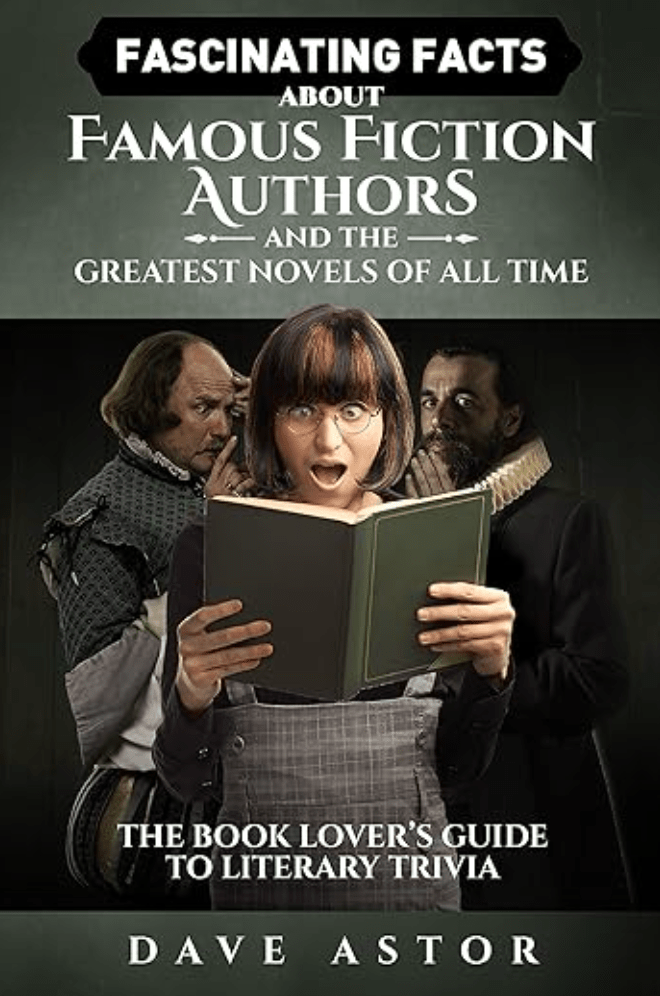
Dave is also the author of a 2017 literary-trivia book

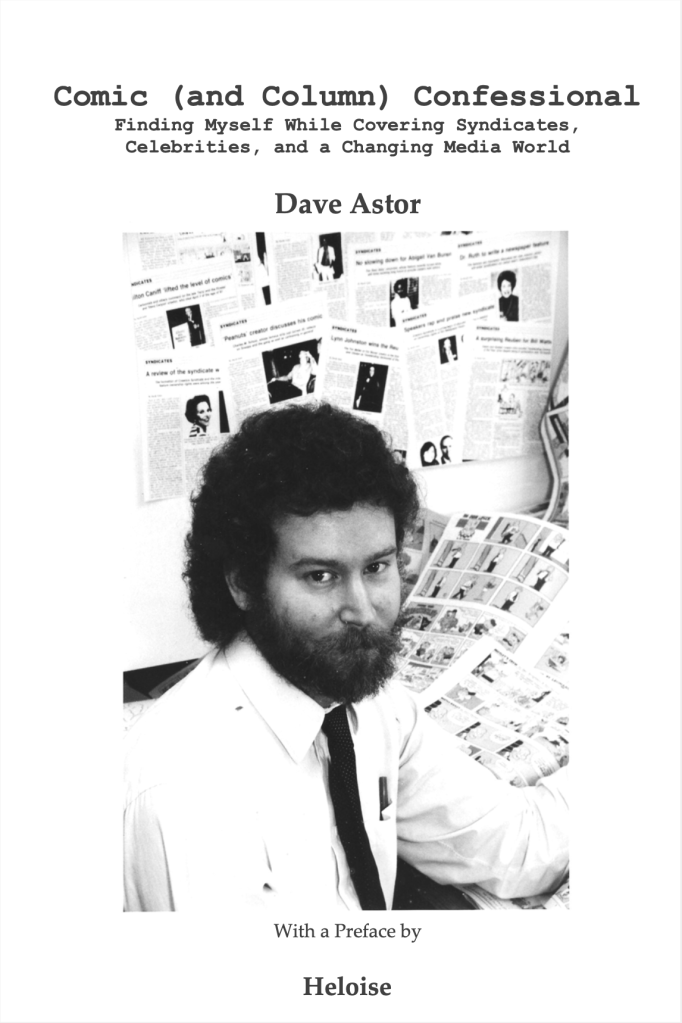
…and a 2012 memoir that focuses on cartooning and more.
In addition to this weekly blog, Dave writes the 2003-started/award-winning “Montclairvoyant” topical-humor column every Thursday for Montclair Local. The latest piece — about New Jersey’s upcoming primary election and much more — is here.

Enemies As Engines of Engrossing Fiction

A couple of posts ago, I wrote about memorable friendships in literature. Now I’ll get less “warm and fuzzy” and discuss…enemies in literature!

Reading about adversaries is hardly pleasant, but well worth the time. The dramatic possibilities are endless, as are the questions: Who’s right and who’s wrong? Are both parties hostile or is one person doing most of the hating? Will the relationship improve or go even more downhill? Will someone get hurt (psychologically or physically)? If righteous revenge comes into play, how viscerally satisfying is that? (Very satisfying, as the many fans of Alexandre Dumas’ The Count of Monte Cristo will tell you.)

Enemies of course appear in both modern and classic literature as well as in both literary and popular fiction. In the last category, Richard Matheson’s Hunted Past Reason features two friends who go on a wilderness trip that sees one of them turn on the other. Some of what happens next is too graphic to describe here.

Another intense work is The Hunger Games, in which young people forced into a state-sanctioned contest of death become each others’ enemies to try to survive. Also not pals in Suzanne Collins’ trilogy are Katniss Everdeen and Panem President Coriolanus Snow, and ultimately Katniss and District 13 President Alma Coin.

Adversaries abound, too, in J.K. Rowling’s Harry Potter books — most notably the villainous Voldemort vs. the heroic Harry. Also, Rowling’s The Casual Vacancy is seething with small-town foes.

Or how about Taliban psychopath Assef vs. the flawed but basically good Amir in Khaled Hosseini’s The Kite Runner?

Obviously, adversarial pairs don’t have to consist of one bad person and one good person. Enemies can both be likable or both be unlikable. For instance, one wouldn’t want to go near either “The kid” or Judge Holden in Cormac McCarthy’s Blood Meridian. And cousins Phillip Boyce and Norman Urquhart are both unappealing in Dorothy L. Sayers’ Strong Poison, though one ends up being far worse than the other.

Indeed, friends can become enemies (Philip and Norman seemingly had a congenial relationship at one point) and enemies can become friends — or at least somewhat friendly. One example of the latter happens with two pivotal characters in Isabel Allende’s The House of the Spirits; to avoid a plot spoiler, I won’t give their names here!

And enemies aren’t always a one-on-one proposition, as exemplified by Zenia trying to wreck the lives of three women in Margaret Atwood’s The Robber Bride.

In fact, a whole state apparatus can be the enemy of almost an entire populace, as in George Orwell’s Nineteen Eighty-Four and the aforementioned The Hunger Games.

Moving to older literature, there is of course the police inspector Javert who obsessively hounds Jean Valjean in Victor Hugo’s Les Miserables.

Another authority figure, the physically strong Capt. Wolf Larsen of Jack London’s The Sea-Wolf, treats the initially soft Humphrey van Weyden viciously much of the time before their fraught relationship turns into something more equal.

Booth Tarkington’s The Magnificent Ambersons features the spoiled/selfish George Amberson Minafer, who makes himself a foe of Eugene Morgan by interfering with the love that likable widower has with George’s also-widowed mother Isabel. Complicating matters is George being in love with Eugene’s daughter Lucy.

Yes, the enemy thing can get very messy when it involves family. I think of Janie Crawford, who begins to hate her prominent husband Jody Starks after he treats her so nastily and patronizingly in Zora Neale Hurston’s Their Eyes Were Watching God; and Dorothea Brooke, who realizes her husband — the Rev. Edward Causabon — is an ice-cold, unfeeling excuse for a human being in George Eliot’s Middlemarch.

In the child-parent realm, Dmitri loathes his vile father in Fyodor Dostoyevsky’s The Brothers Karamazov, and John Grimes fears and dislikes his overbearing/hypocritical dad in James Baldwin’s Go Tell It On the Mountain.

Sibling relationships gone bad are also a staple of many fictional works, as when a character poisons the drink of her sister in Shakespeare’s King Lear.

Who are some of your “favorite” foes in literature?

(The box for submitting comments is below already-posted comments, but your new comment will appear at the top of the comments area — unless you’re replying to someone else.)

For three years of my Huffington Post literature blog, click here.

I’m also in the middle of writing a literature-related book, but still selling Comic (and Column) Confessional — my often-funny memoir that recalls 25 years of covering/meeting cartoonists such as Charles Schulz (“Peanuts”) and Bill Watterson (“Calvin and Hobbes”), columnists such as Ann Landers and “Dear Abby,” and other notables such as Hillary Clinton, Coretta Scott King, and various authors. The book also talks about the malpractice death of my first daughter, my remarriage, and life in New York City and Montclair, N.J. — where I write the award-winning weekly “Montclairvoyant” humor column for The Montclair Times. You can email me at dastor@earthlink.net to buy a discounted, inscribed copy of the book, which contains a preface by “Hints” columnist Heloise and back-cover blurbs by “The Far Side” cartoonist Gary Larson, among others.