Optimistic Fiction Can Be Optimal

Election Day on November 4 brought some good news during a very dark year for American politics. Various progressive and centrist candidates decisively won state and local races that were in part votes against the cruel, far-right Trump regime — providing some hope for people who want kinder and gentler government.

The highlight for me was the resounding victory of Zohran Mamdani over Andrew Cuomo for mayor of New York City, where I used to live and work — and just 12 miles east of my current apartment in New Jersey. Mamdani ran a masterful campaign focusing on affordability, enabling the 34-year-old Democrat/democratic socialist to become NYC’s youngest mayor in over a century and its first Muslim mayor when he’s sworn in on January 1. Cuomo — who ran as an independent after losing the Democratic primary to Mamdani in June — is a mean-spirited, Trump-like figure (even endorsed by the Republican president!) who resigned in disgrace as New York governor in 2021 after being credibly accused of sexual misconduct by 13 women, after causing many deaths by allowing nursing homes to readmit hospital patients with Covid, etc.

Being in a good mood, I thought I’d write a post about novels that are utopian — or at least contain a lot of hope, feature extraordinarily nice characters, etc. I’ve written before about dystopian novels, so it’s a pleasure to go the opposite route today. 🙂

One utopian novel I thought of is Edward Bellamy’s Looking Backward (1888), in which Boston-based protagonist Julian West travels forward in time from 1887 to 2000 and finds that society is doing pretty well in a democratic socialist sort of way. (Reminded me a bit of the Star Trek franchise’s often sunny view of the future.) We get the added bonus in Looking Backward of the debit card being invented by the author — who, incidentally, was a cousin of “Pledge of Allegiance” writer Francis Bellamy.

I also thought of Island (1962), Aldous Huxley’s final novel. As utopian as the author’s Brave New World was dystopian, Island features a cynical journalist who lands on an…island…and finds himself observing a very appealing society. Not one of Huxley’s best novels, but it was interesting to get a feel-good story from him.

There’s also Lost Horizon, James Hilton’s 1933 novel about a visit to an idyllic place called Shangri-La. The part-utopian tale is mesmerizing.

Both utopian and cautionary is Nathaniel Hawthorne’s A Blithedale Romance (1852), set in a commune that’s not as wonderful as it ideally could be. In fact, the semi-autobiographical novel kind of satirizes would-be utopian life.

Not-utopian novels that are mostly upbeat and/or heartwarming are semi-utopian in a way, as can be books that offer happy endings after the protagonist faces challenges. I’m looking at you, L.M. Montgomery; her novel The Blue Castle (1926) and its Valancy Stirling star are real mood-lifters. There are of course many other nice, kind characters — such as Tiny Tim of Charles Dickens’ A Christmas Carol (1843) — with positive outlooks on life even if life, in some cases, has dealt them a bad hand.

The novel I read most recently, The Chemist (2016) by Stephenie Meyer of Twilight fame, is a page-turning thriller that focuses on the tough, brainy, loner, brave-but-often-insecure female title character who goes by different names. As this small-in-physical-stature former government agent tries to fend off multiple murder attempts, she meets a teacher (Daniel) who is about as sweet and amiable as it gets.

Thoughts about and/or examples of this theme?

My next post will appear either later than usual on Sunday, November 16, or on Monday the 17th.

Misty the cat says: “As leaves turn brown, it’s either autumn or Snickers bars have a new look.”

My comedic 2024 book — the part-factual/part-fictional/not-a-children’s-work Misty the Cat…Unleashed — is described and can be purchased on Amazon in paperback or on Kindle. It’s feline-narrated! (And Amazon reviews are welcome. 🙂 )

This 90-second promo video for the book features a talking cat: 🙂

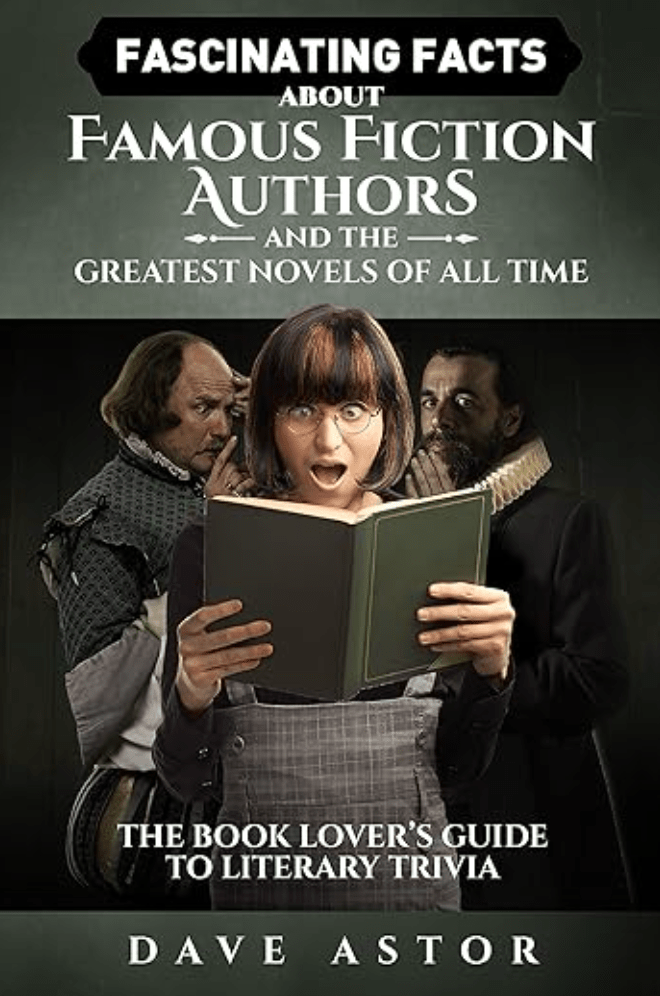
I’m also the author of a 2017 literary-trivia book

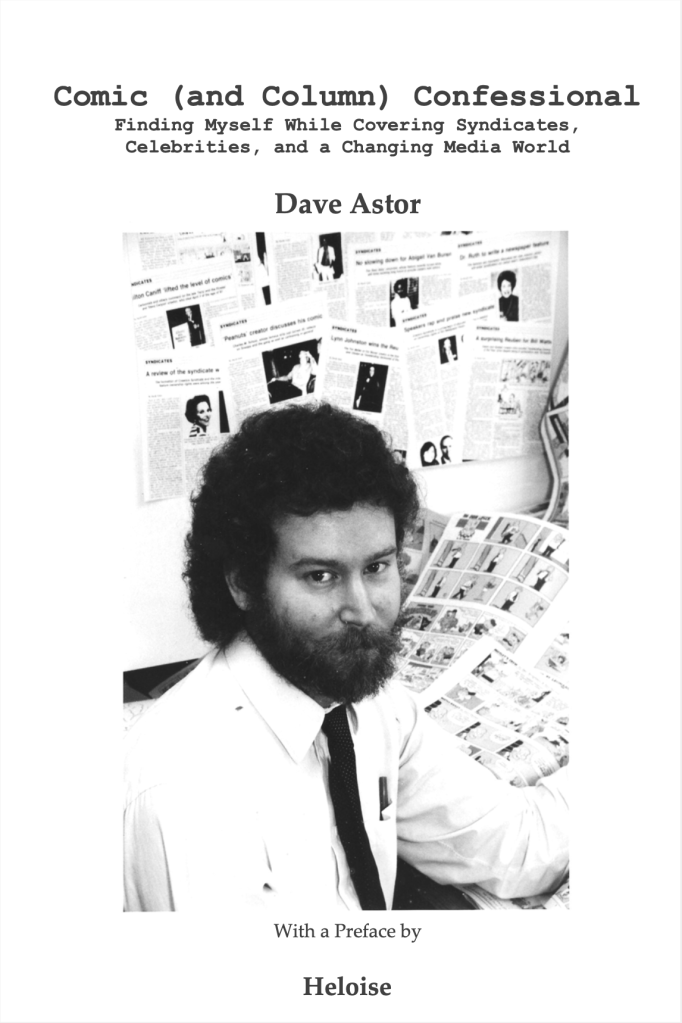
…and a 2012 memoir that focuses on cartooning and more, including many encounters with celebrities.
In addition to this weekly blog, I write the 2003-started/award-winning “Montclairvoyant” topical-humor column every Thursday for Montclair Local. The latest piece — commenting on election results in my town, New Jersey, and New York City — is here.
An Array of Admirable Activists

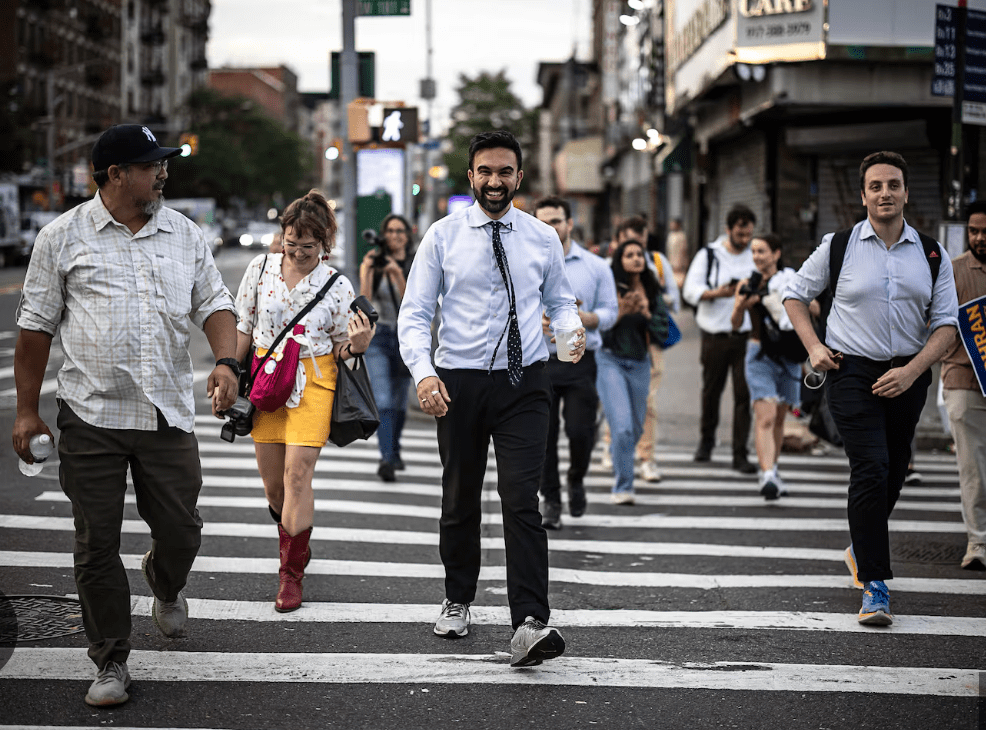
Zohran Mamdani walking New York City’s streets during his mayoral campaign.

I’ve written about activist authors (in 2014) and courageous characters (last year), but as far as I can recall I’ve never written specifically about activist characters in novels. So, today I will. 🙂

My inspiration for this topic was 33-year-old democratic socialist Zohran Mamdani winning last month’s Democratic primary for New York City mayor — and, thrillingly, the results weren’t even close. If Mamdani also wins the general election this fall he’ll become the youngest NYC mayor in more than a century, the city’s first Muslim mayor, and clearly the most progressive mayor the biggest U.S. city has ever had. Among Mamdani’s November opponents will be current NYC mayor Eric Adams, a cartoonishly corrupt politician who escaped multiple criminal charges by making a sell-out deal with Trump’s ghoulish Republican regime.

At a time of ever-growing economic inequality in NYC and the rest of the country, the charismatic Mamdani ran an energetic grassroots campaign that focused on freezing rents, making buses free, offering universal childcare, raising the inadequate minimum wage, and other pocketbook proposals — all to be paid for by raising the too-low taxes on the very rich.

Much of the very rich, of course, went bananas, and many of them during the primary backed Mamdani’s mayoral opponent Andrew Cuomo — the conservative-leaning former New York governor who resigned in disgrace four years ago after causing thousands of deaths by sending COVID patients into nursing homes and after being credibly accused of sexual harassment by 13 women who worked for the state. Plus, plenty of corruption in his administration. Many of those wealthy Cuomo supporters are now backing the aforementioned Adams, a right-wing Democrat who sat out the June primary and is now running as an “independent.”

Mamdani, who has an activist history, is also the rare American politician who supports equal rights for Palestinians and has publicly decried Israel’s genocide of innocent civilians in Gaza — drawing bogus accusations of anti-Semitism from people who wrongly equate being against Netanyahu’s far-right Israeli government with being anti-Semitic. In fact, Mamdani received many Jewish votes amid many votes from young people, Asian-American residents, etc. Also, Mamdani and Jewish mayoral candidate Brad Lander cross-endorsed each other — something they were able to do under the election’s ranked-choice system.

I should mention that I feel a connection to New York City because I lived in its Bronx, Manhattan, Brooklyn, and Queens boroughs for a total of 16 years and worked in Manhattan for 30 years. My current town of Montclair is 12 miles west of NYC in New Jersey.

Anyway, on to some inspiring activist characters in literature!

There’s lapsed preacher Jim Casy, one of the memorable supporting players in John Steinbeck’s The Grapes of Wrath (1939). Casy tries to organize migrant workers after he tags along with the Joad family to California, where conditions for financially struggling newcomers are appalling.

Kristin Hannah’s The Four Winds was clearly inspired by The Grapes of Wrath, though that 2021 novel is original in many ways. It tracks the radicalization of Elsa Wolcott, who’s part of a cast that also includes union organizer Jack Valen.

Kate Quinn’s The Rose Code (also 2021) focuses on a memorable trio of female British code breakers during World War II.

Another compelling historical novel is Leon Uris’ Mila 18 (1961), about the desperate Warsaw Ghetto uprising against the Nazis.

And Julia Alvarez’s In the Time of the Butterflies (1994) features the part-fictionalized sisters who opposed the regime of brutal Dominican Republic dictator Trujillo.

Richard Wright’s Native Son (1940) has a supporting cast that includes radical lawyer Boris Max, who represents protagonist Bigger Thomas.

Margaret Atwood’s The Testaments — the 2019 sequel to The Handmaid’s Tale (1985) — includes the Daisy character (birth name: Nicole) who infiltrates the repressive, patriarchal society of Gilead.

In Barbara Kingsolver’s Flight Behavior (2012), Dellarobbia Turnbow is an initially apolitical young farmer’s wife who joins the fight against climate change.

Then there’s the against-the-odds activism in these two classics: Upton Sinclair’s The Jungle (1906) and George Orwell’s Nineteen Eighty-Four (1949).

While activism occasionally succeeds, many other times it doesn’t — given the formidable/well-funded forces on the other side: powerful politicians, heavily armed military and police, giant corporations trying to increase their already-huge profits, bend-the-knee mainstream media outlets, etc. In fact, some of the fictional characters I mentioned in this post ended up being killed, making for riveting reading but very depressing reading.

Examples of activist characters in novels? Thoughts on this topic?

Misty the cat says: “When I groom myself near a window, it’s ‘A Groom with a View.'”

My comedic 2024 book — the part-factual/part-fictional/not-a-children’s-work Misty the Cat…Unleashed — is described and can be purchased on Amazon in paperback or on Kindle. It’s feline-narrated! (And Misty says Amazon reviews are welcome. 🙂 )

This 90-second promo video for my book features a talking cat: 🙂

I’m also the author of a 2017 literary-trivia book

…and a 2012 memoir that focuses on cartooning and more.

In addition to this weekly blog, I write the 2003-started/award-winning “Montclairvoyant” topical-humor column every Thursday for Montclair Local. The latest piece — about my younger daughter’s June 26 high school graduation (again), a Township Council meeting, and more — is here.