
Every one of us can relate to looking back at our younger years and remembering the highs and lows of that time. Feeling nostalgia or regret or embarrassment, etc., from an adult perspective. And perhaps getting insight into what helped make us what we are today.
Among the many authors who have explored a fictional character’s past is Haruki Murakami in the rather lengthily titled Colorless Tsukuru Tazaki and His Years of Pilgrimage, which I read last week. As a teen two decades earlier, Tsukuru had been part of a group of five close friends when the other four suddenly and completely cut him off without explanation. Tsukuru was devastated, and never quite got over it even into his 30s. Finally, his girlfriend insists that the Tokyo-based Tsukuru try to find out what happened — which leads him to revisit his Japanese hometown of Nagoya and even take a trip to Finland.
Revisiting/analyzing one’s younger years is also a major theme of Cat’s Eye by Margaret Atwood. In that novel, celebrated Canadian painter Elaine Risley is invited back to her Toronto hometown for a retrospective show of her art. That visit brings to the surface many memories of her childhood — which included negative experiences (such as being bullied) and more positive ones.
Harper Lee’s renowned To Kill a Mockingbird novel has its Scout Finch character recount her childhood from an adult vantage point. Nicholas Sparks does something similar in A Walk to Remember, as the middle-aged Landon Carter recalls his teen romance with the gravely ill Jamie Sullivan. In both cases, virtually the whole book takes place in the past, except for the brief later-life framing.
Many other novels chiefly focus on a protagonist in adulthood while offering brief childhood flashbacks to more fully flesh out the character. Elin Hilderbrand’s The Blue Bistro, a book I just finished set mostly in a Nantucket restaurant, does that well.
The recollection-of-childhood approach is different in Charlotte Bronte’s Jane Eyre, as the title character uses a first-person narrative to chronologically chronicle her life from girlhood into adulthood. George Eliot does a third-person version of that in The Mill on the Floss as she tells the life story of Maggie Tulliver (and to a lesser extent Maggie’s brother Tom).
A chronological kid-to-adult story line can of course be extended into a series, as is the case with J.K. Rowling’s Harry Potter books and Jean M. Auel’s Earth’s Children books (The Clan of the Cave Bear, etc). In those two series, the sagas end in early adulthood for the young protagonists.
Another type of approach is in Jamie Ford’s Hotel on the Corner of Bitter and Sweet, which features Henry Lee in parallel story lines — as a 56-year-old adult in the 1980s, and as a 12-year-old kid seeing his friend Keiko Okabe relocated to a harsh Japanese-American internment camp in Idaho in the 1940s.
Then there’s F. Scott Fitzgerald’s short story “The Curious Case of Benjamin Button,” in which the title character ages in reverse — from old to young. Kind of a different category. 🙂
Your thoughts about, and examples of, this theme?
Misty the cat says: “Thomas Wolfe wrote ‘You Can’t Go Home Again.’ I’m proving him wrong.”
My comedic 2024 book — the part-factual/part-fictional/not-a-children’s-work Misty the Cat…Unleashed — is described and can be purchased on Amazon in paperback or on Kindle. It’s feline-narrated! (And Misty says Amazon reviews are welcome. 🙂 )
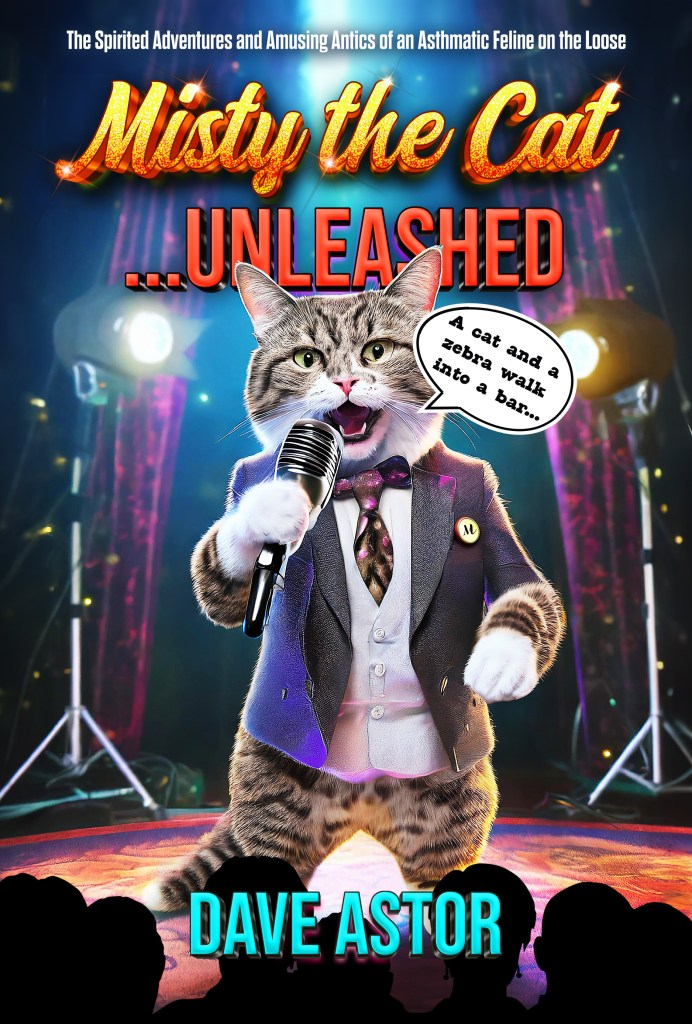
This 90-second promo video for my book features a talking cat: 🙂
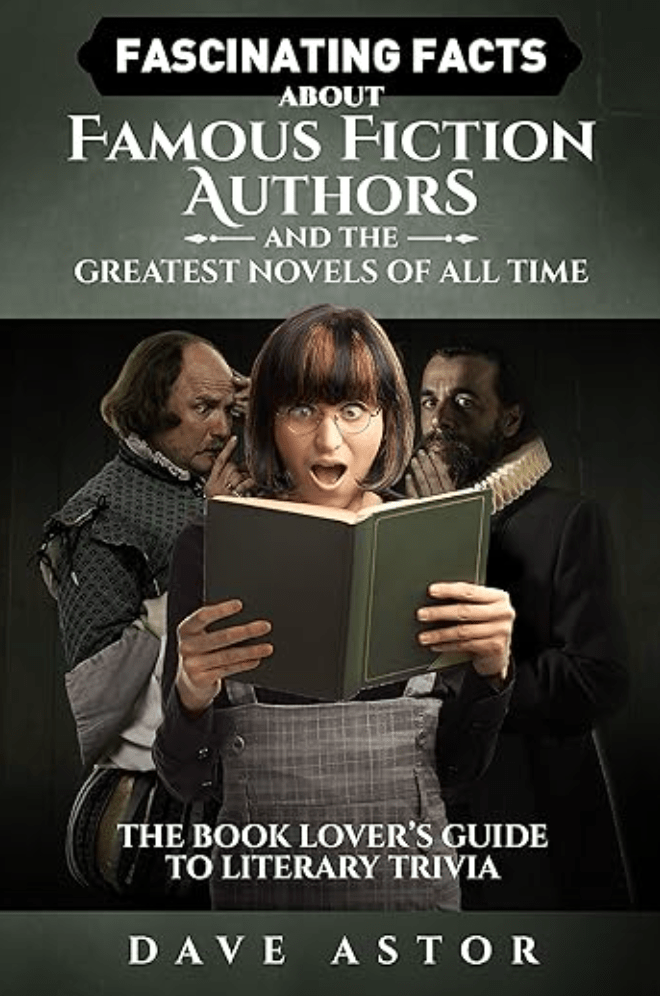
I’m also the author of a 2017 literary-trivia book…
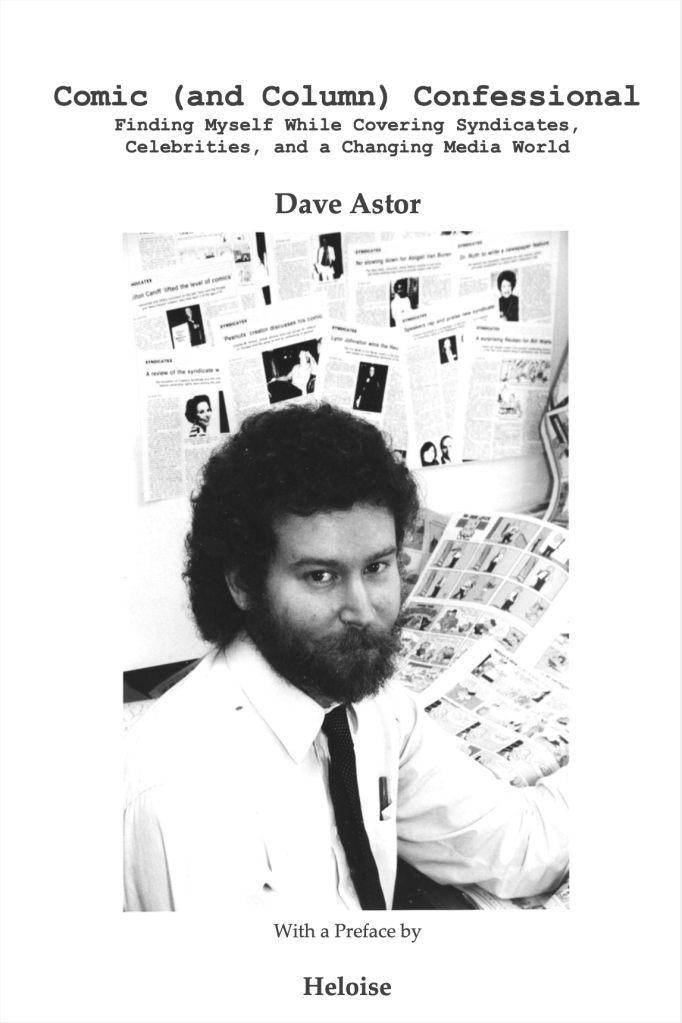
…and a 2012 memoir that focuses on cartooning and more.
In addition to this weekly blog, I write the 2003-started/award-winning “Montclairvoyant” topical-humor column every Thursday for Montclair Local. The latest piece — about affordable housing, flooding, public libraries in need of work, a schools superintendent search, and more — is here.
 Dave Astor on Literature
Nicely written
LikeLiked by 3 people
Thank you, swamigalkodi!
LikeLike
I completely understand that you have had a very big desire to read!
LikeLiked by 1 person
Hi Dave, several of the books I thought of have already been mentioned, but I can add The Thorn Birds, IT by Stephen King, War and Peace, Interview with the Vampire, and The Unbearable Lightness of Being.
LikeLiked by 1 person
Thank you, Robbie! Great examples! Of those you mentioned, I’ve most recently read “The Thorn Birds.” Colleen McCullough’s portrayal of Meggie from girl into years of adulthood is expertly and dramatically done.
LikeLike
Yes, Colleen McCullough’s writing is excellent. I also enjoyed Morgan’s Run.
LikeLiked by 1 person
Me, too, Robbie! Excellent novel! I read it a couple years ago (?) after you recommended it. 🙂
LikeLike
Hello Dave,
So, I will offer a twist on the theme.
A man who stays young, but see his life aging in his portrait.
You know I’m suggesting The Picture of Dorian Gray by Oscar Wilde.
I think I am saying; his old self in the portrait is looking upon his young self, as his young self sees himself aging.
Dorian stays young and beautiful; all the while, his portrait ages and visually records every one of his sins.
He is looking backwards at his life when he looks at the picture.
UCH…well I tried!
LikeLiked by 3 people
Thank you, Resa! I really like the angle you took there. I think Oscar Wilde would have liked it, too. 🙂 Rather deep and profound.
I was reminded a bit of “The Picture of Dorian Gray” when I read H. Rider Haggard’s “She” a few years ago. The protagonist of the latter novel was about 2,000 years old or something but looked quite young.
LikeLiked by 3 people
Yay!!
I was wondering if it would count.
Wow…deep and profound. I’m writing home about it! 😉🤭
Haven’t read “She”. It sounds like a Twilight Zone. Then again so does “Dorian Gray”!
LikeLiked by 2 people
Yes, “She” is part “Twilight Zone,” part adventure story, part horror story, part… Published in 1886, when 1924-born “Twilight Zone” creator Rod Serling was minus 38 years old!
LikeLiked by 1 person
Interesting!
LikeLiked by 1 person
🙂
LikeLiked by 1 person
Hi Dave, another fabulous book that I absolutely love. I’ve read it a few times. The part of the movie where ‘She’ steps into the fire and ages 2,000 years scared me so much as a youngster, I never, ever forgot it. Mom let me watch it with her when I was 8.
LikeLiked by 2 people
“She” is indeed a fabulous novel — absolutely riveting. I’ve never seen a screen adaptation of it, but I can imagine how that scene you describe could be REALLY scary for a young person (or anyone). It’s certainly a powerful scene in the book.
LikeLike
It is. My own scene of a pastor losing a battle with evil in Through the Nethergate was written with this scene from She in mind.
LikeLiked by 1 person
Nice to have gotten inspiration from that, Robbie!
LikeLike
HI Resa, The Picture of Dorian Gray is an amazing book. I love its peculiar mystery and supernatural element. I appreciated what you said here, and you are exactly right. Dorian’s unchanged self seeing the horror of his aged and evil portrait makes this book very powerful.
LikeLiked by 3 people
Thank you, Robbie!
It is Wilde’s only novel, from what I know. I also find if I have a question about proper grammar, his book beats the internet, for best examples.
Dave’s blog encourages me to hang in with all the literary buffs here.
I’m a slow reader, but try to keep up.
Your comment means a lot to me!
LikeLiked by 2 people
Hi Resa, there is a saying ‘slow and steady wins the race.’ Reading should be at your own pace to best appreciate a book. I am not aware that Wilde wrote another novel, but this one was magnificent.
LikeLiked by 2 people
Thank you, Robbie!
When I read slow, I really soak it up. 😊
LikeLiked by 1 person
Exactly. One of the reasons I listen to classic books on Audible is to hear them read at a slower pace. I absorb more too.
LikeLiked by 2 people
Interesting! Do you sit and listen, or multitask?
LikeLiked by 1 person
Me? Sit? haha! Nope, I drive, paint, garden, hang washing and do many other things while I listen. Thanks, Resa. Audio books are great aids to ironing.
LikeLiked by 2 people
Ahh, yes, ironing does not require too much mental perspicacity.
LikeLiked by 1 person
Nope, it’s very boring. So boring, in fact, I can’t even write poetry 🤣
LikeLiked by 2 people
Hahahaha!
xo
LikeLiked by 1 person
I very much appreciate your comment, Roberta! I also remember that Dorian was in love Sybil, because she was able to act or maybe to be ambivalent, which says a lot, too.
LikeLiked by 1 person
Yes, poor Sybil, Dorian created an image of her in his mind and the real person did not measure up to expectations.
LikeLiked by 2 people
Thank you Roberta, I agree with you!
LikeLiked by 1 person
The childhood memories of Tsukura, or of his being ostracized seem really to be very sad. I have never read any novel by Haruki Murakami and it would be high time, Dave! Many thanks!
Your proposals made me think of “Lord of the Flies” by William Golding, where a group of boys, which is transported by plane and shut down, ends on a deserted island. Without adults the do not seem to be able to come to grips with the situation and terrible things happen!
LikeLiked by 2 people
Thank you, Martina! Ostracization can be devastating for a young person (or any person).
Haruki Murakami is definitely a talented novelist; I will be reading more of him.
And, yes, a harrowing childhood experience for the characters in “Lord of the Flies.” 😦
LikeLiked by 1 person
Hi Martina, Lord of the Flies is a great mention. I read that book when I was 11 and it had a powerful impact on me at the time. I was so completely saddened by the treatment of, and ultimate death of, Piggy. I was upset that Ralph wasn’t able to lead the children better and wished Jack had die in the plane crash. I am an empath so this story truly upset me to my core. I still remember the story line very distinctly.
LikeLiked by 2 people
Yes, Roberta, you were really an early reader, but I ask myself, whether you hadn’t been to young for that book. I remember my own childhood when I often had the responsibility for my smaller sisters and that it even had an impact on me as an adult. Thank you very much for your words!
LikeLiked by 1 person
I may have been to young for this book at the time. I was also to young for The Diary of Anne Frank and Child of Satan, Child of God (the Charles Manson story). These books disturbed me greatly and probably played a role in shaping me as a person.
LikeLiked by 1 person
👍🌺
LikeLiked by 1 person
I was a very early reader, starting to read fluently in English at the age of four. By the age of 10 I’d read everything available for children which is why I moved up onto more adult reading material. My mother didn’t know I read these books – she was busy with my two younger sisters.
LikeLiked by 2 people
Impressive!
LikeLike
How about this? It’s an English novel and rather good. This is Black Swan Green by David Mitchell. I really enjoyed it.
This is an excellent coming of age story about Jason Taylor, a 13 year old boy living in a small village in Worcestershire, back in 1982. It is very muddy and very sleepy, but there is more to find out during the one year.
Maybe give it ago.
LikeLiked by 1 person
Thank you, Chris! “Black Swan Green” does sound good, and I appreciate you mentioning it — and describing it so well!
LikeLiked by 1 person
While I’m having trouble thinking of an example for this category this morning – you have brought to my attention many books that I would like to read! 🙂 Although there were a couple mentions in there that I have managed to check off the list already
LikeLiked by 1 person
Thank you, M.B.! With so many of us having too-long to-read lists, I’m glad a couple of mentions were checked off for you. 🙂
LikeLiked by 1 person
What a wonderful post, Dave! The books you mention sound wonderful. I’ve never read any Haruki Murakami novels before; maybe it’s time I picked one up! 😊
LikeLiked by 1 person
Thank you, Ada! I was kind of late to Haruki Murakami’s novels myself. 🙂 An excellent, very interesting writer!
LikeLiked by 1 person
Great subject and post Dave. I see alot of the books I’d have mentioened in comments even A Tree Grows In Brooklyn, which I was clining to there. But the comments are soemthing I also find ineresting re thes eposts ..quite a communtiry you have created here… so I HAD to read them. All I can think of right now is Richard Llewellyn’s How Green Was My Valley, a kind of forgotten book that was a big seller in its day, that is narrated by the family’s yongest member, Huw from boyhood to adulthood. But there’s a few books rattling about in there so I may be back and do better.
LikeLiked by 1 person
Thank you, Shehanne! I love reading the comments, too. 🙂
I also love the concept of a novel narrated by a family’s youngest member! They definitely can have a unique perspective on family dynamics and more.
“A Tree Grows in Brooklyn” is a really great book. (I lived in Brooklyn for three years, though of course long after the time in which Betty Smith’s novel was set.)
LikeLiked by 1 person
Of course. It is a great book.
LikeLiked by 1 person
Yes!
LikeLiked by 1 person
That should say ‘ followed’.
LikeLiked by 1 person
Typos happen. 🙂
LikeLiked by 1 person
Me again, Dave. I’ve just awoken to the memory of Edgar Kellogg, protagonist of Lionel Shriver’s ‘The New Republic’, who throws up a successful and affluent lifestyle as a corporate lawyer to pursue the insecurity of a journalist based in a province fighting for independence – all because he spent his childhood wanting to be like the enigmatic charmer who he followers back then, rather than one of the many second-raters (in his view) who worshipped the guy. 😊
LikeLiked by 2 people
Thank you, Laura! That’s an excellent example I never would have thought of despite reading “The New Republic” just a few years ago. 🙂 A very interesting, quirky novel.
LikeLiked by 1 person
I love it. I’m thinking of making it my choice for a book club I joined recently. 🙂
LikeLiked by 1 person
That would be a terrific book club choice, Laura! (I’ve liked every Lionel Shriver novel I’ve read, with my favorite — as I might have mentioned before — “So Much for That.”)
LikeLiked by 1 person
I remember you saying so, Dave, and I’ve read the free sample of ‘So Much For That’. It’s on my Kindle waiting for me to buy the entire book, which I hope will be soon. So many books, so little time … 🙂
LikeLiked by 1 person
Yes! As I’ve also said before, people needing more reading time hope 24-hour days will be legislatively changed to 30-hour days. 🙂
LikeLiked by 1 person
😂😂😂 Suits me!
LikeLiked by 1 person
Ha! 😂 Me, too. 🙂
LikeLiked by 1 person
My daughter is a big fan of Nicholas Sparks beginning with his book The Notebook, her fav. Me: Not so much a romantic lit kinda person, I eventually gave up and watched the movie instead. Discovered Sparks based the book on his wife’s grandparents. *sigh* young love thru old age; 60 years of it. Yet I think Wuthering Heights is fairly similar in an odd sort of way. As a result, I have to give it to the Brontes re: romantic lit. I confess I did enjoy The Sterile Cuckoo by Alan Pakula as well. Seems to me between baby and old age, our lives are basically a love story and/or should be. Great theme Dave. Thanks, Susi
LikeLiked by 1 person
Thank you, Susi! Nicholas Sparks is very readable (I also enjoyed “The Notebook” novel) but of course not the deepest of writers. As for the Brontes, their books are much deeper and more literary but of course are romantic and mass audience as well.
LikeLike
In the child-to-adult series I would add Laura Ingalls Wilder’s “Little House” books, which I read as a child, and to both my children. (K)
LikeLiked by 2 people
Thank you, memadtwo! Excellent mention! And I love it when great books and/or series get “passed on” to the next generation. 🙂
LikeLiked by 1 person
A wonderful addition to this conversation, Kerfe. I still have this series of books.
LikeLiked by 2 people
Me too.
LikeLiked by 1 person
Dave, thanks for bringing Haruki Murakami’s novel to our attention. I’ve never read any of his novels. The theme is an interesting one, since we’ve all been young once. Some lives are shrouded in mystery or deadly secrets which make for great storytelling. If I recall correctly, the novel Hannibal by Thomas Harris takes us back to Dr. Hannibal Lecter’s youth, providing insight into the circumstances creating the monster he has become.
LikeLiked by 2 people
Thank you, Rosaliene! Yes, what fictional characters (and real people) go through when they’re young can have a huge impact on what they’re like as an adult. Fortunately, not many become serial killers like Hannibal Lecter.
LikeLiked by 2 people
Thank the gods!
LikeLiked by 2 people
Yes!
LikeLiked by 1 person
Great post, Dave. I’ve enjoyed most of these novels, but only saw Benjamin Button the movie. The book was good, I take it?
LikeLiked by 3 people
Thank you, Jennifer! I’ve never seen the “Benjamin Button” film, but did think the F. Scott Fitzgerald story it was based on was excellent.
LikeLiked by 2 people
I liked other books by him, so perhaps I should give it a go! 😊
LikeLiked by 3 people
It’s a quick read — basically a longish short story. 🙂 Maybe 10,000 words?
LikeLiked by 2 people
Just found a link to it, though of course no obligation to read. 🙂
https://etc.usf.edu/lit2go/224/tales-of-the-jazz-age/5770/the-curious-case-of-benjamin-button/
LikeLiked by 2 people
I just ordered it from my library—The curious case of Benjamin Button and other jazz age stories. Thanks!
LikeLiked by 2 people
Great, Jennifer! Hope you like the collection! I think many of Fitzgerald’s short stories are really good.
LikeLiked by 2 people
I’m sure they are. 🙂
LikeLiked by 2 people
🙂
LikeLike
Two of Dickens’ most highly regarded novels “David Copperfield” and “Great Expectations” feature somewhat mature protagonists remembering their childhood and youth.
LikeLiked by 4 people
Thank you, Tony! Two excellent mentions! I’m sometimes a bit hesitant to discuss Dickens novels; I’ve read nearly all of them, but most of that reading was in a “Dickens” college course many years ago. 🙂
LikeLiked by 1 person
I was also going to mention these. I have reread David Copperfield as an adult, so I’d include them (although I always count the books I read in school).
LikeLiked by 1 person
Thank you, Dan! The semi-autobiographical “David Copperfield” is certainly a superb novel. (And its title is one of my favorite pieces of literary trivia, with the name in that title having the reverse first initials of Charles Dickens.)
LikeLiked by 1 person
I have your book, Dave and I never realized that about the name until I read it.
LikeLiked by 1 person
Yes, I recycled that factoid from the book. 🙂
LikeLiked by 1 person
Both of these books are excellent mentions. I am a big fan of Dickens.
LikeLiked by 1 person
You’re making me think – and I like it! Such great ‘grist’ when we rewind into the past as humans…as readers…as writers. I love the examples you shared. Some I’m familiar with – some not.
Many thanks, Dave! 😉
LikeLiked by 2 people
Thank you, Victoria! Very well said! I’m always happy to evoke thinking, as the blog posts by you and others also do for me. 🙂
LikeLiked by 2 people
So happy to connect with you…appreciate all that you share! 🥰
LikeLiked by 1 person
Same here — and thank you!
LikeLiked by 2 people
Another great topic,Dave. I look forward to following the comments on this discussion. For me, reading books that recall childhood memories provides two equally important outcomes. Reading books that evoke happy times allow me to escape into simpler times, fostering nostalgia and emotional connection. Alternatively, reading books that evoke unhappy childhood memories allows me to confront and process past traumas, facilitating healing and understanding.
Books serve as a bridge between past and present, reinforcing the value of imagination and creativity that often flourished during childhood. I believe these stories enhance my appreciation for literature and its power to shape our identities. These are the books that have given much to think about.
“The Catcher in the Rye” by J.D. Salinger
“A Tree Grows in Brooklyn” by Betty Smith
“The Secret Garden” by Frances Hodgson Burnett
“Anne of Green Gables” by L.M. Montgomery
“Little Women” by Louisa May Alcott
I must leave you with one of my favourite quotes from The Secret Garden:
“At first people refuse to believe that a strange new thing can be done, then they begin to hope it can be done, then they see it can be done–then it is done and all the world wonders why it was not done centuries ago.” Frances Hodgson Burnett, The Secret Garden
LikeLiked by 4 people
Thank you, Rebecca! So true that books that recall childhood memories can feature positive or negative memories, and both can be useful for the reader. In addition to being compelling.
And I appreciate the mention of those five relevant novels (all of which I’ve read). “Anne of Green Gables” and its many sequels certainly take Anne Shirley from her pre-teen years well into adulthood.
That astute Frances Hodgson Burnett quote you cited is truly superb!
LikeLiked by 1 person
Hi Rebecca, I haven’t read the Betty Smith book, in fact, I’ve not heard of it before, but the others are all amazing books.
LikeLiked by 2 people
“A Tree Grows in Brooklyn” is well worth reading, Robbie. 🙂 I’ve rarely seen a better depiction of a smart, ambitious girl dealing with life and family (in a patriarchal world).
LikeLiked by 1 person
Thanks for this recommendation, Dave. I always enjoy books you and Martina recommend.
LikeLiked by 1 person
🙂
LikeLike
I loved it too!
LikeLiked by 1 person
🙂
LikeLike
I watched some of the film The Curious Case of Benjamin Button last evening on PBS, I stayed with it as excellent performance by Cate Blachett,Brad Pitt was believable in lead role. As I remember The Lovely Bones by Seybold spoke of a past murder.
I also,for nostalgia, streamed FREE on Tubi Licorice Pizza, took place in CA 1970’s,era I grew up in, Queens borough for me.
Watching the clothes really took me back, I remember wearing these types of clothes, it made the very good film even better,plus not having cell phones, having to post flyers in film to get word out, having more freedom, not being tracked, better way to grow up in my opinion to not be inundated with information, to be more present in one’s life.
Michele
E & P, way back
LikeLiked by 2 people
Thank you, Michele! I’ve never seen the “Benjamin Button” movie, but the acting sure sounds good. 🙂 And it IS interesting to see films set during years we can remember from our youth. A much lower-tech youth, as you note!
LikeLike
A difficult one for me, Dave. For some reason the only text that comes to mind – apart from those you’ve mentioned – is Scrooge being taken to re-examine his childhood by the ghost of Christmas Past. Aside from that, nothing – which is strange for me, as I’ve written two books which feature the main character looking back from the end of their lives to their youth, and the path their lives have taken to bring them to where they are now. I’ve got another one almost-planned too, so it’s clearly a formula which resonates with me, so why can’t I think of any more by others? If I think of any more I’ll be back; it’s a brain-teaser for sure. Thanks for the mental exercise! 🙂
LikeLiked by 2 people
Thank you, Laura! Scrooge/”A Christmas Carol” is a great example! And no problem not mentioning other examples; perhaps my post had already mentioned one or two you would have cited. 🙂 And very nice that you’ve had characters looking back at their youth in your own books!
LikeLiked by 2 people
Thanks for this reading list. I will look into it.
LikeLiked by 2 people
You’re welcome, Maria, and thank you for the comment! Hope you enjoy the reading of one or more of those books.
LikeLiked by 2 people
I will. But I have to finish reading Great Expectations from Charles Dickens first.
LikeLiked by 1 person
Nice! A fantastic novel!
LikeLiked by 1 person
Speaking of “Benjamin Button,” a classmate in a fiction workshop submitted a story that he wrote in the form of a palindrome. The order of the sentences changed at the halfway point, but not the order of the words in the sentences. The prof absolutely savaged it. (Unfairly, I think.)
LikeLiked by 2 people
Thank you, LIz! I love the originality of that! Sorry the professor didn’t.
LikeLiked by 2 people
You’re welcome, Dave! That ended up being a painful workshop to sit through.
LikeLiked by 2 people
Sounds like it. 😦
LikeLiked by 2 people
Your description of the plot of the Murakami book makes me want to mention Nick Hornby’s HIGH FIDELTY, the first of the novels that he wrote and I read, and still my favorite, even though I think I’ve read all the rest. A man in his early thirties decides to find out from all his past girlfriends why they broke up with him, and the book is about his finding them and asking them (or not) and what he learns. It sounds like it could be sad, but it’s extremely funny, even as it makes you think about how complicated relationships are (all his books are about that, actually!)
LikeLiked by 3 people
Thank you, Kim! The plot line of those Murakami and Hornby novels do have similarities! (I’ve seen the very good “High Fidelity” movie but haven’t read the book — the opposite of my usual novel/screen adaptation situation. 🙂 )
LikeLiked by 1 person
Hi Dave. I like the Englishness of Nick Hornby’s books, and the High Fidelity movie was set in the US with American actors. Hard to explain why that disappointed me, but it did.
LikeLiked by 2 people
Didn’t know about that switch, Kim. I would’ve been disappointed, too!
LikeLiked by 1 person
I did not know who the author of Benjamin Butler was. Thanks for that!
LikeLiked by 3 people
Thank you, Marie! When I read a short-story collection by F. Scott Fitzgerald a few years ago, I was impressed with how good most of the stories were. He definitely had a knack for short fiction in addition to novels.
LikeLiked by 3 people
Thanks for this list of novels with your short and interesting reviews.
Even Dickens’ masterpiece, Davide Copperfield, begins when he is already an adult, doesn’t it?
LikeLiked by 3 people
Thank you, Luisa! I’m sure you’re right about “David Copperfield,” but I haven’t read it since college (when I took an English literature course focusing on just Dickens novels) and can’t remember many details of it. 🙂
LikeLiked by 2 people
Thank you, dear Dave, for your gracious reply!
LikeLiked by 2 people
You’re welcome, Luisa! 🙂
LikeLiked by 2 people
🙏❤️🙏
LikeLiked by 2 people
🙂
LikeLiked by 2 people
Haruki Murakami has been one of my absolute favorite authors for many years. I haven’t read his new book yet and can hardly wait. Thanks for introducing “Colorless Tsukuru Tazaki and His Years of Pilgrimage”!
LikeLiked by 3 people
Thank you, Zettl Fine Arts! Yes, Haruki Murakami is excellent! I definitely plan on reading more of his novels. (I chose “Colorless Tsukuru Tazaki and His Years of Pilgrimage” at random from the Murakami books in my local library. 🙂 )
LikeLiked by 2 people
Haruki Murakami’s books opened up a new world for me, similar to Paul Auster’s books.
LikeLiked by 3 people
Paul Auster is another compelling author, though I’ve read just one of his novels: “The Music of Chance.”
LikeLiked by 3 people
Oh, yes! One of the few books I read 3 times 😎
LikeLiked by 2 people
Wow! That is liking a book. 🙂
LikeLiked by 1 person
Thank you to Dave Williams for recommending Haruki Murakami!
LikeLiked by 1 person