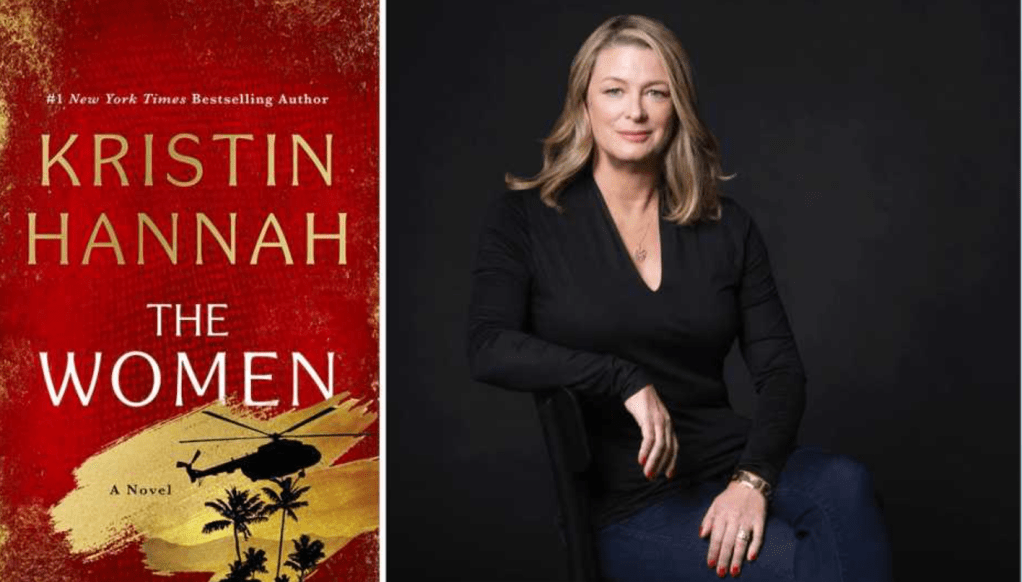
Kristin Hannah (St. Martin’s Press/Kevin Lynch)
Authors of course do research for not only nonfiction books but novels as well — often, albeit not always, when writing historical fiction. And sometimes the power of that research is…stunning.
I appreciated that once again last week when I read Kristin Hannah’s 2024 novel The Women, which focuses on U.S. combat nurses serving amid the chaos of the Vietnam War. The 1960-born Hannah was not a combat nurse, and hadn’t even reached adulthood before that war in Southeast Asia ended in 1975, but The Women‘s devastating “you are there” depiction of the work those nurses did is unforgettable. She obviously researched things to the hilt — reading written sources as well as interviewing people — and then combined that with a riveting story, compelling characters, and excellent prose and dialogue.
This was not the first time Hannah tackled historical fiction; among her many previous books are well-researched novels starring women such as The Nightingale (set during World War II) and The Four Winds (which unfolds in the 1930s Depression/Dust Bowl/California milieu previously explored by John Steinbeck in his classic The Grapes of Wrath).
With the help of careful/thorough research, female authors can obviously write novels set during wartime or other fraught times that are as good or better than those by male authors. We see that in such titles as Isabel Allende’s The House of the Spirits (which includes content about the U.S.-backed 1973 military coup in Chile); Julia Alvarez’s In the Time of the Butterflies (battling a Dominican Republic dictatorship); Kate Quinn’s The Rose Code and The Huntress as well as Elsa Morante’s History (all World War II-related); Quinn’s The Alice Network, Pat Barker’s Regeneration, Willa Cather’s One of Ours, and L.M. Montgomery’s Rilla of Ingleside (all World War I-related); Toni Morrison’s Beloved, Margaret Mitchell’s Gone With the Wind, and Geraldine Brooks’ March (all American Civil War-related); Octavia E. Butler’s Kindred and Harriet Beecher Stowe’s Uncle Tom’s Cabin (brutal U.S. slavery times); Diana Gabaldon’s Outlander series (American Revolutionary War); and Hilary Mantel’s Wolf Hall (intrigue in early 16th-century England).
Other historical novels that grab reader interest with the help of research-buttressed story lines and characters include Barbara Kingsolver’s The Lacuna, Margaret Atwood’s Alias Grace, Alix Christie’s Gutenberg’s Apprentice, Amor Towles’ A Gentleman in Moscow, Khaled Hosseini’s The Kite Runner, Mark Twain’s Personal Recollections of Joan of Arc, Nathaniel Hawthorne’s The Scarlet Letter, Alex Haley’s Roots, Junot Diaz’s The Brief Wondrous Life of Oscar Wao, Tracy Chevalier’s Girl With a Pearl Earring and Remarkable Creatures, E.L. Doctorow’s Ragtime and The Book of Daniel, and Sir Walter Scott’s Ivanhoe and Rob Roy, to name just a few.
Also, I will be reading Colson Whitehead’s The Underground Railroad sometime next month.
There are obviously countless well-researched novels out there; what are some of the ones you’d like to discuss, whether they were mentioned in my post or not? Any general comments about author research?
Misty the cat says: “Those are either daffodils in the distance or unusual cell towers.”
My comedic 2024 book — the part-factual/part-fictional/not-a-children’s-work Misty the Cat…Unleashed — is described and can be purchased on Amazon in paperback or on Kindle. It’s feline-narrated! (And Misty says Amazon reviews are welcome. 🙂 )
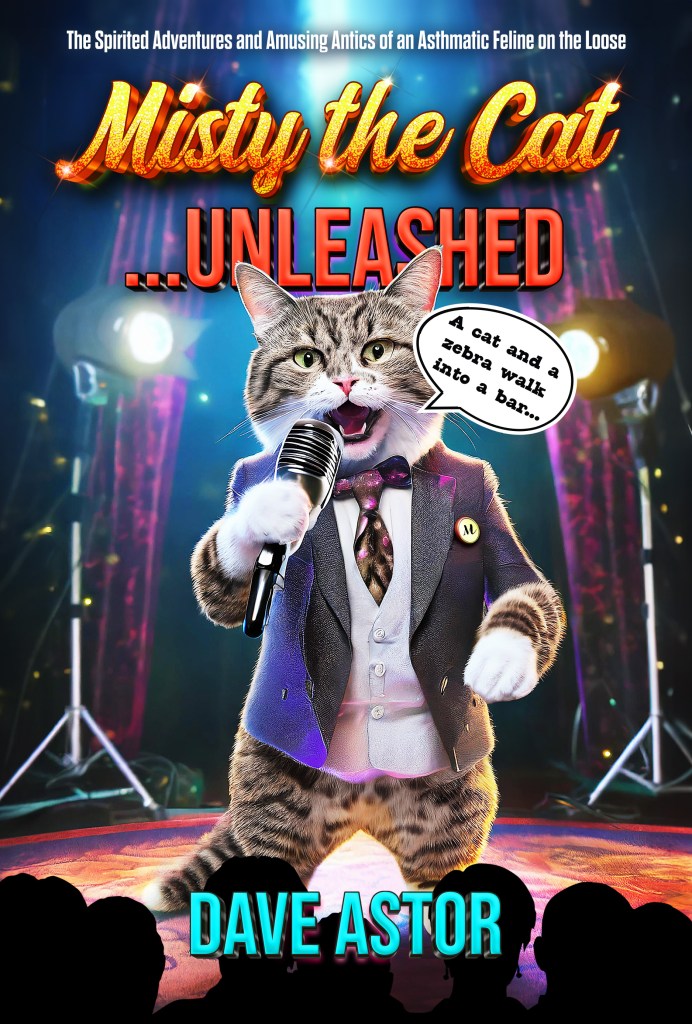
This 90-second promo video for my book features a talking cat: 🙂
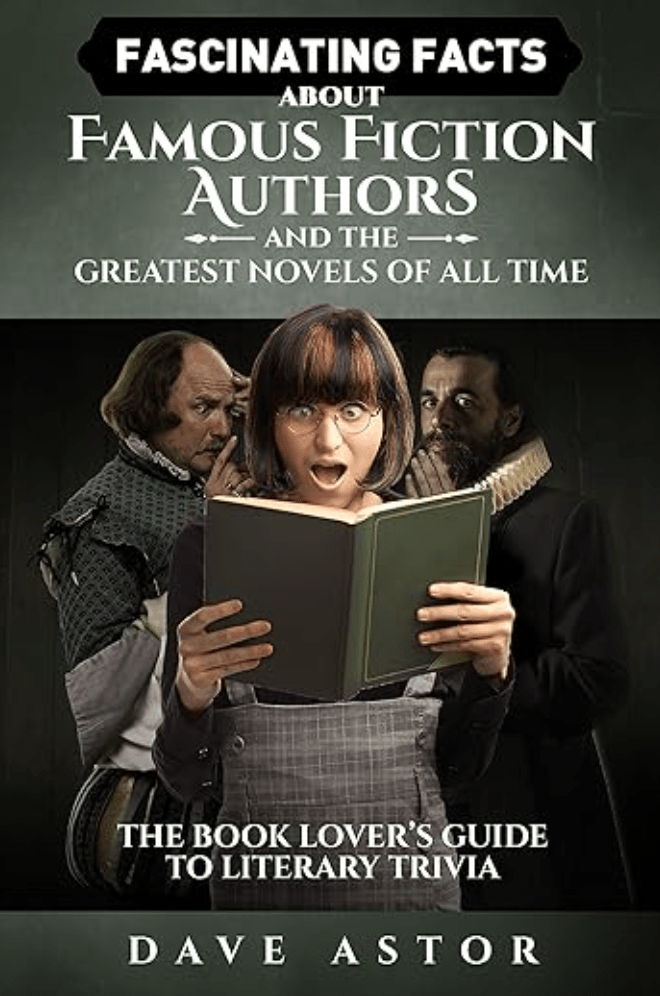
I’m also the author of a 2017 literary-trivia book…
…and a 2012 memoir that focuses on cartooning and more.

In addition to this weekly blog, I write the 2003-started/award-winning “Montclairvoyant” topical-humor column every Thursday for Montclair Local. The latest piece — about a new library bond, an old school district bond, a faltering gubernatorial candidate, mice in a school, a welcome transgender proclamation, and more — is here.
 Dave Astor on Literature
Lawfare and Leviathan: How the Bureaucratic State Became the Real Sovereign. The Prosecution Presidency: Biden, Trump, and the Death of Neutral Law. Justice or Anarchy? The Weaponization of Law in a Post-Constitutional America. Who Runs America? Bureaucrats, Billionaires, and the Puppets They Fund. From Republic to Regime: How Corporate Donors and Unelected Agencies Usurped the Constitution. The Invisible Coup: How Corporate Power and Federal Bureaucracy Replaced the Voter. The New Liberalism Is Conservative: How Populism Became Revolutionary. Anarchists in Suits: When the Left Became the Defenders of Empire. Trump the Radical, AOC the Conservative: The Great American Role Reversal. Rule by Indictment: The Fall of the American Constitutional Order. Soft Tyranny in the Age of Biden: Law, Lobbyists, and the Loss of Liberty. Technocracy Unmasked: The Corruption of Courts, Congress, and the Corporate State.
The U.S. no longer operates as a republic but as a technocratic, bureaucratic regime controlled by unelected officials, lobbyists, and billionaires. Legal warfare (“lawfare”) is not just a symptom but a strategy used by this managerial class to maintain power — and Donald Trump’s prosecution marks its most radical form. The American republic has fallen not with a coup, but with a quiet regime change. The new regime maintains democratic aesthetics, but behind them lies a fusion of lawfare, corporate oligarchy, and bureaucratic inertia.
The attempt to develop a provocative and thematically coherent framework that blends political theory, populist critique, and institutional analysis into a meta-narrative about the decline of the American republic and the rise of a technocratic-managerial regime. The titles and framing devices — such as “Lawfare and Leviathan,” “The Invisible Coup,” and “Anarchists in Suits” — effectively dramatize what many populists and dissidents perceive: that the traditional Left-Right spectrum has inverted, and that power now flows through informal, unelected, and often opaque networks of influence.
The United States no longer functions as a constitutional republic but as a bureaucratic-managerial regime, where unelected actors — from federal agencies and corporate lobbies to tech billionaires — exert de facto control through mechanisms like lawfare, regulatory capture, and financial influence. This regime maintains the appearance of democracy while insulating itself from genuine democratic accountability.
Anarchism is typically anti-state — yet the accusation here is that the state is growing too powerful. This legalistic anarchy, where the rule of law is no longer predictable or binding but selectively applied to punish dissent. Biden’s figurehead governance or executive inertia, compares to the Wilson Administration after he suffered a stroke and collapsed.
Clinton’s prostitution of MSM like Maddow’s chirping for three years the Russia-gate scandal slander of President Trump, Pelosi’s twice attempt to impeach the President, the Jan 6 Democratic committee lynch mob, Tom Homan vs AOC, or the Hunter Biden laptop suppression. Each anchor, abstract critiques in concrete controversies. The EU’s technocracy, Trudeau’s Emergencies Act, WEF influence show how the “invisible coup”, not uniquely American but part of a global managerial turn.
The United States no longer functions as a constitutional republic. It has undergone a silent regime change, not through armed insurrection or revolution, but via the incremental expansion of an unelected managerial class — one composed of federal agencies, tech oligarchs, corporate lobbyists, and judicial partisans who enforce their will through a new weapon: lawfare.
This new regime maintains the aesthetics of democracy — elections, laws, and televised debate — while insulating itself from true democratic accountability. The real power lies in what the public never votes for: the bureaucrats who write regulations, the judges who interpret law by ideological alignment, and the billionaires who fund narratives, campaigns, and policies from behind the scenes.
The hallmark of this new regime is the politicization of justice. When courts cease to be impartial and prosecutions become tools of political suppression, the republic dies by a thousand subpoenas. Trump’s legal troubles, regardless of personal guilt, are emblematic of this transformation: trials as political theater, indictments as electoral strategies.
The managerial state rules by inertia. Congressional deadlock, executive figureheads, and judicial activism have created a vacuum filled by alphabet agencies and “public-private partnerships.” These unaccountable bureaucracies write binding policy with the force of law — but without a single vote cast. The merger of tech censorship, legal persecution, and bureaucratic overreach simply not some ‘democratic oversight’ — but oligarchic enforcement dolled-up in liberal clothing.
Today, populists who challenge the bureaucratic order branded as “criminal radicals,” while those defending entrenched power modelled as whores advertising their trade behind window-panes, as “progressives.” The roles have reversed: dismantling unaccountable federal agencies, restoring legislative primacy, and enforcing transparency, now exist as “revolutionary” ideas. Meanwhile, defending a bloated alien blob infested federal apparatus has become the hallmark of “liberal” governance.
Anarchy doesn’t always burn like Molotov cocktails thrown at SS soldiers at the Warsaw Ghetto revolt. Today, anarchy wears a suit, like as does the current dictator of Syria, or sits on some judicial bench. Law in America, no longer consistent, Court prosecutions politically selective, the consequence of this political corruption — legalistic anarchy — an unstable bankrupt regime cloaked in all manner of legal pretense. This, simply not a critique of the Biden administration alone. That would make it shallow reactionary Trump derangement syndrome stupid. Nor does it limit its condemnation only to the Democratic Party. Republicans too have become fat and sassy comfortable puppets of the same donor class and administrative inertia. The crisis confronting our American Constitutional Republic – structural.
If America rejects the Bush slander of the US Constitution, calling it just a GD piece of paper! We the People of the United States must confront this Leviathan perversion of our Constitutional Republic unto a bureaucratic dictatorship — not just by winning elections, but by dismantling the unelected machinery of governance that makes elections irrelevant, and restore the autonomy of the States to bureaucratically regulate all Industry and commerce transactions within each and every State of the Union without Washington Big Brother. The original Constitution, designed for a limited, representative republic, not Carpet Bagger Federal unelected bureaucrats employing more Americans than does private industry. This bloated post American Civil War technocratic regime, cloaked in democratic ritual, governed by lawfare, money, and media manipulation as replaced the power of the State Legislatures to hold elected Senators and Congressmen accountable to represent the States which appoint them to power in Washington in the first place.
Previous Biden administration’s multiple legal confrontations with Trump (including criminal trials and accusations of politically motivated prosecutions) could be seen as “anarchist in political orientation” — taps into a widespread right-wing concern about the politicization of the justice system.
Supporters of these prosecutions, both State & Federal, argue no one is above the law — and Trump’s actions legitimately warrant investigation. Yet this ignores the historical fact that the manner the Democratic Party conducts itself while in power – totally unprecedented in American history.
This “arrest your political opponents” smacks of socialist/communist Anarchism. Have no heard any defense made by any Democratic leader which contends and rejects this observation made by an outsider US citizen living abroad. Anarchism typically means the rejection of law, order, and authority, often aimed at dismantling state structures, and the Federal and State Court systems together with the entire Federal bureaucracy, based upon all the corruption which Elon Musk has uncovered and exposed, totally corrupt and debased.
Especially under the mentally handicapped Biden Administration the suspicion stands: “Who operates and controls the Government? The President, Congress, and Supreme Court vs the Federal bureaucrats in alliance with the lobbies/Corporate monopoly donors who make huge “investments” which Democrat or Republican or Independent leaders get elected to Office. This infusion of “corporate investments” into the political election process” has cause the costs to elect or run for political office to force political candidates of all stripes – left or right – to prostitute themselves as the whores of the Corporate monopolies! Hence the question stands: “Who actually runs the Federal and State Governments? Do the Constitutional bodies/legislature in the States\ run State and Federal Government OR do the CEOs of corporate monopolies pull the strings of the elected official puppets?
Tom Homan vs AOC serves as an example. Does the Trump Administration seek to dismantle the huge Federal bureaucracy vs AOC who promotes maintaining the old order status quo? This conflict in effect reverses the roles of liberals vs conservatives! Maintaining the status quo – Conservatism. While dismantling the expensive Federal Bureaucracy and holding judges accountable for their legal rulings qualifies as “Liberal”.
Lawfare and Leviathan: How the Bureaucratic State Became the Real Sovereign
The rise of legal warfare, political prosecutions, and the triumph of unelected power in post-constitutional America. The Prosecution Presidency: Biden, Trump, and the Death of Neutral Law. How weaponized justice marks the collapse of bipartisan legitimacy and opens the gates to civil unraveling.
Justice or Anarchy? The Weaponization of Law in a Post-Constitutional America
When courts become political actors and elections become proxy wars for bureaucratic control. Who Runs America? Bureaucrats, Billionaires, and the Puppets They Fund? Inside the shadow regime that governs Washington — and the illusion of electoral choice. Trump the Radical, AOC the Conservative: The Great American Role Reversal. How populist revolt threatens the administrative state — and why today’s “liberals” are defending empire.
The Invisible Coup: How Corporate Power and Federal Bureaucracy Replaced the Voter. A diagnosis of American democracy in decline — and the managerial elite who stage-manage consent. Anarchists in Suits: When the Left Became the Defenders of Empire. The paradox of order through chaos — and how progressive rhetoric now masks the enforcement arm of oligarchy.
A polemical, politically charged analysis of America’s transformation from a constitutional republic to a bureaucratic-technocratic regime. The American Republic has not fallen through revolution, but through a bureaucratic-technocratic quiet coup — one that hides behind the façade of law, elections, and democratic rhetoric while consolidating power in unelected, unaccountable networks of billionaires, lobbyists, and federal agencies. States Rights bureaucrat Washington bites.
LikeLiked by 1 person
A wonderful topic of discussion, Dave. I love reading all the comments and follow-up thoughts. As you know, my go-to reading is non-fiction, although I have returned to fiction these past two years and recognize the time, effort and research that goes into writing fiction. Research plays a crucial role in writing a novel, often overlooked in the realm of fiction. While many associate research primarily with non-fiction, I believe that research is essential in all writing styles, significantly enriching the storytelling process. But I think that there is a deeper more significant reason why research is critical in all types of writing. This is especially the case in historical narratives, as it ensures that the portrayal of events, characters, and settings remains true to the time period being depicted. This diligence not only respects the integrity of history but also enhances the authenticity of the story, allowing readers to immerse themselves in a believable world. Of greater importance, in my opinion, is that accurate representation can prevent the perpetuation of myths and inaccuracies that could mislead audiences, fostering a deeper understanding of the past. By grounding their work in thorough research, authors create compelling narratives that resonate with both the imagination and the truth of historical events. Sorry to ramble on, Dave, but this is a very very important topic of discussion. Sorry for the last response – just returned from a retreat with Sarah in Victoria.
And the last word belongs to Shakespeare:
“This above all: to thine own self be true,
And it must follow, as the night the day,
Thou canst not then be false to any man.”
William Shakespeare, Hamlet
LikeLiked by 5 people
I meant “late” response. 😀
LikeLiked by 4 people
Thank you, Rebecca! Your response is not very late at all. 🙂
Excellent thoughts on this subject! It’s true that research for books is often associated more with nonfiction than with novels, but of course novels can require a lot of research to be the best they can be. It IS important for things to be as accurate as possible (though the “post-truth” Trump and his lying ilk would disagree).
Great and very appropriate Shakespeare passage!
Hope you and Sarah enjoyed the retreat!
LikeLiked by 4 people
I was fascinated by your excellent post (and the various comments) … and by the kitty-narrated video!
LikeLiked by 4 people
Thank you, Luisa! I’ve really been enjoying the comments, too. 🙂 And glad you liked the kitty-narrated video!
LikeLiked by 4 people
Truly my pleasure, dearest Dave 🩵
LikeLiked by 4 people
🙂
LikeLiked by 2 people
Hi Dave, an excellent post. I have read a number of the books you’ve mentioned here. The list might be shorter if I mentioned books that don’t include research, but here are a few notable books for this topic: Shogun by James Clavell, On the Beach by Nevil Shute (current read), The Lady with the Little Dog and Other Stories by Anton Chekhov, Sharpe’s Tiger: The Siege of Seringapatum, 1799 by Bernard Cornwell, The Bastard Princess by G. Lawrence, A Journal of the Plague Year by Daniel Defoe, and The Frozen Hours by Jeff Shaara. I have tried to include titles that I have mentioned before.
LikeLiked by 4 people
Thank you, Robbie! Many great mentions! Yes, the majority of novels have at least some research involved.
I look forward to hearing more of your thoughts on “On the Beach,” which I found to be depressingly riveting — and not THAT implausible. 😦
“Shogun” is compulsively readable, even at about 1,000 pages.
LikeLiked by 1 person
Two novels that included a great deal of historical research that I’ve read include Tolstoy’s “War and Peace” and Nordhoff and Hall’s “Mutiny on the Bounty”. Both novels included many relatively well known and obscure historical figures and actual historical events as well as fictitious characters and incidents in the plot.
LikeLiked by 3 people
Thank you, Tony! I appreciate the mentions of “War and Peace” and “Mutiny on the Bounty”! I enjoy it when novels mix in real people with fictitious characters.
LikeLiked by 1 person
Excellent mentions.
LikeLiked by 2 people
You grabbed my attention with this post alright 🙂 So many great books mentioned and Kristin Hannah is such a genius at what she does. Her research is always incredible. She’s a huge inspiration for my own writing career and endeavors. Research is actually one of my favorite parts of the whole process – immersing myself in an entirely different time and place so I can speak the language to my readers!
LikeLiked by 2 people
Thank you, M.B.! Kristin Hannah is indeed a masterful novelist, and I can see how she’d be an inspiration for you (and other authors).
Glad you enjoy the research part of your book writing (and blog writing). I can’t say I find research super fun, but it can be very interesting and I know it’s necessary. 🙂
LikeLiked by 2 people
This is a great post, Dave. I read a lot of non-fiction, but I have recently started reading historical fiction. I think the research requirements might be harder for historical fiction. Not only do you have to get the facts correct, you have to find ones that fit your plot and move the story along. You also have to be aware of the facts that would derail your timeline.
I’ve just started reading Enchantress of Numbers: A Novel of Ada Lovelace by Jennifer Chiaverini. Ada Lovelace’s life is a fascinating story, and her contributions to computer science have often been overlooked. I haven’t gotten very far into this book, but I like it.
LikeLiked by 2 people
Thank you, Dan! You’re right that skillfully weaving historical fact into historical fiction is not easy — for the reasons you mentioned.
That Ada Lovelace book does sound fascinating. Many women did not get their due (for many years or ever) for their contributions to computer science and science (and math) in general. Also actress/inventor Hedy Lamarr, NASA’s Katherine Johnson, etc.
LikeLiked by 2 people
As far as I know, Ada (the programming language) is still in use in defense systems. I read about Katherine Johnson in an alumni magazine from West Virginia University. I’m proud to be (weakly) linked to her.
LikeLiked by 2 people
Nice to have any kind of link to Katherine Johnson!
And WOW that Ada Lovelace’s programming language is still used in defense systems!
LikeLiked by 2 people
I think it was only named for her, but it has been around since the mid 1970s.
LikeLiked by 2 people
Thanks for that correction, Dan! Makes total sense given that Ada Lovelace lived a couple of centuries ago. 🙂
LikeLiked by 2 people
Dear Dave,
I really enjoyed reading your post about the power of research in historical fiction. It’s fascinating how authors like Kristin Hannah bring the past to life through thorough research. The Women sounds like a compelling read, and I’ll definitely check it out.
I also appreciate the mention of The Nightingale and The Four Winds—both are excellent examples of how research strengthens storytelling. Another well-researched novel I’d recommend is All the Light We Cannot See by Anthony Doerr, which beautifully portrays life during World War II.
Looking forward to your thoughts on The Underground Railroad next month!
LikeLiked by 2 people
Thank you, creativelypainter9fc1679a2c! Glad you liked the post! I finally read “All the Light We Cannot See” a few months ago, and it was definitely another of those very well-researched World War II novels. As for Kristin Hannah, I think she’s one of the best contemporary authors.
LikeLiked by 1 person
Thanks for your reply! I’m glad you also enjoyed All the Light We Cannot See—it’s such a beautifully written novel. And I completely agree about Kristin Hannah; her storytelling is truly powerful.
Looking forward to your future posts!
LikeLiked by 1 person
You’re welcome, creativelypainter9fc1679a2c, and thank you for the follow-up comment! I was late to learn about Kristin Hannah, but have made up for that by reading 14 of her novels during the past two years or so. 🙂
LikeLike
Wow, 14 novels in two years! That’s really impressive. Kristin Hannah’s books are definitely worth reading. Do you have a favorite among them?
LikeLiked by 1 person
Tough to choose a Kristin Hannah favorite. The ones I liked best include “The Great Alone,” “The Nightingale,” “The Women,” “The Four Winds,” and “Firefly Lane.” (Three of those novels mentioned in my post.)
LikeLike
Wow, those are some great choices! The Great Alone and The Nightingale are both so powerful. I can see why picking a favorite would be tough! I’m definitely going to check out Firefly Lane next. Have you read any other authors who have a similar writing style to Kristin Hannah?
LikeLiked by 1 person
I agree about “The Great Alone” and “The Nightingale”!
“Firefly Lane” is a fascinating story about the decades-long friendship of two very different girls/women.
I guess every author is unique, but some of the writers who remind me a bit of Kristin Hannah at times include Liane Moriarty, Elin Hilderbrand, and Kate Quinn, to name a few.
LikeLike
Thank you for sharing your thoughts! I completely agree—The Great Alone and The Nightingale are both incredibly powerful novels. I haven’t read Firefly Lane yet, but after your recommendation, I’ll definitely add it to my reading list.
It’s interesting how different authors have their own unique styles, yet some themes and writing approaches feel familiar. I appreciate your suggestions—Liane Moriarty, Elin Hilderbrand, and Kate Quinn are all fantastic writers. If you enjoy their work, you might also like Jojo Moyes or Jodi Picoult, as they explore deep emotional themes in their storytelling.
LikeLiked by 1 person
Thank you! I’ve read Jodi Picoult but not Jojo Moyes. Just put her on my (long) list. 🙂
LikeLike
Okay nice to meet you sir
LikeLiked by 1 person
Nice to meet you, too!
LikeLike
Dear Dave,
I hope you’re doing well. I wanted to let you know that my mid-term exams are coming up soon. Once they are over, I’ll have some free time during the break.
I was wondering if you have any learning resources or opportunities available related to computer science that I could benefit from during that time. I’m really eager to use this gap productively and enhance my knowledge in the field.
Looking forward to your guidance.
Best regards, Areeba
LikeLiked by 1 person
Unfortunately, Areeba, my knowledge of computer science is minimal, so I have nothing I can offer to help in this instance. Sorry.
The best of luck with your exams!
LikeLike
Ok
LikeLiked by 1 person
It’s really inspiring to see your dedication to literature. While my field is actually Computer Science, I always appreciate learning from experienced professionals.
Since you have a strong background in writing and research, I was wondering—how important do you think strong writing skills are in technical fields like Computer Science? Do you think improving writing can help in areas like research, documentation, or even job applications?
Looking forward to your thoughts!
LikeLiked by 1 person
Thank you! I think strong writing skills definitely help in technical fields (and many other fields), but they’re perhaps not absolutely necessary.
LikeLike
I completely agree—while strong writing skills might not be absolutely necessary in technical fields, they can definitely help when it comes to communicating ideas clearly, especially in documentation, reports, and research. I feel like it’s one of those skills that can really set you apart in the tech world.
What’s your take on the balance between technical expertise and communication skills in today’s job market?
LikeLike
Many thanks, Dave, for your interesting question and the many books you propose! To me, it seems, that Edmund de Wal tells us in his book “The Hare of Amber Eyes” his personal journey through history in order to know more about his famous family, or the Ephrussis and the netsuki collection. When I was in Odessa I discovered their bank and I liked the book very much.
LikeLiked by 4 people
Thank you, Martina! “The Hare with Amber Eyes” sounds like a really interesting memoir (I also just looked it up online). Interesting when an author uses research skills to look into the history of his or her own family. One of many examples I can think of is “A Good American Family” by David Maraniss (who happens to be one of my wife’s cousins). His book focuses a lot on the very unfortunate McCarthy Era in the 1950s U.S.
Glad you got to be in Odessa!
LikeLiked by 2 people
What an interesting answer, Dave! I’ve also checked it and it online and it seems to be the right book to read in this period!
Concerning Odessa, I can only say that it makes me sad to read about this gorgeous city being more and more destroyed by Russia.
LikeLiked by 2 people
Yes, Martina, David’s book is very relevant at a time when Trump and his ilk are doing McCarthyism of a sort with their disgusting treatment of pro-Palestinian activists and others. 😦
And, yes again, Russia under Putin has done all kinds of awful things. 😦
LikeLiked by 2 people
👍🤣
LikeLiked by 2 people
🙂
LikeLiked by 1 person
Stephen King’s take on research in the novel: “If you do need to do research because parts of your story deal with things about which you know little or nothing, remember that word back. That’s where research belongs: as far in the background and the back story as you can get it.
You may be entranced with what you’re learning about the flesh-eating bacteria, the sewer system of New York, or the I.Q. potential of collie pups, but your readers are probably going to care a lot more about your characters and your story.”
With this in mind, I’m going to mention a few researched novels–James Michener’s Hawaii. Phillipa George’s The Other Boleyn Girl my fav of her many novels. Maugham’s The Moon and The Six Pence re the artist, Gauguin. Steinbeck’s Cannery Row and Sweet Thursday based on the character Doc and/or the marine biologist, Ed Ricketts’s adventures. Sir Arthur Conan Doyle’s many Sherlock Holmes novels.
Great theme Dave. Susi
LikeLiked by 3 people
Sorry, I meant Phillipa Gregory not Phillipa George.
LikeLiked by 2 people
Thank you, Susi! I appreciate all the examples of novels by renowned authors with strong research elements! James Michener was certainly one of the kings of that. And you’re right that while research can immensely help a novel, it shouldn’t overwhelm it. Very wise take by Stephen King. (Though I’d like to learn more about the IQ potential of collie pups. 🙂 )
LikeLiked by 1 person
Laurie is a border collie in King’s short story Laurie. I haven’t read it, but it’s a must now. Btw, just before I jumped on here I read the news about the Jane Austen house (where she attended so many parties) is to be demolished. I would think that if there is a Jane Austen Historical Society, they would intervene. *sigh*
https://www.hampshirechronicle.co.uk/news/25049336.country-house-visited-jane-austen-set-demolished/
LikeLiked by 2 people
Terrible news, Susi! 😦 And a bit surprising — the U.S. is usually the country that least values history.
LikeLiked by 1 person
Eleanor Catton’s “The Luminaries” is a favorite of mine, set in New Zealand in the 1800s. (K)
LikeLiked by 2 people
Thank you, Kerfe! Great mention! I read “The Luminaries” several years ago, and I could see that Eleanor Catton did a lot of research about the 1860s New Zealand gold rush and more. Excellent novel, especially for an author in her 20s at the time.
LikeLiked by 2 people
I absolutely adore historical fiction.
So much to choose from, so I’ll only mention 3, all written by women.
The Good Earth by Pearl S.Buck.
It’s a great family story, that applies to many times and cultures. Although I read it several decades ago, certain images linger.
When the wife, O-lan is working in the rice fields, she goes into labour. She walks to the abode, gives birth, slings the newborn onto her back and returns to the rice fields to work.
A Ghost and his Gold by Roberta Eaton Cheadle.
The Boer War research is beyond fantastic. I learned a lot. The story itself has an underlying theme of – power and greed defining a need for war is useless, humans need to get over hating and they can.
This book should be more well known and read.
Shehanne Moore’s collection of Historical Romance novels are fabulous. Her times and places are well researched and intriguing.
Thanks Dave!
Hello Misty! Misha here! I’m Resa’s new cat. I just want to say how much I like your old posts, and look forward to a new one!
LikeLiked by 7 people
Thank you, Resa!
Congratulations on having a new cat in your household!!! Wonderful! Misha is a very nice name. (And the same first three letters as Misty. 🙂 )
I appreciate your mentions/discussions of Robbie’s “A Ghost and his Gold,” Shehanne’s historical romances, and “The Good Earth.” Quite a trio of writers there, present and past!
LikeLiked by 3 people
Ahh the 2 Mis’s.
Left over letters form Haty, or Tyha.
Just saying! 🤭
Thanks Dave!
LikeLiked by 2 people
“Les Mis.”
(Not to be confused with the musical. 🙂 )
LikeLiked by 1 person
Yes..
Actually, I see it all now.
A musical that will blow “Cats” off the fence.
“Les Mis Fits”.
About a bunch of cats revolting against a gang of rats who have taken over the hood.
Led byMisty and Misha, thousands of cats are organized into protest groups that throw LOUD meowing fits all over the hood, 24 hours a day.
The meowing is akin to when the cat of your love HATES their food flavour, or nags you to death for something you are not sure what it is.
Anyway, the rats are driven out, and for their finale the cats roll around on freshly mown lawns purring.
It’s a Mis Fits hit!
We just need some backers, an outdoor theatre and a couple thousand more cats.
LikeLiked by 3 people
LOL, Resa! 😂 Love it! “Pest Side Story”?
🎵 “Misha, Misha, I’ve just met a cat named Misha…” 🎵
LikeLiked by 3 people
Haha , yes, Pest Side is the Best Side. 😂
After all, we have the replaced the Jets and Sharks with Cats and Rats.
OMG.. Misty will need a close up when he meows that song!
LikeLiked by 3 people
Too funny, Resa! 😂
Given that Misty goes outside in the morning, he’s ready for his close-up on Sunrise Boulevard.
LikeLiked by 2 people
Mr. De Millmew is read!
LikeLiked by 2 people
😂
LikeLiked by 2 people
Thank you, Dave.
LikeLiked by 2 people
You’re very welcome, Robbie! 🙂
LikeLiked by 1 person
Gosh, I was reading the comments…I always do here because of the fabulous book discussion. And I was thinking, that I need to get The Women on my TBR. pile pronto. Then I was wracking my brain for books not already mentioned and kept coming up instead with ones that were actually written in the period where the historical bit for us was the author’s present, or books I’ve already mentioned here. like De Berniers Birds Without Wings, the Flashman novels. I’m a huge fan of Kate Furnival and she does meticulous research on her books but keeps that to the backdrop, because at the end of the day, as is kind of said in a comment here, if a reader wants to read a history, then read history, historical fiction is not non fiction. I did love les Miserables but the 100 pages or no…I exaggerate but…. on the Paris sewers might have benefitted from a red pen. Pearl S Buck was an amazing wrtier and my parents loved her books. So I ma kind of ..woah… wow…to be named in the same comment as her. xxxxxxxx
LikeLiked by 5 people
Thank you, Shehanne! “The Women” is definitely worth reading. 🙂 And, yes, what we might feel is historical fiction today might have been originally written as “current event fiction.” Re your comment on Kate Furnival, I agree that historical facts shouldn’t be TOO prominent in historical fiction. And re the begging-for-a-red-pen Paris sewers in “Les Miserables,” that reminded me that another example of an author rambling on too much about a particular topic was Herman Melville’s general content about whales in “Moby-Dick.”
LikeLiked by 2 people
Abso re Moby Dick. I often wonder if it was because they didn’t have movies and TV to show everyone these things. SO in essence there might be things in books that a reader had never seen.
LikeLiked by 2 people
A GREAT point, Shehanne!
LikeLiked by 2 people
I love your historical romances!
You deserve to be mentioned with many other fab authors!
xxxxxxxxxxx
LikeLiked by 3 people
xxxxxxxxxxxxxx resa, you’ve made my day x
LikeLiked by 3 people
You always make mine!
LikeLiked by 3 people
xxxx
LikeLiked by 3 people
Hi Resa, thank you for the shout out, you are always very supportive and I appreciate it. I am delighted to be mentioned with Shey Moore and Pearl S. Buck.
LikeLiked by 3 people
3 fab writers…all different!
Oh, I just read a review on Diana’s blog. I saw Michael mentioned re: an essay or piece on violence against women. Congratulations!
LikeLiked by 2 people
Hi Resa, yes, that was his contribution to After Rain Skies. That book is a great achievement by Michelle and includes a lot of powerful poetry.
LikeLiked by 3 people
Wonderful!
LikeLiked by 1 person
And I ma delighted to be mentioned with you Robbie. And congrats to Michael. I saw that blog too.
LikeLiked by 1 person
Thank you, Shey
LikeLiked by 1 person
https://alaskamagazine.com/authentic-alaska/maggie-shipstead/
The Great Circle, excellent book, one of the best I’ve read. The link above discusses research.
Michele
E & P way back
LikeLiked by 3 people
Thank you, Michele, for the comment and link! “Great Circle” looks…great! Now on my to-read list.
LikeLiked by 1 person
I also thought THE GREAT CIRCLE (Maggie Shipstead) was wonderful, Michele! Great story AND I learned so much; for example, I didn’t know anything about the women pilots during WWII.
LikeLiked by 1 person
I can see I need to read this book, Kim. 🙂 Re women pilots during World War II, I also thought Kate Quinn’s “The Huntress” and Fannie Flagg’s “The All-Girl Filling Station’s Last Reunion” were excellent.
LikeLiked by 1 person
Dave, you’ve mentioned lots of great storytellers of well-researched novels. Dan Brown also impressed me with the extensive research needed to create his successful thrillers. Research is also an essential part of my storytelling.
LikeLiked by 3 people
Thank you, Rosaliene! The one Dan Brown novel I’ve read — “The Da Vinci Code” — did seem very well-researched. And I can see from the book chapters, posts about poets, and other content on your blog that your writing is well-researched as well!
LikeLiked by 2 people
Appreciate your kind comment, Dave 🙂 ❤
LikeLiked by 1 person
You’re very welcome, Rosaliene! 🙂
LikeLiked by 1 person
Fascinating post, recognising the exacting research combined with superb storytelling of so many writers – women and men.
I’d like to nominate two brilliant women writers of historical fiction – Edith Pargeter/Ellis Peters, who created the Benedictine lay brother, herbalist and crimesolver Brother Cadfael., expert in the healing and killing powers of many plants, and equally knowledgeable about where plants liked to grow – often enabling him to locate the location of a murder – which could be some distance from where the body was found. ,
First equal – Lindsey Davis, creator of the linked Falco and Flavia Albia series, Roman crime, detection and punishment in the reign of Vespasian.
Falco, as a republican ( lower case) loathes Emperors – but this one really is different. Every book leaves me wishing I’d worked harder at Latin.
LikeLiked by 2 people
Thank you for those two author mentions and the excellent descriptions of their work! Both sound like they write some very compelling stuff. And I definitely prefer republicans over Republicans. 🙂
LikeLiked by 1 person
What an interesting post, Dave! I admire an author’s dedication to research. It takes a lot of attention to detail, which is something I struggle with! Yes, Zola’s work springs to mind here, and I haven’t read “Captain Corelli’s Mandolin,” although I’m intrigued, now, by the conclusion! 😊
LikeLiked by 6 people
Thank you, Ada! I also admire authors who excel at research. 🙂
Emile Zola definitely did some serious research. As you know, many of his novels had themes that spurred him to amass very specific knowledge — about mining (“Germinal”), early department stores (“The Ladies’ Delight”), alcoholism (“The Drinking Den”), trains (“The Beast in Man”), etc.
One of the reasons the “Captain Corelli’s Mandolin” ending disappointed me was that it didn’t feel believable. But as I mentioned, still an excellent novel.
LikeLiked by 3 people
I was also going to mention CAPTAIN CORELLI’S MANDOLIN as a brilliant historical novel. I haven’t read it since it came out in 1994, so I might feel differently 30 years later.
LikeLiked by 1 person
Thank you, Kim! I agree that “Captain Corelli’s Mandolin” was (mostly) brilliant. World War II was definitely the inspiration for countless novels featuring strong research.
LikeLiked by 1 person
I want to unsubscribe.
LikeLiked by 1 person
That’s something you can do yourself, and you’re welcome to do so.
LikeLiked by 1 person
Thank you, as always, for your marvellous resources. Please, I need books on social diversity (race, language, gender,…), too. Thank you in advance, Ahmadou
LikeLiked by 2 people
You’re welcome, ahmadoutidianebalde, and thank you for the comment!
Some of the previous posts I’ve done related to the topics you mentioned:
https://daveastoronliterature.com/2024/12/01/a-title-wave-of-opposite-gender-novels/
https://daveastoronliterature.com/2019/08/11/toni-morrison-and-other-excellent-female-authors-of-color/
https://daveastoronliterature.com/2022/01/16/black-and-biracial-characters-in-books/
https://daveastoronliterature.com/2017/09/10/in-the-time-of-trump-a-look-at-latin-american-lit/
https://daveastoronliterature.com/2019/06/09/literatures-lgbtq-characters-an-update/
https://daveastoronliterature.com/2019/10/13/native-american-characters-in-literature/
LikeLiked by 1 person
Thank you ever so much for your prompt provision of my requested resources. Gratefully, Ahmadou.
LikeLiked by 2 people
You’re very welcome, Ahmadou! 🙂
LikeLiked by 1 person
Kristin Hannah’s The Great Alone was also a good Vietnam War-related book that was well-researched. The Nine by Gwen Strauss, about nine women who escaped the Nazi death march and Lisa Scottoline’s Loyalty, about the origin of the Sicilian Mafia were also very well-researched. Scottoline’s website features videos from her research, so both the book and the videos are great prep materials for a trip to Sicily.
LikeLiked by 1 person
Thank you, Madeline! You’re so right about “The Great Alone.” Another way that novel is somewhat similar to “The Women” is that “The Great Alone” focused on the aftermath of Vietnam for a family, and much of “The Women” is about what happened with the combat nurses after they returned to the U.S.
And I appreciate the mention of “The Nine” and “Loyalty”! Lisa Scottoline is definitely adept in the online world. 🙂
LikeLike
There are different kinds of research: learning the facts, and immersing yourself in the topic so as to unconsciously infuse your writing with the atmosphere of a time or place. The second type takes longer but is worthwhile.
I haven’t read Mantel’s Wolf Hall, but her novel about the French Revolution is absorbing, in both good and bad ways.
LikeLiked by 4 people
Thank you, Audrey! You’re absolutely right that there are different kinds of research — and you offered two examples that are kind of related yet…different.
As we might have discussed before, I had mixed feelings about “Wolf Hall.” Stunningly written, but somehow it didn’t always hold my interest.
LikeLiked by 3 people
Another excellent topic, Dave, and one which provokes thought. I’ve read many of the books you mention above, and I’d like to add the excellent ‘Captain Corelli’s Mandolin’ by Louis de Berniere, which deals with the occupation of Kefalonia by the German and Italian forces during WWII. The film based on it was good enough, but wasn’t a patch on the book. I’ll probably come up with some more later, as is my wont (‘Little Women’ has just popped up, with the trials of the March family females while the father is off fighting the Civil War). As to authorial research in general, it is an absolute MUST for me. I’ve read poorly-researche book in the past, and finding something clearly wrong–which would have been not too difficult to research–is an immediate turn-off for me. If the author can’t be trusted to find out the correct answer, then the veracity of the rest of their writing immediatelyy becomes suspect. For myself, I’ve spent hours poring over internet documents to discover information on UK law and court procedure, Class A substances and their effects and all things pregnancy and givin birth, to name but a few. It can be a time-consuming process, hours spent in order to get just one paragraph right, but it has to be done. Incidentally, I remember being taught how Emile Zola–a favourite of mine, Realism and Naturalism being styles of writing which I like–was meticulous in his research for his ‘experimental novels’. He was pilloried terribly for this, but nevertheless he wasn’t deterred. I had to laugh however on reading that he spent precisely 2 weeks in the Nord Pas de Calais mining region to do research for ‘Germinal’, but 6 months in the sleezy bars and cabarets of Paris to research ‘Nana’. Coal mine or bar? No brainer, I think, lol. Thanks for the exercise of my little grey cells, Dave. Catch you again later. 🙂 🙂
LikeLiked by 4 people
Thank you, Laura, for the very varied comment! I also loved “Captain Corelli’s Mandolin,” even though somewhat disappointed with the ending. Glad you mentioned Louisa May Alcott’s “Little Women,” which I indirectly referenced with Geraldine Brooks’ “March” — the latter about the “Little Women” dad off on the Civil War front lines. Also glad you mentioned Emile Zola, who did a LOT of research for “Germinal” and “Nana” (as you noted) as well as for “The Masterpiece,” “The Ladies’ Delight,” “The Drinking Den,” “The Beast in Man,” etc. Hilarious mention by you of how he spent more time in bars and cabarets than in coal mines. 😂 Smart man…
LikeLiked by 2 people
I disliked the ending of ‘Captain Corelli’ too, the earlier story having been so good, which helped it survive the ending. Research – an essential tool for authors who want to be taken seriously. 🙂
LikeLiked by 2 people
I agree, Laura, that “Captain Corelli’s Mandolin” was still very well worth reading despite the conclusion.
“Research — an essential tool for authors who want to be taken seriously”…so true! And I neglected to mention in my previous reply that it’s impressive and commendable how much research you do for your own books!
LikeLiked by 2 people
Your own efforts in research are up there too, Dave. And I’m constantly glad that I live in the age of the internet and computer technology, which makes the entire writing/researching process so much easier. 🙂
LikeLiked by 1 person
Thank you, Laura! 🙂
And SO true that the Internet makes research much easier now compared to the laborious way it had to be done pre-digital age. (Though it was kind of fun leafing/searching through documents in libraries. 🙂 )
LikeLiked by 1 person
Research can be incredibly time consuming for an author but it’s worth it. I write for children and I don’t want to give my readers misinformation. I spent an entire rainy afternoon researching sheep-dog trials. At that age, they believe everything they read! You listed some awesome examples. The books I find extremely well researched are the pre-historic books by Jacqui Murray – The Dawn of Humanity series.
LikeLiked by 4 people
Thank you, Darlene! Yes, research can be very time-consuming, but it’s worth it. And, yes again, books for younger readers need to be well-researched, too — as you’ve personally done. If anything, researching books for younger readers is especially important because many younger readers don’t have as much life experience as adults to know fact from fiction. And great that you mentioned Jacqui Murray! Which reminds me that Jean M. Auel also did lots of research for her prehistoric Earth’s Children series (“The Clan of the Cave Bear,” etc.).
LikeLiked by 4 people
So true. Although I find many adults don’t know fact from fiction right now!! 😉😉
LikeLiked by 4 people
A TERRIFIC point, Darlene! 🙂 😦
LikeLiked by 4 people