Fictional People Are Getting Deported, Too

The Trump regime’s cruel deportation program has extended to fictional characters. And this program is widespread: affecting characters from the United States or other countries, characters who live in the present or lived in the past, etc. Because novels can make readers smarter and more empathetic, most of today’s Republicans feel many characters have to be removed from the pages where they live — including pages in some of my favorite literature.

I first heard about character deportations when The Grapes of Wrath‘s Tom Joad, who develops a stronger class consciousness as John Steinbeck’s book goes on, was yanked from the novel by Trump’s masked ICE agent goons. Determined to find Tom, the rest of the Joad family traveled east instead of west and ended up picking crops in New York City’s Times Square. Needless to say, not much was growing through the pavement.

ICE agents also plucked Jane Eyre from Charlotte Bronte’s novel because she’s a determined young woman too independent-minded for Trump’s taste, and doesn’t have big blonde hair like many Fox News hosts do. So, U.S. Secretary of Education/wrestling biz wacko Linda McMahon substituted for Jane as little Adele’s teacher, and Rochester instead fell in love with a Disney princess.

Of course, characters of color are most at risk of the Trump regime’s deportations, and Bigger Thomas of Richard Wright’s Native Son was no exception. Plus his attorney is a communist! With Bigger no longer around as a client, that lawyer represented Jane Eyre as she tried to return to her novel, but Jane instead got sent to Florida’s “Alligator Alcatraz” two centuries before that repugnant concentration-camp-like jail was built.

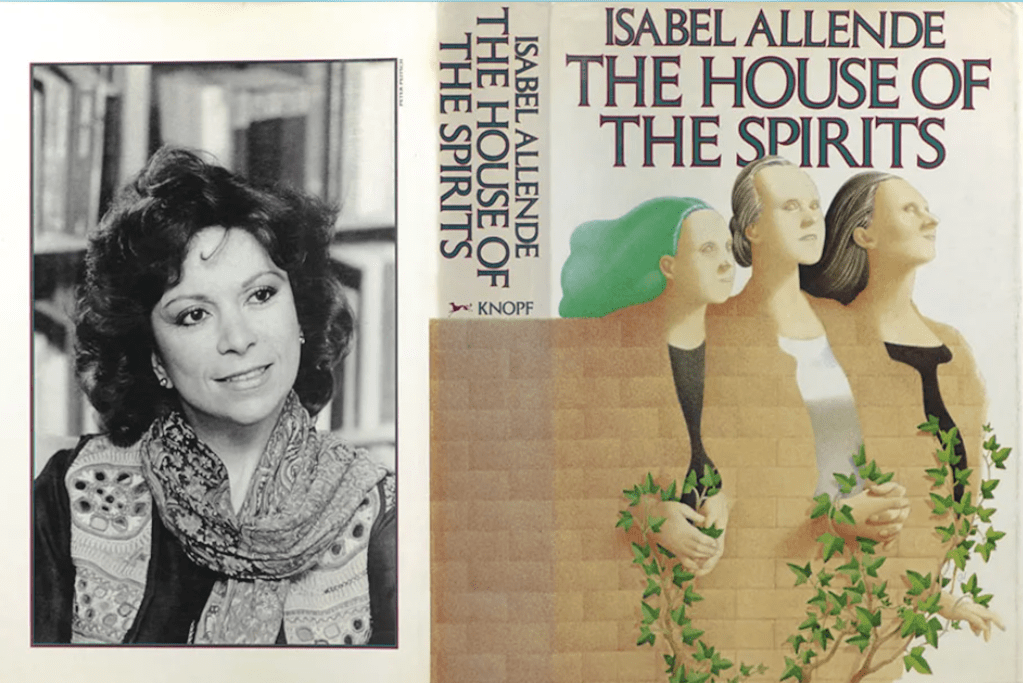
Clara del Valle Trueba was also deported — from The House of the Spirits. After being kicked out of Isabel Allende’s novel, the clairvoyant Clara took her knowledge of Trump’s guilt in the sickening Epstein pedophile scandal and started a blog about that. Because Clara had been in a magic-realism book, the blog levitated out of her computer screen — which puzzled WordPress customer support.

In Daniel Deronda, Daniel D. and Mirah Lapidoth and Ezra Mordecai Cohen are idealistic proto-Zionists rather than the U.S.-armed genocidal Zionists in Israel’s current leadership who are mass-murdering Palestinian civilians, so the three were deported when entering a government office to register as George Eliot characters. That left Gwendolen Harleth wandering around Eliot’s 19th-century novel, searching for a Burger King in which to have lunch.

Atticus Finch? Taken from To Kill a Mockingbird for being an attorney with integrity. This came after some Trump regime hesitation to deport Finch because author Harper Lee had the same last name as Confederate traitor Robert E. Lee, the Civil War general greatly admired by right-wingers for fighting to defend the appalling institution of slavery. But Atticus did ultimately get booted from To Kill a Mockingbird before joining Donna Tartt’s The Goldfinch novel starring a painting of a bird sharing his last name.

In J.K. Rowling’s Harry Potter books, every character except the ultra-evil Lord Voldemort was deported to make the series more palatable for Republican fascists. One of the characters, Nearly Headless Nick, went on to successfully lose 10 pounds by becoming Completely Headless Nick.

But no character was spared from deportation in Arundhati Roy’s The God of Small Things because Trump erroneously thought the title of that novel referred to his fingers and his…

Misty the cat says: “Where’s my teen human? Oh, she went away to college last weekend.”

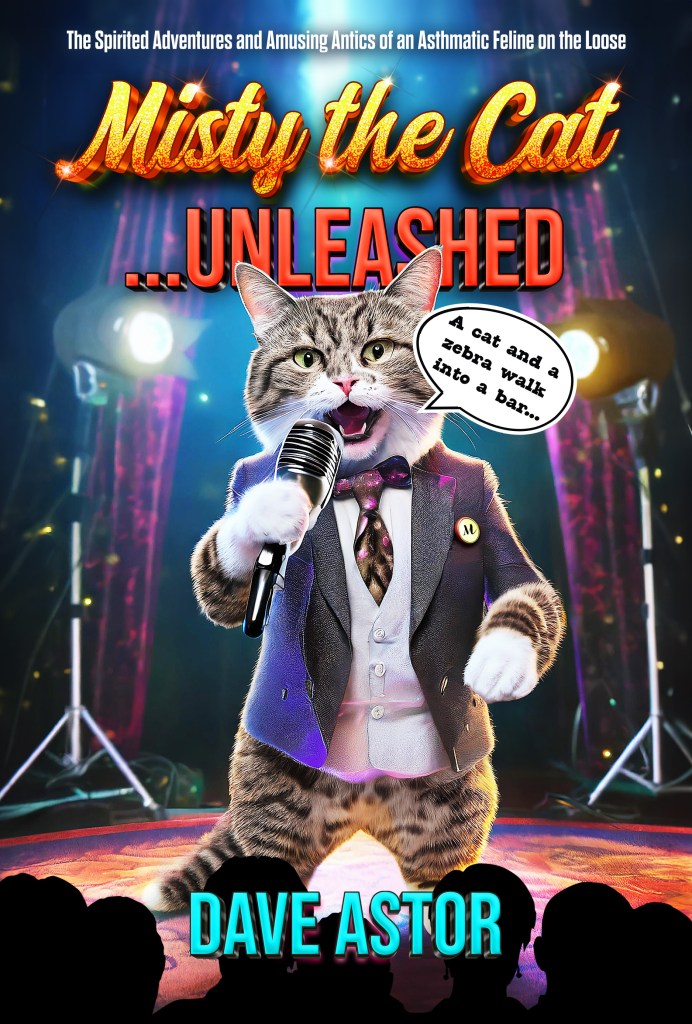
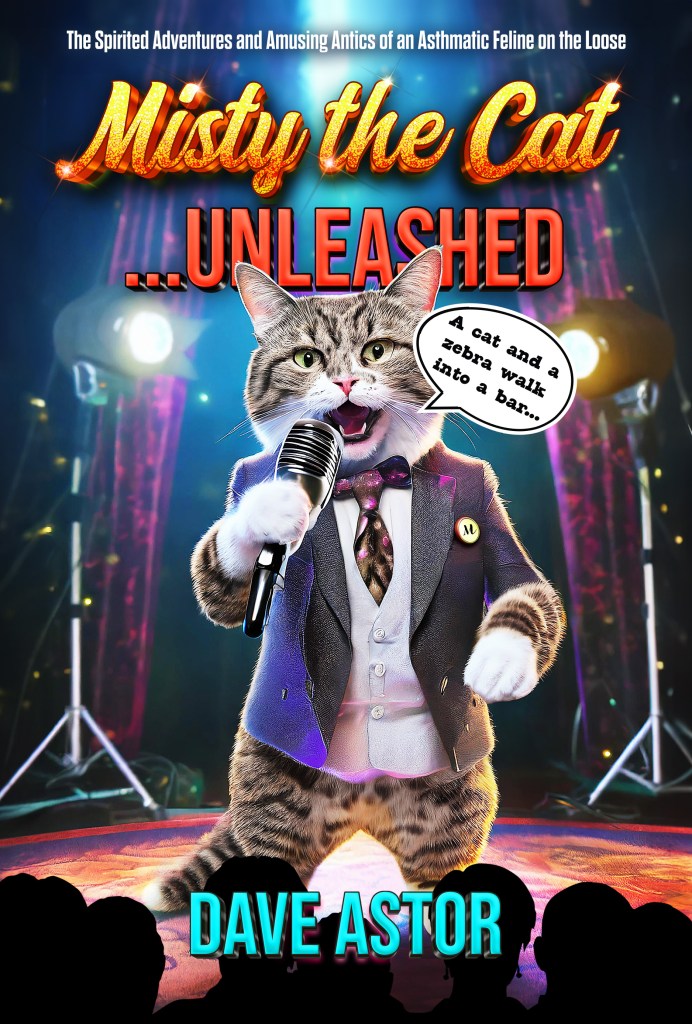
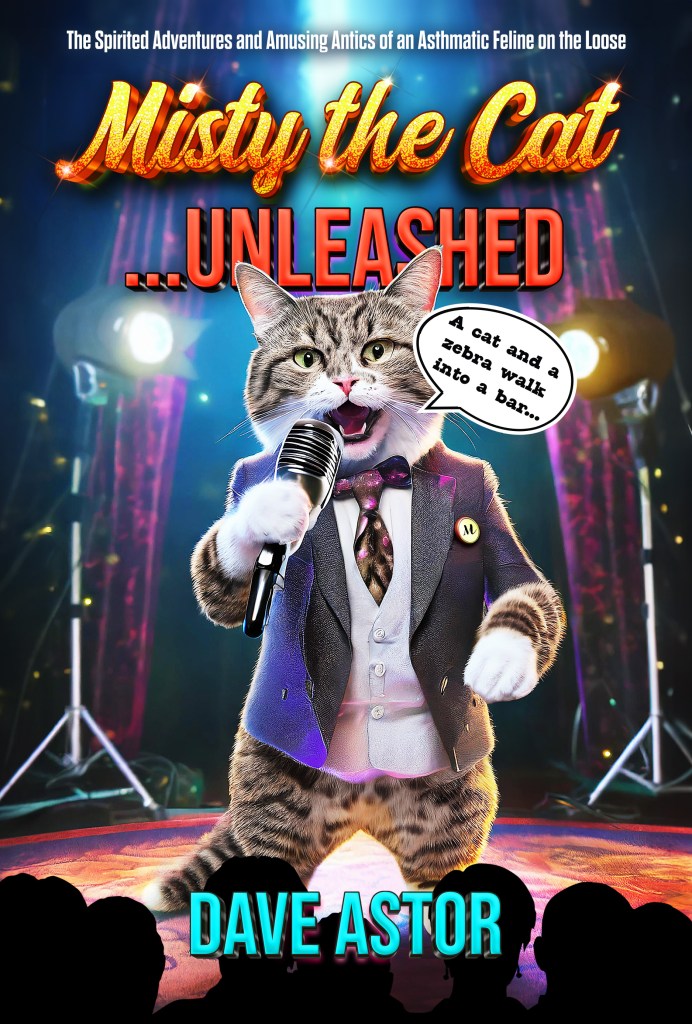
My comedic 2024 book — the part-factual/part-fictional/not-a-children’s-work Misty the Cat…Unleashed — is described and can be purchased on Amazon in paperback or on Kindle. It’s feline-narrated! (And Misty says Amazon reviews are welcome. 🙂 )
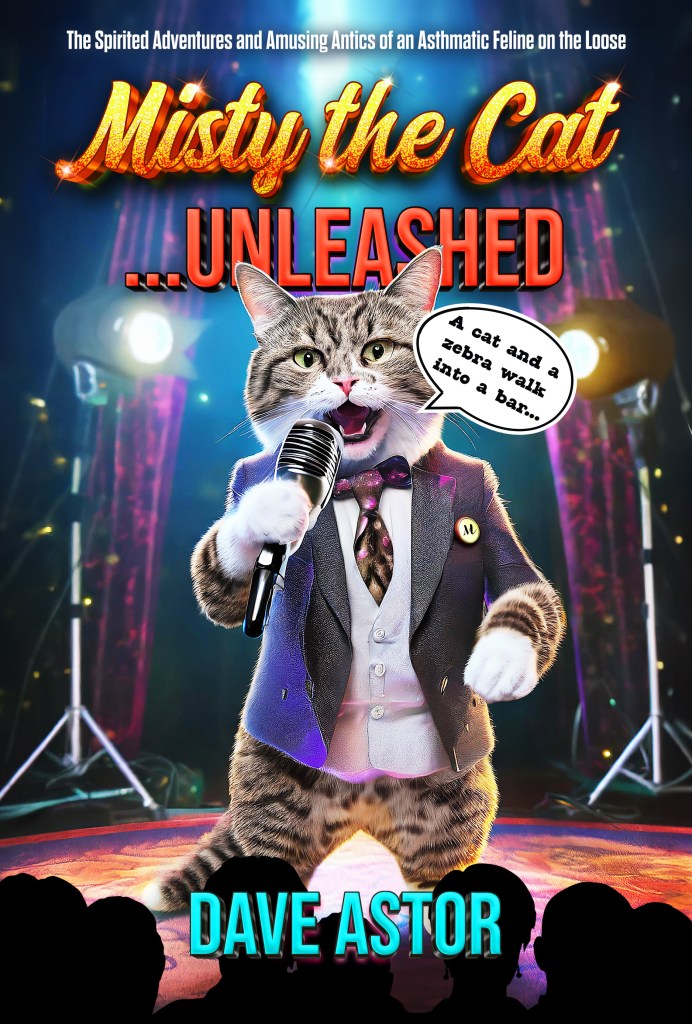
This 90-second promo video for the book features a talking cat: 🙂

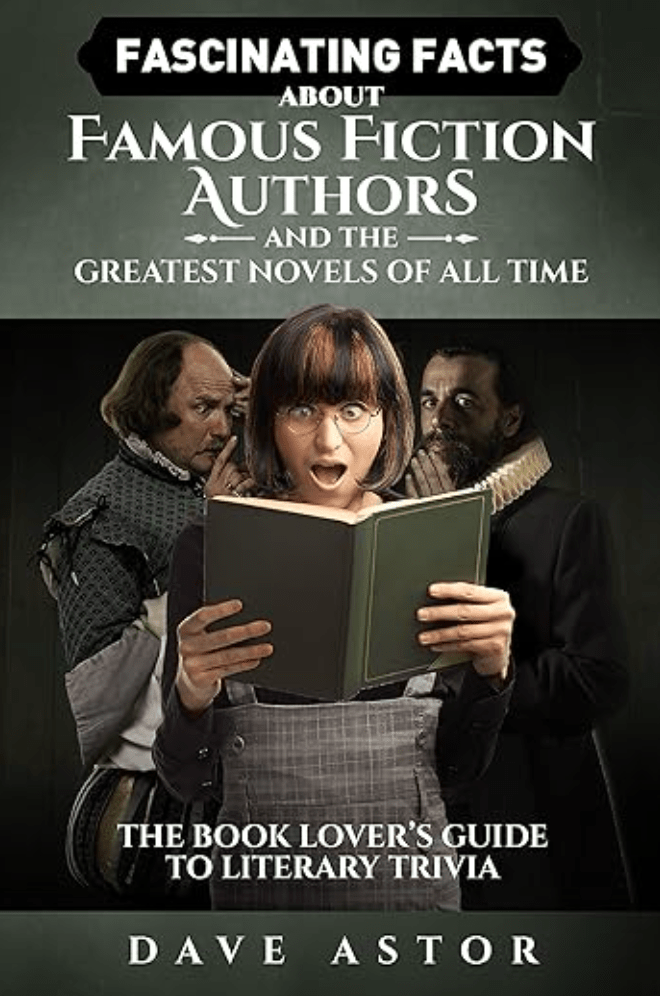
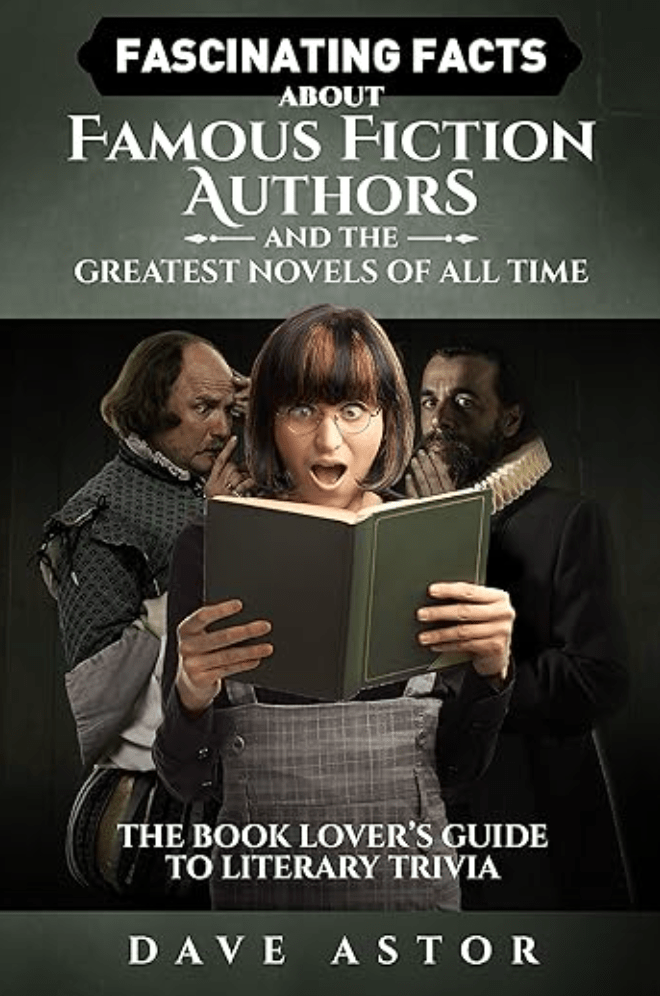
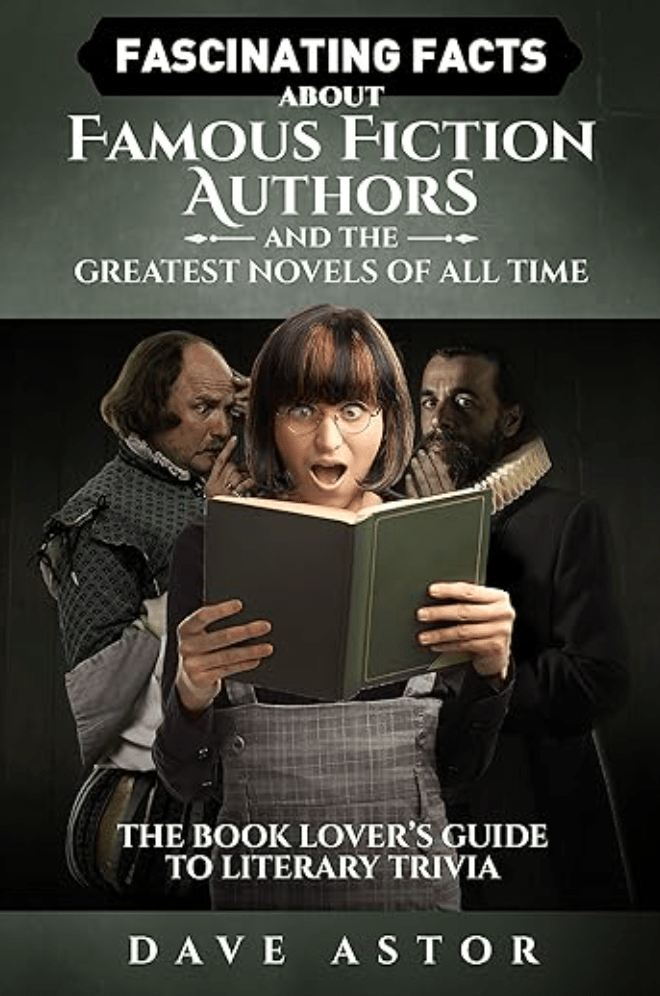
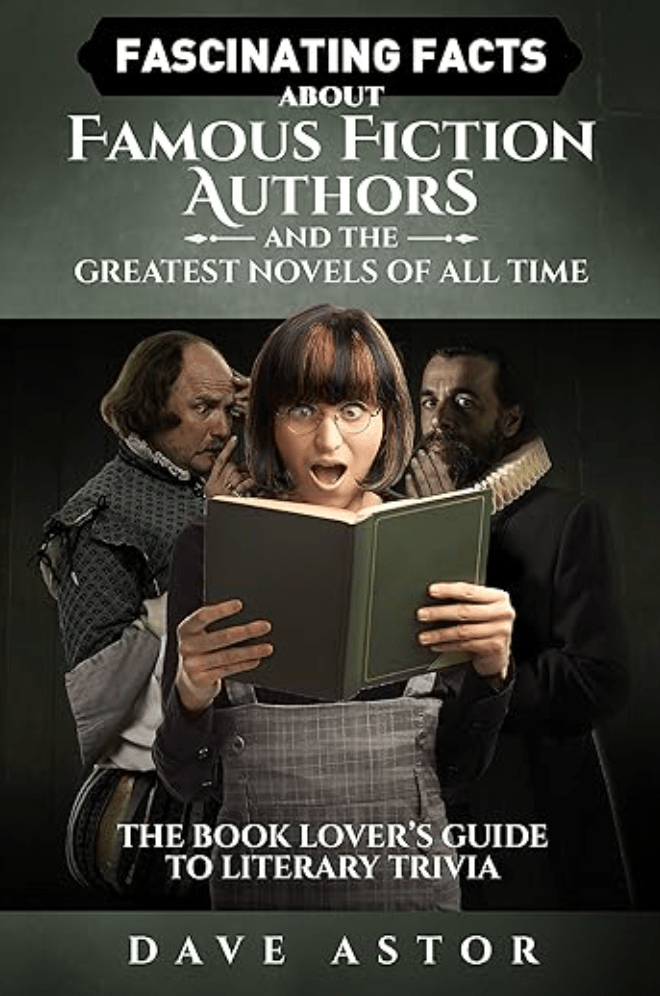
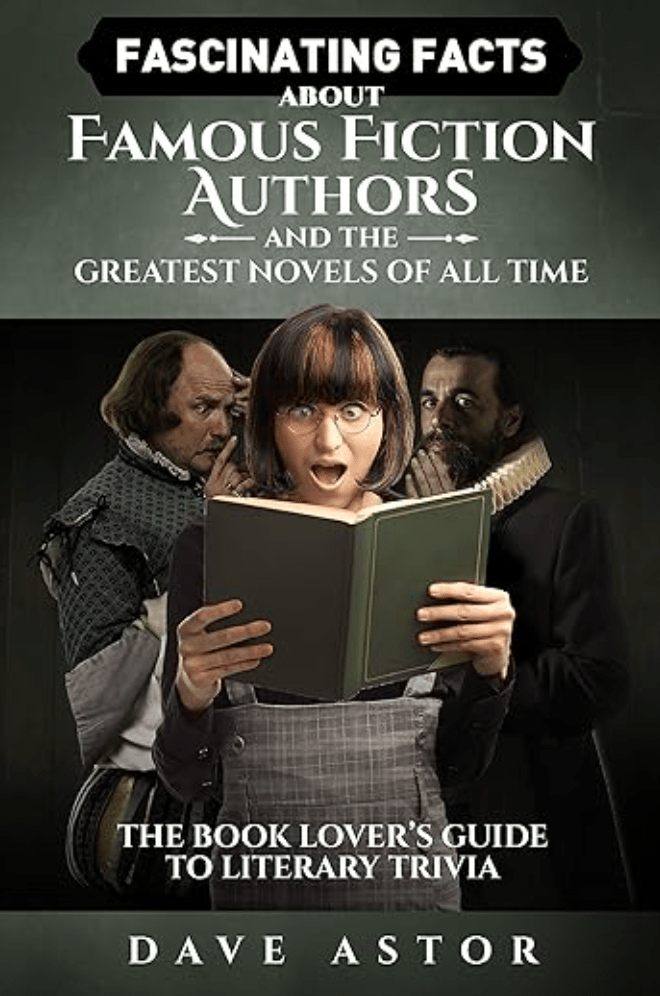
I’m also the author of a 2017 literary-trivia book

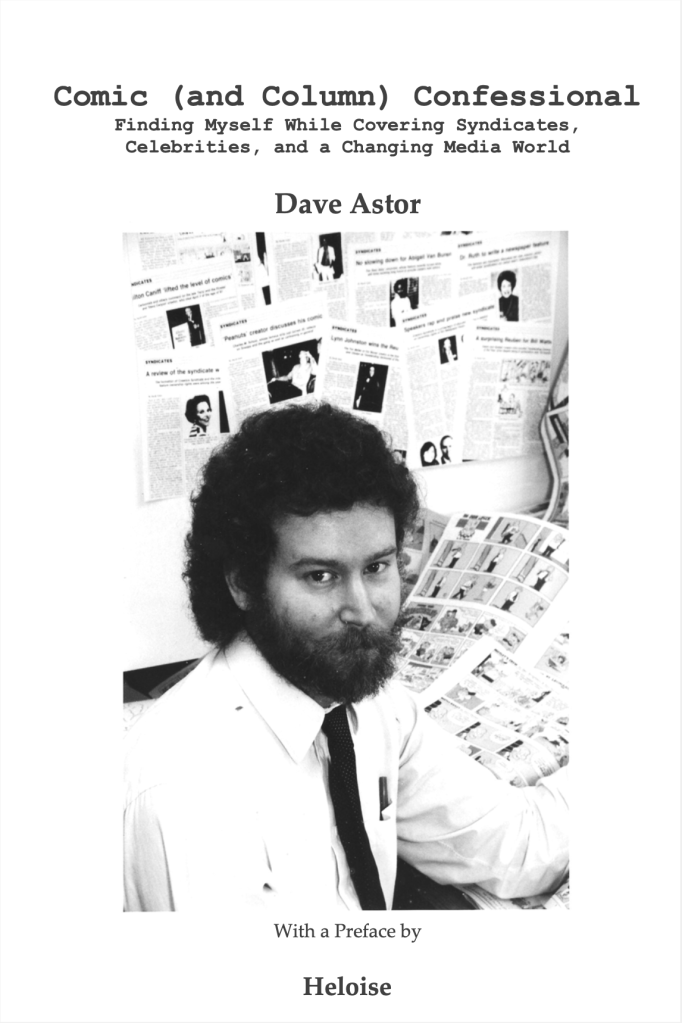
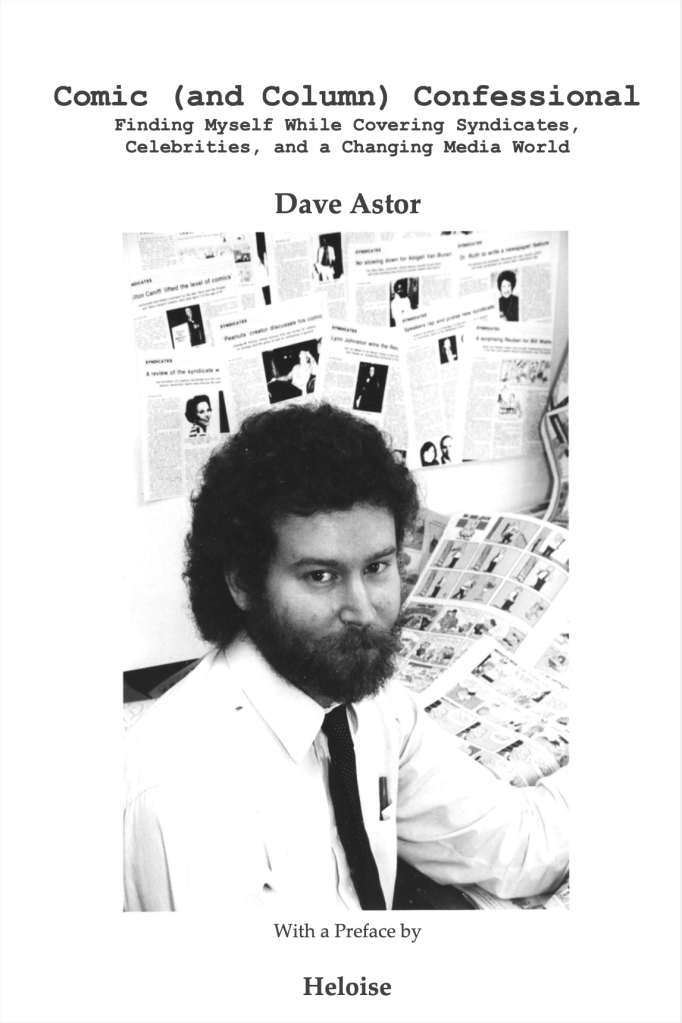
…and a 2012 memoir that focuses on cartooning and more.
In addition to this weekly blog, I write the 2003-started/award-winning “Montclairvoyant” topical-humor column every Thursday for Montclair Local. The latest piece — about the spending to date of money authorized by my town’s massive 2022 school bond referendum — is here.

Reimagination Actualization

Four years ago, I blogged about fiction that uses previous fiction as a jumping-off point — and perhaps reimagines well-known characters. This post is sort of a sequel to that post, taking a somewhat different angle and including several novels I’ve read since 2021.

In general, I’m not a huge fan of fiction that’s heavily inspired by a famous work; I’d rather writers be more original than that. Still, there have been some excellent novels that offer insights into the previous work and might be great in their own right.

My latest encounter with this reimagining phenomenon was Queen Macbeth, Val McDermid’s 2024 novella that takes a fascinating approach to characters in Shakespeare’s iconic Macbeth play. The book is excellent, giving Lady Macbeth a more positive (and more historically accurate) persona as a compelling plot unfolds in two different timelines.

McDermid’s book reminded me a bit of Margaret Atwood’s 2005 novella The Penelopiad (mentioned in my 2021 post) that gives Penelope a bigger and more feminist role than she had in Homer’s ancient Odyssey poem.

There’s also Demon Copperhead, Barbara Kingsolver’s 2022 tour de force that gives Charles Dickens’ 1850 classic David Copperfield a modern spin in America’s Appalachian region during the opioid epidemic.

Kristin Hannah’s gripping 2021 novel The Four Winds was obviously inspired by John Steinbeck’s The Grapes of Wrath (1939), but it’s still plenty original and differs in featuring a female protagonist. (The title character in Demon Copperhead is male.)

Zadie Smith has described the structure/focus of her novel On Beauty (2005) as an homage to E.M. Forster’s Howards End (1910).

In her also-published-in-2005 novel March, Geraldine Brooks takes the father from Louisa May Alcott’s 1868-released Little Women and gives him his own story.

I haven’t read it yet, but Percival Everett’s acclaimed James (2024) reimagines Mark Twain’s Adventures of Huckleberry Finn (1884) from the perspective of the escaped slave Jim.

In my 2021 post, I mentioned the 1966 novel Wide Sargasso Sea, in which Jean Rhys gives three-dimensionality to the “madwoman in the attic” of Charlotte Bronte’s novel Jane Eyre; Rhys’ creation is in effect a prequel to Bronte’s 1847 book. I also discussed the novel (by Gregory Maguire) and the play Wicked, which sympathetically portray the Wicked Witch from L. Frank Baum’s The Wonderful Wizard of Oz novel (1900) and The Wizard of Oz movie (1939).

Mentioned as well in that post were Isabel Allende’s 2005 novel Zorro, Jasper Fforde’s 2001 novel The Eyre Affair, and Seth Grahame-Smith’s 2009 Jane Austen parody Pride and Prejudice and Zombies — the last of which I haven’t felt the “Persuasion” to read.

Comments about, and examples of, this theme?

Misty the cat says: “My right turn has nothing to do with politics.”

My comedic 2024 book — the part-factual/part-fictional/not-a-children’s-work Misty the Cat…Unleashed — is described and can be purchased on Amazon in paperback or on Kindle. It’s feline-narrated! (And Misty says Amazon reviews are welcome. 🙂 )

This 90-second promo video for the book features a talking cat: 🙂

I’m also the author of a 2017 literary-trivia book

…and a 2012 memoir that focuses on cartooning and more.

In addition to this weekly blog, I write the 2003-started/award-winning “Montclairvoyant” topical-humor column every Thursday for Montclair Local. The latest piece — about a badly maintained lower-income apartment building, a change in venue for a senior center, and more — is here.

Going Places

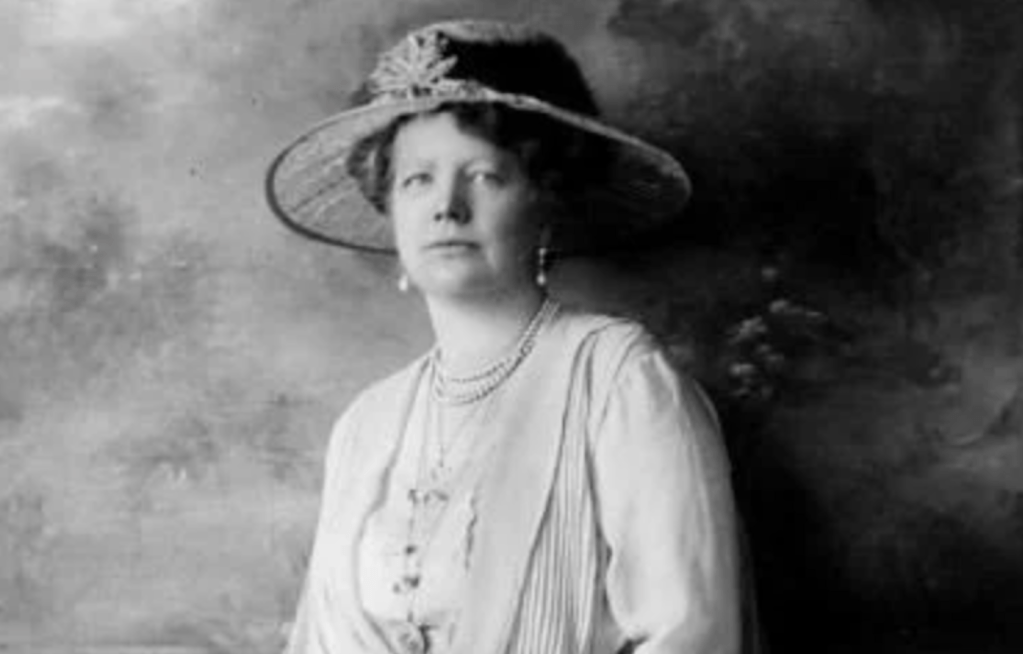
Elizabeth von Arnim

Can going to a different place change a person for the better? It certainly helps in some cases — as seen in various novels. Characters might get out of rut, meet new people, interact differently with people they already know, see new sights, learn new things, self-reflect, find the new place suits their personality more, etc.

I just read Elizabeth von Arnim’s The Enchanted April (1922), which focuses on four unhappy British women who rent a castle on the Italian Riviera for a month. The gorgeous setting becomes a big factor in improving things for each of the four. The Enchanted April is…enchanting — an upbeat novel, but with some welcome puncturing of sentimentality.

Another British character travels to Hawaii in David Lodge’s 1991 novel Paradise News, where love is found along with better weather. 🙂

Rita Mae Brown’s 1973 novel Rubyfruit Jungle stars Molly Bolt — who, as a lesbian, finds life somewhat fraught in Florida. She eventually ends up in New York City, where things are of course not perfect but there’s more of an LGBTQ+ community.

The orphaned title character of Charlotte Bronte’s Jane Eyre spends many of the 1847 novel’s early pages at Lowood School, a harsh place with little heat and inadequate food until some reforms are instituted. But the big change for Jane is subsequently getting a governess job at the Thornfield Hall manor, where life becomes quite dramatic. Good things happen, but not all good…

Yes, it can obviously be a mixed experience going to a different place. In Kristin Hannah’s 2024 novel The Women, for instance, the rather naive American protagonist signs up to be a Vietnam War nurse. Much of the experience is horrific for her and of course her badly wounded patients, yet she grows so much as a person that going to Vietnam has some positives.

In John Grisham’s 2014 novel Gray Mountain, New York City lawyer Samantha Kofer is a very urban person who nonetheless finds a lot of satisfaction amid fraught moments after taking a legal-aid job in Virginia’s Appalachian region.

A life-changing positive travel experience can also involve leaving Earth, as pioneering female astronaut Elma York does in Mary Robinette Kowal’s The Calculating Stars and its sequel The Fated Sky, both from 2018.

Obvioiusly, characters can get to another place and see their lives go downhill, but that scenario is not part of this blog post.

I’ve just touched the surface here. Other novels that fit today’s theme? Comments about this theme?

Misty the cat says: “Whoever writes ‘Stop’ signs is even more widely published than Stephen King.”

My comedic 2024 book — the part-factual/part-fictional/not-a-children’s-work Misty the Cat…Unleashed — is described and can be purchased on Amazon in paperback or on Kindle. It’s feline-narrated! (And Misty says Amazon reviews are welcome. 🙂 )

This 90-second promo video for the book features a talking cat: 🙂

I’m also the author of a 2017 literary-trivia book

…and a 2012 memoir that focuses on cartooning and more.

In addition to this weekly blog, I write the 2003-started/award-winning “Montclairvoyant” topical-humor column every Thursday for Montclair Local. The latest piece — containing a comedic overreaction to a one-hour-earlier closing time at my town’s municipal pools — is here.

Summer in the City? No, Summer with a Kitty

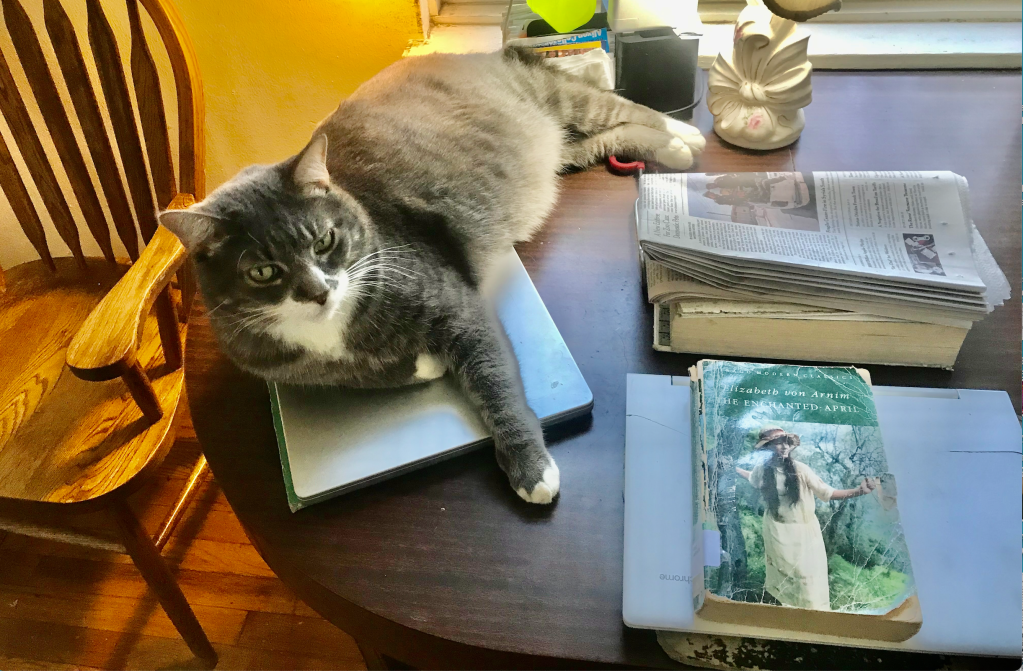
My feline self sprawled next to Elizabeth von Arnim’s The Enchanted April, which I will not discuss today because I haven’t finished reading it yet. The first letters of that novel’s title spell “tea,” which I don’t drink. Thank you for your attention to these two matters. (Photo by Dave.)

Misty the suburban cat here with my every-two-month blog post. My previous guest piece was in June, this one is in August, and the next one will be in October. Except that U2’s October album was released in 1981, so I’m not sure how my next blog post will be in…October. There IS a song on that album called “Stranger in a Strange Land,” which is about me at the vet for my yearly check-up.

Anyway, my adult humans Dave and Laurel saw the Superman movie this month, and enjoyed its thrills, acting, and empathy. But I, Misty, was not allowed in the theater because of being a cat. I was actually kind of relieved, because sitting through 25 minutes of ads and previews would have had me yowling loud enough to be heard on Mars — which billionaire bozo Elon Musk, aka the Tesla dude, wants to not only colonize but have The Martian Chronicles author Ray Bradbury write a 2025 sequel called The SpaceX Chronicles. Given that Bradbury died in 2012, he…missed the pleasure of seeing the catastrophic flop of Musk’s stupid Cybertruck.

The Superman film reminds me and other kitties of Michael Chabon’s The Amazing Adventures of Kavalier & Clay, the 2000 novel partly based on the real-life Jerry Siegel/Joe Shuster duo who created the Superman character for comic books in 1938 — the year the iPhone minus-69 was released.

More generally, the 2025 movie starring the “Man of Steel” also reminds my meowing self of fictional characters possessing abilities beyond the capacity of most mortals. One is the Lee Child-created Jack Reacher — who’s not a superhero but displays unusual strength, incredible fighting abilities, great intellect, and other attributes in the 29-book series that began in 1997. Exactly a century after Bram Stoker’s Dracula (1897), which stars a vampire who acts out in all kinds of ways after Frankenstein defeats him in pickleball. A tip of the hat to Mary Shelley.

Another character who combines exceptional brains with exceptional physical abilities is the prehistoric protagonist Ayla of Jean M. Auel’s The Clan of the Cave Bear and its sequels. Ayla’s many accomplishments included inventing things and being the only person able to ride Baby the lion (a feline like me!), although she never played pickleball with her horse Whinney.

Some fictional people even rise in the air or fly — in magic-realism novels and other books. Among them are Remedios in Gabriel Garcia Marquez’s One Hundred Years of Solitude, Margarita in Mikhael Bulgakov’s The Master and Margarita, and the title character of J.M. Barrie’s Peter Pan — which was first a play, then a novel, then an animated movie, then a live TV film, and finally a jar of peanut butter which also flew when Dave tossed it out the window to compare its hang time with a jar of Skippy peanut butter. Denying me the opportunity to swat both brands off the counter with my cat paws.

There are also characters who might not be extraordinarily adept in a brute physical way but are really, really smart. Hermione Granger of J.K. Rowling’s Harry Potter books, Sherlock Holmes of Arthur Conan Doyle’s detective fiction, Hercule Poirot of Agatha Christie’s mysteries, Lisbeth Salander of Stieg Larsson’s The Girl with the Dragon Tattoo and its sequels, etc. Lisbeth sadly did not have a cat tattoo, but I forgive her because she’s Swedish and thus might toss some Swedish meatballs my way.

Dave will reply to comments so that I have time to eat the aforementioned meatballs. Rest assured that I maintain a balanced diet — one meatball in each side of my mouth.

I, Misty the cat, say: “After years of study, I’m finally qualified to inspect Belgian blocks.”

My and Dave’s comedic 2024 book — the part-factual/part-fictional/not-a-children’s-work Misty the Cat…Unleashed — is described and can be purchased on Amazon in paperback or on Kindle. It’s feline-narrated! (And Misty says Amazon reviews are welcome. 🙂 )

This 90-second promo video for the book features a talking cat: 🙂

Dave is also the author of a 2017 literary-trivia book

…and a 2012 memoir that focuses on cartooning and more.

In addition to this weekly blog, Dave writes the 2003-started/award-winning “Montclairvoyant” topical-humor column every Thursday for Montclair Local. The latest piece — about my school district’s huge, recently discovered deficit — is here.

Weekly Post, Monthly Theme

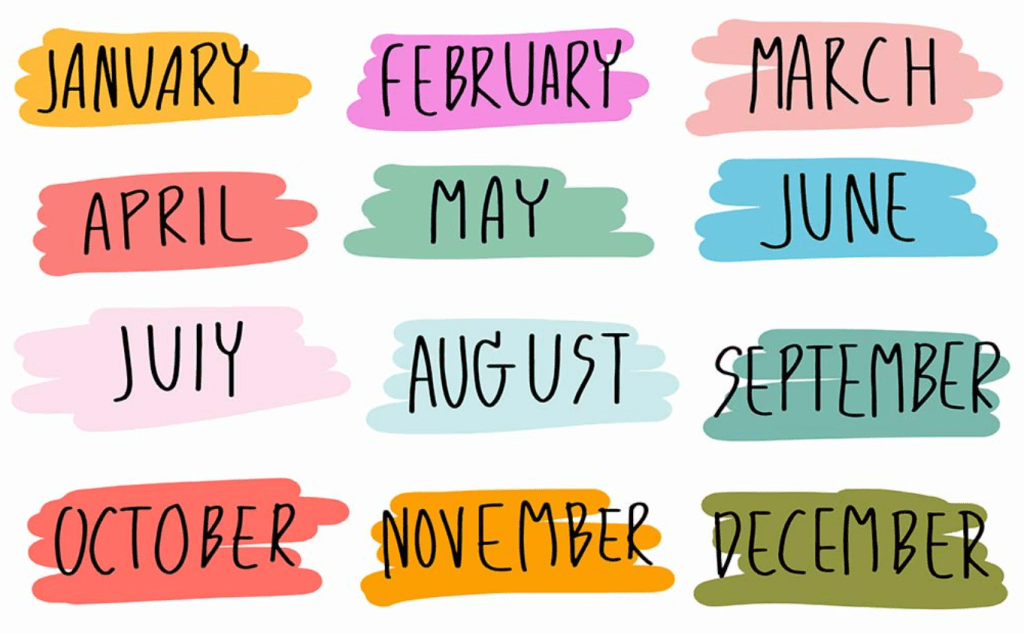
August has arrived, and thoughts not only turn to the approaching start of the school year but also to…Light in August.

Yes, some novels have months in their titles, and William Faulkner’s 1932 book is no exception. It also happens to be my favorite Faulkner work as the author unspools a “Southern Gothic” story about a man (Joe Christmas) who passes as white but thinks he has some African-American ancestry, a pregnant woman (Lena Grove) searching for the would-be father, and others.

Now let’s work back to previous months. Nadine Gordimer wrote July’s People, a novel set in a near-future version of South Africa where apartheid had ended. This was before apartheid actually ended, at least officially, about a decade after Gordimer’s 1981 book was published.

There’s also Three Junes by Julia Glass, whose 2002 novel has an intriguing tri-format set in 1989, 1995, and 1999.

Various novels include May and April in their titles, but I haven’t read any of them. 🙂

March? We have Geraldine Brooks’ March, but — rather than referring to the third month of the year — the title of the 2005 novel is the last name of the father from Louisa May Alcott’s Little Women as Brooks focuses on that dad’s harrowing Civil War experiences. There’s also Middlemarch, but that’s the name of a fictional English town in George Eliot’s 1871-72 classic.

I haven’t read any novels with February, January, December, or November in the title, but they do exist — including Gustave Flaubert’s…November (1842).

Going further back in the realm of months, we have Tom Clancy’s 1984 Cold War thriller The Hunt for Red October.

Have I read any novels with September in the title? Nope. But the Earth, Wind & Fire song “September” was pretty good.

Watch for a Misty the cat guest blog post next week! He was adopted in December (of 2017).

Any novels you’d like to mention with a month manifestation?

Misty the cat says: “There are twin beds, queen beds, king beds, and hall-floor beds.”

My comedic 2024 book — the part-factual/part-fictional/not-a-children’s-work Misty the Cat…Unleashed — is described and can be purchased on Amazon in paperback or on Kindle. It’s feline-narrated! (And Misty says Amazon reviews are welcome. 🙂 )

This 90-second promo video for my book features a talking cat: 🙂

I’m also the author of a 2017 literary-trivia book

…and a 2012 memoir that focuses on cartooning and more.

In addition to this weekly blog, I write the 2003-started/award-winning “Montclairvoyant” topical-humor column every Thursday for Montclair Local. The latest piece — which has a quirky percentage theme — is here.