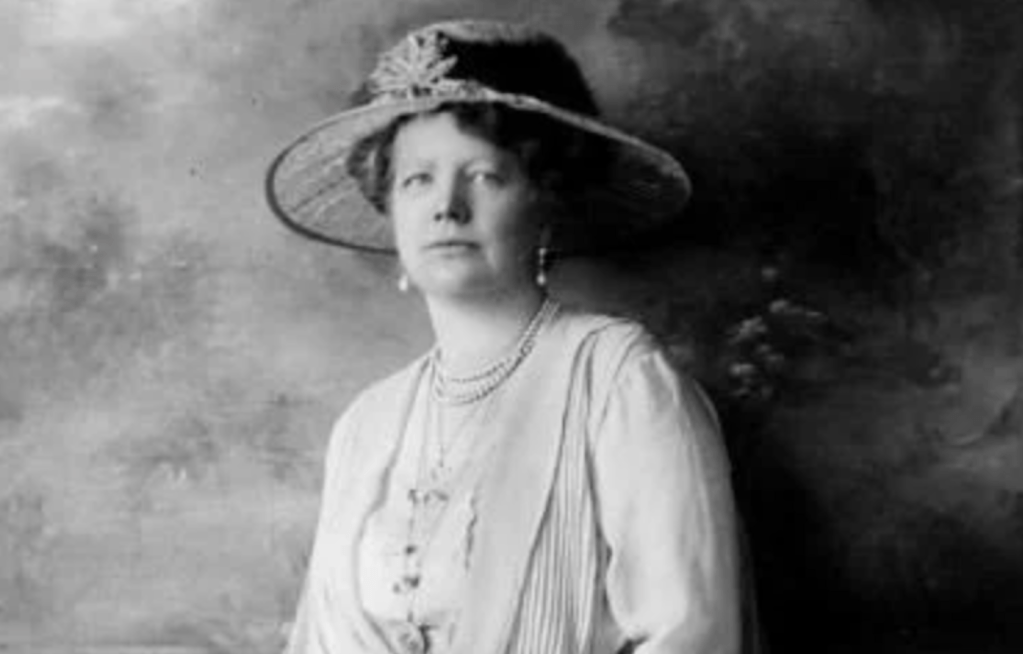
Elizabeth von Arnim
Can going to a different place change a person for the better? It certainly helps in some cases — as seen in various novels. Characters might get out of rut, meet new people, interact differently with people they already know, see new sights, learn new things, self-reflect, find the new place suits their personality more, etc.
I just read Elizabeth von Arnim’s The Enchanted April (1922), which focuses on four unhappy British women who rent a castle on the Italian Riviera for a month. The gorgeous setting becomes a big factor in improving things for each of the four. The Enchanted April is…enchanting — an upbeat novel, but with some welcome puncturing of sentimentality.
Another British character travels to Hawaii in David Lodge’s 1991 novel Paradise News, where love is found along with better weather. 🙂
Rita Mae Brown’s 1973 novel Rubyfruit Jungle stars Molly Bolt — who, as a lesbian, finds life somewhat fraught in Florida. She eventually ends up in New York City, where things are of course not perfect but there’s more of an LGBTQ+ community.
The orphaned title character of Charlotte Bronte’s Jane Eyre spends many of the 1847 novel’s early pages at Lowood School, a harsh place with little heat and inadequate food until some reforms are instituted. But the big change for Jane is subsequently getting a governess job at the Thornfield Hall manor, where life becomes quite dramatic. Good things happen, but not all good…
Yes, it can obviously be a mixed experience going to a different place. In Kristin Hannah’s 2024 novel The Women, for instance, the rather naive American protagonist signs up to be a Vietnam War nurse. Much of the experience is horrific for her and of course her badly wounded patients, yet she grows so much as a person that going to Vietnam has some positives.
In John Grisham’s 2014 novel Gray Mountain, New York City lawyer Samantha Kofer is a very urban person who nonetheless finds a lot of satisfaction amid fraught moments after taking a legal-aid job in Virginia’s Appalachian region.
A life-changing positive travel experience can also involve leaving Earth, as pioneering female astronaut Elma York does in Mary Robinette Kowal’s The Calculating Stars and its sequel The Fated Sky, both from 2018.
Obvioiusly, characters can get to another place and see their lives go downhill, but that scenario is not part of this blog post.
I’ve just touched the surface here. Other novels that fit today’s theme? Comments about this theme?
Misty the cat says: “Whoever writes ‘Stop’ signs is even more widely published than Stephen King.”
My comedic 2024 book — the part-factual/part-fictional/not-a-children’s-work Misty the Cat…Unleashed — is described and can be purchased on Amazon in paperback or on Kindle. It’s feline-narrated! (And Misty says Amazon reviews are welcome. 🙂 )

This 90-second promo video for the book features a talking cat: 🙂
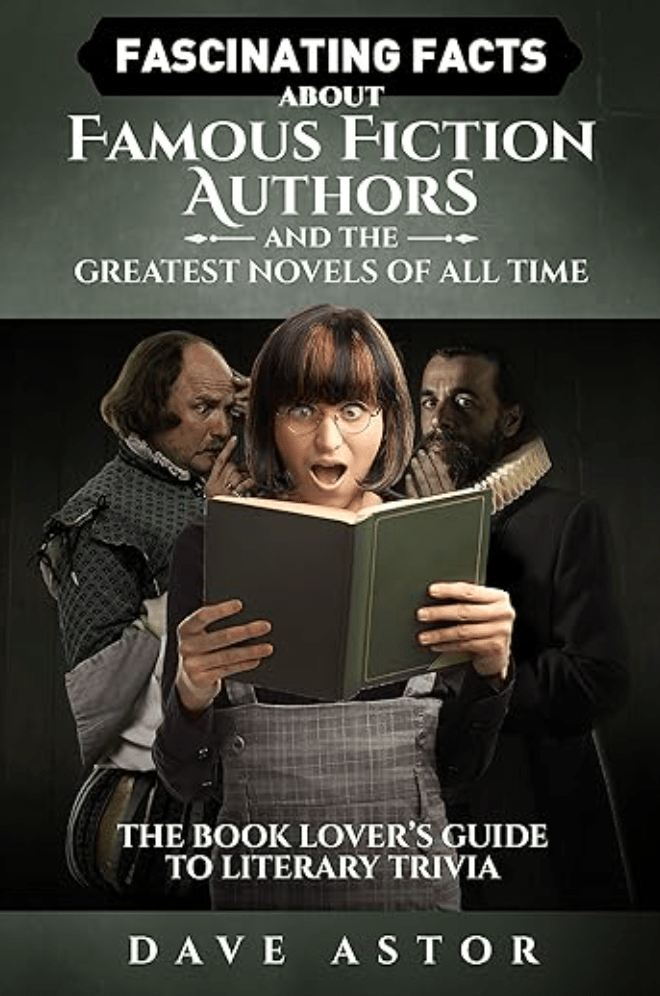
I’m also the author of a 2017 literary-trivia book…
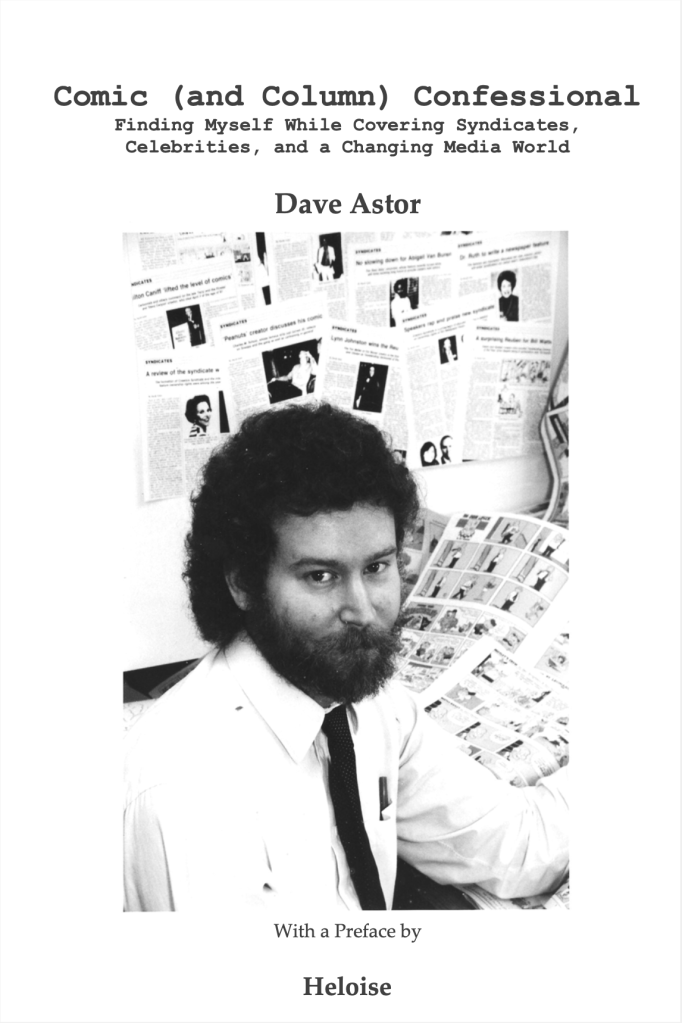
…and a 2012 memoir that focuses on cartooning and more.
In addition to this weekly blog, I write the 2003-started/award-winning “Montclairvoyant” topical-humor column every Thursday for Montclair Local. The latest piece — containing a comedic overreaction to a one-hour-earlier closing time at my town’s municipal pools — is here.
 Dave Astor on Literature
Appealing
LikeLiked by 2 people
Thank you, Swamigalkodi Astrology.
LikeLiked by 1 person
✨ *“Sometimes, the soul needs a change of scenery to remember who it is.”*
Your post sings with truth. Travel in fiction isn’t just movement — it’s metamorphosis.
Here’s a quick bookshelf of soul-shifting journeys:
📚 **On the Road** – Freedom found in motion[](https://festivaltopia.com/20-novels-that-will-change-the-way-you-travel/&citationMarker= “1”)
🧭 **The Alchemist** – Dreams whispered by desert winds[](https://festivaltopia.com/20-novels-that-will-change-the-way-you-travel/&citationMarker= “1”)
🌿 **Outlawed** – Reinvention on the wild frontier
🕰️ **Outlander** – Love and identity across centuries
🍜 **Butter** – Desire stirred through Japan’s kitchens[](https://observer.com/2025/04/fiction-recommendations-must-read-books-that-will-transport-you-to-other-countries/&citationMarker= “2”)
Each place, a mirror
LikeLiked by 2 people
Thank you, Rohitash, the eloquent comment and links! I’ve read “On the Road,” “The Alchemist,” and all the “Outlander” books, and, while they’re quite different, they’re excellent examples of this topic. Time travel, as in the “Outlander” books, is kind of the ultimate in “Going Places.” 🙂
LikeLiked by 1 person
Yes….you are right Dave
LikeLiked by 2 people
🙂
LikeLiked by 1 person
Hi Dave, books frequently involve travel that brings both good and bad changes. In the Secret Garden, neglected Mary Lennox travels from India to Yorkshire to start a new life after her parents die. In the Earth Children saga by Jean Auel, Ayala is constantly on the move. Alice and Cora Munro’s move to join their father in The Last of the Mohican’s doesn’t go well for them. Other books with movement and change are Around the world in ninety days, 20,000 leagues beneath the sea, The Time Machine and War of the Worlds. Hercule Poirot also gets out and about.
LikeLiked by 2 people
Thank you, Robbie! Great examples of relocations that end well and not so well, in a variety of genres! Sci-fi — whether by Jules Verne, H.G. Wells, or other authors — definitely has plenty of travel, including away from Earth. And I’m a big fan of Jean M. Auel’s “Earth’s Children” series and James Fenimore Cooper’s “Leatherstocking” novels.
LikeLike
I have to confess I’ve only read The Last of the Mohicans in the series. I should try to get to another.
LikeLiked by 1 person
Of Fenimore Cooper’s five “Leatherstocking” novels, I think “The Deerslayer” was my favorite. Set when Natty Bumppo was very young.
LikeLike
Thanks, Dave. I’ll try that one first.
LikeLiked by 2 people
🙂
LikeLike
How many good mentions, Roberta, in connection with travelling
LikeLiked by 2 people
Thank you 💜
LikeLiked by 1 person
Impactful
LikeLiked by 2 people
Thank you, Swamigalkodi Astrology!
LikeLike
The majority of the travelers I’m meeting are in fact escapists: running for the law, domestical issues, or existential crisis. It takes them some time to figure out they will find nothing on the top of a mountain apart of what they have brought with them. That and the spectacular view of course. Some people are using literature in similar ways. Wolfing down books at such quantity and speed that I’m asking myself “What with their own life?”
LikeLiked by 3 people
Thank you, Shaharee! Yes, people travel for different reasons. I’m glad that in some cases it’s “just” for some enjoyment and to see new things. 🙂 It’s true that travel often doesn’t have a big impact; as you say, the traveler is the same person no matter where they are. But sometimes, a new place can be a catalyst for change…
LikeLike
When I use the world “traveler” I usually refer to the nomadic crowd that is constantly on the move. I happen to be one (digital nomad) and I’ve learned to differentiate the ones who’re running away of something from the ones who’re traveling towards something. Tourists and pilgrims for example travel towards a destination and see the travel towards that destination as a part of the experience. On the other hand, most emigrants and refugees are running away from something and consider the travel to their destination as a grueling experience.
LikeLiked by 1 person
Ah, I see — someone who’s constantly on the move as opposed to occasionally on the move (for vacation, a once-in-a-great-while work relocation, etc.). And, yes, travel and the reasons for it are not always enjoyable; my post focused on the positives of going to a new place, but it’s of course not always a happy thing.
LikeLiked by 1 person
I think you touched here a very interesting subject, Dave, and I am convinced that travelling, maybe at a lower speed than nowadays, opens our horizon in a very important way. The Enchanted April sounds very tempting to me.
Exceptionally I allow myself to add a post about “WILD” by Cheryl Strayed I wrote some years ago about the book I liked very much :https://rivella49.com/2016/06/09/wildcheryl-strayedwalk-and-silenceedi/
LikeLiked by 2 people
Thank you, Martina! Traveling is indeed a wonderful/important thing, even if one has to approach it somewhat differently at an older age.
Terrific 2016 post you did about “Wild”! Glad you posted a link to it.
LikeLike
What a great surprise, Dave, you wrote me a positive answer to my comment, which I never received! I thought I had offended you and now wanted to excuse myself. Thank you,Dave🤣
LikeLiked by 2 people
Glad you eventually saw my response, Martina! 🙂
LikeLike
Thank you Dave! Unfortunately I don’t receive your answers anymore!!
LikeLiked by 2 people
Very sorry about that, Martina. 😦
LikeLike
As usual when I read one of your posts about books, Dave, and am searching to add an example or two to the list, I turned to stare at the bookcase nearest to my desk, and this time I immediately found two examples of life-changing travels. The first two books I read by Barbara Kingsolver, The Bean Trees (1988) and Animal Dreams (1990) begin with the heroine moving to another place. In The Bean Trees, Taylor Greer, drives away from her home in rural Kentucky and ends up in Tuscon, Arizona. On the way, she acquires an abandoned Cherokee child. Talk about a life-changing event! In Animal Dreams, Codi Noline returns to her hometown of Grace, Arizona, to care for her father, who is sinking into Alzheimer’s, and finds herself reinterpreting her childhood and adolescence there.
LikeLiked by 2 people
Thank you, Kim! A great pre-comment method — eyeing your home bookshelves. 🙂
Excellent examples from Barbara Kingsolver’s early career! I read those two novels of hers many years ago, so I especially appreciate the concisely skillful summaries.
LikeLiked by 1 person
I am going to keep this short cos I am having trouble with the internet this morning. Great theme. Will stick with two books written by a Scot, Kidnapped and Treasure Island… Their leads sure went places whether they wanted to or not. .
LikeLiked by 2 people
Thank you, Shehanne! Two great examples from Robert Louis Stevenson! Adventure-type novels definitely take their characters (and readers) to different places, for better or for worse. Hope your Internet improves today!
LikeLiked by 1 person
I am quite sure if I’d not been just glad to get alike and comment on it I’d ahve thought of more Dave.
LikeLiked by 2 people
You did plenty with what the Internet allowed you to do, Shehanne. 🙂
LikeLiked by 1 person
That was not much yesterday Dave, so thank you.
LikeLiked by 1 person
You’re welcome, Shehanne!
LikeLiked by 1 person
I would love to read Elizabeth von Arnim’s The Enchanted April. This is an interesting topic. The only book I can think of right now is Heart of Darkness, which is a bit of a depressing example! 📚
LikeLiked by 3 people
Thank you, Ada! Yes, going to a new place — as in “Heart of Darkness” — is not always a totally wonderful experience.
LikeLiked by 1 person
I’m going to recommend Tove Jansson’s “The Summer Book” about a grandmother and granddaughter spending a summer on a Finnish Island. And Laura Ingalls Wilder’s “Little House” books–every place Pa moves them leads to new insights for Laura. (K)
LikeLiked by 2 people
Thank you, Kerfe! I like your two examples! Moving to a new place can definitely lead to new insights amid the stresses and difficulties of that relocation.
LikeLiked by 1 person
I lived in Asia for 12 years, and so much of this post really resonates with me. And, of course, I love your book recommendations and will be reading some that you’ve recommended. I always do.
LikeLiked by 2 people
Thank you! I appreciate your kind words about the blog. 🙂 Wonderful that you lived in Asia for 12 years. What an experience!
LikeLike
After Heathcliff leaves Wuthering Heights effectively having ghosted Cathy, what a foreshadowing, ha, he disappears for 3 years, and returns a wealthy man. Speaking of foreshadowing, Hemingway’s memoir Life Is A Moveable Feast was all over the map. He started writing about his life in France, when he was in Cuba, worked on it in Idaho, and in Spain as well (according to his widow Mary Hemingway). Nice theme, Dave. I’d say for the most part these characters who travel in novels, usually (but not always) return with lots of do re mi. Susi
LikeLiked by 2 people
Thank you, Susi! “Wuthering Heights” and Ernest Hemingway’s life and work are great examples! Made me think of American Robert Jordan going to Spain during the Spanish Civil War in Hemingway’s “For Whom the Bell Tolls.” Re your last line, I also thought of Woody Guthrie’s song “Do Re Mi.”
LikeLike
Thanks Dave. Trying to keep a post modern urban dictionary alive. There’s such a wealth of expressions like this that aren’t indecent or vulgar and I hope they remain part of our collective lexicon. Susi
LikeLiked by 1 person
It’s a great phrase, Susi! 🙂
LikeLike
I am a great fan of going places to get a perspective on life and what it can be – on many levels. Thank you for this very interesting post with lots of great reading tips!
LikeLiked by 3 people
Thank you, Thérèse! Glad you liked the post! And I can see from your blog that you (and your ancestors) value/valued the importance of new places.
LikeLiked by 1 person
Hello Dave!
Yes, there are many possible examples for this topic.
Inspired by yourJane Eyre reference, I’d like to add Anne Shirley, from Anne of Green Gables.
This orphan, born in a little yellow house in Bolingbroke, NS. had lived in an orphanage in Hopetown, Nova Scotia. Before that, with the Hammonds and the Thomas’.
When she went to Green Gables, her life truly began.
Great topic, and I must add, moving around and travelling both enriched and changed my life.
Have a fab day!
LikeLiked by 2 people
Thank you, Resa! Anne Shirley in “Anne of Green Gables” is a terrific example! Anne’s life truly changed for the better after she arrived at Matthew and Marilla’s household, though there were certainly bumps along the way.
Yes, moving and traveling can be VERY enriching.
Have a great day, too!
LikeLiked by 1 person
Yayay!
😄
LikeLiked by 2 people
🙂
LikeLike
An interesting theme, Dave. Apart from Jane Eyre, I haven’t read any of the novels you’ve mentioned. From the writer’s perspective, it’s a theme that offers all kinds of possibilities regarding different cultures and ways of being.
LikeLiked by 2 people
Thank you, Rosaliene! Nicely stated! Yes, much potential and almost endless possibilities with a going-to-a-new-place storyline!
LikeLiked by 1 person
How about A Room with a View by E.M. Forster?
LikeLiked by 3 people
Thank you, Liz! Traveling to Florence and Rome…quite nice destinations. 🙂 I read “A Room with a View” for the first time a few weeks ago — on your recommendation, I think — and veered between liking it and having some mixed feelings. For whatever reason, Forster’s “A Passage to India” grabbed me more.
LikeLiked by 1 person
You’re welcome, Dave. I don’t think I’ve read A Passage to India. I know I’ve seen the movie.
LikeLiked by 2 people
I haven’t seen the movie. Just looked it up online, and it seems to have received a lot of acclaim.
LikeLiked by 1 person
It was a good movie.
LikeLiked by 1 person
Good to hear!
LikeLiked by 1 person
I agree, travelling to new locations can be life changing, as shown in many books. Your examples are great. I loved Enchanted April. A Room With a View is another that came to mind.
LikeLiked by 2 people
Thank you, Darlene! Yes, “The Enchanted April” is a real treat to read. And traveling to Italy — as in “A Room with a View,” as well — is clearly a plot line in some novels. Henry James’ “Daisy Miller” and Thomas Mann’s “Death in Venice” are among the examples that come to mind.
LikeLiked by 1 person
Gosh I remember ‘Rubyfruit Jungle’ by Rita Mae Brown. I found it in our school library and I was about 13 years old – rather racy back in the day, but I certainly enjoyed it!
Also a couple of good books, and I have read both of these twice. Both are from Graham Greene: ‘Our Man in Havana’ (I was reading it actually in Havana, Cuba, at the time) and I loved the wonderful – ‘Travels with My Aunt’ – and that was also a very old and good film.
LikeLiked by 2 people
Thank you, Chris! “Rubyfruit Jungle” was definitely ahead of its time. I really enjoyed it, too, and found it interesting that Rita Mae Brown eventually turned to detective fiction — with some of the sleuths being animals. 🙂
And I appreciate the other book mentions. Reading “Our Man in Havana” in Havana — fantastic! I need to try Graham Greene again; all I’ve read of his was “The Power and the Glory” novel and his amazing, macabre short story “Proof Positive.”
LikeLiked by 1 person
Hi Dave, and hope you’re well (and Misty, of course). As usual a great topic for a post, and as usual I’ll need time to think up a few examples. Once that comes to mind is ‘Restoration’ by Rose Tremain, which I read many years ago when it was first published and which I highly recommend. In brief, the protagonist Robert Merival lives a somwhat shallow life, which isn’t improved when he finds favour with King Charles II and lives at court. When he manages to offend said king he’s cast out, and this change of location has an effect on him. The story’s set in England, the Restoration period of the late 17th century, which is part of the reasonf for the title of the book; as to the rest, it has to be read. As I recall, however, it’s very good. There’s also ‘Great Expectation’, where Pip’s move to London improves him – eventually. And that’s it for now; if I think of more I’ll be back. Have a good week. 🙂
LikeLiked by 5 people
Thank you, Laura! “Restoration” sounds really good. Getting cast out of a royal court can have its benefits — if the monarch isn’t too vindictive. 🙂
Your mention of “Great Expectations” reminds me that Dickens sent his title character in “Martin Chuzzlewit” to the United States, though it has been so many years since I read “MC” that I can’t remember if visiting the U.S. was a positive experience or not for that protagonist. Dickens certainly had mixed feelings about the country during his two extended visits.
Have a good week, too!
LikeLiked by 1 person
Thanks, Dave. I have a feeling that Martin Chuzzlewit didn’t have a particularly great time in the USA, although like you I haven’t read it in a very long time. If I think of any more you can be sure I’ll be back. Stay safe! 🙂
LikeLiked by 2 people
I’m guessing you’re right, Laura. The U.S. in the 1840s (and the unsafe 2020s) is not the best place to be. 🙂 😦
LikeLiked by 1 person
Although I’m guessing that Dickens’s problems paled into insignificance against what’s happening now. Take care. 😦
LikeLiked by 1 person
You may have a point there, Laura… 😦
LikeLiked by 1 person
Thanks for bringing another interesting angle from which to consider literature, Dave. Not only are your posts informative, you make us thing about the books we’ve enjoyed over the years.
I immediately thought of Jack London, and while he and his characters, including a famous dog (don’t tell Misty) did travel, much of his writing is stories and non-fiction. However, Burning Daylight is fiction and, as I recall, quite good. I read it a long time ago.
I’d be remiss if I didn’t plug for a friend. Darlene Foster is the author of ten books in the Amanda Travels series, featuring–as she says–“a spunky young girl who loves to travel.” She also chronicles her life before traveling to a new country in You Can Take the Girl Out of the Prairie.
LikeLiked by 6 people
Thank you, Dan, for the comment — including the kind words! 🙂
Jack London definitely had his characters (whether canine or human) go places in many of his books, including “The Call of the Wild,” “White Fang,” and “The Sea-Wolf” — my favorite London novels along with “Martin Eden.”
Ha! 😂 Misty the cat is sort of jealous of the canine protagonists in “The Call of the Wild” and “White Fang,” but he realizes they had some very hard times amid their adventures.
And great that you mentioned the talented blogger/author Darlene Foster and her traveling Amanda!
LikeLiked by 2 people
Thank you, Dan for mentioning Amanda and her travels. She learns new things every where she goes.
LikeLiked by 3 people
My pleasure, Darlene. She was actually the first character I thought of.
LikeLiked by 3 people
Interesting theme, Dave.
I have been reading Tana French’s Cal Hooper series (retired Chicago cop leaves ex-wife and adult child he has some regrets about and moved to rural Ireland). He is still himself, but the setting and the pace of life seem to allow him to be more introspective.
The Giver of Stars by JoJo Moyes is an Englishwoman who thinks she is connecting with American royalty and have vision of living on Fifth Avenue, NYC, only to find herself in backwoods Kentucky. She redeems the outcome by becoming a packhorse librarian and finds meaning in that work.
LikeLiked by 3 people
Thank you, Madeline! Those are two great examples. A retired Chicago cop in rural Ireland — fascinating! Reminds me a little of the somewhat-opposite scenario of a young Irish woman going to New York City in Colm Toibin’s novel “Brooklyn.”
Kentucky instead of NYC…a bit of culture shock there. 🙂
LikeLiked by 1 person
Right, a sort of reverse immigration, although the character is not one of those Yanks seeking his Irish roots. He is looking for a fresh start and a bit of anonymity
LikeLiked by 2 people
Nice, Madeline, that the scenario for Tana French’s character is a bit less predictable than it could have been.
LikeLike
How about A Passage to India?
LikeLiked by 5 people
Thank you! A great example of going to a different place. Certainly a fraught experience for Adela Quested (and even more so for the falsely accused Dr. Aziz).
LikeLike
Thank you to Rebecca Budd for recommending “The Enchanted April”!
LikeLiked by 2 people