
Barbara Taylor Bradford. (Credit: Bradford Enterprises.)
As I’ve mentioned here and there in recent months, I’ve been mixing my more-serious novel reading with a larger percentage of mass-audience and/or escapist fiction these days as I seek diversion from the distressing words and actions of America’s repulsive Trump regime. But of course those categories of literature are not always mostly upbeat.
Take Barbara Taylor Bradford, who was known for best-selling novels starring impressive, plucky women. Those characters are inspiring, yes, but some of them go through some really depressing things. I just read Bradford’s Everything to Gain, and while I enjoyed rooting for its protagonist Mallory Keswick, what happens to her family would not help the mood of any reader appalled at the latest Trump-related news.
Meanwhile, I continued this year to read many novels by Elin Hilderbrand. She is known for what have been called summer “beach reads” — most of them set on the beautiful Massachusetts island of Nantucket — but Hilderbrand is actually a much more complex and nuanced author than that. So, while I first tried her novels with escapist intent on my part, I’ve seen plenty of illness, death, and other sad developments in those books. But plenty of lighter content and entertainment, too, and I always eagerly went back for more even as I don’t get 100% relief from Trump and what he says and supports.
Detective fiction, to which I devoted a separate blog post earlier this month, can also make one temporarily forget the real world — one reason why I’ve read quite a few books in that genre this year. Then again, any novel with crime as a major element can make a reader not only sadly think about the victims but also think about one of America’s biggest criminals, who happens to currently live in the White House rather than in a jail cell where he belongs.
It can also be a refreshing interlude to read very funny fiction. The Pickwick Papers, anyone? But even that Charles Dickens book and most other comedic novels by various authors have some downbeat sections amid the humor.
One of these days I’m going to give a third reread to L.M. Montgomery’s Anne of Green Gables. That iconic novel always brings a smile to my face, yet it contains some fraught moments and a heartbreaking death.
All this makes me wonder if I’ve ever read a completely upbeat novel. Not sure that even exists, and, if it did, I suppose such a book would lack adequate drama. But it would give readers a complete mental break. 🙂
Any thoughts on this post, and on novels that might be relevant to its theme?
Misty the cat says: “Pumpkins but no spice? I turn my back.”
My comedic 2024 book — the part-factual/part-fictional/not-a-children’s-work Misty the Cat…Unleashed — is described and can be purchased on Amazon in paperback or on Kindle. It’s feline-narrated! (And Misty says Amazon reviews are welcome. 🙂 )

This 90-second promo video for the book features a talking cat: 🙂
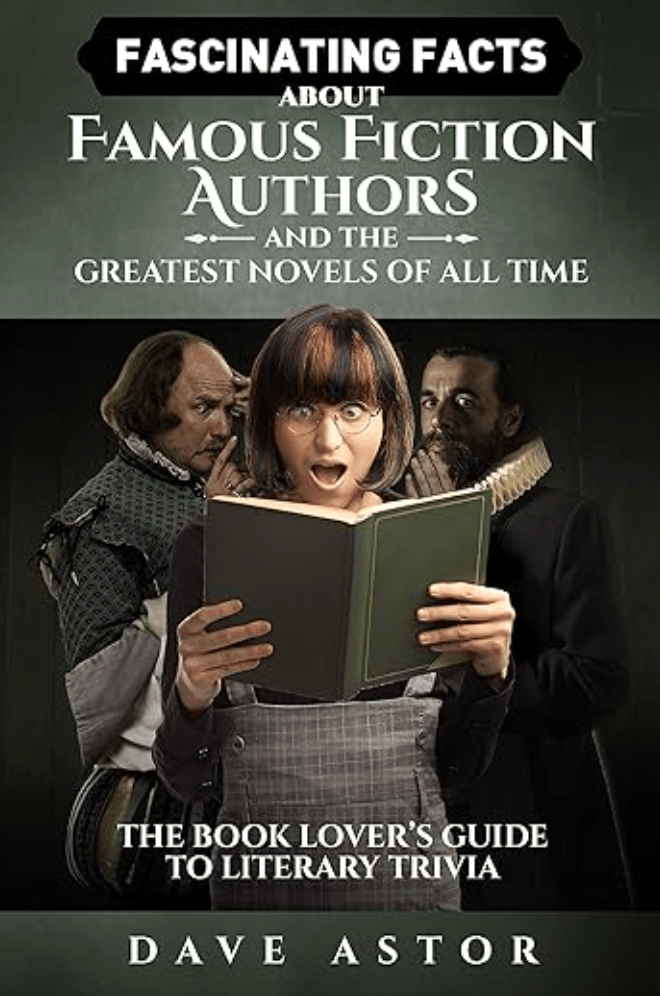
I’m also the author of a 2017 literary-trivia book…
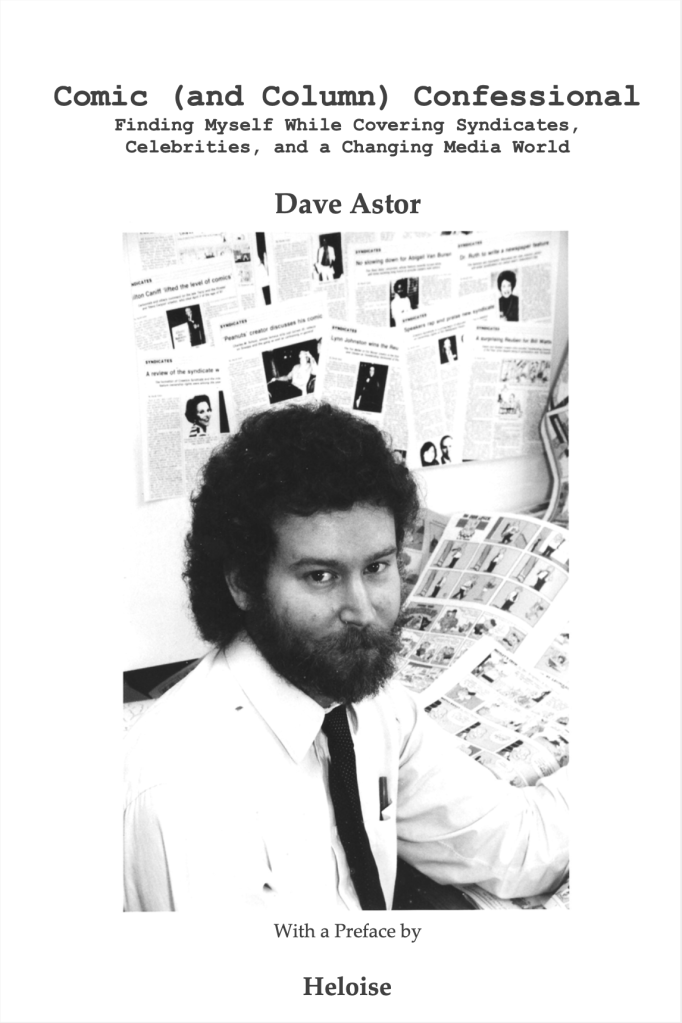
…and a 2012 memoir that focuses on cartooning and more, and includes many encounters with celebrities.
In addition to this weekly blog, I write the 2003-started/award-winning “Montclairvoyant” topical-humor column every Thursday for Montclair Local. The latest piece — about topics such as a local Charlie Kirk flag controversy and a local bookstore canceling the appearance of a Palestinian-American children’s book author — is here.


Dear Dave Astor, Please, I need some diversity, gendered titles authored by women. Thank you, Ahmadou.
LikeLiked by 2 people
Thank you, Ahmadou. My favorite living women authors include (among others) Margaret Atwood (“The Handmaid’s Tale,” etc.), Elin Hilderbrand (“28 Summers,” etc.), Barbara Kingsolver (“The Poisonwood Bible,” etc.), Liane Moriarty (“Big Little Lies,” etc.), Kate Quinn (“The Rose Code,” etc.), J.K. Rowling (“Harry Potter,” etc.), and Zadie Smith (“White Teeth,” etc.).
LikeLike
Dear Dave Astor, My profound gratitude, you are so helpful. Scholarly yours, Ahmadou.
LikeLiked by 1 person
You’re very welcome, Ahmadou!
Oh, and I would add Kristin Hannah (“The Women,” etc.) and Isabel Allende (“The House of the Spirits,” etc.).
LikeLike
Pure escapism ? Cold Comfort Farm ? Stella Gibbons. Apart from heartbroken Judith, betrayed and abandoned by her son ?
And The Young Visiters. ?
LikeLiked by 1 person
Thank you, Esther! I haven’t read but have heard about “Cold Comfort Farm.” Comic novels definitely offer readers plenty of escapism even if they’re not 100% escapist. 🙂
I had to look up “The Young Visiters,” and see that the author, Daisy Ashford, wrote it when she was 9 (!!!) years old. Wow!
LikeLike
Well, Dave, I think that any book must have some darker moments or there really wouldn’t be any story. As with real life, you need the sadder moments to appreciate the lighter moments. I don’t read much humour but even Bridget Jones which I deem humour had sadness and problems. I suppose genre is based on how the author deals with these cycles of human relationships and life.
LikeLiked by 1 person
Thank you, Robbie! I agree with everything you said. Darker moments in fiction are needed to add drama, and the lighter moments feel even lighter in contrast.
I read the first Bridget Jones novel, and it was often hilarious. But, as you note, there were still downbeat elements in it — romantic complications and more.
LikeLike
Yes, every good story must have dark and light. It’s how these elements are presented that dictates the genre of the book.
LikeLiked by 1 person
Yes!
LikeLike
Hahahaha! Love the Misty video.The only thing that moved was the camera. Way to sit, Misty!
Gee, escape hatch books…
I find many of Joy Fielding books a great escape. They are thrillers, so someone gets hurt, but none of the books are sordid or overly graphic. She seems to find a rainbow, even when it’s not the ultimate happy ending.
Post Office by Charles Bukowski (of its time) is hilarious. The part where it’s a black out and flooding, and all he has is a pack of matches had me in tears.
An epic book can be a great escape. 100 Years of Solitude is of varying emotions, and quite absorbing. Still, war in the background.
Romance novels! Okay lots of escapism there, and romance, and happy endings.
I just read “Wryson’s Eternity” a period novel by Shehanne Moore. A fantastic escape read (and escape from a nasty husband, you hear a bit about his meanness, and there is one short scene where he gets comeuppance), but – a ball, gowns, female ingenuity and independence, a handsome patient dude, passion (Shey made me sweat with the passion in this & no graphic scenes.) This book was a lovely escape.
Now, to draw the gown she wears to court!
LikeLiked by 1 person
awwwwww…. sitting here truly snuffling now! Heavens I am thrilled by seeing this mention alongside these hefty hitters. But more so that you enjoyed it so much cos I really wanted to string her most of the time–but then again you’re right, Wryson despite how impatience is in his very D and A , was patient. He understood her. AND as for all the wonderful work you are doing on her clothes???? I am gobsmacked. You have really taken her to your heart xxxxxxxx
LikeLiked by 2 people
Loved your response to Resa’s comment, Shehanne. 🙂
LikeLiked by 2 people
She is a great lady and so kind and generous with her time. She’s drawn all my ladies in ball gowns –I have them framed. But she’s taken this one to her heart, drawing her clothes by the actual scene. And what she has sent me is amazing. I’ve quite humbled by her support, in this comment too.
LikeLiked by 2 people
Shehanne, Resa is indeed “kind and generous.” (Also the name of a Natalie Merchant song. 🙂 ) And her art and gown designs are always exceptional.
LikeLiked by 2 people
It is indeed. And I am truly amazed by what she’s shown me here. How she’s seen this particular lady.And she’s not stopped at one drawing either.
LikeLiked by 2 people
Wonderful!
LikeLiked by 2 people
Eternity is perhaps your best character to date. Although they are all strong resourceful women (still chuckle about Fury’s coffin in the basement) Eternity really had to be extra gritty. xxxxx
LikeLiked by 2 people
xxxxxxxx Resa, truly. Eternity was considering the garden early on for Wryson. It was the getting him down the stairs that was going to pose the problem. Actually there is another book where the heroine and her mates bury someone in the garden and there’s a rammy over the spade between her and the hero. My heroines need to behave better…….
LikeLiked by 2 people
LOL!
Your heroines behave as they need to. They are not exactly living in a female friendly world. You’ve done great with them all!
LikeLiked by 2 people
Aye you’re right–they need to behave as they need to behave. And they do. Nowt like leveling the playing field…. x
LikeLiked by 2 people
Yes! Levelling the playing field. xxx
LikeLiked by 2 people
Thank you, Resa! Glad you liked the video! Misty was staring at something, and, as you know, cats can be quite still when…staring at something. 🙂 “Way to sit, Misty!” — ha ha. 😂 😂
I agree with what you said about Joy Fielding’s excellent novels: escapist as well as emotionally wrenching. So, one reads them with mixed emotions.
I also agree that Charles Bukowski can be very funny, even as he often depicts the sordidness in the world (including alcoholism and such 🙂 ).
Yes, epic books can really absorb a reader — escaping into the world of the author’s imagination (and in many cases, the world of the author’s research). “One Hundred Years of Solitude” definitely sweeps a reader away.
Many romance novels are certainly escapist, too, albeit with plenty of relationship angst mixed in. Great that you mentioned Shehanne’s “Wryson’s Eternity”! Loved your description of it. 🙂
Good luck with the gown drawing!
LikeLiked by 2 people
I’m on drawing the last 2 gowns. I’m planning a post about her book in just over a week.
Thing about period stories is that there are lots of gowns.
💃🏽
LikeLiked by 1 person
Sounds great, Resa, and I look forward to seeing the post! 🙂
LikeLiked by 1 person
Yay!!!
LikeLiked by 2 people
🙂
LikeLiked by 2 people
I don’t recall reading a completely cheerful novel either.
Perhaps it would be too shallow to be captivating
LikeLiked by 3 people
Thank you, Luisa! You’re right that if a novel were completely cheerful there’s a chance it would be kind of shallow.
LikeLiked by 1 person
Thank you so much for your lovely reply, dear Dave!
LikeLiked by 1 person
You’re very welcome, Luisa! 🙂
LikeLiked by 1 person
Well, I would suggest the earlier Harry Potter’s at least #1 and #2; I’ve loved many of The No. 1 Ladies’ Detective Agency’s too. Also how about this beautiful book: The Boy, the Mole, the Fox and the Horse by Charlie Mackesy (for kids… but why not?). Then finally from me: The Hitchhiker’s Guide to the Galaxy by Douglas Adams – pure fantasy.
LikeLiked by 2 people
Thank you, Chris! The first “Harry Potter” book was definitely the most entertaining of the seven, even as there were some fraught moments (at the Dursleys, for instance) and lots of foreshadowing of scary stuff to come.
I’m not a huge fan of “The Hitchhiker’s Guide to the Galaxy,” but much of it is quite fun. 🙂
Great mention of children’s books! Some can be 100% or nearly 100% positive by design.
LikeLiked by 1 person
Your words this week give me to think, Dave, and I probably have to admit that I can’t remember having read a completely upbeat novel, but I have taken note of Barbara Taylor Bradford, many thanks. I have, however, recently read a kind of thriller or “Tell me what I am” by the Irish writer Una Mannion, which provoked a lot of questions in me as far as our personal development is concerned! Many thanks for all your trouble you take for us!
LikeLiked by 2 people
Thank you, Martina! I don’t think I’ve ever read a completely upbeat novel, either, though it’s possible I did long ago and forgot about it. 🙂
I’m glad the thriller you recently read was thought-provoking! Thrillers can definitely be partly escapist even as plenty of negative things can happen to the characters.
As for Barbara Taylor Bradford, I’m currently liking her “Dangerous to Know” novel better than her “Everything to Gain” book mentioned in my post. 🙂 Her most famous work is her debut novel “A Woman of Substance,” but I haven’t spotted it in my local library yet.
LikeLiked by 1 person
It is very kind of you, Dave, to give me the name of Barbara Taylor Bradford’s best book, so I will order “A woman of substance”!
By the way, “Tell me what I am” is very psychological.
Have a good week an many thanks Martina
LikeLiked by 1 person
Novels with strong psychological elements can be VERY interesting, Martina! “Middlemarch” and “Crime and Punishment” are a couple of others that come to mind.
If you read “A Woman of Substance,” I hope to read it, too — to compare notes. 🙂 Fingers crossed that my local library has it during a future visit.
LikeLike
You are absolutely, right Dave, but it’s a long time since I read Crime and Punishment or Middlemarch!
Thank you also for your offer concerning “A Woman with Substance”, but I am certainly not as fast as you! So I hope that your library is not that fast either, haa!:)
Have a good day.
LikeLiked by 1 person
Ha, Martina! 😂 I think it will be a while before I get to that Barbara Taylor Bradford novel, so no worries. 🙂
I reread “Crime and Punishment” and “Middlemarch” within the past decade, but not that recently.
Have a good rest of the day, too!
LikeLike
Surprise,surprise, Dave, I started reading this morning! Good to know that I can take my time. Many thanks 🤣
LikeLiked by 1 person
Wow — that was fast! 🙂
LikeLike
🐞👍
LikeLiked by 1 person
🙂
LikeLike
I know what you mean about escapist reading, Dave. For me, I tend to watch certain movies to escape feelings of sadness, etc. It’s harder, I think, with books — in my experience, anyway, as I’m always searching for hidden themes, subtexts and meanings. I guess reading engages my brain and emotions in a way that films do not. I like movie/tv adaptations of books, though, and find these quite restful if I need to switch off! I’m currently watching “The Girlfriend,” which is based on a psychological thriller by Michelle Francis, on Amazon, and enjoying it immensely!
LikeLiked by 2 people
Thank you, Ada! You’re right that movies can be more escapist than novels — with the visual impact helping in that regard and the fact that more movies than novels seem to have happy endings. As you note, books usually get us thinking more than films do; books of course tend to have more nuance.
LikeLiked by 1 person
Dave, I’ve also been mixing up my novels between serious and lighter reads, both fiction and nonfiction. I find that looking beyond my usual choices opens up a broader spectrum—seeing not only what’s being written now but also how the past continues to influence today’s storytelling. For example, reading The Bird Hotel recently gave me a deeply personal story to carry with me, while revisiting Salt reminded me how history and resources shape human life. And would you believe—I’m even looking at romance novels again! It’s surprising how refreshing it feels to return to them as part of the mix. I think you’re right: no book is entirely free of shadows, but perhaps that’s what makes them real and meaningful.
I am reminded of a line from Joyce Maynard’s The Bird Hotel: “All you can do is be grateful for what you get for as long as you have it.”
Thank you again for a wonderful post and follow-up discussion.
LikeLiked by 3 people
Thank you, Rebecca! Great that your reading has been so diverse! And, yes, it’s really interesting to see how past books directly or indirectly influence present-day books. Also, nothing wrong with romance novels; there are some very good ones out there.
Excellent quote on gratitude!
LikeLiked by 1 person
I think I will agree with Liz about Wodehouse. I like detective books as a distraction because they never seem real, so the murders don’t bother me. True life crime on the other hand–no thanks. I didn’t sleep for days after I finished “In Cold Blood”.(K)
LikeLiked by 3 people
Thank you, Kerfe! P.G. Wodehouse is indeed a VERY entertaining writer. And you made an excellent point about how crime novels can be easier to stomach because the content is fiction. The nonfiction “In Cold Blood” was indeed harrowing. (As an aside, I’ve read that “To Kill a Mockingbird” author Harper Lee provided some help to Truman Capote with his book.)
LikeLiked by 2 people
That’s an interesting tidbit. In a way I can see a connection there.
LikeLiked by 1 person
Yes! And they were apparently friends from childhood.
LikeLiked by 1 person
Bradford is one of my favorite authors since I started reading A Woman of Substance. I have read more than twenty of her books sourcing them at Booksale here. I have three series of Anne of Green Gables (#2,3 and 6). Still looking for the others.😘
LikeLiked by 3 people
Thank you, Arlene! You’ve read an impressive number of Barbara Taylor Bradford books! I’m currently reading (about 75% through) her “Dangerous to Know” novel, which I think is excellent.
I’ve read all the “Anne of Green Gables” sequels. I feel none are as great as “AoGG” itself, but some are quite good.
LikeLiked by 2 people
Read A Woman of Substance Dave, that’s the beginning but most of her books are stand alone.😘
LikeLiked by 2 people
I definitely want to read that one, Arlene! Waiting for my local library to have it. 🙂
LikeLike
Even light, “upbeat” stories make us think, so they may not seem totally “escapist.” I think that “escapism” might be in the eyes of the reader and vary from one person to the next.
LikeLiked by 4 people
Thank you, Becky! All excellent points! In terms of meaning, “escapist” is definitely a fluid adjective. (Maybe one reason why there isn’t an “escapist” section in bookstores or libraries. 🙂 )
LikeLiked by 2 people
So true!
LikeLiked by 1 person
🙂
LikeLiked by 1 person
I enjoyed this post, Dave an I’ve been enjoying the comments. I remember a woman I worked with telling me she wanted to read something that “just didn’t matter.” I gave her my copy of The Hawkline Monster by Richard Brautigan. She brought it back and said it was on her church’s banned book list. I guess escaping has its boundaries.
LikeLiked by 3 people
Thank you, Dan! I share your feelings about the comments here. 🙂 And I loved your comment’s clever last line. 🙂
Reading something that “just didn’t matter” does sound like potential escapist fare. But obeying a banned-books list? Ugh.
LikeLiked by 2 people
I was at a loss to understand that one, Dave. I promised her I wouldn’t tell anyone 😉
LikeLiked by 2 people
I don’t like to see any books banned, but it can really be puzzling why some of them are. And nice that her “secret” was safe with you, Dan. 🙂
LikeLiked by 2 people
In response to the paranormal abilities I gave the characters in my first few books, one reader suggested I was under Satan’s influence.
LikeLiked by 1 person
OMG! That’s a dumb, laughable, unfortunate accusation.
LikeLiked by 1 person
I’d say P.G. Wodehouse and A.A. Milne are good escapist fare.
LikeLiked by 3 people
Thank you, Liz! You have a point there. Both writers leave a smile on the faces of readers. The interactions between Wodehouse’s Jeeves and Bertie Wooster characters are hilarious!
LikeLiked by 3 people
Indeed they are! Poor Bertie is such a boob—but he means no harm.
LikeLiked by 3 people
True!
Another case of the “servant” being smarter than the “master.” 🙂
LikeLiked by 3 people
Just like one can never go home again, if they do, thanks to Sarte’s No Exit they can’t leave, ha! So much for life and death. I am currently reading In The Realm Of Hungry Ghosts by Gabor Mate, which deals with true escapism re addiction. It’s riveting. Your blog post gives me an opportunity to offer it as a suggested read though it is nonfiction. Great theme Dave, Susi.
https://drgabormate.com/book/in-the-realm-of-hungry-ghosts/
LikeLiked by 2 people
Thank you, Susi! That’s a really interesting mention! Addiction is indeed escapism in a way, though often not positive escapism.
Ha ha — loved the first line of your comment. 😂
LikeLiked by 1 person
Well, brace yourself, for I’m offering Les dames galantes by Pierre de Bourdeille seigneur de Brantôme. Not sure if there’s a translation in English, but it sure is escapism pur sang, and must have been deemed that in late 16th-century France when and where it was written.
LikeLiked by 3 people
Thank you, Dingenom! VERY interesting! If that work is totally or almost totally escapist, I tip my hat to it. 🙂
LikeLiked by 2 people
It is outlandish, I agree. My escape tactics have always been (since I was a young girl) to read what is at a great remove from the present. As a more accessible example of an escapist, yet truly impressive novel, I should mention Virginia Woolf’s delightfully unruly and fantastical novel Orlando (mentioned previously on these pages). Woolf herself called it “a writer’s holiday” and an “escapade”. What more proof can one want!
LikeLiked by 2 people
That’s a really good point, Dingenom. A book set long ago and/or written long ago can definitely offer an escape from the present, even if the content isn’t escapist in terms of being mostly upbeat.
One of these days I need to read “Orlando”!
LikeLiked by 1 person
Dave, I can appreciate your need these days for reading mass-audience and/or escapist fiction. They come in all kinds of genre, depending upon our preferences. In my view, if the story is devoid of the ups and downs of real life, it’s not worth reading. For my latest book order, I’ve added a psychological thriller, a novel by my favorite Caribbean (Jamaica) author, and Dan Brown’s latest book in his Robert Langdon series. It’s more than enough to get caught up in great storytelling 😀
LikeLiked by 3 people
Thank you, Rosaliene! I hear you — a totally escapist book (if that existed) might very well not be worth reading. Great storytelling does potentially offer a good deal of escapism, even with various fraught moments. An excellent point!
LikeLiked by 2 people
😀
LikeLiked by 2 people
🙂
LikeLiked by 2 people
Maybe there must first be some escaping for “escapist” books to work… as long as the story doesn’t dwell too much on the dark part. It’s been years since I’ve been able to read or watch most things, because of my “stuff.” The things that are so highly praised come with adjectives that are an instant “No” for me — words like poignant, heartwarming, or touching. I find value in being able to escape. Escapism is very underrated. Anyone can make someone cry. Not everyone can make them laugh and smile. Hugs.
LikeLiked by 4 people
Thank you, Teagan! Well said! Occasional escapism is important for the psyche, but I suppose the most we can hope for from books is partial escapism. Perhaps some other mediums (such as TV sitcoms) can once in a while be almost 100% escapist.
LikeLiked by 2 people
I’ve just spent the last couple of hours in a post-luncheon semi-coma, Dave, considering the question raised here of a totally-upbeat story; and almost drew a blank. Any story, to seem totally ‘of this world’, appears to need something bad for the characters to rise above and gain a happy ending. I used to read the authors/genres you mention above, some recently, and gave up due the troubling appearance of too many victims suffering before the perpetrator is apprehended and a satisfactory conclusion reached. You touch upon the fact of what a depressing world this can be at the best of times, and what’s happening in your country at present, with the threat of it happening in my own in the not-too-distant future doesn’t help. Not only that, but in the wake of the yearly commemoration of 9/11 I’m reminded of the despicable evil perpetrated on so many innocent victims in that vile act. In the light of all this I guess I understand the trend for fantasy novels these days, a move away from this world into another in a galaxy far, far away: but even that usually involves a fight against some form of evil. ‘Pride and Prejudice’, I suppose could make the grade; nobody dies, or gets permanently damaged, and although Lydia’s marriage to Wickham is troubling she’s too flighty to realise it. I recently read the short story ‘Gigi’ by Colette, as I’ve been watching the musical film for years, and crying tears of happiness at the end, and I suppose that qualifies. It has the potential to go wrong, Gigi being groomed to follow in the family tradition of courtesan, which her grandmother and aunt don’t seem too bothered about having lived as; but Gaston realising that he wants her for keeps, rather than just a season, always brings many tears. Romance books, then? I just don’t like them; too unreal. The film of ‘Apollo 13’ works, and I know they adjusted the real events to assist the feel-good, but it works, and I always have a good cry at that too. Just a few thoughts there, but overall I think feel-good stories are hard to come by. Don’t listen to me, I like Bukowski and Leonard Cohen; and speaking of the latter, I’m being uncharacteristically-optimistic when I say I hope that one day I may play his song with the lyrics ‘Democracy is coming to the U.S.A.’ to reflect the fact. Have a read and listen and have a good week, my friend. 🙂 https://genius.com/Leonard-cohen-democracy-lyrics
LikeLiked by 4 people
Thank you, Laura! I enjoyed reading your thoughts and observations. Fantasy, and to some extent sci-fi, can definitely offer plenty of escapism, but, as you note, there can be some harrowing elements along the way. And, yes, Jane Austen’s novels pretty much always had happy endings, but not until some angst, challenges, etc., have been worked though. And some movies can indeed take a novel or real-life events and make them happier. As for the optimism in those Leonard Cohen lyrics…well, we can only hope.
LikeLiked by 3 people
I love your musings here, Dave. As much as I sometimes say I’m “in search of” upbeat, humorous reads, I find myself returning to stories (especially Montgomery’s “Anne of Green Gables”) to visit with old friends. Just as you said – smiles and heartbreak but the familiarity draws me in. When life seems chaotic – like now – I’m drawn to “Watership Down”, too. I make a point of rereading it every year or so. 💝
LikeLiked by 3 people
Thank you, Vicki! Rereading familiar favorites can indeed be a comfort and a pleasure. I haven’t done that myself so much these days, because I try to keep reading novels for the first time to help feed this blog, but I hope to do some rereading eventually. Re “Watership Down,” I read it once — many years ago — and thought it was excellent.
LikeLiked by 3 people
I appreciate that you keep reading and sharing. Don’t stop! 🥰
LikeLiked by 2 people
Will try not to. 🙂 Many thanks, Vicki!
LikeLiked by 2 people
I was going through a bad time some years back and a friend sent me a Calvin & Hobbes book. It was just what I needed to lift my down mood. I also often read Three Men in a Boat by Jerome K Jerome which makes me forget life’s horribleness. Escaping into the past, even if it was not always wonderful, I find helps.
LikeLiked by 5 people
Thank you, Darlene! Escaping into the past can definitely help, including the reminder that we’re part of a such a long continuum that current angst might feel a little less overwhelming.
And the great “Calvin and Hobbes” comic strip is indeed a mood-lifter! (When I covered cartooning for a magazine back in the day, I met and interviewed “C&H” cartoonist Bill Watterson several times and wrote frequently about his comic during its 1985 to 1995 run.)
LikeLiked by 2 people
Lucky you to have met Bill Watterson. No matter how busy we were in those days, the first thing we would do in the morning was read Calvin and Hobbes in the daily paper. Later, I referred to the book of collected cartoons often.
LikeLiked by 3 people
I was indeed fortunate, Darlene. He eventually became rather reclusive, so most of my interactions with him were in the 1980s rather than the ’90s.
And, yes, reading “Calvin and Hobbes” was a great daily ritual, and the collections are really nice to have. 🙂 About a half-dozen of them in my apartment. 🙂
LikeLiked by 3 people