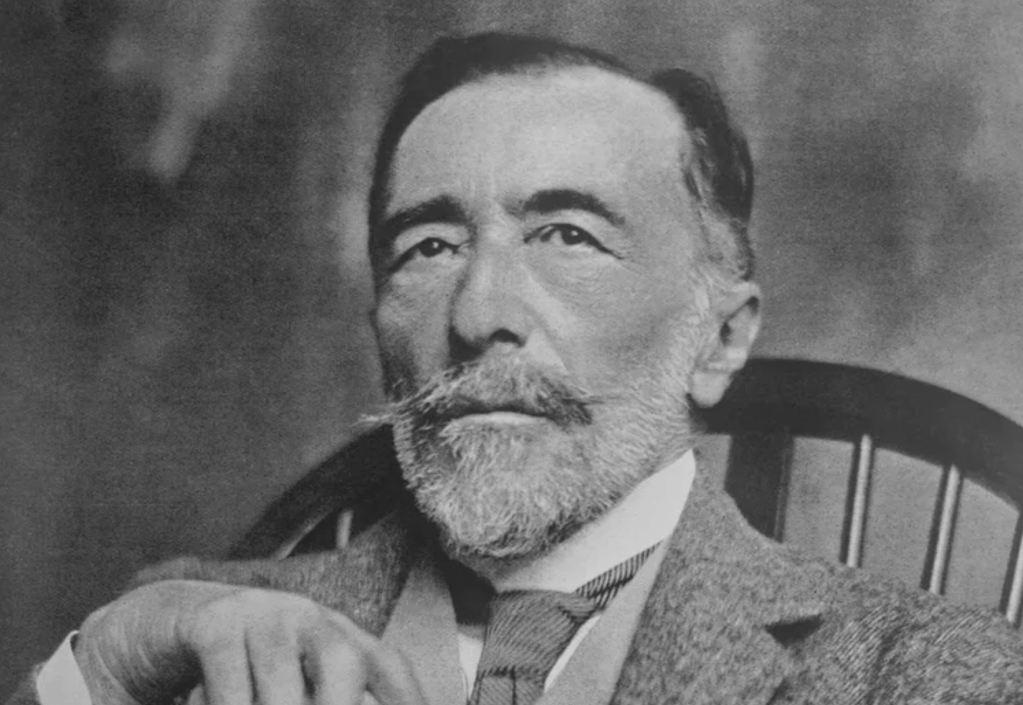
Joseph Conrad (Bettmann/Getty Images).
It’s hard enough to write books. But writing them without using your first language? Impressive!
I was thinking about that last week while reading The Secret Agent by Joseph Conrad, who spoke his native Polish as well as French from childhood but wrote his fiction in English — a language he didn’t learn until he was in his 20s. Still, Conrad’s English writing was quite elegant and far from simple in works that also included such books as Heart of Darkness (which helped inspire the movie Apocalypse Now) and Lord Jim.
The Russian-born Vladimir Nabokov actually wrote his first nine novels in Russian before turning to English — the language of his most famous work, Lolita. But Nabokov’s dexterity in English was especially exceptional in his later novel Pale Fire.
Jhumpa Lahiri, the British-American daughter of immigrants from India, wrote her Pulitzer Prize-winning Interpreter of Maladies short-story collection and her novels The Namesake and The Lowland in English. Then she went on to learn Italian, and authored a novel in that language titled Dove mi trovo (later self-translated into English as Whereabouts).
Afghanistan-born Khaled Hosseini, a teen when his family immigrated to the U.S., was a native Farsi speaker who wrote The Kite Runner and his other novels in English.
Kazuo Ishiguro was a native Japanese speaker whose family moved to England when he was five. The Nobel Prize in literature recipient wrote The Remains of the Day and his other subtle novels in English.
Chinua Achebe of Things Fall Apart fame was a native speaker of Igbo in Nigeria who wrote primarily in English.
Canadian-born Yann Martel, best known for authoring the novel Life of Pi, was a native French speaker who would go on to write in English.
Like Conrad, Jerzy Kosinski was born in Poland but gained fame as a writer in English — with his best-known work the novel Being There.
Anyway, that’s a small sampling — and one that mostly includes authors who became English wordsmiths. Any further examples of this topic, including authors who ended up writing in non-English languages? Any other thoughts on this topic?
Misty the cat says: “I must eat after a claw-trimming shrank my weight from 17 pounds to one ounce.”
My comedic 2024 book — the part-factual/part-fictional/not-a-children’s-work Misty the Cat…Unleashed — is described and can be purchased on Amazon in paperback or on Kindle. It’s feline-narrated! (And Amazon reviews are welcome. 🙂 )
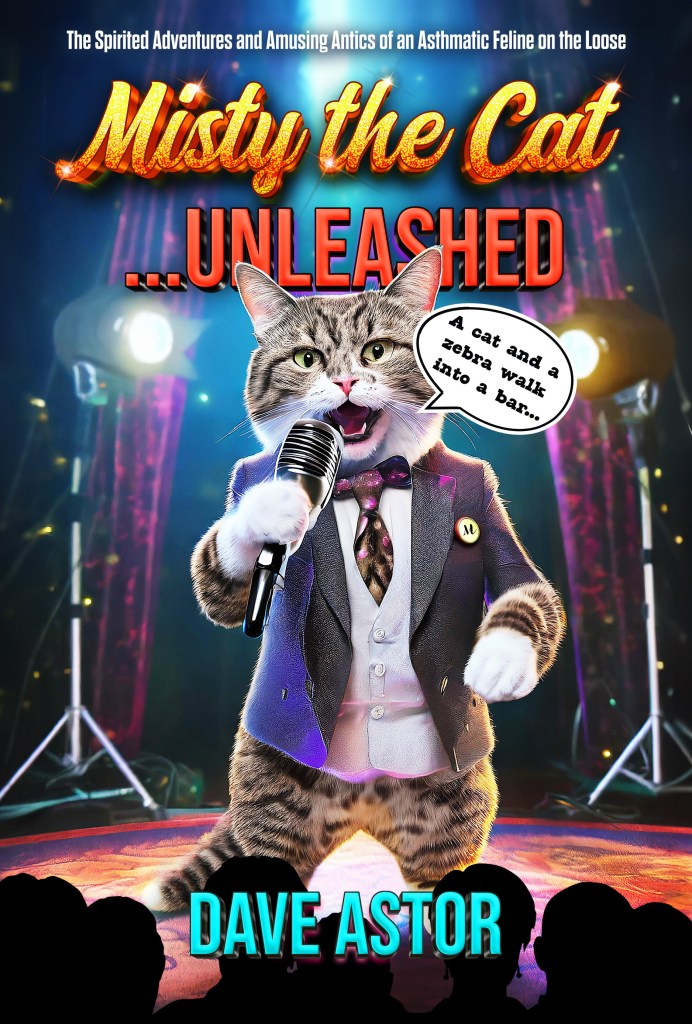
This 90-second promo video for the book features a talking cat: 🙂
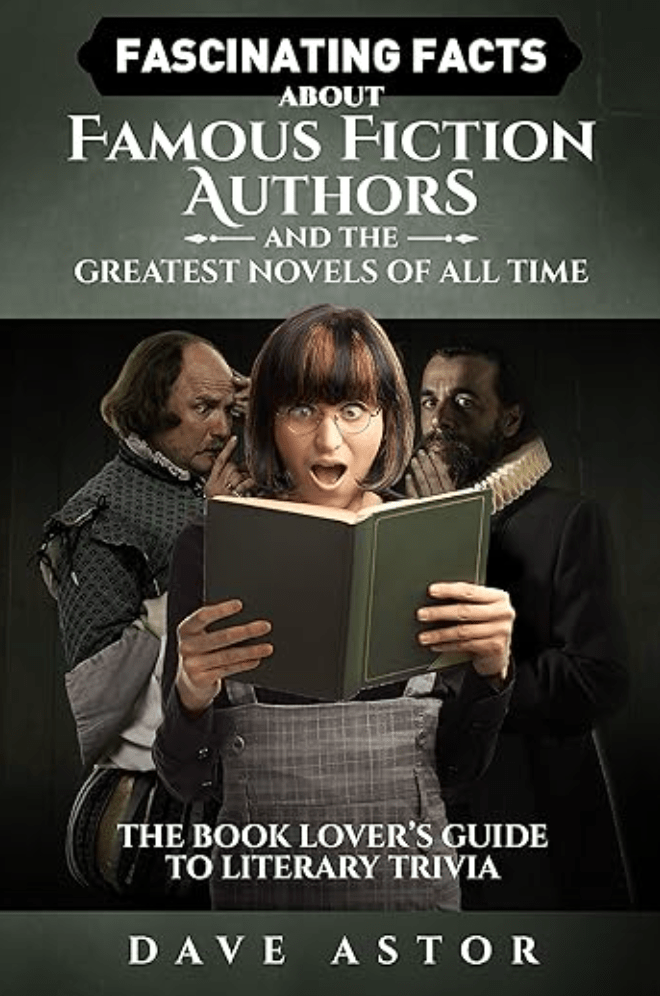
I’m also the author of a 2017 literary-trivia book…
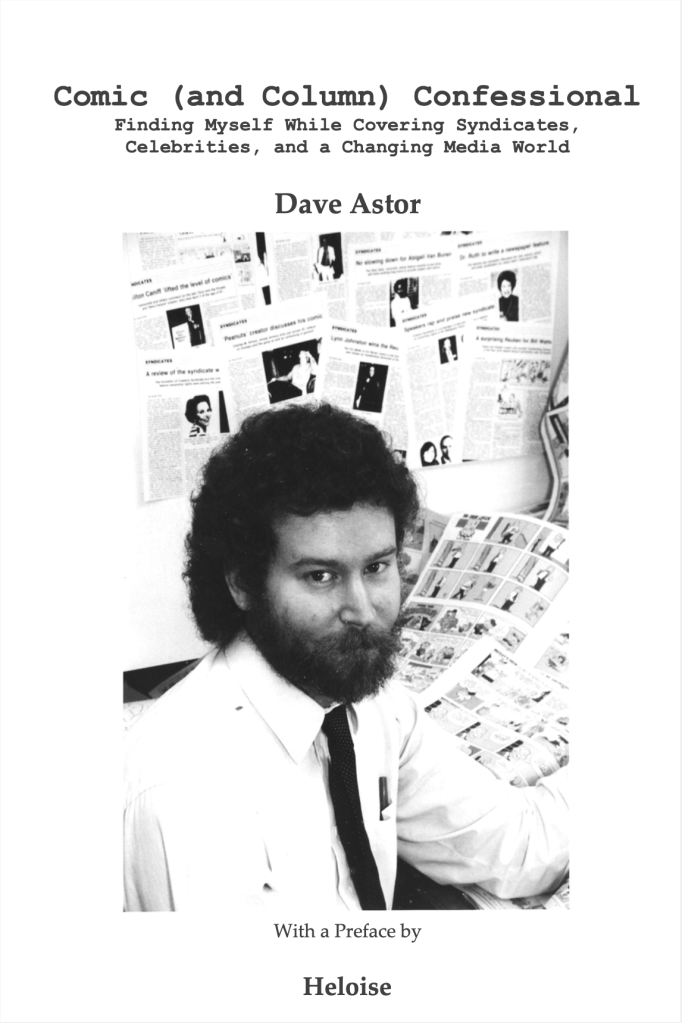
…and a 2012 memoir focusing on cartooning and more that includes many encounters with celebrities.
In addition to this weekly blog, I write the 2003-started/award-winning “Montclairvoyant” topical-humor column every Thursday for Montclair Local. The latest piece — about a local “No Kings” rally, the reopening of a vintage movie theater, and more — is here.
 Dave Astor on Literature
We don’t have Fussy Cat brand here.
So far she likes many flavours, but doesn’t always want the one I pick. So, I end up opening 2 or 3 tins. Of course I refrigerate the no-gos, and later palm them off as a stew by mixing with hot water. That works 75% of the time.
Cold plates are a no go.
She’s so special. Many, many, many, many litters ago, her great grandma was a pure bred Russian Blue. I’m sure of it.
Unfortunately, she thinks she still is.
It’s hard to argue with her, When the sun shines on her fur, it turns blue. Amazing!
LikeLiked by 2 people
Gorgeous kitty, Resa! Sorry feeding Misha seems to be a bit on the complex side. But all worth it, of course. 🙂
LikeLiked by 2 people
Of course!
She’s my beautiful girl! ❦❦🐈⬛❦❦
LikeLiked by 1 person
🙂 ❤️
LikeLike
Awesome post
LikeLiked by 2 people
Thank you, A-Lilu lilule!
LikeLike
I didn’t realize that Joseph Conrad’s first language wasn’t English! Thanks for the interesting post!
LikeLiked by 2 people
Thank you, Dawn! A Conrad reader definitely can’t tell; his use of English totally feels like it was his native language.
LikeLike
Interesting topic, Dave. It is impressive when people speak 2 or more languages fluently, let alone write in a foreign langugae.
I sure like Heart of Darkness, and Lolita. If I was never told, I’d never had known. They write better in English than many who write in English and English is their native tongue.
Apparently Jack Kerouac (Jean-Louis Lebris de Kérouac, French Canadian) began writing on the road in French, then began it over in English.
Oscar Wilde wrote Salome in French, and he was Irish. He was avoiding English censors at the time.
Okay, Misha wants me to tell you to tell Misty, she caught a mouse today. However, it escaped her paws, because she has no claws. Also, Misty’s food looks mighty tasty!
LikeLiked by 2 people
Thank you, Resa! I agree that some authors are better in a second language than some authors are in a first language. 🙂 And I appreciate the Jack Kerouac and Oscar Wilde mentions; I did not know those facts about either until this week’s comments section.
Misha definitely has hunter’s instincts! Sorry about her claws being removed in her pre-Resa life. 😦 Misty is satisfied with his food options, and is resigned to the fact that he’s served truffles only on the 32nd of each month.
LikeLiked by 1 person
Hahahaha!
Misha like her plates warmed, won’t eat off a cold plate!
Of course, she’s not the boss of me!!!!
LikeLiked by 1 person
LOL, Resa! 😂
Misha knows what she likes. 🙂 Bonus: a warmed plate has the same initials as WordPress. 🙂
LikeLiked by 1 person
Interesting, WP blogging through warm plates. Cats really know how to dish it up! 🤭😂
LikeLiked by 1 person
The latest tech!
And — ha 😂 — cats can do almost anything. 🙂
LikeLiked by 1 person
YES!
Hey, what do you do when Misty wants a different flavour of wet food? (not a riddle) 🤭
LikeLiked by 1 person
Over the years, I’ve narrowed down Misty’s wet food options — eliminating ones he didn’t like or seemed semi-allergic to. The survivors: Fussie Cat chicken with vegetables and Fussie Cat chicken with pumpkin soup. Those, along with dry cat food and two kinds of treats, keep Misty culinary-ily content.
Is Misha a picky eater, or are many flavors okay as long as the plate is warmed?
LikeLiked by 1 person
LikeLiked by 1 person
You’re welcome, and thank you for the comment! I hope your book becomes better known.
LikeLike
Hi Dave, I have read several books translated to English like Dante’s Inferno. I have enjoyed them provided the translation is good. Non-English first language writers can make their prose a little stiff and formal as that is how we are taught to speak another language. It lacks the relaxed jargon and simplicity of English spoken by native speakers.
LikeLiked by 2 people
Thank you, Robbie! Very true that there’s a certain colloquialism to some American authors (Mark Twain is of course a prime 19th-century example) that authors who are not native speakers of Americanized English would find it difficult to match. And, yes, the quality of a translation is so important.
LikeLike
🩵🤗
LikeLiked by 1 person
🙂
LikeLike
Weirdly enough, Tolstoy’s first language was… French. Most of the Russian aristocracy lived ib a completely different cultural bubble then the rest of their countrymen. This was one of the main controversies inWarand Piece when this attitude was challenged when Napoleon envaded their country.
LikeLiked by 2 people
Thank you, Shaharee! Didn’t know that about Tolstoy…fascinating! Definitely gives a different angle to the first language/second language thing. The Russian aristocracy — and aristocracies elsewhere, not to mention the super-rich in general — definitely lived/live in the kind of bubble you describe.
LikeLiked by 1 person
Have never heard such a thing…
I know that every respectable person would pretend like they don’t speak Russian but truth be told they all do.
LikeLiked by 1 person
Thank you for commenting, Milena!
LikeLiked by 1 person
Tolstoy described the phenomenon exhaustively in War and Peace.
LikeLiked by 2 people
Interesting
LikeLiked by 2 people
Another example of a brilliant writer writing in his second language is Abraham Verghese, who wrote THE COVENANT OF WATER and CUTTING FOR STONE. I’ve read the former book and thought it was wonderful. Haven’t read the latter yet. Verghese’s parents were Indians from Kerala, speaking Malayalam but living in Ethiopia. His first language was Malayalam, and his first profession was physician. He’s currently a professor of medicine at Stanford University.
I feel enormous respect, even awe, for people who can write books in a language not their mother tongue. I’ve been speaking German in Switzerland for 35 years, but I still could never write one of my mysteries in German–they’re all in English.
LikeLiked by 2 people
Thank you, Kim! I appreciate the mention of Abraham Verghese; that’s quite a background he has! And interesting to hear about another writer who has been a doctor, too. Like Khaled Hosseini, Anton Chekhov, Arthur Conan Doyle, William Carlos Williams, etc.
Also interesting to hear that after all your years of speaking German in Switzerland that you still prefer to write your books in English. I totally understand!
LikeLiked by 1 person
What an interesting post! I loved Yann Martel’s Life of Pi, and actually had no idea that he was French speaker who wrote in English! What a talented writer it must take to write in more than one language. As if it wasn’t hard enough to write in one’s own language to begin with!
LikeLiked by 3 people
Thank you, Ada! I also really liked “Life of Pi,” and also wasn’t aware of Yann Martel’s language “journey” until I researched this post. I’m assuming the tiger on Pi’s boat wasn’t multilingual, but who knows? 🙂
LikeLiked by 1 person
It’s an extra achievement to compose fine literature in a second language to your native tongue! Dave, this is an interesting topic! ‘Things Fall Apart’ and ‘The Kite Runner’ are two of my all-time favourite books in this category!!! You have mentioned some very good books! Wonderful post! Thanks Dave. With best wishes for a great week.
LikeLiked by 4 people
Thank you, Sharon! I agree that it is an extra achievement for authors to write books in their second language. “The Kite Runner” and “Things Fall Apart” are indeed excellent novels. (One of these days I need to read Khaled Hosseini’s other books.) Hope you have a great week, too!
LikeLiked by 2 people
Hi Dave! i can’t imagine how early it must be for you as it’s still morning here in the UK! I really enjoyed your post! Like you, I would very much like to read more books by Khaled Hosseini. Great author! Thank you for your kind wishes for the week. With best wishes, 🤗
LikeLiked by 2 people
An early wake-up for me today, Sharon. 🙂
Wikipedia says Khaled Hosseini has written three novels since 2003’s “The Kite Runner” — roughly one every five years. He seems due for another. 🙂
LikeLiked by 2 people
Thanks for that, Dave! Khaled Hosseini is definitely on my list. I can still remember how excited I felt reading ‘The Kite Runner’. It’s still one of the best books I have ever read!!! His other novels should be as good!
LikeLiked by 2 people
About 20 years ago, reading “The Kite Runner” was a school district-wide, town-wide reading project where I live! (I forget the details of that project.)
LikeLiked by 2 people
Twenty years is about right, Dave. It has to be about the time I read it! A good book for a project! 😊
LikeLiked by 1 person
Yes, Sharon! Published in 2003. Doesn’t seem that long ago!
LikeLiked by 1 person
2003!! No, it doesn’t seem that long ago!
LikeLiked by 1 person
Totally agree, Sharon! 😦 🙂
LikeLiked by 1 person
Many thanks, Dave, for your creative and interestening post! You mentioned various of my beloved books, such as “Heart of Darkness” and I have never known that his native language was Polish!
Concerning your topic, the Sirian writer Rafik Shami, who writes in German, comes to my mind. The book I read has the title “Die dunkle Seite der Liebe ” or The dark side of love. It is about a love that is not allowed and about the history of Syria.
LikeLiked by 3 people
Thank you, Martina! I appreciate the great example of Rafik Schami, who I had not been familiar with. Just read his Wikipedia bio, and I’m intrigued. I will see if my local library has “The Dark Side of Love” or any of his other books.
LikeLiked by 2 people
👏🤣
LikeLiked by 2 people
🙂
LikeLiked by 1 person
Writers who are fluent in more than one language and write novels in a language other than their native tongue have my respect and admiration.
LikeLiked by 5 people
Thank you, Liz! My respect and admiration, too. 🙂
LikeLiked by 2 people
You’re welcome, Dave!
LikeLiked by 1 person
🙂
LikeLiked by 1 person
Jack Kerouac’s first language was French–I think his family was French Canadian–and evidently he also wrote poetry in French, although I have never actually seen any of it.
I’m sure there must be other French Canadian writers who grew up speaking French but ended up writing also in English. I would imagine there are also Latino writers who grew up in primarily Spanish-speaking but bilingual households in the United States who end up writing books in English. (K)
LikeLiked by 3 people
Thank you, Kerfe! Didn’t know that about Jack Kerouac! And, yes, I’m sure there have been other French-Canadian writers, and Hispanic-American writers, who have gone the authoring-books-in-their-second-languages route.
LikeLiked by 2 people
An excellent post Dave. Very interesting. I totally take my hat off to authors who write/wrote in another language. it is sometimes hard enough to write in your own.
LikeLiked by 5 people
Thank you, Shehanne! You, as an author of quite a few novels, know how hard it is to write them. Yes, writing books in one’s second language has to be extra difficult.
LikeLiked by 2 people
Oh aye.
LikeLiked by 1 person
👍 🙂
LikeLiked by 1 person
Stieg Larson’s The Girl With The Dragon Tattoo was first published in Swedish. Grimm’s fairy tales were written in German. Tolstoy’s War And Peace as well as Dostoevsky’s Crime And Punishment were written in Russian. Too bad I can’t read anything other than English. That said, I’m certain I would discover a totally different book altogether, which in some ways reminds me of Ken Liu’s short story, The Paper Menagerie. Great theme Dave. Susi
LikeLiked by 3 people
Thank you, Susi! I share your situation of only being able to read books in English. I could probably semi-understand some lines of a novel in Spanish, but nowhere near a whole chapter.
As for “War and Peace,” any translator had quite a lengthy job. 🙂
I LOVED the three books in Stieg Larsson’s Millennium Trilogy (“The Girl With the Dragon Tattoo,” etc.). Total page-turners!
LikeLiked by 1 person
Two Ishiguro novels, ” Klara and The Sun” and ” Never Let Me Go” are dystopian and are still in my memory as haunting reads that can happen in real life particularly with AI and Klara novel. Prescient.
LikeLiked by 3 people
Thank you, Michele! One day I should read “Klara and The Sun.” As I mentioned elsewhere in comments, I was very impressed with the heartbreaking premise of “Never Let Me Go,” but had a hard time getting through the novel for whatever reason.
LikeLiked by 1 person
Dave, your post touched on a question I’ve been thinking about for years — how language itself shapes the nature of a book.
A few years ago, I read Three Apples Fell from the Sky by Narine Abgaryan, originally written in Russian and later translated into twelve languages. It’s a deeply textured novel, poetic, folkloric, and quietly mystical. And as I read, I couldn’t help but wonder how much of its cadence and warmth was transformed in translation. Was the humour the same? The tenderness? Or do we, as readers, simply hear a new melody echoing through another instrument?
Your mention of writers who chose a second language reminded me of Samuel Beckett, who wrote many of his later works in French because, as he said, English made it come too easy. The French language offered greater clarity.
I often think translation and linguistic reinvention are forms of rebirth, not perfect mirrors, but continuations of meaning across cultures. Each language has its own emotional temperature, its own way of holding silence, irony, or hope.
My favourite quote from Three Apples Fell from the Sky captures the essence of storytelling: “And three apples fell from heaven: One for the storyteller, One for the listener, And one for the eavesdropper.”
As always, a great post and follow-up discussion.
LikeLiked by 7 people
Thank you, Rebecca! Very well said, and much matière à réflexion/food for thought. (A tip of the hat to Google Translate. 🙂 ) I appreciate the mention of Narine Abgaryan’s “Three Apples Fell from the Sky,” which has been on my to-read list for quite a while.
Like you, I wonder with translations how much of the original work is captured; it of course partly depends on the skill of the translator. I remember reading Alexander Pushkin’s poem-novel “Eugene Onegin” a few years ago — I think on the recommendation of the great, no-longer-blogging (?) Elisabeth van der Meer — and finding the Russian-to-English translation absolutely exceptional.
I definitely learned something about Samuel Beckett I didn’t know before today.
LikeLiked by 2 people
Dave, I really miss Elisabeth van der Meer! She was the one who first recommended Three Apples Fell from the Sky to me. She had such a remarkable way of introducing writers whose work lingered long after you closed the book. I’m so glad you mentioned Eugene Onegin. Translations like that remind us how much artistry lies not only in the original words but in the act of carrying them across languages. Thank you again for a great post and follow-up discussion.
LikeLiked by 2 people
Yes, Elisabeth and her superb “A Russian Affair” blog are very missed. I imagine she’s doing other kinds of interesting, important work, whatever that might be. I agree that book translators are artists in of themselves, and of course some of them write their own books as well.
LikeLiked by 2 people
An interesting theme, Dave. Kudos to authors who write novels in their second language, considering it’s already a challenge to write a novel in one’s first language. Of the authors you’ve mentioned, I’ve only read the impressive novels in English by Khaled Hosseini and Kazuo Ishiguro.
LikeLiked by 4 people
Thank you, Rosaliene! You’re so right that “it’s already a challenge to write a novel in one’s first language.” And I agree that the novels of Khaled Hosseini and Kazuo Ishiguro are impressive (though, as I mentioned elsewhere in this comments section, I wasn’t a total fan of the latter’s “Never Let Me Go”).
LikeLiked by 3 people
I don’t know any Indian writer who has English as a first language (India is home to several hundred languages). Even not Salman Rushdie, whose first language is Urdu. Didn’t hamper him to become a Noble – and Booker Prize winner for his contributions to the English – and World literature.
LikeLiked by 3 people
Thank you, Shaharee! I appreciate the information about Indian writers, including Salman Rushdie! I didn’t know that his first language was Urdu.
LikeLiked by 1 person
I’ll have to give it some thought, as usual, Dave; sleeping on the question usually helps. I’m always awestruck by anybody who’s able to master another language to the extent of being able to write in it, ike Joseph Conrad. I speak, read and write two languages other than my own, but I’m far from fluent. I’ve tried translating paragraphs from books in those lanaguages into English, which takes forever with laughable results. I take my hat off therefore to those incredible souls . A fascinating subject and I’ll be back if any examples come to me. 🙂
LikeLiked by 3 people
Thank you, Laura! Excellent point that a person can know more than one language, but writing a really good book in one’s second or third language isn’t easy. (Impressive that you know two other languages fairly well!)
LikeLiked by 2 people
They’re pretty rusty by now, Dave, but I think I could survive if I was abandoned in a part of either country where they didn’t speak English. It does make me appreciate the language skills needed to write a competent book, however. 🙂
LikeLiked by 2 people
I hear you, Laura! Survivable is good. 🙂 I used to know a decent amount of Spanish, but I’m beyond rusty in that.
LikeLiked by 2 people
It’d probably come back, should you be in a position to need it. I was surprised when a bit of long-forgotten French dredged itself from the depths of my brain, when I needed it! 🙂
LikeLiked by 3 people
You’re right, Laura! That happened a bit when I visited Spain and Guatemala.
LikeLiked by 2 people
The English-language writer Samuel Beckett, born in Ireland, alternated between English and French in his writing and personally translated many of his French works into English.
He chose to write his most famous mature works, such as Waiting for Godot, in French because he said he wanted to achieve greater stylistic economy.
LikeLiked by 6 people
Thank you, Luisa! I didn’t know that about Samuel Beckett; very interesting! French IS a language well worth writing in. 🙂
LikeLiked by 2 people
🙏💖🙏
LikeLiked by 2 people
🙂
LikeLiked by 2 people
I was born in the U.S. (Miami, Florida, to be precise), but my parents were from Colombia. After my dad died in 1965, my mom’s family (my grands, specifically) convinced her to move back to Bogota and live close to my aunts, uncles, and cousins. So, from 1966 to early 1972, I lived in a place where English was rarely spoken and not easy to learn. We returned to the States in the spring of 1972, and I had to learn English as a second language, even though I was a U.S. citizen by birth and conviction.
LikeLiked by 3 people
Thank you, Alex! That’s a really interesting U.S.-to-Colombia-to-U.S. background, but sorry the cause of that was a tragic death. Nice to be so grounded in two cultures, even though that might not always have been easy.
LikeLiked by 2 people
Looking back on my “two childhoods,” as I like to call that era, I find it paradoxically that even though I was born and lived in Miami for my first three years, I also have the perspective of an immigrant. As I mentioned earlier, I came back to the States as a nine-year-old with little knowledge of English, even though my school in Colombia had mandatory English courses in its curriculum. And it was a Catholic private school, so my understanding of the real world comes from my experiences as a kid who went to public schools in South Florida.
LikeLiked by 2 people
A dual native/immigrant perspective can be a good thing, I imagine, Alex. And I think going to a public school is almost always the best alternative when the student gets a good education while being in more of a “real world” atmosphere.
LikeLiked by 2 people
Looking back at my early “Americanization” between 1972 and 1973, it really was as though I had two childhoods. School libraries, schools with hundreds of students in a big campus (with a huge cafeteria to match), and no religion classes were, for me, liberating. I don’t remember if Colegio El Nogal (which had less than 100 K-6 students and a campus which had once been a large private house) even had a library. If it did, I don’t recall visiting it. At Coral Park and Tropical Elementaries, I spent quite a bit of time in the library. Plus, I checked out books!
LikeLiked by 2 people
Lots of students, a library, a large cafeteria, and no religion classes sounds like a great quartet of elements. 🙂
LikeLiked by 1 person
I had culture shock the first time I visited Coral Park Elementary School’s library. So many books! About so many topics – I first read about dinosaurs in an American public school; the Catholic teachers at Colegio El Nogal didn’t teach us about those, folks! And we could borrow them!
LikeLiked by 1 person
A good library is a magical place! 🙂
LikeLiked by 1 person
I certainly thought so, especially when I was nine!
I’d seen private libraries before; the houses where I lived in Bogota all had one such room dedicated to books and reading. But I don’t recall visiting public libraries or bookstores before we moved back Stateside.
(There are, of course, lots of public libraries and bookstores in Bogota; I just didn’t go to them as a child.)
LikeLiked by 1 person
Nine is a great age for starting to appreciate the more “grown-up” books in public libraries!
LikeLiked by 1 person
An impressive list, Dave! You do such a good job of adding to my “TBR” list! Thank you! 💝😊💝
LikeLiked by 3 people
Thank you, Vicki! I’m also constantly adding to my reading list from seeing comments here and seeing the blog posts of others who discuss literature often or once in a while. 🙂 My list is out of control, but I do get to some of the books. 🙂
LikeLiked by 2 people
Appreciate you for sharing! 🥰
LikeLiked by 2 people
🙂
LikeLiked by 2 people
I can’t think of any authors or titles to add to the list, but I agree that it’s admirable that so many authors whose first language wasn’t English have contributed to literature in that language. Writing well is a challenge even in one’s own language!
LikeLiked by 5 people
Thank you, Audrey! Yes, it is admirable and impressive that a number of authors have done that. And so true that “writing well is a challenge even in one’s own language”!
LikeLiked by 3 people
The Romanian writer Panait Istrati debuted in French, with the help of Romain Rolland.
https://en.wikipedia.org/wiki/Panait_Istrati
The Romanian playwright Eugen Ionesco got famous in French
https://en.wikipedia.org/wiki/Eug%C3%A8ne_Ionesco
Also some poets, Elena Văcărescu, Anna de Noailles…
LikeLiked by 3 people
Thank you, Marina, for those examples! I was hoping to hear about more writers who wrote in second languages other than English, and I appreciate you providing that. 🙂
LikeLiked by 2 people
Well, Romanians had historically felt closer to France, but there was professor Mircea Eliade, who emigrated to the US and wrote in English about history of religions…
Greetings from Bucharest, Romania!
LikeLiked by 2 people
Interesting to hear about that Romanian-French connection!
Greetings back to you from the (badly governed) United States. 🙂
LikeLiked by 2 people
Of the books you mention, I most remember “Heart of Darkness”, which impressed me in high school in the 1960s. Since then, I have read “Things Fall Apart”.
Unfortunately Americans generally don’t have the language skills to read literature written in other languages, so I’m glad these foreigeners have been able to share their perspectives in American English.
LikeLiked by 4 people
Thank you, Katharine! Yes, “Heart of Darkness” is a pretty impressive read. And I agree that Americans in general (some exceptions obviously) are not as interested in learning other languages, and reading in other languages, as people from many other countries are.
LikeLiked by 2 people
I am always impressed by this and you gave some excellent examples. One of my favourite writers, Michael Ondaatje, who wrote The English Patient and many other amazing books, writes in English although his first language was Sri Lankan.
LikeLiked by 6 people
Thank you, Darlene! Michael Ondaatje is an example of this I wasn’t aware of! I read “The English Patient” a number of years ago and thought it was pretty compelling, but have never seen the famous movie version.
LikeLiked by 3 people
I have read just about everything Michael Ondaatje has written including some poetry collections. He is such a great writer. You mentioned Kazuo Ishiguro, another writer who is exceptional. I just finished When We Were Orphans. He uses English better than many English born writers.
LikeLiked by 3 people
I guess I should try something else by Michael Ondaatje. 🙂 And I totally agree about Kazuo Ishiguro’s facility with language. I loved “The Remains of the Day” — low-key yet riveting — although I did find “Never Let Me Go” a bit of a slog even though the plot premise was depressingly amazing.
LikeLiked by 3 people
Sometimes I wish I could blame English not being my first language for some of the grammatical errors that slip through. Alas, it’s just me not paying attention to the details. I can’t imagine learning a second (or third) language well enough to write a novel. I remember when I took German in high school. The fourth year focused on literature and culture. It’s where the instructor tried to show us the nuances in the words chosen by the authors. Unfortunately the books and stories she chose were so dark, I almost couldn’t care.
LikeLiked by 6 people
Thank you, Dan! I hear you — it’s also hard for me to imagine writing a book in a language other than my native English when it’s hard enough to write one in English. 🙂
Sorry about your German experience in high school. I haven’t read a large number of German authors, but the ones I have read (such as Erich Maria Remarque) have been rather grim even when they’re excellent.
I took French and then Spanish in high school, and was not a “language person.” I did do somewhat better in Spanish, which is ironic given that I would eventually marry a French professor. 🙂
LikeLiked by 4 people
That’s funny, Dave.
LikeLiked by 1 person
Fate works in strange ways. 🙂
LikeLiked by 1 person
Thank you to Audrey Driscoll, Laura Lyndhurst, and Dingenom Potter for recommending “The Secret Agent”!
LikeLiked by 3 people